How to Make 2025 the Best Year of Your Basketball Career
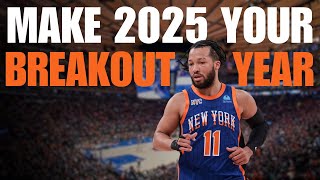
This is a coaching-oriented YouTube video (Ethan Khoza, Jan 8, 2025) that lays out a three-step plan for making 2025 the best year of a player's basketball career. The core message: build a solid foundation by (1) learning the game at a deeper level (basketball IQ, off-ball movement, reads in ball-screens, recognizing closeouts, studying film), (2) committing to learning mode instead of chronically staying in performance mode (periodize training and embrace challenge), and (3) [third step not present in this chunk]. The video includes practical examples, analogies, and a CTA offering a free one-hour Basketball IQ masterclass that Ethan claims can add roughly 6–8 points per game for players who apply the lessons.
Questions this video answers
About 30–70% success (the Goldilocks principle).
One hour.
About 6–8 points per game.
Chapters
With the new year underway, I'm going to give you the three steps you need to follow if you want to make 2025 the best year of your basketball journey so far. Now, if you're putting in a lot of work and you're still struggling to improve and see results, it's not because you're not talented enough. It's probably because you're not going about things the right way. And right now, I'm going to break down the exact way that you should be doing it if you want to see the best results that you've ever seen. So far, so many players are focused on the physical skills. So becoming a better shooter, a better ball handler, maybe more athletic, and those are all great things and we're going to talk about how to improve those. But the problem is that a lot of players go about it the wrong way. And I almost view it like the example used in the Bible where talk about building your house on a solid foundation of rock or building your house on a weak foundation of sand, right? And how if you build it on the sand, it's going to crumble and if you build it on the rock, it's going to be sturdy and you're going to be able to prosper because of it. Right? So a lot of players build their house on a really weak foundation and that's why they might feel really good in practice or in their own workouts, but then they get to the games and they crumble. So I want to tell you exactly about how to make sure that you build your house, you make your improvements by building a solid foundation so that you see the best in game results that you've seen to this point in your career. I want to break it down really simply into three steps. Let's get into it. So number one, the most important thing that you can do if you want to become a better player is you have to challenge yourself to learn the game on a much deeper level. Again, so many players are stuck on a very basic short term focus when it comes to improvement. And they don't worry about building on a solid foundation, they just want to build. And where we really see this is players understanding of the game. The more that I'm around the game and obviously, you know, the big part for me was starting off as a trainer, obviously as a player initially, but then transitioning more into training. And my, I was so focused on, okay, well how do I help my players become better shooters or better ball handlers or, you know, better finishers, whatever. And eventually I started to realize that that stuff isn't really what separates the best players. Right. You obviously need some of that. But what really matters even more than that is the IQ and the feel for the game that a player has that matters so much more when it comes to the actual in game results as opposed to how many ball handling drills they do or how many shooting drills they do, this, that and the third. And so that was kind of the shift that I made right there. One of the biggest things that holds players back is just their, their understanding of the game. And when you finally build a deep and masterful understanding of the game, your skills will take off and your performance in games will take off and the game will start to feel easy. And that's really where you start to play with confidence and consistency. So let's talk about just some, some simple things. First of all, it's understanding offense. What do I need to know in order to be successful in score points? Every player wants to score more points, right? Everybody wants to make more players for their team. How do you actually go about doing that? Just because you get better at, at handling the basketball or shooting the basketball doesn't mean you're going to go out and score more points. Because the game is played five on five and there's a time and a score that dictates what you're doing. Some places a shot clock, you have, you know, referees, you have all these different things to go into. What am I supposed to do when I'm actually, I actually have the ball in my hands and if you don't understand that, that, that, that concept, you don't understand those situations, you're not going to apply what you have. It's like you could have the biggest toolbox in the world, right? Maybe you're, you're a construction worker and you have the biggest toolbox ever. You have all the nicest, most expensive tools in your toolbox, but you've never been trained on how to actually apply those tools and when to apply them. So you're useless even though you have the best tools, right? It's like that in basketball too. You can have the best tools in the world. If you don't know how to apply them, then you're going to struggle. So really one of the big things I think is understanding off ball movement. So this goes into when do I want to cut to the basket, do I understand if that ball gets low, maybe around the block or the short corner, a 45 cut from the opposite wing, right? Or when my teammate drives at me, do I Understand what to look for when I'm trying to get to a backdoor cut in transition. Do I understand, oh, I got to win my first three steps to half court so that I get out ahead and I'm open to be able to get a pass and finish in transition? Do I understand that when my teammate drives, I got to relocate to give them an angle to kick the ball out? To me, all, all those little things are super important when it comes to your understanding of the game and being able to score. Talking about like recognizing the most vulnerable situations for defenders. So we talk about closeouts. Whenever the defense has to rotate towards you because the ball moves to you, that's the best time to look to drive because the defender has to sprint towards you, take away the shot, slow themselves down and not get beat on a drive. It's the hardest thing to do on defense. So recognizing and hunting closeouts to attack is a huge thing that, that players could do if they want to start to score more points more consistently. Understanding reads when it comes to ball screens and different coverages that may come with it. Whether it's a blitz or a switch or a drop coverage. What do you do in those different situations? And all that goes into actually building a solid foundation when it comes to offense. Right. And so we'll talk in a second here about some quick things you can do for that. But diving even deeper into those situations I talked about that stuff matters so much and as a, as a, as a coach now, like I mentioned before, so much of my, how I started with this channel, but just basketball, my career in basketball in general was as a trainer and then I've transitioned more into team coaching. So I'm a varsity coach now and this is stuff that we work on every single day. Because when I see my players get better at this stuff, all the skills take care of themselves. We'll work on shooting and all that stuff as well. But that stuff doesn't matter until they understand this. So if you want a resource that's going to walk you through exactly what I'm, what I just talked about there with those different things, I have a free hour long Basketball IQ masterclass link down below. It'll help you score more points, create more for your teammates, and just play with a whole new level of confidence. We talk about these exact situations, understanding how to play without the ball, reading different cuts on, on pin downs and away screenshots and understanding ball screens, understanding the mindsets that go into being a successful basketball player. Again, an hour long can immediately help you to add six or eight points per game just with the stuff that we talk about in there. And I continue to get so much good feedback. So like I said, completely free. Top link down below. Make sure you check that out if you want to dive deeper into that sort of stuff. Like I said, there is nothing more important than that, so be sure to check that out. But going back into that sort of stuff here, a lot of players think they have a good feel for the game, that they understand the game. But when you ask them about the situations, they don't know. And so that's why they struggle to be consistent and to perform well on the court. So we talk about what you can do going forward to make sure that you actually build a deep understanding of the game. And you have to make a commitment to become a student of the game. And that, that has to be like true in every sense of that phrase there. Watch film, like study basketball. And I mean, it's from a couple different perspectives. The players on my team who watch the most film of our games, the teams that we play, tend to be the most successful, right? And it's been like that in every team that I've been a part of because you're going to see something that you're going to be able to tuck away and next thing you know, you're in a situation and you can call back on what you've watched, what you've picked up on, and it allows you to make a play that if you hadn't seen it, you might, you might have missed it. And it's as simple as that. So are you willing to put in the time of watching your own film? First of all, if you have the access to that high school college players, you likely do. But aside from that, it's watching great players play basketball. So watching college basketball games, watching NBA games, watching international games, there's so many resources out there that you can watch and you can say, hey, I want to get better at using off ball screens. You can go on YouTube and find so many videos of breakdowns of film studies, of just, you know, different compilations of guys using off ball screens, different reads, all this sort of stuff. You want to get better at using ball screens. You can look at, you know, a player who uses a lot of ball screens and you can see what they do because they hit, you know, Chris Paul ball screens. You can search that and find so many videos about that and learn the game that way. You can turn on. What I highly recommend you do is turn on a college basketball game. You're in high school, watch more college basketball because it's in a lot of ways, it's very similar to the high school level in terms of the flow of things. And you get to see, you know, well, what did this team do in that situation? Okay, this team went on a 4, 0 run. What does the offense do after the timeout here? And you start to learn these things. You have to pick up on these things and it allows you to really have a good feel and understanding for the game. So studying and watching and seeing, saying, hey, I want to get better at this, so what can I do? What can I look for that's going to help me to understand that at a higher level, the more you watch, the more you're going to understand the game. And it's really as simple as that. So you're going to put like, what you put into it is what you're going to get out of it. Highly recommend that you do that. And again, use so many resources on YouTube. But also, like I mentioned, make sure you check out that masterclass down below completely free. We dive into a ton of this stuff as well. So that's the first thing is you need to make a commitment to become a student of the game. And I literally mean student of the game. You almost have to treat it like it's like. It's like it's like a school, right? Like it's a class. Like you're trying to study and learn and actually immerse yourself in the details of what's happening instead of just sitting there and watching with no purpose, right? Go into these things and say, hey, I want to watch this game and I just want to see how players are scoring without the basketball in their hands or how players are scoring in transition or how players are going to use ball screens. And you're going to get a lot better because of that. Number two is you want to commit to being in learning mode as much as possible. Okay? So so many players focus on being in performance mode, and they focus on being in it all the time. And I'll explain exactly what this means in a second here. In reality, we need to flip that and be in learning mode as often as we possibly can. There's two different modes you can be in. One is learning mode, one is performance mode. We need both, but we need to know when we need both of these things. So we talk about performance mode. Right now that I'm as I'm recording this, it's January, so most players are in season, meaning most of the time you're in performance mode and you should be right? We have a game, we have a game tomorrow night. We need, like, I need my players to perform, like, I need them to put their, their best foot out there and, and play their best, right? Because it matters, right? We're trying to win a game, we're trying to accumulate points and, and, you know, a position for the playoffs, all that sort of stuff. So what matters is going out there and doing what you do best and sticking to those things, right? You want to look really good, you want to look perfect, you want to shoot 100% if you can, because trying to win a game. We're in performance mode, right? Let's rewind six months from, from today, right? And we're in July. Well, different story. There's no scoreboard, there's no referees. We're not competing for a, a chance at, you know, a district title or a chance at a conference title or a chance at the state playoffs. We're getting better. We're trying to prepare ourselves for January. That's what we're doing in July. So we're not in performance mode. We shouldn't be anymore. Meaning we've got to be in learning mode, where now all of a sudden, this isn't about going out there and only doing what we do well and trying to be perfect, right? Because you have to think of getting better as very similar to getting stronger, right? If you go into the weight room and you lift 100 pounds on the bench press and you just only ever lift that weight, eventually you're going to stop getting stronger because it's not challenging you. It's not forcing your muscles to adapt in order to be able to meet a new challenge. Shooting or ball handling or finishing or any skill in basketball. Decision making. Those only improve if you force an adaptation. You force your brain to adapt and to improve and to get better. And we don't do that in performance mode because we avoid things that we're not good at. We run away from situations that we're not good at because we have to win. So, so many players get stuck in this performance mode year round where in July they still don't want to do anything that makes them look bad, that makes them uncomfortable, that they don't, that they aren't great at already. They don't want to do shooting drills that are going to challenge them and make them miss more shots. Right? They want to do stuff that they're going to do. They're going to perform really well and they're going to feel really good about. And because of that, they don't really get much better, because there's not much of a challenge that your brain has to overcome in order for you to get better at that, at whatever the skill is. Okay? So learning mode is focused on challenge and growth and embracing failure and adapting. In order to put ourselves in a learning mode, we need to think about the drills that we do, the workouts that we have. We want to understand the Goldilocks principle, which essentially just means that we want to succeed about 30 to 70% of the time. Okay. And if we're in that mode, we're going to be getting better. If we are below that, we're, like, never succeeding. Well, probably not. You probably aren't quite ready for that level of challenge. It's probably not super helpful.
More from Ethan

Stop Using One Dribble When You Drive To The Rim! (How To Become A Better Finisher)









