How To Make This The Best Off-Season Of Your Life.
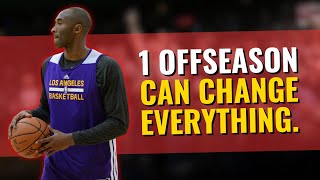
Ethan Khoza breaks down an offseason training plan: evaluate last season, shift to learning mode, train in a challenge zone where you succeed 30-70% of the time, tweak drills for shooting and ball-handling, follow a weekly schedule, and play pickup games focused on reads and decisions, not just reps.
Chapters
This is something that a lot of players miss, and it's the reason that they don't get better during the offseason. I'm going to tell you exactly how to make this your best offseason yet. Whether the season was great for you or if it wasn't what you quite wanted it to be. Here's what you need to understand. One good offseason can change everything for you. I've seen it countless times. A player locks in for an offseason, they come back the next year, completely different player. That can be you. It's absolutely possible. And right now we're going to go through exactly how you can do that. Let's get into it. Make sure you stay tuned for the last part, because I think that's really what makes or breaks in offseason for a lot of players. Because I know growing up, you know how I approach the offseason. Like, if I could go back, I would do it way differently. And I see players make the same sort of mistakes over and over again. So I want you to make sure that you don't make these same mistakes. And that's why we're going to touch on that towards the end there. Just to make sure that you don't do three things right and then one thing wrong. And that one thing wrong kind of erases a lot of your progress right here. Okay. But everything is going to be important. Starting off first of all with the fact that you have to evaluate what just happened. You've got to look back on this past season and evaluate it. What was good? What did you do well? Did you start a lot of games? Did you play good defense? Did you lead your team in scoring? Did you lead your team in three point shooting? Did you score five points per game more than you did the year before? Right. What was a positive that you can look at and say, maybe the positive is that you got playing time the year before. You didn't. Right. What are the positives? What are the good things that happened? Right. What was bad? What. What didn't go well? Maybe you didn't score as much as you wanted to. Maybe you didn't shoot as well as you would have liked to. Maybe you turned the ball over too much. Maybe you didn't play great defense. Maybe your role wasn't quite what you wanted it to be. You got to look back and. And. And evaluate those things. What were you confident doing? So. So did you feel really confident shooting the ball? What? You know, were you really confident handling the basketball or finishing? Or were you really confident defending, right? Conversely, what were you not confident doing? So maybe you weren't confident shooting the basketball. Maybe you felt like you were limited because you weren't confident handling the basketball. Okay, evaluate those things as well. And then finally kind of forecasting, what do you want to be better at next season? So when you look at it, maybe you look, you look and you say, hey, I wasn't super confident shooting the ball, or I didn't shoot the ball very well. Next season, I want to shoot the ball well. I want to be confident doing it. So that needs to be a focus that I have going with that. What opportunities are there going to be for you next year? Is your team losing three starters? Are they losing someone who is playing ahead of you? Are they losing someone who maybe was a really good shooter? So your team is going to need offense. You have to evaluate those things, too, and see, okay, what kind of opportunities are there and where. How should that affect my focus? If I know that we're losing, you know, our main ball handler, maybe that is what I should be focused on because maybe I can be able to step into that role right there because I know it's going to be a need. If we're losing a really good defender, is that something I can focus on? If we're losing a really good shooter, is that something that I can focus on? Okay, so evaluate this past season. What was good, what was bad, what were you confident doing? What were you not confident doing? And then look at opportunities coming up, right? And what could you potentially have going into next season that might affect what your focus should be during this offseason? So that's the first thing. You want to make sure that you have that down. The second thing is a huge, huge, huge thing that you have to understand, and a lot of players don't understand it. Your mindset in the off season needs to be completely different than your mindset would be in the regular season. Okay? There's two different modes here. So when we think about the season, right, we have what's called performance mode, where your main focus is the performance or the games or playing as well as possible at all times. Ideally, you make every single shot. Ideally, you never lose the ball. You never turn it over. Ideally, you never get beat on defense. Ideally, you never miss a layup, right? And ideally, your team wins every single game. And. And that's that. Because we're in performance mode, all that matters is the outcome of what we're doing. Did you make the shot or did you not make it? Did you get the stop on defense or did you not? Did you win the game or did you not? Right. The performance or the outcome is all that matters in the actual season because that's when it's. It's results oriented. That's what matters. Right? The best shooters play because they make the shots more than other people do. Right? They perform better when you need it. So that's the mindset of a player in the season, is I need to perform at my best every time I'm on the court. The thing is, though, in the off season, that's not the same thing, right? We can't be in that same mode. You need to be into learning mode. What learning mode is, is essentially we're not worried about how we look or how we perform or the outcome every single time, because the outcome can be misleading. Sometimes you. You can have a workout where you make every single shot, but you didn't get much better. And you can have a workout conversely where you miss a lot of shots and it makes you better because it was challenging. I think that's the, the main thing the players have to understand right now is that the off season needs to be all about challenge and challenging yourself and being uncomfortable. When you're in performance mode, you're performing well, you're usually going to be very, very comfortable, right? We don't want to be comfortable because now we're putting ourselves in learning mode. We need to expand what we're doing. So no longer can you judge how good a day was based on your performance or how many shots you made, how few times you turn the ball over. You're now judging your days, your workouts, based on how much challenge did you face? Did you face that in that workout? So this is called the Goldilocks zone, where we don't want. We want to be in the perfect range of challenge, right? So, for example, we don't want to be. If you're doing a shooting drill, you don't want to be doing a bunch of drills where you make 100% of your shots. Think like the mike and drill, right? For the majority of players, like the mike and drill is very, very easy, right? They're probably going to make every single one. Like, if you shoot 10 of them, you're probably going to make 10 or maybe make nine, right? That's not very challenging. So we look at the Goldilocks zone like that's, that's, that's too easy, right? Because we're at about 100% success rate. Conversely, we don't want to be in a spot where we're making zero shots, right? Doing drills where we're never scoring, because that's way too much challenge right there. So we're not really getting any sort of valuable information because nothing's working. So we're not realizing, oh, this is working. This isn't working because nothing's working, right? So we don't want to be there. We want to be right into that 30 to 70% success rate in our drills and our workouts in the off season. So you can look at that and say, hey, if I abide by that Goldilocks principle of making sure that I'm only really succeeding in my drills, in my workouts, 30 to 70% of the time, meaning I'm only making 40% of my shots in a workout. You know, maybe I'm doing a finishing drill and I'm only making 40, 50% of my of my shots in that drill. Or maybe I'm doing a ball handling drill and I'm losing the ball, like on half of the reps that I'm doing. That is going to be better than if we were doing a drill and you were making every single shot. Because there's no challenge. What challenge does? It forces your brain to adapt, right? Think about lifting weights, right? When you lift weights and you really struggle, like, maybe you lift 100 pounds for four reps and you try and do a fifth rep, it's really, really challenging. So you get four, right? Maybe next time you increase the weight. So now all of a sudden, like, okay, now I'm gonna try and go 105 pounds for four reps, right there, maybe you get it. That's the process of you getting stronger. As you continue to increase the weight, increase the challenge, your body is going to have to adapt to be able to handle that challenge. So that's why. That's how you build muscle and get stronger, because you continue to increase the challenge. It's the same thing we talk about getting better at our basketball skills is we have to make sure that we have challenge present. Because what that's going to do is it's going to force your brain to say, hey, I'm not. I'm not doing too well at this. So I've got to make sure that I improve this year, right? It's going to force your brain to adapt. And essentially that's what the oxygen has to be, is. It needs to be you forcing yourself to get better. Because all of all of this, right? Getting better is actually a mental process, right? They call it muscle memory, but it's a very mental process. You should think of it that way. Your brain has a lot of things that it's focused on that it's worried about, that it's that it's on the hook for, right? It's got to worry about you surviving. It's got to worry about all the other things that are going on in your life, right? If you do not force yourself to get better, you won't. So this is a mistake a lot of players make is their whole off season is doing the same easy drills every single day, and they don't get much better because of it. Because why would your brain allocate any sort of energy towards any improving a skill if it doesn't need to? You have to make it want to do that, right? And you're only going to do that by there being challenged. So again, we got to think about being in that Goldilocks zone with our workouts here. Improvement is going to require struggle because like I said, it's a mental process, right? So just like, again, if we're lifting weights in the weight room, we want to get stronger. We continue to increase the weight or increase the reps and increase the challenge with that. That's where we've got to be, right? So, like, let's think about shooting workouts, right? If you're doing a shooting workout or a shooting drill and you aren't in that Goldilock zone, right, Maybe it's way too easy. You're making all of your shots, or you can, you know, you can kind of zone out because it's not really engaging or challenging at all right here. Just simple ways to. To maybe put yourself back into that Goldilock zone, put pressure on those shots. So maybe instead of doing just five makes at a spot, maybe. Maybe you have to do three makes in a row to complete that spot or whatever is challenging for you. And then again, as you continue to go, maybe eventually three makes in a row becomes easy. So now we have to do four makes in a row, right? Or maybe instead of makes in a row, you do, okay, I've got to make two out of three shots at this spot to move on. And then eventually, maybe that gets easy, and then you got to go three out of four, right? So we're finding ways to first of all challenge ourselves where, guess what? You might not succeed in the first time when you do that drill. Now, you might not make three in a row the first time. You might get to two in a row a bunch of times. And Miss the third one. But eventually you're going to adapt. You're going to be able to do that three in a row. It's going to become easier. And now we can increase that. You're going to be able to see your progress as well. Okay. One thing we do in a lot of our workouts is we make normal shots harder. So essentially what that means is like, let's take us to normal catch and shoot shot. Once you get to a certain point as a shooter, that shot becomes pretty easy. Right. A catch and shoot, when you put in enough time and you're a good shooter, like a catch and shoot in a, in a practice setting where you're not being guarded is a pretty easy shot. And so what we'll do is we'll find ways to make that more challenging. So maybe we'll say, hey, you have to stagger your feet so that they're a little bit off. Maybe you have them a little bit farther apart, you have a little bit more narrow, you have maybe one foot a little farther back than normal. Maybe you're turn a little bit to the side. And now we make that shot harder just by making your feet weird. Right. And now you're gonna have to find a way to adapt and still make that shot. So now think about what that's going to do when you get back to shooting a normal shot. It's going to make that so much easier because you've been working on making it more difficult and it's going to allow you in a game setting where your feet might not be perfect. You're going to be more prepared to be able to handle that and make the shot anyway. Another thing we'll do is we'll throw bad passes. So like, if we're going spot up shooting, maybe instead of just throwing good passes, maybe I'll throw bad passes to them. Like I'll throw a high pass or a low pass or pass to the side, whatever the case may be. Maybe I'll roll the ball to them like it's bowling. Right. But again, now we're working on taking a difficult shot or an easy shot and making it more difficult because the pass is going to be bad. So not only is it going to make you a better shooter, but again, it's going to prepare you for games when you might get a bad pass as well. Well, so those are all ways that you can take something that's easy and maybe isn't challenging to you and make it more challenging, which is going to force adaptation, AKA improvement. Right. So if we want to see improvement. That's kind of how we got to think about it. For ball handling, if something's too easy for you, you can. I mean, the number one thing is do it faster, right? Move the ball faster. If you're going through a drill and it's too easy, can you either, like, run faster or go faster than the drill, or can you move the ball faster than. That's a really great way to increase the challenge right there. Or try something new. So try a different move that you never tried before that you're not very good at, and then once you start to pick that up, go faster, right? For finishing, kind of the same thing. Go faster or work on different finishes that are. That are difficult, you can maybe try finishing some further away. That's another way that you can kind of challenge yourself when it comes to finishing, too. So those are, again, ways to put yourself in that Goldilocks zone if things are too easy. And then, you know, again, kind of the. The process of it is like when something become. When something becomes too easy, you either want to make it harder in some way, like we kind of talked about the shooting right there, or add something else to it, right? Like I said, with ball handling and finishing, try something new that you're not very good at. Once you start to really master the stuff that you, you know, is. Becomes easy for you, and that is the process of forcing yourself to get better. So the next part that is really important is you ultimately need to have a plan. Right now that we have our process figured out, you need to have a plan. What does your week look like? What do your weeks, your months look like during this off season? What are you going to do? What are you going to do each day? You want to have that written down. And, you know, obviously you're going to have to adjust that based on what you have going on. Maybe you play a. You. Maybe you have, you know, other commitments, whatever the case may be. Here's an idea of, like, what a schedule look like, and I'll put a screenshot on the screen here if you're watching on YouTube. But on Monday, maybe we have a morning lift, and then we. Maybe we shoot, right? Or shoot and then lift, whatever you want to do. Maybe we do that in the morning, and then maybe at night, you have a team workout or an open gym or something like that, or. Or maybe like an AAU practice or whatever. And then maybe on Tuesday, we have another morning lift shooting. And again, that can be. Maybe it's. Maybe it's a morning lift and like a full workout or morning lift and ball handling, whatever. And then at night maybe you have a workout or you play pickup or maybe you do both, whatever. Wednesday maybe you just go in the morning and shoot or you have a workout, whatever. And then at night you have your skill workout, maybe you play pickup, whatever. Thursday morning lift shooting. And then at night you have the team workout au practice, whatever that might look like, slash pickup. And then Friday morning lift and shooting. And then, you know, at night we have that skill workout and then maybe same thing, Saturday you get that morning lift, that evening skill workout and me take Sunday off. That's an example of a schedule that there's no such thing as the best schedule. Right? I get that question a lot. Like what's the best schedule for the. There's no such thing, right? The best schedule is what works for you and how much work can, can you put in while making quality. So not doing too much, right. So if you're going to the, to the gym every day for eight hours, it's probably a waste of time. You're probably not really using all that time effectively. So maybe the best for you is an hour or an hour and a half or two hours, right? That might be the best thing for you. And again, this is just an example, but this kind of covers all your bases. But it's important that you have a plan and, and that you have that plan written down or you at least commit it to memory. So you know, okay, Monday I'm doing this, Tuesday I'm doing this and that. That way you can again make sure that you're staying on, on track and covering all your bases, getting everything done. So like I mentioned earlier, there's mistakes that players make that can almost negate the things we've talked about. Right. You could do the, the first three things we've gone through here very well. And if you don't do the last part, chances are you're not going to see a lot of that progress the next season. This is something that a lot of players miss and it's the reason that they don't get better during the offseason. And it's very simple. You need to be playing as much as possible that can be pick up ideally, but also AAU playing with your team, like maybe at team workouts or open gyms and stuff like that, whatever the case may be. But you need to be playing against, against defense as much as possible, right? A mistake a lot of players make is they'll go lock themselves in a gym by themselves for eight, nine months. And that's not going to be at the most beneficial thing for you when you have to go back and then play against an actual person in front of you, right? If you try to spend your whole offseason by yourself, never playing against defense, you're going to wonder why you struggle so much. When you see defense finally come November or December, it's because you didn't tr. You didn't practice it there, right? The thing you have to understand is that we talk about skills, right? We want to improve our skills. Well, skills are not just the physical act of doing something. A skill is not just you making a layup. A skill is actually there's a part before that where you have to first of all read the situation, what's going on, then you have to actually make a decision and then you actually execute the physical skill. The problem is if you only work out by yourself or you never play, you only ever work on that third part, which is the physical skill, which is important. But you never work on the read or the decision making. So if you don't do those two things, you're missing 2/3 of the actual full skill, right? And you're going to get to a game again or a practice and you're going to have to do that full three step process. You've only ever worked on the last part of it, right? So you see where this disconnect there, if you don't ever work on that. So that's why it's so important that you're playing as much as possible. But understand this though, when you're playing, it needs to be purposeful. So what you can't do is just go out and go back into performance like we talked about, where all you care about is how many points did I score and pick up today? How many times did I not lose the ball and pick up today? If that's how you, you judge yourself, you, you're probably going to leave a lot of improvement on the table. Instead you want to go into these pickup runs, these games that don't matter, and you want to have a focus on something. If you're trying to get better, driving to the basket, for example, force yourself to do it more often and figure out what works well for you and what doesn't work well. You might realize like, hey, when I go to my right and I, you know, use a little bit of a change of pace right here, I'm really good at getting to the basketball. And you're going to learn when is that Effective when is it not? And the best way to do this by playing. But you have to go with purpose. So you're trying to say, hey, I want to work on this, this specific thing. I want to add this specific thing to my game. So I'm going to go into this pickup game and yeah, I might have some open shots that, yeah, if it was a real game that mattered, I'd probably shoot it. But right now I'm only worried about improvement. I'm in learning mode. That's all that matters right here. Because I want to get back to this, to the real season, next year that matters. And I want to have this extra element added to my game. So I've got to take the time now to work on it. You got to make the sacrifice of sometimes not looking the best and being willing to, to look bad at times even because you're there with a purpose, trying to get better at something right there. Okay. If you're trying to improve your ball handling, put yourself in more positions to handle the basketball, you again, be purposeful with those things and be okay with losing a pickup game because you're trying to work on something, it's okay, right? The game, it doesn't matter. It doesn't. We want to use those games that don't matter to prepare for the ones that will matter. Right? That's, that's, that's what you have to be focused on right there so you can't judge yourself on, again, how many points that I score, how many times I'm not turning the ball over. That's how you might judge a game in December or January. Right? But we're playing in the off season. We're just trying to get better. Right? And when you do those things, right, when you focus on these things, that's how you have the best and most productive offseason of your life. And that's going to prepare you to have your best season yet next year. Now if you click the top link in my description down below, that'll take you to all of our online programs. So we have the elite shooter system which if your goal is to take your shooting to the next level this offseason, that's going to completely transition form things for you. Whether it's your form, just your ability to make in game shots off the catch, off the dribble three mid range, all that sort of stuff. Super comprehensive. So if you want to become that next level shooter, that's list that's linked there for you. Elite ball handling 2.0. So again, if you're that goal is to stick your handles to the next level. You want a set schedule. You want drills that, like we talked about, are going to challenge you and force that improvement. All these programs will do it. But specifically, if you're talking ball handling, elite bowling 2.0 going to help you to develop that confidence as a ball handler, ball control, different ability to score off of the dribble. So check that out. And then of course, the perimeter score system, which goes through kind of everything. We talk about being that elite perimeter player and building not just the physical skills, shooting, finishing, ball handling, ability to score, all that sort of stuff. We. But then the confidence, the basketball IQ to go with that. That's, that's also there as well. So if you guys need something to do for the offseason, make sure you check those out. And we've had at this one, hundreds of players go through them and see massive results. You can kind of see on those pages there a lot of players who are kind of like what I mentioned, guys. Like one good offseason can change everything for you right there. So committing to something, committing to a plan is really, really important if you want to make that next step. So everything right there is linked below. I appreciate you for watching. If you have any questions, make sure you drop it down below. Any suggestions for videos, if you're new, make sure you subscribe. Drop a like as well. I appreciate you for watching. Talk soon. Peace.
More from Ethan

Stop Using One Dribble When You Drive To The Rim! (How To Become A Better Finisher)









