How To Play in Games As Well As You Play in Practice
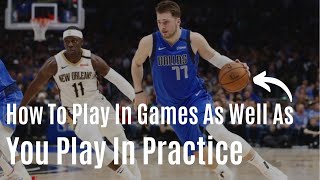
A coaching video by Ethan Khoza explaining why many players perform well in practice but underperform in games and offering practical fixes. Key recommendations: practice and play against live defense frequently to develop instincts and learn to apply skills under pressure; watch film to learn when moves work; mentally prepare through visualization, focused breathing (4-7-8), and narrowing focus to effort; use small live-drill variations (e.g., repeated ball-screen possessions) and leverage the "snowball" effect to build confidence.
Questions this video answers
At least two times a week.
The 4-7-8 breath: inhale 4 seconds, hold 7 seconds, exhale 8 seconds.
Chapters
Probably the most common thing I hear from players is a situation like this. Ask yourself if you've ever felt like this as well. Hey, coach, here's my problem. I play well in practice and workouts. I shoot at a high percentage. I handle the ball well, and overall I feel very confident. But when games get here, it's not like that anymore. I don't play as well and I don't feel as confident. How can I fix this? Playing well in practice but not in game is one of the biggest hurdles that players face. And I've spent many, many frustrating days asking the same questions to myself when I was younger. So how can you overcome this? There's a few steps you can take to get past this. Let's get into it. The first thing you have to realize is that games provide different challenges than practice does. First of all, if you practice the workout by yourself, you don't often experience playing as another defender. Having a real defender on you, as well as four other defenders on the court, completely changes the way you have to approach what you're doing. So if you always practice by yourself, this is something that you'll struggle with that will cause you to shoot worse, be more nervous, and ultimately not play as well. If this sounds like you, the solution is very, very simple. Play against live defense more. In my Perimeter Score System program, I recommend that all my players play at least two times a week. We obviously hit our skill work hard every day in the program, which is a crucial piece of the puzzle. But that's not enough to truly put the whole picture together. I like to use the toolbox analogy. So imagine you have a toolbox, and inside that toolbox you have the best hammer, the best drill, and the best screwdriver you can buy. But you have no idea when or how to actually use them. If that's the case, even if you have the best tools in the world, if you don't know when or how to use them, it's basically worthless. Basketball is the same. Maybe you practice and you have a really good shot or really good handles, or you have a couple really nice moves, but ultimately, if you don't know when or how to apply those things in games, you're going to struggle. So this is why actually playing against real defenders is such a major key in your training. You'll have to learn how to do those moves effectively against an actual person who's trying to stop you. You'll have to learn how to handle the ball against somebody who's trying to take the ball away from you. You have to be able to shoot with the defender closing out, trying to alter your shot. And you'll have to finish at the rim with a defender chasing you down, trying to block you. And when you start to do this, often you have to. You develop the most important trait in basketball, instincts. I believe that as important as it is to be able to hit shots and handle the ball, having great instincts on the court is as important, if not more important, than both of those things. I'm sure you've seen players who just seem to do everything right on the court. Maybe they don't even work out as much as you do, but for some reason they're always making the right decisions and the game just seems easy for them. That's instincts. Some players just have it naturally, but most gain that through playing pickup with their friends or at the park all the time. And, and maybe they've never even done drills before, but they know how to play the game because they've done it so much. If you lack skill, but you have instincts, you're going to find ways to be effective on the court. If you lack instincts, then you'll always struggle to consistently perform in games, no matter how great your skills are. Basketball is not a cut and dry sport. There's no formula, drill or workout I can give you that will guarantee you to be successful in every single situation. A shortcut like that does not exist. My goal is to help you through my videos, my programs and my workouts, to develop the skills necessary to do what your instincts ultimately tell you. And this is why the ultimate way to train if you want to be an effective player in games, is both to work on your skills and athleticism, as well as to develop your instincts through playing as often as you can. And this can be 1 on 1, 2 on 2, 3 on 3, 4 on 4, or 5 on 5. But the important thing is that there's defense on the court, and to get even deeper into it, you can drill certain situations through your live play. So let's say, for example, you've been working on a ton of ball screens in your workouts. Maybe you get three of your friends or teammates to play two on two with you, and in that two on two, you start every possession with a ball screen so that you get to work on that situation with defense out there, you can literally do that with any situation that you might want to work on. And this is the missing key for a lot of players who struggle in games. Another missing piece for a lot of players is not watching film. You can learn so much from watching film, and yet it's something that a lot of players don't do. Take learning a new move, for example. If you've been working on your step back, have you watched film on YouTube that shows when the step back is actually effective? On YouTube you can find film on almost any move, and on my channel I have breakdowns on a lot of different things as well. But if you want to feel confident about using that step back in games, you better know what situation the step back is applicable in. If you just go out and do a step back because you feel like it, chances are it's not going to work or create any separation for you. But if you do it at the right time and place, it can be a great move. You can also watch a film on attacking closeouts, backdoor cuts, relocation for a jump shot in the wing or corner, or handling pressure and beating a trap, as well as many other situations. So in order to speed up that process of increasing your basketball IQ and gaining those instincts, make sure you're watching film as well as playing. Now, for those of you who may do well in practice against other defenders, most likely your teammates, but then you struggle when you get to games. Here's a couple other things that can help you Practice is going to be slightly different from games because the environment is more familiar to you. In practice, you play against your teammates every day. It's only them and your coaches in the gym. No clock, no fans, no refs, nothing else that comes with an actual game. So your comfort level is going to be higher and therefore your performance will likely better in practice as well. If this is something that you struggle with, there's a few things you can do in both your training and in actual games that will help you. First, nothing has changed from my advice above. Play as much as you can. If you're able to play with different people from time to time who you aren't as familiar with so you can become more comfortable playing against new people like you will in games. This can definitely be helpful, but really, as long as you're playing as much as you can and developing your instincts, you'll be in a position to be successful. You also have to understand that you need to mentally prepare yourself for games because it's different than practice. If you approach games the same way you approach practice, your in game results be worse than your practice results before games. I highly recommend visualization. Visualization is simply picturing yourself on the court doing the things that you want to do in that game. The brain is A very special thing. And it can't tell the difference between what you visualize and what you actually do in real life. So visualization is something that can be very, very helpful. When you visualize, you want to picture yourself making plays on the court, but when you do this, you want to visualize it from your point of view in the first person. You should be able to feel the ball in your hands and feel the shoes on your feet. I might visualize myself coming off of a screen and hitting a shot on the wing. Or maybe I visualize myself handling pressure off the court, or maybe I make a really nice move against my defender. It should be whatever you want. I recommend that you go through a few situations like this before every single game to really prepare yourself to play. And when you do this, it doesn't mean that 100% of the time you're going to go out and actually do that thing, but you're priming your brain to go out and be aggressive, be confident, and most importantly, expect to be successful on the court. Confidence comes from experience and success. If your brain is experienced and has succeeded in the situations you visualize, it's going to help you to be more confident come game time. The other thing to keep in mind is your breathing. If you're nervous before a game or during a game at some point, chances are you're probably going to be tense and not in a position to play your best. So resetting yourself with a deep breath hold and can be very, very helpful in this situation. I recommend the 4, 7, 8 breath where you're going to inhale for 4 seconds, you're going to hold that breath for 7 seconds, and then you're going to slowly exhale for 8 seconds. Once you do this a couple times, you're going to start to feel much more relaxed and focused. Another key is your focus. Many players get out on the floor and have their thoughts in a million different directions. They want to score 20 points, but they don't want to turn the ball over. They want to run the play right. They want to make sure the coach isn't mad. And chances are there's five other things going through their mind as well. This is the complete wrong way to approach the game. If your mind isn't in the present moment, you can't be consistent as a player and you're going to struggle. This is a very simple fix. From now on, the only thing you should focus on during games is your effort, nothing else. When you focus on giving your best effort every play, you actually put yourself in the best position to play at your highest potential. Usually when you don't play as well as you know you should have, it's mental self sabotage that comes from overthinking. Overthinking is the enemy. If you put in the work in the offseason and you have the ability and the skills to play at a high level, you've earned that. There's nothing more you can do at this moment. Now it's all about giving your best effort and everything else will take care of itself. Focusing on that will get you better, more consistent results than trying to focus on scoring a certain amount of points or avoiding making mistakes. It's counterintuitive, but ultimately it works. And lastly, don't underestimate the power of the snowball effect. Sometimes just getting one thing to go right can get you out of your own head and can cause you to start playing with more confidence. For example, if you struggle to score but then you get fouled and make both free throws, that can push you to keep being aggressive and attacking the basket and that ultimately can completely change the trajectory of the game that you're playing. Hitting one three pointer will oftentimes elevate you on both ends of the floor and give you confidence to score more on the offensive end. So if you find that you're struggling to get going in a game, focus on making one play offensive or defensive and then watch the snowball effects start to happen. If you guys enjoyed this video, make sure you click the top link in my description to get my free elite perimeter score workout where you're going to hit a bunch of skills that you're going to need. You want to be an effective player in the perimeter? I'll send it to you for free. Go ahead and click that link. If you guys enjoyed the video, make sure you drop a like and subscribe and leave a comment for me as well. Let me know what you think. Talk to you guys soon. Peace.
More from Ethan

Stop Using One Dribble When You Drive To The Rim! (How To Become A Better Finisher)









