How To Play With Confidence, Lessons For Players and Trainers, and More with Danny Cooper!
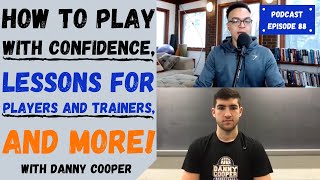
Danny Cooper, a senior point guard at Moravian University, talks about building confidence through process-focused habits, adjusting to college speed and help defense, and training methods like live defense and fatigued-condition drills. He emphasizes film review and pre-game routines as accountability tools, and discusses how players can build personal brands through NIL.
Chapters
Foreign. Welcome to the Vision Driven Basketball Training Podcast. Appreciate everybody who's tuned in today. Apple Podcast, Spotify, Pandora, Google Podcast, or wherever else you may be listening. And of course, Everybody watching on YouTube right now. Drop a like subscribe if you're new today's podcast. Have a very special guest making his second appearance on the show. And we talk about this for a couple weeks now. And we've got the fans calling forward as well, apparently. So my guy, Danny Cooper. Danny Cooper basketball here again and super excited to chop it up with him today. You know, he's doing a lot of really, really cool stuff that, you know, I think from a trainer's perspective is great, but also from a player's perspective, I think he's going to have a lot of value for everybody who's listening right now. And, you know, we'll get into it, but, you know, kind of a brief intro on what Danny's doing now. Danny is a basketball trainer, but at the same time he also plays college basketball at Moravian University here in Pennsylvania. So I'll, I'll give him the floor real quick to give you guys, you know, a little background and we'll get into it. But Danny, I appreciate you coming on the show, man.
Yes, sir. I'm happy to be here. So to give you guys a little background. Like Ethan said, I'm a D3 hooper at Moravian University. I also have my own basketball training business called Danny Cooper Basketball. And then recently I've been exploring YouTube and kind of vlogging my whole life and doing started a series called Life as a T3 hooper. So I'm 10 episodes in. That's been really cool and yeah, it's been a really cool experience getting to see kind of the player side from a trainer's perspective. And, yeah, it's really been cool.
Yeah. Yeah. So, you know, first of all, I'm going to tell everybody right now, you guys need to go check out Danny's vlogs. Because. And I told him, literally, I think it was episode one. I'm like, man, if you keep posting this, like, this is going to take off because it's just so entertaining and you get to see behind the scenes of what it's like to, you know, be a college basketball player. And of course, like, you know, like, like we talked about Danny's doing so much outside of all that, and it was funny because we talked about this and, you know, we can kind of tie this into, you know, you being a trainer, but, you know, back when we were at the Master Hoops conference, In Miami in October, you know, we were talking about how lucky everybody on your team is that they have somebody like you there to, you know, be able to help them develop and, you know, be able to run those fall workouts when you don't have your coaches. And, you know, it's somebody who, like, really does this stuff and, like, you know, is taking the time to go to Miami to go to a conference to learn about it. So how has. First of all, like, how has this season been? Because I know last year, you know, as a junior, and for everybody who doesn't know, you're a senior now, but as a junior, you know, you didn't play cause you were hurting. It was a shortened season and all that. And kind of your journey of getting to Moravian is definitely unique as well. But how have things been this year for you guys?
Yeah, I mean, it's been really cool. It's. I'm actually the only senior on our team, so we're really young and we got a lot. We got a lot of learning curves. But right now we're 4 and 5 and we're heading into league play. So for those of you who don't know, league play is kind of the most important. And in college, especially D3, because you have to win your tournament in order to make NCAA tournaments. So as a senior, I'm the only senior, so I'm really trying to lead the guys and get us rolling into league play. So it's been really fun though, getting a chance to play a lot of minutes. I really like my teammates and yeah, I'm just really enjoying it so far.
And so kind of speaking to that, you know, as. As the senior and as. And really, like, just as somebody who, you know, is a leader on your team, because, you know, I'm sure that there's other guys on your team who aren't seniors who are also leaders. But what is that? What is being a leader? Like, what does that role look like for you specifically?
Right. So it's been a very unique experience. So we got a. We actually have four captains. So the reason that our coach picked all four of us is because there's a bunch of different personalities on the team. So my leadership style might work for some guys, and then the other captains, their leadership style might work for others. So my style is kind of very vocal. I kind of tell guys how it is. I try to be a coach out there on the floor. So, yeah, it's been a really cool experience mentoring the freshmen and sophomores. And I try to lead by My actions. And really, it's been a really cool experience. I actually, I read up on leadership. I read a book called the Dichotomy of Leadership, where, you know, it was the first kind of book I actually read about leadership, and it talks about leadership capital. And that's a term where you have to kind of pick and choose where your leadership is needed. So maybe there's some scenarios where you don't need to butt in. You kind of let guys figure it out on their own, and then there's other scenarios where it's necessary. So kind of that balance of where do you show your leadership and where do you go talk and help guys figure it out? And then the other end of the spectrum where you kind of stay quiet and kind of let guys figure it out.
So, yeah. Yeah. And it's such a. It's such a skill, I think, being. Being an effective leader. It's not just like, you're not just a leader because you're a senior, but you're a leader because, like you said, you understand, like, you know, how do I. How do I lead effectively and how do I give guys the, you know, ability to not feel like I'm, you know, always, you know, on them about certain things? And, you know, it's something that I always say. And I'm sure you having, you guys having four captains obviously means with one senior that, you know, you probably have some junior, I assume, juniors who are captains as well.
It's. I'm. I'm the only senior. Then we have one junior and two sophomores. So.
Okay, so that's the other thing right there. Yeah. You got some young guys as captains. And I always tell, like, you know, one of our things with the team that I coach is that, like, we don't even actually do captains. And part of that is because we don't want it to feel like it's always on the captains or the seniors to be the ones who are leaders. Like, basketball doesn't know age, and it's not. It's not going to. How old you are doesn't determine whether or not the ball goes in the basket. Right. Basketball knows ability and knows experience. But I think that as a younger player, like, there's certain you can. You can add value as a leader again if you just understand, like, how to communicate well with guys. But I think one thing that I would say to everybody out there is, like, you don't want to sit there and just, like, wait your turn until you're a senior. Be like, oh, it's not My responsibility to be a leader or try and make my team better or try and help guys out until, you know, I'm a captain or I'm a senior. I think that's how you build like a good culture and a culture where, where you win ultimately. Yeah.
To add on to that, I think a lot of freshmen come into play in college and they might be timid at first and not be willing to communicate. But from my experience, I mean, the coaches love players who talk and communicate. So it's been, I've been really trying to challenge the young guys and empower them to talk and be vocal because it's kind of the same couple guys every day at practice who are talking and you're only as effective as your weakest link. So I think for anybody looking to play college basketball, making talking and being vocal one of your main focus points is very important because from my experience, young guys come in and they might defer to the older guys or defer to the captains, but like Ethan just said, don't be afraid to talk. Every coach loves a talker. And yeah, it can only, can only help the team. So.
Yeah. So from a, from a basketball perspective, how have things been for you? Like how has the adjustment been to the college level?
It's been going really well. It's definitely a lot faster than the high school game. I would say a couple things that are definitely different. Our defense, you gotta be on top of everything. In high school we had a seven footer, so I didn't really have to worry about help defense at all. We could trap and lunge and try to steal it and if they beat us, our seven footer would block it. So biggest adjustment for me has been help side defense for sure. My coach and I have been working on that since day one. I think just the offense in general, just kind of the concepts different. You know, we're running, we run a lot of dribble handoffs, pin downs, away screens. So kind of getting that as a point guard, getting the offense to gel, especially as such a young team, has been a challenge, but you know, it's been good.
Yeah. Yeah. And definitely like as, as that point guard as well, you know, that, that just adds to. Because now you're not just responsible for yourself, you're responsible for everybody else as well when it comes to the offense and the defense too. So. Yeah, I mean, and again, I think it gives you such a great perspective as, as a trainer, but also as somebody who's like doing, doing it right now, you know, I guess I Guess while we're kind of on the topic and you kind of mentioned it, you know, talking and being vocal, but you know, what are, what are a few things that, or maybe just a couple things honestly that like players looking to play at that next level, like what, what's important for them to have a grasp on or for them to focus on if their goal is to make it to, you know, that college level you can't guard.
It's. It's just really hard to get on the floor, plain and simple. Number two, I would say shooting as a team. We're actually not shooting great right now. So I think just the ability to knock down open catch and shoot jumpers. Because if you look at the statistics, the majority of the shots are either catch and shoot or attacking a closeout and getting to a pull up. So I would say the ability to shoot and then also develop making in basketball IQ as much as you can. Because there's a lot of situations in the game where we usually don't train and obviously we're going to get into this. But I think training with live defense and actually making decisions is so important because I've posted some videos on me missing a layup in a game where the rotating shot blocker comes over and I miss the layup. And my whole life I never worked on any of those scenarios. So what I try to do is in like before our practices I put us through workouts and I'll try to replicate those exact same scenarios. And last night I actually missed another one where got to the basket, rotating shop blocker came and I kind of double clutch tried to finish. And in my mind I'm like, I gotta finish that. But I never worked on kind of hitting the defender and then finishing. So I would just say training with live defense and really preparing yourself for that physicality, for those moments where you're gonna be against bigger, taller, stronger guys. So.
Yeah, yeah, yeah, no, exactly. We can kind of hop into the training. Like, you know, I think live defense is such a big thing. Um, and anytime that I have the opportunity to do that because you know, there's been like, there's papers that have been done that talk about the difference between a skill when it's executed again, like with no necessary reaction where you can pre plan it, and then movements executed when there is a reaction and it's two completely different movements. Like it's not the same thing. So for example, that might mean if I'm just, if I know that, okay, I'm going to catch the ball, rip through, take two, dribbles to the basket. If I know that that's going to be different than if I catch the ball. I read that the defender is giving me the right side so I rip through and drive to the basket. It's just two different types of movement. So obviously when you're in a game the, it's all reaction. So if you don't ever train that and you never have anything to react to, then it's it like it's no wonder why your training might not rear itself, you know, in games. And then that's where you get the question of oh, hey coach, like I'm training all the time, but I'm not seeing the results in games. And generally that's, that's wise because the, you're not training the right movement or the same movement as you would be in a game. And there's, there's a lot of ways that you can, you can work that, you know, reaction. It doesn't necessarily always. It's not only live defense, you can do other stuff as well, which we can hop into. And I know you do a ton with audio cues and even, you know, there's ways to do it with visual cues as well. So you can kind of speak to that a little bit as well because I'm sure that that's, that's what you found as well. Yeah.
To add on to that from being a player, one of the most unique things that I've seen you when you're in the game and I'm sure a lot of players can relate, you really aren't thinking you, like you said, you, you never are like, okay, I'm going to catch the ball, take two dribbles here and, and shoot. It's all reaction based. So I think even looking back on my training growing up, it was a lot of pre planned moves, a lot of on air stuff. But in the game you, you're never like, okay, I'm going to take a crossover between the legs, get to a pull up. So I think developing those reactions like you said, is, is vital for our training. To talk about audio cues, I really like audio cues. Especially when you're working out with just one teammate and maybe your body's sore and you don't want to go live because it really adds that unpredictability factor. So a lot of times trainers in our, in our industry, we'll talk about the perfect footwork and stuff like that, but I don't even really think that exists because a lot of my pull ups are not your Traditional one, two, like we teach. So I think audio cues really, you know when you don't know when you're going to stop. If you just say drive and when I say go, you're going to pull up for a shot. You don't know when you're gonna stop. And it might, you might step outside, inside, you might have to hop. So I think that's a really good way to do it. And yeah, I think, think playing the game has really elevated me as a trainer actually because now it's seen, now I've seen what I do and don't need to teach in a session because I think a lot of stuff that we teach is fake. I think a lot of the pre planned on air stuff like if you're repping out, a lot of the finishing stuff that myself included rep out with clients are by myself kind of going.
To that point that you made about perfect footwork. Like I just actually posted about this but it's, it's so funny because I remember being back in high school and it was like the trainers I work with, it always be like, okay, we're always going to step inside, outside. Like there was one trainer had that, we always did that and it was like we're not hopping, we're not stepping outside, inside. But then like watching so much basketball now like pretty much with every single player, especially players who use ball screens. Like we're gonna, we're gonna work on inside, outside, outside, inside, hop coming off of like different floats and different stops. Like because you're gonna use different variations of. I just saw a quote yesterday. It was, I think it was like it was from a book and actually, you know, I think it was from the book that you actually posted on your story. It was like how we move or how we learn to move or whatever that was. But it was like it was like different movement solutions or it's like if you want to produce the same outcome in. If you want to produce the same outcome under ever changing conditions, I have to use a different movement every time. So every single like shot is going to be a little bit different from the one before. So I love using audio cues like coming off of a ball screen. So like maybe we'll say, all right, we're going to get to, you know, we're going to say the defender, you know, plays or they get hit by the screen, we'll say and so you're gonna hit, you're gonna hit this three here. But I'm gonna tell you whether or not it's going to be a hop, or maybe I'll say inside, which would be inside, outside. Or I'll say outside, will be outside, inside. So now you're having to make that quick reaction to what's being said. And it's going to allow for, like, so much variability between each shot because everyone's gonna be a little bit different, especially if it's like they're gonna come off that screen. And I say hop and then I quick say outside. And so now all of a sudden it changes to being an outside, inside, step. And so you're able to kind of work that concept of, like, okay, every single movement is different. It's going to be a little bit of a different situation. And so how can we be able to work the ability to adapt to that? And I think that's where audio cues become so big. But at the same time, I completely agree with you. When you're in the context of a game, it's just not perfect. And that, to me has been like one of the biggest in issues I've had, like, especially recently with basketball training, is that, like, everybody wants everything to be perfect. And it's just that's never how it's going to be, you know, and if that's. That's what. If that's how you train, like, basketball is so much chaos. Right. And it's really more. So about how. How do you deal with that, you know?
Yeah, I think something that I was also, like we were going to talk about, I was down in Miami with Colt and something that. Well, actually he just posted a video about Shay Gilgis Alexander and his. It was on TikTok, I think, and his footwork was different every single time. It wasn't your perfect one, two footwork, so I thought that was interesting. But what we were talking about, kind of adding on to the training side, I don't think we train enough when guys are exhausted. So hear me out. A lot of times in workouts, I feel like we try to, like, take it easy on the player in a certain way so that they could come train the next day. So if you're doing a Monday through Friday program, you're not going to kill them, obviously on a Monday or Tuesday. But from what I've learned as a player, I think that's necessary to at least throw in training with exhaustion at least a couple days a week. We had one overtime game, but then a bunch of close games down the stretch. And I think I was not prepared. My legs at least were not prepared for those moments. All my shots were Short. I was. I had calf cramps, I had quad cramps. So I don't know if that's something you could do conditioning wise, but I just think I feel like I'm in great shape. But I had never done a basketball workout where I was that tired.
Yeah, well, and I just saw you had that, the one post on, I think it was on TikTok of that, you know, you had to score 50 points in five minutes full court. And I was like, that's like, I think that's a great thing that players can take and use. So like I said, guys, check out, just check out the day. We'll have all this stuff linked and all that. But like, if you guys want to see what I'm talking about, go check out his TikTok. He has a. Yeah, he's got a great, like a great video. Talking about conditioning where it's in a basketball sense where you got to hit shots when you're tired. And I think that's like, that's that for sure is something that I'm going to start, I'm going to start adding into sessions just because like you said that we don't, like, we don't quite give enough credence to the fact that like, things are different when you're tired and if we're always training when you're fresh or you're at 80%, then when it gets down to the fourth quarter and you know, I've, I have a couple players who like have to play the whole entire game. And so when you're on, when you've played 30 minutes of that game, like, are you still able to make shots? Are you still able to, to make good decisions? And that's where a lot of players just kind of fall flat. So I'm completely with you on that and I think kind of adding to what you were saying with, with Shake, go to Alexander. I think the other thing that Cole talked about was just his finishing and how he was able to finish so quickly off of the dribble where it's almost throwing off the timing of, of those shot blockers. And I forget where I got it from, but there's, there's. I think that's the other aspect of finishing that I think isn't worked on enough. Like, everybody wants to do the mic and drill, everybody wants to do layup lines and all that sort of stuff, but I think just like finding ways to take finishing and just make it a lot more difficult, whether it's changing the angles of it or changing like the like, the constraints. So maybe like, you have to start outside the lane line, and you can't. You have to jump and land outside the lane line on your finish. So it forces you to like, have good, like really good touch on the ball in a situation that probably is more difficult than it would be in a game. And then maybe you add audio cues to that. So maybe you say, all right, I'm going to tell you either under or over. So if I say under, then it's going to be an underhand finish, and if I say over, it's going to be an overhand finish. Now you're able to add another element of reaction to it, but at the same time, it's just making those finishes more difficult. So that. That way it just expands your capacity. I think that's another way that players can get work in, even if they don't have a defender on them necessarily. Right. So kind of, you know, to. To that point that you made about going down there with. With Cole, Miami, like, how. How was that process for you? What was that like, being down there? And what did you learn, maybe as a player and as a trainer from that?
Yeah, it was a great experience. So I'm lucky enough. My grandparents actually have a house like an hour from Miami, so it's kind of the best of both worlds. I get to visit them and then get to link up with trainers or people in the basketball industry. So got to link up with Cole for about four days, I think, really got to see how he operates on a daily basis. I got to see his new gym that he launched, which is an inspiration and one of my goals in the next couple of years to start my own. I think what I learned as a player was that. So we did. He worked us out one time, and we did obviously a lot of the live stuff, but I think what I learned is to have a little more creativity. So we did a cool passing drill where you kind of had to do a different pass every single time with a defender guarding you. And I think growing up, I'm used to, like, kind of the traditional pass, like two hands don't jump. But I think expanding my creativity as a player and allowing myself to experiment a little more would help me, would help me improve as a player. And then I think from a trainer's perspective, what I really like what he does is he asks the players what they want to work on. And I think I do this sometimes, too. But as trainers, sometimes we get carried away and we really want to kind of force feed what we want to talk about, but before every workout he did, he would say, all right, guys, what's three things we want to work on? And he would go around to each player and they would kind of say what they want to work on. So I think from a player's perspective, that shows that the trainer cares and actually wants to work on what you need. And then from a trainer's perspective, it's like, now you're working on what the player needs. You're not just coming up with some elaborate drill that might not even help them in the game. So I think that was my biggest takeaway from what he did that I'm going to take away.
Yeah, yeah, no, that. That's awesome. I think having that, that relationship with your players, too, is just. I mean, I feel like I talk about it a lot, but I think that it just matters so much regardless of, like, you know, what you feel is best as a trainer. I think whenever you have buy in from your players, like, it just makes whatever you end up doing so much more effective. Because even if you bring something to them where, you know, maybe it's a little bit unorthodox or it's not something that they would have grown up doing traditionally, the fact that they trust you and they know that you have their best interest, like, they're. They're more than likely going to buy into what you're doing, meaning that they're going to get better results, which is, of course, better for them and better for you as well as a trainer. So I think. I think that's a really, really good point to. To understand right there.
To butt in real quick.
Yeah, yeah, yeah.
I think he does a great job at developing a culture and relationships, like you just said. So it gives him the freedom to experiment with maybe these unorthodox drills. So if he didn't have those relationships, people might, you know, not listen or not. Not buy in, but he's able to kind of do what he wants to experiment with and really see what works because of the relationships he's built with these players. So I thought that was pretty cool.
Yeah. Yeah, absolutely. So kind of to circle back to, you know, being a player real quick. You know, this is just something that probably a question I get more than anything else was just talking about confidence and players who struggle with their confidence or whatever the case may be with that sometimes just feeling comfortable on the floor or whatever, you know, from your perspective. What. What would be your advice? Maybe if you have a player that you work with who is, you know, struggles with Their confidence in games. What's your advice? Just for improving that or maybe like the process that you need to go through to. To become more confident as a player.
Right. I think confidence is definitely an interesting topic. I've had my own mental battle this year, and I've talked about it kind of on my channel where I think nerves definitely play into that. I think confidence comes from obviously your repetition and, you know, putting in hours and hours of work. But I think it's also not being so afraid to make a mistake. So the first five games of the season, I was like, pit in my stomach, so nervous. So just playing so fast. And then it kind of hit me one day and it was like, it doesn't actually matter the outcome. I've already won by playing the game. Just have fun with it. And I think just that mindset boosted my confidence a lot because I just started saying I'm grateful to be out here and I'm just playing the game that I love. So I know I'm kind of all over the place, but I just think a little mindset shift can help with confidence, can help go a long way with confidence. And then for a more literal sense, I think just getting your reps in every day, like we talked about, getting in more live reps. And also what I've seen people do is say you're in a slump. You can go back and watch a highlight tape of yourself and kind of see, you know what? I really do this. I really can play. And that can help build confidence. I think positive self talk can also help. You know, a lot of times players will miss one shot and get down on their self, get down on themselves. So I think. I think, yeah, I think being. Being positive with yourself and. Really?
Yeah, yeah, no, that. That's. That's awesome. And. And I completely agree with that. And that's like, especially the first point that you made right there where it's like not. Not being so afraid of making mistakes because that's all that the game is. It's just mistakes. Like whether or not the offense scores or the defense gets a stop, it's because somebody made a mistake. So either. So they didn't close out hard enough and a three got hit on them. There's a mistake right there. And if there is no mistakes in the game, basketball, then it wouldn't be. It's like a paradox. Like there's no. You couldn't have a game if there wasn't mistakes involved. So there's hundreds of mistakes, probably thousands when you look at just like the little micro details of every basketball game. And like players will get so caught up over making like a few mistakes in a game. I'm like, you have to understand there is a thousand other mistakes. Even if you made five mistakes, that's five of a thousand right there. Right? So it's just, it's like, it's just how it is and everything else going with that too. Just relaxing and like just being appreciative of the fact that you get to play, right? You have the ability to be on the floor and that your coaches trust you enough to put you on the floor and your teammates trust you enough to, you know, give you the ball or trust you enough to, you know, even be on the floor with you. I think that's such an important shift for players to have. Even, even aside from just the, you know, the live player adjusting how you do drills, I think just sometimes taking a deep breath and like relaxing is the best thing you can do.
And to add onto that really quick, I think to put it into more literal, literal terms, I think what I did was switch from being outcome based to process based. So the first five games I was so worried about how many points I scored whether we win or lose the outcome. And then I had a mindset shift and I said, worry about the outcome, just focus on the process and just enjoy the game. And I really can't even tell you how much it's helped me. And just now I just go out there, let loose and obviously you want to win, obviously you want to score points, but I'm not worried about those little things anymore. I'm just going out there pooping and that's when you're at your best. So.
Yeah, yeah, no, that, that's awesome. And I already know like, because I talk to my players all the time about confidence. So like a lot of them watch this. So I think what you just said right there is going to be, I think that's, that's great for them as well, kind of pivoting a little bit. But when it comes to, you know, your habits and I know like watching your vlogs and stuff that you have like, you know, your pre game kind of shooting routine and you have obviously habits that you've built, you know, to try and make yourself successful and put yourself in a position to, to at least again, like you said, you know, process based, like, what's the process I can follow to put myself in the best position to be successful? So what are some habits that, you know, maybe you've. You've you've discovered over the years or even just as a college player, kind of like, you know, your pregame shooting routine. What are some habits that players can develop to put themselves in a position to be more successful?
Yeah, so I think it's first and foremost finding the routine that works best for you. So my every game day, I wake up and go get my shots up at 9am Just something. It's not a superstition, so to speak, but I just have to do it. And it's only 15 to 20 minutes. So I just do it just to get the ball, just to get loose, just to get feeling the basketball. I think getting shots up after practice is definitely a big key because a lot of times you don't get that many reps in practice because you're focusing on team ideas. So even when your body's kind of feeling it, make sure you get those extra reps, I think definitely can go a long way. Another habit, I think watching film is super important, not only on your opponent, but on yourself. Because a lot of times we'll think that we're doing something or we'll get mad why we're not playing more or why we aren't getting the play called for us. But when you watch the film, film doesn't lie. So, you know, really dissecting that film, going to your coach and asking him or her to sit down with you and. And what you can do better. So I think, yeah, I think those are some habits.
So I think kind of going. Going to that point that you made about film and I think you posted on it was. It might have been a real. Just talking about how a lot of your drills that you come up with just come from watching film. And it's recognized that, okay, this situation, you know, happens a lot or even like you were saying earlier, like, okay, this is a situation where, you know, I missed that layup because that guy rotated. So how do we build a drill to work on that situation? So what's kind of your film watching process, whether it be your own film or even watching with the NBA or watching other college games? And how is that process for you when it comes to coming up with drills or coming up with things to improve?
Yeah, so I usually look. So. So the first time I go through film, I usually kind of just watch it, but I usually end up stopping it and finding specific things. So like the film that you're talking about, Steph, was, I believe, coming off a step up or sideline ball screen and the defender launched. So like when I see that. I pause it, and now I look at the screen. So Steph had the ball, buddy. He was facing the opposite direction. There was a gap defender and there was a rotating defender. So I think kind of just looking at where you can put the defense and what it looks like, and then that's kind of how I formulate my drills. And then from a player's perspective, I think looking at my specific, like, looking at all my possessions. So, for instance, I didn't get a chance to look at last night's film, but I'm going to look back and look back at my feet on all my threes. So I think I shot 3 for 11, which is not great for me because I'm shooting 40% from 3 this year. So I think a big emphasis for me this year was landing wide and balanced. So I'm going to look back at all my threes last night and look at my feet, and if they weren't wide, imbalanced, that's probably why I missed. So I think knowing those specific tiny details that work for you and then looking back, dissecting the film and seeing, okay, did I do this? How can I fix it?
Yeah, no, that. That's awesome, too. And I think it's a great way for you to almost take ownership of your game as a player when it comes to watching your own film. Because I know, like, some, you know, players talking to me to be like, you know, I'm just really frustrated because I'm missing shots, or I get really upset when I miss shots. And so my question becomes, well, why? Like, why are you missing shots? Like, what's off about it? And I think you can learn a lot by watching the film, right? Like you said, like, maybe you see that your base is too narrow when you're landing, and that might be the reason why you're missing shots, but you don't. If it just becomes like a I'm frustrated, you know, sort of deal, and you don't do anything to. To try and make an adjustment to that. I think you're kind of. You're selling stuff a little bit short as a player. So I think, you know, watching your film and trying to, you know, trying to look and piece together, you know, why are those struggles happening? I think, like I said, when it comes to taking ownership of your game as a player, not feeling like you're at the mercy of just, you know, you know, the whim of the day when it comes to, am I going to play well today? Am I not going to play well? Today, I think you can gain a lot when you actually know why. You know, different things are happening. If you're frustrated with the turnovers maybe that you've had, well, why did that turnover happen? Maybe you missed a guy, you know, maybe you turn the ball over in a press and maybe the cross court pass was there, you just didn't see it at all. So now by going back and watching that film, you're able to adjust the next time you see that look, you already, you already know you can kind of put a mental note in and you know what's available. Because I think a lot of times in games, like players don't even remember that sort of stuff. Like you might know in the moment, like, I should have made that pass. But so much else happens throughout the rest of the game that by the time the game's over, if you don't go back and actually watch it, you're probably not gonna remember that lesson that you learned. You're gonna probably make that same mistake again, you know, and adding on to.
That, I think this is gonna help a lot of players. So this could be one of your clips. I think one of the most important things that a player can do is go up to their coach and be honest and ask for open and honest feedback. What do I mean by that? I think if you're a player who wants to play more, instead of blaming on the coach or not taking accountability literally, go up to the coach and say, what do I have to do to play more? What do you need from me? By doing that, the coach now has, they have no choice but to tell you what you need to do. So they're either going to be honest with you and say, sorry, it's just not going to work out, you're not going to play, or they're going to say, you can't play defense. I need you to get stops or you're not making open shots, I need you to make open shots. So I think going up to your coach and being just asking for open, honest feedback, instead of deflecting and kind of, you know, not taking accountability and blaming the coach, go up to them, say, hey coach, let's watch some film. How can I improve? How can I play more? I think that is one of the most powerful things that a player can do.
Definitely.
I've seen, I've seen firsthand players not do that and kind of wonder why they're not playing. And any coach, if you go up and show that initiative is, is going to respect that.
So, yeah, yeah, it definitely for sure. And it also if, if you do that as well, like, you have to make sure that you follow through with making the effort on it as well. It can't just be like a, you know, I'm going to go ask them and try and get some brownie points for it. And it has to be like, I think as a coach, like, if you see that, like, you know, you have that conversation and you see them making an effort to improve in that area, then you gain a lot of respect for that player. And it almost allows you to give them the benefit of the doubt where it's like, you know what? Like, I see that this, this, you know, this guy's bought into what we're doing. You know, he's making, he's making strides to get better at it. And now that coach is on your side now. So if they have opportunities to help you, they're going to be more inclined to do that because they see that you're taking that feedback and you're not upset about it, you're not sulking about it. You took it and you're trying to do something to improve right there. And I think that's all you can really ask for as a coach. And I think that that, that means a lot. For sure.
Yeah. And adding on to that really quick, we were talking about books that I've read recently. And one book that I read was by gary Vaynerchuk called 12 and a half. And one of the ingredients. It's called 12 and a half. The necessary ingredients for business success. And one of the main ingredients he talks about is accountability. So I think as a player, accountability is so important because we've all heard this. The coach hates me. Or growing up in class, I got a bad grade because the teacher hates me. In my opinion, that's never the case. It is always point. So I like he uses this quote, it's very easy to point fingers. It's not easy to point thumbs. So I think pointing the thumb back at yourself, no matter what the scenario, you might think the coach doesn't like you. But saying it's on me. I am responsible. Now, how can I get better? Because I think it's so easy to resort to, it's the coach's fault or it's the parents fault, or it's my teammate's fault or it's the teacher's fault. But I just think, number one, that doesn't get you anywhere by pointing the blame. And then number two, if you're pointing thumbs at yourself, you're the person responsible, and now it's on you to get it done. So I think that was really a really cool takeaway I took from that book and can be applied to basketball and just life in general is just accountability. And you'll honestly be happier and more positive and a greater impact to your team if you take accountability and then move forward from there.
Yeah, man. It's so crazy because as. So as a coach, like, you see it that, like, what you just said right there matters so much. And I don't even think that a lot of players understand how much it does. Like, it's to the point where players who can't take accountability and are always blaming like, you're. They're going to have less output than a player who's the same skill level, who does take accountability and takes responsibility for the stuff that they do, like, you're just going to be able to do more when you have that, that proactive approach of, okay, it's on me. I've got to be better. What could I have done better in this situation? How can I improve myself to achieve this or to get better at this? When you have that mindset, like, that translates to basketball again, like you said, it translates to anything but basketball, for sure. Like, I see it so much where it's like, you'll have one player who just is like that and they just take responsibility for things. You know, they're never trying to put the blame on somebody else. And those are the ones who make improvement, the ones who get better, the ones who produce and the ones who, you know, ultimately continue to elevate themselves. And the players who can't do that, the players who always have to have a scapegoat or somebody else to blame, or it's never their fault. There's always an excuse for something, or it's always because the coach doesn't like me, or it's always because this or that. Like, those are the players who plateau and the players who have such an obvious ceiling. And I think any coach of a team who's listening to this would agree with that. When your best player is like, long term are the ones who are constantly in that sort of growth mindset where it's like, you know, that's kind of the difference. Like, you have a growth mindset and a fixed mindset, where that growth mindset player is like, okay, yeah, I. I might not be great at that. I didn't do a great job at that, but I can be better at that. So I don't have to sit here and be defensive about something because I understand, like, I can take the truth, but I also know that I can get better at that in that area. Whereas players who can't do that, who can't take accountability or responsibility for the stuff that they do, typically are going to have that fixed mindset where they're going to think to themselves, I am what I am. You know, if I can't do that, well, I can't get better at it because it's not my fault. So they're. They're going to be defensive about things because they can't admit if they are bad at something because they don't think that they can get better. So when you have that growth mindset approach, it just gives you such a higher ceiling and you're going to make progress so much faster than somebody who doesn't have that mindset. Yeah.
And I think if you look at any coach in the world, their number one priority is winning. So I think as to any coach, they're gonna play the top five guys, not necessarily the best five guys. I think this is a misconception. It's the five guys that they can trust the most. So like we're saying, if there is a player who is lacking accountability and has a bad attitude, especially at the college level, there's no time for that. So they're gonna play guys who, when it's a tie game with 5 minutes left, can I trust you? Yes or no? And if they can, you're on the court, they can't. You're on the bench. Does not matter how many points you can score. It does not matter how good you were in high school. So. Yeah.
Yeah.
So I think a thing that a lot of players don't think about, but we're seeing in our 2022 world now, is personal branding. So kind of tying back into the attitude, the accountability, the way that you portray yourself and the way that you carry yourself is so important in today's world, especially because you can monetize your name. Monetize for all the young players out there, is making money off of your name, image, and likeness. So as you see my brand here, I try to carry myself everywhere. I go with class, with how I want people to think of me and how I want people to remember me. So I think what you young players can think about is how am I building my personal brand? How is this teacher? When I'm out of the room, what do they say about me? How does. What does my coach say about me? What does my teammates, parents think about Me. And I think that can go such a long way. Not only when you're 13 and 14 years old, but now when you're 20, 21, and you maybe want to get hired for a job or maybe you want to start that business with your teammate.
Right?
So I think personal branding and just being the best that you can be in all aspects of your life can go such a long way. And, you know, the opportunities. Now, I always say this to people, like, we are living in the greatest era in human history. And Gary Vee says this a lot. And, you know, it really. It really hits me, because when, whenever, before in history, could you, like, kind of what you're doing right now? I mean, whenever, before in history, 20 years ago, could you talk about basketball, like, on the Internet to a bunch of people and profit off of it and make a living off of it and impact people off of it? So I just think being aware that the opportunity is there to not only talk about things that you love and monetize off it, but also being able to impact so many people, and that all starts with your personal brand and how you carry yourself day in and day out. So if I could leave you all with something, I think that is. That's the main thing, and that's what I'm trying to do. Impact as many people as I can while building my personal brand. And also. Yeah, just. Just enjoying the process and living day by day. So.
Yeah, man. And that I. I think.
Sorry to kind of. I think Ethan's a living. A living testament of that. Like, started this podcast on YouTube, what, two years ago?
Not even. Yeah, actually, I guess it'd be a little over. Yeah, a little over two years ago. Right.
And in 1992, our parents could not do that. So I think just recognizing the opportunity that we have. And Ethan's a great example of capitalizing on. Capitalizing on, you know, identifying your hobby, identifying something that you love, and then sharing it with the world. And you can literally do that for a living. So I think it's just. It's very cool, the times that we're in.
Yeah, absolutely. Absolutely, man. And. And I think at the same time, like, that's. That's where. Where you're going, man. And. And I see it, like, you know, especially the ones who are really bought into, like, we're talking about books that you're reading, and you're like, man, I'm getting books on this and on that. And I think having that approach to it, just being like, this is what I'm gonna do. Yeah, yeah, exactly. Like you got your shipment in, you know, like you've got your, you've got your stack of books ready to go. Like when you, when you're really bought in and like that's what you want to do. You say, listen, like, I am passionate about this topic or I feel like I can help people when it comes to this topic. And I'm just going to go all in on, you know, trying to maximize the impact that I have. Right. If that's always at the forefront of what you do, like, what is my impact in the situation, how can I impact more? And that might be, you know, as a trainer, like you're not just somebody who, you know, works out with a player and then you see him next time. You know, maybe you go to their game or maybe you at least watch their game and then you send them some feedback or you ask them, oh, hey, how are things going? Like, is there anything that, you know, you're struggling with? And I think that's where you can have a bigger impact. So it almost becomes like, it's not about the workout, there's not about the training. It's about my overall impact. And that's, that's a training perspective. But obviously, like you said, building your brand so important. And I tell my players too, like, when you are, whether whatever you think you are as a player, when I talk about, like, you know, my players who want to play at the next level, like, if you might think that you are, you should be an all American or you might think that you're, you should be a, you know, scholarship level, player, whatever, when you have a coach, like, here's a good example. If you have a coach come up to you from any level of any school and they are interested in you playing for them. Right. I think what, and I've seen it, like, players will think like, oh, no, I'm not playing at that level. Like I'm above that level. And they almost big time that coach. And the problem with doing that is that it's not just about that coach. Yeah, you might, maybe you won't play at that program. Maybe you are better than friends. That's exactly what I'm saying, man. Like, it's all intertwined. So when you have that negative, you know, when, when that coach, who knows a coach at a conference, you know, at a scholarship that you want to play in, and he's like, yeah, oh, hey, you know, have you seen so and so play or have you met them before? And they're like, yeah, you know, he Kind of big time me. And, you know, now all of a sudden, you don't even have to talk to that coach. He. He might cross you off the list and move down to the next. To the next guy because he's got 50 other dudes on his, on his list. And he's like, well, I'm not. I don't need that, so why would I continue to do that? And it's just because people know each other. So your impact and your reputation and your brand, like, it. It literally starts when you are like, even if you're not doing anything on the Internet, you. You have a brand right now, and that brand, a lot of times precedes you. People might not even meet you, but they know somebody who knows you. You guys can all think about this. There's somebody that you could think of that you've never talked to, but you've heard enough stories about them that you don't even want to talk to them. Right. And that can be you. If you don't protect your brand, you don't go, you know, no Under Armour affiliation with that one. But if you don't, you know, do the right things to keep your. Your reputation intact. And I think that players need to understand that, like you said, Danny, how does this teacher think? What does teacher think of me when. When, you know, my coach asks about you? Because a lot of, A lot of times, like, players will be one way on the court, but then you go talk to their teachers and it's just like a complete 180, you know. So I think that that impact and building your brands, it starts right now for everybody and the better. And the more that you protect that brand, the farther you're gonna be able to get and the more people are gonna be in your corner as well with that. Yeah.
And we can end on this kind of, Kind of a thought I have on a daily basis is if somebody was talking about me to their friends or talking about me behind my back, what would they be saying? And that's kind of a thought that kind of runs through my mind every day. So obviously you want them to be saying good things. So I think every person you meet, making that impression, having them then when they go talk to their friends, say positive things. Every interaction that I have, I'm trying to make sure that when they go do that, they're saying good things. And just to add on real quick, I think attitude and body language kind of tying into this is so important. So I'm telling you, coaches watch film to look for that Stuff. So especially if you're recruiting a player, you want to know everything about him. And one of those things is how is he as a teammate when he's on the bench, does he clap for his teammates? Does he stand up and celebrate or does he sit there and kind of sulk on the bench? Or when he comes out the game, does he sprint off the floor or does he kind of walk and shake his head? So I think adding, it's all the personal branding adding into all the how do you carry yourself on the court, especially if you were trying to get recruited or if a coach is watching your game, that stuff can be even more important than how many points you score or your defense. So yeah, they want high character individuals. That's, that's ultimately what matters at the college level. So.
Yes, sir. Yes, sir. Well, listen, man, I really appreciate you coming on before we end. Let people know where they can find you, how they can connect with you, your social media stuff that you're doing, all that, all that stuff.
So yeah, it's funny because last time when I came on, I didn't really have a direct place to, to send people. So you guys can go check out my YouTube channel, Danny Cooper Basketball. I have 10 episodes of a documentary called Life as a D3 Hooper. Kind of showcase, kind of showcasing the my day to day Life as a D3 hooper, showing you guys the ins and outs of it. And I think it'll be really beneficial for you guys to not only see what college basketball is like, but also see that D3hoops is no joke and you can really get a great experience both on the court, academically and just, you know, with your teammates having a great time. You can follow me on Instagram @dcoopbball and also TikTok, I think is dqbball. And then I also have my first online program coming out at the end of January, Ball handling transformation programs. I'm really excited about that. So be on the lookout for that and yeah, just never hesitate to reach out, ask me any questions. I'm an open book. So.
Yeah, yeah, no, and like I said, everything is gonna be linked down in the description, guys. So like I said, go check that out and I said it before, but go check out his vlogs for sure. Like, I guarantee you, you'll binge watch through all of them if you haven't watched them before. They're. They're great. And Danny's doing a lot of great stuff. So again, Danny, I appreciate you coming on the show. Everybody right now, who is listening. Apple podcasts, Spotify, wherever else you're listening. And everybody on YouTube, shout out. To all of you guys who are tuned in today, I appreciate every single one of you guys. I will talk to you all soon. Peace.
More from Ethan

Stop Using One Dribble When You Drive To The Rim! (How To Become A Better Finisher)









