How To Separate Yourself As A Hooper
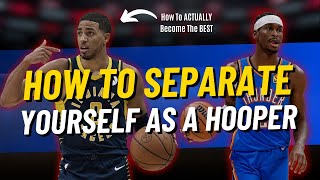
YouTube coaching video by Ethan Khoza ("How To Separate Yourself As A Hooper") that explains three practical, non-physical ways to stand out as a basketball player: 1) competitive stamina — consistently showing up, competing and doing the little things (illustrated with JJ Redick); 2) impact on teammates — communicating, celebrating others, and adding value that leads to more playing opportunities; 3) basketball IQ — perceiving, deciding, then executing (improve by watching games, applying in play, and learning plays/concepts). The speaker also promotes a free Basketball IQ masterclass ("this coming Tuesday, April 23rd") to teach scoring triggers, finishing options, and mindset work.
Chapters
Basketball has never been more competitive than it is right now. Players now are more skilled and more athletic than they ever have been, which makes it more difficult than ever to make it. So if you want to separate yourself as a basketball player and get a leg up on everybody else, there are three things that you absolutely need to develop that we're going to talk about right now. Because while skill and athleticism is at an all time high, these three things are severely lacking. So if you develop them, you'll have something that very few players have. You'll be able to reach levels that very few players can. And make sure you stick around until the end, because I have a free gift for you that's going to help you add points per game to your average, help you to be able to create for yourself and your teammates and allow you to start playing with more confidence. Let's get into it. There's a popular saying or quote or really just kind of a thought. The biggest difference between successful people and unsuccessful people isn't necessarily talent, isn't necessarily luck, isn't necessarily any other factor. Aside from the successful person is the one who didn't quit and the unsuccessful person is the one who did. Successful people continue to get up and show up and go after what they're trying to achieve achieve, regardless of the setbacks, the difficulties, or the amount of time that it might take to get that thing. And people who aren't successful a lot of times quit before they're able to get to the point where they can be successful. So the thought is that a lot of times the biggest differentiator between someone who makes it and someone who doesn't is just the ability to continue to show up every single day, regardless of what might be going on around you. There's truly something to be said when it comes to just the ability to continue to go after something, especially when it becomes difficult. This in basketball is referred to as competitive stamina. So your ability to compete as hard as you can for as long as you can and being able to do that every single day. Here's former NBA player JJ Redick talking about this exact thing.
I always felt though, that I had a realistic sort of approach of who I was as a player. And I always said if I can maximize who I am as a player, player, which is an elite shooter, someone who's better conditioned than anyone on the court, someone who competes every night. I think that's an underrated skill. I like to call it competitive stamina. Being able to sustain your competitive spirit night to night. Game to game, season to season, I was able to do that for 15 years. That's a, that's a skill that not everybody has. And so I kind of, I kind of bought in. Especially early on in my career. When it didn't go well, I just sort of doubled down on that. I'm a competitor, I can really shoot the basketball. I know I have some weaknesses, let me work on those. So what I did was I got, I got stronger, I got in even better shape. I studied film, I learned every nuance of NBA defensive concepts there was. And I decided I've got to be perfect on that end. I may not be able to stay in front of every guy or contest LeBron James shots, but all of the game plan stuff, I gotta be perfect.
So as you see right here, when he got to the NBA, when he was approaching the NBA, there was a lot of things that he didn't have, right? There was things that he would go to these pre draft meetings and these teams would tell him about the things that he's lacking. But he also knew who he was and he understood that, hey, listen, I might not have every single physical gift, I might not be the most talented, the biggest, most athletic, but I'm a competitor and I'm going to show up and go after it every single day. I'm going to study the film, I'm going to do whatever it takes to be, be great. And that was ultimately his key to having a long and successful NBA career. And like he says in this video, not everybody has this ability to show up and compete their hardest every single day. So if you're able to develop that, that will allow you to almost have a superpower over a lot of other players who can only show up sometimes? This is for sure one of the biggest differentiators that I see between great players and average players at every single level is just the ones who are able to show up regardless of what's going on. So whether it's a 9am AAU game where there's nobody in the gym, or there's a state championship game with 10,000 people in the stands, a player with great competitive stamina is going to show up and compete their hardest at both of those events and you're not even be able to tell the difference. And like I said, this is a skill that you can develop. So your focus has got to be, how do I get to a point where every single game, every single practice, every single workout, I show up with an incredibly high level of competitive stamina? I'm Able to show up every single day and give my best, regardless of what's going on, whether or not I was good yesterday, bad yesterday, I've had success. This season, I haven't. I've struggled. I've done great. Can you show up with that same level of competitive nature? And then on top of that, kind of like what JJ Redick mentioned, are you also going above and beyond to do all the little things that are going to separate you? Are you watching film? Are you studying the game plan? Are you making sure that you can do every single thing in your power to be successful? And if you can do that every single day, that will separate you a ton as a basketball player. The second thing that will separate you as a Hooper is your impact on other players. And I want to talk about exactly what this means because it's kind of twofold, but I think it's so important. And is it not only important when it comes to your success and your results, but just in terms of how much you enjoy the game? We ultimately play basketball because it's fun, because we enjoy it, right? Or at least it started that way. And the ultimate goal should be how can I gain the most enjoyment? Because there's so many other things you could do, right? You could do so many other things with your time. But if basketball is what you love to do, we want to maximize our enjoyment of that, right? So this thought is beyond simple. But when you're on the floor, there's something you can do at all times that's going to make everybody else around you better. And it doesn't require you to necessarily be great at anything. In fact, you can be the worst player of the five on your team that's on the floor right now, and you can still make everybody else around you better. And it's just by communicating at a high level. Think of it like this. By providing another set of eyes or just a brain for your teammates around you, you make their job easier. Therefore, you're going to make them more likely to be successful. So if you're constantly making your teammates more successful, that means you provide value on the floor, even if you aren't the best player, just by being able to communicate, giving them another person, another set of eyes to be able to help them do their job, that that makes them better. That that means that you provide value on the floor, which means that you're more likely to have to be on the floor, you're likely to make an impact. And when you provide value in that way, guess what? You're probably going to get more opportunities to do things throughout the rest of the game, right? When you, when you find ways to provide a value that is constant, right when you get your foot in the door that way. Communicating screens, different coverages. So hey, we're switching this. Hey, stay, hey, get over, get under screen left, sweat, whatever. Just communicating through these different coverages, talking about what the offense is doing, like, hey, he's coming down or whatever. Just communicating these things through, helping them anticipate what's coming. So hey, we got a ball screen coming here. Hey, he sent that down screen to a ball screen. Be ready for it. Hey, you guys, we're going to switch that. If he goes. Just being able to anticipate those things, all of that matters. And by you communicating that at a high level, you make your teammate better again, making them more likely to be successful, which means your team is more likely to be successful, means that you provide value to your team. Because ultimately what basketball is about is contributing to winning. If you want to be a successful player, you want to make it wherever you want to make it to the next level, you want to get a starting spot, you need to ask yourself, what do I do that contributes to winning basketball when I'm on the court? Do I help us win games? Do I, do I do things that lead to winning? Communicating at a high level, making others better is exactly what that is. So like I mentioned though earlier, this also includes playing with joy. So do you celebrate your teammates? When your teammates a great play, are you the first one yelling, congratulating them, hey, great shot, great take, great finish, all those sorts of things, Is that who you are? Right? Are you, are you super excited? And do you, do you, do you enjoy your teammates success as much as you enjoy your own?
Right?
Because I think this is where a lot of players struggle, is that they get to a point where they are so focused on themselves and they put so much pressure on themselves to play well and to do well and to score well that they lose the joy that comes from celebrating your teammates. And the weird thing, the catch 22, the paradox of it is that when you get outside of yourself and you stop focusing so much on what you're doing, you start to appreciate your teammates, you start to root for your teammates, you start to be more concerned about how we are doing instead of how I am doing, you're actually going to play better, there's going to be less pressure on you, you're going to just be more in the flow of things and you're going to End up actually playing better. When you get outside of yourself and you focus more on, hey, I'm going to celebrate my teammates success, my teammate success means more to me than my own does, right? Think about the players that you play with, that you have played with, that you've enjoyed playing with the most. Chances are those those teammates are probably very vocal, right? And they probably are very supportive of everybody. Maybe they don't even play that much, but you always hear them on the bench congratulating you on a made shot or on a good play. Those are probably the teams that you enjoy playing with the most. Why not be that person? And when you are that person again, you provide more value. And not only do you provide more value, meaning you're going to be more of an integral part to a team, you're probably going to have to play more, you're probably going to have more opportunities, you're probably going to be more successful. But like I said, it's also going to contribute to you having joy, you enjoying playing. And that's when we really see the best success is being able to look at a player and say, hey, they play with joy, they enjoy the game, they have fun, they're all about their teammates success, the we over me sort of attitude. And that's going to lead to you being at your absolute best, right? So get outside of your own mind and worrying about, oh, how do I look, how am I playing, how am I doing all that sort of stuff and start being more focused on the we and the other stuff is going to take care of itself. It's going to actually go a lot better than it would otherwise, right? Do you genuinely love playing the game and do you express that while playing? Obviously everybody's personality is different, so some people are going to be more vocal than others and that's okay. But at the end of the day, are you so caught up in what's going on with you that you can't get outside of yourself and worry about what's going on with your teammates, right? If you can shift your focus from you more so to how do I help everybody else be better? Whether that means communicating more or it means congratulating somebody or helping somebody when they miss a shot, like be that person, right? And not only going to make them better, but you're going to put yourself in a position to play better as well. The third thing that is going to separate you as a basketball player is basketball iq. Basketball IQ is severely lacking in today's game. And in my opinion, this is actually the Number one, cause of a lack of confidence and a lack of ability to perform well consistently in game. So if you struggle with either of things, if you struggle with performing well consistently or you struggle with your confidence, chances are, and I'd be willing to bet that it's probably because of a lack of basketball IQ in some form or sense of the word. This is because everything is basketball iq. Literally everything that you do on the court ties back into your basketball iq. Think about it as when we have skills. Talk about skills. When you think of that word, you think of shooting, ball, handling, finishing, right? We think of the physical act of doing it, the stuff that you do in your workouts to prepare yourself for games. But actually, when it comes to those things, there's three parts to it. So you have the physical skill of shooting the ball, but you actually have to first of all perceive what's going on. So determine what opportunities you actually have when you catch the ball or before you catch the ball. Hey, that spot's open. Okay, I caught it. Now my. You know this. I have enough space right here to get my shot off. You have to be able to perceive and understand what's going on. Then you have to actually make a decision. So do I shoot this? Do I shot fake and take a dribble? Do I shot fake and drive here? Well, no, there's help there. So I'm going to have to pull up. You have so many decisions to make right there. And then once you've perceived made a decision, then that's when you actually get to the physical act of shooting the ball. Right? So if your basketball IQ is lacking, you're going to really struggle to consistently be good in those first two steps before we even get to the physical act of you doing that skill. Right? So when I say basketball IQ is literally everything, it's tied into everything that you do, that's what I mean by it, because it is every single thing you do in the court requires you to perceive and then decide before you actually physically do it. So if you don't have a solid basketball iq, then the actual physical skills are going to matter much less because they're much less likely to be used effectively. You spend all this time in the gym, practicing, working on your skills, trying to improve, but then you're going to get into game situations and probably not see a ton of improvement. And a lot of times it's because you lack when it comes to basketball iq. So I know as a player, I struggle with this a ton. Like, I put in all this work And I wondered why. Why am I not seeing this translate? A lot of times it's because, yeah, the physical skill you might be getting better at. But how about the first? How about the first part of that? The first two parts of that. Perceiving, deciding, do you make good decisions consistently? If you don't, then you're going to struggle to actually even be able to be in a position where your physical skills matter. Right. Because you might make the wrong decision. So how can you improve your basketball iq? There's three things we're going to talk about right here that I think matter a lot. And like I said, I want to. There's something I'm going to talk about, the end right here that I think is going to help you a ton, like adding points per game to your average. We'll go through all that sort of stuff, but I think it's gonna be really, really important. We'll talk about that when we. When we get to the third thing here, number one, is you need to watch a ton of basketball. So full games, any level, high school, college, NBA, whatever. Watch highlights of players that you find interesting. Watch breakdowns of teams and players and concepts, whatever. The more you do this, the more you're gonna pick up on, you're gonna notice patterns, you're going to notice, you know, what matters and what doesn't. And when you do this enough, you're actually going to start to be able to apply this stuff into your games sometimes without even working on it. Right. I think that there's a great clip, and I'll put it in here now, of Anthony Edwards talking about something that he saw from Luca Garza when it came to like a finishing move with a slow step right there. And I thought it was really, really.
Interesting putting the R and B on the tapes now because that slow Euro that you've been doing, talk about that move that you've been doing when you drive to the. The cup, get the little slow.
Honestly, man, I got that from Luca.
Garza, a big dude on our team. I saw him in workouts. They were showing me a move and he did it. And I was like, okay, I'm going to try that. And the first time I did it was versus Knicks in the preseason.
And it worked.
And then ever since then, I'm just like, I'm just going to slow step every time.
So as you see right there, just watching the game, just observing is incredibly valuable. And you can, you can literally gain solutions and gain basketball IQ that shows up in games just by watching and just by learning from other players. So it's incredibly important that we do that. The second thing that you should be doing is playing and looking to apply these things that we learn. So kind of like what we just talked about right there, you see something go out, go and play and try to find opportunities to apply these things. If you struggle in a certain situation, you struggle when it comes to handling the ball. Go watch somebody that you think is a great ball handler and see what they do and see what you can apply to your own game right there. I think it's one of the best ways to improve is just by watching and then going and playing and learning. Okay, this works. This doesn't work. And understanding things through that way. Right when it's like about becoming a better decision maker, well, the best way is to put yourself in positions to make decisions. And as you do it more, you mess up, you fail, you make the wrong choice, you're going to figure out what doesn't work and then conversely, what does work for you. And that's the best way to really see that improvement and make sure that it applies to what you're doing. The third thing is learning different basketball actions and concepts. I think this is so important, and this is probably the number one area that players lack in understanding pin downs, ball screens, dhos, different types of screens, all those common offensive actions, different concepts like closeouts and creating advantages and dominoes and triggers and all those sorts of things. And then defensive concepts like gap help, weak side rotations, all of that stuff is so important to learn. When it comes to that sort of stuff, there's. I mean, there's so much that's involved with it. I couldn't go into all of it right now in the amount of depth that we would need to. But I do have something that's going to help. So this coming Tuesday, April 23rd, I'm going to be releasing a free basketball IQ masterclass. This is almost an hour long and it's going to teach you a ton of different things. So how to create easy and consistent scoring opportunities. The truth on how to develop a high basketball iq, how to consistently create great shots and increasing your value on the court. We talked about that earlier. Becoming a valuable player, contributing to winning. So that's a huge part of it. Becoming a great score and creator by focusing on triggers and dominoes. So I just mentioned those two words right there. If you don't know what that means, we're gonna dive into that and why it matters. Three options are gonna make you unstoppable off of the catch. So these three things that you need to add to your game that are gonna immediately make you better when it comes to just attacking off the catch in these situations that happen dozens of times guaranteed for you, they happen dozens of times every time that you play. So becoming great in those situations. Three options for finishing around the rim. So talking about how do you actually get there and finish as well, I think it's very, very important mindsets that are going to absolutely change the way that you just play the game, that you approach the game and then a giant bonus in there and then more stuff as well. A ton of stuff that's mixed in right there. And so if you're interested in getting this masterclass, like I said, it's completely free. Just click the top link in description down below and it'll put you right on the waitlist. So on Tuesday when it's live, you'll get an email with a link to it. You'll be able to check it out. So like I said, top link down below, go check that out if you're interested. This is by far one of the most important things that I've ever created and I know that it's going to help you to immediately add points per game to your average, create more for yourself and for your teammates and ultimately just play with more confidence. Like I fully believe that the stuff that you're going to learn there, you'll. You'll easily be able to score more as you play just by understanding these things that are already happening to you. But like I said, you can have all of the physical ability in the world. If you don't really understand the IQ and you don't have that, then you're going to be missing a lot of opportunities. So my goal here is to help you with those things. Like I said, completely free. So click that link if you were interested. Hopefully these tips helped you understand how to separate yourself as a player, how to reach your goals, how to become the player that you want to be. I appreciate you for watching. We should drop a like subscribe if you're new, leave a comment if you have any questions for me. I'll talk to you soon. Peace.
More from Ethan

Stop Using One Dribble When You Drive To The Rim! (How To Become A Better Finisher)









