How To Watch Film In-Season To Maximize Your On-Court Performance (Podcast Episode 84)
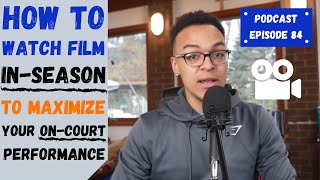
This is a coaching-oriented YouTube podcast episode by Ethan Khoza (Visionary Basketball Training) explaining how basketball players and coaches should watch film in-season to improve performance without overtaxing physical energy. Main advice centers on using a SWOT analysis (Strengths, Weaknesses, Opportunities, Threats) when reviewing your own games and when scouting opponents/matchups. The episode gives concrete examples of what to record (process-focused strengths, specific weaknesses, missed opportunities, opponent threats), tactical items to note (defensive schemes, pick-and-roll and screen coverages, personnel weak defenders, offensive spacing and shot tendencies), and recommends writing key points and visualizing them before games to improve mental preparation and basketball IQ.
Chapters
Foreign welcome to the Visionary Basketball Training Podcast. Appreciate you guys today on Apple Podcasts or Spotify or Pandora, Google podcasts, wherever you may be listening from and everybody who's watching right now on YouTube, make sure you guys, like, subscribe if you are new, new podcast coming every week, sprinkled in with different film breakdowns, workouts, different stuff that's going to help you guys become better basketball players. If you're coaches, hopefully myself helps you become a better coach or better trainer as well. That's the goal, to be able to hit every single category, every single demographic who watches me, because I hear from you guys pretty evenly, like I hear from a lot of different coaches, say, hey, I listen to your podcast, or hey, I watch your videos and also from players. So it's great that I'm able to reach both. And I guess kind of going with that just started on my, on my book that I'm writing. And honestly, that's all I really have in terms of updates on it that I started it because I don't know exactly what it's going to be yet. I have kind of a concept in my mind, but I don't know where exactly I'm going to take it. I don't know how long it's going to end up being. And there's a lot of stuff that's still kind of unknown. But, you know, sometimes that's what it's about. Sometimes you don't have to have the exact plan, you know, down in your head when you start something. Sometimes it just kind of all sorts itself out. So that's where we're at right now. But I'm really excited to get that to you guys. And again, it's going to be something that's going to be helpful for you as a player, if you're listening, but also if you're a trainer or a coach as well. I think there's a lot of really, really good stuff inside of that that's going to make you better. And so it's really a ton of what I've learned as, you know, both from a player's perspective, but also from a coaching trainer perspective. And I really look at it as like something that I wish I would have had when I was, you know, younger, when I was a player or when I was just starting out or all that sort of stuff. So really, really, it's sort of me trying to give back in that. In that sort of regard. So, again, I'm excited to give it to you guys eventually. So be on the lookout for that. But anyway, hopping into today's topic, you know, the season starting up has started up for a lot of you guys already. I know that. And, and I think a big part of being in season is understanding what ways you can still get better. You can still maximize your performance, while also understanding that you don't have unlimited energy, okay? So you can't necessarily go out and do, you know, some super intense workout every day if you have practice, you have a game or whatever. But you can also, you know, you can make sure that you, you are maximizing the ways that don't make you expend energy physically. So we're going to talk about watching film today. I think film is one of the most important parts of being the best you can be as a basketball player. And again, this is going to, I'm going to kind of approach this from a player's perspective, but for trainers, coaches listening, this is great stuff to instill into your players or when you're watching film with your players, stuff that you can look at as well. But from a player's perspective, there's so much you can gain from watching basketball in general, but specifically watching film that pertains to you. So we're going to talk about it from a different perspective. Talk about watching your own games and how you can kind of go through that and gain a lot of valuable insight from that. But also when you're watching teams that you're going to be playing, so scouting different teams and seeing, you know, basically trying to give yourself an advantage come game time, you know, I think a parallel is like. And it's more like football. And it's more like football. Film is so, so important, right? These quarterbacks are spending all this time, like, you know, the great quarterbacks spending hours every single day just watching films and, okay, how, how the defense look when they run this sort of coverage, okay, what is this guy liable to do? What does that safety like to do? What does that linebacker like to do when they line up like this, what does the blitz look like? Do they ever disguise their blitz coverages, all those different things that they learn from watching film. And I think as a basketball player, if you really want to be, as the best you can be, you want, you want to prepare yourself the way that a quarterback would prepare themselves when it comes to football. Okay, so that's kind of a parallel that I wanted to make, but kind of hopping into it. The first part of, of understanding how you watch film is just understanding first of all, what, like, what are you watching? Right? So Is this you? Are you watching your game that you played last night or are you watching an opponent that you're playing tomorrow? Okay, so when we talk about watching yourself, we're going to go through this in what's called a SWOT analysis. So this is just kind of the, the general analogy you can use for how you can watch film. And we'll approach both, both perspectives again. But a SWOT analysis just stands for strengths, weaknesses, opportunities and threats. And generally, you know, a SWOT analysis is something that's used pretty commonly in, like, businesses and for stuff like that. But we can use this at a basketball perspective as well. So the first part of that, when we're talking about watching your own film, so watching your game from last night, we talk about the first part, the s. So strengths, what did you do? Well, right. And you can make this part really specific. So, you know, maybe you use ball screens. Well, maybe you did a great job of hitting the roll on the ball screens. Or, you know, maybe just in general, the reads you're making on the ball screen are really, really good. And then, you know, maybe you did a great job of driving and drawing and helping kicking to open teammates. Maybe you did a really, really good job of that. Maybe you did a really, really good job of relocating while your teammates were driving so you could get wide open threes. Or you did a really good job of running in transition and getting some easy points that way. That's, that's something for you to look at. Maybe, maybe you did a great job in help, making sure that you were in help early so that you were able to prevent giving up a couple layups when your teammates got beat. So there's some examples of looking at your strengths when you first, we first talk about the first part of that SWOT analysis. So again, being as specific as possible when you do that so that you really can pinpoint to yourself, okay, I did these things. Well, it wasn't as, oh, I shot the ball well. Well, what led to that? Like, what can you repeat? What sort of actionable steps can you take? Because we don't want to look at it from just an outcome goal like, oh, okay, my strength was I had 20 points. Well, that's an outcome. Like, we can't just say, I'm going to go and have 20 points. We had to say, okay, what's the process to actually getting there? So what are the process. Like, what was the process that you did well, that led to the outcome that was good? So think about it from that perspective instead of Saying, oh, I shot the ball. Well, what? Well, it's because I made sure I relocated when my, when my defender went in to help so that I could get a wide open pass from my teammate and I hit the shot that way. Or I did a good job of making sure that I found the open space in the zone so that I was able to get a couple open threes. And now we've had, now we actually have the process you can repeat to get that desired outcome again. Okay. So specific as you can be with that and then moving on to the next the W, which is weaknesses. So what did you do poorly? Again, trying to be specific with this. Okay, maybe you didn't do a very good job of recognizing when your teammate was open on the roll, right? So maybe you missed them a bunch of times, or maybe you had teammates who, you know, were posted up and you didn't even look at them. Maybe you had, they had a wide open seal and they could have got an easy layup, but you just missed them a couple of times. So maybe those some things you did poorly, maybe you had an opportunity to, you know, shoot a couple of shots and you passed them up because, you know, for whatever reason you didn't realize that you had the open shot or in that same kind of regard, maybe you would have had an opportunity to drive and you missed it because, you know, for whatever reason, you just weren't thinking about it. So you can look at different things that you did poorly, again, trying to be specific with those things so you can improve on them for next time. And then opportunities. So what opportunities did you have that you missed out on and which ones could you have taken advantage of more often? So again, maybe when maybe they kept on blitzing you on the ball screen and, and had you been quicker, you would made it, you might have been able to dump the ball down to that roll guy and he might have had a wide open layup, right? Or again, like we talked about earlier, maybe they were switching a lot of screens and your teammates were sealing on those screens and you didn't see them, so you missed the opportunity to feed them and get open shots. Maybe their, their team was really, really bad in help and their help didn't rotate over very quickly. So you would have had opportunities to actually drive if you would just, if you just could have got past your first offender. You had to lay it every single time, but you didn't think, think about that, right? So there's some different opportunities that maybe you missed out on or maybe that you didn't take advantage of enough. And again, that that might have led to you playing even better than you could than you did then, because you missed those opportunities. So the third part of that SWOT analysis is recognizing those opportunities that you missed. You know, you can even look at it from like, you know, maybe on the pick and roll, they were switching a lot of things and maybe there was a couple of matchups that either you could have taken advantage of, maybe you would have had a big on you who maybe was slower than you and you take advantage of it. Or maybe the, the, you know, the big who set you that ball screen, maybe when they switched it, he would have had a really small guard on him and maybe he kept sealing or maybe you should have looked for him, you didn't see him. And he probably would have had a couple, you know, kind of easy post ups and maybe that was an opportunity that you missed. So you can even look at it from like a perspective of foul trouble. Was your defender in foul trouble early? Should you have maybe gone at them a little bit more, knowing that, oh, they've got two fouls in the first half, I got to go at them maybe, and they have to either let me go because they can't pick up a third foul, or they're going to pick up a third foul and have to go back to the bench, right? So there's another opportunity for you. Maybe there's a certain person on the floor who's in foul trouble and you miss an opportunity to go talk to your teammate and say, hey, your man's in foul trouble, so you got to make sure you go at him, okay? Or hey, guys, we got to make sure we get him the ball because he's in foul trouble. So we got to make sure we go at that guy or if you see that guy's coming over and help and you know, I got to go at this guy because he's in foul trouble. Right. There's different opportunities you can see on film. Maybe you didn't think about when you actually were in the context of the game. So then the fourth, the fourth part is threats. But actually I want to save this for the next scenario we're going to talk about, which is watching the other team or scouting, Right? So scouting for your game tomorrow. And this can be watching the other team in general and also watching the matchup you're going to have. So if you know that you're matched up on number two, then you can watch specifically for number two and do a SWOT analysis on that specific Player that you're going to be guarding? Okay. I think it's probably a good thing, especially at, you know, at like the high school level of doing this for the whole team and then also picking up a few key points of the player you're going to be matched up with or the players maybe that, you know, you're primarily going to be guarding. So when it comes to that, so strengths, like what do they do well? What does that team do well? Do they move the ball well? Do they have maybe a post player who's really good? Do they push the ball in transition really well? Do they get to help early? Like, are they really good as a, you know, and help defense? Do they do a great job closing out and taking away three pointers and running, you know, guys off the three point line? So that's one thing. And again, you can look at that from an individual perspective. What does number two do really well? Does number two do a great job of, you know, attacking closeouts and getting into the paint, getting paint hudders in addition to teammates? Do they do a great job of pushing the ball ahead in transition? Do they, do they do a great job of crashing the offensive boards and getting easy points? Do they do a great job of drawing fouls? Right, so you can look for those specific strengths that they either the whole team or that individual matchup does well. And then when you look at the weaknesses, right, the second part. So what do they struggle doing? Does that player you're going to be guarded, do they avoid going left? They always go right. Well, now you have something you can potentially exploit. It's okay that that guy wants to go right as much as possible. So I'm going to try and shade them to go left. At the very least, I know that if he goes right, he's playing at about 100% of his capability. Right. He's very comfortable doing that. But if I force him to go left, maybe he's only playing at 75% now. So I've just made him a worse player just by knowing he wants to go right. And now I force him going left and he's less comfortable, he's less likely to make a play when he goes left. There's an example of why it's important to be able to look and know the weaknesses of the players you're going to be playing against. Does that player avoid going to the rim? Are they just a shooter? They just want to stand outside and shoot? If you run them off the line, they're not comfortable going to the rim. Not comfortable finishing whatever the case may be. That's another thing that would be important to know. And on the other side of that, do they avoid outside shots? Do they always want to get downhill? They just want to get to the basket. In which case you might want to play to that and, and give them a little bit more cushion on the outside when you close out so that you can take away their number one strength, which is getting to the basket. Again, them getting to the basket is them playing at a hundred percent of their comfort level, 100% of their ability. You force them to take outside shots might be them playing at 70% of their comfort of their comfort level or their, their capability. Okay, so we want to make sure that we, we take away that a hundred percent comfort level and we make that 70 or less. And that is the way you do that is by forcing them to do what they're weak at. But to do that you first have to understand it. So that's why it's important to watch and really look at and say, hey, what do they do well and what do they not do well? So that you have that idea in your mind. So then the third part becomes opportunity. So what opportunities will you have against this team? Where are you going to get your opportunities? Maybe they always force middle, right? Maybe just the way they close out, they force middle. So you know, hey, you know, if they're going to force me middle, that means I'm going to be able to drive, get into the paint. Maybe they're going to collapse. I'm going to have a lot of driving kick opportunities and so my team is going to be ready to catch, shoot the ball. But I can create for my teammates because they're going to force me middle so there's an opportunity. Maybe they are really, really bad in help. Maybe they don't rotate and help very well. So you know, hey, if I beat my primary defender, I'm probably going to be able to get all the way to the basket because they don't rotate over and help or they're going to be late and I'm probably going to get fouled. So there's another opportunity that you may have. You may see that your matchup is a lot smaller than you. So you know, like, hey, if I'm setting a pin down or whatever and I have the opportunity to turn and seal towards the basket, I'm going to be able to catch and then have a post up situation against a player who I'm stronger than, I'm probably going to get fouled. Or, you know, get an an one. So identifying that sort of opportunity as well, you know, are they bad at. In transition, you're going to be able to push the ball ahead or leak out and be able to get easy buckets that way. Do they jump a lot on shot fakes? Are they super, super aggressive on defense? And if you do a shot fake, they're going to be jumping forward every single time? Do they foul a lot? Are you going to be able to get the free throw line if you get to the basket and then go shot fake? Are they going to jump every single time and foul you again? It's important to know those opportunities you're likely going to have through just watching what they've done already, right? That guy who you're going against, who's probably gonna be guarding you, what do they do on defense? Do they foul a lot? Are they super over aggressive? Are they super lazy? Do they not close out very well? Are they bad and help. All those different things are important to note. And then we talk about the last part, which is threats. Where will they be a threat to you? Right? Where could they potentially be a threat to you or your team? Do they press? What kind of press do they run? Do they like to trap in that press? That there's one thing to know. Do they trap in the half court? Are they super aggressive? Do they peel guys off to try and force the ball out of somebody's hands or whatever? Maybe if you're the best player in your team and you watch the game that they just played against another team, maybe you know that the best player in that team, maybe you know who that is. And you see that they constantly are throwing doubles at that player. So now you might have to think in your mind, like, oh, that might happen to me, like, they might throw me some doubles. So what do they give up, Right? Oh, I see. Whenever they, whenever they throw that double team, if I can get the ball opposite, I'm going to have a teammate who's wide open. So now, you know, when that double potentially comes to you, you already know what the, what the answer is. You know, what the right decision to make in that situation is, and maybe you can even see it coming early and you really can get a jump on their rotations and all of a sudden they can't double you anymore because you're already a step ahead of them. So important to identify those potential threats. We talk about them on offense. Do they run a specific play to get somebody going or do they put somebody in a position to Try and get them going when maybe they aren't doing much. It's important that again, you can potentially identify that early as well. And you know, again, that's where threats come into play. So you're prepared for anything that might happen to you in the context of that game. So now let's talk about just some really specific tangible things, tangible questions you need to ask yourself while you're watching that film. Okay, so if you're going through watching film, these are the important things for you to look at, the important questions for you to answer. So we talk about the other team's defense or again, if you're watching that specific player that's going to be potentially guarding you, what defense do they run? Do they run a man defense? Okay, are they super aggressive in that main defense? Are they always playing like right on, right on the ball? Like are they up in that ball handler space? Again, do they trap out of that man? Do they, are they super, super aggressive in that regard or are they more laid back? You know, they're kind of hanging out just at the three point line, like they'll give you some space, like they're not going to be pressuring you very much. Or do they run a zone? Are they running a 2, 3, a 3 2, a 1, 3, 1. What do they do in that zone? Can you hear any calls for that? Maybe they have a certain call that would let them know when they're going into that certain zone. So somewhere for you to look at defensively, if you're somebody who uses pick and rolls, identifying how they guard, pick and roll. So do they always play under it in that case, maybe that gives you the opportunity to hit that three, if you're able to do that, do they play over that screen? Well, if that's the case, how does that big play? Does that big always drop? And if that's the case, maybe that gives you an opportunity to, you know, maybe hit that mid range shot or it gives the opportunity to maybe attack that big if they don't drop very far. Or maybe that means that your, your defender or your, your screener is going to pop and you're going to have that, you're able to hit them on that pop. So identifying how they guard that pick and roll, both your defender and the, the big's defender. And obviously if you're the one setting the screens, then it's important for you to know that as well. Going with that, how do they guard pin downs or you know, away screens? Do they always switch? Do they always play over it always play under it, you know, do they, do they miscommunicate on that a lot? And if that's the case, like are they chasing you? Maybe, you know, okay, if they're chasing me over the screen every single time, maybe I'm going to be able to get to the basket on a real tight curl and potentially get either a layup look or maybe a post up opportunity. It's important to identify what opportunities you might have coming off of those pin downs as well. And then we can also look at, you know, do they switch things? Are they a team that switches a lot? So for example, if they switch on those pin downs, but maybe you're going to have an opportunity to seal and if you know that, hey, they're going to switch this and I'm going to have a smaller guy on me, well, I'm looking to seal right away and then call for the ball so I can get a little post touch and potentially an easy layup or a foul. So important things to look at when it comes to screens. How do they guard the other team's best player? Right. This obviously applies to you, especially if you are the best player, one of the better players on your team. How do they guard those, those best players? Do they face guard them? Do they not help off of them? Do they, do they just treat them like every other player? Maybe they don't switch any screens with that player, but they switch screens with every other player. That's something that's important to know as well. What shots do they allow? So do they, will they give up, you know, threes off a driving kick? Like are they really heavy in help and they're willing to give up those threes or maybe they aren't that heavy and help and they just rely on everybody being able to defend one on one. And so they're not going to give up threes off of a driving kick, but maybe that means they're going to give up potentially more layups because guys might get beat on the perimeter. So it's important to look at what shots they allow, what shots are more likely going to come to you in the flow of the offense. So then the next thing is how do they guard threes? So kind of talking about that, like are they super up in everybody's face? Are they running people off three point line or are they kind of weak on their closeouts, kind of giving up those threes? Do they play over ball screens to try and take away threes? Do they blitz ball screens trying to try and take away threes Those are important things to know as well. How is the help kind of talking about that again? Like do they get in help early outside of the paint to take away that layup opportunity and force a kick? Or are they really relaxed, really late, really lazy and help and you're probably going to have an opportunity to get to the basket more often because they're not good in help. And I think the other thing to, to be able to pinpoint is who the weakest defender is. Are there any defenders on the floor that are just not good? And if you know that, then again if they end up switching that defender on to, you got to know, hey, I got a bad defender on me, I got to take advantage of it. But that's why it's important for you to know personnel by watching that film so you can identify, hey, that's a bad defender, that's a back, that's a bad defender. In the film I watched, they always went at that guy and he always was getting burnt. So I know if I have that guy on me, I got to go at him. That's important to know as well. And then switching over to offense, what kind of offense does that team run? Do they run a four out? Do they run a five out? What are they doing that offense? Are they pass and screen away? Are they, are they, do they use a lot of ball screens? Do they set a lot of, you know, do they run a flex offense? And is it really just a continuous action, continuous motion? Like what does their offense look like? What kind of shots do they try and get? What shots do they want to take? And that's important for you to know. And then do they have good spacing in their offense? And what defenders do they target? So are there, are there certain defenders that you know they, they're going at or there are certain players in their team that they say, hey, you can go at that guy, maybe that player. Whenever they get the ball in the wing, they always are jabbing right and trying to drive middle. Or maybe when that player comes off of a ball screen, they're always trying to shoot the three or shoot the mid range, pull up, whatever. Trying to find patterns throughout their offense are going to help you to again just be one step ahead of them. And potentially again, like I said, the goal is to take whoever your matchup is from being at 100% comfort level to get getting them to 70. So if you know, hey, they really want to do this, I'm going to force them to go to option number two. That's Going to take down the comfort level that they have and probably make them perform a little bit worse. So it's important that you know those things as well. So, again, some real tangible stuff that you can look at. And I really encourage you to, like, take out a piece of paper or notes on your phone or whatever and just kind of write some stuff down. Write just some key points down. So that way, you know, maybe that's the night before the game, and then when the game gets there, maybe on the bus ride there, or maybe, maybe right before the game's going to start, before you guys get warmed up, you can kind of look through that again and just be like, okay, that's the point. I need to remember this is what it's going to be here. And the other thing going with that is that when you know these things, when you know, okay, hey, they give up these sort of shots, or, hey, they. They always switch this, or, hey, they always play this like that. And we kind of. You're about to identify your opportunities like we talked about, then you're able to sort of sit there and almost visualize it right before that, before a game happens. You can visualize and say, okay, I see myself in this situation, going through this and really feeling yourself taking advantage of those opportunities that you're probably going to have. That's the power of watching film. And then writing down those key points and being able to just kind of go through that in your mind, and you're going to see that your performance is going to be drastically better when you're prepared like that. It's not only about being physically prepared, but it's also about being mentally prepared as well. And you do that by watching film and by, you know, by making sure that you prepare yourself as much as you can, okay? And when it comes to, you know, basketball IQ and all that sort of stuff, everyone hears, you know, LeBron, or people talk about LeBron, how LeBron will just call out people's plays before they even run them. He'll hear a play call and say, hey, that guy's going to do that. And he's gonna do that. He's like, that's why LeBron's one of the best ever, is because LeBron has that basketball IQ. But I guarantee you, LeBron's a quarterback, right? LeBron's spending a lot of time watching other teams play like LeBron, spending a lot of time preparing himself, understanding the strengths of the other team, the weakness of the other team, the opportunities that he's going to have that that the other team is looking for and by doing that it makes the game way way easier for you. Things slow down and you're prepared for a lot more. You're a much more effective player. So again film is so important. Hopefully you guys have taken some stuff from this as well. I appreciate you guys listening on Apple podcast Spotify you guys are on on Apple podcast right now. Do me a favor, leave a review let me know what you think about the show. If you guys are on YouTube drop a like subscribe leave a comment for me. Let me know what you think, what you want to see moving forward. If you guys have started your seasons already, let me know how your seasons are going so far. That'd be great to know as well. And if you guys are not following me on Instagram, do me a favor and do that as well. My Instagram is at Vision Driven Basketball and again I appreciate everybody who's tuned in supporting. I'll talk to you guys soon. Peace.
More from Ethan

Stop Using One Dribble When You Drive To The Rim! (How To Become A Better Finisher)









