How To Watch Game Film Like A Pro - Basketball Film Study (Breakdown)
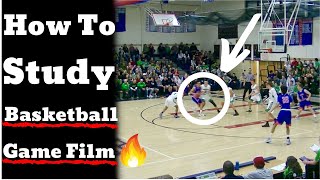
Ethan Khoza (YouTube creator) explains how to watch and break down basketball game film to improve performance. He emphasizes that basketball relies on both muscle memory and mental preparation; film study trains the brain to notice patterns, fixes, and repeatable advantages. Using clips from his own senior-year high school playoff game, Khoza shows how to prioritize errors over highlights (recognize mistakes like poor spacing, missed splits, traveling, and failure to contain on the baseline), plus how to reinforce positives (spacing, back-cuts, reading help defense). He also stresses taking written notes and using a scouting/game plan mindset. Calls to action include subscribing and joining a free private basketball training group linked in the description.
Questions this video answers
Ethan Khoza
February 7, 2020
Clips from his senior-year high school playoff game
Chapters
What's up, guys?
Coach Ethan here.
Today we're going to talk about how to break down and watch game film. Now this is a question that I get pretty frequently and I wanted to.
Make sure I made a video on.
This because it's very, very important that you watch film. Now understand that basketball is all about muscle memory. You know this. That's why we do all these drills, that's why we work on our shots so much. That's why we do all these things to improve, to improve our muscle memory specifically. But you have to understand that your brain is also a muscle. The more that you work it, the better it gets. And watching game film is a great way to work your brain to be able to understand the game better and for you to be able to improve game to game by basing what you're going to do off of what's worked for you, what hasn't worked for you. And a lot of times it's difficult to remember everything that happens in games. Honestly, it's difficult to see everything that happens while you're in the spur of the moment during the games.
So I.
So watching game film after is a great way to make sure that you don't miss anything, that you're able to take what you did well and what you did poorly and improve on those things to be able to keep on leveling up and moving forward. So we're going to break down how to do that in a minute. But first I wanted to talk about specifically, what do we do when we watch game film? Right, because this is something that players don't quite understand all the time. Is that the difference between watching game film and watching highlights or watching a mixtape or something, it's very different.
Alright.
When we watch game film, really we're more so looking for what we do wrong than what we do right. We're not watching it to see where we crossed up a kid or where we hit a three or where we dunked. That's not the important thing. Those type of things obviously have their place. But when we watch game film, we specifically want to watch things that are going to help us to improve. And being able to do that means being able to find the points where we mess up, where we do something less than our best and figure out what it's going to take to improve on that. So today I'm going to take you guys through some of my own game film from when I was in high school. We're going to go through how I break it down, what I look for and my Methods for taking what I see and improving upon it. Now, I'm telling you guys, watching game film is such an important part of.
Being a great basketball player.
The best players are the ones who don't only have it physically, but have it mentally as well. And if you're missing the mental part of it, you're going to be leaving so much on the table. Before we get into it, make sure you guys are subscribed. I'm dropping new videos all the time. Don't miss anything. And I'll tell you guys again, but in the description below is our private basketball training group where I'm giving you guys free workouts, personal coaching, and a ton of exclusive stuff. 100% free. Just click the link in my description and join. And let's get into the clips.
All right, guys, so today we're going to break down some film from my senior year of high school. This game is one of my playoff games. And just a little bit of a background. We're up by 20 right now. It's the third quarter. We're the team in blue. We're bringing it down. I'm on the left side of the floor, on the wing. You'll see me in a second. And when we talk about breaking down film, guys want to make sure we look at both the good and the bad, really especially the bad, because we want to be able to take what we did poorly and improve upon it so that our overall level of our game increases. But at the same time, we want to take what we did well and build on it, continue to do those things well. So it's also important to break down good things too. But you really want to take what you did poorly and be able to improve upon it to kind of eliminate your weaknesses. So we're gonna first look at a bad clip of mine and we're gonna talk about what I could have done better and why it's so important that we break down the film after. Okay, so we'll go through. I'm here on this left wing dribble handoff right here. Try and get to the middle. My guy does a good job getting me there. Boom. Turn this way. Ref calls the travel, doesn't like it. Alright, I disagree with that travel call. But in my state, that's how they call it. So I gotta do a better job here. Let's look at it a little bit slower. So my guy comes down here, hands me the ball. I try and get myself to the middle, alright? And my guy does a good job, cuts me off. Boom. Crossover Right here. Now we pause it right here. I have my guy beat right here. I've got to do a better job of getting to the middle right here because he's on my hip. So currently the defender who's right outside the paint really isn't in a position to stop me. If I get to the middle, I do a good job getting downhill. Now, if he does step in and stop me, then I would dump off to my teammate who's right next to him and we'll have an easy layup if he doesn't get there. But that defender on the wing comes in and crashes. For that help defense, I can kick it right out to one of our three point shooters on the win. So really, with this possession, we should have gotten an open layup or an open three pointer. That was how it should have worked out. I got to do a better job of recognizing this situation. I'm not really sure what I was thinking here, but again, this is a situation where I didn't really recognize this during the game, but going back and watching it after, I can look back and say, man, I got to do a better job with this. That's the importance of watching film. You don't always remember every situation you go through in a game. And I remember a lot of things about this game, just not this particular situation. However, it's very, very important that I do a better job of this the next time I find myself in this same situation. So I come off here and I was going to make this pass to number two on the wing until I recognized that his guy was in the passing lane. I didn't see him until I got there, but at that point I had made my mind if I was going to pass, picked the ball up, took that last step with my right foot and ref calls a travel on it. Again, I disagree with the call, but it is what it is. I got to do a better job of not picking that ball up once. I'm 100% sure. So at this point, if I miss that split, that's fine. I just got to dribble this ball back out live to play another day. But that's the importance of watching film. We can find all that stuff just from a little six second clip right here. Okay, so right here we're in the fourth quarter, kind of in the middle of the quarter, and they're getting super aggressive, trapping everything. So right now we're beating this full court press and we'll take a look at another time where I messed up. Once we got the ball across half court. So ball comes into me on the wing, back to the middle, goes back to me, boom, move it forward. Now this ball comes back to me up top. So immediately the issue right now is that we don't have anybody on that opposite wing on that right kind of high wing slot area. We have a guy who cuts down through, but then our guy on the far wing doesn't replace up to the top. So I don't really have anybody to throw it to right away. And the issue right now is that I have a split available. So these two guys coming to trap me, maybe I give them one or two more seconds to come at me, but then I have to split that right away and you'll see as we keep on going. So they get here for me, boom. And I've got to make sure that. So if I don't have this pass, this is a tough pass to throw. You know, the guy right in front of me was pretty, pretty big long arm. So getting that ball above him will be tough to do. So that comes there, that pass fake to the wing, got him to jump and immediately I would have had that split right in between them, probably would have had a wide open layup. But again, I had to be smart here, recognize that at this point it's too late, they're too close to me and now everybody's coming up to the wing too late. So we're gonna have two or three other defenders additionally who are gonna be right there. And so a couple things we could have done here actually is if our guy in the corner would have cut to the basket, I would have been able to see him and we would have had a wide open layup right there. At the same time I have to make sure that I recognize that split and get through it. And then again we have a wide open layup. So here's another situation where I didn't do a great job of recognizing what advantages I had and when to take them. And that cost our team the ball through at that point, had to force a tough pass, gets tipped and I believe we went down and got fouled. So got to do better with that. Alright, so here's an example of something good. Now what happens right here is we're running a play in order to try and get me a three point. Look, that play doesn't work. But then we go into our offense and because we properly utilize spacing, we're able to get an open 3 to end the quarter. Let's look at it. So he's going to come off this screen, I'm going to get screened to the outside. That's not. There he comes, drives towards me. Now, my man comes over to try and take away this look, almost like a soft hedge. But he really is kind of in no man's land right now because he wouldn't be able to contest this shot shot regardless. But what I recognize right here is that my man's back is turned towards me, therefore he has no clue where I'm at. There's another guy on my team in the corner right now. So it's really a two on one over there. So if 21, who's in the bottom right there, wants to guard somebody, he's gonna have to make a decision, either me or the guy who's in the corner. Now, our guy who has the ball recognizes this, and as soon as he gets closed out on, makes this pass right here. Boom. Easy shot, wide open. Three. All about spacing. So this is again something that you recognize as you watch more film. You understand where you should move in relation to where the ball is. So something that a lot of players struggle with is that the ball will come towards them and they'll just stand, right? But if the ball comes towards you, you either want to space out or you want to back cut. In this situation, there was nobody on the wind to guard me, so I spaced out, got an open look because of it. But there's other situations where a back cut might be appropriate. For example, if there's a guy close up on the wing, or if there's absolutely nobody in the paint, or if we had a little more time, there's only about five seconds left when this happened. So we take that look that we can get. But understand, this is things that you're gonna learn as you watch more film. So here's another situation where recognizing spacing and when to move got me an easy basket. And knowing where my guy is, where the opening is, is super important. And another thing that I'm able to pick up by watching this on film. So this ball comes inbounds back to the inbounder, brings it back to my side in the wing. Now he gets here, and my guy brings up traps. So he's honestly got three guys on him right now. I recognize this, and I drift down towards the wing and look at this. I basically have that entire half of the floor to myself. So if he's able to get this pass to me, then we're going to have a two on one on the back end because we have our guy in the Corner. So if I get this ball and I go to the basket and not have an open look, I can kick it up to him. We got one of our best three point shooters wide open for a three. So this ball comes to me down the wing, I see that there's one guy, the other guys don't get really good into help. And boom, easy layup. So that's another situation. Recognizing spacing, where to go. The ball handler dribbles towards me. My guy turns back to me to go and trap. So I space out more to give my guy a passing angle and boom, he hits me. Easy layup. So if you've watched my videos before, then you've heard me talk about the importance of knowing the scouting report and knowing the game plan that your coach and your team is following for that day. So here our game plan was, one of their guys on their team was their guy. He was really, really good, really talented. He's the guy with the ball right now at the top who's about to get a screen set for him. And we understood that we wanted to try and do our best to give as much attention to him as possible and make the rest of his team beat us. So we always were focusing on where he was and our main objective was to stop him. So he has a screen right now at the top and he goes over to the wind. Now you see me down in the right corner and we'll get down and see, here's a situation where I've got to do a better job containing him. So he comes down, they switch. Now all of a sudden we have a pretty good opportunity to trap him in the corner right here. But I don't do a good enough job getting my foot to the baseline to make sure he doesn't have space to get around me, right? And for guys who aren't as quick as he is, this might be good enough. But a guy who's that quick, you have to understand that you've got to get there and contain him. So I give him a sp. I give him space right there to get through. And he does that and he scores easily because I didn't do a good enough job keeping him contained in that corner, as you'll see down here. Boom. And you see, that's the issue right there. You can see there's a little bit of space in there on that baseline. And he's able to split right through. And now all of a sudden he gets past us. And his guys got our other health defenders sealed at that point. Easy layup. So now I know next time I'm playing, especially against a guy like that, you got to get your foot all the way to the baseline, make him have to split that trap, because even if he does split that, chances are he's going to split it right into the help defense. But if he gets baseline like that, we didn't really have help defense that were low enough in order to be able to stop him right there. So I got to do my job better. And again, another reason that we watch film, to recognize what we can improve upon and to build on that.
The last thing I'll say to you guys is when you're watching yourself on film or really watching anybody on film and trying to break yourself down like we just did in the video, make sure you take notes on it. It's one thing to think about it, but you have so many thoughts per day that really thoughts can be in one ear and out the other, literally. Okay?
So you have to understand that writing.
Things down is going to kind of cement it in your mind. Right now it actually exists because you wrote it down. So I really highly recommend that you guys, when you watch your film, break it down like we just did, recognize what you can do better, what you can and what you did well. But write those things down, take notes of them. So that way, when you get to the game again, muscle memory, that thought that you had of what you did poorly need to improve upon, and what you did well, that cemented into your mind. And that's going to help to speed up the process which you improve. And that's really going to increase how much film helps you as a player. Now, this video was really more so breaking down yourself on film. If you guys want to see me break down some other players, maybe some NBA guys, first of all, let me know who you guys want to see and I'll definitely get that for you guys. If you enjoyed the video, go hit.
That like button and subscribe as well. I want all you guys right now.
To click the link in my description below. Join our private basketball training group where I'm giving you guys free workouts, personal coaching for me, and a ton of exclusive stuff. And like I said, link in the description below. 100% free. I'll see you guys in there. Like I said before, if you enjoyed the video, hit that subscribe button, this little black button right here to make it easy. I really appreciate it, guys. Thank you. And like I said, drop a comment for me below and let me know what you guys want to see. That's it, guys. Peace.
More from Ethan

Stop Using One Dribble When You Drive To The Rim! (How To Become A Better Finisher)









