If you got cut from the team last year...watch this.
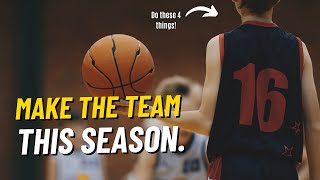
Ethan Khoza breaks down how to make the team after getting cut. Show up in peak condition, know your role, stay positive and communicative, and improve your basketball IQ through better shot selection and decision-making.
Chapters
If your goal is to make your basketball team this year, this video is going to help you out a ton. I'm going to give you the exact tips right now that you're going to need to make the basketball team this year. Specifically, I want to speak to players who maybe got cut last year. They want to know, hey, what can I do differently to make the team this year? How can I approach it differently? What do I need to change? What should I be focused on? And that's who I'm specifically speaking to. But even if you just are looking for tips, this will help you when it comes to just doing the best you can at trials, give yourself the best possible chance making the team. Like I said, as we get into the fall, a question that I get a lot is players asking about, okay, what should I do this year to maximize my chances of making the team? First thing, obviously, we should talk about is making sure that you are putting in the work. So you're focusing on improving your skills, being in the weight room, getting stronger. That stuff is obviously a prerequisite. And you understand that, hey, if I want to be the best player I can be, I should be doing that sort of stuff. So that kind of goes without saying that obviously, you should make sure that you have your plan in terms, okay, what am I doing for my workouts? I'll link a video above that'll help you with that if that's something that you don't have a good grasp on. But that's kind of like point zero right there, or, you know, level. Level zero is making sure we have that sort of stuff done. But what I want to do is I want to give you some, like, really, really tangible things that you can do right now and start to prepare yourself with in order to make sure that you give yourself the best chance of making your team, of making a great impression and showing that you're a player who can help the team and. And contribute to winning. So, number one, I think this is really, like, the most controllable thing, but you need to be in incredible shape. So like I said, this is something that you can absolutely control, right? There's a lot of things that can happen in a tryout that you are at your hands, a lot of things that. That you don't have any sort of say in that will kind of just happen. When it comes to how in the level of shape that you're in, that's completely up to you. And so we can do a couple things when we talk about this. Number one, I think the best way to get into shape for basketball is by playing basketball, right? So how often do you play, like full court, five on five, like, can you do that as often as possible? And ideally you want it to be like, you know, good runs where people are actually, you know, trying and it's difficult for you. You got to play on offense and defense. Can you do that for, you know, a few hours a week? Right. That's. That's one of the best ways to get in shape. And obviously it's great because you're also improving your abilities as well because you're playing, playing. But you can also supplement that or if you don't have access to that, you can also do different sorts of workouts to be able to get yourself in shape. I'm going to link a video above that goes into like a workout that you can do to get yourself into shape. And it's actually one of my most popular videos and, you know, people really seem to enjoy it and it helps a lot of people out. So point number one, like, be in great shape, right? Don't let that be a limiting factor for you. Don't let anything going on be. Be stunted by the fact that, oh man, I'm really huffing and puffing and I can't keep up here. Like, you should make your goal to be the most in shape player at that tryout and it's going to make everything easier for you. And it's a very impressive thing to coach when they see that you're already in shape as tryouts get here. So like I said, that's one thing that's absolutely in your control that you should make sure that you get done. Number two is you want to be self aware. This is where I think a lot of players make mistakes, is that they go into a trial without any idea of what the actual point of a tryout is. Right? You have to think of it in the analogy of it is that you want to have the coaches window shopping and not test driving. Right. And what I mean by that is that when you are window shopping, right, you can kind of look at something. Let's say we're using cars as the example. You can window shop, meaning you're just kind of looking. You can look at a car and be like, oh, it looks like a really, really nice car. I could see myself, you know, really enjoying that car. Right? You can say that by looking at it. But maybe once you test drive that, you realize like, oh, I don't like how this car feels. The seats too low. I don't like how the speakers sound. And, and now your view on it can completely change because you actually got an up close personal view and you, you now can see the downsides of it. Right? So with tryouts when typically it's going to last two, three, four, maybe five days, maybe a week at the longest, you want to keep people in that window shopping mode where they're seeing the positives, right? They're seeing the best things that you have to offer and eventually people are going to see the full picture. Right? But that doesn't need to be something that happens immediately during tryouts, right? Going back to how I started off that point, you need to be self aware of who you are, what you're good at and what you should be doing and what you should be looking to show as often as possible. So stick to what you do well. If you're a great shooter, shoot the ball. If you're not very good at driving, then don't drive it often. Right? Obviously when you have to do it, you have to do it. But, but if you can focus on saying, hey, like I wanted to make sure that I show what I'm great at. If you're a really great facilitator, really great passer, but you're not a great shooter, don't go chuck up a bunch of threes. Right now you might say, well, I don't want the coaches to think that I'm this or think that I'm that. At the end of the day, you need to stick to what you do well and eventually, you know, you're, there's going to be a time where they're going to actually be able to test you out and say, okay, there's weakness, there's a weakness, but we don't need to have that be right away. The other thing that's important to understand when it comes to this is that teams need to fill roles. I think looking at Team USA and the Olympics this past year was a great example of that. Obviously you have some star players, you have LeBron, you have Steph Curry, you have Kevin Durant. But then you think about the guys who really made a huge impact and you think of the fact that these guys were just really, really good at the role that they needed to play. And you also look at someone like Jayson Tatum, right? Where Jason Tatum is obviously one of the best players in the world. You know, he's been a first team all NBA player last three seasons, obviously coming off a championship season, super talented, but just didn't fit the role that the team needed, right? What that team needed was Jrue Holiday to, you know, be able to hit corner threes and play great perimeter defense. And that was what they needed from him. They needed Devin Booker to guard the, the other team's best player and make open catch and shoot threes and make extra passes and be unselfish with the basketball. They needed Derrick White to play great defense and hit open shots. They needed Bam Adebayo to rebound and set screens and you know, be active on the boards. Like they needed those things from, from those guys and they played a significant role, right? And someone like Jason Tatum, who is super talented, saw his minutes pretty much vanish completely because he didn't fit a role despite how talented he was. I say all that to say you have to understand that team's looking to fill a role. So what you need to do is go there and show what role can I fill? Like when the coach looks at you, what can they say, okay, I can see that person contributing here. If you go out there and you're just kind of not self aware and you're just kind of doing whatever, they might not have an idea of what you are, they might not have an idea of how you can help and they might be kind of unsure on you and that's where you don't want to be. You don't want to be in a place where coaches are neutral about you or they don't really have an opinion because you haven't shown how you can contribute. Right? So if you know that I'm a great shooter, well, be a great shooter and focus completely on doing that. And then when the coach thinks about you, they're going to say, hey, well you know, we really could use some more shooting and that that player can help, right? There might be player who's, who's more talented than you, more athletic than you, bigger than you. But if they don't have a role that the team needs, then maybe you made the team over them. Okay? So be self aware, ask what am I good at? Where can I contribute? What role can I fill? And then focus on being really, really good at show showcasing that to, to the coaches there, okay, Number three is an acronym, okay? Pca And I'm going to go through exactly what this means. But really, if you can focus on doing these things, you're going to be a player that coaches love, that your teammates will love. And then ultimately when you talk about winning teams and teams that are successful, you have a lot of players that have these attributes and so These things that you want to show right away because it's going to set you apart as someone who coaches are going to want. Number one is positivity. Okay, so how positive are you, right, when your teammates make a mistake or miss you on a pass or whatever? Like, is your first reaction to lift them up and speak positively to them? Or is your first reaction to be negative and sulk when you start missing shots? When you make a mistake, are you immediately sulking, throwing your hands up, not running back on defense, being super negative about it? Because that stuff, that sort of stuff spreads, and coaches don't want that. Teams don't want that. Winning teams don't have that. Right. Number one, be positive at all times. You need to be a positive person, a positive teammate, and that goes a long way. That's that first part of it. The second part, the C. Communication. Right? So this kind of goes with positivity. How often are you positively communicating with your teammates, but also just communication in general? How often are you talking? How vocal are you when the coaches are in the gym? Do they hear you often? Do they hear you talking on defense? Do they hear you communicating your matchup with your teammates? Do they hear you again, being encouraging, being uplifting? When your teammates make mistakes, when they're struggling, when things are not going well? Are you the most vocal person in the gym? Do they leave the gym remembering you? Because they can remember how often you were talking, how often you were communicating to your teammates? That's such an important thing to be able to do. I'll link a video above here. Talking in depth about communication and how that should look if you're unsure of that. But the second part, communication, is huge. Third part, the A, is attentiveness. Okay, so how locked in are you? Are you constantly looking the coaches in the eyes while they're talking? Okay, Are you. Are you being an active listener, right? Showing, hey, I'm listening. I'm locked in. Are you able to hear something for one time and do it correctly after hearing it? Explain, or do you need to be explained the same thing over and over and over again? Because you aren't listening, you aren't being attentive to that. Right? That's such a massive thing. And again, if your players on the borderline, where it's like, okay, we could cut that player, we could keep them. Well, if they also are like, well, that person doesn't really pay attention. It doesn't that they're really that locked in or, well, that's a. That's a great Way to put yourself on the wrong side of that line. Okay? So be attentive, be locked in. Be able to do things correctly the first time and really focus on, again, being an active listener. So at all times, you're looking your coaches in the eyes and they're talking, because it's going to help you to lock in and. And execute better the things that you guys are going through. Okay? And then the fourth. The fourth thing is want to. The w. Want to. When they watch you play, what is your level of desire? What is your level of competitiveness? What is your level of want to. Like, what is your level of effort? Do you want to be there? Do you want to win every single possession? Do you want to execute at a high level every single time that you have an opportunity? Okay, how much does it mean to you? I think is a great way of putting it. What is your level of want to. When it comes to anything? Okay, this is something that you can really see as a coach. When you're watching somebody play, like, there are certain players who, like, they can kind of take it or leave it. Like, okay, if I. If I do well on this, that's cool. But if not, like, whatever, you know, if I get a stop here, cool. If not, whatever. If I get this rebound, like, whatever, whatever, you know, and that. That's how a lot of players play. But then you see other players who are like, no, I'm getting this rebound. Like, this rebound is going to be mine. If there's a 50, 50 ball, it's mine. Okay? A rebound goes up, I'm pulling it. If I'm trying to get a stop on defense, like, it's going to happen. Like, there is no question mark about it. Like, I want to get a stop more than that person wants to score. And you see players who play like that, and that is something that you want on your team. When you see somebody like that, you want a player who's like. Like that. Okay, so going through that Ackerman again. P. Car. P. Positivity, right? Communicating positively. See? Communication. How vocal are you to coaches hear you. A attentiveness. So how locked in are you? How focused are you? How good are you at being able to hear something and execute it right away? And then double. You want to. What does your desire look like? What does your effort look like? Do you have to win? Do you have to be successful? Or is it a question mark? Okay, those are. Those are four things to keep in mind. And that ultimately should be what you want to embody as a Player is that acronym right there. Those four things. Then the last thing that I'll go through here that I think is really important when it comes to making the team, when it comes to being successful in general, is having the necessary basketball iq. So a lot of times the biggest lack for players and a big reason why players will get cut is because they don't understand the game. Okay? They. They might have some physical skills. And I would say a lot of times there are players who are like this where they might have. They might be a decent athlete, they might have some size, they might be able to shoot, they might be able to drill, they might be able to finish around the rim, they might be able to defend, but they don't know how to piece all that together. So you can't put them in a game and trust them because they don't understand when to do what or how to do it. And that's a huge limiting factor. Okay? So we want to make sure that basketball IQ is something that isn't holding us back. And on the flip side, when you can show coaches that you really understand the game at a high level, you understand, okay, what's a good shot? What's the right shot to take right now? What should I do in terms of the decision I should make in this situation? And how often do I make those good decisions? When you can show coaches that that's who you are, that you're a really smart player, well, immediately that's the player that you want on your team because you can trust them. And generally, if you play the right way, it's going to inspire other people to also play the right way, and that's going to lead to winning. Okay? So we want to make sure that basketball Q is not only something that doesn't hold us back, but it's an area that actually makes us more likely to make the team and to be able to contribute, to be able to play and to be able to help a team win because of how valuable that is to a team. So really going through it quick, and I'll give you guys something that's going to help you take this to, like, a whole new level. Number one, is understanding what's a good shot. Okay? When we talk about a good shot, really what that means is we have to balance, okay, the risk of taking this shot. The risk is just a miss. So essentially, you have the. On offense, your team has the ball. Well, there's a risk that when you shoot the ball, it's gonna miss. And essentially it's like a Punt and the other team gets the ball and you got nothing for it, you got no points. That's the risk you take whenever you take a shot is that you might get nothing. Okay. And we have to balance that with the reward. So the reward of two points or three points, okay? And, and so when we look at that risk reward, that's how we determine what a good shot is. So a shot that is really low risk but high reward or moderate reward, which would be like an open layup or a free throw or a wide open three, we want to take those shots consistently. And if you understand how to create those shots for your team, obviously for yourself, but for your teammates especially, you're going to be really valuable player. And if you also understand how to avoid taking those high risk to low reward shots, you know, the contested pull ups and difficult off balance shots, four shots, shots where you can get a better look instead of the one that you took, then again you're super valuable to a team. You're a player that a coach wants. So that's a really important thing. Also understanding the best time to shoot, like when do I want to shoot, when do I want to drive, when do I want to pass that, that's a question that I get a lot and players really struggle with. But understanding that is super, super important. And then obviously overall decision making is a really, really important thing to have when it comes to that basketball iq. I want you to go down to click the top link below in the description where I have a free hour long basketball IQ masterclass where we go through literally the exact things we just talked about. So understanding what's a good shot and how to create those good shots consistently so the coach look at you and they see a high IQ player and someone who's going to help them win games. And then understanding when to shoot, when to drive, when to pass, and knowing how to consist of consistently make the right decision so that the game feels easy for you and scoring, creating feels easy for you and then just overall decision making, boosting that understand, okay, when I drive, when do I kick it out, when do I take a pull up, when do I take a layup, when I take a flick? All those sorts of things that go with just the overall decision making of the game we go through in that hour long masterclass completely free. So click, make sure you check that out. Click that top link and the description down below. That's going to help you take your basketball cue to a whole new level. Like I said, it's such a massive thing that holds players back. And a lot of times it's why players get cut again. They might have some of the physical abilities, but they don't know how to put it together, then it doesn't matter and they're going to get cut and they're going to get replaced by a player who might be less talented but might have a better feel, better understanding of how to play the game. Okay? So cannot overstate how crucial basketball IQ is when it comes to your success, when it comes to making the team and making great impression on those coaches. So again, it's going through the four things that matter when it comes to making your basketball team. Number one is you need to be in amazing shape. You control that. You can make sure that you're the most in shape person in the gym. So that that's not something that holds you back. Number two is be self aware. Remember, we want to be window shopping mode over test drive modes. We want to show what we're great at and avoid things that we're not great at and show the coaches, okay, here's the role that I can fill. Here's how I can contribute to the team. Number three is remembering pcos. So positivity, communication, attentiveness and then want to. So those four things are going to really put you into a category of a player that coaches want to have, the teammates want to have that ultimately leads to winning teams, which is what it's all about. And then number four is the importance of basketball iq. Developing your basketball iq. And like I said, click that top link in the description below to get that Basilica master class. And it's going to completely change the way that you view things going into your tryout and it's going to help you to be way more successful. So make sure you check that out. I appreciate you for watching. Hopefully this helps you to make your team. This gives you more confidence going into your tryouts. You have questions, make sure you drop them down below. I appreciate you for watching. Talk soon. Peace.
More from Ethan

Stop Using One Dribble When You Drive To The Rim! (How To Become A Better Finisher)









