Improving Strength, Building Confidence, Shooting + Handle Tips, Good vs. Bad Trainers - Live Q&A
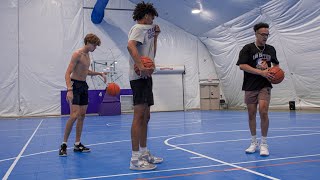
Ethan Khoza answers questions on building strength in the weight room and translating it to the court, improving your shot and handle through high-volume drills, and developing confidence by playing against faster competition and embracing failure reps.
Chapters
All right, welcome. I'll let people, let people roll in here. I'm really excited to do this. You know, I'd mentioned on Instagram, for any of you guys who are watching who had seen my post yesterday, I was just talking about how I get so many DMS with questions. Maybe, you know, YouTube comments with questions. A lot of times it's like I'll get these sometimes even detail questions. I don't always have time to like sit there. And it's also, it could be hard to like write responses through text. And so this is a really great way for me to just connect with you guys, answer your guys questions. And you know, obviously I think that's going to be super valuable for you guys. So I put a poll up on my Instagram yesterday just asking for questions and we'll get to some of those. But yeah, definitely you have questions. What's up everybody in the chat right now. If you have questions, go ahead and drop them in the chat. I'll get to those. And I have a lot of really, really good questions that I'm excited about here. But I think this is going to be a good way for me to be able to, you know, answer the questions that you guys have, the situations you guys might be in. And I think it'll be good for everybody else too. Because if you're going through something, if you are experiencing some sort of problem and you need an answer to it, there's guaranteed somebody else out there who's going through a similar thing. Probably multiple somebody's out there who are going through the same thing here. So continue to let people roll in. Welcome. If you're just tuning in here and we'll jump into the questions here, I'll go to the chat first here. Ace Pistons. Ace Piston. Biggest key to improving strength that translates to the game. So I think being strong in the weight room is important, right? Like you have to have a certain baseline of strength in general. The best way to do that, the simplest way to do that is to go get stronger, right? So just your typical bench press, deadlift, squat lunges, and then over time as you get stronger, increasing your weight, that's how you, that's the base of how you get stronger. Now to your question, though, that doesn't necessarily always equate to basketball strength, right? You might have the potential to be strong in the basketball court, but then it, you have to learn how to translate that. So best way to do that is you can put yourself in different drills, for example, that might do it. So maybe you Know it's a one on one drill where you're starting at the elbow with the ball and let's say both, both players have the ball. So the offense is dribbling it, the defense is just holding a ball in their, in their hands. And then what you can do is as the offensive player, you're trying to get to the basket and that person who's on defense is just like basically checking you with the ball, like not allowing you to go where you want to go. That's a great way to just develop that strength and you're still playing through it, finishing through that. So that's a great way to be able to develop that. Another drill that's really good is if you just take a line, right? Let's take, let's say it's like the half court line and you know, you and one other person, offense, defense, and the offense is just trying to win the line. So, so you both start on one side of the, of the half court line and you're trying to get across to that opposite side and the defense is trying to keep you on that side and whoever, like, like there's a clear winner and loser too. So if you're not strong, you're not winning that drill. So I would say building strength and then on top of that finding opportunities to put yourself in positions where like you have to actually use that strength and then as you do that more, you're gonna get more comfortable with it. And then maybe even the simplest thing is just like find players who are older than you, bigger than you, stronger than you, and play against them as much as you can and you're going to have to be strong or else you're not going to, it's not going to go well for you. So that, that would, that's how I would answer that. Ace Piston. How can I improve my footwork? Especially lateral moving? Again, stuff you can do in the weight room, for sure, stuff you can do just on the performance side of it. But I think the best way to just become quicker and become just a better mover is to play against players who are quick, right? If you go, you guard somebody who's quick, just think of the quickest player that you know, right? If you can go guard them as often as you can. Like if you play against them every day, you're going to get quicker just because you're going to have to keep up, right? I think that is a lot of what will make you better is seeking out people who maybe aren't even better than you. But do something that challenges you and then put yourself in a position to have to match that. Right. Like, for me, I love going to play pickup, where, you know, it'll be a group full of college guys, pro guys, and I know, like, hey, I don't want to be the weak link here. So I've got to up my game. I've got to be able to get a stop on a guy who's quicker than me. I've got to be able to, you know, finish against a guy who maybe is a little bit taller than me, and it forces you to raise your level. So go seek out competition, and you're naturally going to get better because of it. Opinion on Josh Smiler basketball. That's my guy. Shout out Josh Smiler. Yeah. You guys, you guys definitely check out Josh for sure. I love. I love that guy. Love his stuff. He's doing great things. I mean, especially the fact that he's so young too. Like, love and been on his podcast. Great conversation. So, yeah, definitely check out Josh Mellow Basketball. If you guys have not for sure. How do I increase my vertical? Go jump more. Go find something. Find a point that you can't touch. If you can't touch the rim, go practice jumping and try and touch until you can. And then once you can do that, try and dunk a tennis ball. Once you can do that, try and dunk a volleyball. Once you can do that. Now go for a basketball. That simplest way to do it is just go jump more. What is the simplest way to improve shooting? So, simplest way to improve shooting. Trying to think of how to answer that. I mean, okay, the simplest way to do it is to shoot more, right? If I was going to go, the absolute simplest way is shoot more. I think a lot of times players get so caught up in doing the exact right thing, especially when it comes to shooting. Okay, what drill is right? Is my form perfect? Is this. Is that if you shoot a ton, you're going to figure out how to put the ball in the basket, Right. Obviously, there are. There are adjustments that you want to make to your form to become more efficient, for sure. But once you have a baseline of that, you feel pretty confident about how your form is, how your mechanics are. Go shoot a ton, and then you're going to get better at it. How should a forward practice shooting such what to practice? Well, I mean, honestly, it depends a little bit about what level you're at, right? So you say forward, but if you're a forward and you're still middle school, high school, you Might not be a forward forever, right? And especially in the game today, it's so positionless. So you've got to be able to make all the shots the guards can make. Unless you're, you know, 6, 10 and you can play inside it. You got to be able to shoot the ball from the perimeter. So the same stuff that you would be doing if you were a guard, like work on that, be capable of doing that. Then if you do it less in games, okay, you'll figure it out. How do I get better at defense as an undersized guard? So I think having really good instinct is important. If you're undersized and you just get this by watching, by playing a lot. If you're, let's say you're in the season, you've access to film, being really prepared about the team that you're playing against. So you can watch early and see, hey, this guy likes to do that or this guy does that. Oh, whenever he puts in his left hand, he gets to a pull up. If he goes right though, he's getting all the way to the rim. And if you know these little things, it's going to make it easier for you to overcome that, that height difference. And then I think on top of that, being prepared and then, and then having those instincts too where you're just able to like, you get really comfortable with, you know, playing and figuring stuff out because you do it so much right. So kind of like how I started play more, play against really good players as much as you can. You're gonna start to figure out what works for you, what doesn't work for you, and that's the best way to do it. And on top of that, it's just like you have to, you have just have to be a dog too. When you're, when you're undersized, like, you have to just be the, like that's where you have to be a high level competitor. Like you have to find ways to win. You can't accept not winning. And I think you have to almost play with that chip on your shoulder, especially if you're undersized. How can I shoot quickly in a real game? Put yourself in positions in practice to have to shoot quicker. So go to the free throw line, have a friend or a teammate start under the basket and then as soon as they run at you, you have to shoot the ball before they get there to block it. And if you do that, you're going to be able to shoot quicker. When I'm playing five on five and I Get the ball. I often freeze up. How do I make a decision faster? I might be under dribbling. So playing five on five, I would say try and play two on two, three on three. So a little bit smaller sided of a game than five on five where you're going to have the ball in your hands more and be more space and then get really good at doing that. As you do that more, it's going to become easier for you to translate that to that five on five overall. Just put yourself in a position to have to make more decisions and you're going to do that more in a two on two and a three on three and be okay with failing and like messing up. Right. Especially if you're trying to get better at something. It's. If you don't have to be perfect, you don't want to be perfect. The failed reps are the ones that you're going to learn from. So you want to put yourself in a position to have to do that more. Marquis Noel. Good person. Definitely. Definitely. If you're undersized, great guy to watch. How to deal with favoritism with coaches and their sons so I would say there's two things. There absolutely are situations where there's coaches favorites and they're playing their kid or whatever. I've seen it for sure, like it happens. But that isn't really something that you control if you're on that team. I would say in a lot of situations just you got to be better. Like you just got to be better. If you're, if you are undeniable, then you're going to play. Right? So take it on yourself. Whether it's fair or not and whether it's your fault or it's not your fault, whatever. Just get as good as you can and then the cards will let everything fall where it may. But end of the day, control what you control, which is being as good as possible. And then if. If there's other stuff inside of your control, that's life. Best way to create an angle on a defender. Depends on the situation. Are we talking ball screen? Are we talking off of the catch, off the dribble? Depends on the situation. How many times a day should I work on shooting? Less? About how many times per day and more. So that's probably more. So a question you got to answer yourself right there. Right? There's no right answer. I could tell you two times, but for some people, one time is good enough. For some people, maybe they can do three times. How to improve your driving angles and overall Driving without a training partner. So if you don't have someone to train with and you want to work on this, first of all, the best thing you can do is play more. So go play pickup, go play two on two, go to the ymca, go to the park and just play with whoever, whoever you can find and do that more. Right. Work on driving more and then figure out what works for you, what doesn't work for you. I've got videos talking about driving angles, talking about attacking, closeout, stuff like that. So check out that stuff where that'll be helpful too. Just understand, okay, can I attack a closeout? Can I figure out how to be able to, like, what are the good situations to actually be able to attack? Sometimes if you attack at the wrong time, it's gonna be really hard for you to be successful doing that. So do that. But then the other thing is kind of like I was saying, watch more go study videos that talk about this sort of stuff. If you don't have someone to train with and then go play as much as you can. 350 game like shots a day. Good. Yeah. How. How do you train to go downhill at about 80 or 70%? I'm not sure what you mean by that. Iconic. How many shots should I shoot a single workout? There's no right answer. Could be 50, could be 500. Think more along the lines of an ISO situation. Coleman of Binary Basketball talks about utilizing east west movements to create an angle. Yeah, that's so. Okay. Yeah. Shout out Coleman. ISO situation. Yeah. So I would say one thing to think about in ISO situations is being able to play relaxed. So if you're always at 100%, no matter how fast you are, you're easy to guard because people can gear up for that. But if you're able to relax and play high up and be unpredictable, but when you decide to go, it's hard. The defender is going to be a half second behind you because you're the one making the initial decision. So if you can get good at kind of lulling them to sleep and being relaxed before you go, that's where I think you can really be able to force a reaction from them. And maybe you can go, maybe you get them to shift, you go the other way. But being able to play relaxed and then hitting that explosive level when you need to. How much pickup should I play? As much as you can, I would say. How do I get better at ball handling? Dribble the ball more. That's number one. Go dribble against defense if you can that's probably the best way to do it. And then work on just the different qualities that you need. So being able to manipulate the ball is important. Being able to change pace, kind of. We were just talking about being able to go from, okay, can I handle the ball at like relaxed 20% level, I think was where a lot of players struggle is they can't. The reason they can't play slower is, is because they never practice actually dribbling the ball at a relaxed pace. They're always at 100% going through these cones like, like. But there's no work on pace there, so you're not going to do it if you don't work on it. So being able to work on just being relaxed when you dribble. Okay, now I'm explosive. Can I play in the middle of that? Can I play at 100% speed? But can I also play at 20%, 40%, 60%, 80%? And I think that's a really important thing as well. There's a lot of movement that's involved with ball handling too. So if you guys look on like my Instagram or actually I posted a ball handler workout a couple weeks ago where we work a lot on crawl starts. So putting ourselves in these low shin angles to work on just acceleration and being able to handle the ball. Can you handle the ball at full speed? Meaning, like, if I'm going and I'm driving as fast as I can, can I keep the ball up with me? Or is it a limit, like a limiting factor? Because if you're limited by how fast you're going in terms of, oh, if I go my top speed, I lose the ball? Well, then you're always limited in the game because you might need to go at your top speed to get somewhere and you're not able to do it. So work on being able to get to that top speed as quick as possible, but also not letting the ball be something that holds you back so it almost becomes an extension of you. Right. So just working on those different qualities. I talked about that a lot. If you guys go back my probably two or three pockets episodes ago, go through that big time. So go, go check that out. Also, if you guys go back probably two, three weeks ago, I posted like at least two or three workouts, ball handle workouts on YouTube. So check those out as well. And then I'll go through a lot more of what I was just talking about where we at here. Most of you guys are answering your own questions. So the funny thing about that is that a Lot of times the answer is, like, it's very simple, like, okay, you know, how do I get better at shooting? Well, shoot more, right? And then everything kind of. Everything kind of falls into place. And again, like I said, it's almost like a. It's almost like an experience thing. I think that's maybe the number one thing. How do I get better at being able to, you know, attack somebody off the dribble? Well, go do it more. If you go do it more and you force yourself to keep going until you figure out how to do it, that's how you're going to do it. But a lot of times where players fall short is they don't like the failure part of it, right? It's uncomfortable. It's not fun to do something that you're not good at and you're going to mess up and not be able to do it a lot. It might take you a while to figure it out, but once you do it, that's so valuable. Way more valuable than anything that I can tell you because you actually have the experience, the context of it, right? So if you go do more, you figure stuff out along the way, and that's a super valuable ability to have, is just figure it out ability. Can I put you in a situation and have you be able to figure something out? That's probably the number one thing for, like, the players that I train, the number one quality that I want them to have is just the ability to figure stuff out. So I'm not going to give you answers all the time. I'm going to put you in a situation and I'm going to say, hey, go figure out how to put the ball in the basket here. And. And if you can do that and you're really good at. At that ability to just, hey, I can figure this out, that you're going to play with more confidence. You're going to be better because of it. Best way to become a better mover out on the court. There's a lot. There's a lot that goes into that for sure. Go back and check those workouts that I was talking about earlier, because I go through a little bit of that as well. But being able to. I would say the number one thing, if I was going to boil it down, is kind of like what I was talking about, be able to hit that top speed. Okay, I think we're back. Broke the Internet there. Love that. So I don't remember where I was at, but I will say I saw a really good comment that I do want to talk about Adam. Shout out Adam for this because this is actually a really good point. Dribbling or freestyling with a metronome, I absolutely love that. So putting it at like 70, right? Put it at 60, put it at 55, and then just work on being able to handle the ball at that pace. That's going to force you to slow down and, and there's some great accountability that you can use to be able to work on handling the ball slower and being in control of yourself right there. I think that's a really, really good thing to do. And even better, if you have a partner, you can do that and then have them try and take the ball from you. So let's say you have like a six foot area where you're just dribbling at that pace at whatever the metronome's at. And then on top of that, they're also trying to like reach in, take the ball from you, whatever. Like, I think that that's a drill that I love to do as well. So that's, that's definitely something for you guys to, for you guys to think about for sure. How can I get better at finishing? Driving to the rim in the off season, knowing to practice with. So go play, go play more. And then on top of that, when you are playing in five on five or two on two, whatever, whatever, whatever you can do, force yourself to do that. You know, maybe you could shoot a three. Maybe you're, maybe you have, maybe you're able to do that, but instead of shooting that three, you just go to the rim instead, right? Make yourself, constrain yourself and say, this is the only way that I'm going to score here. I think that's a great way to do it. I severely lack confidence in shooting. My seasons will start until November. Any tips? Figure out why you lack confidence. So is it a certain type of shot that you lack confidence in? Do you lack confidence on catch and shoots or shots off the dribble, or do you lack confidence, confidence from a certain spot on the floor? Figure that out. And then if, if that's something, then you can go ahead and attack, you know, attack that and then do it more. Shoot more if you can. Almost the opposite of what I was saying earlier, Force yourself to shoot more in game. So especially when you're playing pickup, you're playing two on two, whatever, maybe you're really good at going to the room, you can do it. But force yourself to shoot the ball more. And then as you start to make it more, you can Become more confident doing it. How do I enter the zone every game and stay confident? Because I feel like sometimes I lose some of my skills during the game. So. Confidence. Confidence. I've seen a few confidence questions here. Confidence comes from having the belief that you are capable in your situation. So if you know that you're in a certain situation and you're capable of succeeding, you're going to be confident. So if you lack confidence, it's because you don't truly know that you can. You have what it takes to succeed in a certain situation. So how do you gain that? Well, you gain that by being in that position and having success and then having repeated success. So what's the process of going from not confident, probably not being successful in those situations, to now having that? And it's by forcing yourself to go through the discomfort of the failure reps of going and playing pickup and saying, I'm only going to drive to the basket. And you only scoring once the whole time you play because most of the time you lose the ball, you miss the layup or whatever. But you know, you have, you have that belief, you have a purpose for what you're doing. So you know, hey, it's a struggle right now, but in a week, in two weeks, in a month, in two months going to be way better at this. And then as you get better at it, you build up that innate confidence, right? The thing is, a lot of people want to skip right to the confidence part and they want like a, like a, like a magic pill that's going to immediately give them that confidence. And that's just not how anything works. You have to earn that, and you earn it by going through the discomfort of failing at something first. So whatever it is that you lack confidence in, go do that thing. So if it's, you know, let's say if the zone example. So maybe you get into games and you start to overthink things and you start to really second guess yourself. You start to, you know, you don't play as loose and as free as you do when it's pickup or when it's in practice or whatever. Okay. So in order for you to do that, you got to figure out what are the situations that cause you to lack confidence. Is it that you don't like dribbling the ball against defense? That, that's a huge thing. If so that's something that you've got to do more. So going through your drills again, working those qualities. So we're okay working on manipulating the ball and being able to put it where I want to put it. Working on being able to be relaxed to explosive, changing my pace, changing my heights, being able to break my rhythm and you know, being able to control my feet. So different start footwork, stop footwork, confidence in that and then going and handling the ball against, you know, one on one against the defender, you know, hey, I'm going to handle the ball here for 30 seconds. You try and steal it from me and then you continue to do that and, and you continue to put yourself in those situations in games, then that's where that confidence is going to come from. I think playing more pickup is essential to get better. One offseason I want to improve on playing with pace and learn the hang dribble. Did a couple drills of playing a lot. Held massively. Absolutely. When you think about a skill, right, a skill is really three parts. Everybody wants to look at a skill as just, okay, I went and I shot 100 threes today. So I worked on my skills. Well, that's, that's only part of it because when we look at a game, let's just take shooting a three for example. If I shoot a three, the first thing that I do is I have to actually take like an inventory of what's going on, right? So I have to assess the situation first. So, okay, am I open? Where's the closest defender? Is my teammate wide open under the basket? So I make a pass right here. Like you have to actually first assess what's going on. Once you do that, you evaluate all of your options, then you make a decision. So now, okay, I'm going to shoot the ball, right? This is the best choice in this situation. So that's my decision now. And, and then you actually physically execute the skill, right? So those first two parts, that's crucial and a lot of times why players lack that transfer over to games is because they don't ever work on the first two. All they ever do is sit there and work on the actual third part, which is the physical act of the skill. So shooting. But they don't work on having to actually assess the situation first, make a decision and then execute that skill, right? So that's why I think playing is so important, why I'm harping on it a lot. Because if you, when you play, you have to do that every single time. Every time you do anything, that three step process is happening. But if you're just going one on zero, there's no defense and ever, then you don't work on the first two parts. And that's why you get to the game and you don't feel confident because you, you haven't prepared yourself to have to go through the whole skill process. Okay. So it, you need to find, be able to find ways to just see defense. Right. That doesn't like, obviously I understand not every player is going to have access to a defense every time they work out. That's completely fine. There are certainly things you can do by yourself to get better. No doubt about that. But can you play pickup as often as possible and find ways to go through that entire skill building process? And then if you do that, you're going to be way more confident come game time. See what I got here? I don't know what drill moves to do when there's a defender in front of me. You got any tips? So figure out something that's going to help you go right, something that's going to help you go left. Whatever way you want to go, try and go that way. And if they cut you off, go the other way. Hey, coach, you recommend dribbling with a tennis ball to sharpen your handles? So I, I'll say this, I can't remember the last time that I've used a tennis ball in any of my workouts ever. Like probably I was probably in high school still, so I'll say that. So it was probably six, seven years ago the last time that I've ever done anything with a tennis ball. So I'm not going to say that it's not useful. You can certainly get better with it. But for me personally, I like to do, I just like to go about it in a different way. Right. Everyone's got their thing that they want to do and you know, but there's, there's a lot of different ways you can go about it. So I won't say that it's not useful, but me personally, it's just not my thing. Brandon Rose. Brandon Shout out to you. You left a lot of questions on Instagram and there are some really, really good ones I'm going to go through and see if there's any that I got to get to here because I actually do like the questions in the chat right now too. But I'll answer you is right now how can one learn to become a trainer? So becoming a trainer, I would say the first thing you need to do is just train somebody. So as simple as it sounds like, you can, you can study all that you want, you can read all the books, watch all the videos you want to do, but if you don't actually get in the gym or on the court with somebody and go through that yourself and actually learn what it's like. Then you're not, you're not actually going to know what you're getting into. You're not going to know what it, like, what's required of you. There's nothing like experience. So it can literally be for free. Somebody that, you know. Like back when I was in high school, I, I would just like. It was my, my younger brother and it was my teammates and you know, we, like, I, we'd go through stuff, right? That was my thing back in the day. And then even when I first started, like, there was a lot of kids who, you know, I was training, who I just knew from high school, and I trained them for free, you know, and that was a big part of how I developed just my foundation of being able to do this. And okay, hey, this is an area that I struggle in. How do I get better at this? And as you do that more, you're going to figure out what you need to get better at. And then you go out and you read the books and you watch the videos and you talk to trainers who are doing it. But then you have also your own experience to be able to relate to what they're talking about. You have the context of it all. Is it bad if I subconsciously move my guide hand thumb upwards to avoid a thumb flick? Devin Booker does it too on his shot. But I also shoot a fine with thumb in the way without the flick. So I would say that that's, that's up to you. Do you shoot better without it? Cool. Then don't do it. Splash brothers. What's good, my guy? People say to watch more film, is it just as simple as tuning into an NBA game and pay attention to a certain player? So it can be that. That's a, I mean, that's a great way to do it, I think, being very purposeful. So if you want to get good at like seeing details in film, best thing you can do is pick a player. So let's say you want to watch. I don't know, I'll pick somebody random. So you want to watch Tyler Hero? You're like, you know, I'm a Tyler Hero fan. I want to watch him. You go, just go on YouTube, say Tyler Hero highlights, and then just go through and write down, okay, what do I notice? So maybe on his pull up you notice that he picks the ball up really late. That might be something that you notice. I want you to literally pick apart every possible thing that you can, even if it seems irrelevant, like, oh, that doesn't matter, just write it down, right? You don't have to do this every single time. But especially starting off, just see how many details you can pick apart from one. You might look at one play and challenge to pick apart 10 different things in that. And then watch another play and pick up our 10 different things and see what things start to pop up. And you'll start to see patterns eventually. And then eventually you'll get good at recognizing it. And you can see it one time and notice that thing right away. And then what you guys will also see. And for those of you guys. And I talk to trainers all the time about this, right? Me personally, I don't train nearly as much as I did in high school. Like, high school, I was training every single day myself. Now, like, I'll play pickup, I'm in the gym shooting every day, but I'm not training the way that I was. But I'm so much better at basketball now because I watch so much and I like, intently study it and I like, try and pick things apart and ask why. And once you do this, it's hard to even explain, but you start to be able to apply those things to what you do in games. So even if you're not working on things, something will click in your mind and you'll do something that you've never worked on before because you've watched it and you understand it. And I think that's such a cheat code that a lot of players don't. Don't take advantage of, right? But obsessing over the details, especially at first, you'll figure out what matters down the line. Don't even worry about it. But that, to me is the best way to really start to get into it. Good question. When I play pickup or casual games, I'm usually the best player on the court. But when I play organized basketball, I play like crap. So that. That to me is like, that could be for a couple of reasons, obviously. Well, here's the first thing. Are you playing pickup against people who are good? Right. If you're playing pickup against people who are terrible, then yeah, it's not going to help you very much come game time. If you're playing against. If you're playing organized basketball, it's probably not going to help you too much. That's the first thing. Second thing is, like, why is that? It's because you don't understand the system you play in. You don't. You don't know your offense you don't know how to play offense. You don't know what's a good shot, what's a bad shot. There's a lot that can go into that. We're dealing with different training styles, such as yours, Michael Lancaster's, Drew Hanlon. Do you feel like the best one? Good question. And you asked that on Instagram, too. That was one that I definitely wanted to get to. So there's all these different training styles, and those you guys who are familiar with, like Michael Lancaster, like, he has his own training style, then you know something like me a little bit different. So you look. You look at, like, Coleman with by any means basketball. He has his. His style of doing things. Drew Hanlon has one that's different as well. And everybody has their differences. I think there's value in all of it. Like, I don't think anybody's wrong. Right. Like I said earlier with the tennis ball stuff, personally, it's not something that I do, but there are trainers who swear by it. And if that's what works for you and you see it help your players and they. It builds their confidence, I'm all for it. You got to figure out what you do. Well, I think everybody's a little bit different. Everybody's different. The way that they communicate and the way that they just are in general and in the way that they just. They process things and they view things. So you shouldn't try to be somebody else or be something that you're not, because this is right, this is wrong. You've got to stay true to who you are and what you. What you believe. Do you do personal training in San Francisco? No, I got the San Francisco shirt on today, but I do not. I am in Pennsylvania, so I'm a little bit of a hike from. From over there. Oh, good question. Is cross country a good sport to do during the off season? In case anyone doesn't know, cross country is running for two plus miles at a time. I've been doing cross country for three years, and I don't know if it's good. Okay, so that's a great question, because when I was in high school, my school was very, very good at cross country. I went to a small Catholic school, so we had a lot of guys on my team who played multiple sports, and a couple of them ran cross country, and I would watch. So cross country is a fall sport, and I would watch guys run cross country. And it's a different type of athleticism, like those long distance runs. It doesn't translate to the quick Change of direction, quick acceleration, athleticism that's required in the game of basketball. It's just completely different. So I would watch guys who would, you know, season would roll around November and it would take them until January to actually look like they could move well again on a basketball court. Sometimes it's because they were just so beat down and tired from the, that the cross country season. But also a lot of times it's because they have to like relearn how to, how to almost be basketball athletic again. So my personal opinion is like, I watch the downsides of it, so I would say like, probably not gonna help you, but at the same time, like, you know, if you like doing it, I don't like if you like doing it. And you're also still working out, still, still, you know, playing basketball. Like, I wouldn't, I wouldn't stress about that too much. Okay, let me get to that question, last one, because I got a dm, Cameron, so any tips for five two point guards? So we'll say undersized point guard. And then you said in the dm, I'm trying to get better with my passing iq, ball handling, overall game. So when it comes to that, I've mentioned a little bit about being undersized earlier where, you know, there's a few things defensively that you need. Like, you have to have instincts, so you gotta, you gotta play a lot, defend a lot and just get used to doing that. So that's, that's number one. You have to, you have to be like, if you're undersized, I think this is something that aside from the skill stuff, you have to be the best competitor on the floor. Like, you just have to be, you have to, you have to hold yourself to a higher standard where it's like, I have to like be about winning above everything else. Right? That, that's how you, that's, that's like the mindset you have to approach it with. You have to play with that sort of chip on your shoulder. I think in terms of skills to have. I just did a video on this too, talking about Fred Van Fleet. So go check that out as well. Literally, I think it was three days ago. I post that video. So check that out because I go kind of in depth into all this, but one thing that I'd say is getting really good at changing your pace. So we talked about a little bit. If you play at one speed and you're undersized, you're not going to be good. You're just not, you're not going to be because somebody with length who's bigger than you, like it's going to be so easy to guard. So be unpredictable. Be unpredictable. Not just how you dribble the ball and how you attack, but also how you finish. So can you be really creative on the rim? Can I finish off of either leg? Can I finish off of two feet and I get to different shot fakes and pivots. Can I Do I have a floater? Like you got to have a floater runner. If you're an undersized guard, like that's just a non negotiable. You got to have it. Can I put like touch on the ball? Can I finish the ball high up off the backboard? Can I put a lot of spin on the ball and still make it go in? You have to be so resilient as a finisher. I think resilience the best word I can use, meaning no matter what's going on around you, what angle you're driving at, who's on you, like where the defender's at, you've got to be able to still put the ball in the basket. So that. That's the first thing that I was. Or that's. That's probably one of the biggest things is being able to be creative if you're undersized. I mean really, if you're, if you're a basketball player in general, you got to be. But if you are undersized, absolutely. You have to be creative and be able to finish in a variety of different ways. But go check out that Fred Van Fleet video on my channel because I go more in depth into the finishing stuff. But do that play a lot and you know, eventually maybe you'll hit that Anthony Davis growth spurt too. Maybe you'll be six, ten one day and then you'll have all these crazy skills and then you're in the league. Is using your body off arm and change of pace direction the best way to beat an aggressive defender? That stuff will definitely help you for sure. How can I finish against taller centers? I like doing layups. So having a floater is important because sometimes you can't go over the. If you're. If you aren't like the biggest guy on the floor, you're not always going to be able to get all the way to the rim. It's just not especially as you get you tired, higher levels, you're just not going to be able to do it all the time. So there's that kind of what I just mentioned to being creative around the RIM is really, really important too. So be able to do that. And then I think also being able to control space. So I talked about this in the Fred Van Fleet video the other day. But being able to create contact with defenders and be able to slow them down so they can't take momentum into blocking your shot all the time. So go check out that video. Because it's hard for me to explain that, but go check out that video. I go real in depth into that. How can you make a. Okay, good question. How can you make a livable income off training? Also, can you. How can you utilize social media to complement your training? So it's a good question, actually. I'll. I'll. I'll read the question that you put that you gave me on Instagram, because I thought that was. I thought that was. There's another point that I think wanted to bring up with that. Do you feel like training for a living can be achieved by anybody who works hard? That was one of them. Yeah. So to answer that one, yeah, I do think so. But I think you have to have a lot of other skills aside from just knowing basketball, right? So knowing how to train, being good at. Being actually good at it is definitely important. You have to be good at it. But then also understanding just business in general and how that works, understanding how to communicate well with people, and that's such a big thing. Like how much people like you, you know, like, how reliable are you? Are you. Are you a reliable person? If you say something, do you do it? Can people trust you? I think that is a big. A big part of that. And also just like, how. How much of. Like, how much of a hustler are you? You know what I mean? Like, are you really. Like, are you. Are you really about it? Are you willing to wake up early and go train and go train at inconvenient times and figure stuff out? Right? It's hard. It's definitely hard to do. That's why not all people do it. But I think in the world we live in today, having that online aspect of it, the social media aspect of it, makes it even more feasible because you can have a whole different stream of income now that's completely coming off social media. And so if you get really good at that, you can almost have two different things that feed into the same thing. And a lot of times you can be in the gym recording your workouts, posting that, so it almost kind of feeds into each other. But answer to that is, yes, you can, but it's hard. It takes you not just being good at training, but being good at a lot of other things and then also, like, being willing to just hustle and, like, figure out how to get things done. Any tips for improving your touch around the rim? Good question. So I posted a video about shooting the other day. I guess it was yesterday and maybe two days ago, where I said shooting and lifting weights are, in my eyes, like, the same thing, like the same concept, or I should say shooting and getting stronger are basically the same concept. You want to get stronger. You can't go to the weight room and lift the same weight for 10 months straight. You know, go five sets of five for 135 pounds for 10 months straight. Eventually you're going to stop getting stronger if you don't add challenge to it. It's the same thing with any other skills of touch. For example, if you're just doing the mic and drill, like real basic, you're not improving your touch unless you're, like, really a beginner and you struggle with that. But if it's easy, you're not improving. So find ways to challenge your touch or on the rim. So a simple way to do it is. Is let's say you work on just, like, underhand, like, scoop shots, but you have to make two in a row from the block and then two in a row from the hash mark behind it and then two in a row from the hash behind it. That's really going to challenge your touch. When you hit that second hash mark and you're, you know, 8, 10ft away from the rim trying to hit that same scoop layup, putting the right amount of touch on it. What that's going to do, though, is now when you're in a game and you're closer to taking, like, a normal distance layup, be a lot easier for you to actually hit that because you worked on it from farther back and when it was harder. Right. So find ways to challenge yourself. I love crawl starts. I'm probably going to make a whole video actually on finishing, which is crawl starts, but taking a lot of speed into those finishes. Right. So can you work on that, too? And then I think a really simple way to do it, too, is like, go and then try and spin the ball in, but your goal is to touch it as close to the outside of the backboard as possible. That's where you're trying to place the ball. So you got to be able to put a nut enough touch on it that you can still get it in after it's been spinning or after it Almost hits the side of the backboard, right? So really challenge where you can place the ball and still make it go in. And if you struggle, you force up to miss a lot of shots. You're probably going to get better. Okay, good. Great question actually. How do you handle being 6ft enforced play center in high school? So high school is always interesting with that because depending on where you live and just the school that you're at, you know, you want to be put in a spot that's not ideal, right? So my personal example is when I was in high school, so my, our whole starting five was just all guards, right? But it wasn't like we didn't have like a bunch of six, five guards. It was like anywhere from five 10 to six two maybe. So I ended up playing a lot of five. Now we ran a five out because that's what we had. We shot a lot of threes, but also to guard the five a lot, which that alone is very difficult to do. So depends on where they put you. But get really good at what they're asking you to do. And the thing that you have to understand is your role is what your role is. So wherever you're at and whatever you're being asked to do, there's nothing you're going to do to change that in the immediate future. You got to excel where you're at. But on top of that, continue to work on those skills outside of that. So work on being able to, you know, being, work on being able to have those guard skills, shoot the ball, handle the ball, whatever, and then eventually you may get an opportunity. But make sure you're prepared for that. What I will say is that you won't get that opportunity if you don't excel where you're at already. So that's something that's important now if you want to talk about defense and guarding people, because that was my situation. I was six one, but I was guarding dudes every game who were six, five, six, six. And a big part of it is just like taking it to them. So don't let them get comfortable if they're trying to post you up, don't let them just sit on that second hash mark. Force them out, force them to catch the ball away from the basket, make everything difficult for them. You have to just play with a super high motor. And then also I'll say this, learn how to take a charge, be good at that and you'll be all right. Any advice to improve my mid range game? So best way to do that is I Saw this coach talk about this play one on one with somebody with one dribble. So you're gonna have to get to a mid range shot and eventually you're gonna get blocked a lot. But you're also gonna figure out like, how do I, how do I create a shot in the mid range with one dribble? I think that's a great way to do. You can do with two dribbles where you're only allowed to shoot jump shots. I think that's a great way to do it. And then I think also working on different sorts of footwork into your shot. So can I shoot it off of like a 1, 2 where I'm stepping right, left? How about left, right? How about off of a hop? Can I make all of those shots right there? And then you're going to be prepared for any sort of situation you face to be able to make those shots in games. I'm gonna go through some of these Instagram questions real quick. So again, shout out B. Rose. A lot of great questions. Okay, here's another one I like. What separates a quality trainer from a bad, average trainer? I think there's a couple things here. So one thing that I would say is a, I think it starts before you can get to basketball. How well can you connect with your players? Right? Do they, like, do they respect you outside of basketball? Because I know a lot of trainers who, they're great at the basketball stuff when it comes to, okay, how do I build relationships with my players? Like, do they trust me enough? Because especially with the way I do things, I am putting you. And I say this to all of my, especially like the really, really good shooters that I'm around. I, I sort of tell them, I say, listen, my goal, like, I know you're a great shooter. My goal is that if somebody were to walk in the gym while we're working out and they just sat and watched you for five minutes and they would look at you and say, oh, that, that kid's kind of a terrible shooter. Because I want to put you in situations that are so challenging that, that you're going to look bad sometimes, but you're not going to have players who buy into that if they don't trust you. Right? They don't, they don't believe that you have their best interest. So do you know, like, do you talk to your players about stuff that's not about basketball, but do you know what's going on with them? I think that's really important comes to building buy in. So if you Want to be a great trainer, learn how to build buy in. There's a great book called Conscious Coaching Brett Bartholomew. So anybody listening to this who wants to be a trainer, be a coach, read that book. Does a great job talking about building buy in. That's the number one thing. And then when it comes to, when it comes to, like the actual basketball part of it, the biggest thing is if somebody were to walk in the gym while we're working out and they just sat and watched you for five minutes, they would look at you and say, oh, that, that kid's kind of a terrible shooter because I want to put you in situations that are so challenging that, that you're going to look bad sometimes. But you're not gonna have players who buy into that if they don't trust you. Right? They don't. They don't believe that you have their best interest. Okay, looks like, looks like we're. It looks like we're good now. Yeah. Limited. Do you guys hear that? Do you guys hear that? That whole me going through good trainer versus average player. Brandon, did you guys hear my answer on that one? It looked like it was buffering for a second. No. Do you know, like, do you talk to your players about stuff that's not about basketball? Do you know what's going on with them? I think that's really important when it comes to building buy in. So if you want to be a great trainer, learn how to build buy in. There's a great book called Conscious Coaching Brett Bartholomew. Justin. Okay, what's up, Justin? Quick question. I'm 22, so anybody listening to this who wants to be a trainer, be a coach, read that book. Does a great job talking about building by 5 9, but never played for a basketball team in high school. But I can play my community college at 23 or 24. Can I do the juco D1, NBA or overseas? I, I trained since 2020. So the, the first thing is like the, the age part. That, that, that is what it is. That, like, I know guys who started playing at 23, 24. My question is that's the number one thing. And then when it comes to, when it comes to like the actual Basel part of it, the biggest thing is are you good enough to do that? So juco to D1. Like if you're going juco to D1 at 20. Okay, looks like, looks like we're. Looks like we're Good now. Yeah. 425. Like, you better be. You got to be real good, right? You got to be real, real Good. So I would ask yourself that first. Like, when you play against players in your area who are D1, like, where are you at in comparison to them? That'll tell you what you need to know. Overseas again, like. Like you want to play over limited. Do you guys hear that? Do you guys hear that? That whole basketball, like, you got to be elite, right? So that's the question, right? And the age you start at, that's kind of irrelevant. So if you're good enough, absolutely. Me going through good trainer versus average player. Brandon, you did I. Did you guys hear my answer on that one? It looked. It was buffering for a second. All right, I'll go. I'll go. I'll go through that right there. Yeah, I'll go through that. Brandon. So basically what I was saying is that when I look at kind of the first part of it, you want. You got to build buy in, right? Players have to trust you. They have to know that you care about them as a person. You're invested in them, and then on top of that, they'll be willing to buy into what you do, and that's how you get great results. So you can't build buy in if you can't build relationships. If they don't. Justin. Okay, what's up? Justin, quick question. I'm 2259, but never played for a basketball team in high school, but I can play in my community. If they don't really, like, if they don't trust you, then you're not going to get good Community College at 23 or 24. Can I do the JUCO D1 MBA or overseas? I trained since 2020. So the, the first thing is, like, results with them, and you're probably gonna accumulate players, so they're not really gonna want to work with you anyway. So then when it comes to basketball side of things, do you, like, do you watch the game? Because I, I see trainers and coaches who say stuff that I know is wrong because I watch, like, I go and I study this. Hey, I want to know how to. The. The age part. That, that, that is what it is. That, like, I know guys who started playing at 23, 24. My question is, are you good enough to do that? So juco to D1, like, if you're going juco to D1 at 20 is like, how can I be better as an undersized guard? So if someone asks me that question, like, everything that I'm saying is just stuff that I've watched. So I'll go watch Jalen Brunson. I'll go watch Fred Van Fleet. I'll watch these guys who are doing it, and I'll pick up these certain things. I can prove that with the film. If you're not watching the film and you just say, 4:25, like, you better be, you got to be real good, right? You got to be stuff. Hey, don't dip the ball when you shoot. Hey, ten toes to the rim when you shoot. Well, no, because if you watch, that's not how it is, right? So you have to be willing to question the things that you believe. You might have grown up and always believe something, but if you can't prove that thing, then just assume it's not true until you can, right? And being willing to do that and question yourself and constantly improve until you have the right answer, I think is really, really important. And then real, real good. So I would ask yourself that first. Like, do when you play against players in your area who are D1, like, where are you at in comparison to them? That'll tell you what you need to know. Overseas, again, like, you want to play overseas basketball, like, you got to be elite, right? So that's the question, right? And the age you start at, that's kind of irrelevant. So if you're good enough. Absolutely. Top of that, I think it's really important to always have that mindset of just like wanting to be better and not being satisfied with where you're at. I think that's really important. Okay, let me go through these IG questions, big man. Okay, so good question. What are your tips for a big man channel? Work on. All right, I'll go, I'll go. I'll go through that right there. Yeah, I'll go through that. Brandon. So basically, what his guard skills. So I would say, first of all, the simplest thing is just become a better shooter. So spend a lot of time doing that. If you can shoot the ball, you're not only you going to be able to. I was saying is that when I look at kind of the first part of it you want. You got to build, buy in, right? Players have to trust you. They have to know that you care about them as a person. You're invested in them. And. And then on top of that, they'll be willing to buy into what you do, and that's how you to potentially be a guard. But you're also going to be better as a big as well, right? As you can stretch it for a little bit, get great results. So if you can't build, buy in. If you can't Build relationships if they don't. And then when it comes to the, like, the other stuff that goes along with being a guard, like, you have to really. It's a difference in, like, mindset. So you're not just going to be able to do drills. And so that's going to translate you being able to play as a guard in a game, especially if you haven't grown up playing that you're playing a new position. So go play as much as possible and work on your guard skills. Be out in the perimeter and do those things. If they don't really, like, if they don't trust you, then you're not going to get good results with them, and you're probably going to accumulate players, so they're not really going to want to work with you anyway. So then when it comes to the basketball side of things, do you, like, do you want. You're going to get better at it? How can you grow your social media as a basketball trainer? So I think you have to really understand, like, what. What helps people? So something that I used to always think of was, like, when I was, I don't know, in high school, what would have helped me? And I always think of things like, watch the game. Because I see trainers and coaches who say stuff that I know is wrong because I watch, like, I go and I study this. Hey, I want to know how to. From that perspective. And that's how I know. Like, okay, this is probably gonna be something people are gonna want to watch because it's gonna be helpful. Because I know that for me, it would be helpful. Probably the best way to do that is just to ask people. So I ask all the time on, like, my Instagram or whatever, like, hey, what do you guys need help with? What do you guys want to see? Hey, leave a comment below, let me know what you guys like. Just being able to understand what people want and then post what people want. And if you do that, people are gonna watch it, and then more people are gonna find it, and then that's how you grow, right? It's just posting stuff that's good first of all, not just putting stuff out there because you can, but putting stuff out there that you know is good and you know, and then making sure that it's not only good, but it's what people want to watch too. And if you do that, you'll. You'll grow. Ooh, top 10 is like, how can I be better as an undersized guard? So if someone asks me that question, like, everything that I'm saying is just stuff that I've watched. So I'll go watch Jalen Brunson. I'll go watch Fred Van Vliet. I'll watch these guys who are doing skills trainers. Top 10 strength code in your opinion. So I don't know, man. I don't know if I can 10 off top of my head. I'll name guys who just no particular order. Guys who I think are really good. Coleman by any means. Basketball really, really good. Love his stuff. Tyler LeClaire, TGL training. Love his stuff as well. There's it. And I'll pick up these certain things. I can prove that with the film. If you're not watching the film and you just say stuff, hey, don't dip the ball when you shoot. Hey, ten toes to the rim when you shoot. Well, no, a bunch of guys who I'm just like, I know personally through like my podcast or whatever. Tyler Clark, TC performance. He's great stuff as well. Danny Cooper, really, really good. Danny Metzer, like, guys who just, I have a very high respect for because these guys kind of think the game out a lot and I see their stuff and I'm like, man, that's really, really good. Because if you watch that's not how it is, right? So you have to be willing to question the things that you believe. You might have grown up and always believe something, but if you can't prove that thing, it makes me think about stuff that I haven't thought of before. Paul, for Brits, PJF performance is one of the best out there. He's kind of like a mix of the two in terms of the strength side of things and the basketball side of things, but he's really, really good. I love Drew Hanlon stuff in terms of just how like fine.
More from Ethan

Stop Using One Dribble When You Drive To The Rim! (How To Become A Better Finisher)









