Stopping: The Skill You NEED To Master To Be A Great Scorer (Full Breakdown + Workout)
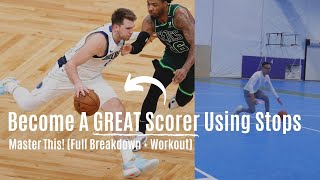
Ethan Khoza breaks down four stop types in basketball: punch, snatch, inverted drag, and step-back. Defenders are most vulnerable when their hips and legs cross to recover. The video includes progressive drills to build the movement patterns and game feel needed to use these stops in live play.
Chapters
Basketball is a sport that requires all sorts of different movements. It requires you to play low, to play high, to have your feet narrow, to have your feet wide. It requires you to start, requires you to speed up, slow down. And one of the most important movements to be comfortable with is the ability to stop. Players who were able to start, and more importantly, stop on a dime whenever they need to, are players that are very difficult to guard offensively. And these are typically the players who are able to create for themselves on offense, handle pressure in the full court and the half court much better, and is one of the foundational pieces to being a great athlete and a great basketball player. Something I've noticed working with a lot of players, that they're uncomfortable getting to these stops, especially when they're starting at high speeds. So in this video, we'll break this down a little bit more, and I'll give you guys some things you can do to work on this ability to stop. Let's get into it. So the first thing I want to do is go over a few different types of stops that we're going to focus on in this video. The first type of stop is a punch, or same foot, same hand stop. This type of stop is the easiest and the quickest to get to and also gives you a ton of different options coming out of it. It allows you to shoot the ball, it allows you to quickly change directions, or it allows you to just keep on going after you've broken that rhythm. Foreign. The second type of stop that we'll go over is the snatch. And this can either be a snatch behind, a snatch between, or a snatch crossover. The snatch is definitely one of the more popular stop options, and it's probably the most common one that you see when it comes to ankle breakers and the moves that get highlighted. But it's a really effective stop because it not only allows you to get into a shot off of it, but it also allows you to very easily change directions after shifting your defender. This can really help you to create better driving angles for yourself. Some players are also more comfortable with this because whereas with the punch, you're going to be stopping with one leg and one step, with the snatch, you're able to stop with two steps using both legs. So some players more naturally gravitate towards that. The third stop option we'll talk about is the inverted drag. And this is very similar to a snatch, except you're only going to be taking one step. So you take that crossbody step instead of taking that second step and then crossing the Ball over, you're going to pull that ball between your legs after the first dribble. And this a lot of times just throws off the natural rhythm of that defense defender. Typically, they're expecting that second step to happen. So when you stop on that first step, a lot of times you're able to more quickly go back the other direction or create space. That defender expects you to keep on going. So this is another good stop option to have. And the fourth stop option we'll talk about is the step back. The step back is a little bit different than these other three, because when you go to a step back, generally you're picking the ball up and shooting it. Although there are options you can get to where you don't pick the ball up, but more than likely you're gonna be picking the ball up, which makes it different from these first three options. But it is also an effective stop, especially when you flip through defender's hip switch. Talk about in a second. So step one is first having an understanding of what these different stop options are. And step two is understanding how and when to get to these different options so that you can create separation and create different advantages for yourself. You should think of these different stop options as counters to your initial drive. So if you can drive and get all the way to the basket, obviously that's the ideal situation. But if your defender cuts you off, then getting to these stop options is what you want to do. When you look at the majority of these clips, no matter which option they go to, whether it's a punch or a snatch between, or a snatch behind or inverted drag, typically the cue for them getting to one of these is that the defender starts to turn their hips and cross their leg over in order to recover and cut them off. When the defender does that, it means that they're going to have to take at least two more steps in order to get themselves stopped again. So if you're able to stop on a dime in that situation is going to create space for you, or it's going to create an angle for you to attack the other direction. That's the most vulnerable spot that a defender can be in is with that leg crossed. So if you're able to recognize that quickly and exploit it by getting to a stop option, generally you're going to either get a shot or you'll have another angle to attack. So that's step two, which is having an understanding of when these stop options are effective and when you should look to get to them. Step three to adding this to your game is developing a feel for when to get to these different stop options. And this just comes through playing. So this can be as simple as playing in different one on one situations and getting a feel for when that defender is turning to recover. So, so that you can create that advantage by getting to a quick stop. And this is something that really comes best through just trial and error. So one thing I want to challenge you to do is as you're watching basketball, whether it be the NBA, college games, even high school or youth games, start to notice when players get to these different stop options to create separation. And as you do this, it'll start to become more and more natural to you. Now, the other aspect to this is the movement aspect. These are not just basketball moves or basketball stops, these are athletic movements and athletic stops as well. And it's important that we build a foundation that allows you to handle these athletic stops and be comfortable with them before we expect them to be effective on the basketball court. So we're going to go through a few different drills and exercises that you can do to get comfortable with these stops so that you feel comfortable and confident going to them in the context of an actual game situation. Let's get into it. So first we're going to start off with continuous cuts. And you can do this going from either baseline to half court, or from sideline to sideline, it doesn't matter. But your first couple sets you're going to go at about 50% max effort. And then your next couple sets you go at 90 to 100% effort. Next we're going to go with this start, stop, cut freestyle. So for this again, you can go sideline to sideline or from the baseline to half court. All you're doing is just freestyling, being creative, getting to different sorts of cuts, imagining as if there was somebody who's trying to stay in front of you and you're trying to shift them and not allow them to stay in front of you. Next, we're going to go with continuous drops. So all that you're going to do is start with your feet about shoulder width apart. And then after every hop, you're going to split your feet at a 45 degree angle so that you would be able to push off of your back foot. And you'll repeat this movement with your right foot moving forward for about five or six reps. And then you'll switch it and have your left foot go forward for about five or six reps. Now you're going to go with three of these continuous drops and we're going to get to a speed stop where you're going to be stepping inside foot, then outside foot and stopping off of that. You repeat that going both ways. Next we'll do the same thing, getting into a punch where you're going to stop on that outside leg again repeating that going both ways. Then we'll get into it out of an inverted drag where you're going to stop on that inside leg, repeating that both ways. Now we're going to work those same movements, but this time with the ball. So you're going to start feet shoulder width, casually dribbling the ball. You're going to drop and take a dribble into a speed stop with that behind the back or that between the legs or the cross, working that snatch movement. Next we'll go same thing working into a punch, and then we'll go same thing working into an inverted drag, pulling the ball back between your legs. And then you'll go through for five or six reps, alternating between these different stops and getting comfortable with these movements with the ball. Now you'll set up a few cones or really any objects in this sort of pattern. And we're going to work on repeating this footwork and getting into some foot switches. We're going to start with getting, getting into a punch and then some sort of change of hand move to get to the next cone, as you see me doing right here. That can be a crossover, a between or a behind, doesn't matter. But you're going to repeat that through trying to really perfect the footwork. Next we'll repeat these snatches and they can be behind the back between the legs or a crossover, doesn't matter. Then you're going to get into a foot switch to get yourself to that next cone with a dribble. And you're going to repeat that through all the cones. So next we're going to go with these inverted drag repeats here. So you're going to start out of the drop, take that dribble and go with an inverted drag between the legs. After each rep, you can reset your feet to get yourself to the next cone. You repeat that the whole way through. And then finally you're going to go through this, alternating which stop you use at each cone. So maybe the first time it's a punch or between. Next time maybe it's a snatch between the legs or whatever. Just change it up at each cone. Being creative and to finish it out. This is really your opportunity to be creative and get into different shots out of stops. You can get to pull ups, you can get to finishes around the rim, but you're working out of the drop or working off of a catch and rip through, getting into those different stops, changing direction and getting comfortable with all these movements. Sam if you guys enjoyed this video, make sure you drop a like and subscribe. Click the top link in my description below to get my free Elite Perimeter Score workout. Talk to you guys soon. Peace.
More from Ethan

Stop Using One Dribble When You Drive To The Rim! (How To Become A Better Finisher)









