The 4 Step Blueprint To Becoming An ELITE Basketball Player
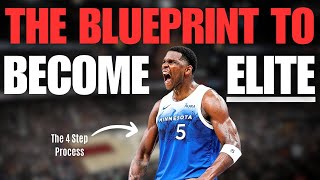
Ethan Khoza breaks down four steps to elite basketball: spend 80% of skill work on shooting, lift 3-4 times a week with compound lifts, learn spacing and cut triggers, and build confidence by playing in tough situations repeatedly.
Chapters
If your goal is to become an elite basketball player, then there's a four step blueprint you have to follow if you want to make that happen. The number one problem that players have is information overload. There's so many different trainers and coaches talking about so many different things. Do this drill, do this workout, focus on this, don't focus on that. And it can feel overwhelming to try and figure out what exactly you should be focusing on if you want to achieve your goals as a player. So right now I'm going to break it down, I'm going to make it super simple and give you an actionable plan, an actionable focus that, that you can study if you want to become an elite basketball player. So let's talk about part one, which is skill development. So this is obviously the part that players are most focused on. Chances are you're most focused on this area. The goal and the focus has got to be building skills that actually translate into in game success. I refer to it as the 8020 principle. 80% of your results are going to come from 20% of your inputs or 20% of the things that you do. So we have to focus on what we call the high leverage areas when it comes to building skills and skill development. And if you want to make sure that not only do you see your results actually show up in games, but you actually make major progress when it comes to your skill level. Because otherwise you're going to get stuck in the place that a lot of players get stuck in, which is being a workout warrior. You're in the gym every single day, putting in the work, but yet you're not actually seeing any sort of progress or any sort of tangible results. And you probably are going to have players who are around you who don't work nearly as hard as you, who are playing way better, maybe getting better faster than you, you're going to wonder why. Chances are it's because you're not focusing on the high leverage areas and it's not translating into in game success. So the number one area that you should be focusing on is shooting, specifically catch and shoot threes. This area is always relevant no matter what position you play. These opportunities to make catch and shoot threes, whether it be off of driving kicks off of different actions like pin downs or dribble handoffs or ball screens, or in transition, whatever those opportunities present themselves over and over and over, dozens and dozens of times per game. So if you can capitalize in those situations, you're going to be in that, you're obviously going to have more success in games. My recommendation for players is that 80% of their skill work should be focusing on shooting in some way. Because it's that high leverage of a skill. You get 1% better when it comes to your shooting ability. That's going to lead to more results than getting 1% better at pretty much anything else. Now, that doesn't necessarily mean that every single workout you do needs to be 80% shooting, but it should mean that you're spending a ton of time working on your shot. That's the majority of your skills training because it's the most important skill you can develop. And then with that other 20%, work on your ball handling. Specifically, I love working on manipulation. So being able to kind of place the ball wherever, having control the basketball. I think that's one of the best ways to develop ball control. Working on different types of freestyles and different types of creative drills where you're working on being able to string different moves together. That's really how you develop that ball on a string ability. And then finishing, working on finishing off of either foot and both hands, one foot, two feet, Just mixing up how you're able to finish. Box all that into that 20%, your ball handling, your finishing, that sort of stuff, and then make your shooting the majority of what you do. Obviously there can be overlap and you can work on ball handling and shooting at the same time and all that sort of stuff right there. But that really needs to be your focus, is that if you get better at shooting, it's going to lead to results on the court in a way that ball handling and finishing might not always, especially early on. I'll link a video above going a little more in depth into this. The second area that you need to focus on if you want to become an elite player is developing your strength and athleticism. A lot of times players actually reach their ceiling not because they aren't skilled enough, but because they physically aren't able to keep up with the demands of the game. They aren't strong enough, they can't run fast enough, they can't jump high enough. So they might be super skilled, but those skills basically stay locked inside of them because they can't physically do what they want to do on the court. Basketball is a very physically demanding sport and you need to make sure that you're training in a way that's going to prepare you for that. In fact, for a lot of players, this is probably probably the most important area that they should be focusing on. Because without it, like I said, the Skills don't really matter as much. We want to build a few different things. First of all, we want to build just kind of general strength. We want to build durability, we want to build explosiveness so that we're able to move the way we want to move. Getting stronger, getting more athletic is going to make you obviously better at handling contact. It's going to make you a better defender. For a lot of players, it actually is going to make them better shooters because you're going to be more physically capable. So when we talk about doing this, we want to first of all focus on building strength. When it comes to the compound lifts, this would be for upper body, like bench press, shoulder press, bent over rows, pull ups. For lower body, it could be squats, deadlifts, lunges. Generally we're going to go three days a week, four days a week, and we want to probably pick two or three of those compound movements and then probably two or three isolation movements. Those would be stuff like bicep curls or tricep extensions or lateral raises or calf raises or leg extensions or hamstring curls. And then we'll also throw in an exercise or two working on core. So I love stuff like the ab wheel rollouts, pal of presses, suitcase carriers are great ones as well. There's a lot of options for that right there. But really that's how we target everything from a strength perspective. And like I said, three days a week. If I go three days a week, then we're gonna think like full body. So Monday, Wednesday, Friday, we're gonna go full body. Or we can do like a two and two, so a four day split, like maybe Monday, Thursdays, lower body, Tuesday, Fridays, upper body. And then when it comes to building your athleticism, I think this can be super simple as well. There's obviously a lot of plyometrics and stuff that you can do at its core. Twice a week, three times a week, you want to focus on jumping as high as you can and sprinting as fast can. So we talk about sprinting. This would be like from the baseline to half court and you're thinking about trying to get to your max speed. We're not sprinting as if it was like a basketball practice and you were doing like conditioning. Right. We're trying to work on just getting to our max speed and then taking a while to, to recover so that when we sprint the next time we also can hit our top speed. That's how we build that sort of speed and start to develop the floor or the baseline for our Athleticism. And then when it comes to jumping, it's the same thing. So we want to focus on jumping as high as we can a couple times a week. So this could be you trying to dunk, maybe if you have a low rim you can use, or just trying to get up and touch something as high as you can and going for, you know, two to three sets of, you know, five or six jumps. Again, just focusing on getting up as high as you can, giving yourself a little bit of time to recover so you can go and jump as high as you can again. And you're going to become, you're going to become more athletic just by, just by pushing yourself to be at the edge of your ability when it comes to training these things. The next area that's so important when it comes to developing yourself into an elite player is developing your basketball iq. And this is an area that is so overlooked by players. Just like with weightlifting, a lot of times you're going to reach your ceiling and you're going to either see a lack of success or a ton of success based on your basketball IQ and your understanding of the game. When you work on your skills and you develop these things, it's like putting tools into a toolbox. But if you have no idea when to use each tool, how to use each tool, then you can have the best toolbox in the world with all the newest and flashiest tools and it won't matter. You, you aren't going to be able to go and apply them. And that's what it's like if you don't have the necessary basketball IQ to play at a high level. So it really starts off with understanding the different actions and concepts in the game of basketball. So concepts like 0.5 decisions, spacing, moving without the basketball basket, cut triggers, stuff like that, and then actions. How do you play out of pin downs or down screens or away screens, how do you use dribble handoffs, how do you use ball screens? How can you be effective in these different actions? And most players don't spend any time learning these things, working on. They get into games, they feel unsure of themselves, they aren't sure when to do what, and it leads to a high level of inconsistency, even from players who might have the necessary skill level to play way better. Everything you do on the court, your success or your lack of success is all going to stem back to how well you understand the game. And chances are if you're putting in a ton of work and you aren't seeing results on the court. It's probably because you don't know how to apply these things that you don't have that necessary game awareness and decision making ability to be able to play at a consistently high level yet. So the best way to develop this is first of all, like I said, dive into learning the actions and concepts that go into the game of basketball. I'll put a list on the screen of some different things that you need to understand. If you don't know these things, then you need to make sure that you take the time to learn them because you want to become an expert. If you're an expert at these things, you understand them, you understand the ins and outs of them, you're going to play with way more confidence and consistency on the court. The next part that's so important is to watch a ton of basketball. So watch full games of basketball, watch full college games, Euroleague games, NBA games, whatever. When you do this, watch it with a purpose. Don't watch it as a fan. So pick a player that you play similar to or that does something really well and just watch that player and see how they carry themselves. How do they move without the ball? What do they do on defense? What do they do when they catch the ball? Why do they make the decision to drive or to shoot or to pass? What does that look like for them? And take away as much as you can. By doing that, you can get on YouTube and watch game highlights of different players and again, just dive into it and try and find those little details that not everybody sees. This doesn't have to be anything crazy complicated too. You could spend 10, 15 minutes a day doing this and you will get so much better and it will directly translate into your on court success. Like I mentioned with shooting earlier, working on your basketball IQ is a massive, massive high leverage area for you. So even getting a little bit better is going to lead to massive results on the court. And then the fourth area that you need to develop in order to become an elite basketball player is your confidence. Now everybody tries to overcomplicate what confidence actually is. And you hear people tell you, well, you just got to fake it till you make it, or you just got to say these things to yourself and you know, you just got to show up and keep doing it. And so it's hard to know what it actually is to be confident. Confidence is very simple. It is your belief that you have what it takes to be successful in a certain situation. So for example, let's say there's a gas station down the street from your house and you drive there every single day to go get snacks or go fill up and get gas or whatever. You're probably going to be very confident that the next time that you attempt that, you're probably going to be able to do it because you've done it and you have belief that you have what it takes to be successful in that situation. But if someone were then, were to then say, hey, we need you to fly this helicopter from your house down to the gas station, you're probably not going to be quite as confident because you haven't done it enough times to have that belief that you have what it takes to do that. So a couple things that can lead to you developing this self belief. First of all, you have to place yourself in those situations that you want to be confident in as much as possible and then detach yourself from the result, especially early on. So for example, if you struggle to handle pressure and you know you're not very confident ball handler, go find opportunities to put yourself in situations you have to handle ball pressure. Go play more pickup, go play more one on one, two, one, two. And put yourself in that situation, do it more than you normally would. Even though you're probably going to struggle, you're going to look bad, you're going to lose the ball and it's going to, it's going to be difficult. But what you do is you detach yourself from that. You understand that those bad things will probably happen, but eventually you're going to figure out what works for you, what doesn't work for you, how to make adjustments, and then you're going to realize, okay, well, I can be successful doing this when I do this and you make those changes and next thing you know, you have that belief that you have what it takes to be successful in those situations. And now you have true confidence. The other thing that's so important if you want to develop true confidence is understanding the 8020 principle when it comes to this. Obviously I mentioned the 8020 rule when it comes to the high leverage skills. We talked about shooting earlier. But when we talk about building confidence and playing the game confidently, you have to understand that as good as you might be the best players in the world, 20% of the time things are just going to go wrong for them. You're going to lose the ball, you're going to make the wrong decision. 20% of the time things are just not going to go your way. And so when what that should do is it should give you freedom to not have to feel like you have to be perfect because nobody's perfect. And a lot of players get hung up on the fact that they make one mistake and they think that the world's imploding. Meanwhile, the best players are also doing the same thing. The difference is that their focus, they put all of their mental energy into making sure that they're great that 80% of the time. And that needs to be. You don't worry about being perfect, understand, embrace the fact that things are going to be imperfect 20% of the time and then focus on being great in that 80%. And the funny thing is, you are not only going to play with way more confidence, giving yourself that grace and that freedom, but you're going to actually outperform players who are trying so hard to be perfect because they're going to be second guessing themselves, they're going to be hesitating. You're just going to go out there, play aggressively, play decisively, and because that, you're going to have way better results than somebody who is overthinking everything. So when we talk about putting all this together for your skills training, anywhere from four to six times per week, it doesn't be anything crazy. 45 minutes, an hour, an hour and a half. Again, trying to really skew towards focusing on those high leverage areas, specifically shooting, and then mixing in your ball handling, finishing working that other 20% of the time for strength training. We want this to be like three to four days a week. And if it's three days that we can go Monday, Wednesday, Friday, like more of a full body split. And if we go with four days that we can go, you know, Monday, Thursday being upper body, Tuesday, Friday being lower bodies, we get a 2 and 2 right there. Either option is great. Focusing on getting really strong in those compound lifts, adding those isolation lifts as well, different core movements and developing athleticism by max effort jumps, max, max effort sprints. That's how we start to develop true basketball athleticism. And then developing your IQ. Like I said, this can be super simple, right? 10, 15 minutes a day where you go and you watch, you watch a player play and you notice, okay, what do they do without the basketball? Why did they make the decision to drive the shoot to pass? What are some things that you can tangibly take away and apply to your own game? Write these things down. And like I said, you could do it for longer than that. But even just 10 minutes a day of doing that is going to supercharge your basketball iq. This is an area that a lot of players just don't do so it's going to make a massive impact. And the developing confidence is a daily thing. Like I said, putting yourself in those situations that you struggle in until you figure out what works best for you and being able to detach yourself from the result early on is huge. And then giving yourself that grace to be imperfect. And instead of focusing on being perfect, you focus on impacting the game in that 80%. That's how you lay the foundation to become a hugely confident basketball player. Now this obviously is a lot, but if you want a full system that's going to help you become elite in all four categories, that's why I created Basketball IQ Academy, the elite score blueprint. Inside of it, you'll get access to a full year round skills training program that's going to help you to develop your shooting ability, ball handling, finishing different scoring moves, how to score in different situations, and you're going to get workouts for the offseason for the preseason in season so you can stay sharp year round and develop your skills at a super high level. You also get a complete strength and athleticism program that's geared for basketball players. So there's going to be options for three days a week, four days a week in season, lifting as well to make sure that again you stay sharp year round, you develop the physicality and the athleticism necessary to dominate on the court. And then of course you'll get access to Basketball IQ Academy, which is the ultimate way to develop your basketball iq. Your decision making. It's going to help you to score more points, it's going to help you to create more for yourself and for others. And it's going to help you to start to play with an insane level of confidence because of the understanding that you're going to have. It's going to transform your decision making. And like I said, nobody's doing this. Most players aren't focusing on this. So you're going to stand out immediately and make massive gains when other players are wondering how it's even possible. And then on top of all that, we also have a full confidence course that's going to help you to build unshakable levels of confidence every single time you step onto the court. And those four things are just the start. There's way more included inside of it. So if you're serious about becoming an elite player, this was built just for you. And there is no better option for you to take everything to a whole new level. That's going to be linked down below in the description. Make sure you check that out. Hopefully this gave you a good roadmap to follow. Appreciate you for watching. Talk soon. Peace.
More from Ethan

Stop Using One Dribble When You Drive To The Rim! (How To Become A Better Finisher)









