The BEST Players Are Also The BEST Learners (Podcast Episode 76)
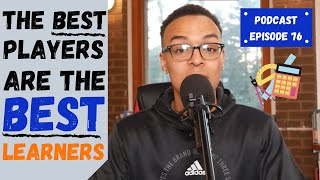
Ethan Khoza argues the best basketball players are the best learners. He structures workouts to train observation and adaptation through layered drills and forced failures, and gives three levers: embrace failure, mimic pro moves to exercise the learning muscle, and train the mind-body connection so skills transfer beyond basketball.
Chapters
Foreign welcome to the Vision Gym Bastard Training podcast. Appreciate you guys for tuning in today. Apple Podcast, Spotify, Pandora, soundcloud, Google Podcast or you may be listening from. And of course everybody who's watching on YouTube right now, shout out to you guys. If you guys are on YouTube, drop a like and subscribe if you're new and of course drop a comment, let me know what you think, Let me know if this episode helped you at all. If you have any comments, any suggestions moving forward, any topics you want me to cover, make sure you drop them in the comment section as well. And if you're on an Apple podcast, do me a favor, scroll down the bottom of the page, leave a review for me. When I get a new review, read it on the show. So scroll down, let me know what you think of the show. You have any questions, you can leave it in there as well. And I really appreciate that. So thank you guys. So today I wanted to talk about something that I've been talking a lot about in my personal workouts, on my in person workouts with the players that I train and something that I've been thinking about really for the past couple months. Shout out to Paul for Brits PGF performance. He's actually the first, well, he, he posted something on Instagram probably the end of August that kind of got me thinking more about this. It's something that I've been talking about. But he really started to, you know, kind of jaw my mind even more with that. And I thought it was something that was super important to talk about and I felt like I should get it into a podcast form. So I was kind of going through things I had to talk about today and, and that's just the concept of learning and why it's so important for players to become great learners. As important as it is to become a great basketball player, going with that is becoming a great learner, right? Generally the best players are also going to be the best learners as well. So if you're able to learn at a, at a high rate, not only are you going to, are you going to improve quicker, but it's going to actually raise your ceiling or your capacity for how good you can be. And if you aren't able to learn at an efficient rate, at a quick rate, then you're going to struggle no matter what the physical work is that you put in. So I wanted to talk about why that is so important. Really. For me, learning is something that I prioritize so much in my workouts. And honestly, for the most part, every Drill is based on some sort of learning. Now, a lot of that's going to end up being, whether it be a live drill where we're playing out of a one on one situation or a two on two or a one on two where you're learning how to read defenders, you're learning how to adapt to defenders playing you different ways. You're learning how to change speeds, how to hit different shots, how to shoot, going to your left, going to your right, all those sort of things you learn. And, and that's certainly an aspect to learning, of course, but I want that. I wanted to kind of take that even further. And you know, for me, I want players to learn the game and learn, you know, the why, the how, the when of where, what's actually important and what they're actually doing when they're on the floor and above those things, being able to make those reads and make those decisions, that's super important. Of course, learning the ins and outs of the game, the actual skill of learning is one of the major components that I target because I recognize how important it is. And it's kind of. It's constantly something that I preach to my players too. Like, you know, I'll give you some examples of this in a second, but like, we'll be going through a workout and there's. There might be a drill that we're doing that has some sort of complex footwork or something new that they haven't done before or something really weird that they might not do the next time they play, right? They might not do this exact sequence, this exact forward, this exact move, this exact type of dribble. But a lot of times I put it in there just like strictly to work, to target their ability to just learn things, right? If I show you something, can you replicate that thing? Can you do it back? If I change it up a little bit, can you change it up as well? That's a major component of you just being able to see something and replicate it. And that a lot of times is what I try and hit with a lot of drills that I'll do. So, you know, an example might be a specific dribble sequence that I might want them to replicate perfectly, right? So it can sometimes come down to something as simple as like I might say, hey, we're going to do this and then we're going to go into a between cross out of it and just seeing, okay, can they, can they like, can they repeat that? Can they do what I just did? Maybe we start with a drop, we take One dribble and then we go with the between the legs crossover, Right? That's just an example I might like. That's neither here nor there based on what it actually is. But are they able to just repeat that sequence right there? We may take something simple like a pull up, and I might make it complex, right? We might be doing a drill where I'm passing them the ball and then telling them which side to drive through. Maybe I pass the ball and I say left or I say right, and that just determines what side you're driving towards. I might do that. And then I might also say outside foot first, right? Your outside foot's got to step first into that shot. So I'm stepping inside, outside into my pull up. And maybe they're not. They're used to doing that inside, outside. That's typically how we. How it would go if you're going into a one, two step. Or maybe they're used to hopping into that jump shot or whatever. And maybe I just throw them. Throw that at them to try and change this up a little bit, right? But now they're working their ability to kind of learn that on the fly, learn how that feels, how they would actually get into doing that. And so sometimes I might start to just layer stuff like that on top of each other. I might layer this move and that sort of footwork. And again, it might not even be with any sort of specific context. Okay, you're gonna do this the next time you're in your game. It might be we're gonna start working this sort of footwork so that when I come back to it later, when we come back to working this later, you're gonna have a recall of it where I can say, hey, let's go into that outside inside footwork again. And you've already done it. You've already learned that you had that tucked away in your brain, right? The other thing with that is, like, you're gonna get into a game at some point and you're gonna pull out something that we did in one of these drills where it might not have seemed applicable at the time, but we worked on it, and all of a sudden you find yourself in a game. And as I talk about all the time, games are imperfect, right? They're not gonna go as you planned them. That's just not how it works. They're gonna be chaotic at times. You're gonna find yourself in the midst of that chaos. Getting into that outside inside footwork, or getting into that. That dribble combination we went into, right and, and that simply goes back to you learning and being exposed to that right there. That's almost more of a long term view of it. And we talk about building up to that. It can really start with just like the characteristics of great athletes and really people who are great in any sort of area. But athletes for sure, one of the characteristics that they have is that they are able to see things and they're able to replicate it very quickly, right? They might see a player do something and they're able to go out and replicate that same thing. They might be working with a trainer and, and they show them this and they are able to replicate it just like that. They might have a teammate and their teammate does something and they're like, oh, that's awesome, I want to try that too. And they go, and they can do that same exact thing. Their mind works at an elite level and that translates over to that physical side of the game as well. So all that sort of stuff that we do is just working to get them to that point where you can see something and you have the mental capacity to be able to replicate it quickly. And that's the place where I want all my players to be at. And if you're listening, that's the place that you should for sure strive to be at as well if you want to be considered a great player. And it's important that we work that now, that doesn't mean that I script everything that we do. In fact, I'd say 85% of what on average, right? It depends on the player and how old they are, how good they are. I'd say on average 80, 85% of my workouts aren't going to be structured like that. Where I'm going to tell them exactly where to step and when to do this and when to do that, what move to do. Generally I'm not going to do that. But it's always again, when we're trying to target just this ability where, okay, if I go out and I see that, you know, like my coach shows me something to do, can I repeat that immediately? That's a skill that not a lot of players work on, right? And not a lot of trainers or coaches really think about, okay, how do we, how do we actually work on this skill and make it challenging too. You have to understand that great players aren't just great physically, but they're also great mentally. And so there has to be a component of your training that is going to hit that as well. So I want to talk about three keys to this three things that you can take with you to help you become a better player from that perspective and help you start to learn things quicker at a more rapid rate, at a more efficient rate, so that you can become a better player. And, you know, we're going to kind of hit this at the end as well, but this is going to translate to way more than just basketball. Basketball is going to be like the pin, like the start, right? This is going to be like the, the. The vehicle that you use to develop this stability, because again, we're talking today, but it's just developing that ability to learn and to learn quickly. And if you can do that, the sky's the limit with basketball, with everything else that you do. So the number one thing that you have to keep in mind when we talk about this is that you cannot be afraid of being wrong or looking bad. That is the number one thing. I've worked with so many players who have been, for a myriad of reasons, either afraid or avoidant or just straight up unwilling to put themselves in situations where they might look bad or they might mess something up or they might fail at something. And typically this is an insecurity issue. So, you know, maybe they've always been better than the players that they played with. They grew up and they were the best player and, you know, so they never had to look bad because everyone always told them, oh, you're so good, you're so good, you've, you know, you can't do anything wrong. And. And then they get to a point where people start to catch up. And now, like, they're. They've never had to not be the best. They've never had to not look the best in a practice or look the best in a workout. And it's tough for them to be, to be able to handle that. So I'm just throwing out some examples of why that might be the case. And, you know, maybe they have a lot of pressure being put on them by their parents or by their family members or by their friends to be perfect or to be something, to be really good. And so they. It's tough for them to handle at all. Not looking good or not looking perfect, not being able to do something perfect. So a lot of times players like that are going to avoid those situations where they might fail or they might look bad or they might look imperfect. Sometimes it can be a just an insecurity issue where they just are insecure about looking bad in front of other people. Right. If their friends are on the team, they don't want to look bad in front of their friends, and they really. It's to a point where they just can't handle it. They can't handle potentially looking bad in front of people they know, Right. If they're in a gym by themselves, maybe they're fine, but when there's somebody else in the gym, they can't go their hardest. They can't really put themselves out there because, you know, they don't want to look back because that would be the end of the world, right? So that's one thing. It can also sometimes just be like an arrogance thing, right? Where they think that they kind of know everything already and they kind of are maybe, maybe they are the best player right now or the best player on their team or whatever, and they feel like they don't have to really push themselves because they're already best. Right. That's certainly something that I've seen as well. And, you know, it can be a shot to the ego if you look bad or you fail at something in front of everybody, Right. Nobody likes that. But for. For some players that they can't even. They can't handle that, like, that's way too much for them. You know, sometimes that can be that they're just uncomfortable with it, right? They're just really uncomfortable with failing. And whatever that reason might be, if you, if that's you. If you really are, if you really struggle or you avoid situations where you might fail, you might look bad. You know, if you're going through a drill, that's new and, you know, you really are struggling because, you know, maybe it's something that's foreign to you, something you're not very good at, and you tend to avoid those situations. Maybe you don't go 100% because then you can always say, like, oh, I wasn't really even trying that hard, or, you know, something along those lines. You know, if you're a type player who avoids showing up places, if you know there's going to be bad, better players there, like, you would fall in that category as well. So I want you to start thinking about that sort of stuff. And it can even be more micro than that, Right. It can be as simple as, like in the. In the. In the context of like a pickup game, right? You, you know, avoid trying something you've been working on because, you know, you're afraid of potentially losing the ball or looking bad or whatever, Right. That you can kind of put yourself in this category as well. You know, you can't be afraid of looking bad. You know, One thing that you have to keep in mind is that the moment that you stop learning from others or from experience or the moment that you think that you know it all is the moment you're going to get passed up by a lot of other players who don't think that way, right? The players who are hungry to learn to get better. So to the people who may be maybe comfortable where they're at or don't feel like they have any. Any farther to go, they feel like they've already arrived somewhere, you haven't, and there's somebody out there who is not approaching it that way, who wants to learn, who wants to fail, who wants to get better, and they're going to take your spot if you are comfortable with where you're at. That's the first thing to understand. The best players that I work with are also the ones who love learning the most, right? They're not afraid to look bad or to fail or to lose the ball in a drill. They're not afraid to ask questions. They're not afraid to ask for criticism, to ask, like, hey, what could I have done better here? Or hey, what do you think I need to get better at? They're not afraid to. They're not afraid to ask that. They're not afraid to put themselves in a position where they might fail. They're not afraid to go play against better competition, knowing that they may. They may very well lose in that competition. And they're bought into doing what it takes to be great. Every single one of them. Every single one of them, the best players that I work with, that's how they are. They. They love to learn, and they're okay with being in uncomfortable, uncomfortable situations. They're okay with potentially failing, right? Because my goal is in my workouts, like, you're going to fail. Like, I'm going to make sure that you miss shots. I'm going to make sure that you lose the ball and make sure that you don't win every drill, right? And the best ones are okay with that. And they. They're still, of course, striving to win everything, but they understand that that's not going to always be the case. And they're just trying to get better every single day. And, you know, consequently, those are also my best learners, is my best players because they love the process of learning. They're okay with the. The lumps that it takes, you know, the growing pains of getting better. They're okay with that. And consequently, they're the best learners as well. Meaning that they have the talent and they have the mental ability to learn as well. And they have the highest ceiling of all the players that I work with. Right. That just makes sense. And so the players who are working, who are unwilling to put themselves in positions where they might fail, they might lose, who are unwilling to ask questions to, unwilling to not only ask for criticism, but unwilling to accept criticism, constructive criticism, they don't want it. They, they feel like they know everything already and, you know, they're just scared to be in positions where they might lose. Those are the players who are, they may be talented, but they will never reach what they could be. They will never be. Their ceiling is not as high as my best players who love learning, but even though like their ceiling that they have for themselves now, they're not going to hit it because they're never going to be able to push themselves to the extent that they need to in order to get to that point. And they don't love learning at the end of the day. And they're not, they're not great learners because they haven't put in the, the, the mental reps to be able to do it. So you have to be willing to put yourself in a position to fail as often as you possibly can. Right? You can't avoid it. You can't be insecure about how you're going to look to that person or how that person's going to think, or if they're going to think that you're bad or if they're going to think that you're bad or whatever. Like that stuff can't matter to you. You have to be completely long term focused, completely growth focused. Okay? If I got better today, it does not matter how bad I looked in the context of this practice or the context of this workout or whatever. It doesn't matter if I learned something today, if I got better today, that's the only thing that matters. And again, those are my best players or players who approach the game like that. So that's step number one, super, super crucial thing. And then number two is you got to be able to exercise that learning muscle. So from a player's perspective, if you're working out, training by yourself, you want to expose yourself to new things. And so that can be a myriad of different things. Maybe you, you know, there's a couple great trainers on Instagram. One that I really recommend is Henin Workouts. If you guys have ever, if you guys haven't heard of him, he's, he's great. He posts a lot of really good stuff. Especially when it comes to, like, footwork and all this sort of stuff. He's one of my favorite followers right now. So, for example, maybe you see some of the stuff that he works on with his players and you decide, hey, I'm going to repeat some of that sort of stuff. Like, I'm going to, I'm going to try and do that stuff as well. And you're. Now, you know, that might be a drop and into a, you know, a one, two, pull up or a drop into a, you know, a heavy step or a drop into a crossover, or it could be something into, like a partial step, right? And if you watch his, his Instagram stories or his, his posts, you'll see all this stuff that I'm talking about. If you don't have, you have no clue what the terminology is I'm using. But if you can see that stuff that he posts, or I'm just giving you an example, it could be what anybody posts. And you, you just make it your goal to like, hey, today I'm go, I'm gonna go repeat this. Like, I'm gonna, I'm gonna look at this and I'm gonn to repeat this exactly as it is. It's going to be 100% perfect, right? That can be, that's an example. But it could also be something like with, you know, maybe there's a, a move by Luka Doncic that you love, right? There's a, a move that he had. I'm thinking about that move that he hit over Clint Capella against the Rockets. I want to say it was two or three seasons ago, and we hit that, that inverted drag into a step back three, Maybe that, maybe you love that move. And so you, you go outside, you go to the gym, whatever, and you just work on mastering that move. You want to replicate it perfectly. Your footwork is perfect. Everything is perfect. Right now you're working your ability to see something and do it, see something and replicate it. Okay? And what this is going to allow you to do eventually is that you're going to have a very solid foundation of being able to see something, not only replicate it, but be able to innovate and add your own stuff to it. And you're able to, in the context of a workout or a practice, see something happening. And, and being able to repeat that and add to that as well. And that's the next step of learning, is being able to make those connections. Oh, I did this before. So I did that before. And then kind of merging those things together, right? And that's what you get when you're able to have a solid foundation when it comes to just mentally being able to see something and then being able to do it, being able to hear something and being able to do it. So that's an example, right? Maybe it's Chris Paul as a great movie that you love, maybe it's James Harden is a great movie that you love, or maybe it's Steve Nash or whatever. It doesn't even matter. It doesn't matter where you get it from. But just exercising that, that, that mental muscle, the mental ability to see something and repeat it, is super, super important and is going to help you a lot. And what I really challenge you to do with that is focus on the details and mimic them perfectly, right? Find a clip you guys can even go look at, like my NBA scoring workouts, right? And find something on there and be able to mimic it perfectly, like exactly down to every single detail with the footwork, with the timing, whatever it may be, be able to mimic that perfectly. And again, that's where you really develop that, that ability. And then, you know, the third thing that you have to understand is that there is such a powerful, there's such a powerful connection between your mind and your body. And the crazy thing is with this talking about working on your ability to learn things is that it applies to not only basketball. It's gonna make you better learning in every capacity, right? It's gonna make you better when it comes to school, it's gonna make you better when it comes to other sports you might play. It's gonna make you better when it comes to the weight room, right? And all those other things as well. If you're in the weight room and you're learning new things, you're having to work on different sorts of footwork, different sorts of movement that's gonna translate to you learning things better on the basketball court. So at the end of the day, you want to train this ability to learn as often as possible. And other ways you can do that is by reading, right? By just listening to podcasts or interviews on topics that you're interested in, where you really just kind of developing your brain in general. I think that's a super important thing that separates, again, great high functioning people from people who are functioning well below where they should be is just, you know, how, how often they are really challenging their brain or giving their brain something to help it get better. And we're not just like, this isn't just about basketball, right? Like, you, you. This whole episode isn't just about you getting better at basketball. It's about you getting better at learning, which is going to make you better at basketball, you know, but it's also going to make you just better as a human in general. Right? And that should be the ultimate goal. Is that the stuff that I'm doing, basketball training, right. The ball stops balancing for everybody someday. So the skills that I gain through basketball, I want that to apply to something else. If I really get good at learning how to learn through the game of basketball, then when I have to go do something else, when I'm done playing basketball, I'm going to be able to get really good at that really, really quickly. I'm able to pick up that stuff really, really quickly because I'm used to it. I'm used to being in workouts and seeing something and picking it up really, really quickly because I practiced it, because I went and I mimicked those things, and I. I challenge myself to do it perfectly. And because of that, when I step into any other area, I know that I can learn things quickly, and I'm going to be able to adapt quickly, and I'm going to be able to get really, really good at it because I develop those habits and that ability to learn now. So that's the third thing to keep in mind, is that there's such a powerful connection between your brain, your body, and it transcends basketball. It's about the entire person that you're developing as well. So every opportunity that you have to develop your minds, you got to take that because it's going to, again, not just make you better at basketball, but better at everything that you do for the rest of your life. Right? And that's. That's my goal with all this stuff, is that basketball is important, but it's also about what comes next after basketball. Right? I want to build better people, not just better basketball players. Now, both should go together, but I don't want you to focus on the basketball player part of. I want you to focus on who you are as a person as well. And I think learning is maybe the number one part of that. So hopefully that that gave you guys some. Some food for thought and, you know, hopefully gave you guys a little bit of a challenge moving forward. And hopefully it changed your outlook a little bit on, like, what's important, because I know for me, you know, that's something that I stress to my players every, like, almost every workout, you know, I'm mentioning something about learning, right? Where I'm saying, hey, you know, remember we did this drill last week and you couldn't even do it. Like the foot we were trying, you couldn't do it and you were struggling, you were maybe you were probably succeeding 20 of the time. Like once every 5 reps you do it right? You were frustrated. And then we came back today and we did the same thing. And all of a sudden you're getting it 85% of the time. Like you'd be fun, it'd be like, it's funny how often that happens, right? But that, that like your brain is so powerful, literally it can see something and if you really give it a go, like you might not see the results of it right away. But long term your brain is going to be able to recall that and you're going to be better at it because your brain's the time to process it, right? That, that we can get into a whole episode talking about short term performance versus long term learning, right? Short term you might look good or look bad, but that actually doesn't really matter because what matters is what you look like. Long term, what you're actually learning, what you actually take away from that session. In a session, I might try something new and look horrible. I might come back the next week and try the same thing and be way better at it because my brain actually picked that up. And while I might never got it the first time, I've had time to process it and I come back and I'm prepared for it now. My brain is adapted and ready to go, right? It's, it's incredible how powerful your brain is. So continue to work it, continue to make it better and I promise you it's going to be a game changer for you again, basketball wise and non basketball wise. So I appreciate you guys who have tuned in, who've listened again. Apple podcast, Spotify and wherever else you listen to. Google Podcast Pandora, shout out to you guys your Apple podcast. Leave a review for me. YouTube, leave a like subscribe if you are new and drop a comment, let me know what you think. If you have any questions about this episode, if you have any comments thoughts about this episode, if you have any questions about anything else or you have suggestions for podcast episodes, whatever it may be, video ideas, whatever, drop that below as well. My Instagram is at Vision Basketball. Make sure you guys give me a follow on there as well. I will talk to you guys soon. Peace.
More from Ethan

Stop Using One Dribble When You Drive To The Rim! (How To Become A Better Finisher)









