The Exact Skills You NEED To Be Working On (According To 307 Basketball Coaches) - Podcast Ep. 43
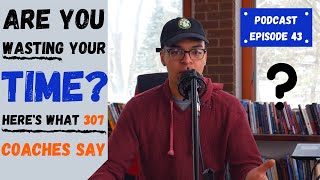
Ethan Khoza breaks down what 307 basketball coaches say matters most: shooting tops the list, followed by decision-making, defense, passing, and ball-handling. Most players waste time on viral drills and cone work instead of practicing what actually wins games.
Questions this video answers
22
17 mentions
About 285 team coaches (surveyed as the second group)
Shooting (reported as 81%)
Ball handling was reported around 72% (very close to shooting in the survey)
Chapters
Foreign training podcast. Thank you guys for listening, tuning in. Whether you guys are on YouTube right now watching shout out to you guys and of course everybody who's listening on Apple Podcasts or Spotify or wherever else you listen to your podcast. Thank you guys. If you are on Apple Podcast, do me a favor right now, scroll down, leave a review for me, lets you know what you think. I mean, I'm checking the reviews basically every week to see if I get any new ones. See if I have anything I can, I can respond to, not really respond to, but if I ever get a good review then I might read it on the, on, on the podcast. So just throwing that out there for you guys. But today I wanted to kind of a little bit of a different episode I was on. I got a DM a couple weeks ago from somebody who was putting together an article that I thought was really interesting from One UP Basketball. So shout out to One UP Basketball for this. But he reached out to me about, probably about two or three weeks ago and he said that he was putting together basically an article talking about the most important skills that players should be working on from the perspective of coaches. So he was reaching out to literally hundreds of coaches and he was going to put together an article with a bunch of stats numbers to really give a clear cut definition of what it is that's important, where your time and your effort should be devoted and focused to. And ultimately it was gonna be a really good player for a really good way for players to kind of measure up what they're doing with what they actually should be doing. And so I gave him my, my answer. And then a couple days ago, the article went live. He sent it to me and I checked it out. I thought it was really, really interesting what I was reading in it. So I wanted to kind of go through it a little bit. And I'm a link below to that article in the description. So go ahead and check that out. I think it's really, really cool. And there's a lot of answers like I can't even go through the whole thing now, but there's a lot of answers that you can read that I think are really, really valuable. So he started off the article. It's kind of two sections of it. The first part, he reached out to 22 basketball coaching experts, okay. And somehow lumped me in that category, I guess, I guess that's the title. I'll take it. But he. So I was in this, this section where he asked me basically the five most important skills that players need to have, in my opinion. And so a lot of the people in this section were like professional coaches, a lot of guys who coach in Europe, a lot of college coaches, and then other trainers who, you know, train guys at the, you know, youth level, college, you know, pro level. So a lot of really experienced coaches, trainers in this category. And so for me personally, it was really interesting to see what those guys had to say and kind of see the overlap of the differences. My answers, and I'm sure a lot of you guys who are, you know, tuning in every week are probably going to be able to at least know what most of mine are, if not all of them, because I talk about them all the time. Number one, for me, the ability to shoot the basketball. I think it all starts from there and we'll go back into, you know, the importance of each. But number two is the ability to read and attack closeouts. That kind of builds off of the shooting aspect because you're going to be in a situation to read and attack closeouts most of the time every game. That's usually going to be your, your offensive opportunities right there. Number three is the ability to handle the basketball. Number four and also passing would be included in that. Number four, the ability to defend the basketball. Play, help, defense, I shouldn't even say to basketball, the ability to defend in general, meaning on the ball. But also are you in the right position to help too? So kind of a team concept as well. And then number five is the ability to read the game and make decisions. I think I didn't necessarily, you know, after number one, I think shooting is the most important skill. But also you make case that decision making is too. So really one, two are kind of the top ones. Then after that the other three can kind of be, gotta be, whatever. So for me, that was kind of my thought on the five most important skills. And it was interesting because then he did kind of a, you know, a summary of those expert opinions and he kind of put together the 11 most important skills coming from those 22 experts. And number one, I'm sure you guys can guess what number one is. But shooting the basketball was number one. It was mentioned 17 times. And not only that, it was the number one most important skill for 17 of the 22 guys who were, who were interviewed. Okay, so off the bat, shooting, whether that be off the catch, three point mid range, off the dribble, free throws, everything kind of included with being able to shoot the basketball was by far the number one most mentioned skill. Then number two was decision making, which had 12 mentions. And that means you know when to shoot, when to drive, when to pass, reading defenders off screens, offensive spacing, situational awareness of the defense, handling pressure, understanding how to play the game, not only from an individual perspective, but also from a team perspective as well. Number three was defense, with nine mansions and nine of those coaches. Nine of the coaches mentioned defense, which includes on ball, but like I said, also that includes off ball, defense, communication, your help, defense, that entire aspect right there. Then passing was number nine. I think a lot of coaches probably can like for me, I kind of group that in with ball handling. And a lot of coaches mentioned it separately though. So passing is also an important skill to have. Not just the physical skill of passing, but knowing when to make the right pass, when do I catch the ball and quickly swing it, when do I skip the ball, the other side of the floor, when do I advance the ball in transition, those kind of things. Number five was ball handling, ball security, and kind of just goes to, you know, being able to be confident with the basketball in your hands if you need to do something with it. Number six, finishing with eight mentions. Number seven was, you know, kind of effort, mental toughness with six mentions. And number eight was coachability, listening, then moving up the basketball is number nine, rebound at number 10, jump stops at full work. 11 communication was 12. And so kind of in summary of those 22 opinions, shooting, defense, decision making, passing and ball handling round out the top five. Shooting the basketball, being able to play defense, making decisions, passing and ball handling is in that top five. So then after that, I thought it was very interesting off the bat. But then he went out, he went on to ask over three. I think he had 285 coaches. So what he did then is he reached out to 285 team coaches. These are all guys who were coach, coach at various levels, high school level, college professional, but team guys, guys who are going to be guys who are going to be approaching this from really more so a team perspective. How can you help your team? And this was also really interesting, the five most important skills you want players to have on your team. And again, there was a summary done of the 11 most important skills out of these. And, you know, you probably guessed it, but number one, again, shooting the basketball. Number two was ball handling, which was right behind shooting. Interestingly enough, with this, with, with the coaches, with the, with the, the 22 experts before, Ball handling was farther down the list. But with, with these coaches, ball handling was right. Number two, and it was close. It was almost number one, defense Was next, then passing, then decision making, then finishing, then footwork, then kind of rebounding, effort, teamwork, moving up the ball and then a lot of some other stuff too. But with shooting, a lot of these coaches also mentioned not just being able to shoot but, but being able to make game like shots. So being able to make the shots that you need to make in your system. If your team runs a four out, okay, and you set a lot of pin downs or you have to relocate a lot, can you hit those shots you're going to see in your system? There's an example for you. If you guys are on, you know, flex offense, can you hit that elbow jump shot, you know, that curl elbow jump shot. Again, just another thought. And again, these coaches are approaches from a team perspective, which that was one thing I really, really liked about this article. And also I'll give a shout out. I was on another podcast. I know this, it sounds like I'm like throwing like, oh yeah, you know, I was on this article and that podcast. I really, it's not like that at all. It just happened that these things coincided at about the same time. But I was on a podcast called the Cut the Deck podcast. Make sure you guys go check that out on Apple podcast, Spotify, the Cut the Deck podcast. Really, really great interview with my guy, Isaiah. So shout out to him. But one of the things that I mentioned to him because he was like, oh man, you're coaching at such a young age. Those of you who don't know, I'm 21. And I told him one of the biggest things that's helped me is coaching an actual team as well. So I don't just do my individual coaching or training stuff that you guys see me do, but I also coach a high school team. So I'm able to kind of see how these things work together. How does the individual training, how does that mesh and fit with the, with the team training? Because that's a very, very important thing. What you don't want to do is have a player that you, you work with and you give him a bunch of skills that he then can't use with his team that doesn't translate well to his team. So you have to make sure you prepare players to be able to do both. Okay. We're going to work hard to develop you individually, but we're also going to make sure that when you get back with your team that those skills that you worked on can help your team win more games. So I can kind of approach things and through that lens, like what Do I know is important with my team, the teams that we, that we play. And it's, it's really, it changes your perspective a lot. So approaching this from a coaching perspective, I think is really important. That was so on that podcast, the Cut the Deck podcast, I had said that one of the biggest things and one of my biggest pieces of advice would be like, you know, if you're a trainer or whatever, also getting involved with a team in some capacity, whether it's a, it can even be like a middle school team, whatever, like high school team, just getting involved and understanding like how these things work together, it's really going to help you to recognize what's important and what's not important. Because you know, when you don't have that sort of team component that you're thinking about, you're just kind of doing whatever you feel like doing. And you might say, oh, you know, I watched, you know, I watched the NBA, I watched, you know, the, the Nets and the Raptors last night. So I think I want to do this. But if you're approaching it from a team perspective, you're going to say, hey, you know what, I know that this skill is very important for teams to have. So this player kind of fits that mold well. Let's get him really good at doing that. And that's kind of my outlook on things. So that was why I thought it was really cool with this article too, how he reached out to just team coaches for this part because team coaches have a very, very good perspective on what players need to actually be good at. So something to think about. But again, starting off with that shooting, then not only mention shooting, but also the ability to make game like shots. So again, I say this all the time, but you know, if you're just out there, you know, shooting five shots, five spots every day, that's, that's good. That's gonna help your shooting, right? That's gonna make you a better shooter for sure. I'm not saying to not do that, but I'm also saying you should be working on shots that you're going to be shooting in games. So working on curls to the elbow, curls to the top of the key, relocations to the corner to the wing, all those things that if you guys go check out my 0.5 decisions workout, that was one of the things we ended with, was some relocations for our three point shooting. That's the type of thing I'm talking about where coaches want guys who can make those kind of shots because those are shots you're Going to get in games. And if you can have you guys who shoot those at a high percentage, you can play a really nice driving kick style of basketball and you can put up a lot of points. So that's what coaches ultimately want. So shooting again, number one. Number two was ball handling his ball security. And like I said, guys, it was really close. It was. Shooting was mentioned 70 at 74% as the most important skill. And then ball handling was 72%. So it was very, very close. And when coaches mentioned ball handling, a lot of them said that kind of dribbling, passing, pretend the ball all kind of fell into that. Which again, like, is what I said earlier. Like I would have thrown passing in with ball handling. But again, like some might say it separately. So it kind of is what it is. But I would say passing the ball is kind of a part of that. Coaches basically want guys who protect the basketball. You know that you want to have as many possessions as possible. And when you turn the ball over, you, you, you limit that number. So, you know, coaches want guys who are smart with the ball, who make good decisions, good passes and can handle their own if they need to. So in addition to that, you need players who can get where they need to get to. So if you know you're getting pressed and you got to get to the middle of the floor, do you have the ball handling ability to be able to take a guy one on one and get to the middle of the floor to then make another pass? Right. Something to think about. So that's number two right there. Number three was defense at 59%. And coaches want guys who can defend. They want players who can play the ball, you play on the ball. But also, again, a big thing for coaches, having guys who are smart enough to play and help and be in the right position, be in the passing lanes. They need to be like, be where they need to be at the right time. That's a big part of defense. It's not just on the ball. It's also what are you doing when you're not guarding the basketball. Okay. Again, this is approaching it from a team perspective, which is the most important perspective when it comes to the game of basketball. Okay. Communication also was rolled into that. So how well do you communicate defensively too? Number four was passing, but again, that can kind of be thrown into that ball handling mark. And then number five, decision making. Where again, coaches want guys who make good decisions, make the right decision when to attack, when to pass, when to shoot, when to advance the ball in transition. Okay. And all those things play into how successful your team is going to be. Because if you have a guys, if you guys are really, really smart and they can shoot, they can dribble, they can pass, they can defend, like you're going to be a really, really good team. But you can have guys who might be kind of physically talented, but if they don't, if they can't make good decisions, you're going to be very limited in how good you can be as a team. So again, number five right there, six was finishing. And then we kind of go through footwork, rebounding, effort, teamwork, all that sort of stuff getting open. And then there were some other skills mentioned. Coachability, communication, spacing, toughness, attitude, listening, athleticism, leadership and enjoy of playing the game. You know, again, the thing is, a lot of these last skills, if coaches are naming their top 10 or top 20 most important skills, probably these have a lot more mentions, but we're talking top five. So then the question becomes how does this change between high school and college? And the. It changes a little bit with when, when they look at coaches who coach at the college level or higher, so college or pro level, and up they found that shooting went up. Actually shooting was now 81% most important skill. Then ball handling went down to 65%, then defense, then passing in decision making, then kind of everything else fell below that. So the percentage has changed a little bit, but really not all that much. And the order of those top skills stayed the same. Okay, so then it becomes like, what do we learn from this? Well, you can kind of see that basically every single skill on here is just a fundamental skill. Like no coders were like, we need guys who are better at, you know, playing in isolation, right? We need guys who are better at sizing up defenders and we need guys who have better moves on the ball. We need guys who are shift, who are more shifty with the ball in their hand, like that. That's not what they said. I'm not. Again, I'm not diminishing that stuff. That stuff has its place at times, but they want guys who have the fundamental skills, the fundamental ability to shoot the basketball, to handle the basketball, to play defense, to finish. And that's what is valuable in basketball. So again, you know, we can see all the crazy drills with a million cones and guys who are doing these crazy crossovers and all these moves and all that sort of stuff. And that's cool. Again, I'm not trying to get on that. But like it's most important that you have These skills mastered. Because again, like, this is kind of seeing that the number one thing, like these fundamental skills are what coaches want to have, yet they're not really getting them at their level. Like these. If these coaches had these, then they wouldn't have to say that, right? They could, we can move on to like the. Oh, they need to have better moves. They need to have better this and better that. Like, these guys are saying, I need guys who can shoot the ball. I need guys who can defend. I need guys who can handle the ball. I need guys who can make good decisions like these very basic fundamental skills. So what that means for you is that if you can master these fundamentals, you can immediately separate yourself from players who aren't doing that. If you can get really good at shooting the basketball, playing defense and handling the ball, you're going to be a very, very, very valuable member of a team. Okay? And I can, again, I can tell you this right now as a high school coach, if you can shoot the ball, you're very valuable. Like, there are coaches who need you on their team. If you can shoot the ball at a high level. Because that is something where for a couple reasons, like, no matter what you are, you might be small, you might be not that athletic, but if you can put the ball in the basket, it's worth just as many points as a guy who's 6, 8 and can dunk the ball. And honestly, it's worth more if you hit a three. So that's where shooting becomes the most important skill. I always talk about it, but guys, when you can shoot the ball, it spreads the defense out. They've got to play you differently. They've got to play your teammates differently because they have to account for you. So that might take away a help defender. And now all of a sudden, it makes everything easier for your team. Your coach can take that into account and say, listen, we're going to be able to get this guy these looks. And when they overplay that, then we're going to have this look over here, okay? We already know that their best defender is going to try and take him out of the game. That means that my other four guys are going to go at this team. That's kind of how it all works, okay? So that's something to think about. Then the question becomes, are you working on those skills, the most important skills? Because let's think about it, guys. If these are the skills that coaches want, this is where the majority of the of time you should be spending, should be right? Is on these Sort of skills. And a lot of times that's not the case though. A lot of times players working on stuff that isn't necessarily that. So let's, you know, being honest, are you going 100% game speed on the shots that you're shooting in practice? Okay. In your workouts, are you working on shooting shots that come out of game situations? Again, we talked about, are you working on shooting shots coming out of, you know, relocations or coming off of pin down screens, down screens, coming off of, you know, maybe a flare or a wide pin down, going out to the, to the wing? And are you working on, you know, two dribble pull ups, coming off of a jab or a shot fake those, those shots, those game shots you're going to see over and over and over again. And basically any system you play in, are you getting really good at those sort of shots? Then it becomes, are you working on your defense? So, so are you working on your strength, your agility, your ability to change direction, your ability to decelerate all those areas? And then of course, are you playing enough basketball where you work on defending people? Are you good at being in the right position and help? Do you good at rotating on defense as well? There's another area for you to think about as well. Or like when we talk about ball handling as well. Like, are you able to handle the basketball? Do you have control over the basketball? Can you pass the ball with either hands? Can you make quick, efficient passes? Do you know when to pass the basketball? Do you know when to advance the ball? Do you know when to swing the basketball? Can you play with those.5 decisions like we talked about on last week's podcast? Another thing to think about right there. Then we talk about decision making. So, you know, are you playing a lot of basketball? Are you playing one on one, two on two, being able to work on these kind of, you know, these kind of more micro decisions in these kind of smaller situations? And are you playing those full 5 on 5 pickup? Are you playing with your teammates? Are you getting those game reps in? Are you learning, are you learning how to play basketball? There's another area for you right there. And you know, for a lot of players, the answer isn't yes to all those. Like a lot of times they're, they're spending too much time thinking about something else that's not as important as opposed to getting really, really, really good at those skills. And if you do that again, you're going to be a very, very valuable player to have on a team. And you're going to be able to make an impact, more of an impact than if you were going to focus on just those other things that, you know, might not be as important. Now I'm not saying that, you know, they're, those are the only things to work on. I'm just saying those are the areas that need to be mastered. Like that's where the majority of time should be spent. And you know, here's. And I kind of liked what, what my guy wrote in this article because it was, it was kind of, it was kind of interesting. So he said this, he's like, does this sound like one of your practice sessions? And basically what he said, it's okay. It starts out with stationary dribbling with one or two basketballs, which is practicing moves never used in a game, which I talked a little bit about, like two ball drills. There's some value in some stationary stuff. But a lot of stationary drills, aside from maybe a very, very basic, like if you're, you know, 7, 8, 9, 10 years old, like just learning basketball, a lot of, a lot of the stationary drills that people do, like they just, they aren't a good use of time. Again, there are stationary drills that I do, that I still use, I think are very helpful. But that's only a small piece of things. That's not the majority of ball handling right there. That's kind of getting a feel for controlling the ball. But there's so much more to ball handling than just your stationary drills. Two ball dribbling at this point, I almost never do it. Like I can't think of the last time that I actually did a two ball drill with any of my players. I mean it's, it's been a while. I don't, and I don't think I'll be doing them anytime soon. Like, I just think that there's a lot more you can get out of using one ball. So for me personally, I'm throwing two ball drills away. But a lot of players that's, that's like their definition of balls. Oh, I go do some two ball drills and in my opinion that's not the way to go. Then he said, you know, then next you go dribbling through around cones and no defenders. And you know, again, I think there's a space for cones to be useful. But at the same time, again, a cone doesn't react to you like cone's not trying to stop you. So again, you can use cones at times. But I also think that there needs to be another element of Things like if you're just taking one dribble between the legs, one dribble between the legs, like that, that again, developing the skill of going between the legs is fine. But also we've got to think about, okay, is this all that I'm doing? Is this. My definition of ball handling is doing, you know, two ball dribbling and then dribbling to some cones and then, oh, there's my ball handling for the day. I think that there's more to it than that. When it comes to developing your ability to play with pace, your ability to actually execute game like moves at game speed in game situations, you don't develop either of those through two ball drills or cones. You just don't do it again. There's potentially, you know, space for both. But I think more time should be spent on what I just went through that, the work on that pace, the game, my moves, all that sort of stuff. Okay. And then, you know, next they'll go on to shooting and it'll be something like, you know, take one or two or three dribbles, go through the legs a couple times, take a, take a long shot, you know, maybe a step back, and then kind of repeat. So it's just kind of not purposeful, just kind of going through it like, okay, I'm gonna go do this shot and that shot. And then again it becomes shots. You're not really gonna shoot that much in a game. Now there are, there are certainly times where, like, listen, there, there are times we'll work step backs, but I'm not working step backs with players who don't. Aren't at the level to shoot them. Like, there's a lot of players who just aren't quite at a level where shooting a step back is going to be a thing for them. Right. So we might spend all of our time just working simple pull ups, simple catch and shoot. And we're not even thinking really about pull, about setbacks yet. Okay. We got to make sure we master that kind of basic ground level and then we go up from there. So then, you know, they might go through do, you know, a couple layups, a couple free throws. I love this part too. Then you might throw in a couple drills from TikTok. And then, you know, you play some pickup games, which, listen, I'm all for playing the pickup games. I love that little TikTok dig right there. You know, I was on TikTok for a little bit and if you search vision of raspberry, you'll find my. I didn't Delete my account. My account is still on TikTok. I think I have like two or three videos posted on there. But, man, it's. It's hard for me to get with TikTok just because I really don't like basketball Tik Tok at all. I. I don't like TikTok in general, but basketball Tik Tok. I think it's pretty horrible in terms of just like the, the, like the 15 second, like trying to explain a lot of things that there again, I post some reels sometimes on Instagram, but. But I think that a lot of times it's so, like on TikTok, people water things down so much that you can't, like, you can't explain some things in 15 seconds. You just can't do it. Right? So if I'm trying to explain to you, like, how to get better at this and that, like, I'm not. I'm. That's why I have a podcast so I can talk to you about it in half an hour, right? I'm not trying to explain everything in 15 seconds. If I post on Instagram, typically it's a clip from a longer video. I might post a clip on Instagram and I'm trying to get you over to YouTube so you can watch the full video. So I actually explain what I want to say. I just don't. That's why, that's my issue with basketball TikTok. I think it's like, it's a lot of the how and not the why. So you might say, oh, well, I got to do this to work to make my shooting better. But then there's not like the why in terms of like, okay, well, why do this? Like, what is it? What does it accomplish? So, you know, again, it's, you know, give a man a fish, he can eat for a day. Teach a man to fish, he can eat for a lifetime. TikTok is the definition of give a man a fish. So give you one thing in 15 seconds and you have no idea how to apply it or why it's useful, but someone just told you to do it, so you do it. I would much rather be in a position where I can explain to you why something is what it is, why it's effective. That again, why I like this podcast format, my video format, way more than I like TikTok. So that's just. I'm not, again, I'm not trying to throw shade at people on TikTok. I'm just saying not my thing. So. But I do get questions about TikTok sometimes. So I figured I'd throw that in there and then. Yeah. Anyway, after that playing some pickup, which is great, you should play some pickup. I'm with that. And then, you know, after that you might, you know, work on your vertical jump with some vertical program you found online. And then you know that he kind of gets back to the point I was making earlier. None of the coaches in the survey mentioned dunking, vertical jump, one on one moves or step back jump shots. Yet a lot of times that's what players spend all their time practicing. Again, it's not an all or nothing approach. And I'm like, okay, I can never work on step backs. No, there's certainly times where you can work on, you know, catch shot, fake dribble into the, into the mid range, two dribbles into a separation move, like a little step back right there. That can definitely be something that you throw in there. And it is something like guys in the perimeter score system we work on not only two dribbles into a pull up, but two dribbles into separation moves too. Just you get comfortable at being able to go into a counter, you know, when you might need it. But if that's like the majority of your what you're working on, like we're going to make sure we hit the basics first. Like we might get into some separation stuff but before that we, we've already worked on two foot finishing, we've worked on ball handling, we've worked on, you know, hitting basic two dribble pull ups, we've worked on hitting those relocation shots, shots coming off of pin downs, whatever it might be, those are, that's what we're working on. That's what we're getting good at. Okay, that's the majority of time that we spend on. And then again you know, the, the whole like one on one moves and then all that sort of stuff. Again, a place for it. But how valuable is it? I would venture to say not as valuable as the stuff that we've already talked about in this. And so that kind of gives you an idea and again, why I really like this article gives you an idea of like where do you line up with this? Like what are you working on and how does it fit into what coaches are saying is important because ultimately, listen, all of you guys, you know, most of you guys, I should say play for a team, probably want to keep playing for better and better teams. So something like this is very valuable to see. Saying, listen, the coaches are looking for this. So instead of you Know the million questions I get about vertical jump, which is crazy to me that I get so many questions about like jumping and stuff like that. Because like you guys haven't seen me, haven't seen me dunk. Like, you just haven't seen it. In fact, you know, I might post them on Instagram about this actually, because I actually have a video of me trying to dunk. I wasn't that far off, honestly. And honestly I think I'll probably be there within the next few months. But it's just like people DM me asking me about, hey coach, what should I do to improve my vertical? I'm like, listen, I've never posted anything about me trying to. Actually I might have posted like a couple years ago, like maybe a year ago, but I had way less followers. Most you guys didn't even see that. And I didn't make the dunk. I was close, but I didn't make it. So you guys don't even know if I can dunk the ball and you're asking about vertical jump. And I always give you guys like, I always like refer guys to other people who like are better at it than I am. But it's just, again, it's just funny to me. I'm like, really? You don't even know if I might be the worst. I might, I might have a, I might have a 9 inch vertical. You don't even know. Like, I might not. I'm. I might be the worst athlete ever. So. But that again, that's going back to this article. No coach mentioned, like, I need more guys who can dunk now. Coaches want athletes. Don't get me wrong. You want to have guys who are athletic, but you, you also like you, you more than that. You want guys who can shoot, make good decisions, play defense, handle the ball. You want guys who are like that. And so again, that, that's, that's kind of the thing. End of the day, the numbers don't lie. Like the, the numbers compiled up show what Cody's find important. And you guys who want to play at a higher level for a team have to be able to bring these things to the table. That's the most important thing for you to focus on. So here are kind of to end this and to look at the survey and look at the summary of it. Here are the exact skills that you should focus on according to the survey and the experts. So number one, shooting form shooting. So you know, make sure your technique, your mechanics are on point, catch and shoot. And that coming from three pointers. And then some cases the mid range as well. Shooting on with game like movements. So again, we talked about relocations, pin downs, different situations where you know you're going to actually get the majority of your shots from shooting off the dribble at game speed, usually mid range shots. So a lot of one dribble, a lot of two dribble pull ups, very important that we hit those two dribble pull ups and then free throws. Number two, ball handling. So being able to use either hand. And I'm gonna go, I'm gonna go, I'm gonna go off script for this one because I have some other things to add as opposed to what he wrote for this. So being able to use either hand, being able to control the basketball, very, very important. Being able to play with pace. So being able to not have to play the same speed the whole time. Being comfortable, being slow with the ball, being comfortable being very fast with the ball and being able to change those up as, as, as needed. Okay? Then your ability to change heights, change width with the ball, be unpredictable, and then your ability to be creative with the basketball in your hand. So your ability to solve problems with your ball handling. You don't need to go to a predetermined move because you've worked on your ability to be creative. So no matter what the defense throws at you, you can react right away and you can, you can, you know, get ready to get to. So again, those are kind of my four areas of ball handling that I think are very important. You guys are interested in my ball handling program. Elite ball handling hits those very, very hard, lays it all out for you. And ultimately that's, that's like my, that's my, my outline for improving ball handling is those four things. But I kind of want to go off script a little bit for that one. Number three is defense. So your ability to play on the ball, your agility, your quickness, all those things, and then your off ball defense, help defense. And your ability to communicate as well. Passing. So your ability to make kind of those basic passes quickly. Being able to throw hard passes, that's a very big thing right there. Being able to pass with either hand and then knowing when to pass. What situations do you throw the ball in? Decision making, when to shoot, when to drive, when to pass, where to move on offense. Spacing and reading situations when you make cuts and set screens, and being able to read ball screens as well. Then handling pressure situations, avoiding trap areas, all those things. Finishing up the basket. Basic layups off of one foot, two foot Finishing very, very important. And being able to make layups with either hand, okay? Being able to finish contested layups and layups with contact, making layups from different angles that happen in games, not just your normal layup line layups. Being able to make angles from the baseline from straight on and then being able to protect the basketball on layups as well. Number seven, footwork. So your jump stops, your front and reverse pivots, drop steps, step throughs, you're being able to pivot to protect the basketball. And then again, a lot of few other skills are mentioned, but I think those are the most important ones. So again, that is the formula right there for being a great basketball player, is mastering those skills. And like I said, guys, the link for this survey, this study, I should call it, is down below in the description. So go ahead and check it out, read it for yourself and then be able to kind of evaluate, listen, what am I doing for my game? Am I hitting these skills and am I spending the majority of time targeting these skills so I can get really, really good at them? Again, this doesn't mean you have to do everything at one time. You don't have to get good at all eight skills at once. But are you working on your ball handling and you're shooting, you know, your ball handling, you're finishing, you're shooting. Like, are you getting good at those three areas? And if you are, again, you're going to be a very valuable player because you're going to have those basic fundamentals mastered. All right? So again, hope this was valuable for you guys. Go and check that article below to see more about that. I don't think I have anything else for you guys. I think I might have had something, but I can't think of it now, so it must not be that important. But like I said, guys, if you are on Apple podcast right now, go ahead and leave a review for me. YouTube. Thank you guys for watching. Drop a like and subscribe as well. If you are new, drop a comment. Let me know what you think. Do you agree with this survey? Do you disagree with something? Let me know what you think. I'll talk to you guys soon. Peace.
More from Ethan

Stop Using One Dribble When You Drive To The Rim! (How To Become A Better Finisher)









