The Only Video You Need To Watch To Fix Your Hand Placement (Shooting Form Secret)
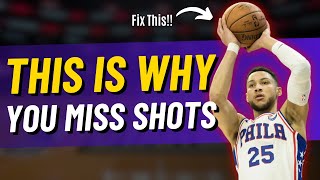
Ethan Khoza breaks down why hand placement wrecks your shot consistency and how to fix it. Index and middle finger should split the air hole on the ball, guide-hand thumb on the middle seam. Three drills train your hands to stay consistent even when the catch is messy.
Chapters
Over the past five years that I've been working with players and specifically helping players to improve their shooting. There's three major areas that I've realized when it comes to shooting form. These are the areas that players are most likely to struggle in. And if you do struggle in one of these areas, it's going to cause you to be a wildly inconsistent shooter. And in this video, we're going to talk about the first area, which is hand placement. First, we're going to talk about the big mistake that a lot of players make when it comes to their hand placement. And then we're going to talk about the fix that you can have so that you have much better control of the basketball and therefore you're able to shoot the ball at a much higher level. And then at the end, we're going to talk about a few drills that you can do so that you gain elite level control of the basketball when you shoot it. And I guarantee these are drills that you've never seen before, so make sure you stay tuned. Let's get into it. First, we'll talk about proper hand placement. And this is where so many players that I see make a huge mistake. Obviously, we want to have our shooting hand in the middle of basketball, right? Every basketball camp you've ever gone to since you were a kid that you've learned this, have your hand, your shooting hand, middle of the ball, guide him on the side, right? We all know that. But we want to make sure that we're doing this the right way. So let's talk about the shooting hand first. Now, generally what I say is that we want to split the air hole with our index finger and our middle finger. So if we can split the air hole with those two fingers, then it's. It's very likely they're going to be shooting in the middle of the basketball, through the middle of the basketball, because our hands going to be right in the middle of the ball, okay? And then when that ball comes off of those of those two fingers last, it's going to make sure that we're able to shoot the ball straight, which part of being a great shooter, as obvious as it sounds, is being able to consistently shoot the ball straight. Right. We want to eliminate our left and right misses. And the best way to do that is by getting good at shooting the basketball straight. And when we have that, that middle hand placement with that shooting hand, it's going to give us the best chance to do that. So we want to split that air hole. And then where a lot of players mess up is that they think about their guide hand being on the side of the basketball. And so they put it directly on the side, like where all the seams kind of meet up. Well, it looks like, yes, that's a side of the basketball. In reality, you actually hold the ball at kind of an angle, so it's actually a little closer to your shooting hand that you probably want it to be. And this is going to cause you to have less control of the ball. You might feel like the ball is coming off the side of your hand or the wrong finger, or you might just lack control going up with it. So what we want to do is we want to move our guide hand actually out a little bit wider so that we have better control over the basketball. And it just. There's more pressure balance throughout the ball. And to do this, we want to think about putting that. That thumb of our guide hand right on that middle seam of the basketball. This is generally what I tell players to do, and it's going to elicit the best amount of control over the ball right there. Now, the most important thing when it comes to this is that you want to find what feels best for you. And so you want to try this. If it doesn't feel good, if you don't feel like it helps your control, then continue to adjust, right? And figure out what. What helps you to feel the most confident, what allows you to feel the most in control. Maybe you want to have your guidance a little bit closer to your shooting hand, and that helps you feel the most in control. Maybe needs to be a little bit wider, and that. That is all dependent on who you are. Everyone has different hand sizes, different biomechanics. Everybody's a little bit different. So you need to figure out what works best for you and allows you to have the most control. But again, this is generally where I start with players, and then we can adjust from there. The last thing we'll talk about is one of the biggest problems that players face when it comes to shooting. Sometimes you catch the ball and you shoot it and it off your hand weird. Or you feel like you didn't get a good. A good grasp of the ball when you caught it. And this especially happens in games. You maybe have to shoot the ball a little bit quicker or, you know, maybe you're. You're coming off kind of quickly into your shot, which is a lot of shots that you're going to shoot in a game. And so it can a lot of times feel difficult to get really good control over the basketball. Now this is a huge problem, and one of the main reasons why players miss shots. And my belief is that we should train ourselves to be able to handle this problem. Shooting involves a ton of variability from shot to shot. This includes, like, the exact placement of your hands. Right. Shooting is so difficult because there's so many things that can change shot to shot. And when it comes to your hand placement, you're a lot of times not going to have time to make sure that it's perfect. Okay. I perfectly have my, my two fingers played in the air hole, and my guide hand is in that middle seam right there. That's not going to happen every single time because you're not going to have the time to do it. So when your hand, when you're shooting, hands a little bit off to the right. Can you still make that shot? When your guide hands a little bit more, a little closer to your shooting hand than you would like, are you still able to make that shot? Are you still able to control the basketball, Shoot it straight and get it where you want to go. And so if you aren't good enough to make shots when your hands are slightly off, you probably aren't going to be a very consistent in game shooter. So here's a couple of drills that I like to use to take this, exaggerate it, and therefore train it in a way that's going to allow us to make more shots in games. Now, this first drill is something that I call hand replacement shooting. And essentially all we're going to do is we're going to switch up how our hands are placed in the ball. So we're kind of just tossing the ball just back and forth to ourself right here. But we're switching up where our hands are at. So sometimes our hands are narrow, sometimes they're wide, sometimes the left hands a little higher, right hands a little bit higher. But we're just going to keep changing it. And then on the go call, we're going to shoot from wherever our hands are, and we've got to go up and shoot the ball. So this is going to train us to be able to shoot the ball when we have an imperfect hand placement or a hand placement that isn't what works. Accustomed to using. And if you don't have a partner to give you that go call or that shoe call, then you can just kind of switch it up. So give yourself a few tosses and then make sure that every shot you shoot, your hands are placed a little bit different on the basketball. The goal with this is to Challenge yourself and expose you to as many different combinations when it comes to your hand placement as possible. So that when you get to a game and something's a little bit off, you've already trained your ability to adjust and work through that and make the shot despite of things being imperfect. The second drill is called wide and narrow shooting. So all we're going to do is we're going to alternate each shot between our hands being placed a little wider on the basketball than normal. And then the next shot, they're going to be a little more narrow, a little more close together than they normally would be. And so again, we're just exposing ourselves to different types of variability when it comes to what our hand placement looks like and challenging our ability to make those shots in spite of that variability. And you can challenge it even more by forcing. You know, for example, you have to get three sets of back to back makes. So you got to make one where your hands are narrow and the one where your hands are wide in a row, and that's one set. And you got to do it maybe three times. Just something simple that you can do to add a little bit of challenge to that. And then the last drill that we'll go through is just fast shooting, shooting the ball as quick as you can. So you want to think about having the ball in your hands for the least amount of time possible between catch and shot. This is going to mean that you're likely going to have some imperfect hand placement. And this again is going to train our ability to make the shot anyway. A lot of times when you shoot the ball and you have, you feel like you don't have a great grip on it, it's because maybe you had to shoot the ball a bit quicker. There's close outcoming, the, you know, late clock situation, whatever, but you got to shoot a little bit quicker than maybe you normally would. And so being able to do this, have that imperfect hand placement at times and still make the shot is such an important skill to be able to have. So my recommendation is you take five to 10 minutes in your workouts to add in these, these three things, or, you know, maybe just one of the things in this workout. The next day you do another one, whatever the case may be. And that's going to allow you to again train that ability and get rid of one of the main reasons why you miss shots, which is just hand placement, being off, not having great control of the basketball. And it's something that I haven't seen a lot of people talk about. But it's something that I've been experimenting a lot with my players and. And it's something that I think is really good thing to again, just add for, you know, five minutes in a workout, at the beginning, at the end, whatever that might look like for you. A lot of times we'll do this towards the end of our workout, right before we get into, like, our normal spot of shooting. We'll just go through and we've got to make 10 shots, maybe where our hand placement's imperfect. And it's great when to sort of build that trait of being an adaptive shooter, someone who's able to work through imperfection, which is ultimately what the best shooters are able to do. So I'm going to be coming up with videos that are going to go through the second and the third aspect of form that I've seen. It's really, really important. So stay tuned for that. Make sure you click the top link in the description down below to get my free elite perimeter score program that's going to take your game to the next level and take your shooting to the next level as well. So, like I said, go ahead and check that out. Completely free top link down below. I appreciate you for watching. We'll talk soon. Peace.
More from Ethan

Stop Using One Dribble When You Drive To The Rim! (How To Become A Better Finisher)









