Why Ball Handling is the Second Most Important Skill In Basketball - Podcast Episode 18
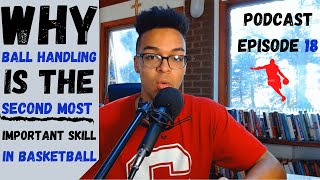
Ethan Khoza breaks down ball handling into four core components: ball control, change of pace, change of height, and creativity. Better dribbling expands what a player can do on court. He walks through specific drills like wide V dribbles, the 3-cone drill, and full-court freestyle work.
Chapters
Welcome to the Vision Drip Asshole training podcast. Thank you guys for tuning in today. Whether an Apple podcast or Spotify or YouTube, I appreciate every single person who's listening or watching right now. If you are on Apple podcasts, go ahead and scroll down to the bottom of the page. If you have not, leave a five star review helps out. The show helps everything to grow, gets in front of more people, so that really, really helps out. Again, the more people that watch, the better questions we get, the more it's gonna help you. So, so again, I appreciate you guys. Scroll down, leave a review. If you're on YouTube, make sure you like and subscribe if you're new as well. Again, new podcasts every single week and I'll mention it again at the end, but make sure you have questions for me. Send me a DM on Instagram. I just put a poll out on Instagram this past week asking for questions and you guys asked me a ton of questions. So got some stuff going forward, gonna do a Q and A at some point as well, so be ready for that. But appreciate all you guys asking questions and all that because again, everything comes off the questions that I, that I, that I get. And including today's episode, which we'll hop into right now. So I got a lot of questions on my Instagram poll about ball handling and dribbling and all that sort of stuff. So I kind of want to make this, this episode devoted to that and kind of my, my thoughts on how to, on how to train ball handling, how to improve it, where it factors into your game and the steps you need to take going forward if you want to become a great ball handler. And you know, just so you guys know, as of the time of recording this, well, actually as of the time you guys, you guys are going to see this, this probably come out on a Sunday. Elite Ball Handling, which is my ball handling program, is coming out when you guys see this the next day on Monday. So Monday, August 17, elite ball handling is going to be open and essentially what it is is going to be a six week program where you're going to go through different ball handling workouts and they're going to target the skills we're going to talk about today. But really, you know, if you struggle with your confidence with the ball, if you struggle with handling pressure, you struggle with being able to create with the ball in your hands, being able to create off the dribble, being able to control the basketball and not lose it, all those things that, you know, if you struggle with those things this ball hand program is going to be a massive game changer for you. I've spent a lot of time, talked to a lot of people about, you know, kind of stuff. I'm, I've been developing with this over the past few months and so I'm really excited to get it to you guys. It's, it's really, it's something that's going to take your, your ball handling ability to the next level. And we're going to dive in today to why that is. Because, you know, a lot of times players have a misconception of what actually ball handling is and what it actually entails in terms of, of getting better. But what I love to do is I love kind of diving into things, diving into like, you know, the why behind why we do things. You know, why do we do this drill? Right? Like, I don't want to just do a drill because that's what everyone who has ever played basketball has done for however many years. Because every coach, you know, that you had growing up in elementary school, middle school says, do this drill. Does that mean that, that, like, why are we doing that drill? What's the reasoning behind it? I think that's what players need to ask themselves when it comes to developing your ball handling. And unfortunately, there's a lot of just, there's a lot of stuff out there that players do that I feel like you could get better results doing different things. And again, doing the research I've done over the past few months and just working myself, working with players that I work with as well, I've seen a ton of improvements. So again, if you guys are looking to take that part of your game to the next level, this program is going to be something you guys are going to want to check out. So again, make sure you guys follow me on Instagram visiondriver Basketball. I'm going to post about it as soon as it's live on Monday at midnight. It'll be so Sunday, you know, so Sunday 11:59, boom. As soon as it's 12:00am Monday morning, that program is going to be live. You guys can grab it and there's going to be a discount for the first week. So if you guys grab it the first week, you're going to get it for a lower price. So be prepared for that. And again, you know, summer's getting towards the end. Now is really the time where you guys need to buckle down and get yourself prepared for this preseason. So, you know, no better way to do that than getting kicked off, starting ending your summer the right way and bringing that momentum into your fall. So I'm super excited for this next week upcoming to see the stuff. As I know I've gotten a lot of DMs, a lot of comments from you guys who are excited to get going with the program as well. So I'm here for it. But, you know, I got a question, actually, I got multiple questions in that Q and A on Instagram I did about ball handling. So I wanted to kind of answer those specifically. And one of the questions I got from John, he asked, how does dribbling help your game? This is kind of a, kind of a broad question because I think you would take it a couple different ways. But, you know, I kind of wanted to move it towards something. So, you know, essentially kind of off the bat, when you can handle the basketball, it just gives you another level of freedom on the court, right? Because now all of a sudden you're able to go where you want and you're able to take advantage of those opportunities that, that are presented to you. And when I say opportunities, what that means is that if you have the ability to handle the basketball, there's going to be some certain things you can do on the court that you would not be able to do if you weren't able to handle the basketball. Okay? If you can handle the ball well, you might be able to drive into the lane when there's another person in there, and you might be able to finish a layup right there. Okay? If you can't handle the ball at all, then you might, you might not be able to do that. You might have to settle for the outside shot. You might not be able to drive into the paint. You might have to pass the ball. So there's also a scoring opportunity you're going to get because you have the ability to handle the basketball. And that's a real, real basic example. But that extends throughout way more, right? So if you can handle the basketball, maybe your coach designs pick and roll opportunities for you, okay? So all of a sudden you get to be the ball handler in a pick and roll. You get a bunch of looks off the pick and roll. You might get some jump shots off that. You might get to the rim. You might. There's a ton of reads you're going to make. You might get a lot of passing, be able to drive and kick, do all those things, you know, get to the free throw line. You're going to have the ball in your hands a lot more, meaning you're going to get more opportunities because your Coach knows, you know, hey, I trust this guy with the ball. I'm going to get it to him. He's going to make a play with it, okay? So being able to handle the basketball is going to give you freedom, but it's also going to give you opportunities as well. So those are two things to keep in mind. You know, I'm a firm believer, and I've done a whole podcast episode on this, but I'm a firm believer that shooting is the most important skill in the game of basketball. And. And, you know, while I stand by that, I think that ball handling is probably a close second to that. And honestly, there are people out there who probably would argue ball handling above shooting for various reasons. Now, I disagree that it's above shooting, but I can understand where people are coming from when they say that, because ball handling is incredibly important. And while shooting is for sure important, you also have to consider the fact that when you can handle the basketball, that's going to get you more shooting opportunities. Okay? If the defender knows, like, okay, this guy can blow by me, he can drive by me. He has the ball control. He's able to change his pace. Well, he can get by me. I might have to give him a little bit of space, and I might have to. I might be more susceptible to going for his little fakes, right? That might give him an opportunity to get by me or to get me to back up enough for a shot right there. That's going to play to your strength as a shooter, right. If you can put the ball on the ground a little bit and. But I don't want that to be like, bottomly, it's not just. Just that, okay. I think there's more that goes into it as well. You know, another aspect that I want you guys to think of is you have to consider your position and your role as well. Okay? You know, 95% of players are not going to be asked to dribble the basketball as much as Kyrie Irving or Trae Young does or Chris Paul or Steph Curry. These guys who have the ball in their hands, you know, think about James Harden. James Harden is going to take so many dribbles throughout the game, okay? Most players aren't going to be asked to do anything near that with the ball in their hands. Okay? There might be a few who may, but even the point guards are going to. Are going to. Not. Their coaches are not going to want them to be dribbling the ball as much as those guys might dribble the ball in an NBA game. Okay? But you have to consider that that's also going to affect the way bottom is going to affect you personally. Okay? That being said, you don't just need to be a point guard to need those ball handling skills, okay. And we can kind of break that down as well. You know, the majority of players aren't superstars. The majority are not. The majority of players are role players, right? You might have one or two guys on a team that are like the guys and then everybody else on the team has to play a role. Okay? Now your role might be to go out and score, maybe that's your role. But your role might be to go and be the point guard. Your role could be to go get rebounds. Your role might be to play defense. Your role might be to be a spot up shooter, whatever that role might be. There is a, there are ways that your ball handling is going to make you more effective in that role. Even if you might not kind of realize that right off the bat. The ability to put the ball on the floor and be confident doing that is going to add another aspect to you as a player that's going to make your team a lot better. It's going to thrive in that role even more and probably even expand your role. Okay? So let's kind of break it down, right? If your role is you're a catch and shoot guy, okay, you know, you, you're catch, shoot, spot up shooter off driving kicks. You, maybe you get, they set a lot of pin down screens for you. You know, you're a shooter, okay? If all of a sudden you're able to put the ball on the floor, two, you're confident driving to the basket, you're able to break down your guy one on one or even if he's just overplaying you, you're able to rip through, go buy him. Maybe, maybe how defender steps up. You can go with equipment between the legs and finish, right? Just real simple stuff that's going to add a whole other dynamic to the way that you play. So whereas before the other team might say, okay, that's their shooter. We're just going to put a guy right up in his space. Now if they respect your ability to put the ball on the floor, they have to give you that space now. So now they're going to play you differently coming off of screens. They're going to be forced to be less aggressive playing you on ball. Meaning you're going to get to do your strength more, which is shoot the basketball. Because they're going to have to respect that you can do more than just that, okay? And that's just one example of being able to do that. You know, what you can also consider is like if you're a big, right, you're a big man and the majority of the time you're playing inside, you're getting rebounds, maybe you get a couple post opportunities, maybe you get some dump offs off of drives, maybe you set a lot of ball screens, all those things that a traditional big man is going to do. You know, if you're confident being able to put the ball on the floor a little bit, that's going to change that. That's going to expand the, the impact you can have on the game as well. Because now all of a sudden your coach might say, okay, you know what, he's a big, but he's confident with the ball in his hand. So if we see a mismatch where maybe the guy guarding him isn't confident playing perimeter defense, maybe we space him out a little bit, get him the ball and then let him go to work on him, right? So now you get another, like we talked about before, you have more opportunities now, okay? You're able to, to have the ball in your hands a little bit more, your coaches trust you more, your teammates trust you more. And basketball just becomes more fun at that point, right? Because now all of a sudden you're expanding your role and you're becoming better just because you're adding in this one skill of ball handling to that, okay? And to me, that's really where the importance of ball handling comes in, is what exactly it adds to your game. Not in terms of just ball handling may never be your go to thing, right? Like me as a player. And the majority of the times if I'm playing like I'm looking to shoot the basketball, okay? You know, that being said, I can put the ball on the floor if I need to, right? If I need to get somewhere, if, if I'm being overplayed, if someone goes for a shot fake or a jab, I can put the ball on the floor and I can get into something real quick off the dribble right there, right? I'm not Kyrie Irving with the basketball, right? And that's because I don't need to be right. I don't, I don't need to be Kyrie Irving. I'm going to play my role, but I'm able to expand what I can do in my role because I feel comfortable and confident because that I can do that with the basketball, okay? And that's exactly what I'm talking about with this as well. It comes, you know, you think about this in all sorts of opportunities and you can even, you know, you can think just right now, how would ball handling, how would, how would, how would it increase in your ability to handle the basketball? How would that impact your role right now? Okay, so you know, if you're playing, if you're in high school right now, right? Think about how, what your role was last year, okay. And think about what it would be like this year if your ball handling was better, okay. If you're going into high school, right? Think about what you could do, what you could accomplish with more ball handling ability, okay? Let's think about with a press, right? Let's say you're that spot up shooter. Let's go back to that spot up shooter example. And you know, you've never really been comfortable. You know, when you're getting full court press, you don't like putting the ball on the floor, okay? Teams like to trap you because they know, like this guy's not comfortable with the ball in his hands. If you all of a sudden become comfortable with the ball in your hands, how does that change things for you? Well, now all of a sudden your coach can keep you in there for a press, right? You're going to have the ball in your hands more often, okay? You're going to have more of those duties as well. And again, once players start to overplay you, you get by them. You're in this transition kind of break thing, you're getting more easy points because you're able to be in there, you're able to be effective. And again, that's another aspect to your game that you can add right there, okay? And you know, if you're a big, you're a big man, you might not be asked to put the ball on the floor all that much. You might say, well, coach, why would I need to be able to handle the ball? Well now if you have a great, you have a great grip on your ball control and your ability to manipulate the ball, you're going to be much more comfortable putting the ball on the floor. When you're inside, when you're maneuvering in the paint, going into your post moves or whatever your finish is, there's a little quick things, okay? So it all kind of comes full circle right there, right? And we can look at a guy like, like Nikola Jokic, right, With, with the, with the Denver Nuggets. You know, that's a guy who's a traditional seven footer, is Just based on how he's built. Like it's built to be an inside, you know, paint player, but. And, you know, not. He's below average NBA athlete. He's not a good athlete in terms of NBA standards. Okay? He should be a back to the basket rebounder and screen setter. That's what he should be. But because of his skill, because of his ability to handle the basketball and to pass, right? But I don't even want to talk about. Because he can shoot the ball, he can pass, but his ball handling is where that really, it stems from. He's able to play point guard at times because he's so good with the ball in his hands. So now all of a sudden he is the, he is, he is the centerpiece of that Denver Nuggets team because he literally can do every single thing on the floor, right? He's your biggest guy, okay. And at the same time, he's one of your most skilled players. So he's able to have a whole different role. So as opposed to him, you know, just being guy who gets rebounds, maybe gets, you know, some, some shots or whatever, he's able to get the, all these triple doubles. And he's a guy that defenses have to play differently because they're like, okay, this dude can do this dude, you can put the ball on the floor, he can pass, he can do those little things. So now he's expanded his role as not just a big guy now he's, he does everything for them. Okay? So. And that's where the game, that's with below average athleticism and he's able to do all of that. So that's where basketball is today, right? That's where it's going. That's where it's been going. And every single year, it continues to progress more and more to positionless basketball. And everybody has to be able to handle the basketball to an extent. Okay. It's not a time where, you know, you can have your point guard, your shooting guard, they can be the guys who can do that and then, but really just your point guard, shooting guard's gonna do it if he needs to. But you know, your, your, your other three guys are like, ah, they can play off ball. No, like today everyone's gotta be able to handle basketball no matter what position that you play. And if you feel like you don't need to, well, probably what you'll find is that if you were able to handle the ball, you're gonna get a bigger role, you're gonna be able to do more in Your role, and you're gonna get more playing time. The coaches got to put guys in who are going to make plays. Okay. And you know, as a coach, my ideal situation for any team that I coach is I want to be able to put five guys on the floor who can shoot the basketball, who can handle the basketball, and who can defend at a high level. Right. I don't care what position you are. I don't care if you're a big. Now, you need size, obviously, so you hope that your big guys can do those things. Okay? But if I have to start five guys who are six, five and taller because they can all do those three things, then cool, right? These days, coaches will start a seven footer if he's their best point guard. Okay? That's how basketball is today. So we want to make sure that you have those abilities. And I think ball handling is such a crucial aspect to that because it makes every single team better. When you have guys who are comfortable with the ball in their hands, right? Defenses can't key in on one guy. You have multiple guys who can make plays, who can run these, who can get things set up, and that's kind of how it all goes. So, again, consider that. You know, I also talked about this in my video that I posted on YouTube a couple of days ago, talking about, you know, the ultimate guide to becoming a better ball handler. And we kind of broke down the four main areas of ball handling that I really have been focusing on, and that again, elite ball handling. The program really heavily emphasizes these four points because I think if you can master these four things, you can be very, very talented with the ball in your hands. Number one is ball control. And ball control is where everything. All these other points are going to come from. If you can't control the basketball, then the other three, it's going to be very, very difficult for you to do those things effectively. Okay? So it all comes with, can you keep the basketball in your hands and can you be trusted with it? Can your coaches trust you to control the ball? Can you trust yourself? Do you have the confidence to go out and hold on the ball? Okay. And you know, this is going to. When we talk about ball control, there are specific parts of it, specific pieces that we can look at that actually make ball control that, like, make up ball control, essentially. So basically, your ability to dribble the ball hard, okay? Your ability to get the ball to the floor and back to your hands as hard as you can. That is one aspect of ball control. Okay? You don't Want to be somebody who dribbles the ball real lightly, real weakly because there's more space for that ball to get stolen from you. Again, it's going to be out of your hands for longer. You're going to find it more difficult to be able to get in things quickly. Right. If someone jumps the ball or jumps on you as you're dribbling the basketball, you can't dribble it hard. Well, you might not be able to react fast enough to do anything with it. You're going to lose the ball. You're going to not be effective with the basketball in your hands. Okay? So that's one thing to consider. Also need to consider your ability to get into moves quickly. How quickly can you get into your between legs dribble? How quickly can you get into your crossover? How quickly can you get into your between legs behind the bat? Right? So that's another aspect of ball control that we need to master if we want to actually get to a point where we are confident and great at controlling the basketball. And then we also want to be able to play with the ball outside of our frame. Okay. So one draw I love to do that helps with this is wide V dribbles, right? We're going to have the ball, we'll say in our right hand to start off, and we're going to dribble it, you know, out towards our knee with our right hand and back out towards our left knee all the way across, getting, trying to get it outside of our frame. And then we push the speed with that. We can add different combos or whatever to that, but just the ability to go to the outside of your frame with that right hand, or then when we switch hands, go to the outside of your frame with your left hand. That's going to help you to become so much more confident in your ability to control the basketball because you can handle the ball wide, narrow, and anything in between. If you play basketball, you'll understand there's going to be a lot of times where that basketball is not going to be right in front of you. You have to be able to control it when it's outside of your body. Okay. And that's something that players struggle with a lot. Because a lot of times it's not something that they focus on when they do their stationary ball handling stuff. It's all narrow moves, right. Pound, dribbles, crossovers that are right in front of them, behind the back is right in front of them or right behind them between the legs. Like real narrow, right. And that's something that I talk about a little bit in that video. But it's super important that we're able to handle that ball outside of our frame. So again, that's the drill that I like to do for that. And then manipulating the basketball is the fourth point I'll make about ball control. Your ability to kind of hang the ball and be able to move it where you want to move it. Right, so exactly. If we talk about your ability to go into an in n out dribble, for example, that's manipulating the basketball, right? A normal dribble, where it's going kind of up and down with it. Whatever might go crossover or pushing it, okay. But now we're taking it, and we're able to kind of not carry the ball in a sense of like, we're moving it in the air. Obviously, you can't pick up the ball underneath it, but we're able to manipulate the ball in the air, and that gives us more control over it for a longer period of time. And if you watch guys play at any time, you know, even if it's like you see guys going into a retreat dribble, right, you're retreating from the defense. That's manipulating the ball right there. Okay, Guys, when they play off of the pick and roll, if you watch guys who are elite off the pick and roll, you'll see them manipulating the basketball the entire time. They're slowing down their pace with a dribble. They're holding it for longer because they're able to kind of manipulate it and hold it and keep it with them. So that increases the amount of time you're able to control the basketball as well. So those four things all go into that, and we talk about drills that develop those things again, you know, I like to start off with drills. The one one thing I'll say is when you're doing your ball handling drills, you want to make sure you're drilling the ball as hard as you can. Okay? So if you guys check out my video I put out on ball handling, like, two days ago, there's a workout at the end of that video. And throughout all those drills, you want to make sure we're starting off with those manipulations. Pound that ball as hard as you can the whole time. That's going to develop your ability to drill the ball hard. Minimize the time from the floor to your hands. And you know something that I always say, and coaches always say that the kind of cue you can use is you want to try and break the floor right when you're pounding the basketball. Especially in those stationary drills, you want to try and break the floor. Okay. The other tip I'll give you guys is when you're doing those kind of stationary pounds, you want to use your entire arm. That includes your shoulder as well. So it's not just something where you're just using your wrist to dribble the basketball or just use your elbow. You want to use that entire shoulder, elbow, wrist, right thigh, three, all three joints. That way you're going to have the maximum amount of power you can have on those dribbles, and that's going to help you to be able to move the ball faster, pound it harder, and again, get better at moving that ball quickly. So then we talk about moving the ball quickly as well. That kind of goes along with that. But how quickly are you getting into those crossovers? So if we go back to that manipulation dribble, that manipulation drill, we're going to go into those manipulation dribbles, and we're going to go into a crossover. Right. How quickly can you go through that? Right. Can you go through those three. Those three pounds, then that quick crossover? Right. So when you're doing drills like that, you want to be able to push your speed as well. I think that these two things especially apply during stationary drills. Okay. So if we're doing, you know, we're doing our wide V dribble series, we're going to try and pound that ball and go as fast as we can, and then we're going to get into our combinations. We're going to do as fast as we can, too. So now we're developing our ability to pound that ball as hard as we can. And also we're able to get into those moves quickly and. And go through the whole drill quickly. So all of a sudden, those two aspects of ball control, we're targeting those. When we start off with that drill, okay. Then we talk about moving the ball outside of our frame. I kind of talked about it with those wide V dribble series, but also there's going to be plenty of drills you can do. There's another drill actually, in the YouTube video I posted two days ago in that workout where we're going into our shiftiness high to low series. And it's another aspect where another time we're working on that aspect of being able to hold, you know, put the ball outside of our frame and then back to it. Right, Right. We're up high and relaxed. Boom. We drop down double crossover balls outside of our frame. Now we're Back into it. Okay, so that's another drill you can use to improve that part of your game as well. And then manipulating the ball, really simple manipulation drill is my favorite. You can also go front to back manipulations, which we do in elite ball handling. But if you guys check out the video from a couple days ago, you'll see the manipulation drill that we go through the series. We go through. And again, that really is going to help you guys improve your ball control immensely. One of my favorite drills ever because literally, as we're talking about it, that works on basically every single aspect of ball control, except for maybe being outside of your frame because it's not quite, but it's still pretty wide because you're still getting that ball nice and wide. You see my feet nice and wide. I'm getting low, so I'm still moving that ball pretty far. But it kind of hits every single aspect of ball control right there. So that's a drill. You guys do that every single day. You're going to immediately see improvements in your ability to handle the basketball and control the basketball. So I highly recommend you guys check that out again. If you haven't watched that video yet, go back to my channel right now. Check it out. The ultimate guide to becoming a Better Ball Handler. It's a full breakdown and a workout as well you guys can go through. It's going to target all four of these as well. So even if you guys don't end up getting the elite, the elite ball handling program, that workout is going to help you guys out. So number two, okay, we went over ball control. That's aspect number one. Okay? We have four total ones. So number two is your ability to change your pace. Okay? And this is such a crucial part because there are so many players who might be really good athletes, but they're always going 100% right. It's either they're going 0 or 100%. Okay? You have to learn how to play and know when to change your pace, when to go fast, when to go slow. What moves can you use to slow yourself down? So in the video, the workout from a couple days ago, we went through a drill, the three cone drill, where we're starting and stopping at those cones, working on being able to go from explosive 100%, slowing down to a hesitation and then boom, we're back into it to that next cone, okay? In elite ball handling, we also work on a closed stance hesitation. So if you look at Isaiah Thomas, and I'm sure a lot of you guys who've seen Isaiah Thomas know the move I'm talking about where he's going to kind of close him. Like he's gonna. He's gonna go into kind of a closed stance and then as the defender relaxes, he's gonna explode off that back foot and attack. So it's like a really weird looking hesitation, but it's so effective because he slows himself down. It looks like, oh, he's about to close himself off. He's probably waiting for a ball screen or whatever. And boom, before that, that foot hits the ground, he's exploding. Okay, that's another move that we work on in elite ball handling and we have a full breakdown. So workout six, I believe is what it is where we break down that move, then we add that into that three cone drill that we were doing. But essentially what that three cone drill does is it allows us to learn how to change our pace quickly. Okay. It gets us just comfortable with that change of pace. Okay. There's so much we can do with change of pace and a lot of stuff that we do with it. But that three cone drill is so great because it's so basic, but it really primes you and it gets you in the. It really gets you comfortable with changing your pace. A lot of times players just don't practice changing their pace. Every ball handling drill they DO is at 100%, which again, there are times for that. There are times where you need to go 100% for your ball handling drills, but there are some times where you should be able to switch up the pace that you go at so that you can work on being able to do that in actual games. So that's super important. So again, check out that video if you guys want to see that drill as well. And then the third point we can make, the third aspect you want to develop is your ability to change your height, changing heights when you're dribbling the basketball. And this can be getting lower or getting higher, and there's reasons to do both. So when we talk about getting low, something I want you guys to look at in that workout that I posted is just how low my feet are. And for any of you guys who have been a part of our live ball handling workouts on YouTube, you've heard me say it, where I say, guys, you can get your feet wide here so you can get nice and low. Okay? If you watch guys play basketball, right, if you watch somebody attack off the dribble, they break somebody down and go watch how wide their feet are and how low they are. If you watch James Harden go into one of his little size ups and then blow by somebody. Look at how wide his feet get, and then look at how low he gets because of that, okay? So we need to be able to train our ability to get our feet nice and wide. That's going to drop our hips for us, put us in a more advantageous situation to be explosive. And being able to do that, going from that high position to that low position is going to allow us to be explosive and get by our defender. Put pressure on them, make them foul us, whatever it's going to take to get and make some plays, okay? But at the same time, it's not just about getting lower, okay? Getting lower is important. And again, we did that shiftiness, high to low crossover drill that you can see in that work, in the work a couple days ago as well, where we work on going from a high position, high and relaxed, to, boom, low and quick on those double moves. Okay? But also it can be effective to raise up, because what raising up is going to do a lot of times is it's going to make your defender relax himself as well. Okay? If you guys watched that video I posted, you guys would have seen the Jayson Tatum clip where he's. He's driving, he's in the lane, and he goes into that little closed. The closed stance, hesitation dribble against. I believe it's Brook Lopez or maybe Robin Lopez, one of the Lopez brothers on the Bucs. He goes into that and then Lopez raises up, he's like, oh, you know, J.T. he's raised up, he's in his closed stance. And then, boom, Jason Tatum explodes right by him, right? So Jason Tatum raising himself up, changing his height causes his defender to be like, okay, I can relax a little bit. And then, boom, he's able to quick get back, blow by him. Okay? That's the kind of thing that. Again, that's why I say that, you know, a lot of times ball handling players kind of go about it the wrong way. They think, like, if I do my little stationary ball handling drills every single day, then I can just become great at it. And that's part of it. Again, we talked about ball control. That's part of it. But also these change of pace, changing heights, that stuff you develop through actual targeted work on that sort of stuff. So that's something we actually have to train. You don't want to just ignore that sort of stuff because exactly what I'm talking about right now, little details of the game that you might not even think of those are very, very important. And then the fourth point I want to make, and probably the most overlooked part of all this stuff is creativity. And creativity is so huge because, you know, I always talk about it. There is never going to be two plays that are exactly the same in basketball, right? If you. You might be in a game and you might have two similar situations, but there's always going to be some sort of little difference that's going to make that play a whole new set of circumstances. You know, I talk about basketball being a game of solving problems, okay? How. How the players and teams who are successful are great at solving new problems that they face, okay? That those problems might be, how do I react to this defender, right? How do I, you know, how do I hit this shot from here? You know, if my defender plays me this way, now what do I do, right? If their team comes to press it this way, what do we do? How. So your ability to solve problems is going to directly correlate to your ability to be successful, because basketball is a whole bunch of new problems you're never going to see twice. So how are you able to improvise? Are you able to adapt on the fly and. And overcome those little things? That's where creativity comes in with ball handling, okay? If you watch guys who might make moves, you're like, man, like, how do they do that? Like, how do they even practice that, right? You watch a guy like, Trae Young is one of those guys who I watch, and I'm like, man, this dude is like, how does he even. How is he able to do all that? But you look at him, and it's really his ability to be creative with the basketball in his hands, okay? So there are. There are times where, you know, he may get. You know, he may get a double team thrown at him, okay? But he's able to go into some sort of move that even doesn't even see coming, because he's worked on that. On that ability to really have an answer for every problem that could come his way. And that makes him incredibly difficult to stop. Because you don't. Like, no matter what you do to him, there's something he's going to do back to you, okay? And that's where creativity comes into play and why I think it's such a crucial part of your development, and it's not something you should be ignoring. So kind of one thing that I really worked hard on developing a lot in elite ball handling is creativity. We do creativity stuff in every workout. Every workout is going to be Creativity stuff. So if you guys saw in the video a couple days ago, we had that full court creative freestyle. So we have a lot of stuff like that in there where we're going to work out of different situations. Your ability to be creative and switch up your moves, and that's where you kind of add all these three things together, right? You're gonna. That's gonna. That's gonna stress your ball control, but it's also gonna stress your ability to change your pace. Okay? You're going through your freestyle, you got a defender on. You gotta be able to change your pace. Okay. Also, you can change your height as well. So I'm up, I'm high, I'm relaxed. Boom. I'm quick, low and explosive. Then I go, okay. Targets all three of those things and allows you to kind of just shut your mind off and just play basketball. Okay. I did a podcast a while back ago about block training versus random training, how essentially when you have block training, right, you're going to see an improvement in your skills. But if you really want to see the most effective results in your games, which are random, right, block training is going to be stuff that's set out for you. So, okay, go to, you're going to go to the gym today and you're going to do £50 with your right hand, 50 with your left hand. You're going to do 50 crossovers, 50 between the legs and 50 behind the backs. Okay. Objectively, you're going to get better at your ball handling by doing those things. Okay? But somebody else might go to the gym and they're going to say, you know what, here's what we're going to do. We're going to go through, you know, some pound stuff. And then what I'm going to do is I'm going to put you on the court, you know, in the center. We're going to do the kill the grass drill, okay. Where you got to try and dribble on every single piece of that center court, doing different sort of moves and being able to change your pace up, touching every single part of that space that we have. Okay? So you're all of a sudden we working on all sorts of different moves, different speeds, different, like different, you know, hard pound here between the legs, behind the back, spin move, all those different things you might work on, that player is doing a more randomized aspect of training, okay. And we broke down the differences in results when they take groups of players who, in any sport, literally, in so many different sports where they would take guys who who went through block practice and. And their results in practice got better every single day. So the first day, they do their 50 pounds, 50 crossovers, 50 between behind. Every single day, they're doing it faster, right? Day one, they do it in, you know, 40 seconds. Day two, they do it in 38. Day three, they do it in 35. Day four, they do it in 32. Right? Those guys doing the randomized training, they might not see that sort of, you know, that. That sort of same trajectory of results the same day. They might do a great job. Day one. Day two is a little bit worse as a new factor thrown at them, you know, Day three, they might do a little better. Day four, they might do a little worse. Something new is being thrown at them. But when they get into games, the players who have been able to do this randomized sort of training are able to perform better because they're used to having to adapt to new things. Right? They've been training to. To succeed in randomized situations, which every game is a randomized situation. Again, there's no two ways that are the same. Okay? So you need to be able to adapt into play in that sort of style, right? And if you're only focused on your block training, you're not gonna be able to do that. So that's why I spent so much time putting in this creativity stuff to elite ball handling, because it's so important that you guys do this sort of stuff. Okay? So. And creativity, again, is gonna kind of add all those things together. And that's why I think, you know, something that every player needs to able to focus on. So that's something I talk about a lot. But again, elite ball handling is going to target all four of those areas. So, again, highly recommend you guys check that out. And we also talk about footwork and different stuff. I got a question about footwork as well in that Q and A I did the other day on Instagram. And essentially, we target that footwork when we work on pace and we work on those height changes. Okay? So we're doing ball control. It's not usually going to be a lot of footwork creativity. You're going to obviously use your footwork, but we're not developing it at that point. Okay. So we'll have drills where working on our pace, working on our different hesitation dribbles, paying attention to what our feet are doing. Okay. And obviously, there are different moves that you can go through that are going to have different aspects of footwork, but kind of when it goes, when it comes, when it all comes back to it. How well can you do these four things? How well can you control the basketball? How well can you change your height and change your pace? And how well or how creative can you be with the basketball? Are you able to adapt to different things? If you can master those four areas, then you're going to be a really, really, really, really good ball handler. Okay? And so I don't want you guys to think that it's just as simple as going out and doing ball handling drills every day because you want to make sure that you target those areas so that you can get better at those. So again, check out the video I put out a couple days ago. You guys are going to see a workout you guys can go through that's going to help you guys out. Like I said, guys, Elite ball handling is coming out on Monday, so be prepared for that. Monday, August 17th. Again, I'm super excited to get this into your guys hands. And again, if you guys are interested, make sure you follow me on Instagram. I'm going to post exactly when that's out. You guys be prepared for it and hit the ground running on Monday and get to work with it. Again, I really think you guys are going to see some results in these six weeks that are going to really, really blow your mind. Because I know a lot of you guys probably haven't tried the stuff that we're going to get into. So really, really excited to get going with this sort of stuff. And again, any questions you guys have for me, send me a DM on Instagram visiondrivenbasketball. Again, always looking to answer questions to my podcast. And again, appreciate all you guys for supporting and I will see you guys soon. PE.
More from Ethan

Stop Using One Dribble When You Drive To The Rim! (How To Become A Better Finisher)









