Why I Don't Like Form Shooting and Why We Don't Do It In Workouts
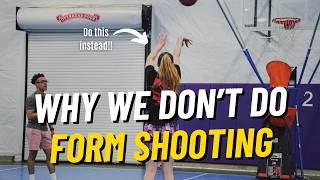
Ethan Khoza (YouTube) argues that traditional form shooting routines offer limited transfer for already-good shooters and that training should prioritize challenging, game-like variability to provoke neuroplastic change. He explains that form shooting mainly provides psychological momentum but lacks the error-driven challenge needed for improvement, demonstrates a practical "8am AAU" drill that starts with threes to simulate game conditions, and cites Nikolai Bernstein’s research on variability in expert motor performance to support training for adaptable technique.
Chapters
So I want to make a quick disclaimer before I get into this video because I know that it's a very polarizing topic. First of all, this is not aimed at players who are beginners, players who are younger, who you know are developing shooters, or players who are bad shooters in general, regardless of the level. This is not aimed towards them. For them, they may need something completely different. Right? Basketball and basketball training is a science, but it's also an art. And part of that art is being able to adapt or what you're doing based on who's in front of you and what level they're at. So for players who aren't great shooters or were younger, developing, this isn't necessarily tailored towards them. This is much more in reference to players who are good shooters. So high school players, college players, who are good shooters. And then the question becomes, well, what qualifies me as a good shooter? I don't subscribe to the belief that, oh, you know, if you're a good shooter, then you're making 70% of your threes and workouts or whatever number you want to throw out. Because again, if you've watched my videos before, then you know that if you're training the right way, a way that incites challenge and actually forces you to get better, that you're not going to be making 70% of your threes and workouts. Like, you're just not going to be doing that. So when I refer to a good shooter, a few things you can use to kind of gauge, like whether or not you're there. First of all, if you've had multiple games in your career that you've made multiple threes or multiple games, you've made three, four, five, six plus threes in a game, you've done that multiple times. You're probably a good shooter if you are confident in your shooting ability, if you expect to make shots. Right? If you believe that you're a good shooter, you probably are a good shooter. And then really, even simpler than that, if your coaches or your teammates believe you're a good shooter, they have confidence in you. They expect you to make shots. If your coach is drawing plays up for you to get shots, if your teammates are encouraging you to shoot the basketball, you're probably a good shooter. So those are all things you can use to kind of gauge whether or not you're a good shooter. But that's who I'm referencing. That's who I'm up. I'm really focusing on in this video, right? So I actually got the the idea that made this video this morning I was on YouTube and this video popped up and it was of this basketball trainer, was a smaller YouTube channel. And this guy was kind of talking about like, oh, you know, players will always come in the gym and they just. First thing you do is start shooting threes and, and they think that they can just, you know, shoot shots like Steph Curry and just be Steph Curry. And the reason that they're not great is because they don't spend the time doing the boring work and, you know, shooting the ball three feet from the rim and getting up all their shots and all that sort of stuff where essentially was saying like the first thing you do when you walk in the gym every single time should be form shooting, because that's how you become a great shooter. That was the essential premise. Then he went through a workout that was a couple hundred made shots of just form shooting. And I wanted to make this video because I actually completely disagree with that sentiment. And I know that's, that's kind of a, again, a polarizing thing to say because the big thing has always been form shooting. Form shooting, form shooting and for shooting is the most important thing when it comes to becoming a great shooter. But when you actually look at the science of it, again, I already mentioned basketball training is a science and an art. So we can't throw away experiences, we can't throw away building confidence. That's the art part of it. But there is an entire science aspect of that that we have to look at. And this whole, the whole craze and obsession with form shooting, to me completely goes against what the science says when it comes to becoming better at a motor skill, in this case becoming better at shooting. And I want to dive into why that is and some effective ways that again, if you're a good shooter, you can actually progress as a shooter. And some ways that actually I think we can adjust form shooting to make it better. And so the first question that I would bring up, does form shooting even relate to making shots, Making actual game shots, when you compare the two of them, especially in the way that a lot of, a lot of people do it. Like the videos watching today, they're starting off with one arm form shooting and then we're doing like two arm, like normal shooting, but we're actually starting off with one and bringing the guy hand up late. So it's just very like awkward and it's not what an actual shot is going to look like at all. And so I look at that and I'm like how much does that actually apply to making game shots? And I would argue that in the vast majority of cases it doesn't really apply that much. And so we spend all this time saying, hey, you know, I'm, I'm shooting all these form shots. I don't think that a lot of that actually translates to becoming a better shooter. I think there's a lot of other explanations that go into that. It's funny because when I think about the best shooters that I'm around, all of them, at least all the ones I can think of, have some sort of form shooting routine. When they come in, like we'll have a workout, they'll come in before we get started, they're going to be overdoing their form shooting. Pretty much all of them have something that they do right? And so you look at that, you might say, well, that's probably why they're great shooters, because they come in the gym and they, they get their form shooting in all that sort of stuff. I actually think that we can look at it a different way. So there's an analogy that I'll use right here. And you know, I don't know if you're into cars or not, but generally throughout the world of cars there's two manufacturers that are kind of viewed as like the holy grail of like reliability and just well made cars. And that's Honda and Toyota. And so like for me, I have a, I have a Honda. And so I was listening to a mechanic, actually a shop owner who was talking about the whole Honda, Toyota, like, you know, why is it that they're so reliable? Are they that reliable? And he said, really it's, it's two parts of it. Half of it is the fact that yes, Honda and Toyota, they do make great cars. They make very reliable cars. They're, they're good manufacturers. But the other half of it is the fact that generally people who own Hondas and Toyotas a lot of times are buying them because of the reliability, the fact that they're going to last a long time, so they take better care of them because they're already thinking about how to make this car last as long as I can. So they're going to take the time, they're going to do the maintenance on it, they're going to get the oil change, they're going to do the tune ups when they need to, they're going to replace the tires, they're going to do all the stuff that's needed to make sure that car lasts as long as possible. And that's a big part of why these cars last a long time, because half of it is it's a well made car. And the other half of it is that the owner does a great job taking care of it. And if you took those owners and you put them in a different manufactured car, like a different brand, that car would probably last a lot longer than the other cars on average that are made by the same manufacturer, because that person takes better care of their cars. And so relating that back to shooting and basketball, you can look at great players having some sort of form shooting routine and say, well, that's why they're a great shooter. In reality, that person is the one who's spending the most time in the gym. More than likely they're getting the most shots up, they're the most obsessed with it. And therefore that's why they're going to be a great shooter. It's because they do all the right things. So we can take away the point that says, oh, they get in and they do their phone shooting first, but what about the fact that they do everything right? You know, you could take somebody who treats their car horribly, put them in a Honda or Toyota, and it might not last quite as long because they're not doing the right thing. So when I look at the fact that a lot of the best shooters that I'm around, pretty much all of them have form shooting routines. You can look at that and say, well, they also are the players who are spending the most time in the gym and are the ones who are doing the most to be great shooters. Now we're going to dive back into that point in a second here. But form shooting is not going to lead to you making more in game shots, you making more game shots. It's not going to lead to that. Again, past a certain point, we're talking about beginners, we're talking about somebody who's new to shooting. But sure, anything you do is going to help you. But when you're a good shooter, a consistent in game shooter form of shooting is not making you any better. And what it will do though is it's going to provide you some sort of psychological momentum as you kind of move into your workout, right? So all that psychological momentum is, is it's essentially just you getting yourself going, you seen the ball going, go in, you building a little bit of confidence that way, and then you feel a little bit better as you start your workout. Think of it like when you wake up in the morning and you know you're a little Tired, you have no momentum yet, and it's a little hard to get out of bed. But you do get out of bed and you wake up and go brush your teeth, and then you go make your coffee and you go eat, and next thing you know, you're like, ready to go. Because you built a little bit, a little bit of momentum just by doing small things. And that allows you to get into your day. That is a lot of times that what can be a benefit of formal shooting is it just allows you to build a little bit of momentum seeing the ball go in. And then you get into the rest of your workout and you have that momentum to kind of go with you. And we're going to talk about why we actually want to train without that sometimes, because that is very much applicable to games as well. But that's one reason why we might use form shooting to build that momentum, to build confidence by seeing the ball go into the rim. But not because it's going to make you a better shooter. It's not going to. Because we need challenge in order to become better at something. Okay, and we'll dive into that. Abilities are increased by challenge and error reps. So I say this all the time, and I already alluded to it. If you've watched my videos and, you know, you follow the things that I talk about, then you're not making 70% of your threes in workouts. You're struggling a little bit. You're in that Goldilocks zone where, you know, you're making anywhere from 30 to, you know, up upwards of 70% of your shots. And there's a lot of misses that are happening because you're going to take a drill that, okay, hey, I can go 8 for 10 here, and it's really, really easy. And I'm going to find a way to make it harder and challenge myself so that I find ways to raise my level in order to meet the new challenge that I'm getting. And when you can do that, when you raise your level to meet challenges, that's what. That's literally what improvement is, is by you doing that. And then all of a sudden, you become so good at that, that, okay, now I'm back to making 8 out of 10 at this again. So how do I find another way to make it more difficult? And that's how you actually become better at a skill. And shooting is a really simple way, a really simple thing to kind of see that work in. So we need misses and we need those error reps in order to force our brain to improve. If we never miss shots, if there's no challenge, then there's nothing. Like, your brain doesn't have to move. Your brain is plastic, meaning it can change itself. But it's very, very difficult for your brain to do that, and it's only going to do that if it's forced to. So by doing your form shooting, where there's no challenge, there's no neuroplasticity that is. Is being affected at all by that because there's no challenge. So why would your brain adjust? Why would you become a better shooter? You may be more confident in that workout, and that may lead to better results, but your actual physical capacity to perform is not improving from that. So let's talk about my approach to shooting and developing shooting and why I think it's the superior way to do it again, when we talking about good shooters. So a drill that I love doing is one that I've called the 8am AAU drill, and I'll put it on the screen here. But all that it is is the first thing that we're going to do when we walk in the gym is we're going to pick four shots, and generally it's all going to be three. So, for example, we might go off the catch and we'll go. The first shot we'll do, you know, relocating from wing to corner. Then we'll go from corner to wing, and then maybe we'll go pin down to the wing, and then maybe we'll go transition, and they've got to make three out of four shots on the right side. Then we're going to go left side, do the same thing. We can also add in, depending on, you know, who they are, what they do. We might add in some shots of the drill. Maybe, maybe they go ball screen into a three. Maybe we go transition, pull up. Maybe we go some sort of handoff. Just all depends on the day, on what they. On what they want to do. And that's the first thing that we're going to do being in the gym. So we're not going to start ourselves in close and move ourselves back. No, we're going to go right in and make shots because that's what the game is about. And I think where this really applies is you look at like the high school level, and most of the most high school players think about aau, right? So the time of year when coaches are watching you, right? When you're. You have to go and you have to perform because coaches are coming to watch you play. And that's where they're doing the majority of their recruiting. You're going to play a game and you're going to have two minutes to warm up, right? Your first game on Saturday might be at 10am and the game before you went into overtime. And now all of a sudden you get a three minute warm up and there's two basketballs for your team of 10 people. You're not going to get to shoot a hundred form shots. You're going to have to get your few reps to warm up and then you got to go out there and make shots because the coaches are here watching you now. So if you can't switch it on and make shots right away, if you need psychological momentum to get yourself going, then what's going to happen when you aren't afforded that opportunity? When you have to make shots right now without a warm up, what are you going to do? That's the case for a lot of players. That's why I call this drill the 8am AAU drill. Because we're simulating what it's like when you don't have a warm up and you have to get up and be able to make shots right away. Even when we talk about like school basketball, like I remember back to the days, like my varsity days, okay, so you might get to the venue at, you know, 5 o', clock, let's say, and your JV warm up is going to be at 5:30. So if you're a varsity player, you know, like you get yourself dressed, whatever, it's 5:15 you get out there, you might get 15 minutes to do form shooting or do whatever you want to do to warm up. Then the JVs are on at 5:30 for their warm up until 6 and then game goes till, you know, maybe you get JV halftime at 6:30. But there's two basketballs and there's 10 people. So you're not really getting many reps there. And then JB games over, next thing you know it's varsity warm up. But again, three basketballs for, you know, 12, 15 people and you're doing a set warm up where you're not going to get a ton of reps up. Now we have starting lineups, we have the national anthem. Now it's 7:30. Your shooting warm up, your form shooting, you you did over two hours ago. And then you got to go in there and make shots. You got to be able to do it. So if you can't switch that on when you need to, if you need the psychological momentum to be good how are you going to be a good shooter in those moments? Right, and it might get a little bit easier as you're older at the college level, at the, at the professional level, obviously, but to get to that point, you've got to be good enough that you don't need that, that momentum, you don't need that warm up. And so that's why that's, that's a drill that we do all the time. Almost never, if I'm working with a good shooter, we will almost never start inside of the three point line. You got to go make shots. You got to be able to figure it out, you got to be able to do it. And that's the approach that I a lot of times take is that hard first approach right into the fire so that players are prepared to be able to do that when necessary. One of the big things that I see and I saw in the video that I was watching today, one of the big things that I hear is like, oh, you know, the reason why blank players such a great shooter is because every time they, you know, they do their form shooting, they do their routine, they're great behind the three point line because they put in all the work close to the basket and they always do that. And again, we're talking about somebody who's a developing shooter. 100% you're going to start closer than three point line. Again, not who I'm referring to. When you're a great shooter, we look at Steph Curry, Steph Curry is a great shooter and he's, he's able to hit some of the crazy shots that he hits because he's, he's gone out there and done it. He works on those things. He works on making those difficult shots. He doesn't spend, you know, every day shooting 500 form shots and then he goes out, he hits half court shots. That's not how it works, that, it doesn't translate like that. He goes back and he works on the, you know, the tough shots that he makes. You watch any of his, his like pregame stuff, like you'll see him like shooting shots from full court and shooting shots from the tunnel and like shooting shots from half court off of one foot. Like he's doing all this stuff that's challenging and again, that's pregame, that, that's when he's preparing to actually play in an NBA game. Think about what he's doing in the off season when the cameras aren't there, when he doesn't have to perform that day and what he's able to do and experiment with. I did a video a couple weeks ago reacting to one of his workouts at a Team USA practice. And you even see then the little things that he does to challenge himself where he's shooting with the seams. Then he's also working on shooting, you know, without the seams and so finding ways to challenge himself that way. He's working on shooting the ball from really far away. He's taking half court shots like in his workout. Like that's a part of his workout, just shooting from half court. How many players do you know who do that? There's a reason why he's as great as he is, because he does stuff like that. And you would even see stuff where he's got to make different types of shots in a row, putting pressure on himself. A lot of variability when it comes to his spot up shootings. While he's prepared. In games, no matter what type of shot comes at him, he can make it because he's able to be variable and adapt. And that's actually what I want to get into right now. So there is a Soviet scientist back in the early 1900s and his name is Nikolai Bernstein. And he was hired by the Soviet government to study and see what they could do to increase the output, increase the performance, the efficiency of the workers throughout the country. And so he did an experiment. He took a bunch of blacksmiths and he had some of them who are expert blacksmiths. They were the most efficient, they got things done the quickest, they did the best work. And then he compared them to the novices or the blacksmiths who weren't quite as good, who didn't. Weren't quite as efficient. And he just compared the way that they would swing their hammer to see, okay, what's the difference between the two. Now his initial hypothesis was pretty much what the common thought was, was, okay, hey, the expert blacksmiths are going to have the same exact technique every single time. The pattern is going to be the exact same. And the ones who are novices who aren't as good, they're not as good because they're not gonna be able to repeat the same motion over and over again the way the experts are. And that was his hypothesis going in. What he actually found was that the experts were, there were, there was way more variability from swing to swing. So they weren't swinging the same way every single time. There was little differences, but they were able to hit the same place on the nail or the same place in the target every single time because of the Fact that they were experts, right? So they were incredibly accurate with what they were doing. But the actual technique that they would use would change swing to swing. And he saw that what they would. What they're able to do is that they were able to actually compensate. So there'd be times where they would swing and maybe their shoulders would be a little bit off, but their elbows could compensate in order to make up for that. And so they were able to hit the same spot even with errors happening. And what he saw with the novices is that a lot of times their swings were much more like. They looked much more similar to each other, but they were not as accurate because when one thing would be off, they weren't able to adapt or adjust and fix it. So they were much less accurate when it came to hitting their target. And so this is actually from the book How We Learn to Move by Rob Gray. And I think this is something that should be like, required reading for every basketball trainer. And again, when I watch videos of the one I watch today, I can tell that a lot of trainers don't actually dive into the science of teaching movement, of learning, movement of skill acquisition. All this stuff is important. So kind of going with that, he says in the book. Why did Bernstein's blacksmith swing the hammer slightly differently every time? Surely if I want to produce the same outcome under the same conditions, the best strategy would be to repeat the same movement every time. Bernstein himself identified the flaw with his logic. The same in the middle. When we move, the conditions are never the same. Just ask tennis great Rafael Nadal. There's a quote right here says, you might think that after millions and millions of balls I've hit, I'd have the basic shots of tennis show up that reliably hitting a true smooth, clean shot every time would be a piece of cake. But it isn't. Not just because every day you wake up feeling differently, but because every shot is different. Every single one. From the moment the ball is in motion, it comes at you from an infinitesimal number of angles and speeds, with more topspin or backspin or flat ladder or higher. The differences might be minute, microscopic, but so are the variations your body makes. Shoulders, elbows, wrists, hips, ankles, knees. In every shot. And there are so many other factors. The weather, the surface, the rival. No ball arrives the same as another. No shot is identical. This is an example of a problem that our motor system must solve, which Bernstein dubbed Context, condition, variability. All that means is that the movements that we make do not occur within a vacuum or they don't occur isolated from themselves. So when we take and put all this stock in the form shooting, it's essentially training our shooting in a vacuum, saying, okay, in this perfect scenario, here's what's going to happen. But like we just heard right there, every single shot you're going to shoot a game is a little bit different. Nothing is going to be identical. And the overall context or all the factors that might affect that shot are going to be different every single time. So what we have to look at is say, okay, hey. Experts are able to adjust and adapt their shot and their technique and their form every single shot. Depending on what is necessary, they might be moving a little bit to the right, and they have to be able to find a way to change.
More from Ethan

Stop Using One Dribble When You Drive To The Rim! (How To Become A Better Finisher)









