Why Some Players Make It And Most Don't - Podcast Episode 3
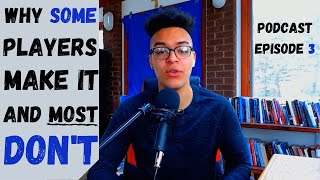
Ethan Khoza breaks down why most players fail: they post about their goals instead of doing the work. Real separation comes from tolerating discomfort, consistent practice, and the mental toughness to show up daily. His Perimeter Score System runs year-round with offseason, preseason, and in-season phases to build game-ready skills.
Chapters
Welcome to the Vision Driven Basketball Training Podcast. Really excited to get started today. Appreciate you guys joining me. Whether you're on YouTube, Apple Podcast, Spotify. Thanks for tuning in. Today we're going to talk about a few different topics. I'm going to answer a lot of questions, but, you know, we're going to kick it off talking about, you know, getting comfortable, being uncomfortable and how that can provide you with such a massive advantage over other players because as you'll learn, people don't like being uncomfortable. And not a lot of people will tolerate that for long periods of time. So gonna talk about, you know, how to be able to get things done, get to the gym when you don't feel like doing it, get your work in when you don't feel like doing it, why that's so important. And I think that just understanding, like, how I lay it out to you guys today, I think is really going to help you guys. I think it's gonna. I think it's going to inspire you to do it. You see, I almost use the word motivation, but I don't like that word. So I use it. It's going to inspire you guys to be able to do that and, like, really be, I guess, self. Like, I guess trying to think of the right way to describe it. But essentially you're going to feel an innate responsibility to go and get your work done regardless, because, you know, other people aren't doing it. Okay? And that in itself is going to inspire you to do that. So we're going to, we're going to hop into that. But, you know, the majority of players who, who follow me, who, you know, DM me on Instagram, leave comments. The majority of them, I mean, probably almost every single one of them have big goals when it comes to basketball. And so that's the thing. Like, most players do have that. And it's not just them, like, it's players all around the world who also have those same exact goals. So for me, you know, something I always talk about is, is you want to be different, right? Like, you. You know, if every player has similar goals to you, every player wants to be great at scoring the basketball. Every player wants to be a great shooter. Every player wants to be a great defender. Every player, well, not every player wants to be a great defender, which is unfortunate, because if you are a great defender, you're going to get a lot more playing time than if you aren't. But, you know, we'll hop into that at some point in this episode, too. But these players all have these Massive goals. They want to play in college, they want to start on their varsity team, all these things. And to me, it's like, I look at the way that you work at it, and. And I can. Like, it's like, you tell me you want one thing, but, like, if you aren't willing to actually do the work to get it, then what do you, like, what's the point? Like, why are you even saying it? You know, that's the thing. I'm. I'm actually had my cousin the other day, he FaceTimed me. He was like, hey, man. Like, I see you're growing. Like, I didn't realize you were doing all this stuff. I think my first episode just came out. I was about to hit 2000 subscribers. Shout out to all you guys who are subscribed on YouTube. Just hit 2000 this past week. So appreciate every single one of you guys. And anyway, he called me, or he called me up and he was like, yeah, you know, like, I didn't realize. He hadn't even told me that, like, you know, you were doing all this stuff. I was like, here's my thing. I don't like to say. I don't like to tell people what I'm doing because anybody can talk, right? Anybody can say, oh, you know, I'm doing this and I'm doing this, that and all. Like, everybody does that. And you go on Instagram, you go on Twitter and Snapchat. It's always people flexing about what they're doing. You know, how. How they're successful. All this stuff, you know, 80% of that's not really the whole truth. And it's, again, it's just highlights of their life. They aren't actually putting in the work. They're just. They want. But they want you to. They want to give that impression that they are. So that's why I'm just opposed to talking about what I do. I just. I like to do it instead. So, you know, I told him. I was like, listen, man, you know, I've. I've. I've grown, I've come, I've come. Obviously, everyone starts with zero subscribers, zero followers. Nobody knows who you are. So to get to whatever the number is, that's cool to me. It's like, I still feel like I always have this sense of, like, I still haven't done anything, though. Like, cool. You know, you got 2,000 subscribers. Like, a few people know who you are. Cool. Now what? It's like, it's not really much when you look at the grand scheme of things. So to me, that's always been my outlook. So I told him, like, listen, man, you know, I don't. It's not that I don't. It's not that I won't talk about it, but it's like, to me, it's like I'd rather put all of my energy and focus into actually doing it because that's, that's what can't be refuted, right? You can talk about it. And some people say, oh, you know, he talks about it, but he doesn't actually do it. If you do it, then what is there to say? Like, you've done it. So that's kind of my issue when it comes to what a lot of players do. A lot of players will post on Instagram that they're working out, but are you really working out? Are you actually committed to it? Or is it that you just post whenever you go to the gym? Because it's not that it's kind of a rare occurrence for you or it's not a very consistent occurrence for you. Now, not every player is like that. There's a lot of players who do post when they go to the gym, and they're in the gym all the time, okay? But a lot of people are gonna try and make it seem one way and then it's really not that way. So that's something that I feel like needs to be said. You know, really evaluate what your goals are and ask yourself, like, am I. Do I talk about doing something all the time? Do I tell everybody? Listen, I'm gonna do this, alright? I'm gonna do this. And look, here's the thing. It's cool if you do that. Now, I actually talked about in episode one, setting goals and not telling anybody about them, just having them be yours. Okay? Because again, it goes to this. You can talk about it, but the thing with talking about stuff is that sometimes it makes you feel like you've actually done something. Like if you go tell somebody your big goals and they're like, wow, that's impressive, you're gonna do that. It kind of gives you a weird, like, it's a weird thing with your brain where, like, it almost gives you the same feeling of you actually doing it and then them saying like, oh, wow, good job that you did that. But it's like, you didn't actually do that to me. I don't want that to ever affect how I do things. So that's why my personal opinion is that I just don't share. I just can't put my head down and do the work. But you know, if that's not. If you don't agree with that, that's cool. But you gotta make sure that you're actually. At the end of the day, if you're going to talk about it, you got to actually be about it too. And that's the thing. I never want to talk because I don't want to be the person who gets the reputation of saying things and then not delivering on them. Okay? So that's just something to think about. The most important thing is action, okay? Words don't matter. They don't matter at all. What matters is how you act is the effort that you actually give. The work that you actually physically put in every single day. That's what matters. And it's funny talking about the work that's just like, guys, I feel like this is going to be a reoccurring theme probably every episode because it really, like, it's the baseline of everything in basketball, but really in every aspect of life, it all starts with the work. With the work that you're willing to put in. And you know, I was thinking about this the other day. If I wasn't, if I wasn't Vision Driven basketball, I would be Work Driven Basketball. And, and it's funny. So I was talking in episode, I think it's episode one about what vision driven basketball actually stands for and what it means to have a vision. If you haven't seen that episode, make sure you check that out. But the thing after that is like, my next biggest thing is like, it's all about the work. Players will ask me, like, coach, how do I, like, how do I become more confident? How do, how do I get this? Like, how do I become, you know, how do I reach my goals or whatever? Like, that's, that's what I'll get in a lot of dms and comments stuff. And to me, it all starts with the work that you put in. If you want to be confident as a basketball player, then you have. You better be confident in the work that you've put in. You better be confident in your abilities because you've put the work in. Because if you haven't put in enough work to be confident in it, you won't be confident. It's just that's how life works. Okay? You can't. I always talk about the importance of selft talk, the importance of, you know, giving yourself positive affirmations. That stuff is very important in my opinion, because there's a lot of players who have put the work in, but at the same time they haven't. They still have negative beliefs about themselves which prevent them from actually executing on their with their abilities during games. But if you haven't put the work in, then no amount of mental training or self talk is going to make you confident. Because at the end of the day, you're going to think to yourself, man, I have not put the work in. You're going to step out on the court and you're not going to be confident with the time that you've spent on the court. And I think one of the biggest things is just again, when we talk about the work, you also have to evaluate what exactly that work is. And just on a side note, so for those of you who are subscribed on YouTube or follow me on Instagram, then you've seen that I just announced that the perimeter score system gonna be coming out on May 11th. Okay. So that is. That's gonna be eight days from when this podcast comes out. This podcast is gonna come out on Sunday. So eight days from then, May 11, I believe that's right. That's when it's gonna come out. So I just want to explain it a little bit real quick. I'm gonna relate it back to what we were just talking about. So the perimeter score system, it's kind of been a. It's been in the works for a while now. I've wanted to do it for over a year, but it's been months that I've been building it. And, you know, it all started because I've been, you know, ever since I was a kid, I've been very involved with a lot of different online basketball training. I've tried out a lot of it, and a lot of the most popular stuff and a lot of it is just not very effective. And I look at it now, knowing what I know now, and I look at the drills that I was doing there and how it was laid out. Like, man, like, this is terrible. Like, kids are doing this stuff expecting to get a result and they're just not going to get it. So. And not all of it is bad. I mean, there's a lot of trainers out there who I love and I learn a lot from, you know, guys like D.J. sackman, Jordan Lawley, Tyler Ralph, Drew Hanlon. You know those guys. I learned a lot from those guys. Those guys are great. But there's other guys out there who are pretty popular too. And also, But I also don't feel like, you know, their, their training is all that effective, you know, nothing Again, it's no personal thing as anybody, but that's just my, my, my own experience with a lot of it. Okay? Not all of it, but a lot of it. So I wanted to do something that would, I wanted to put something out that would get results for players. So that started the perimeter score system. But also I want it to be more than that. I didn't want it to just be. Because it's not just about skill. Skill training is where it starts. Okay? Obviously, like you need that. Like I just said before, if you want to actually be confident in your abilities as basketball player, you have to put the work in. So it all starts with skill training. But I realized that it's more than that too because ever since I was young, I put like, I always put in the work. Like I never had issues doing that. But for me, a lot of it came down to just the mental part of it too. Okay? So I wanted to do something that was going to help players with that as well. So it all started. I wanted to build the perimeter score system, but I want it to be a little bit different because I recognize that, you know, a lot of these programs will be, you know, eight weeks, 12 weeks, and then it's like. And then, you know, then what? Right? If you give me 12 weeks of training, I mean, first of all, there's 52 weeks in a year, so I need 40 more weeks. Like, what am I to do with that? 40, those 40 weeks. But on top of that, I mean, what am I going to do in the next offseason? Because here's the thing, the work doesn't ever end. You don't ever get to a point where you're good enough. You always have to keep getting better. Because you get better or you get worse, you don't stay the same. If you don't get better, then people are going to catch up to you and essentially you're going to get worse because everyone's getting better, okay? So if you stay the same, you're actually getting worse. So your training needs to have that in mind where you have to be working at your game consistently and it can't really ever end. So I decided I wanted to be a year round system. So essentially I broke it up into three phases. There was off season training, preseason training, and in season training. You know, obviously the bulk of your of your time is spent in the offseason. So that was a 16 week program I laid out for the offseason phase. And essentially that's where you get the bulk of your skill Development in really working on a lot of detailed things, a bunch of different things. You know, shooting off the catch, off the dribble, ball handling, finishing, creating space, being able to create your own shot. You know, all different sorts of things like that that are going to help you develop your skills and actually become a player who can, who can, you know, get results on the floor. I wanted everything to be something that would directly translate to game results. You know, a lot of my issues with these programs is that they objectively got me better skills. Like, I became a better ball handler from a lot of these programs. I became a better shooter, but I wasn't actually able to use those skills in games. Because the difference between being a practice player and a game player, okay, you can be great at doing drills, but if you can't translate that to games, then you're not really a Hooper. Okay. Like you got to be able to translate what you practice into games. That was what I wanted to have with my, with the parameter score system. One of that. That was my main goal. And so, you know, that was again, I felt like that needs to be a year round thing, so. And I also recognize that a lot of training kind of neglects in season training and that was an issue I used to have is like I get to the seat, it's the season, I'm like, oh, I'm practicing every day. So like I don't need to do anything extra. But you're not. Usually when you're practicing, it's all team stuff. So you want to make sure you're still getting skill work in. Right. Like you still. Because you don't necessarily have to get better over the season with your skills specifically, but you need to at least keep them to where you've built them to. So I, I included a bunch some in season training too, where it's like 20, 30 minutes of. It's not, it's very different from the preseason or preseason off season training because that stuff is much more demanding. Really building your skills here we're really fine tuning. So you're shooting your ball, handling a little light, finishing, and it's something you can do. But you know, honestly, before, after practice, whenever you have time to do, I want it to be something that was simple but would allow you to maintain your skills and stay sharp throughout the season because obviously that's the most important time of the year when you actually are in your games. So that was one of my thoughts with that as well. But I also understood that it doesn't just stop with that. I Wanted this to be a complete basketball development system. Like I didn't want it to just be skill training because it's not always easy to know how to apply that into games. And this is stuff I had to learn over years from multiple different sources. And I wanted to piece it all together into one thing. So I created two other things specifically that would help with that. One was the 20 points per game blueprint, which essentially is an intensive study film breakdown of college and NBA film where I'm basically explaining to you different techniques, different things to look for, basically how to score. Okay. Because it's not just as easy as oh, I'm good, like I can just go out and score. Well, you have to know, you have to know how to score, you have to know when to score, you have to know what situation you're going to score at. Obviously basketball is played in, there's a certain flow to the game and it changes over time. So you know, back in, in the nine, in the 80s and 90s, it was a much more of a post up ISO game, right? Every team had a big man. Every team that, you know, Shaq and Hakeem and every, like every team had, every team that won had a big, you know, David Robinson. So you had to have a big man and you'd post the big man up and you know, you'd have guys who play one on one. Now that's not how basketball is. You know, some teams have, if you have a really good big, you know, you might play them, but typically even those base can shoot. Everybody's got to be a shooter these days. Basketball is much more free flowing. Typically that's how it's going to work. You're going to really push the pace. You got to have guys who can shoot and defend and attack, you know, at a closeout. So that was really what I focused the 20 points per game blueprint on is learning how to actually do those things at a high level. And we break down film of guys who do it really well. So you can see exactly how, how you can implement what you're learning actually into games. And that was something that I really had a good time making. I think it's really, really going to help a lot of players out because a lot of players just don't have. It really is going to help you to understand like how to develop your instincts when you play. Okay. Because that's a big part of being a great player is knowing, okay, when do I do this? When do I not do this? This is going to give you like cut and dry examples of what that actually looks like. So I think that's going to be very effective, and that's going to come with the perimeter score systems. So if you join the permanent score system, it's going to be with it then. The second part was the mental toughness Masterclass, which is all about, you know, a lot of players, and I was like, this too, feel like they have, like an invisible ceiling over their head, right, where they work on their skills, like they're committed to it, but they just feel like when they get into games, they can't seem to get in the zone, they can't focus, they don't see the results that they feel like they should. So the Middle Tempest masterclass is all about helping with that. And this goes into mindsets, techniques, routines. I think routines are huge. And this goes in this, dives into that as well. Another thing I think is really going to help a lot of players, and it's something that I had to learn from a bunch of different sources over. Over a long time. So I kind of compiled that all into one. So both of those are going to come with the perimeter score systems. You have your skills training, but also your actual development training. So that's going to piece together to really make you a complete player. And then to add on to that, there's a couple of things that I wanted to do. So I have basically, it's called my VIP film breakdown, where I'm going to go through film breakdown of, you know, NBA superstars, so specifically their scoring. So Kobe, Kevin Durant, LeBron, Steph, guys like that. And, you know, I'm taking through specific areas of their game that you can also learn from as well. Again, that's included with it. And, you know, all that together, I think, really is going to improve players from like, an overall development standpoint. Okay. Because I don't, again, I don't think it's enough to just have the skill part of it. I think you also should have the. The mental side of it, too. Developing your instincts, all that stuff that's actually going to allow you to become effective as a basketball player. So the question that I got when I released a video talking about it on YouTube, like, whatever, two or three days ago, and everyone was asking, like, oh, coach, is it free? Like, no, it's not. It's not free, guys. It's not free. And those details are gonna come out this week, so. Or probably the end of the week, so we'll see. But stay tuned for that. The one thing I'll say is if you don't, if you don't join, that's, that's fine. Like I'm gonna keep doing all of my free stuff. Like my workouts are still gonna come out, still doing NBA player workouts, still gonna put out shooting workouts, ball handling workouts, all that stuff. Stuff going to do my live ball handling sessions. Like none of that's going to change. This is just something that I think is really going to help players. And I, I can't put it on YouTube, you know, because I have to find a place to host it all. Obviously. I have to, I have to film and I have to actually make all of it and I just need to host another platform. So, you know, this is kind of a way that again, I can, I can help players who want to take that next step. Okay. And, and again it's not, you know, won't be for everybody. I understand that. But you know, again, still a ton of, a ton of stuff on YouTube and I asked myself this question with everything that I do. So every workout that I've made on YouTube, obviously everything I've made with the perimeter score system, I asked myself, is this going to get this player results? Like, is this going to be effective? Because I'm not just going to put something together that's going to be a waste of time because how's that fair to people who trust what I have to say? And all of my stuff on YouTube is going to be that same exact, that same exact way. Okay? So that's not something that's going to change. So again, May 11th is when that's going to come out. And I'm going to give you guys more details as it goes on for those of you who are interested. And actually, even if you aren't even like, you know, I'm probably not going to, going to, going to join, but what I'm doing is I'm actually going to give you guys part of the 20 points per game blueprint. So I'm going to give you guys, it's about a 13 minute video. And in that video I explain defender control. So how to control your defender, the two ways that you can score off the dribble, specifically that you can kind of repeat. And so now again, you know what to look for and the two moves you need to develop to be able to actually do that. So that's kind of an all encompassing video. Even if you don't end up getting the full thing, it's going to help you out. So I would recommend that you Guys do that. If you guys are interested in that, I'm going to put a link to it in the description below. So go ahead and check that out. Also, it's on my video on YouTube that I posted a couple days ago. Highly encourage you guys to do that. And for the rest of you guys, you know, everything will come out, the information will come out as the week goes on. But again, very, very excited to get this started. And I, you know, I've heard from a lot of you guys who are excited to get going with it. So, you know, I'm glad that you guys are ready to go. But the reason I even bring that up now, obviously I want to give you guys a heads up, but that relates back into the work because players a lot of times will do work like they'll work at it, but the work that they're doing isn't actually that effective. And this is something that, that I've again, I personally struggle with. And I know I see a lot of players, I see firsthand players do it. They don't actually, they don't actually like the work that they're doing isn't going to translate to the games, right? Like, maybe all they do is, is, you know, these crazy moves that they're never going to do in the game, but they don't actually work on the simple things or it can be the other way around. All they do is the very, very simple things. All they do is figure eight ball handling every single day and you know, ball slaps every day and then they think they're going to become a great ball handler. Well, no, you can't just do those things, right? But a lot of players don't understand how to find that balance of the simple stuff, the fundamentals you need, but also the more advanced stuff that you know you're going to, that's going to allow you to pull that off into games. So that's part of it. And again, part of why I have the perimeter score system in every workout on my page. Again, every workout I think is effective, depending on who you are, kind of tailored towards you. But I wanted to make sure that that was something that I thought about as well is like, you know, is this going to allow the player to get results? Because a lot of players put in the work and they're still like, man, why am I not getting the results I want? And it's frustrating because I understand that same exact feeling. But you have to, you have to put in the right type of work. Okay? That's what it all comes back to. But again, aside from that, here's the thing. Even if you're putting in the wrong type of work, that's better than putting in no work at all. Because at least you're going to develop a toughness that's needed to consistently put in the work. And even you still get marginally better, but you're also gonna develop the mindset that you need to be successful. And so here's the thing with this guys I talk about. You have to be able to do the work, okay? Even when it's not fun, even when you want to just sit at home and play video games, you have to do the work. Because guess what? You want those big goals. So do every, so does everybody else. But also the work is just as hard for player A as it is for player B. Okay? Just because one guy might be better or one guy might have a different playing style, or he might be on social media talking about how much he works just because that's, that's that player, he's going to struggle with his, with, with actually going to put in the work every day just as much as you are. And guess what? Most people aren't committed to actually doing it every day. Like they just aren't. Most players are going to, they're going to quit at some point and it might not be forever, but it might be like, eh, I don't feel like doing it today. So if you're able to overcome that and you're able to put the work in every day, you're able to set out a vision, set out a game plan and stick to it, most people won't do that. So just by you sticking to it, doing the right type of work, giving 100% to it every single day, like you're gonna, you're gonna get a lot farther ahead than a lot of people who aren't willing to do that, okay? So that's a choice that you have to make as a player and you have to make if you, again, if you have those big goals that you guys all tell me about, well, you gotta determine how much am I willing to work for, Am I willing to be committed to it, okay? Because if you have a million dollar goal, I mean, what's the cliche saying, million dollar goal, you can never get that with a 10 cent work ethic. I mean that's the example of it right there. So this is actually kind of funny. I got a couple questions that kind of relate back to this. So I put out a poll or a sticker on instagram on my story, shout out to all you guys who ask questions. I'm gonna get to, I think all of them here, but at least a few of them. So first one from Acash, he asked me what prevents people from reaching their goals? Mainly from what you've seen. And this is gonna kind of go back to what I was just saying. But you know, it's hard to, it's, it's hard to be good, guys. It's really hard to be good at something. Okay? And I mean like, good at like a competitive level, okay? You might think you're good right now, but you gotta look at where you're playing. You gotta look at going forward, can I remain good? Can I still be good going forward? It's hard to do that and consistently do that. But even harder than that, I mean, the hard part is actually putting in the work necessary to, to be good at something. Like, that's the hard part. Because it's not just a one time thing where you can't buy, you can't just buy it. You can't just, you know, go work at your job and then bring home some money and buy the ability to be good at basketball. It's something you got to do every day. You got to put the, like, you got to work at it every single day. And that's hard. But again, that's the key part, guys. It's all about the work. And you know, not just doing the work, but good work, efficient work, work that's effective. Again, going back to what I was saying about the perimeter score system, you got to make sure the work you do is actually effective and it's efficient too. You're not just spending time on the court, you know, not doing, not, not actually getting as good as you possibly could. I think what it comes down to is that the players who succeed are the ones who are able to withstand being uncomfortable for long periods of time, okay? They, they develop the mental toughness that it's required to get up every day, go to the gym and work hard and give 100% every single time. And that's difficult. And I think the players who don't succeed, I think the players who don't reach their goals are the ones who can't commit to doing that. I think those are the players who, you know, they can do it three times a week, but they can't do it four times a week. They can do it four times a week, they can't do it five times a week. I think the guys who succeed in the end are the ones who can do it every day. The ones who can say, listen, I'm going to go to the gym five times this week. And they stick to it and they go 100% the whole time. Because, like I said, that in itself, I think putting in the hard work is one.
More from Ethan

Stop Using One Dribble When You Drive To The Rim! (How To Become A Better Finisher)









