Why Stress Can Ruin You As A Basketball Player (And How To Deal With It)
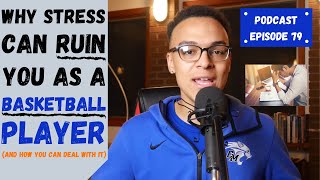
Ethan Khoza breaks down how physical, mental, and emotional stress compounds for basketball players, damaging recovery and immunity. He lays out concrete fixes: 7-9 hours sleep, diaphragmatic breathing, and a paced breathing routine that starts at 4 seconds in and out, scaling up to 8 seconds to calm your nervous system.
Questions this video answers
Ethan Khoza
October 24, 2021
7–9 hours per night
Start with 4 seconds in/4 seconds out, progress to 6s in/6s out, then 8s in/8s out (repeat each stage until comfortable).
Chapters
Foreign welcome to the Vision Driven Fastball Training Podcast. Appreciate you guys today. Whether you're listening Apple Podcasts or Spotify or Pandora Google Podcast, whoever may be listening from and everybody who's watching on YouTube right now, shout out to you guys. Make sure you drop a like and subscribe. If you are new on YouTube and if you're an Apple podcast, do me a big favor. Scroll down, leave a review, let me know what you think about the show. As you guys who listen know when I get new reviews I read them. So I have a couple to read to you guys today. So first one comes from Miles Roberts. He says hey coach, my name is Miles Roberts and I became your trainer just before the summer. I wanted, I wanted you to know that you helped me as a coach more than anyone could imagine. I'll continue listening. Be great if you view my Instagram @m3bag work. Let me know if I'm doing good from marketing standpoint and showing different drills. I can help everyone out. Appreciate the podcast. 10 out of 10 recommend shout out to my guy Miles. Love what you're doing bro. Keep it, keep, keep it up. And I appreciate the support. Appreciate you listening to the to the podcast and of course I appreciate the review as well. Best source of basketball information cuts off after that. This comes from Mike first of all, I want to thank you coach. Before the pandemic, I was a lackluster player, barely averaging 2 points per game, barely touching the ball. Then Covid hit I found your channel. I had tried to watch countless YouTube videos on how I could improve, but none of them really helped as much as your videos did. Only a month into using your workouts, technique, philosophy and mindset mentality, I saw myself as a completely different background basketball player. I just came back from a scrimmage and the same shots been practicing. I've been. I was hitting consistently in game and even if I missed a layup or shot or made a mistake on a play, I didn't let it take me down. I moved on with the next play mindset. I can't wait to play in my high school basketball team and dominate. Love hearing that and I love hearing the mental part of it as well that you you don't let mistakes derail you. You don't dwell on misses, you don't do on mistakes. That's as important as anything that I could help you develop. I think it's just learning how to deal with adversity, learning how to deal with stuff not going your way. That's as important a life skill as you can possibly have. So love to hear that as well. Then I have one says it, says Gold, says Danny Messer's episode is so helpful. I was surprised to hear how young he is. He's such a unique perspective, explains concepts clearly and is so passionate. If you guys did not listen to my episode with Danny Metzer, DM Hoops, this was last episode, so make sure after you're done listening this one, go check that one out. If you have not watched. Was one of my favorite episodes that I've had so far. I had the pleasure of interviewing my guy, Danny. And Danny Mess is a trainer and amongst other things, he a student up at Quinnipiac in Connecticut. And dude is just. I was really excited to have him on because of his perspective when it comes to basketball training, from a movement perspective, from a cognitive and mental side of things as well. Dude is just really, really good and he knows his stuff. And I love having people on the show who are constantly trying to get better. I even told him, I'm like, I love having people like you on the show because I want. I want to learn stuff from the show. Like, I told him I wrote that as we're going through the podcast, you guys see me look down a lot. I'm basically typing out, like, notes and other topics. We can go into topics that I can start to look up. So I love having people on the show who know way more than I do about different topics so that it challenges me to be better and learn more. And I guarantee you, if you guys listen to that episode, whether you're a player, a trainer, a coach, doesn't matter. You're going to get a lot of that episode. So go check that out if you have not as soon as you're done with this one. And the last one I have for you guys is great podcast. Have a question. Hey, I love the podcast. Really great tips. But I have a question. I was wondering what I should do to get a better relationship with my coach outside of basketball. Because I'm already going. I'm already going to all the extra stuff he does and what we talk sometimes, but I want to stand a little bit more. Thank you. So I talked about this a couple of weeks ago a little bit, and I'm probably going to go and do an episode devoted to this topic. I'm going to talk about how if you're a player, you can have a better relationship with your coach, and if you're a coach or a trainer, how you can have better relationships with your players as well. Kind of the short answer for this is that you just want to do things that help your team win, right? So be somebody who makes the extra passes, somebody who makes the right play, somebody who talks on defense, who gets into help when they're supposed to be, who boxes out in rebounds, who finishes the possessions, somebody who's positive and encourages their teammates and works hard in practice and does all those sort of things and essentially just prioritize team success over your own success. And coaches love players like that. The worst thing you can do is try to make your coach like you because they're going to see right through and they're probably going to not like you if you try and do that. Nobody likes the person who likes, who is always sucking up to them and always trying to manipulate them into liking them. Nobody likes that person. Like, not only will your coach dislike you, all your teammates will dislike you if you try and do that as well. So don't try. Just be a person that a coach would like, which is a person who cares about the team above everything and doesn't have an ego and is willing to sacrifice and put in the most effort they can so that the team does well. If you do that, then every coach out there will at least respect you whether or not they like you. That's, you know, that sometimes coaches might just not like you. So there's nothing I can really tell you that will, that will change that. But they'll at least respect you for that. And generally that'll go hand in hand. They first have to respect you before they can like you. So do those things and you'll become a player that coaches at least want to have around their team. And that's certainly a positive for you. So again, I appreciate all the reviews this week. If you guys have a question, you guys have a thought. This podcast helped you in any way, make sure you guys drop one as well and we'll hop into it. So this is an episode, I alluded to this last week in my podcast with Danny talking about this topic, which is stress. And this is an important topic for players to understand, but also for trainers, coaches out there to understand as well how stress, how it impacts your kind of day to day life. And this is a topic that I got from PGF Performance from Paul Fabrize where he talked about the concept of stress is stress, right? And this is something that we don't always think about when you go to the gym or the court to, you know, work out. Like that's putting stress on your body, right? That's that's, you know, elevating your nervous system. And now you are in fight or flight mode, Right? Especially if it's, you know, any sort of training with a defender out there, then you're constantly in, you know that, that adrenaline's flowing, that cortisol's flowing, and you know that's stress on your body. And so you combine that with the weight room, right? The weight room is also putting stress in your body as well. And we understand that, right? That's all we understand. Okay. We need to take rest days so that our body can recover and all that sort of stuff. But what I don't think a lot of people think about is the fact that that sort of physical stress can compound with mental stress, emotional stress that you might feel from stuff that happens off the court. Okay? So, you know, stress from a big math test that you have tomorrow that you're really not confident on, right? You're thinking about the whole day before and you have practice that night and the whole practice you're just stressed about your math test tomorrow. That makes an impact on you. Okay? You know, if you have, if you have a hard workout, obviously we just talked about that puts stress on you, that puts you into a stress state. And obviously your body has to recover from that. You know, if you have a big game coming up, your body's, you know, you're stressed out about that. You know, those jitters you're feeling before the game, you're in fight or flight mode. For me personally, I can't, like, I couldn't eat before games. Like I would, you know, we have, if we had a game at 7:30 or 7:00', clock, I get out of school at 3 and I would probably eat a couple sandwiches, like four. By the time 5:00 clock got around, I was already like on my way to the gym. I can't eat at that point. Like, I'm so angry, amped up. I'm so nervous. I'm so like ready to go. That, like, I can't, like my body's already in fight or flight mode because it's essentially shut off that, that, you know, the, those that hunger, right? So you typically, you know, when you're not stressed out, you know, you're always thinking about eating food, right? But when you are in that fight or flight mode, when your body's in an elevated state, that's where it starts to take away the. That's where it starts to take energy from those, you know, net those unnecessary or harmful bodily functions that you might not need in that stress state. And it completely just changes up the way that your body works. And so that's why for a lot of you guys, you probably feel the same way. You can't eat before games because you feel so nervous. You're like, I can't eat. Maybe you haven't eaten since lunch, but if you're about to play a game, you feel like you don't need to eat at all. Right? That's how I was. And that's because of stress. That's one factor of that. But really my point is that stress from anything can cause. Can compound with the stress that you put in your body already. If you're a player out there and you're working out, you're doing all this sort of stuff that stuff compounds. So you take the physical stress and then you take the mental stress from something happened at school, emotional stress from some situation that happened to you or whatever. That stuff all builds on each other, okay? And the thing about that is that your body needs time to recover from that. And. And the issue is that a lot of times there's stress that you don't get a break from. Right? And this is what I want to talk about today. Because when you are stressed out, your body produces something called cortisol. And when you feel that fight or flight response, that's that cortisol raising your heart rate, a lot of times it's going to, you know, raise your blood pressure. And that's what causes that feeling of fight or flight, that nervousness, that anxiousness, that alertness that you feel. Um, and your body does that for a reason, right? Stress can be good in certain contexts, right? Your body has stress so that, you know, if you're out hunting and a bear is there, you are all of a sudden, boom, quickly able to put all your energy into out running that bear so that you can survive. Okay? You know, if you're out hunting and you killed a rabbit, and you're taking that rabbit home to your family and somebody has to steal it from you, that cortisol comes to, you know, raise your alertness, raise your heart rate so that you're immediately able to put all your energy into fighting that person to make sure that you keep your kill so that you can eat that food tonight and feed your family, right? So stress has a purpose. Sometimes it's necessary. And the issue with it is that if it's prolonged, if that cortisol production is prolonged, that's where it can start to cause problems from you. When that stress becomes something that's chronic. So extended overproduction of that cortisol can result in a general just deterioration of you physically. And so this is where injuries start to pile up for you. And this can also lead to a lack of growth in terms of your actual, like, you know, the growth you might make in the weight room or on the court. Right. It's very related. So the actual results you're going to get from your training are going to deteriorate significantly if you're always in an, in a state of elevated stress and reduced, like I said before, that your appetite a lot of times is going to suffer from that. And then all those other functions of your body, reproductive function as well, all that sort of stuff that your body deems as not necessary to survival is going to suffer when you're constantly in that state of high stress and add on to that poor immune function. So you're more likely to get sick and stay sick. And this is why for me, like when I played, I was always, I was sick for like the entire winter because I was just constantly stressed out. We're talking about some stuff too that can also make this stuff worse or better, depending on how you use it. Back then I didn't really think about it and I kind of went with the flow. I didn't consciously try and do anything, so I. This stuff worked against me. But again, we'll talk about that in a second. So, you know, typically working out whatever is a temporary stress in the body, right? You go home, you eat, you sleep, and your body recovers from that. But again, like I talked about, if you're also stressed out about school, you're stressed out about a relationship, you're stressed out about whatever else is going on, and that's a constant sort of thing for you where like you wake up, you're stressed out throughout the day, you're stressed out and then you add on the physical stress. That's where things can start to become a problem for you. So your body, when combining that, that mental or emotional stress with the physical stress, is where problems start to pile up when it's a long term sort of thing. So it's important that you manage stress effectively so that you don't overdo things and that everything is good ultimately. And you know, the important thing is that when you do this well, you actually see results from your training and you see better results, you see more results in the weight room, you feel better and you stay healthier, both when it comes to injuries and just, you know, your immune health as well. And at the end of the day you just, you, you are a more productive person and you feel better and that's ultimately what you want. So we're going to talk about a few things that are super important here. But the first thing that I want to talk about is sleep and the importance of that. And there's a ton of research and studies that I can point to that will talk about how important sleep is. I think that's a topic that I've actually talked about, I believe on the podcast. But I think we all understand that sleep is important. Sleep is one of those things that back when I was playing I was horrible at managing, especially during the season. That was one of the reasons why I was always sick, was because, you know, I'd wake up at 7 in the morning or 6:30 or 7 sometime around there. A lot of times, you know, I'd maybe we'd have a practice and then practice would be done at 5:30 or 6. Maybe I'd go hang out with some friends for a little bit. At 8 until 8 I come home, do some homework and then maybe I'd watch a show or something. Next thing you know it's 12, 12:30. I'm not going to bed till 12:30, 1 o', clock, 1:30. So we're talking five and a half, six hours of sleep every single night. And if it's a game day it's probably worse because if it's an away game, we might not get back until 11 o'. Clock. And then if I didn't get my homework done before then I might do have to do it then if I have a test, I might have to study for it then. Or maybe I'm just again being lazy, watching TV something and all of a sudden I'm up till, you know, 12:30, 1:00 clock again. And when my body most needs that recovery, which is during the season when you're stressed out about games again we're talking about that compounded stress of you're playing. So the physical stress, if you're still working out or lifting, which I was, add that to the stress you're feeling, but also the game, like playing games and thinking about making the playoffs and thinking about performing well, all that stress is on you. And then you throw on top of that school all the other stuff. Sleep becomes critically, critically, critically important. Trying to fall into that seven to nine hour range and that can be difficult. But one thing that you can think about is finding a couple days during the week where you can get some extra sleep as well, because your body builds is called a sleep debt or sleep deficit. And when you consistently don't sleep enough, that debt starts to build up. So if you can find a couple, maybe it's on the weekend, you're able to sleep for, you know, 10 hours and kind of cut into that sleep deficit a little bit. If you find yourself, you know, having trouble sticking to that seven to nine hours every night during the actual week, one thing that you can do is try and catch up a little bit on the weekend. Now again, obviously you would. The best thing you can do is get that seven to nine hours every night. But, but it's always, again, that's just an option for you. So something to think about is aiming to get that seven to nine hours. And I want to talk about a couple things that will help you to do that, I think. But the first thing, the most important thing when it comes to dealing with stress, physical, mental, is making sure that you have enough sleep. Because when you're sleep deprived, the studies show that it significantly puts you more at risk for those negative effects that come with stress. And it makes your body less able to handle that stress. And then when it comes to actually your actual recovery physically, your body isn't able to be in that deep sleep as long, so you don't recover as well either, which leads to those injuries, your immune system not functioning at its most efficient level. And obviously those bad things that will probably lead to you being more stressed out probably leads you being more sleep deprived. So we don't want to enter that cycle. We want to make sure that we are in that seven to nine hours of sleep range as often as possible, ideally every single night. So something that you can think about. Okay, what time do you go to bed? What time do you have things done? Can I take 30 minutes before I'm supposed to go to bed, like to wind down a little bit, maybe do some, we're going to talk about breathing, maybe do some deep breathing, that sort of stuff, get myself prepared. So that's important. And that's something that I certainly need to get better at because I'm pretty horrible with my sleep schedule a lot of times. But I understand the importance of it, so I want to share that with you guys. And so the second thing that I want to talk about is healthy eating. That's the, that's the next part. Again, these are kind of common sense things, but like, eating healthy is also significantly crucial when it comes to immune health. And just overall, how you feel, the energy levels that you have and not eating healthy can also lead to you being more stressed out, not recovering as well. So another thing to think about, I mentioned breathing and I think breathing is such an under, an under talked about topic. Like it's something that is super overlooked. But I want to talk about it from two perspectives. So this is another thing that I heard first from, from PJF Performance from Paul. He talked about nose breathing versus mouth breathing and the benefits of breathing through your nose. So when you breathe through your nose, it allows you to take fuller and deeper breaths and you know, kind of without going too far into it, it stimulates the lower lung and it distributes more oxygen throughout your body. And when you are constantly taking these deep breaths through your nose, you're able to actually get into deep sleep quicker and more easily. So that's why I mentioned, you know, that we're going to talk about a breathing routine you can go through that's going to help you to get yourself out of that stressed fight or flight state and into a more relaxed state so that your body is able to recover. And you can use this to get yourself primed to sleep as well. So you're able to ease, to fall asleep more easily as well. So the lower lung, why that's important to understand is that that's associated with our parasympathetic nervous system, which is responsible for calming the body, calming your mind. And mouth breathing is more, it stimulates the upper lung, which is more associated with our sympathetic nervous system, which is what is the kind of main factor in that heightened fight or flight state. Right. Think about when you're breathing through your mouth most heavily, probably when you're running, when you're playing basketball, you're, your body's at that heightened alertness, that heightened fight or flight state, because you're obviously in a fight or flight situation. And so when you constantly breathe that way and stimulate, stimulate that same part of your lungs, your body thinks, oh, well, I'm still in that fight or flight state. So I have to keep my cortisol levels higher, my adrenaline higher. So it's harder for you to relax and actually put yourself in a state of recovery. Okay, so it's important to breathe through your nose. And, and this is something you can literally just like try and think about the next couple of days. It's like, okay, if you catch yourself just sitting there breathing through your mouth, constantly, make that shift and then try and start breathing deeply in and out through your nose. And there's so much behind the idea and the concept of breathing through Your nose. They found that. Studies have found that children that have a resting, open mouth and breathe through the mouth more often aren't able to achieve their academic potential as much because their brains and their bodies are more sleep deprived than kids who, who don't do this. And a lot of times these, these kids are more likely to be diagnosed with ADHD and other sort of behavioral issues. A lot of times kids like this also have a lowered immune system, and a lot of that traces back to and is connected to mouth breathing. So nose breathing is super, super important. And so one thing that you know you can do is when you're like, this is kind of second part I wanted to talk about. First of all, think about breathing through your nose more often. Especially when you're sitting there, you catch yourself breathing through your mouth a lot, just trying to breathe through that nose and trying to fill that diaphragm up with air. Okay. That lower lung up with air. And the second part of it is a, like there's, there's breathing routines that you can do that will help take you from being in that parasympathetic state to, to that sympathetic state. Okay, sorry. From that sympathetic state to the parasympathetic state where you're at the heightened level and you can take yourself to that calm, relaxed recovery level. And this is something that you can do after a workout, because after a workout, you're in that heightened state. So after, when a workout's done, you want to as quickly as possible, get yourself to that parasympathetic state so that you put yourself in a position to recover. Okay. If you don't do that, then, especially if you work out at night, your body's gonna be in that fight or flight state for probably a couple more hours after, which means that your recovery from that workout isn't gonna start right when the workout's done. It's gonna start two, three hours after the workout is over. Okay? So that's time where you could be recovering, but you aren't simply because your body isn't letting you. But if you just go through and you think about your breathing and you get your body to calm down physically through that route, you can start your recovery immediately after you're done with your workout. Okay? So the question is, how do you do this? Right? And it's simply just you're going to, you know, sit, stand, lay down, whatever is most comfortable for you, and you're going to put your, your hand on your stomach. Okay? We're going to breathe in through our nose and then out through our nose. But we want to fill up our lower lung and our diaphragm. Okay. So the reason you're hand on your stomach is so that you can feel your stomach filling with air. Okay. Okay. That's, that's how you know that you're breathing in as deeply as you need to. And we're going to go, we're going to start with just four seconds in, four seconds out. So you can kind of start to Repeat that cycle. 4 in, 4, 4 out. 4 in, 4 out. And do that till it starts to feel comfortable for you. Okay? You feel relaxed, feels comfortable. Maybe you do it five, six, seven times. And then you're immediately going to go to six seconds in, six seconds out. Okay, four in, four out for five, six, seven. However many it takes to start to feel natural, to feel more relaxed, you're going to increase that to six. Same thing, do that until that feels more natural. And then go to eight and you'll do the same thing till that feels natural. So you might do that. You know, you might do 15 total breaths right there. And it will only take you a little bit, but it allows you to put yourself into that parasympathetic state. Okay. Now you're breathing into that lower lung and you're, you're, you're, you're stimulating that lower lung, which gets you into that much more relaxed, calm, and ultimately that recovery state. Okay? So again, that's something very, very simple you can do after a workout, after a practice, after a game, after. And that's just the physical stuff. But as I talked about earlier, there's other types of stress as well. So when you're stressed out about anything, just taking yourself and putting, and just breathing, focusing on breathing through your nose, you know, counting those breaths, breathing in nice and relaxed, not taking these super sharp breaths, just nice and relaxed, not trying super hard to breathe, just being relaxed and breathing through that nose. That's going to put you again into that calm state. So now you're able to put yourself in a state where you're in recovery most of the day, right? When you need to be in that, that heightened state when you're playing, when you're working out, whatever, then your body is able to, your body is, is, is not constantly in that state. And then when you're, when you're done with that, you get that, that breathing and you put yourself back into that recovery state. Okay. Because ultimately we want to be in recovery as much as possible throughout the day so that we can, when we are Exerting ourselves. We have a lot in the tank, okay? And again, that. That leads a. That leaves us less susceptible to injuries, less susceptible to getting sick, and all the negative stuff that comes along with being in a stressed out state way too long. Okay? So start to think about this over the next few days. And even I'd say make a habit of trying to do that right before you go into bed. Breathing deep through that nose, filling that diaphragm up. That's the super, super important thing with that, guys. You want to make sure that you feel your stomach really rising as you. As you inhale and then kind of deflating as you exhale. And that's gonna let you know that you're breathing in the right way. And it's gonna feel really weird, really awkward at first and probably uncomfortable at first, but as you do it more, you'll get more comfortable, you'll get better with the timing of it and kind of timing your breaths up. And ultimately it's gonna help you to build it as a habit and be able to put yourself into that relaxed recovery state much more easily. And that's almost like a cheat code, guys, in terms of you being able to recover, because a lot of people live their lives, like 14 hours a day in that heightened state. And I catch myself a lot of times, too, just stressed out all the time about whatever, right? I'm obviously, I'm not playing as much as I was when I was still in high school, but, you know, I'm still out on the court, I'm still in the weight room, and I'm still doing all this other stuff. And, you know, with. With my business, whether it be with my online stuff, my in person stuff, like, it's very easy to get into that stressed out state when I don't need to be right. Sometimes I'm just stressed for pretty much no reason, and I have to catch myself and then put myself back into that relaxed state. And a lot of times you'll feel a lot better when you go through that deep breathing. You're just gonna feel a lot better when you're done with that. And that's again, the power of breathing through your nose and stimulating that lower lung and that diaphragm. So I hope this helps you guys out. You guys have an understanding of, you know, how you can keep yourself in that recovery state, that relaxed state, and be able to, you know, kind of manage your stress more easily. And hopefully you understand the importance of that as well. So if it did help you guys out, drop a comment on. If you're on YouTube right now, let me know what you think, if this helped. If you guys have any other tips for dealing with stress that you would like other people to know, always would love to hear about that in the comments. Again, like I said with earlier about Danny, like, anytime I can learn, I want to. So if you guys have something that helps you, let me know. Any books that you've read that helped, you let me know as well. I'd love to be able to share that with other people. So I appreciate that. If you're on YouTube and you're new, make sure you subscribe and everybody listening. I have a podcast, drop a review for me. Make sure you guys give me a follow on Instagram @visiondrivenbasketball. Send me a message. I'm posting my story pretty much every day, whether it be drills, whether it be in the gym, whether it be my thoughts on different things. And yeah, so if you're not following me on there, make sure you do that again on YouTube. Drop a comment. Let me know what you think. Any questions moving forward? I appreciate all you guys who tuned in. I'll talk to you guys soon. Peace.
More from Ethan

Stop Using One Dribble When You Drive To The Rim! (How To Become A Better Finisher)









