Why You Need To Have Irrational Confidence As A Basketball Player (Podcast Episode 89)
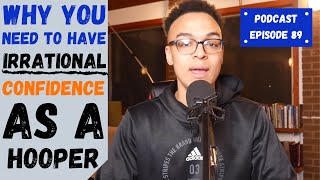
Ethan Khoza explains how negative self-talk kills performance and why irrational confidence often beats skill. He shares an AAU story where a mindset shift produced immediate improvement, and walks through how to identify and replace limiting beliefs with positive expectations.
Chapters
Foreign Bastard Trading Podcast. Appreciate you guys who tuned in today. Apple Podcast, Spotify, Pandora, Google Podcast, whoever else, I don't even know. But if you're listening right now, I appreciate you. And of course everybody who's watching right now on YouTube, drop a like subscribe if you are new. If you are listening on Apple Podcasts right now, do me a favor, scroll down the bottom of the page and leave me a review. And as you guys who listen know, if I get new reviews, I read them on the show. So I have a couple new ones today for you guys. First one says, great podcast, amazing podcast helps me so much. Thank you so much. I usually play a small forward and shooting guard, but I'm starting to realize it won't be tall enough to play those positions at a high level. Any tips to help me become more of a Chris Paul type of player? A point guard who can pass and make plays on both sides of the court. Thanks again. Obviously, the first piece of it is that to be a Chris Paul type player, just the physical ability, of course, has to be able to handle the ball, have to be able to shoot the basketball at a high level. You have to be able to defend at a high level and move really, really well. So your ability to move is very, very important. And then the next piece of it is just at Chris Paul's size. Like he is just such a great feel for the game and such a high basketball IQ as well, that I think that's another area that really separates him. So those physical abilities of ball handling, shooting, but also the ability to move really well. So whether that means your ability to slide or transition from a slide into a sprint to a slide, to cut somebody off, your core strength, your ability to be able to deal with contact, whether that be offensively or, or on defense, I think that's really what separates him a lot as well. And then of course the, the mental side of it, just the understanding of the game. Okay, how does what I do impact my teammates? If I drive right here, how is that going to impact the help defender? My. How is that going to potentially free up my teammate? When's the right time to make these passes? When's the right time to take this shot? That stuff that comes through playing basketball, but also watching a lot of basketball, I think that's an important thing. So spend as much time as you can doing those things and that's where you really start to get a great sense for the game. And that's probably more so than anything what makes Chris Paul what he is so appreciate that review. And then I have one more review for you guys. This question about tryouts. Now I know you've done an episode about tryouts before. My tryouts are coming up January 2nd, which is way past this. I hope you did well in your tryouts, but I had, I had all my guests on and all that sort of stuff. So this is the first time actually looking at my reviews. And I think that I have an okay chance because I have the skills. My best trait is shooting and basketball iq, but I just don't have the size my coach has said is a weakness and a reason I don't have as good of a chance as some kids who are taller. But I was wondering if you had any other tips or trials that could help me stand out. Thanks, coach. Biggest thing when it comes to tryout guys is just sticking to what you do well and not trying to be something that you aren't. So if you're a shooter, then be a shooter, right? And there's certain things that you have to be able to do, like you have to be able to play defense no matter what you are on offense. So obviously that's important. If you can defend and shoot the ball, then you're going to put yourself in a position to probably be on that team. Especially if like you're saying you have that basketball iq, but don't go out, try and do things that you aren't able to do. And aside from that, really just be a good teammate, be a person that a coach would want to actually coach on their team. And that's pretty much as simple as that when it comes to what you can do to give yourself a better chance of being on that team. So again, I appreciate the reviews. Like I said before, if you guys have not left one, go ahead and do that Apple podcast. I think Spotify does reviews too, so you can leave them there as well and we'll hop into it. So today I want to talk about an area that I get a ton of questions about. A lot of DMs, a lot of comments left on YouTube videos, all this sort of stuff. Some of my Most well performing YouTube videos are videos talking about confidence and videos talking about, you know, how do you play as well in games as doom practice or whatever. Just the mental side of basketball. And so I wanted to talk about it a little bit more in depth today. And I kind of want to start off with the topic of small of self talk. And self talk I think matters so much throughout everything, but especially when it comes to basketball. How you talk to yourself really, really matters. And, and this is something that I see all the time, whether it be with players that I coach, obviously I can think of it from my own perspective. But players that I coach or players that I train is that self talk. It like, it all starts there. It all starts with what you tell yourself. You know, I can tell. I can literally, like, I can think about situations, coaching, where I might tell a player, like, hey, I need you to shoot the ball way more like, I need you to shoot the ball, shoot the ball, shoot the ball. And they miss a few shots. And then no matter what I tell them, their own internal dialogue is telling them that they can't shoot today. It's telling them they're terrible, telling them that their shots off today, and no matter what I say, they are not gonna look at themselves out of that and they're probably not going to be effective the rest of the game. And that is the power of self talk, is that it can literally take you from everybody on the outside can say, hey, do this, do this, do this. And you might not be able to do that simply because of what you are telling yourself. And that, to me, we're getting into this, but that to me is a lot of times the biggest area of struggle for players is just what they tell themselves and how they view themselves. And so the first part of it is you have to find a way to switch that negative self talk into positive self talk, right? So the first piece of that is just getting rid of the negative self talk. And I think to do that, you first have to identify it, right? A lot of times players just have the habit of anytime anything bad happens, it's immediate. Do this, oh, I'm terrible today. Oh, I'm so dumb for making that mistake. When you catch yourself doing that, it's important to stop and then replace that with something positive, right? For example, let's say, you know, you missed a couple shots and you start telling, oh, I'm terrible, I can't shoot it. But you catch yourself doing that, you say, I got the next one, I'm going to make the next one. Next shot, I'm good, I just need another one. And when you start to do that, it feels weird at first, but it becomes a habit and you start to think that way and your performance starts to follow the way that you think, right? So finding ways to first of all recognize when that negative self talk is something that you're going through, when you, when you start to feel that and then replacing those negative thoughts with positive ones is going to lead to better performance for you. So that's the first thing to think about. But I want to talk about another thing going with this that I think is also really important for players and really for everything. And it's the concept of having irrational confidence. So much of success in anything in life is literally just about how much you believe you can do something and what you tell yourself surrounding that sort of thing. So people who believe they can do something have a much higher chance to actually be able to do that thing than people who don't. And that's not even taken into consideration talent or knowledge or what your situation is or who you know or. Or the help that you have. This is literally just talking from a base perspective. The person who believes they can do something has a much higher chance of actually doing it than somebody who doesn't believe that they can do something right there. And even if that person who doesn't believe that they can do that, even if they still try hard for it, it's probably not going to be at 100% because there's always a little piece of them that's like, well, you can't do that. You're not going to feel you're not able to do that. And basketball is the same exact way. We all know players who aren't the most skilled, they haven't put in the most amount of time, but they just have this confidence about them regardless of that. And they play well, right? They go out and they produce. And they might not have put in nearly as much time as somebody else, but they might outplay that person just because of the confidence that they play with. And where does that confidence come from? I think that's a great question. Now, there's. There can be different answers to that, but I think a lot of times the answer is that it doesn't come from anywhere. It's just. They just have that confidence. That's just how they are. And a lot of times you'll find that players like that are like that are very confident about things outside of basketball as well. And again, things that they may not be. They may not have put the time in that you would think you would need to have that sort of confidence. This is what I mean by irrational confidence. Now, just to kind of preface this, I don't want people to think that I'm saying that you should go out there and think that you're, you know, way, way, way better than you are if you haven't put anything into it. Obviously, there are players out there as well, who haven't put much into it, who go out with a high level of confidence and can't produce or perform at all because they've, they haven't put the work in to be able to do so. And again, we've all played with players like that as well. I'm not telling you to be that player again. Just so all my coaches out there who coach of the team just so that I'm covering my bases with them. I'm not telling you guys to go out there and be like, oh yeah, I'm the best. I'm going to shoot the ball every time I touch it. That's not what I'm saying. What I am saying though is that for the players who have put in that work, generally where the problem lies is not that a player has too much confidence. The problem is usually that they have a lack of it. I see this so much, so much with player, like with good players, with players who are like, who have ability, who are talented and for whatever reason they are the ones who hold themselves back from being as good as they can be. And a lot of times it comes down to a lack of confidence or a lack of irrational confidence. There are players out there who make their entire careers based on irrational self confidence. And I've played with players like that. Like I can think of players, teammates that I've had where they aren't the most talented, they aren't the biggest, they aren't the most athletic, but they go out and they just do. They just get it done. Like if they have the ball and they're driving to the basket, like they believe they're going to put the ball in the basket. If they're going for a rebound, they believe they're going to pull that board. And it doesn't matter who they're playing against, right? I've seen dudes who are 8 inches shorter than other dudes pull boards over them. Not because they're better athletes, they just, it's hard to almost describe it, but they just play with that, that irrational type of confidence where they have no business pulling a rebound over somebody who's eight inches taller than them, but they do it anyway. They just, they go for it. Whereas a lot of players won't even go for something like that. And they like, they might not be the best, but they have this irrational confidence that when they shoot the basketball, it's going in the basket right? When they are going to get a job done, they're going to get it done. And I think the big difference here is that a lot of players are so worried about, well, what happens if I can't do this? The majority of players who have ability, who are in that category, of people who hold themselves back, the thought is, what if I can't do this? What if I fail when I do this? What if I miss? What if I turn the ball over? And players who have that irrational confidence don't think about the what if in a negative sense and think about it in a positive sense. So, well, what if I put the ball in the basket? What if I score right here? What if I complete this pass right here, what if I grab this rebound right here and it all becomes about what if I can do this as opposed to what if I can't do this? Or what will happen if I don't do this as opposed to what will happen if I do this if I get this done. Irrational confidence is something that you need to be at your best, to be at your highest potential, to play to your highest potential, that's something that you need. A lack of confidence and an abundance of self doubt is so much more detrimental than the other way around, which is a surplus or an abundance of confidence and a lack of self doubt. If you are in that first category where you have a lack of confidence but you have an abundance of self doubt, you're going to play way worse than what your potential probably is. And that's again the area where a lot of players are. So when we talk about how to fix that lack of confidence or how to gain that irrational confidence, I think it all starts again with kind of what we started with self talk is identifying when you have those limiting beliefs and then questioning them. So for example, when you doubt yourself about something that you can do, right when you say, hey, what if I miss this shot? Then then the question becomes, well, what if you, is there, is there a scenario, is there a situation in which you could make this shot? Chances are the answer to that is yes, like, yeah, I could make this shot. Okay, why can't you make the shot right now? And it almost becomes like, well, there isn't really a reason why I couldn't do that right now. So you almost find ways to question those limiting beliefs and then just make them invalid because usually they are. Usually there is no basis behind why you're doubting yourself. You just do. And so I think that that's where it starts right there is questioning those limiting beliefs, those rational thoughts that you might have sometimes, the self doubts you might have sometimes. And when you start to do that a lot of times, that's where you're going to be able to play at your highest potential with that confidence that you need to have. And I could think of this just from a ton of perspectives. One thing that I was thinking about when I was kind of writing on my nose for this was like, I remember when I was in 8th grade and I played for an AU team called Team Hustle. I don't think I've talked about Team Hustle on the podcast before, but I don't know if it's been a bit. I don't know. I doubt any of my teammates from that team are listening. But if you are, shout out to you. That was a lot of fun that summer, spring, summer with Team Hustle. But anyway, a lot of times we would play up. So we would actually play. Like this would have been my. I was in eighth grade. We're going into ninth. I was 14, so I was playing 14. Uh, but we would play 14U. And then some of us would play up and play 16U too, because we'd have enough guys on our 16U team. So some of us would play up. And so I still remember one of those 16U games we were playing in probably like Erie, I think. Yeah, I think it was Erie we were playing and there was a lot of teams there. There was teams from Canada, New York. I mean, it's your typical AU tournament where you have teams from all over the northeast who were there, even some Midwest teams who were. Were there as well. And so, you know, for. For us, like as 14 year olds playing up, you know, and for me, it was really the first time. It was the first summer I'm playing AAU and I'm playing up with these kids who are older than me and, you know, bigger than me. And so I remember one of the first games that we played that, that tournament, we played against this one team. I don't remember where they were from, but they were all really big and really athletic. And so I still remember they pressed us to start the game, of course, as they should have. And the first few times that I had the ball, it was just. I was so concerned about losing it. I was so concerned about not being able to break the press. I look at this, these dudes who are guarding me, who are clearly older than me, clearly more physically developed than me, and I'm just this, you know, skinny 14 year old, and the first couple possessions, I'm hesitating. I'm like, not convinced that I can go. And I'M getting trapped, the ball's only ripped or turning the ball over, they're scoring. And I remember there was almost like a switch that was slipped at some point where I just went like, I got the ball and I'm bringing the ball up and it's a man press. And I just went across half court. And next thing you know, it's like, okay, foul's getting called on them, or I'm actually beating them across half court and they're having to retreat. It's like all of a sudden I go from, oh, that person's way bigger than me, they're way faster than me. I'm not gonna be able to beat them. And then I just did it one time and I realized, oh, wait a minute, you actually can. If you actually believe that you can go. If you believe that you can beat this guy, you probably can. And that was the, that was the switch that was flipped that game. There was no change in ability from, you know, the first half to the second half. I didn't get better from a skill perspective. I didn't grow any taller, I didn't get any stronger. But my mindset just shifted from, well, what if I fail here? To what if I just try it? What if I just go, what if I just do it and happen to work out for me? And that to me is like a lesson that I always think about when I think about having that irrational self confidence, right? Where everything is telling you, you can't beat that guy, he's bigger than you, faster than you, and you just, for whatever reason, you believe that you can do it and all of a sudden you're able to, right? And I think that is a lot of times where players can be, especially players who have the ability, like they can be that, but they place those limiting beliefs on them. And when you don't question them, when you don't ask yourself what happens if I say no and I actually go against what my doubts are telling me that you're never going to know what you're actually capable of doing. So kind of wrap up, I want to give you guys a quote that I think really encapsulates this. Well, says the reasonable man adapts himself to the world. The unreasonable one persists in trying to adapt the world to himself. Therefore, all progress depends on the unreasonable man. So I think that's by George Bernard Shaw, by the way. And I think that where that really can tie in for players is that you have two, we'll just call it two parts of yourself, right? You have One that's the reasonable part and one that's the unreasonable part. And we usually let the reasonable one make all the decisions. And that's generally a good thing, right? If you. Let's take the economy, for example, right? If you want to make money, then you invest in the stock market, right? You don't make these crazy. Like, you don't go out to casinos and just try and gamble your way to becoming rich, because probably not going to work out for you. Most people are not going to work out. But when you're smart and you're reasonable and you go talk to a financial advisor and you put your money in the right places like a reasonable person, you generally tend to win in that situation. Okay? So being reasonable has a lot of advantages in life. But when you look at the unreasonable side of things, that's where sometimes it's necessary. You know, you look at people who have done incredible things. Look at someone like Elon Musk, who. We have electric cars, right? We have readily accessible electric cars that anybody can buy and use. And Elon Musk is a big part of that because before him, it was gas cars, right? That was what everybody did. Like, nobody had. Nobody drove an electric car. Oh, an electric car would never work, right? And. But now that's just a thing that we have, right? The. The iPhone, which basically took an ipod, it took a computer, and it took a phone and made it all one. Before that, you had to have all three, and nobody would have thought, like, oh, yeah, you know, you just have a phone and you have a computer and your phone that you can put in your pocket. And like, nobody would have thought about that. You listen to music on it. You can download apps on it. You know, I can order sheets. I can order. I can order food on. On this computer that's also my phone when I'm not connected to the Internet. Like, nobody would have thought about that. So it takes some people who are unreasonable to make a lot of progress. And I think we look at that from a basketball perspective. You sometimes are going to have to listen or drown out the reasonable part of you and listen to that unreasonable part that says, like, hey, you can do this. For me, it was okay, I can beat this guy, even though I probably shouldn't be able to, but if I go, I can, you know? And so sometimes it takes you being that unreasonable person, having that irrational confidence to actually be able to make the progress, take the steps forward that you need to. So, again, I think this is an interesting topic and something that I hope helps you guys out and hope that you can take a lot from that. Really, at the end of the day, the biggest thing I can say is just don't let your limiting beliefs. Don't just let them be. Don't just let them. You have those beliefs and say, hey, you can't do that. And you just accept it. You can't just accept it. You have to really question it. And if you question it, you come back and say, hey, yeah, it's probably right, then fine. But a lot of times when you do that, you're going to find out that it probably actually isn't accurate. You probably actually could do what you're telling yourself you can't do. Okay, so something to think about for you guys Again, I hope that this helps you guys out. If you are an Apple podcast, leave a review for me. Spotify you guys as well. And and Everybody's watching on YouTube right now. Drop a like subscribe, leave a comment, let me know what you think. If this helps you guys out. If you have any questions and if you're not following me on Instagram, go ahead and do that for me as well. At Vision Driven Basketball, keep up with all the stuff that I'm doing on there and also that I'm posting different film breakdowns, different workout highlights, different drills, all this sorts of stuff that's going on over there. So again, I appreciate all you guys who are tuned in and I'll talk to you guys soon. Peace.
More from Ethan

Stop Using One Dribble When You Drive To The Rim! (How To Become A Better Finisher)









