Why You Outwork Your Teammates and They Still Play Better Than You (Podcast Episode 58)
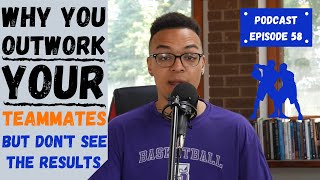
Ethan Khoza explains why outworking teammates doesn't guarantee better performance. More hours don't matter if your training lacks specificity and game-like intensity. Decision-making and instincts from actual play beat isolated drills.
Chapters
Foreign. Welcome to the Visionary Master Training Podcast. Appreciate you guys for tuning in. Shout out to everybody who's listening right now on YouTube and of course, everybody who's on Apple Podcasts or Spotify. Appreciate you guys who are tuned in. If you guys are new, you listen to Apple Podcasts. Go ahead, do me a favor, leave a review. Scroll down the bottom of the page, be right there. Like, you guys know, beginning of every show. Those, I should say those of you who have been here before, know that before each episode. If I have any new reviews, I'll go through and I'll read that review today. We've got one review to read and it says thanks. This is a great baseline podcast and I love it. I noticed that I'm a little slow on the court and not so quick on my feet. Do you know anything to fix this? Thanks to Weekly Advice. I mean, without seeing you, there's. There could be a bunch of different reasons, reasons for why that is. Could just be straight up working on your ability to be quick. So your ability to, you know, play whatever, whether that's defend, whether it's move laterally and, you know, kind of working like reactive training that way. Or it could just be like, you know, the weight room, like you got to go and get stronger. That's why you can't move. But in general, make sure that you're focusing on that side of the spectrum, which we're going to talk about a little bit later in the episode too. There are a lot of great trainers out there who focus on that sort of stuff. Getting quicker. PGF performance is one of my favorites out there. I think he's really, really good. So he's a guy to check out PJF performance. He's got a lot of stuff talking about quickness and just overall athleticism as a basketball player. So go check that out. But I appreciate the review. So I got a DM this week from a player who is frustrated and it's a DM that, you know, I've seen multiple times. And I thought it'd be a good idea to make an episode talking about it because of course I've been there. I'm pretty sure everybody watching will also be able to relate to this. And obviously you out there who's watching, listening right now, like, I'm sure you probably can think of situations where, you know, you can, you can relate or you've had this similar experience on some team that you've been on. So ourselves. Hey, coach, I had a game recently where my team expects me to Play well because two of our best players were in lockdown. I performed really badly. I was like a ghost. It's really frustrating for me because I know I'm working harder than the rest of my team, but they score 20 plus points per game and I barely ever score. Do you have any advice? So that was that, that question. I want to focus on the end of that question. Talking about, I have teammates who do this, teammates who score 20 points per game and I barely score, but yet I put in more time than them, I work harder than them, and for some reason I'm still not performing as well as they do. You know, to, to kind of. We'll touch on the beginning of it when we talk about, like bad games, you know, bad games just kind of happen. And even as much as you may want a game to go well for you, you might just have a bad game. Now, if that becomes a consistent trend, typically that's where you need to change something. But, you know, just because you really want to play well in a game doesn't necessarily mean that you're going to. That's just kind of how things shake out sometimes. I want to go through three things to specifically talk about. You haven't, you know, you have a teammate or multiple teammates who are better than you or play better than you, and yet they don't put in as much time as you. I know it's one of the most frustrating things. And again, everything that I'm speaking about in this episode is coming from my own experiences as well, because I've definitely, again, like I've said, I've been there. Sure you've been there. I'm sure everybody listening has been there before where you feel like, yeah, you know, I put in a lot of work and I work harder than, you know, this guy on my team or that guy on my team. Yeah, that guy, you know, shoots better than me. That guy is scoring more than me. That guy's getting more plays run for him than me. And it's definitely a frustrating thing. And there's, there's definitely ways to, to fix that. Not, not, not necessarily saying that you're going to be the best player on your team. Saying not necessarily a bad thing for your teammates to be good. Obviously you want to play with good teammates, but how can you maximize your own ability so that you don't feel like you're kind of wasting your potential or wasting the work that you're putting in? Because it's one of the most frustrating things, for sure. So we'll go through Three points that I want to make about this. Three things that are really going to help you guys to be able to change the way that you approach, you know, hey, I work this hard. This guy doesn't do this. Like, it's going to help you to approach that from a better perspective and be able to ultimately maximize the work that you put in and the efficiency that you work with. So point number one that you have to understand is that more work does not equal more success. Okay? You got to understand, more work does not equal more success. So one of the biggest misconceptions out there is that the more work I put in, the harder I work, the better I'll become, and the more successful I'm going to be, okay? The more work I put in, the more success I'm going to have. And that can be true sometimes, but it's not always true. And it's not sometimes. It's only true to a certain extent. Okay, One of the. You know, I'll give you a pretty glaring example. You might say, hey, you know, if I work out for eight hours a day and my opponent only works out for three hours a day, then I'm going to be better than my opponent because I work out for five more hours per day than they do. Right? That's. That's a thought that players have. And, you know, if you've listened to me for any amount of time, you know that I would not subscribe to that theory. But there's a lot of players out there who actually believe that, and they're frustrated when that's actually not the case. You putting in five more hours a day than your teammate doesn't actually guarantee you're gonna be any better than they are. And sometimes when it's that big of a gap, it can actually counteract what you're trying to do and actually not help you at all, or at least help you very, very minimally compared to what you could be doing. So that's one right there. But obviously, we can go with a more realistic example, which would be, you know, if. If players might think that, you know, if I put in more work, then I'll be better than them. So if I work out for an hour and a half a day and my teammate over there never works out, he just goes, he plays basketball. He shows up to, you know, to tryouts in November, and boom, he's for some reason, better than I am. And players will think, oh, well, if I just put in, you know, work every single day, if I go to the. To the gym and I work out every single day. I'm going to be better than him because he doesn't put in that amount of work. And that's not necessarily true either. And again, I'm sure a lot of you guys have experienced that, and for sure I have, too. But you know, that's, that's the mantra right there, is I work out every day. My teammates don't. And for some reason, they're still having more success than I am. It's important for you to realize that hard work does not guarantee you anything at all. All. Okay, I'm about six' one, probably around £180. And no matter how hard I work, okay, it doesn't matter how much time I spend the weight room, I'm gonna hire the best strength and conditioning coach, the best nutritionist, the best on court trainer. I can do all that stuff. No matter how hard I work, I would not be able to guard prime Shaquille O' Neal in the post. Just couldn't do it. 6 1, 1 80. Does not matter how hard I work. I'm not defending seven 1, 300 pound Shaq in the post. It's just, it's just, it's not possible. Okay? No matter how hard I work at it, I'm going to have to foul him or I'm going to have to try and foul him and hope I don't give him an and one. That's, that's how it's going to have to be. Because at the end of the day, he's too big and too athletic, and it doesn't matter. Even if Shaq puts in zero hours and I put in three, four or five hours a day, it's not going to change the outcome. Okay? Okay. So there we go. We can see that the fallacy of hard work equals more success. We can see it for what it is right there, which is a fallacy. It's not true. It's not always true, I should say. And so again, that's where we can really start to see that play out. So sometimes hard work just isn't enough. And what you need to do is you need to start to view hard work as just the baseline. It's just the entry fee. Unless you're supremely talented, right? Unless you're Shaquille O', Neal, 7 1, 300 pounds, who also is the fastest player on the court. Unless that's you. You have to understand that hard work is just what's expected. Like, you have to work hard, you have to show up, you have to put in the work. That doesn't guarantee you're going to be the best player on the court. It doesn't guarantee that you're going to be a starter. It doesn't guarantee that you're going to get playing time. It doesn't guarantee that you're going to be more successful than that person who doesn't put in work. But it's going to give you a chance at the end of the day, again, unless you are some sort of freak athlete who just naturally has it, which there are certainly players out there like that. And again, you guys all know players who are really good athletes who don't put in a ton of time, basketball wise, yet are still good at basketball because there's kind of naturally what they are, okay? And no amount of hard work is going to overcome that natural, you know, deficiency, we could say, between me and Shaq. Right? So that's just again, another extreme example. What I want to really lay out to you guys. The hard work is not everything. Just because you put in more work than somebody is not guarantee that you're going to be more successful, that you're going to be better than them. And we have to understand is that if you don't work hard, then you're screwed. If you, if you just, if you don't work hard, then you have no chance, you don't even put yourself in the running to be able to be successful at basketball or really at anything. But. And again, that's with a caveat that you aren't some top 1% naturally gifted athlete. Okay? This is for everybody else, right? This is for all of us. And again, everything I say is from experience. So you have to understand that you have to work hard. But there's so many other factors at play. Okay? So that's point number one is that more work does not always equal more success. But I want to talk about some more steps you can take. So point number two I want to make is, are you working efficiently, are you working hard, but also are you working smart at the same time? Okay. I think this is where players really start to overlook things. And this is really where players get themselves in trouble, thinking, oh, I just work hard, I work hard, I work hard. Yeah, okay, you might work hard, you might go to the gym every day, you might go outside every day and put in work. But what exactly are you accomplishing when you do that? What exactly are you getting out of that? You know, I could go outside and do stationary pound dribbles for four hours a day. And if Listen, I'll go. I could go hard at it, really be working hard, sweating, arms sore, and I go inside, I might feel really accomplished, right? My arm is going to be real sore, probably sore the next day, and I'm going to feel like, yeah, you know, I went out today and I worked hard. But what is doing stationary pounds for four hours actually accomplish? When we talk about how it translates to the game, does it necessarily make you that much better of a ball handler as compared to somebody who maybe went outside for 20 minutes and did a bunch of different dynamic drills, working on different, you know, crossovers, maybe working on, you know, a V dribble, mixing that in there, working stuff on the move, like more game, like ball handling stuff. Well, I think that, you know, it's really no contest. You're going to get significantly better in that 20 minutes of focus, dynamic work compared to that four hours of just strenuous pounding the ball kind of mindlessly. Okay, you know, I might go aside and work for four hours in those pounds, but if I go take, you know, if I go take one of my players and I say, okay, you know what? We're going to play one on one half court right here, where you've got to be able to beat me, okay? And now you've got to really work on your, your ball handling with pressure on you, right? In a dynamic environment where there's actually a defender there trying to take the ball from you. And we do that for 20 minutes. That player is going to get significantly better in that 20 minutes than I would get in that four hours. So you have to understand that what you do when you work is actually more important than how hard you work or, or how long you work for. Okay? So I think that the mindset shift needs to go from I work out for X amount of hours per day, or, you know, I do X number of workouts per day to I accomplished X today, I accomplished this today, or I got better at this today. Okay? Start looking at the actual outcomes, the actual results of what you did. Okay? Not just, oh, I went to the gym for three hours today. Well, what did you actually get better at when you were doing that? What did you accomplish today? What did you get better at? What did you focus on? Okay? And that's where you're gonna start to see the results come for you. So something to understand, guys, that at the end of the day, nobody cares how much time you put in, Nobody cares how many hours you worked for. Like, no one cares about it. Okay? Because at the end of the day. What people care about are the game results, right? You can work for zero hours, and if you go out and you score 20 points per game, people are gonna think that you're good. And if you go out and, you know, you work out for two, three, four hours a day, but you go out there and you don't do anything, then people are. What are people gonna think, right? At the end of the day, people only see the finished product. So that's what the ultimate, like, what our training is to gear us for, right? Your training should gear you so that you, when you have the best possible results when it comes to actual games, okay? And that's where it comes from. Do we train to get better at practice or do we train to get better at games? And changing your mindset from, oh, it's all about how much work I put in, how hard I work, too. It's all about what I get out of the work I put in. Then that's where you start to see those game results come for you. What people care about is what you do when the lights come on. Coaches will always say, right, oh, I want guys who are gym rats. Like, I love guys who always in the gym, always working. But at the end of the day, coaches actually above everything, love guys who help them win. They're going to play the players who they. They look down the bench and they say, those five players are going to help me win. So those are the five players who are on the court. And there's no thought in that coach's mind of, well, oh, well, this guy worked out for two hours a day in the summer, and that guy only worked out for 30 minutes a day in the summer. So I guess I'm going to play the other guy. There's no thought of that. There's, this guy is a better player than this guy, so that guy's going to help me win, right? This guy is a better shooter than this guy. So I'm going to run the play for that guy. And there's no thought of, oh, well, I guess, you know, maybe I should give it to that guy because that guy actually spent more time working on his shot than this guy did. So I should probably give it to that guy. Even though he's a better shooter, I'll give it to the other guy. That's just not how it works. Coaches play guys who help them win games. So at the end of the day, you have to be focused on getting better results when it comes to your actual games and the quality of your hard Work is what actually matters when it comes down to that. So the questions to ask are, how game, like are your workouts? How much attention to detail do you pay to your form? How much time do you spend shooting? Right, and how much, how much of that is very, very focused working on form, cementing it that form, becoming confident in your form. And then how many, like, how much time do you spend working game shots, the shots that you know you're not able to hit, how much time do you spend working on those shots? How good are you at those shots? Okay, and ultimately, what's the intensity of your workouts? If you're going at 50% intensity because you work out for six hours a day, the. The translation to a game where you need to be at 100% is probably not going to be that high as compared to maybe doing an hour long workout where you're actually going at that game speed the entire time. Okay, so in terms of all these specific areas, I've got podcasts, workouts, videos, talking about pretty much everything that I just mentioned. I also have programs that go through this stuff step by step in terms of like, okay, here's what you need to do. Follow this, do this drill, this workout, and kind of a step by step process. So there's all those options for you. So again, if you're confused on any of that stuff, check it out. Like just head on YouTube and look, look at that stuff up. Especially my most recent podcast when it comes like shooting and stuff, I've talked a lot about that recently. So that's important for you guys to look at. But again, more important than how hard you work is how efficient the work is that you put in. There are plenty of players out there who focus on the wrong things. They go out and they do their, their pound dribbles for four hours a day. I'm not saying that players are doing that, but I'm giving that as an example, right, where it's something that might feel like you're working hard, but how important is that work actually? How much does it actually translate? Because sometimes it doesn't, sometimes it's not. It doesn't translate the way that you might think it does. Okay, so that's point number two is the way that you work matters, right? It's all about the efficiency that you work with, not just how hard you work, but how smart you work, how efficient you are at that work as well. Okay, and then the third point I want to make is that, you know, if you struggle with not playing up to your Potential or being outplayed by guys who maybe don't put in as much as you do, then it becomes, do you know how to play the game? Okay, drills versus play. Do you know how to actually play the game? If I put you on the court, can you go make things happen? Can you make decisions in split seconds when you need to. Do you know when to cut to the basket? Do you know when to. When to, you know, tight curl around the screen? Do you know when to flare off a screen? Do you know when to go back door? Right? Are you. Are you willing and able to go set screens for your teammates to help them get open and then make the right read off of that? Do you know how to play. You know, when you get pressured by somebody? Okay. Do you know how to attack a closeout? Those are all things you get from actually playing the game with defense on you right there. And that's a lot of times where players struggle, especially players who put in a lot of time, right? Players who. And again, I speak from experience, players who are in the gym every day. You know what, I'm in the gym. I work on my. All my skills every single day. I never miss a day. All this stuff. A lot of times where they struggle with the disconnect is, is when it comes to actually translating what they do in practice to games. And again, we don't. We shouldn't be training to get better at training. We should be training to get better at games. And so if you aren't able to translate what you do in practice to games, then obviously there's a disconnect. We need to fix that right there. So this is probably the most important area of all this sort of stuff right here. Okay? The one thing we can talk about kind of prefacing all this is that, you know, there's. There's kind of two main reasons for why players who don't put as much time in don't work as hard. Why. Why those players might have better results, might have better results during games than players who do put in that work. Let's go back to my Shaq analogy, right? You might have players who are just naturally more athletic, right? You might have a player who's just naturally the best athlete. They might not put in much time at all, but they're bigger than everybody or they're faster than everybody or they're quicker than everybody. And because of that, they just, They're. They're able to play at a high level. Now, as you get, as you raise up in levels like that, becomes less and less of a thing because the, the, the better athletes naturally start to like, have to work, right? The worst athletes get weeded out. So everybody's. It's more of a, of a level playing field. So guys have to now work at it, right? As you go up in levels to, you know, college, professional, but levels below that, they're like, there are guys who are just great athletes and that's all they really need. So that's one reason. And obviously there's not much you can do to naturally to change what you are naturally. But like I said at the beginning of the podcast, like, there's ways you can affect your athleticism, improve your athleticism significantly for sure. Like I said, I usually defer to trainers who I think are really good at this stuff. So like I said, PJF performance. I think he's great at this stuff. So go check him out if you guys want to get better at that sort of aspect of things. But I think that's the first kind of main area is why, like in the day, if someone's more athletic than you, they're going to have the advantage. And that goes back to does the hard work matter as much as we think it does? Well, in that situation, there's certainly a lot more to overcome when there's a player who's just way more athletic than another player. So that's number one. But number two is just natural feel for the game, right? Natural instincts for the game. And this is where you really see those, those differences, right? You might have a player who doesn't do many drills, but they're constantly playing. They're at the park playing, you know, they're just messing around, playing two on two with their friends. And they have a, just a good feel for the game because they just play, right? And so they, again, they might not do all the drills, but when it comes down to getting on the court and having a good feel for the game and making good decisions, they've just done it more than a lot of other players who just do the drills, okay? So that's, that's really where you have to look at is you have to the, the players who struggle, who don't play up to their potential, who get outplayed by guys who maybe don't put as much time as them. A lot of the times it's because they spend all their time training and they don't spend enough time actually playing the game, actually getting better at being able to be a basketball player, okay, have developing those instincts that feel for the game, that decision making, you know, I talked about in a video a couple weeks ago how decision making is probably the most important skill in basketball. And if you never play, if you never have a defender there, then you don't ever work that skill. You don't work that skill by yourself. You can work your shooting, your ball handling, your finishing. Obviously those are very, very important. You don't have those skills. Then the decision making part, like you're not going to be able to make a decision because you don't have the actual skills to carry it out. But if you don't ever play or you don't play enough, then you don't. That, that decision making ability is neglected. So you have to find a balance when doing that. And again, that might be one on one, two on two, three on three, five on five, just whatever, okay? Having a defender in front of you as much as possible and having to learn how to play and having to succeed with that, I think that's very, very important. And kind of to add to that, if you guys go to the top link in my description below, you guys can grab my free decision making training checklist where I go through it like step by step, how to train your decision making completely free. Just go and click the top link below on YouTube or on podcasts or Spotify. You'll see that they're completely free and it'll walk you through this step by step in more detail. But decision making is such an important skill that a lot of players just, they, they overlook, they think, oh, because I go to the gym by myself every day, that I should just naturally be the best on the, on the, on the court. But you have to understand there's a difference between practice and games. With games, you have a whole defense trying to stop you and you've got to be able to make reads, make decisions. And if you don't train it, you're going to struggle there. So that's the other area that, you know, players, players will struggle with. Especially the type of player who, you know, again, speaking from experience, is at the gym every single day, right? Putting in the work, always, you know, watching YouTube videos, trying to get better at basketball, trying to learn more about basketball. It comes down to how like, are you, do you, do you just hoop or do you just train? Because if you just train, you're probably really good at training. You're probably, when you guys do shooting drills and practice, you're probably one of the best players, right? You guys do ball handling drills. You're probably one of the best players. But when you guys get in games, if you're not one of the best players still, that's probably where you're lacking is the decision making, the instinct, the feel for the game which you get through playing. So play more basketball, okay? Develop a better feel for the game. Develop those instincts, train your decision making, and ultimately you're gonna get better. Again, check out that decision making training checklist, top link in the description below. That's gonna help you guys out. Because again, at the end of the day, guys, the thing you have to understand is that the results are what matters. Okay? How much time you put in doesn't matter. Nobody cares about that. What matters is what do you do when the lights are on? So knowing that we have to train for that, we have to train so that our training is tailored to that. Okay, so again, third, one. Third point that I need to make about this is that do you know how to play the game? That's the question. Do you know how to play the game? Drills versus play, okay? Do you have a good balance of both? That's very, very important. So again, the three reasons why you might get outplayed by players who don't put as much time as you. The first thing to understand is that more work does not equal more success. Number two, working efficiently. Do you work hard and do you work smart? And then number three, do you know how to play the game? Those three things take care of those three areas, guys. Shift your mindset to focusing on how can I get the best game results, how can I be the most efficient with my work? And that's where you're going to start to see the best game results moving forward. So I hope this helps you guys out. I know, again, I've said it a bunch of times, speaking from my own experience, just thinking about what would have helped me, you know, what I know now, and being around so many players, seeing kind of similar patterns with that, I think it's very, very important that we understand that hard work is not everything. It's also about how you go about doing things. And I think once we start to take a smarter approach to training, you'll see those results start to double, triple, and. And that's where things really start to take off. So again, hopefully this helps you guys out. Like I said before, guys, drop a review on Apple Podcasts if you're new or if you just haven't done one before, Let me know what you think in that review over here on the show. If you guys are on YouTube, I appreciate you guys for watching. Make sure you guys drop a like and subscribe. Talk to you guys soon. Peace.
More from Ethan

Stop Using One Dribble When You Drive To The Rim! (How To Become A Better Finisher)









