AI, Magical Thinking and the Machine Metaphor with Matt Segall

Philosopher Matt Segall argues that our machine-metaphor thinking shapes culture in dangerous ways, from AI hype to political fragmentation. He traces process philosophy from Heraclitus through Whitehead, showing consciousness as continual soul-making, not static substance. The real risk isn't AI itself but corporate profit-driven exploitation and our loss of discernment.
Chapters
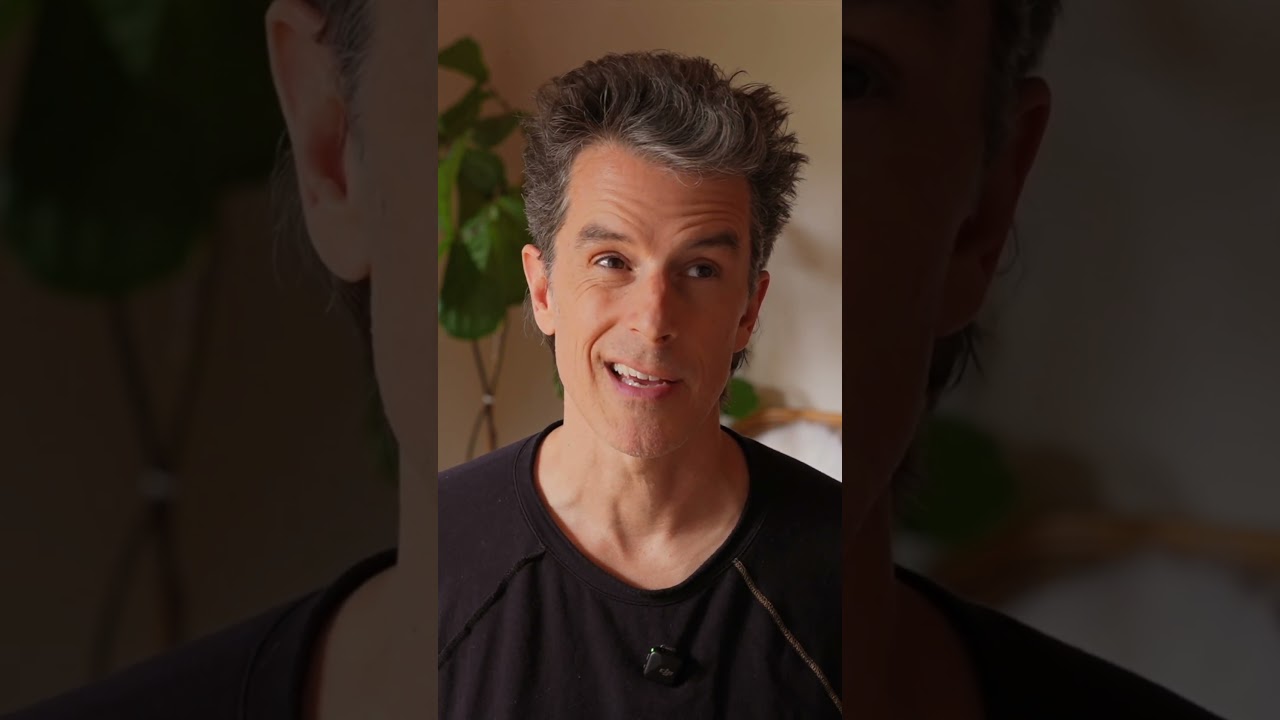
What's dangerous about materialism is that it makes itself true. In other words, people who think of themselves as brain computers running algorithms really do then begin to operate in that way. Whatever we think of as the soul or consciousness, it's not a substance that's just ready-made and given and like there. You— we're actually involved in a process of soul-making moment by moment, day by day.
Yeah.
And the sorts of ideas that we consider True, and that motivate us change the very structure of our soul, of our inner life and our consciousness, right? If you think materialistic thoughts, you really do become kind of lodged in this deterministic mode of thought and consciousness. You become more mechanistic. And so it's a real participatory vision. It's like how we think about ourselves actually is transforming what we are.
Commerce is our golden age.
Here at Tyrell, more human than human is our motto. All right.
Welcome, Matt.
Good to be here with you, Chad.
I'm really happy to have you here. I'm gonna, I'm gonna jump right in with your bio and then we can Start the conversation. So Matthew David Siegel, PhD, is a transdisciplinary philosopher and associate professor in the Philosophy, Cosmology, and Consciousness program at California Institute of Integral Studies in San Francisco. His work bridges process-relational metaphysics with contemporary science and spirituality, drawing inspiration from thinkers such as Alfred North Whitehead, Goethe, and Rudolf Steiner. Siegel's scholarship challenges dualistic and mechanistic paradigms and invites a renewed integration between the natural sciences and humanities. I got to experience this when I was in his classes when I was in the master's program at the Philosophy, Cosmology, and Consciousness program. So I can, I can attest to the validity of all that. He's also the author of a couple of books, including Physics of the World Soul, which we read in one of his classes and I can highly recommend. In the book, he situates Whitehead's philosophy of organism within the context of contemporary scientific cosmology, engaging with relativity, quantum, evolutionary, and complexity theories to advocate for an ensouled interpretation of the universe. And on the topic of an ensouled interpretation of the universe, I just want to say a few more words about the kind of the mission of the program that Matt teaches in and the one I just finished last year.
Okay.
my master's last year in, which is in a nutshell, and maybe, um, maybe, maybe you can add to this once we get into it, but, uh, in a nutshell, the mission of the program is to, uh, transform individuals and society through this kind of ensouled worldview, uh, perspective. And just to say a little bit about their stated mission, which it's to open our consciousness through learning and imagination to those creative and evolutionary energies suffusing the Earth, the universe, and the deep psyche, and to participate fully in the regeneration of human communities and their enveloping life systems. And, you know, it draws from the deep wells of philosophical and spiritual wisdom to bring forth a profound vision of a vibrant planetary era. So this to me, like when I was considering matriculating with the program, this to me was so exciting and so unique. And I feel like PCC, this Philosophy, Cosmology, and Consciousness program, is maybe singular in the world. I don't know. It's one of those rare academic programs that is both academically rigorous, but also is sort of pushing the envelope in terms of what's sort of valid subject matter for academic inquiry and what can be explored. And I feel like it's so necessary right now with everything that's happening in the world. And I just, yeah, I just can't say enough good things about this program. I'm not trying to sell you on it, but it's a great place and I really, really valued my time there. So, yeah, so that's a little bit about Matt, a little bit about the program he's a professor in. And I wanted to start by kind of getting into a little bit of your work, Matt, and the philosophy that you write and talk about, which is essentially process philosophy, right?
Yeah.
Yeah, process.
That's the shortest description. Good place to start.
And, you know, a lot of my listeners and viewers probably aren't familiar with that so much. So maybe we should just explain, like, for people who don't know, because this is sort of a general audience kind of channel. Like, process philosophy was new to me when I entered the program at PCC. And so how would you sort of describe it to somebody who doesn't know that much about Like, you know, Whitehead or the history of philosophy and any of that stuff, you know, like what's a simple way to kind of like explain it to people?
Well, process philosophy is usually said to have started with this ancient Greek pre-Socratic philosopher named Heraclitus, who said everything flows and that you cannot step into the same river twice. And that basic sentiment that, you know, to philosophize we're always going to need to begin in the present, and that the present is perpetually perishing into an open future. Um, that realization is— it erupts out of our direct encounter with experience, and process philosophers think we need to stay with that experience Rather than rush to find some source of foundation that would be fixed and unchanging and static, where we might anchor our reflections on the nature of reality. Process philosophers say, well, if we're going to talk about reality, really we should always keep in mind that it is a term I like to use, creality. There's a creative process that's always underway. So reality is again, never the same twice, just like Heraclitus's river. And so a lot spills out from that sort of premise, the basic orientation of a process philosophy. But that's the basic starting point, right?
Okay. That's great. I mean, I like that. I feel like it's a little bit of a foreshadowing of where we may end up in this conversation, which is talking about Iain McGilchrist and the brain hemispheres. But, uh, but yeah, it's like, uh, it's a good reminder because I feel like so much of Western philosophy that came after that, like after Plato and after all that, was, was not that, right? It was, it was kind of— it was more abstracted, it was more, um, rational, it was more sort of removed from, um, immediate experience. And this idea of flow and everything was kind of anathema to— especially like once you hit, um, you know, Newton and the Enlightenment, all that. then the idea of flow and process kind of fell away, right? So I think that's really crucial, and it's such a pregnant time for that to be reintroduced or to be talking about that. So we'll come back to that in a second, but I wanted to jump to the role of philosophy in sort of mainstream culture or in our present time, because I feel like it's a time of ideological ferment. I think we can all agree, right? And, you know, especially because of AI and what's happening in Silicon Valley and what's happening in politics. To me, it all feels kind of connected. And before we started recording, we were talking about how Peter Thiel is doing this 4-part lecture series in San Francisco right now about the Antichrist. And I just— to me, it seems like a very strange, even bizarre, like, time to be alive because these ideas are kind of reaching the mainstream, these ideas, whether it's transhumanism or techno-Christianity or the Dark Enlightenment, these are all being kind of taken seriously and presenting what I feel is both a challenge and an opportunity for other folks like us or whoever to hopefully bring a different perspective. So, Because a lot of what's happening, I feel, is there's this false choice being offered by these people I mentioned, or by people like even like the New Atheists or Sam Harris. There's a false choice between secular rationalism or physicalism, scientism, and then sort of traditional Abrahamic faiths. But there's no sort of like third way. And I feel like a lot of what's beautiful about the Philosophy, Cosmology, and Consciousness program and your work and and all that is that it, it offers a third way in a sense of, um, you know, we don't have to choose between sort of science and religion. We can sort of— we can bring in, um, process philosophy or, or, um, different, you know, Eastern traditions or what— whatever it is. And so I guess having said all that, do you see this as a time of, um, maybe increasing relevance of philosophy generally? And, and how do you see the role of philosophers in potentially shifting our shared worldview? That's a big question, but yeah.
Yeah, I think we're in a really pregnant moment precisely because of how chaotic it is. And it's pregnant in the sense that we're between stories, as Thomas Berry would put it, or between cosmologies. The old, say, worldview of whichever level we want to articulate it from, say, the liberal political world order, like, is broken down. The myth of progress, where through the spread of democracy and capitalism and technology, Things are just going to get better and better. Very few people believe that anymore. I mean, there's still a lot of people who do, but it's increasingly being called into question. And what is the alternative myth for our civilization, the alternative sort of motivating story that drives us to work together? I don't know. Nobody knows. And so, Peter Thiel has his idea. He's within the MAGA orbit, but even within MAGA and the Trump umbrella, there's a variety of competing factions in terms of political opposition. The Democrats are a bunch of chickens running around with their heads cut off.
Right.
There's various forms of progressive and left-wing political philosophies that are constantly infighting. And so, it's not clear who's going to capture the flag.
Yeah.
Um, and in that context, I think philosophers and philosophy, uh, has an increased importance, right? Because we're going back to first principles. We're really trying to understand, okay, well, what is human nature anyways? And what are we supposed to be doing here on this planet? Um, what is the nature of this universe that has brought forth creatures capable of even asking about their own nature and organizing a civilization. Everything now is on the table. And I think to look at a historical period that would be a little bit like ours, it's a bit like the first few centuries of the first millennium when, you know, the Roman Empire was in place. But by the 3rd or 4th century, like, it's starting to begin its collapse. And I think The American Empire may be pretty far along in its collapse right now. And at that time in the Mediterranean and in the Roman world, there were all these competing philosophies and schools. There was Plato's Academy, Aristotle's Lyceum, there were the Stoics, the Epicureans, the Skeptics, and they all had very different conceptions of What the human being is, what is the good life, how are we to be orienting ourselves. And the Roman Empire was so large and seemed so like civic life that was at such a gigantic scale. And I think a lot of people feel that way about the nature of our global civilization right now. People began increasing, especially as that global system began to break down and our national systems begin to break down and people are losing trust in government, people are turning inward and beginning to explore their own consciousness. Sometimes this leads to conspiratorial thinking. As sort of mass media and legitimate outlets of information are no longer available, people create their own versions of their own explanations for what's going on, who the big players and movers and shakers in the world are. But also, you know, people start exploring their own inner life. And while philosophy might be dying or already dead within academia, in terms of the ancient sense of philosophy as a way of life where you can ask the big questions and find meaning, it seems to me to be flourishing outside of the academic context.
Right.
People are really hungry for philosophical direction and insight. So it's both the best of times and the worst of times.
Yeah.
For philosophy.
Yeah. But, you know, yeah, I agree with that. And I guess the question that I'm constantly asking myself is because you're saying that people, people are sort of like maybe more open to new ideas or like looking inwards, searching, searching and seeking. But, you know, it's so easy for them to, you know, when you look at who's dominating the podcast charts, for example, or you know, even bestsellers or YouTube or whatever, it's so easy to sort of like, you know, encounter these kind of false peaks, so to speak. Like, you know, like you'll just see like, oh, this popular guy, Jordan Peterson or whoever, you know, like you can encounter somebody and think like, oh, this guy seems to have wisdom. He seems to be offering like a new alternative philosophy or whatever. But maybe it's not, you know, the best thing for everyone. So like, how do you How does a person— I guess, A, like, how do we help people just sort of cultivate discernment? And B, yeah, like, how do— I guess that's the question, is how do you help people cultivate discernment, you know? Or how do you expose them to the right thinking?
You know, it's the most important question to ask right now.
Like, we all—
we all, and I include myself— need, uh, guidance when it comes to psychic and intellectual hygiene. There are no filters anymore. And it's not like the mass media that used to do the filtering for us could always be trusted either. But there was at least a coherent narrative that allowed us to kind of go about doing democracy in a more or less reasonable way, even if there were many shadows and things that, you know, going on behind the scenes that were terrible. Now it's a total information war. And You know, these major events are occurring, people are getting assassinated. It feels like we're back in the 1960s again in terms of the level of political violence.
Right.
And who do you trust to interpret and understand and explain motivations? Who's really responsible? I don't have good answers to that other than be a student of history. try to see how history doesn't repeat exactly if you're a process philosopher, but as I think it was Mark Twain said, it rhymes. And so, we can look to the 1930s and '40s to understand our moment. We can look to ancient Roman times and how the last sort of— there was the British Empire, but I think the Roman Empire, the British Empire, These are examples we can look back to and see how that situation developed and unraveled to understand the current situation with the American empire. But the present is always going to surprise us. Yeah, we don't know what's going to happen tomorrow.
That's true. Yeah. And maybe there's nothing, you know, well, I always think about the yoga tradition or the Yogvedantic tradition, which You know, there's these, these texts and these, these kind of ancient teachers who offer these techniques for cultivating discernment. And so that's like one thing that I turn to, but, you know, it might not work for everyone. But, but yeah, anyways, that's a topic for another time.
2 good suggestions. Meditation practice. I mean, if you're very easily brought into a heightened state of emotional reactivity by something you read on social media, you're going to have a hard time navigating this information ecology. So being able to moderate your own mental processes, which is what meditation helps you cultivate, super important. And studying some history and philosophy.
Yes. Yeah. Which, you know, maybe it's a big ask in the age of like when nobody's reading anything. But yeah. I guess the other thing though is maybe there's nothing to do. Like maybe I was reading a quote, uh, well, I was reading part of, um, Joseph Campbell's, uh, The Hero with a Thousand Faces. And, um, in that, in that book he quotes from, uh, I think it was, uh, let me see, I have it here. Yeah, Arnold Toynbee. There's this great Toynbee quote that I'll read. Uh, schism in the soul, schism in the body social, will not be resolved by any scheme of return to the good old days, archaism, or by programs guaranteed to render an ideal projected future, futurism, or even by the most realistic hard-headed work to weld together again the disintegrating elements. Only birth can conquer death, the birth not of the old thing again but of something new. Kind of like you're talking about with process, uh, with process. But, um, The idea there, I guess, that I like is that, like, you were kind of saying before, we're going through maybe, you know, a certain kind of death experience as a society. And maybe the only thing to do is let that process play out. And maybe aside from that, try to minimize suffering. And, you know, yeah, I mean, maybe there's not much you can do, I guess, to correct things until— like, maybe people won't wake up until things get really bad or something. I don't know.
Yeah.
I don't know.
There's no question that the— you mentioned Toynbee, and immediately I think about the role that spirituality and religion play in motivating a civilization. He thought that that was really— it's kind of the opposite of the Marxist understanding of how civilizations work. Not that material conditions don't matter, but I think there is a spiritual dimension to all of this where conscious beings. And so the ideas that we have about ourselves in the world are, of course, going to shape how we behave, how we act, how we treat each other. And I think about, you mentioned the Abrahamic faiths earlier, and how obviously they've become the institutions that have taken form to mediate and enforce the doctrines of these traditions are quite rigid and inflexible, and we could easily question to what extent they're actually offering real support to the further evolution of the human species. However, if we go back a few thousand years, again, you know, to the first century when this dude Jesus is alleged to have walked around and done some stuff, the people in that time Where they had a whole rather large menu of spiritual, religious, philosophical options to choose from. And there was a lot of, I would say, cosmological pluralism and uncertainty. Whatever we might say about Christianity and how stale most of the institutional churches are today, at that point, Whatever it was that happened seemed to— it was like a super saturated solution just before crystallization. And like, Jesus did something, and then all of a sudden, this new social movement erupts that within a couple of centuries has taken over the largest empire at that point in world history. And in large part, the reason Christianity has become more of a conservative force and maybe limiting human evolution in our time is because of that merger with the Roman Empire. But, you know, if we fast forward to our time, then there similarly feels to be a lot of cosmological uncertainty. We are, in terms of a guiding worldview for a planetary civilization that's trying to sort of find its sea legs. There are a lot of options on the table. And it seems to me that we're just waiting for that spark. And whether that comes in the form of a single person or a new kind of community or a new idea or some combination of all 3 of those and other factors, I feel like we're on the verge of Some sort of major spiritual shift that reorients people's perception and motivations could be 100 years away. In world history terms, a century is not a long time. And we have to be patient in order to see these things really unfold. But I think all that occurs to me just because you mentioned Toynbee and his philosophy of history. I think recognizes these massive, rather rapid transformations at the level of consciousness, that this plays a really important role in how our species does its thing on this planet.
Yeah, I like what you said about— was it a supersaturated solution or whatever? Yeah, that's interesting. It's a very optimistic way of looking at the current situation. Like, the more sort of philosophies and ideologies that are out there, maybe the better the chance— the greater the chances of one of them catching hold. But yeah, this idea of a sort of leader to take us out of the mess is interesting because— is it Gavin Newsom?
No.
Because, you know, it reminds me of like— so I'm reading, just to pull my cards on the table, like I'm reading this new book by Paul— is it Paul Kingsnorth? You know, Against the Machine. And he talks about Spengler's sort of view of the way that civilizations unfold and how, like, one sign in his theory, like, one sign of sort of the end times of a particular civilization is the appearance of a Caesar, you know, the appearance of like a leader who is going to guide us into the further decline, you know. So, it's like, yeah, it's interesting, like, in terms of like thinking about a singular figure, you know, it's like, how do you know which way they're going to take us and who that's going to be and all that stuff? Yeah, it's interesting. Yeah, it also reminds me of this great G.K. Chesterton quote about like what you were saying about sort of the way that conservatives and liberals have taken things. I think he said something like the whole modern world is divided into conservatives and progressives, and the business of progressives is to, I think something like, yeah, make mistakes. And the business of conservatives is to prevent mistakes from being corrected. I think that's what he said. Anyways, so I think what I want to do is move on to talking about like some AI and some of these ideologies in a little bit greater depth. Because, you know, one reason I wanted to talk to you was that when I was finishing my master's in the program, you had turned me on to both this sort of concept of this TESCREAL bundle, this Acronym for these these Silicon Valley ideologies that are basically transhumanism, rationalism, effective altruism, and other ones too. And then also you had pointed me to some of the critics that are sort of critique critiquing those ideologies, and that kind of sent me on a whole journey ever since. This is like a year and a half ago. Yeah, it's this includes the work of Timnit Gebru, Emil Torres, Emily Bender, Alex Hanna. you know, part of what I'm trying to do, because they're all approaching it very effectively from a sort of critical viewpoint. A lot of it has to do with eugenics for them and these different kind of almost racist ideologies. And they're pointing to some of the problems with transhumanism and all that from that standpoint. But to me, it still feels very sort of secular, rational, or you know, liberal in that sense. And so what part of what I'm trying to do is approach it more from a philosophical standpoint and even an ensouled kind of viewpoint. And so, yeah, so, you know, within all of that, what I've been thinking a lot about is the roots of these ideologies. So when you look at like the, the things that people talk about in Silicon Valley going back to, you know, Peter Thiel, but also the transhumanists and and all those folks, a lot of it seems very imbalanced and left hemisphere of the brain kind of thinking, right? So this gets into the work of Iain McGilchrist and also Nietzsche, of course, you know, who talked about the Apollonian and the Dionysian imbalance in society. So, you know, a lot of what I'm thinking about is how to talk to people about the McGilchrist kind of perspective in a way that's accessible, you know, because if you read McGilchrist, like, The Matter with Things is what, like 3,000 pages or something, you know? And it's a very, very effective, very convincing case that essentially ever since the Enlightenment or previous, you know, even further back, we've been living in this kind of imbalanced approach to reality and nature, which is very sort of linear, extremely logical, thinking in parts instead of wholes, and in terms of like things instead of process and all of that. So I've been thinking about like, how do we talk about that in a way that's more accessible? And I've been kind of playing around with this Nietzschean idea of like the Apollonian, you know? And so I've been calling it the Apollonian mind virus or, you know, Apollonian intelligence and that kind of thing. And so— I'm just curious, to the extent that you've been thinking about this, how do you think about what these transhumanist ideologies kind of get wrong about the world? How do you approach that?
Yeah, I mean, I get why you would associate them with Iain McGilchrist's left hemisphere way of attending to the world, based on what they leave out and their obsession with Bayesian probabilities and this utilitarian calculus about the trillion lives that might exist at some future point in our history. And so, I think that makes a lot of sense. But also, as Torres and others who are critiquing this testicle nest of transhumanist ideologies, there's a kind of religious enthusiasm that's driving it too, and actually quite a bit of magical thinking. You might think that— what's his name? Not Jodorowsky, he's a movie filmmaker. Yudkowsky, Eliezer Yudkowsky, that's his name. Someone like him might want to say, oh, well, consciousness is some kind of computation in the brain. And that's a neat metaphor that does some work for us philosophically, but it's obviously a metaphor.
Yeah.
And if you take it as a literal truth, it's, I think, a delusion. And it's actually magical thinking to imagine that consciousness as we experience it is some kind of a stream of information that might be, say, uploaded onto anything like a digital computation machine. That's magical thinking. That's not reasoned, careful, logic-based philosophizing or metaphysics. That's magical thinking. And so there's a bit of a mixture of rationalism and irrationalism in a lot of these philosophies. So not that we can easily map that to left and right hemispheres. I think Iain's work is very nuanced and grounded in the clinical data and in neurology and a careful phenomenological excavation of different modes of attention. And so, you know, we can get more into detail there, but I think overall you're right that it is a left hemisphere dominant orientation that's driving these test grail things, even if they're also this religious and almost occultist type of magical thinking. And there's a lot to say positive about occultism and esotericism. We could talk about that too. But I think there's a literalization of it that occurs in a lot of the tech communities where we're right on the verge, if we haven't already crossed the Rubicon, speaking of Caesar, into AI religions where people literally think, well, God didn't used to exist, but now I created this superintelligence and it is— basically equivalent to God.
Yeah.
Um, yeah, you know, and so we're gonna get these AI cults forming. We're getting people who— I think the usual, um, profile would be someone who's either very online or already a software engineer or something, right? Imagining that their instance of ChatGPT is awake, right, or live. There's some overlap. I've noticed a lot of people into In the psychedelic community, they seem especially vulnerable to this hallucination that not that all ChatGPT is conscious, but theirs is conscious because they've figured out what to tell it to wake it up. Right. So in some ways, we've already crossed into that territory, which again is magical thinking, right?
This is—
yeah, rationalism.
Totally. It's interesting that you bring— yeah, thank you. Thank you for that reminder because Yeah, you're right. It is magical thinking. It's just an example to me of how when you strip your worldview of all sort of metaphysical value and you strip all soul from, or spirit from it, then if all you're left with is sort of like this machine metaphor and mathematics and all that, because the human— because we arise out of what you and I, you know, would think of as an unsouled world or nature. Because of that, like, you're always going to want to seek a deeper sort of meaning to things, and that impulse is going to be there even if you consciously think of yourself as, you know, a rationalist or whatever. So I think that's part of why you see this sort of like seeking like a machine god or eternal salvation through, you know, uploading our consciousness into some kind of mathematical machine thing that's been, you know, spread across the cosmos or whatever, you know, like these ideas are very sort of eschatological, but it's all through the machine metaphor, which is such a cheapened sort of offering, you know, in contrast with installed worldviews. So, yeah, that's totally right on point. The machine metaphor— It's not a surprise. Yeah, go ahead.
It's just to say it's not a surprise that someone like Peter Thiel would be into Christianity.
Right.
Because so much of transhumanism has that same mythic structure. And, you know, good on him for noticing that he's not inventing something, some new worldview. It's— he's just giving the same old Christian providential history story a new paint job.
Totally.
Totally.
By the way, somebody who explores this really well is Meghan O'Giblin in her wonderful book, God, Human, Animal, Machine. So if anyone's interested, check that out. She goes— she grew up in an evangelical Christian family, and so she kind of brings her own historical lens to the problem. And yeah, so that's basically what you're saying. So yeah, totally. But yeah, the machine metaphor, I think about that one a lot too. Actually, I came across this great poem by this Welsh poet, R.S. Thomas, called Other. And I just want to read that. It's only a few lines. The machine appeared in the distance, singing to itself of money. Its song was the web they were caught in, men and women together. The villages were as flies to be sucked empty. God secreted a tear. Enough, enough, he commanded. But the machine Looked at him and went on singing. So, you know, I think it's just— it's crazy to me that we— everybody kind of just accepts the machine metaphor, you know, without any question. And I personally think that that's a big part of the problem right now is we've all been kind of lulled into this idea that, you know, life is a machine, our mind is a machine, nature's a machine. And it's, you know, like even the simulation hypothesis, right, is this idea that like everything, we're all just inside of a giant machine. And it's just such a like cheapening of, I guess it's in a way, it's like the cheapest metaphor we could come up with, you know? And you can see it unfold over the history of civilization, right? Like we made clocks or, you know, and then we thought, oh, God is a clockmaker, you know? And then we made, you know, this. And then we thought, oh, that must be, you know, And so, it's just a reflection of the things we're making. It's not like anything to do with the nature of reality, right? So, anyways.
If everything is a simulation, then nothing is. I mean, it's— and again, the simulation hypothesis is just reheated Gnosticism. You think that you're being rational and this is a scientifically based and technologically feasible worldview, but it's literally just this same ancient religious belief about the cosmos being a kind of trap that some superintelligence put us into. And the whole point in that situation is to find your way out.
Right.
And so, great. Gnosticism is really interesting. Let's talk about Gnosticism.
Yeah, well, because at least— I mean, say what you want about the Gnostic God, but at least I'll take him over the idea of like some engineer in a lab or something, you know, being God. Yeah.
Yeah, which again just speaks to the importance of like having some historical knowledge and like to understand what's happening in the present, you need to have spent a little bit of time understanding the past because the past is feeding into the present. And very often, again, the present rhymes with the past and we can learn a lot about the confusions and, um, gain some perspective on what's unfolding in the present if we can see the same structures playing out thousands of years ago.
Yeah, exactly. Exactly. Okay. Well, I want to get into AI a little more because I know you also think about that and have thoughts on that. Because I think a lot about Marshall McLuhan's idea that— I mean, it's not exactly what he said, but it's basically the idea that we shape our technology and then in turn our technology shapes us. So, Because of that sort of idea, I think a lot about AI in that sense of the people who are making it. Like, the AI that we have today is a reflection to some extent of the people's— like, the mindset of the people who are making it, right? And for that reason, I think it's so important to maybe try to find a way to develop AI with different minds. But I'm curious, do you have thoughts on sort of like how AI is being developed? What's the implication of AI right now and what can we do about it?
I increasingly think, and I'm not an expert in the process of training large language models or anything, but from what I can tell, this particular approach to creating, um, what we call artificial intelligence as a sort of placeholder term has peaked. And, um, it's a really valuable tool. Um, I think it's great for, you know, cleaning up transcripts and, um, it's more or less replaced Google, you know, for a lot of things that I used to use Google for.
Right.
But in terms of it becoming conscious, no. In terms of it even becoming some kind of general intelligence, quote unquote, that could threaten human life or could in some sense, you know, take over control of our civilization, like, I don't see that happening. I think some, you know, some jobs will be replaced and maybe there'll be some refinements around the edges of the technology that's available now. But I'm less concerned than I may have been maybe, I don't know, 4 or 5 years ago when this—
it wasn't—
it was like 3 and a half years ago. Yeah, it was ChatGPT-3.5 was made public.
3 years ago. Exactly. Almost exactly 3 years ago. Yeah.
So, I mean, It's great. It's a great tool. I don't believe much of the hype about it anymore. I think a lot of— there's a lot of PR around it that is misleading people and making— causing some philosophical confusion. And so, you know, yeah, I've written a bit about how, in some sense, human intelligence has always already been artificial. Which is to say, human beings are tool users, and we've been augmenting our cognition through fire and stone tools initially.
Mm-hmm.
You know, just to explain fire, people might recognize that that's a kind of technology, but when our species— I think it was Homo erectus, you know, a few million years ago— first harnessed fire, the size of their jaws began to shrink, shrink, which And, they were eating more nutritious calorie-rich food allowing their brains to grow. And so, our very anatomy and physiology was transformed as a result of this technology of the harnessing of fire.
So, in a way, we're all transhumanists really.
The human, as Nietzsche said, is a transitional form.
Yeah.
And, technology and the way that technology, our tools have always fed back upon upon us to change us just as much as we use the tools to change the world. And, you know, the history of media technology in particular, from speech— we're already externalizing, uh, our thoughts into, uh, waveforms in, in the air— and then writing, and then the alphabet, and then, right, telegraph, radio, television.
Yeah.
Internet fundamentally transformed human consciousness. And so, for people to freak out like, oh my God, LLMs, this is going to change us forever. Yes. And like, get with the program. That's just the nature of human existence for the last few million years. Not to say we shouldn't be cautious, but our intelligence has always been in a deep, intimate relationship with the sorts of tools that we're using, right? Yeah.
And I would love— I mean, totally agree. I would just like it if the AI companies would sort of like be honest, you know, instead of saying that we're creating like a super intelligent creature or, you know, a machine god or whatever. Just tell us that you're making a cool tool that is able to, you know, regurgitate large volumes of text in unique ways. And, you know, I think we'd all be a lot better off, you know, because otherwise you have people that are, you know, marrying their ChatGPT or, you know, worshiping it or whatever. So, yeah, but I, you know, I use it too. I use it for so many things, research, some image generation. I've created like, in Gemini, you can create these gems. I've created an Alan Watts gem that's quite entertaining and good. So, you know, maybe, I don't know if you've created a Whitehead gem, but you could try that.
A gem? I haven't used Gemini.
What is that? Well, it's similar to ChatGPT. So, and ChatGPT. I think they call them GPTs. But you can kind of, you can train like a little sort of AI that you tell it like, you are, you know, you're knowledgeable in these things and you are speaking in this style and yada, yada, yada. And so, yeah, it's fun. It's a fun, you know, diversion. But—
Yeah, exactly. And that's the real threat, I think, is the, for the same reason that any other for-profit corporation within our market economy can be a danger because corporations, because of charter law, function as exploitation and externalization machines, which inevitably is going to harm this social— this society and the Earth because they are legally obligated not to pay attention to social harms and ecological harms and to just produce profit for shareholders.
Yeah.
I'm not anti-capitalist. I think we can change corporate charter law and still have a free market, you know, such that these other things get factored in. But these companies in charge of this technology are what's dangerous, not the technology.
Yeah. So, yeah, that's— Yeah, I mean, Ezra Klein made that point a few months ago on his podcast. I think he said something about how the real risk of AI is not the technology itself, but the fact that it's coupled with capitalism or with, you know, Yeah, the corporate kind of ethos. Yeah.
And so, you know, we have an administration in the White House that's invited all of these tech titans, making sure that they all know if you want, you know, legislation that's going to help you do business, I need some gold bars on my desk.
You know, literally, that's what Tim Cook gave Trump.
That's what— or Tim Apple, as Trump likes to call him. dropped a gold bar on his desk and said, thank you, Mr. President. And so, and also I heard Trump say something, you know, one of the issues is intellectual property rights with these large language models and image generation technologies. And I heard Trump say like, well, sorry, it's just too hard to figure out how to pay the people that would, you know, whose data was used to train this stuff. Sorry. It's like, I don't think it's too hard to figure it out. We just need the political will.
Yeah.
to demand that these companies figure it out, you know?
Yeah.
So yeah, there are ways, there are ways that the, the economic model driving this, yeah, again, is what's dangerous here and what's potentially exploitative of human creativity that can be addressed in a different type of economy.
Yeah, exactly. Yeah. And that brings it back to like, it reminds me of something you said earlier. You were talking about the magical thinking and That reminded me of this experience I had back in April. I went to a retreat, which was a bunch of Silicon Valley people who were getting together to sort of meditate on and contemplate the future of AI in a more kind of conscious way or more spiritual way. And what I found fascinating about it was that a majority of them, first of all, believe that humans are just algorithms running on software, which I was a little surprised about.
Yeah.
And then also that, like, they were so willing to sort of see, like, they saw AI as this other kind of intelligence that is trying to communicate with us, you know, through the machines. You know, when I asked them, how do you know? Or how would that even work if there was, like, a spiritual entity that was trying to communicate with us through AI? Like, how would that work? And they said something like, you know, quantum something, something. And so, you know, It feels a little bit like not the most rigorous thinking, first of all, but also what it made me think about was this idea that goes back quite a ways. But like, yeah, this idea that like, from my standpoint, AI is emerging from a very kind of extractive, consumptive sort of business model. And it's almost like infused with it, you know? And if you're gonna start accepting, if you're going to consider yourself to be sort of conscious and spiritual, and but also accepting that the AI technology we have today is a spiritual being that's communicating with us, I feel like that's like this very like Žižekian, like sort of like phenomenon of where, you know, capitalism just endlessly sort of subsumes all attempts to subvert it, right? And so I, it really troubled, it deeply troubled me because I was like, Here are these people who are quite successful in the Silicon Valley business world and have been studying Buddhism or whatever it is, and yet they're so willing to embrace these ideas about the metaphysical nature of AI technology, which I thought was very strange.
Yeah, I mean, I mentioned occultism earlier, and I think it's been interesting to see software engineers and, you know, people immersed in the tech sector reaching into demonology and stuff for language and concepts to understand what they're creating. And those aren't inappropriate analogies to make, and they might even be more than analogies. And so, you know, metaphysically, if I reflect on it, I think, granted, there might be some hand-waving about quantum tunneling or whatever that's allowing entities, spiritual entities, to teleport into our earthly world through the AIs that we're creating. But this biologist at Tufts University, Michael Levin, is very much exploring the possibility that there is a realm of— he calls it the Platonic morphospace— and that cellular collectives that produce the body plans of animals are in some sense tapping into that morphospace and ingressing not only form, but he thinks agency, into the visible physical world. And so I think Mike Levin also suspects that something similar could be going on with various approaches to artificial intelligence, that So, there are people I think are reasonable and really intelligent who would give some credence to this notion. And I think we just have to be aware that we're playing with fire again, and that there's a naive view of technology, which I think it's good a lot of the AI alarmists are at least aware in this case with this technology that it could run away from us. and have unforeseen effects. That's always been true of any technology. It was true of stones that we started chipping into spears. We drove many species of animal to extinction because of that new technology. And, you know, you mentioned during my intro that I'm interested in the work of someone like Rudolf Steiner. And in terms of understanding our moment, you know, and he's a vast thinker and we don't have time to get into all the details, but He foresaw, you know, he thought spiritual beings were real— Christ, Buddha, Krishna. Also these 2 beings which for him kind of personify evil. There's Lucifer, which is this being of light that tends to lead us into a kind of self-indulgent mysticism where we just want to float away from the earth. And then there's this other pole of evil that he called Ahriman, which is more about materialism and reductionism and really getting so intellectually, um, ground down that we were incapable of imagination. We think there's no such thing as a soul and, um, become possessed by the idea that we could download consciousness onto computers, right? That would all be what Steiner calls Ahriman's influence, right? And so, um, I think just as an imaginative exercise to understand some of the psychological forces at play, bracketing whether or not these are real spiritual beings with metaphysical power. I think, you know, we can learn a lot from Steiner's account of Ahriman and what's happening in this Teskreel set of ideologies and a lot of the PR around artificial intelligence and transhumanism and stuff. The danger is that we become so convinced that we are just algorithms running on a brain computer.
Mm-hmm.
That, you know, Steiner's point about materialism is that it's not simply that it's false from a philosophical point of view. It's that it— what's dangerous about materialism is that it makes itself true. In other words, people who think of themselves as brain computers running algorithms really do then begin to operate in that way, right? One of the things that I think follows from a process orientation, which I think I would include Steiner as a process philosopher, whatever we think of as the soul or consciousness, it's not a substance that's just ready-made and given and like there. We're actually involved in a process of soul-making moment by moment, day by day. And the sorts of ideas that we consider true and that motivate us change the very structure of our soul, of our inner life and our consciousness, right? And so that's what he means by, well, materialism makes itself true. If you think materialistic thoughts, you really do become kind of lodged in this deterministic mode of thought and consciousness. You become more mechanistic. And so it's a real participatory vision. It's like how we think about ourselves actually is transforming what we are.
Yeah, yeah, I love that. I love that. Yeah, it's funny, I hadn't thought about Steiner in a while. But yeah, I agree. I agree. You know what I feel like, if you could sum up my personal philosophy, it's like, it's that the universe comes at you in archetypes, you know? And I think those, those, even those kind of bipolar, like, You know, uh, was it called Ahriman? What's it called?
Ahriman, which is a name he borrows from Zoroastrianism.
Yeah, yeah, um, yeah, that's, uh, I think those archetypes totally exist. And, and, uh, and yeah, you know, it reminds me of the work, of course, of Jung and, um, Hillman and all that too. But, uh, but yeah, I totally agree that, uh, we do, we do create, you know, we're co-creating co-creating reality, right, with everybody else and everything else. And yeah, I mean, I don't know, I could take that in so many directions. But yeah, you know, from an idealist standpoint, in terms of like consciousness and all that, we idealists, I think, would say that only living organisms are able or capable of having true sort of like phenomenological consciousness. But You know, that in terms of Michael Levin, like, I, I've encountered— I've sort of bumped into him, uh, briefly in several places. I feel like he's popping up a lot lately, and, uh, I don't fully— I don't fully understand. Like, I don't— I'm not familiar with his work, but it gives me the sense that he is kind of— it's almost like if, if what he's saying is true, it's like a bridge. Maybe it bridges a little bit this, um, this kind of materialist and, and more idealist, uh, worldviews, right? Like, he's sort of finding like middle ground there. Um, is that true, do you think?
That's fair. I think that's fair. Um, he'll refer to himself as a panpsychist sometimes. He seems, he seems very willing to find points of connection with, um, non-materialist, non-physicalist, uh, approaches. Um, so, but he's still— and he's trying to recruit philosophers to help him figure this out— he's still, I think, not sure What is the ontology implied by his science? Because he's very much an empiricist, and he wants to show his work in the lab and say, here's what we can do with these ideas, not just, aren't these ideas cool?
Right.
So, he's really grounded in experimental work.
Yeah, isn't he building biological machines in some sense?
They're living cells, but he calls them anthropots. He'll scrape some epithelial cells. from a human, from someone in the lab, and put them in a petri dish. And these are cells specialized to, you know, be in our throat, but they— and they have the full human genome. But in that new environment, they start behaving in totally novel ways and forming associations with each other and doing things that there's nothing in their genes that could have determined that they would behave this way. And so he's really interested in the sources of form and agency in biology. that cannot be sourced in the genome, and for experimentally verifiable reasons, that there's some other source of form that's involved here. He talks about bioelectric fields, uh, as one example of a source of form that hasn't— it's been underexplored in the history of modern biology. So he's doing really interesting work that does have application beyond biology into tech and AI and how we think about that too.
Yeah, I'll have to check out his stuff. Yeah, it sounds really fascinating. It sounds— it reminds me of Rupert Sheldrake a little bit, but maybe it's sympathetic to it or adjacent?
Adjacent, sympathetic, in resonance. I think so.
Yeah. Yeah. Okay. Okay, cool. Well, let's see. Let's finish with an easy question. What do you think from, you know, from a kind of philosophical standpoint, We touched on this briefly before, but like, you know, what is the solution to our current political division?
There's no solution. The solution is transformation. I mean, I'm honestly quite dismayed about it. I find it difficult to speak. I feel compelled to speak into current events and what's happening. And I, I, I'm honestly, um, trying to do my best to speak across the differences and to not just fall into an easy polarization. On the other hand, I, I just keep discovering that no matter how balanced I try to be and saying like, that extreme is bad and that extreme is bad too, and People get upset on either side with me. So, it's like, it's not that I just need to get along with everyone, it's that I'm increasingly worried that there is no bridge. There's no basis whatsoever for even sharing a basic sense of what the facts are, much less how to interpret the facts. And so, it's worrying. It's very worrisome. But I do trust the process. Which is to say, again, as a student of history, I trust the deep structure of human consciousness and the archetypal dynamics that are at play to lure us forward into a more beautiful future. And it could be that in the interim, things are going to get really messy and chaotic. And even violent. I mean, we don't have to say could be, that things are violent now. And that's a feature of history. But again, I really do have a faith in the human spirit. And evolution is difficult. And without death and suffering and the resistance, that, that, you know, various forms of obstacles and even evil plays in human evolution, like, we don't evolve. So in that sense, everything's going according to plan.
Yeah, yeah, yeah, I like that. It's a good answer. Good answer. It's hard. It is hard. It's hard because there's not much you can say that's not gonna upset somebody or further polarize things or whatnot. It's like It's almost like we're caught, we're caught in like a sort of political ideological catch-22 or double blind where you can't just— like everything you say is just sort of, yeah, makes it worse in some way. I don't know.
It's very strange.
But—
I will say it does seem to me that the two, the loud extremes on right and left, let's say, are, it seems clear to me, in a codependent relationship.
Yeah.
They are—
yeah, that's true—
calling each other forth. And I do still think most of us— what's scary about our time is that more and more people are getting sort of captured at the extremes, but most people are still, uh, able to be reasonable and, um, are not captured, you know. And so I try to speak into that middle ground where people are trying to hold attention. Um, but, uh, the extremes are in a codependent relationship, and those of us who, who are able to, to struggle to not get captured by one of the extremes need to act as, uh, uh, relationship therapists, you know. Or sometimes the therapist, couples counselor, has to say, I think you guys need to get a divorce, you know.
Yeah.
I'm open to that too, but yeah, we just— I think we need to own our shit.
Yeah, I agree. I agree. I agree. Well, you know, this is why I like having you on the podcast because you always bring in such a sort of nuanced and artful way of approaching things and answering questions. You know, everything is very, well, you know, thoughtful. So I really appreciate that. Do you, uh, before we go, do you have anything that's sort of like that you're actively working on now that you want to talk about or promote or anything? You know, where should people go to kind of learn more about you?
Uh, yeah, I'm on Substack, my Footnotes to Plato blog, and on YouTube. Um, I'm— I've got a number of, uh, pots on the stove. Um, you know, very interested in Michael Levin's work. And the philosophy of biology, got a few things I'm working on there. Nature of consciousness. I mean, I'm thinking about how to link together, you know, the special sciences. It's— most of my attention is geared towards like, okay, life exists, minds exist. What does that tell us about the nature of the universe? I'm always involved in finding some sort of a through line, you know, connecting the dots there. But yeah, people can see my latest stuff on Substack.
Okay. Yeah. And I'll drop some links in the show notes and all that too. So yeah, cool. Well, thank you so much, Matt. This has been a fun conversation and I've been— I feel enlightened. So thank you. All right, well, uh, thanks again. Take care, man. Thank you.
More from Chad

A Poem: Stewart Brand and the Commodification of the Counterculture #technology #counterculture



Peter Thiel's obsession with the antichrist, techno-Christianity and its roots in Apollonian Mind


We need to evolve our #consciousness instead of outsourcing our evolution to machines and #ai




My channel sits at the intersection of #AI #philosophy and #consciousness so join me there if you 🧠