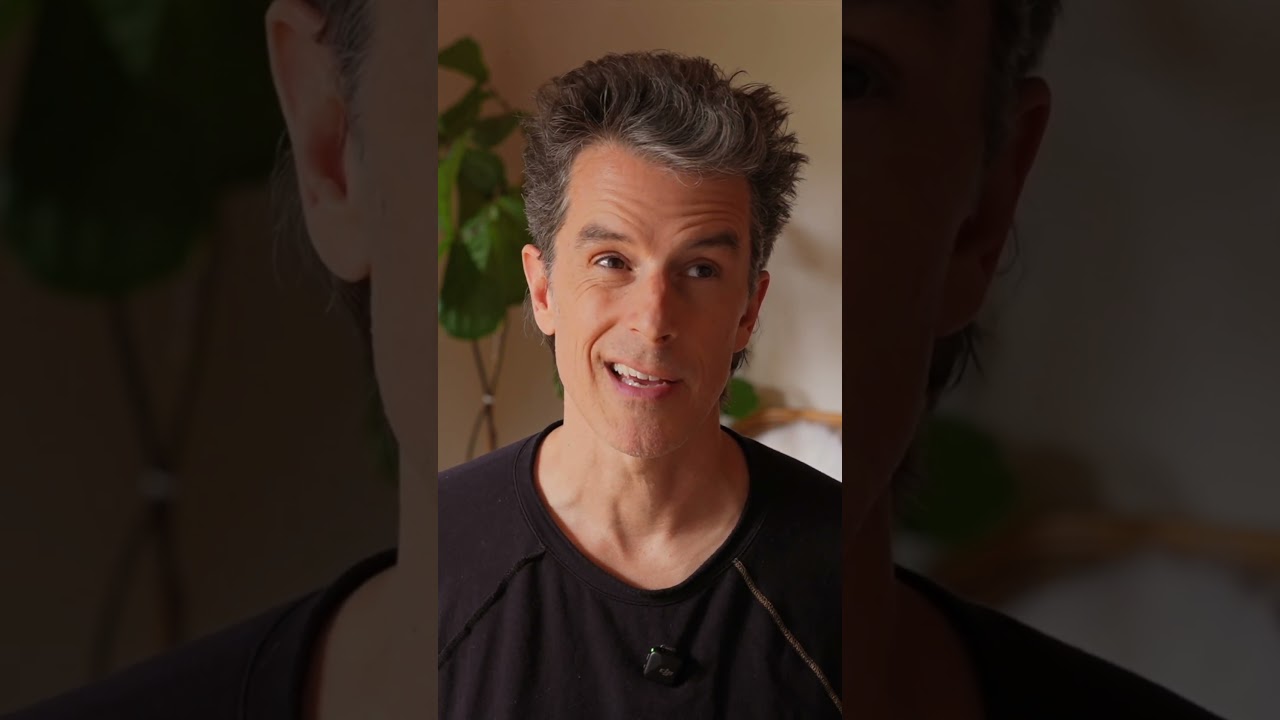
In this introductory video, the speaker—Chad Woodford— recounts a decade‑long personal odyssey that weaves together technology, law, spirituality, and philosophy, and explains how it shapes the purpose of his new YouTube channel. He begins by describing his departure from a senior legal role at Twitter to live on a houseboat and write a novel about a tech‑bro protagonist in a spiritual crisis. The novel’s narrative prompted him to experience Burning Man, where he joined the Cosmicopia camp of students from the Philosophy, Cosmology, and Consciousness (PCC) program at the California Institute of Integral Studies (CIIS). Seeking deeper insight, he traveled to the Peruvian Amazon for ayahuasca, which sparked a seven‑year emotional‑healing journey that led him to India to study advanced yoga and Vedic philosophy. Inspired by psychedelic therapist Stan Grof and cosmologist Richard Tarnas, he later earned a master’s degree in PCC at CIIS, reconnecting his spiritual insights with his original background in computer engineering, AI research, and tech‑law. He now works full‑time in AI law and policy while producing content that explores how artificial intelligence challenges notions of intelligence, consciousness, intuition, imagination, and what it means to be human. The channel’s mission is to bridge the “mundane” tech world with the mystical, encouraging viewers to ask deep questions, cultivate wisdom, and envision a future where humanity and technology coexist in harmony. He also mentions an upcoming book, What It Means to Be Human in the Age of AI, which will further examine these themes.
Chapters
Because I have a bunch of new subscribers, I thought I would introduce myself properly. Who is this guy talking about AI, philosophy, and consciousness? 11 years ago, I left my dream job at Twitter, where I was one of their first lawyers, and I moved to a houseboat to write a novel about spiritual crisis and what it means to be a man in the 21st century. Writing that novel opened up a portal into a whole new life. I think because I was writing a novel about a guy who was experiencing a spiritual crisis, It initiated a sort of spiritual crisis of my own. The protagonist of my novel, this guy named Wyatt, fell in love with a polyamorous San Francisco woman who took him to Burning Man. And because that was happening in the book, I went to Burning Man for the first time as research, as one does. In one of the greatest examples of synchronicity in my life, I ended up in this Burning Man camp called Cosmicopia that was 70 students, alumni, and faculty from the Philosophy, Cosmology, and Consciousness program at the California Institute of Integral Studies. We'll come back to that in a moment. Anyways, because my protagonist Wyatt, this guy Wyatt, was going through this spiritual crisis, he goes to do ayahuasca at Burning Man. And so I also needed to research for myself ayahuasca. Right. So about 7 years ago, I went to Peru, to the Amazon jungle, and I did ayahuasca for the first time. I should probably mention that this guy Wyatt, this protagonist in my novel, was basically a tech bro. And so a lot of the things he was doing were very tech bro cliché, right? So yeah, he's going to Burning Man, he's doing ayahuasca, all these things. But as a result, of course, I am sort of living through these multiple layers of self-referential kind of ironic cliché, whatever, whatever. Anyways, I go to Peru to research ayahuasca, and that was the beginning of a 7-year emotional healing journey for myself. Because my experience with ayahuasca in particular was, was helping me to get in touch with my feelings and to learn to feel my feelings, I started for the first time in my life to develop emotional intelligence and intuition and all these other faculties that I hadn't really explored before. And so I started to follow my intuition more, and this took me to India, and I began a 7-year journey of traveling around India, studying and teaching these kind of advanced transcendental styles of yoga and meditation that are relatively unknown in the West. And the more I got into traditional authentic yoga in India, the more I really fell in love with Indian and Vedic philosophy. So I came back from India, reconnected with my friends from the Burning Man camp, and started thinking more about my philosophical nature. I should mention that my novel was initially inspired by my exposure to the work of this pioneering psychedelic therapist and transpersonal psychologist named Stan Grof. And I didn't know when I went to the Burning Man camp that Stan Grof was actually a collaborator and a friend of the philosopher and cosmologist Richard Tarnas, who founded this Philosophy, Cosmology, and Consciousness program. They were together at Esalen in the '70s and '80s and developing all these interesting theories. And so when Richard Tarnas came out of Esalen, he started this program in the early '90s. Because Esalen is my favorite place on the planet, and because I was, like, a huge fan of Stan Grof and then Richard Tarnas, I decided to enroll in the program. Anyways, taking a cue from this incredibly profound synchronicity, being in this camp at Burning Man, meeting all these people who were in this program, I decided to finally get a master's in philosophy, cosmology, and consciousness at the California Institute of Integral Studies. So that— I've done all that, and that experience has brought me back to my roots as a technologist and AI researcher. In short, that whole decade of me writing this book and having these experiences gave me this kind of spiritual wisdom and this philosophical insight that I think is relevant and helpful in this kind of chaotic time of rapid change in this so-called intelligence age. I haven't even talked about my lifelong love affair with technology. Tell me about your childhood. I was a philosophical kid growing up. I was reading a lot of philosophical science fiction— Isaac Asimov, Arthur C. Clarke, Frank Herbert, Philip K. Dick— and so I was asking a lot of these big philosophical questions from a very young age. I also loved technology immediately. I was, I was a kid during the '80s when we were getting personal computers and so much was happening. My parents got me a computer when I was 11, and I taught myself how to program on it, and I just, like, loved that thing. So I studied computer engineering and artificial intelligence in college and graduate school. I did my graduate work in AI on neural networks and genetic algorithms, but this was during the AI winter of the '90s, so I was a little bit too early. And so I started to kind of drift a little bit more into more practical work. And so I worked as a software engineer for 6 years, At this point, I had Unix on my license plate, if you know what that is. So I was a pretty big nerd. Yeah, and back then, in hindsight, I was pretty much a techno-libertarian or like a techno-utopianist at the time. And so this got me thinking about technology policy and interested in technology law. And so I went to law school to get into technology policy essentially, and to try to make more of an impact As somebody who understands technology at the policy level. I also worked as a tech lawyer in Silicon Valley at Apple and Google and Twitter and a lot of the different companies in the Valley. As I started to get more into policy work and I watched how government and politics works, I started to realize that you can't just change policy through pure reason or making rational arguments to people. First, you have to change people's minds, both the electorate but also the politicians. And I think that includes evolving consciousness and cultivating wisdom. And so I started to kind of focus on that more, and that really dovetailed nicely with my own sort of consciousness, philosophical, spiritual journey. So I think that brings us up to date. Yeah. So, you know, for the past decade I've been exploring consciousness and studying philosophy, and that's why I'm here to talk about this intersection of technology, philosophy, and consciousness. We are living in an age of extraordinary technological advancement. Artificial intelligence is reshaping our world, pushing the boundaries of what we thought was possible. But amidst this rapid change, a crucial question emerges: what does it mean to be human in the age of AI? I think artificial intelligence is inviting us to think more deeply about what it means to be human, to question our philosophical worldview even. For this reason, I think it's an incredibly exciting and confusing time to be alive, and I'm here to chronicle all of it on this channel. In short, this channel exists at the intersection of technology, philosophy, The most exciting thing about the arrival of the intelligence age is the questions that it forces us to ask. I think AI is the apotheosis of not just the techno-scientific worldview of the last few centuries, but also a certain kind of left-brain approach to the world. I think our attempts to apply the machine metaphor to every aspect of nature and to life is starting to reach its limits. Is the mind a machine? Is life mechanical? Can we merge with machines? Do we want to? I want to explore the implications of all of that, and I want to think about what all this means for consciousness and the possibility of sentient machines, superintelligence, and ultimately the scientific materialist worldview. So that's what I'm exploring on this channel. On this channel, we'll explore the ways that AI is challenging our understanding of Intelligence and consciousness and intuition, imagination, creativity, and wisdom. We'll explore the ethical implications of these technologies and how it's impacting our lives. And most importantly, we'll explore how we can navigate this new era without losing sight of our humanity. This is a space for those who believe in a future where humanity and technology can coexist in harmony, a future where we become more human, not less. Together, we will uncover the wisdom that we need to thrive in the age of AI. I believe deeply in the human and the ability to evolve the human through technologies of the sacred, not just technologies of the mundane. I don't think the future of humanity is a simple matter of outsourcing our evolution to technology or to technologists. Listen, I don't have all the answers, but I have some good questions. I see myself as a sort of bridge or connector between worlds, between the spiritual and philosophical world, the mystical world, and let's say the mundane world, the corporate world, the technology world, Silicon Valley, that kind of thing. So I want to try to merge these 2 things. Part of my mission is to kind of bring more philosophy and spirituality into these conversations about technology. Part of my mission too is more spiritual or philosophical. I want to inspire other people to ask these questions, to try to find more meaning in their lives, and to cultivate fearlessness and discernment. I'm also writing a book about all this stuff, What It Means to Be Human in the Age of AI. And in the book, I explore these questions about the nature of intelligence and other faculties too that I think are a crucial part of being human: intuition, imagination, emotional intelligence, embodied intelligence. Mortal intelligence and conscious intelligence. Also wisdom. There's so much more to being human, I think, than just being intelligent or having reason. The book is ultimately an examination of the implications of these questions on our collective worldview. So I'm using this channel to explore all of that with you. So please join me as we go down the rabbit hole into A pretty psychedelic world of holotropic states, altered states of consciousness, questions about humanity, questions about utopia. All this stuff is going to be part of my content. In the end, I'm just a guy sitting in front of a camera asking questions. Also, I work full-time right now in AI law and policy, so sometimes it's challenging for me to make these videos. It might be a little bit of time in between each video, and so I ask you to bear with me. So join me as we embark on this journey of self-discovery, critical thinking, and conscious evolution. Together, we will uncover the wisdom we need to survive and thrive in the age of AI. This is a space for those who believe in a future where humanity and technology can coexist in a state of harmony, a future where we become more human, not less. The future of humanity is being shaped right now, and it's up to all of us to participate in that.