In this instructional YouTube video, the presenter outlines a three‑step framework for Canadians to create truly passive income streams. Step 1 focuses on building a reliable "cash engine" by maximizing tax‑advantaged accounts (RRSP, TFSA), reducing high‑interest debt, and saving a modest but consistent surplus (as low as $250‑$500 per month) that can compound into substantial wealth over time. Step 2 describes how to allocate that surplus across three wealth‑building pillars: (A) index and dividend funds invested through TFSA/RRSP for tax‑free growth; (B) real‑estate income via direct rental properties (with optional property‑management outsourcing) or low‑capital REIT investments; and (C) an automatable business (e.g., subscription services, accounting practice) that can be gradually systematized. Step 3 emphasizes scaling the system by automating contributions, avoiding early withdrawals to let compounding work, and continuously removing personal involvement from the process. Throughout, the speaker provides concrete numerical examples (e.g., $600/month → $100k in 10 years; $500/month TFSA → $83k in 10 years, $247k in 20 years) and urges viewers to adopt disciplined, frictionless habits. The video concludes with a call‑to‑action to subscribe for more Canadian finance content.
Chapters
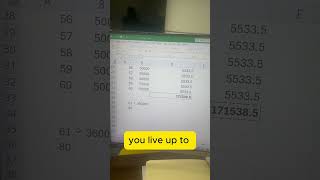
Most Canadians try investing, buying a rental property, or investing into markets, yet their income doesn't become truly passive. It's because they're missing 3-step formula that quietly build the wealth in the background. Let me show you how that system look like. Step 1: Build your cash engine. Most Canadians skip these steps and directly jump into the investing. That's why their passive income doesn't feel stable or truly passive. The cash engine is basically the cash surplus that fuels this engine. It can come from your job, business, or side hustle. But the point is, passive income doesn't work unless you have consistent fuel. Why you need cash engine? Because every passive income in the starting needs upfront capital or investment. So if you have consistent cash coming in, you are less likely to stop investing and it will truly grow with the compounding effect. So how can you strengthen this engine? There are 3 ways to strengthen this engine. First of all is the taxes. This is where I see the biggest gap as a CPA in my practice. You might not be maximizing the RRSP contribution, TFSA contribution. You might be missing the legitimate business deductions. You might be not optimizing corporation versus personal tax income. Even improving a little bit small planning for this one can truly free $200 to $800 per month for your cash engine. Second thing is, if you are paying 20 to 25% high credit card interest, there is no way any passive income will outrun or outperform this kind of interest. So first of all, you need to focus on cutting down the debt. And the third thing is, you actually don't need the massive surplus. You can start with $250 or maybe $500 per month, and that's more than enough to compound a good wealth over the longer period of time. Just a simple example, if you invest $600 per month, you can actually get $100,000 after 10 years. Step 2: Convert this surplus into automated wealth. Now at this stage, you need to choose where your money should be going. In Canada, basically you can build passive income on the 3 pillars. Pillar A is index and dividend funds. You can invest this via RRSP and TFSA to even maximize the tax returns. And why this work better? Because first of all, TFSA is tax-free. Second, Canadian dividends are treated more favorably compared to the rest of the world. Also, it doesn't require your day-to-day efforts. Basically, you fix the fund, you start investing, and that's it. You have basically zero efforts in it. Just to put it in perspective, a $500 monthly contribution in TFSA can grow up to $83,000 in next 10 years with the 7% yield. 7% is the basic yield you can get anywhere in the stock market. It will become $247,000 in 20 years and half a million in 30 years. So purely passive, no tenant, no rental, no maintenance. Pillar B, real estate income. It is active at the start, but it can truly become passive afterwards. So two ways to do it. First of all is traditional way. Basically, you buy the property and then you try to rent out. It's not passive. You need to invest a lot of your time, efforts, and energy, but it can give you a little bit good returns.. But you can also hire a property manager that might take certain percentage from your rental income, but then it'll become passive income for you. And there is basically a lot of corrections we are seeing from the time of COVID till now. So this might be, or in the next few coming months, this would be right time to buy an asset at a good price that might be cash flow positive for you. Second option, if you don't want to take the headache of buying the property, maintaining it, you can do the Real Estate Investment Trusts. So basically there are companies who does manage on behalf of you. You just invest in their trust. And this option is very good because to buy a property you need at least $100,000, $200,000. But to invest in trust like this, you don't need that much money. You can start with, with as low as $500 or $1,000 a month. But it gives you the same kind of return and reward as if you are owning the property. And pillar C is building a business that is automatically working for you.. It is also not truly passive at the start, might not be passive in the long run as well, but at the start you need to do heavy lifting. When the time goes, you can slowly, slowly try to automate it and eventually it might just need maybe 2 hours of your time throughout the week or maybe 5 hours time. So few of the example is some of the business that you can automate with the subcontractors, some of the IT subscription service that you can build once and then you just let it live. Accounting and tax practice, where your system is automatically producing consistent client service. And for many Canadians, with a little bit of efforts, this might surpass your job income. And the step 3, scale with the system. This is a step where you will see the difference between real wealth builder and the normal Canadians. Basically, you need to make the investment as frictionless as possible. So what you can do is automate everything. You don't need to decide each month when you want to invest, how much you, you want to invest, where you want to invest. If these decisions are left, you won't do the investment. So it's as good as building a habit. You take the shower in the morning and then you do the breakfast. You don't wake up every day and think, should I take the shower? Should I make the breakfast first, then shower? Should I do this? No, no. Should I go to the job and then come back and then shower? No, you wake up and you shower. That's it. Same thing with the passive income. You need to commit amount, make automatic everything. Every month it should deduct from your checking account going to the— towards the investment. No questions, nothing to worry about it. Second thing you might be doing wrong is taking out the money early. So in the early example I gave you, $500 a month investment becomes $83,000 in 10 years. In the next 10 years, it doesn't double, it basically triples almost. It becomes $247,000 in the 20th year. So if you take out little bit money out as well, then it won't grow. So let the system mature, let the snowball keep going. And the third thing is replace yourself with the system. Each time I do anything, I ask myself question: how can I make this automatic? How can I remove myself from this process? So the same thing you can apply in the passive income as well. How can you remove from the investing? How can you make an automatic decision? If you have a rental property, hire a manager. If you are not able to find a tenant, hire a real estate broker who can find on behalf of you. So if you are still here, It means you are serious about the wealth building. Do me a favor and subscribe to my channel so I can keep bringing you no-nonsense, simple, direct Canadian finance videos. Thank you.