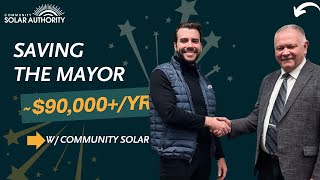
Dakota Malone of Community Solar Authority walks through how Fulton, New York set up community solar without on-site installation, unlocking $90,000 yearly in electricity savings. The city aggregated 80+ utility accounts and coordinated with an energy-efficiency project to size capacity correctly, then won a contract through RFQ and negotiated additional savings with the developer.
Chapters
Cities are as restricted as their municipal resources. The average municipality has a limited budget and obviously not much human capital to get projects done. Most people think that there is no chance at a municipality getting access to something like Community Solar, but it's completely possible using our community solar rollouts. If you don't know who I am, my name is Dakota Malone. I co founded Community Solar Authority. We've unlocked access to $22 million plus in future electricity savings. We make these videos as a way to make our business easy to understand. We just unlocked access to about $90,000 a year for the city of Fulton, which is a municipal city in central New York. In this video I'm going to walk you through the three big pieces to this community solar rollout so you can wrap your head around the deal. First thing I want to point out is exactly what I said in the intro, which is a lack of municipal resources. The city has a population of 11,000 and it is a certified clean energy community in Central New York. I grew up 15 minutes down the road from the city of Fulton. They want to push to become more sustainable and continue their clean energy commitments. And traditionally they've relied on external partnerships with private and public companies in order to help them execute sustainability projects. When our team came in to talk about community Solar and really the opportunity around spending $0 not having to install solar on site and enhancing sustainability while improving operating profit, they love the idea. But it came back down to this problem. They didn't have the resources to get it done and that's why it lined up perfectly with our business model which is delivering turnkey access to this program. The second big piece here are tandem initiatives going on while we're doing our community solar rollout. So we had to aggregate all of this data. If you think about a municipal town or city, in this case they had 80 plus utility accounts that we had to sort through, organize and and separate, giving them ultimately a 10,000 foot overview of their energy spend. So in the future they were now able to make smarter data decisions because they had this information to look at for us. We needed to piece it together for our community solar rollout and then it served as an additional benefit to them in the future. Next, I also mentioned how they traditionally relied on outside partnerships to get sustainability projects done. And in this case the City of Fulton was working with Siemens at a long standing relationship in the energy efficiency space. They were working on solar and lighting and other initiatives that we essentially had to work around because as they were reducing usage, AKA spending, we had to be aware of what to set their community solar capacity at, which ultimately determined our savings, and in conversations and good communication with the Siemens team, we were able to easily and effortlessly work around those projects. Lastly, the City of Fulton had municipal purchasing requirements so they are a city, meaning they have to go through and line with their procurement policies. After speaking with multiple organizations in the procurement space from NICOM to ogs, we had to essentially figure out what was the path forward to Fulton being able to even make this decision. Ultimately, we came to the decision that the City had to put out an RFQ requesting a quote for a community Solar consultant. There were multiple bids. We ended up submitting ours and winning based on our expertise and ability to deliver and the savings that we were able to allocate for them. This led us to being able to deliver our community solar rollout. We additionally brought even more bids and were even able to chip in an additional savings piece through our private negotiations with the solar developer. Overall, it took us about six months to unlock access to $90,000 a year in savings for the City of Fulton. With very minimal effort required by the municipal, they were able to enhance sustainability practices and improve operating profit. They were able to hedge electricity infl and create a buffer from rising electricity costs. As I mentioned, they can use these savings from Community Solar in addition to the data we gave them on their electricity spend and use that to invest into smarter energy projects to continue to create resiliency within the municipality as well as save additional dollars. This is exactly how we think about doing community solar rollouts for large electricity users. If you want to book a complimentary strategy call to talk about how we could do this for your organization, we Whether you're a municipal, corporate, private, family owned or otherwise, you can book a call@communitysolarauthority.com I encourage you to also connect with me on LinkedIn where I post all about our business, how Community Solar works and much more@LinkedIn.com in Dakotamalone. Thank you so much for tuning into this video. Have an amazing 2025 season and I'll see you guys on the next one.