Building the Embedded Banking Layer: Treasury Prime’s Chris Dean
Chris Dean, co-founder and CEO of Treasury Prime, built software that connects fintechs to banks via APIs. The platform has facilitated over $10 billion in deposits across partner banks and works on a model where banks pay for signups and usage. Dean discusses why he keeps founding companies and his approach to hiring.
Chapters
Welcome to the Financial Technology Report, a leading information source on financial technology companies and solutions. In this episode, we speak with Chris Dean, co founder and CEO of Treasury Prime, a modern banking platform that connects fintechs and businesses to a broad network of banks. Through secure, scalable APIs, Treasury prime enables companies to open accounts, move money, and embed banking services directly into their applications. Supporting millions of accounts and billions of dollars in daily money movement, the platform helps banks reach new markets while giving developers the tools to launch financial products quickly and reliably. Dean previously led API banking at Silicon Valley bank following its acquisition of Standard treasury, where he served as cto. Earlier in his career, he founded several software companies and began his work in machine learning systems at NASA's Jet Propulsion Laboratory. I'm your host, RJ Lumba. We hope you enjoyed the show. If you like the episode, click to follow. Chris, thanks for taking the time. Great to be with you.
My pleasure. Thank you.
I think a good place to start is, I mean, you've built a lot of different companies and sold them. And the first thing that pops into my mind is what keeps you wanting to start new companies? Is it kind of like you have this idea and you. You have to see it out in the world. I mean, you've made money on your prior exits. So. Curious what drives you.
Yeah, I met my financial goals a long time ago. It's an internal thing. I want to build things. I talked my family about this a long time ago, and I was young, and they told me that if I had been born in, like, New England in Revolutionary War times, I'd be walking around building mills for people. I just want to build stuff. I tried to retire for a minute, and what I found was I just kept building my own stuff. But I'm like, well, if I'm going to do this all day anyway, why don't I do it in a way that helps more than just me? I'm a beekeeper, and I was like, building all these elaborate stuff for my bees, and I'm like, it was fun, but I can do something else, too.
I could imagine, like, you have so many different ideas and you almost have to, like, remind yourself to stay focused.
Yes, that's right. And my general thing is I find something I really like and I try to go as far as I can with that. And for whatever odd reason, I really like banking. And it sounds crazy, but I do think it's super interesting. Here I am doing banking stuff. I'm a big nerd, which is not usually the match. Usually all the finance folks, I'm like, no, I like all the money movement stuff, risk stuff.
In this area that you're in, these embedded banking solutions is an area that we're finding more companies operating. I guess it's been happening for the past several years. But what initially prompted you to kind of go down this path? You know, you had your choice of, you know, different solutions. You could go after overall. Fintech.
Yeah, I didn't know anything about banking. A buddy asked me to help out with this company. It was like, you know, a minute old. I did that. It was about banking software, it was about kind of embedded finance software. We sold that company and I just wanted to stay with it. And if I looked at what was happening especially in the U.S. worldwide, especially in the U.S. the tech companies were the ones who are innovating on kind of what I would call the last mile product. How they actually talk to the end user, going after very specific, sometimes very small markets that were like small terms of people. And meanwhile the banks were still doing what they always did which is like they're really good at risk management, they're really good at customer relations and they have just moved to be oh, our customer relations are going to be with the fintech and our risk management is going to be helping them not be too risky because they really know how to do that. And when all that happened I was like this is a sea change. Over the next 20 years we're going to see more and more of our day to day finances be handled by tech companies and with a bank in the back. And I'm like okay, let's do that. I'm good at writing tech stuff, I know how to do that. Let's do that.
I mean I guess as you're describing it it's kind of like three layers. The fintech, then there's you, then there's the bank. Am I thinking about it correctly?
Yeah. We're a software company though we don't actually make any decision. It can be very frustrating. We'll find a fintech, we'll introduce them to the bank. Lots of banks, we have a whole program for doing this and the banks who use our software will sign that customer, it's their customer, they'll turn it on, but they'll use our software. So the banks will use our software to run that fintech, the fintech loves it because it's modern great software like some old weird bank software and everyone's happy. And then the end user of course gets the value of all that and.
Is the Fintech do they have like a specific point solution that's the catalyst for them starting the relationship with the end customer?
Almost always, yeah. They have a market need that they see and they're all over the map. Like we have a customer named Sidecar and what Sidecar does is they are an investment platform for people wanting to invest in mostly early stage startups. That's interesting. Right, so what do they need? They need bank account for their investments, they need money around and as soon as you say they need a bank account that means they need a bank.
And so give us a sense for where the company is today. I think you founded it in 2017, you know, you've brought in some capital, you've got some good investors. Like QED is in there. He started out with Y Combinator I believe. Where are you today?
Yeah, we have great investors. I was just like not what you ask, but couple investments ago I had a really mediocre investor and I promised myself never again. So our investors this time we're all A plus grade. Yc, DESE and qed, they're all great. So where are we now? We're at the moment the premier solution here for the embedded banking stuff. Our competitors are generally banks who don't use our software. What we do is we go to a bank, we help them set up a line of business. Easy to lose their smaller community banks, although we have a couple big bank clients and we teach them how to create a whole new national business by going through the chin techs. They do that, they make a lot of money. We're a deposit making machine. We have more than 10 billion in deposits across all our banks. We do a lot of stuff and once the community bank turns on it becomes like a way that they can have this whole other line of business. And that's great. Then we'll find another bank. Another bank. There's not any danger of the tech companies running out of ideas and that means there's always new business from these banks. The challenge here is that there's so many tech companies and a bank can only do like say a dozen deals per year at most that there needs to be a lot of banks who are doing this. And so that's our whole thing. We have a network of banks. That's how we're different than everyone else. A fintech can come to us, they know they can probably find a home. A bank comes to us, they know they can probably get a deal. And most of our bigger fintechs are at multiple banks and that works out for everyone.
How does it work with your business model? Is it kind of these partnerships with the banks where, you know, maybe it's kind of thought of as lead generation for customers.
So we're a software company and when a bank signed, they buy our software.
Got it.
So that's step one. They buy our software and then there's a usage fee that they pay based upon how many fintechs they have, how busy they are and how successful they are. But our model is set up very carefully so that the only way we can be successful is if the bank and the fintech are successful. Because it can't be a mutually beneficial relationship or the small thing is a horde.
Right. I imagine it's a very compelling pitch. I mean there's community banks all over the U.S. i forget what the last count was. It's in the thousands I assume. Yeah, I can imagine if you go to them and say, hey listen, we could grow your deposits. Because deposits is the name of the game. And you're saying, well listen, we have this ecosystem of fintechs who could partner with you and graze your level of deposits by 10, 20% per year. That's a pretty compelling pitch.
And some of our banks have said look, we need to slow down because the fintechs are becoming too big a percentage. So we need to really just slow down. And I'm like, well you can offload them and we have like ways to offload them. You can ask the fintech to add another bank and then you can split deposits that way. But yeah, it's like I said, we're a deposit making machine. It's just a lot.
Well, you know, one of the things we do like to touch on and we alluded to it earlier, you know, about your investors, how you have like really great investors, how they've helped you. It seems like, I mean, you know, the business building game, you know, the fintech space. You could possibly do this, you know, almost independently with investors that don't have the expertise. But you do have great investors. So how have they added value besides the financial capital?
Yeah, it's a tricky question. Everyone says they're more than just a chat, everybody and they talk about how great they are, but mostly they're just checking. And you know, you get someone on your board who doesn't actually know how to run a business or something, it's very frustrating. So we were very picky about doing that, about making sure that our folks do not have that problem. So everyone on our board is an operator or has some like Strategic, you know, saying that we really needed like on our board from QED as a biosecurity Amayas for eight years ran a portion of the US Treasury Department, the delic banks during the Obama days and he has just this endless knowledge of how banks work and how the banking system works. And he knows everyone and I can call him and he was like give me a minute and I'll connect you to the important person who knows the answer. And that's just been invaluable. And my buddy Dave Kimberly, he's a Nissan guy, he and I did the company together. He knows everyone in fintech on the tech side. So it's the same thing. If I need an intro, if I need business, it's really helpful. I think people underestimate how helpful a good investor can be and how useless like a mediocre investor is.
You're a multiple time entrepreneur, I presume when you start a company or when you started this last company, you're probably way more efficient and effective than your earliest days. What do you think it was like? Just like all that experience you had, if you had to pick something where you feel like you had learned this over and over again, that was like a key piece of the way you operate now that you, it's like based on mistakes you made earlier.
Yeah. You know, mostly it's as you do this more and more you make brand new mistakes. I look at my job very simply. I have to pick a problem. In this case it's the embedded finance problem. I have to pick that problem and decide what that means. The market is, how are we going to pitch it and what the product actually does, all that. But the second thing I'd have to do is find the right people. Startups are made of people. They're our biggest expense and our biggest advantage. And it is overwhelmingly important that you only hire great people. That is the thing I've learned over and over. It's better to say I'm going to keep looking for someone to fill this role I need rather than taking someone who seems pretty good. They have to be great. If they're not great, you should just move on. And it's painful, we'll keep waiting but it's more painful to try to take someone who's not quite working out and have them leave.
What's been your hit rate when you decide to hire someone? Do they work out 100% of the time, 80% of the time, 60% of the time?
We're pretty high. It's like 80, 90% of the time. But the flip side is our interviewing and searching problem is very slow. We just hired a new person yesterday, day before yesterday. And that search took I think five months. And this shouldn't have taken that long, but it did because it's the way it worked out. And that's the thing. So the number of people we interview versus the number of people we hire, it's like single digit percents, which you can say is a waste of time until you try doing the opposite. Or you try like, give me a little bit and you feel like, no, that's actually a good investment. It's like, you know, you want to do the right thing in the beginning, so build a good foundation that's worked over and over again. If I like didn't show up for work for like a month, everyone would wonder where I is. Right. But the business would grow at the same exact rate because the team is so good.
Right.
That's what you want, right? You want the team to be great.
Yeah. When do you have conviction around a candidate?
We have this thing where we up to like 75% way through the process, we're looking say no as soon as we can. So we just kick people out during that whole thing. We have multiple written things, we have multiple interview processes. We make sure that they have their interview processes for all the right things. Are they competent at their job? Technically, for like your job, it would be like, can he actually write a sentence that seems coherent? And so we would have, you know, candidate write something. Or if it's an engineer, we have them build a program. We do all that stuff in the beginning. We do that multiple times. And some of the interviews are for like, are you going to get along well with the team? Are you a team player? Can you team sport maybe jerk. We don't want to work with jerks. All that stuff. And that generally works out. And then the end becomes okay. We decided this person might be okay. And we have enough people have conviction when they just say, this is one of the best people I've ever met for this job. I really want to work with them. If we can't get to that level, then we just don't hire the person. And it's very frustrating for us because I know this person is pretty good. We're not looking for pretty good, we're looking for greater and the same speech I use all the time about, you know, professional baseball team. It's like, there are lots of good baseball players in the world, but to play in the major leagues you have to have A certain level of talent.
Right.
And that's it. You just have to. Sorry, that's true.
How much weight do you put on the school someone went to or the prior companies they worked at?
It does turn out that there's a self selecting thing where the educational background of a lot of people are pretty high, but it doesn't matter. It's a signal whether you should interview someone. It's not a signal whether you should hire someone. You know, I went to a good technical university and if someone from my school who saw their resume and they were looking an engineer, probably looking for a job, we would interview them, but we wouldn't hire them unless they were great. But the thing is we interview almost everyone because we're looking for diamonds. It's too hard to find them. And like I know plenty of people who went to the fancy schools, you know that, who've been through our process, you know, I think somewhere Harvard, Stanford, mit, some of the name places we have people who work here who went to school there, another place, they're great. We had equally interviewed people like I was the first thing. You have a job. No. You can good at your schoolwork doesn't mean you're good at your professional work. Right. It's not true.
We're coming up on time on this conversation. It's really been great chatting with you, but I have two final questions I'd like to close with. One is can you tell us about a person who has had a profound influence on you on a personal level?
It's always a family member. Let's pick. My dad passed away. In some ways I'm the black sheep of the family. My family, my dad, my brother, my son, they're all like this. They're all very high eq. They're the person you go to when you have trouble. Like my brother's like a special needs teacher, all that stuff. I'm not that guy. I'm a big nerd. But whenever I get stuck about how to manage someone, I think about what my dad would do. I don't think he ever managed anyone. He was a sign maker. He built signs. He worked at SeaWorld and said England's that way or dolphins that way. And I think what he would do. So he's the first one. And professionally I had a mentor early on. His name is Mary Baker. And Mary basically taught me how to be an executive. The best people manager I've ever worked with by a significant amount. And she had her own mentor named Bill Campbell, who's a famous guy and she used to say this thing that Bill said all the time, which was, the value of our company goes home every day after work. The value is in the people. We're a tech company. We make technical things. It's the brain power, the creative process, the knowledge and skill we all have together. If those people leave, we're done. If those people aren't effective, we're done. So my job is to make sure that they're effective and happy, because if we can give them fulfilling work, they'll be happy and they'll do that. And that's what I try to do every day, make sure that they have a fulfilling, good work environment. Whatever else is going on, treasury prime is a good place for them to be.
Last question. Can you tell us about a charity, cause, or other endeavor that you're passionate about?
The thing that I. We like to do is we're part of the Interface, being the homeless thing. So there's a rotating schedule, and I go in and I cook for the homeless guys here in San Francisco when they're at my church. And we, you know, we have a rotation. We do. That's perfect for me because I want to help everyone, but I'm not like my dad, who could be out there talking to the mom. But I'm great in the kitchen back there. I'm making the food. They're appreciative. I don't have to talk to anyone. It's great.
That's wonderful. Chris. I want to thank you again for taking the time. It's been a great conversation.
Thank you. It's great to talk to you.
More from Chris
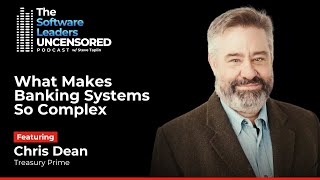
Chris Dean, Treasury Prime CEO on AI, Fintech Innovation & Building Banks That Talk to Startups
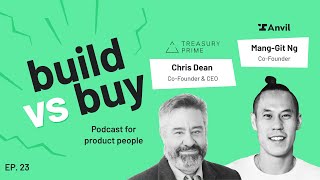
Treasury Prime CEO Chris Dean on Banking-as-a-service, embedded finance, and the evolution of Fi...