Chris Dean, Treasury Prime CEO on AI, Fintech Innovation & Building Banks That Talk to Startups
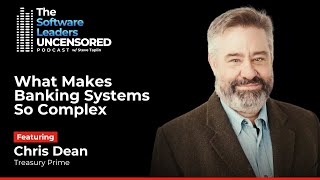
Chris Dean, CEO of Treasury Prime, talks about his path from academia to fintech and how AI is changing software development and banking. He covers building a company that connects banks with startups, managing teams through rapid change, and the real challenges of integrating AI into financial systems.
Questions this video answers
November 12, 2025.
Provide an API so banks and tech companies can open bank accounts and integrate (banks ↔ tech communication).
About a dozen-plus engineers.
Headquartered in San Francisco; engineering team is remote across North America (Toronto to San Diego, with two people in the Bay Area).
About 90% of their code is written in Clojure (an immutable language).
Chapters
Welcome to Software Leaders Uncensored with Steve Taplin. Welcome to Software Leaders Uncensored where tech leaders drop the filters and just tell it like it is. I'm your host, Steve Taplin, a serial technology entrepreneur who's launched 30 companies throughout my career, failed at 20 of those, but scaled 10 of those to success. And I turned that roller coaster of a ride into my book. It's called Fail Hard Work, Win Big. And this is where I teach people how you turn failure into your biggest competitive advantage and how custom software played a defining role in every win. Now I'm the CEO of Sanify Technology. We are a nearshore software engineering company with engineers both in the US and Latin America. We help existing engineering teams scale and today I am joined by Christine, who is a guy who was an engineer turned fintech exec to founder multi time CTO and now the CEO and founder at Treasury Prime. Trust me, you're going to want to hear this one. Chris, welcome.
Thank you. Great to be here. Appreciate it.
You bet. Chris, if you would take a few minutes, walk our listeners through the journey of your career.
Sure. So I had always intended to live an academic life, you know, be a professor at some mid tier college. I was working at JPL right before going to grad school, NASA's Jet Propulsion Lab doing machine learning stuff. I really enjoyed that. And then my life was thrown for a loop. We moved to San Francisco and I needed a job for at least a year so we wouldn't starve. So I got my first regular job and it was at a startup. I was the first employee there. I literally did not know what the word startup meant. I did not know that word. But they said they would pay for the move and the salary was, from my perspective, amazing. It wasn't until I was there a couple years when I learned I made half of what everybody else made. But there you go. That startup failed pretty dramatically. You know, there was all the things that you always hear about, like the drama, the founders hating each other and you know, people doing things they shouldn't be doing in my server room. It was just terrible. And that should have said go back to academic buddy, you know, go to grad school, finish your, finish your doctorate, do all that stuff. And but I had the opposite reaction, said, oh no, this is it, this is the thing. I love this stuff because it actually lets me build things and test if they're good. Because if they aren't good, no one's going to use them. If they are good, everyone's going to use them. So I went through that journey. I did another startup with just as an employee. And since then I've been founder, co founder or whatever of multiple startups. Usually I'm the technical person. I, I mean, I guess I'm always a technical person. My ego doesn't really demand that I be the CEO. But you know, for this one, which I'm doing Treasury prime right now, which is a fintech startup, we, I was, you know, kind of pushed into the role because there's no one else to do it basically. And I'm happy to do it, I don't mind doing it, but it's usually other people really, really, really want it.
You, you don't hear many stories, Chris, of somebody who thought academia was gonna be in their career and out of necessity started in a start. And you said, this is for me.
Oh, I love it, it's so good. And I know like I was, I said I should go get an mba. So I like went and talked to my buddies and they're like, don't get an mba. If you want to do startups, you want to do something else, get an mba. MBA is great, but you don't need that for what you want to do. So I did the whole self education thing where I spent like three or four years talking to everyone who was, I thought good at the job and asking them how they did it and what and you know, took lessons from that and tried them. Some of them worked for me, some of them did not work for me. And at some point I said, you just got to do it. And I found I was. This is a long time ago, so this is like the dot com days and I was working at a startup that got bought by another big.com and on paper I was worth a zillion dollars. But we, over the, over the year, the next year that stock went to zero. And you know, so like the only money I made was a retention was on stock was the friends and found friends and family shares that you get. It's a thing an ipo. Often they'll say like you can buy a thousand shares if you want right now and you can do whatever you want as a special deal. So then I bought a thousand shares at $20. We sold it, I sold it that same day for, at $80. That's what popped. And I made that money in stock. That's good. That's not millions of dollars, that's tens of thousands of dollars. But that was all the money ever made from that company. I was like, okay, this is a Good lesson. You should do it because you like it, not because it's going to be the golden ticket.
Chris, I wrote a whole book on and I had hesitation of writing this book. Do I really want to say I've failed at 20 companies? One of my buddies is a retired major league baseball player who has three World Series rings. And he said to me, taplin, are you crazy? If you were a baseball player, that's a 333 lifetime, your hall of fame. And you know, one of the defining things about me of people who knew me was I could fail at a business and just shake it off and move to the next. And unfortunately you learn more from your failures than you do successes. When you have success, you often get cocky. There's always some luck involved, but you get cocky and you don't examine things as much as when you fail.
Yeah, 100%. Like I. If you'll talk about why historically Silicon Valley has been so successful and I think it's not as important as it was a decade or two ago, but. And they talk about access to capital and Stanford and Berkeley are right here and all that stuff, right? And like early days of chip manufacturing, I always think they miss the soft things, which is like, it's okay to fail in San Francisco. It's okay. It's just something that happens everyone. It happens to everyone. So after all you're like, yeah, whatever. And the amount of cooperation you can get as you fail and as you is great because then you remember that when you're succeeding, like I'm, we're doing really great right now. But I remember when, you know, I haven't been doing great. So when people reach out, I'm helpful to them, like they were helpful to me. And I, I think that is always, I've always thought that's one of the keys of why Silicon Valley or you know, startup have really worked is because of that. Like there's no reason to be self. I can give you 15 minutes. It's going to cost me, you know, Exactly.
Now treasury prime, you started, you founded, you're the CEO of this company. It's been a little over eight years. Tell us about it.
Yeah, so I was retired and I did not like retirement. I did not care for it. I was like building data centers in my garage for absolutely no reason. And I, my buddy called me and said, will you help with my startup? Because we're struggling with the product and engineering side. And you know about that. I'm like, no, because I'm retired. But he sold me in the room. And he's. And I'm like, okay, what do you do again? He's like, banking. Like, dude, I don't know anything about banking. I had the same bank account since I was in college. Come on. And my investment strategy is I got a guy at Fidelity and that's it. And I get startups. And he's like, that's okay. You know how to make computers work. I know how to get banks to do stuff. Well, let's go. And so we sold that company to Silicon Valley bank. And I'm like, great, I'm out. Back to, you know, back to the ranch. And I loved working at Silicon Valley Bank. It was crazy. The people were so nice. And I discovered, luckily, looking inside, how bank works, the US bank works. It is A, wonderful and one of the best design systems in the world. And also B, kind of a disaster at the same time, if you think about it like from our kind of world. It is like a computer system which the macro of it is fantastic. It's distributed, it's fault tolerant, it has all sorts of checks and balances in there to make sure something goes wrong, gets fixed. But if you look at the details, the codes are rat's nest, right? It's terrible. And at that point I'm like, shoot, I can fix this. This is a problem I understand how to fix. So that's the whole treasury prime point, is we're trying to make a system so that banks and tech companies can talk to each other in a way that both are comfortable with. And I have the unique position that I am like the world's biggest nerd. So, like the tech people, those are my people. But I also spent a couple, three, four years at a, you know, working with bank bankers. And so I kind of understand what their motivations are. And they're very different culturally, they're very different.
Yes.
And that's the treasury prime thing. At the basis of it, we make an API so you can open bank accounts and do stuff with it. That's the basis.
Okay, excellent. So you actually came out of retirement. I have a funny story there too. I had a nice exit a week before my 30th birthday on one of my companies. And I, in most people's terms, I probably had enough money to live for the rest of my life. And my kids were young, they weren't in school yet. And my wife and kids, we left on an eight month vacation with no plan. And about a month and a half in, I was ready to blow my head off. I couldn't take another pool or pina colada. I don't golf. And my wife turned to me, I was like, honey, I love you, but your mind needs to be solving challenges. This isn't for you. And I learned that, you know, that I could never retire. And when you talk to a lot of retired people, you know, unless you have hundreds of millions of dollars and you're just sitting on some boards to keep some stimulation, most retired people are, they, their minds aren't stimulated and they seem to go down quicker than if you were still in the game.
Like that was my thing. Like I realized I always need a project and I either can use the, I can do a project which no one cares about or I can do a project that will, you know, be good in the world. And so I'm going to, it's up to me to pick because I'm going to do a project regardless. And so I picked the one that'll be doing good in the world. And like Treasury Primes, like it's a commercial enterprise or venture backed, all that stuff. That's true. But the point of treasury prime is to like make the banking system better. And it's, you know, mission driven on that. And if it's better, it's better for like rich people, it's better for poor people, it's better for everybody. And like that's all, that's all I really want. And like the project's fun. If it's fun and important, of course I'm going to do it. Right. Of course.
Nice. So tell us about your software engineering team. How many engineers you have, where they're located, how you like to run your teams.
Pretty small teams where I have. There's my view. I'll tell you this, this is always the controversial thing I always say. Like I've read a lot of books on software development. I've managed lots of teams from like one person to 150 people. It's like topped out around that. And I've tried all, lots of experiments. I've done all this stuff. The single best book I've ever read on software development management is the Unexpected. The Marine Corps Warfighting Manual. It is by far, like not even a question for me. Like it's like twice as good at least as the next one. And what the Marine Corps War Fighting Manual. It's like if you take out the part where you're shooting at bad guys because you don't want to shoot at anybody. But it's basically how do you manage the chaos in a hostile, ever changing Environment and, and like the software that I develop is always in the startup world, right, where it's constantly changing. We constantly have to push new features out.
You're never done.
You're never done.
You're always adding features.
You're never done. Like if you're not replacing huge portions of the code every 18 months. Like I'm like, are you even doing it right?
Yes.
And the thing is, if you look at how what actually works, or at least it's worked for me, it seems I fell down to. There's two ways to do it. There's like the small elite team where everyone's a genius, they all get along. Basically they can all. They all want to work on the same problem. And those teams are incredibly productive. Each person is like, you know, one of the truly great programmer, but there's very little overhead because there's so few people. Right? And that's where we are right now. There's about a dozen plus engineers. It's pretty like small group. The other way to go is to like have more what my friends always call the surgery. You know, the surgery one where there's a doctor, you know, a surgeon, a couple surgeons in charge, and then an army of support people. And then you get many, many more engineers. And I've tried that way. It's not my favorite way. There's a lot more infrastructure. You get a lot done, but it's different. I can't move as fast as I want to move because steering the ship is harder when there's a hundred people versus twelve people.
Now you're in your office in San Francisco right now. Is your engineering team. What's the work model? Are you on site? Hybrid, remote.
We're remote. Have people from all in North America, from Toronto to San Diego. I think those are the two edges, Maine, depending on when the guy moves around, where all. There's two people in San Francisco or Bay Area, one in San Francisco, one down down in Palo Alto, and then everybody else is scattered throughout the U.S. it's funny, we used to have a lot more people in San Francisco and slowly they leave because there's like, love this job and I don't have to come in the office. So why don't I move to wherever, to San Diego or, you know, somewhere like that. Because it's all remote. That works really well for us. I have a strong biased North America only because I want everyone to be able to communicate quickly that in theory we could go down to South America, but we just never gotcha.
So you just, you described Yourself. I want to make sure to say this in your words as a tech nerd. So are you still hands on code?
Yeah, not a lot because I've got this whole, you know, gig I'm going to, I'm doing it all the time. But yeah, I do stuff all the time. I do a lot of cleanup, you know, because I find that if I don't stay in the code at leave once every two weeks, I start to lose the thread of like, what's actually going on in the real world. So I'm the guy who's like, this file's too big, we're going to split it up. You know, there's no unit test for this. I'm going to write it, that, that kind of thing. Over the summer, I wrote a real app just because I was on holiday and like, yeah, that guy and I wrote a real app. We shipped that and so that, that was fun. But I, I don't know, it's like 5% of my time and everyone else, it's a hundred percent of their time. And they're all constantly working and they're, they're all animals, you know, they're just crazy. I can't, I wouldn't be able to keep up right, if I wanted to do this job too.
So as a tech leader, as we're closing out 2025, what are some of the biggest challenges you're facing now?
So I was trained and came up, you know, decades ago. I learned how to program. My original. My first language was C, you know, some assembly and I did all the stuff when I was doing the machine learning code, which I did a lot of for a long time was all about performance and large systems. So C, C, actually Fortran too, because back then at least FORTRAN was indeed faster. And if you care about that 5% improvement, which I did, you know, do that and you know, that's morphed into, you know, higher level languages, which I appreciate and like, and which would be used. And there's a training for that about like quality of code and development styles. But the thing that's changed in the last five years is the AI stuff. It just has made. So it is a different job than when I learned how to do it. It's as much about managing the AI tools as it is about having a beautiful vision of what you're going to do and shipping that piece of code that you're very proud of. Like a lot there's just a volume of code you can make. The AI is much higher. And I would Say at this point I would have, you know, maybe doubled the size of my team. But we've been very reluctant to hire because everyone, we're doing really well here and the AI tools make us much more productive, but it's very different. And I think the challenge is, is that it's uncomfortable. I mean, I'm uncomfortable in it, like to let the AI do stuff. It's like, I say this all the time. It's like having that intern, you know, the AI is like having that intern who's like, they're eager, you know, they're 20 years old. They come in, they no idea what they're doing. You got to teach them how to use version control. They don't know anything. Right. And they're very eager and they're very smart and they, you give them a job and they do great. You're like, amazing. Then you give them another job and it is a train wreck. Right. It is like there's. You don't even. It's just complete nonsense. And that's how I feel about the AI stuff every day. Like sometimes it's just complete nonsense and you need very senior smart people to guide it. That's the biggest challenge we see is like how we can do that and keep up with the productivity that we're all experiencing. These huge productivity wins while still are maintaining the quality of the product. Right. We don't want to let that slip.
So dealing in fintech, dealing with the banks security compliance regulations are a huge thing.
Yeah.
How has AI helped or hurt that?
I mean, generally just helps. It's dangerous. You know, it's like a sharp knife. You can cut yourself, but just don't. Just keep chopping the food. Yeah. One thing that's true is that people get really mad when you lose their money. Even if it's only a dollar, they still are really, really mad.
Sure.
And so don't do that. I mean, our whole development environment is design, so that's hard to do. It's hard to lose money and all the checks and balances throughout the system. We, we chose an unusual programming language. We all write like 90% of our codes written in Clojure, you know, which is an immutable language. And partly it's immutable because that's a source of bugs that we didn't want to see. Right. And so that helps AI tools, basically, still they, the AI tools, if you let them go, would make a mistake. So we just don't let them go. Right. We use them for two things. One is to create New code, but that's reviewed by humans and everyone looks at it and like it was reviewed by the person who asked the AI to do. It's reviewed by the code review process, it's reviewed by our, you know, all our testing we have. And so that generally has worked. We have a handful of cases where we use the AI in the product itself to do things. But they're never things which touch money at the moment. Moment or that's not true. They're never things which change money. They all look, they only, they're, they're only read only when it comes to touching money. Only read only. Only read only.
Gotcha. So in the, in the banking world, legacy code, legacy debt is a huge thing. You still have mainframes running core banking systems. You know, they keep hanging on and the older code is reliable. However, at some point there needs to be refactoring. What's your view on this and how AI in a specific to banking can either help or hurt that going once again with the fact that we know you just can't let it go on its own.
It needs to be monitor very inside baseball. So every bank runs on at least one core. The bigger banks, even modest banks, run on multiple cores. A core is the thing that says here's your balance, here's your name, here's your transaction history. So it's the thing that knows that it's a database kind of thing. Some of the cores, like you said, are ancient. Like one of the ones we integrate with is written in the 80s, runs on mainframe and we use it and it's no. And for us, we treat it the same as the one that was written like 15 years ago. I think that's the newest one we have that we integrate with. It is not feasible for most banks to change their core, not because they can't do it, but because it's a multimillion dollar process. It requires many people. It's like this big IT project which is usually not my world. Right. And they do it. It takes them two years. And when you're done, you have pretty much exactly the same thing you had before from a customer's point of view. So it's almost impossible to like justify spending two years of your life when no one's going to notice except you. And so banks don't do it. It's very rare. However, AI is changing all that because you can. Instead of taking two years, you can do it much, much quicker than you ever could. And I think these large companies, there's these huge Software, banking companies, Fis, Fiserv, Jack, Henry, you know, they're all these multi billion dollar companies. I think they're starting to wake up to the fact that they've been made money over the years by saying, buy my core software, I'll charge you $1 million a year for seven years. In seven years I'll be back and I'll charge you $1.5 million a year. How about that? And that's worked for them for decades and I think that's not working anymore because people are like, well, I'm just going to switch because the AI is going to help me switch. And that's different.
Lots of challenges to solve there.
Yeah.
So Chris, you're a guy that's been coding a long time. You've been involved in AI since before it was cool or mainstream, when it was machine learning. And you look at MIT reports, every report that comes out, it's saying 95% of generative AI projects that companies are failing and leading to negative ROI. Why do you think that is?
They don't know what they're doing. I mean, it's a shorthand, right? It's like they, they're treating it like a silver bullet. And you and I, like, we've read that book, there's no silver bullet, Right. You can't say at a very high level, do this thing and make it perfect and then walk away. It's a tool, right? And if you use it as a tool, it works like we've had huge successes internally in managing our software development, our go to market teams, which is like sales and marketing folks, you know, internal operations by using the AI, but every single time, the only thing that's ever worked is when it augments a human. When we say we have a great engineer. There's, you know, they're better than most engineers. They're producing great amount of code, high volume, high quality, all the good things. What if we could make them 50% more productive? It's not, we don't want to replace them. You can't replace them. But I can make them, I can make them better and stronger. It's a lever. And I think the people that fail over and over again are the ones who say, well, I'm going to set it and forget it, I'm going to turn this on and it's going to work and I don't need all these people anymore. Like, that's BS. Like, maybe there'll become a day when the AIs are running the world, but today is not that day. Today they're just, they're just faster, better.
Well, very well put, Very well put. Your company is headquartered in San Francisco. San Francisco is hot again and AI has helped revitalize the area, investments in companies. But there's this young culture that started in Asia that's migrated to San Francisco, Silicon valley of the 996 culture. You know, it's a once in a lifetime opportunity. 996 meaning working 9am to 9pm Six days a week. And the job ads for these companies basically say you're in office every day, you're not going to, your pay is going to be subpar, you will get equity and it's a short window. Me and you are both some guys that have a couple gray hairs that have been around the block. What's your view of this, this 996 culture and this FOMO fear of missing out of this AI wave?
I don't want to overstate it here, but how is that different? I mean I always ask people this like so some of my best friends graduated from, we graduate, you know, graduated college and they, you know, went to the cool school and they went to work in the gaming industry. This is like the 90s, right. They worked more than to build, to build these initial games. When I did my first startup, I worked more than that because it was six days. I wish I could have done six days. I did seven days. Right. And that's normal. The thing that's harder is I think if you intend to do that for a large organization for extended periods of time, I don't know if that will work. I think what would happen, what might happen and I don't have any evidence either way. What might happen is that you start to, your quality of your work starts to go down after the six months or a year because you just, you're burnt out. Right. Treasury prime doesn't run like that. We have a, you know, high performance culture for sure. We all rely on each other. But it's not like that. We, this banking especially is a marathon, not a, a sprint. And we treat it like that. When we have to work hard, we work hard. Right. But it's not every day. I mean we're not, it's not every month.
Let's say it's as a guy who's had 30 companies.
Yeah.
You know, as a serial entrepreneur, founder and CEO. I'm sick in the head. I work like that because that's how I'm programmed. But it's to your point, it's, it's not sustainable for, for team Members for long periods of time. It's certainly, you know, we build software, you hit critical deadlines, you may have to, you know, have a couple months of hell because stuff went wrong. But to try to maintain that over the long term, that's. I don't see how companies can make that work.
It's hard to imagine, you know, I'm, I'm like you, like, I've done this for a while and I do it because I, that's the way I'm wired. I. Long time ago, this is, I stopped trying to have a work life balance. Not because meaning for me, balance means on one side I got this and the other side I got this and they're balanced out. I don't do that anymore. They're mixed together. Like if I need to do something in the middle of the day that's personal, like go to my kids thing, I go to my kids thing in the middle of the day and I just do that and the schedule works around it. If I have to take a call with important client on Saturday night, I take a call with an important client on Saturday night. But I don't, I make sure there's time for me, there's time for my family and there's time for work. And you just have to manage that. It doesn't seem sustainable to do it for a decade to me. And like, okay, if it's. And I think I usually get people to agree with that. I say, okay, it's sustainable for a day. I could work all day. So it's between a day and 10 years. Where's that line? Where's that line? And then we can argue about that. Is it five years? I think it's probably five months. But let's, let's talk right before you burn yourself out.
Well, to that point in my book I talk about, you know, what is the true definition of success? Does that mean you have a ton of money? Because I know a lot of guys who have 10 times the net worth. I do. But they're divorced two, three, four times. Their kids hate them. And is that, is that the definition of success to your point? You know, having them intertwined when you are an entrepreneur, a CEO, a leader is important. And it was like I would always bring my family along with the ride. Hey, I could go on vacation whenever we want, but dad might have to sit in the hotel room until one and do calls and then I'll come meet you and you know, getting their buy in, getting it forward. Because to me the definition of success is having it all, not just money.
I know. I have the story. I still remember. I was. It was my first real startup. You know, like, I had had a consulting gig I ran for like a year and a half with, you know, with people, and then my first real startup. And I had a hard technical problem and I couldn't solve it. And I knew the guy who knew how to solve it, and it was my friend Jeff, and he had retired, sort of, and he was actually one of those, like. Anyway, I called him and out of the blue and I said, jeff, I have this problem and it's urgent for me. Can you help me? Can you walk me through how I should solve it? He's like, I absolutely can, but I'm about to get on the ski lift. You have until the ski lift gets to the top. And I'm like, nice. I'm ready. Yeah, Like, I understand the constraint. He solved it before he got to the top. And I'm like, great, thanks. See you. See you when you're back in the city. And he's like, yep, I probably won't be back for another year. But yeah, I'll see you. Okay, buddy. Very nice. Yeah.
Chris, thank you for getting uncensored with us today. Your stories of your career, of the innovation you've led on how you go about things, just awesome. And I excited to see what you and the treasury prime team continue to do to change and evolve and modernize the banking industry. Before we wrap, what's your no BS advice for tech leaders today who are trying to build, scale or even just survive in what I'll call these interesting times?
Sure. My normal advice is people matter more than anything else. You got to choose the right problem. You got to choose the right people. If you can do that, you'll win. So just do not skimp. Do not waste time. Do not compromise on the people. They have to be great. You mean pretty good. I don't. I mean great. And that means most people you meet, you won't be able to work with. That's okay. You can have beer with them, don't work with them. That's my advice. Every time I've compromised on that, every single time, I've been sad about it, usually months or a year later, but I've always been sad about it. Don't compromise to that.
An awesome advice. And to that point, I've hardly ever seen when family or friends work together verse. It's one thing if you're working together, you become partners and you become friends, but when they're your friends or your family and then you hire them on. I've, I've actually never seen an entrepreneurial situation where that's worked.
Same, same. Yeah, it's. I know one married couple that has a. They've had, they've been entrepreneurs together for years and I'm always like, how does that even work?
Like, what the hell do you talk about at night?
Apparently just work. I mean, I've been to their house for dinner. All I do is talk about work. And there's that exception. Okay, great. There's one in a million. You're probably not that guy. So don't, don't do that.
Chris, this was fun. Thank you so much for coming on the show. That's it for this episode of Software Leaders Uncensored. I'm Steve Taplin. If you enjoyed the show, go ahead and hit subscribe. If you didn't enjoy it, well, we'll just send it to your competitors. Probably the edge they're looking for. Remember to fail hard, win big, and always build what matters. See you next time. That's a wrap. Another great episode of Software Leaders Uncensored. Thank you guys so much for listening. I really appreciate it. It's a lot of fun doing this show. I love talking with great tech leaders. As a side note, if you're interested, check out my new book, Fail Hard, Win big. This is the story of how I built 30 companies, failed on 20 and turned 10 into multi million dollar wins. The common thread with all of them was custom software. Also, if you need software development help out there, my company, Sanify Technology, we deliver world class software development engineers out of Latin America. We have a solid track record of helping companies launch better products and faster. Thanks again for listening. Appreciate it and appreciate you.
More from Chris


Treasury Prime CEO Chris Dean on Banking-as-a-service, embedded finance, and the evolution of Fi...