Ep 23: Chris Dean, Co-Founder & CEO, Treasury Prime

Chris Dean, CEO of Treasury Prime, discusses building APIs and software that banks use to power fintech partnerships. He explains why the company avoids getting a banking charter, built custom reconciliation instead of using Salesforce, and how they handle the technical complexity of integrating with legacy banking systems.
Chapters
And we looked at that for a long time and maybe unsurprisingly, we decided, no, this is too complicated. And it wasn't that it wouldn't work, because I think it would work, but we're going down a path that we can't back out from. So instead we did kind of a classic engineer thing and said, what is the simplest possible workflow system I could build with no user interface to start, where we would just configure everything, code and properties like configuration files and stuff, and go to town? How hard would that be? And the answer is it's pretty easy. And we still use it today.
Hey welcome to this episode of Build vs Buy, a 30 minute conversation with product and engineering leaders about situations during their career where they've had to decide whether to build or buy. If you'd like to be a guest, reach out to me@maganusanvil.com that's M A N G G I T@useanvil.com if you enjoy this podcast, please like and subscribe on YouTube or leave us a reading review on Apple Podcasts or Spotify. Enjoy this episode. Hello and welcome to another episode of the Build First Buy podcast. I'm your host, Magit Ng, CEO and founder of Anvil, the fastest way to build software for paperwork. And today I have Christine. He is the founder and CEO of Treasury Prime. It's really nice to have you on this podcast.
Thanks. I'm excited. Like you said, I'm the co founder Jim and I founded treasury prime. Together. We are the, we're the winners in this banking as a service space. We have the number one thing we make software for banks so they can manage these fintech relationships and we're not. It's the only real safe way to do it in the United States is to go straight to the bank. But challenge is most of the bank software is terrible. But so we, so the banks use our software are great. They can compete with anybody.
Yeah, maybe. Before we dive into the Build versus Buy conversation, I would love to get a quick background about your work experience. I know you are a serial entrepreneur. You've done this many times. So I'm sure there's lots of great stories there. And then of course we can work our way up to the present day, which is treasury prime and talk a little bit about treasury prime specifically and what you guys are building there. So why don't we start? You pick?
Sure. I'll give the mini bio because it's always. There's a couple transitions interesting to me. So I'm at university and I'm doing my thing. My assumption was I would become a professor at some mid tier university somewhere and I was doing machine learning research. I really liked it. That was fun for a brief moment. Must be like 25 years ago now. I had the biggest machine learning project in data size ever. And that lasted for one second until someone else did something slightly bigger. And I loved that and I was happily ensconced in that. And then my wife says we got to move to San Francisco to take care of her parents. And I'm like, okay, I can do that for a minute and I'll get a regular job for just a year and then we can go. I can go back in the publishing track. And I got work at a startup where I was the first employee and I didn't know that was hard or special or anything. I didn't even know what the word startup meant. But they were someone who was doing machine learning and I'm like, I can do that.
And by the way, they call it, the Gen Zs call it AI, generative AI nowadays.
I know that's the problem, right? Is that when I was doing it all day, AI meant one thing and machine learning meant another thing. And now AI, no one talks about that anymore, right? Yeah, for 100% at the time it was even called the data mining. That was the thing too. We had, we did a startup and I fell in love with the startup culture and just the problem. And all my plans like six months in just went out the window. And I'm like, oh, guess I got a new life. I'm not moving out of San Francisco. And the funny thing was, I don't know if you ever saw that old TV show. It was called Silicon Valley. The guys are doing their startup. Very funny. I like part of that was my life, right? And I was like, oh, these people are crazy and terrible. And there's. We had, this is back in the day when you had to have a server room on premise, right? So I had a server room I was running and there are people who wasn't locked because it was just in the building and near my office. And apparently people are going in there and having sex. And I'm like, dude, you can't do that. And I'm like, oh, I see. This is how it goes. And one of the founders threw a chair at one of the other founders in the conference room and they were. It was just this terrible experience. But the result of it is I love the startup stuff. Except for that drama. I'm like, okay, how can I have the same work environment but drama free. And the money's good, the money's the money, but that's not the important thing. It's just super fun to build stuff. And I figured out how to do that. I went to a company to teach me how to do that because I thought this is a well run company. And then since then I've been founding my own. I founded three or four. One of a couple of them have had very good exits and that led to Treasury Prime. Jim and I, my co founder Jim and I were at a. We got bought by Silicon Valley bank during one of these startups and I was like, I'm not working at a bank, this is crazy. I'll be out in three months, let's just make sure like my buddies are okay.
Quickly though, that company that got acquired by Silicon Valley bank was called Standard Treasury. So yeah, you see the lineage here.
Yeah, I know. Treasury prime, it's a math joke, right? It's like we're the next one prime and everyone think all the bankers think it's about prime rate or something like that. And I'm like, yeah, sure, it's not what I was thinking, but it's funny that you think that if it gets.
You in the conversation, it works.
We had sold Standard treasury to Silicon Valley Bank. They were our first customer and our biggest customer. And I ran the fintech group there, but I didn't think I'd stay. But I really like the bank and for whatever weird reason, I'm like, I'm a technologist, I like to build stuff, like the AI stuff in my background. I really like banking. I still don't know why it is, but I really like it. The US banking especially, it's like the slightly broken computer system with all these different nodes and distributed stuff going on. At the moment there's, I don't know, there are 8,400 banks in the U.S. there's just a lot of them, a lot of them are like doing nothing. Some of them are giant like JP Morgan. Most of them are doing something and it's old and creaky but remarkably resilient. I just like it. And my co founder Jim and I were at Silicon Valley bank and we were looking around and said, hey, there's something going on here. Because the input, the asks for the clients and the product market fit we had SV were crazy good, as good as anything I'd ever seen in my entire life. We said we should take advantage of this and do a startup and we Came up with treasury prime which has like an odd business model. And we quit SVB after a couple years probably and did the normal thing where we did a startup. I wanted to do YC Y Combinator. So we did Y Combinator and we sell enterprise software to banks and we make the fintechs who are there really successful. And that has worked out well for us. It has been a very bumpy ride. We're well into it here, but I love it. Every day is super fun. Right.
Maybe let's talk a little bit about Treasury Prime's business model. You said it's a funky business model and you guys work with banks and also work with fintech. So maybe high level describe what it is that treasury prime does and I guess what's the funkiness about it?
Yeah. So the obvious way to do this, there's two obvious ways to do this. We don't do either of those ways. First obvious way is you become a bank. If you just buy a bank and you are apply to be a bank, the capital requirements are real and like you have to deal with regulators and stuff, but then you can write software for it, you can make deals with fintechs and you can be successful. And there are banks that do this and there are good ones and bad ones, but there are banks that do this. That's one way. That's the obvious way. The problem is your growth is constrained and that frankly, unless you start out as a big bank, it's hard to grow quickly to be a big bank. The growth rates that we're used to in the software world aren't something that most banks are allowed to do. The regulators will stop them. And from the regulator's perspective that makes perfect sense because they don't want banks to fail. They want banks to be successful. They want to keep things safe. And if you grow real fast, that means you can shrink real fast. And so they don't want that. They want you to grow very slowly and steadily. So Jim and I want to do that because that's too slow. And the other obvious way is that you pretend to be a bank. Like you basically you find a bank or two and you rent somebody's charter and you say, let me do whatever I want. You have to give me your blessing. And then I can grow quickly because I'm not actually regulated. And there's a whole bunch of banking as a service middleware providers done this SYNAPSE is the kind of the famous poster child here and that we looked at that. So that won't work either because sooner or later you're going to screw up and sooner or later the regulator is going to shut you down. And oh my God, that's what happened to synapse, right? They're, they screwed up, they lost a whole bunch of money by actual real, for real people. The bank got in trouble, the bank's management got kicked out. Who knows what's going to happen to them. It's going to have to end up going bankrupt. And yeah, we didn't want that either. So those are the obvious ways, straightforward ways, but, and we're like, those aren't going to work. So here's what we're going to do. We're going to make a network of banks. We're going to make a new banking standard for the US what do we actually build? We build an API for bank account accounts. You make an API call, you open a bank account, you want to send a wire, you make an API call, you want to know your balance or whatever, issue a credit card, whatever you want to do, there's an API for it. And it's all centered around this idea of a bank account. And we go to different banks and we sell that to banks and say you can use this to power your fintech partnerships. And some are like well established banks who like have been doing this for a while but their technology is not where they want to be. So they buy our software and we teach them how to do basically two things, how to talk to the fintech so they can sell to them. Because you imagine a banker like you and I, techie, nerdy entrepreneur people, right? That's not how bankers are. We're not, they don't fit like that and sometimes the conversations can be very stilted so we act as a translator for that. And then once they hire fintechs, let's say, I'm sorry, partner with fintechs, we, we help them manage them, right? But really it's the bank and our treasury prime funky part of their business model is that really we make money through usage, right? You use our stuff and we charge the banks for that. So we want big successful fintechs there. But we generally, there are a few exceptions, but generally don't sell to fintechs, we sell to banks, right? So we're always one removed. We're like, please sign this giant fintech, please at the bank's, I don't know, maybe next Tuesday. It's dude, if you don't jump on this, someone else is going to grab them because they're too good. But they're just, that's the funky part. And it's very frustrating sometimes because I'm just like, yeah, I would just go. But also it's turned out this is the way that's safest. And we rarely have a bank that has any sort of problem ever. Like one. And then we, the fintechs are very safe because even if they get in trouble with the bank and get mad at each other, which sometimes happens, you don't get mad at your vendor, the bank can just kick you out. And then where do you, where, how does your business run? The nice thing is there's 20 other banks that are willing to take your business that all use the same technology. So you just have to make a commercial deal with them and we'll help you with that. And then all of a sudden you have a network of banks. So you can just, you can have more than one bank and you can have two banks, you can move banks. And the banks don't particularly like that. But the fintechs, it's very safe for them. And that's the funky part is that we want fintechs to be successful, but we don't actually sell anything to them.
I guess you guys are almost like the marketplace for the fintechs and the.
Banks in that sense.
But the only person paying is the banks in this case.
Right. We actually have a website marketplace, treasuryprime.com which all the banks use like their mini CRM to manage all these things. It is funny. Like there's some, it's fun, it's like some AI matching algorithms that do dating because it's a lot of our work is almost like we're a matchmaker. Oh, so you want to meet, you want to meet a nice girl or boy, that's great, you know, what are you looking for? The fintechs will enter their stuff, the banks will enter their stuff and then we'll do a little matchmaking and do.
A little slurping left and right.
Yeah, that's right.
And second date is try opening a bank account with them. Third day.
Yeah, it is funny. We do have a go to market. One of our go to market teams too. Is all they do is help with this matchmaking problem. And it's very funny to watch the salespeople work because they don't actually can't get anyone to sign anything. They're just like, how was the date? Did you like each other? That's all.
It's vendor therapy, that's what it is.
Oh man.
So there must be an army. Like one of the go to market teams, they must just be focused on trying to get more startups into this ecosystem. Is that correct?
Yeah, that's right, that's right. It's split brain, right. You got the people focused on the fintechs but all they can really do is do lead gen and funnel maintenance. They can't actually close any deal because it's very rare for a fintech to actually sign with us because they always sign with the bank. And, and so at the end of the day we just got to give it to the bank and say it's your deal to make. What do you want to do? Which it usually makes sense because all the economic powers in the bank, if you go through one of the, there's not so many of them left anymore because they all went bankrupt. But the, if you go through one of the middlemen people, it's hard because if you're a bank you can say, oh, you want yield, you want interest, I can give you some. And then you can argue about that. Right? Because they have all the control they want and oh, you want the price of wires to be lower. Okay, I'll give you that in exchange for this other thing. And it's a deal you can make. And we treasury prime can't make those deals. In fact, we don't want to. But it does mean that the fintech ends up getting the best economic deal, which is great, but we can't actually, they never sign with us. So that step, when you're in sales, when you're trying to sell something, I'll send you the document, the DocuSign, you just sign it.
The Anvil Etch Chris.
There you go. That's right.
Yeah, that's right.
Forgot about that. And, and we don't have those. Right. On the fintech side. And so all we can do is sit in the meetings and go, yeah, it was a good meeting. Do you guys like each other? Maybe you should think about making it permanent.
You should. There's another revenue stream for you which is like a spiff for every lead that you send over to the banks. And they can.
Yeah, that's right, that's right.
Cool. Obviously being in a very complex ecosystem here, American banking system is a very highly regulated, complex system. There are very many, many reasons to, to buy instead of build.
Right.
I think this, if you take plaid for example, building those integrations to extract the data from banking systems was a big enough problem to create a, what, five, $10 billion company here. So, and you guys are on the flip side, you're on the. If they're weed, you're right. Yeah, maybe let's switch gears here and talk about a build versus buy experience that you've had. Or maybe you're on the other side, maybe you're the vendor, but talk through one of those types of decisions and how those typically resolve.
Sure. It's. If you actually look at the tech that we use, we have. Our position here is that you want to be as safe as you possibly can. Like, you never want to lose anyone's money. You never want to not be reconciled. We try to reconcile in real time, make sure all the money's there, and then end of the day, we make sure everything's synced up. If we're behind in money, it's a big deal. Like, it rolls up to me like, we're like, that's an all hands on deck. You can't do anything else until that's all resolved. And because of that, if you look at our system, everyone thinks, oh, it's the API, it's this thing, it's this feature. It's not, it's not any of that. There's this giant workflow system behind the scenes that we use to manage all this money movement. Because if you want to send a wire or something like that, we don't just send the wire. There's approval steps, there's. It actually moves into a settlement account because that's easier to reconcile and then it goes out from the settlement account somewhere else. And usually as we're doing that, that crosses multiple different ledgers. There's like a ledger which is like a database of how much money everybody has. And we have one that's great. But the bank also has a separate one from somebody they buy. And so our question early on is how do we do that? Right? Like, how do we manage all this stuff? And we did look at a lot of different pieces here. Like, I have a strong build bias because I think that most stuff is junk and I want good. I only want to work with good stuff.
And you're also an engineer, so you can do.
Yeah, I'm an engineer. I can do it better. That's right. And so generally, like, the things we buy, quote, unquote, buy are pretty big pieces. Like we'll use Postgres, right? Because I don't want to build my own database. And Postgres is a good one. And we're going to use Linux because we don't want to build our own operating system and all this stuff like the. But. But they're generally big things. But we have a choice early on, like when we realize this is actually just a giant workflow system. Do we buy something that is an existing workflow system? And you're going to laugh at this, but we seriously consider, at least I seriously considered for a long time using Salesforce as the backend for the whole thing. You get a built in CRM, you get a way that the bank, which they really want to, can see every little thing that goes on, all the approval steps. You end up being like a Salesforce development shop. And we really looked at that. In fact enough so that I found a bank that was actually doing that. Like that was their way. They solved it. And I talked to them for a long time. How happy they were with the solution, how unhappy was it? Easy, hard and frankly they loved it. Everything about it was good.
You also get like a built in sales channel in that sense. I feel like if you say you're using Salesforce as your backend service, there's a level of trust I think, especially amongst bankers that they're automatically, oh, okay, they're good to go. And it feels like in these kind of sales processes you're not selling the technology, you're selling compliance or like adherence to a certain standard that they've somehow decided is the industry standard.
Yeah, yeah, that's 100%. And there's, there's a marketplace they have that Salesforce has. So and if you're a bank and you don't know what you're doing, to have someone say, oh, I can just click on this and like I can get started, like that's really powerful. Because nobody really wants, no one under the bank wants to replace all of their systems. They just want to add to it. And we looked at that for a long time and maybe unsurprisingly we decided no, this is too complicated. And it wasn't that it wouldn't work because I think it would work, but it would just. We're going down a path that we can't back out from. So instead we did kind of a classic engineer thing and said, what is the simplest possible workflow system I could build with no user interface to start, where we would just configure everything in code and properties and like configuration files and stuff and go to town. How hard would that be? And the answer is it's pretty easy. And we still use it today. We've upgraded internals of it like three or four times. But excuse me. The basic idea is really simple. We have some custom code that we run. It backs up into postgres, there's a queue of work to be done in there. There's depending on what you're doing, there's different publishers and different subscribers that do different steps. It does a step, it writes it out, it's done everything. And then over years you built a UI for it and everything. But it is funny that the thing we work on for a while more than anything else was not anything except we need to make this workflow system better. Because it turns out all of our. And this frankly was a genius decision in retrospect. We were really smart about it because it turns out all these banking systems are really flaky over time. The workflow system we built changed to be like it has to be really good at retrying steps and making sure that. Because basically doing complicated two phase commit things to make sure that things actually worked. And if you can see like right now probably the number one bug that we see is still some backend system being flaky and us having to get around that. And I don't think Salesforce ever could have done that. I don't think we could ever have made it because so much of the workflow system was. And now you do the step and you're done. It's like now you do the step and now you have to check the step work because it's. You did it, it said it worked and then you checked it and it didn't work. What's up with that? But that happens to us like literally every day.
And of course because this banking, the way you write things to your postgres is through an FTP file upload that then gets stored.
I do not. Because that's a terrible idea. But yeah, it does turn out that most of the banking stuff is we connect. The banks use the. When banks runs, they run this thing called a core that and the banking core, it just keeps track of everyone's money and everything else. And these are old archaic systems. Our first core was built in the 80s that we connected to and they're flaky and slow and we have API calls we make to them to do things like I want to move money from this account to that account. And like sometimes it just doesn't work. And what do you do in that case? You take a breath and you retry in five minutes or five seconds.
How do these cores work in today's era given that they were all created or not all, but many of them were created in a pre Internet world. They were not designed to be interconnected and so you guys are that connection point and presumably you need to connect into the SPANX core somehow. How do you do that from our perspective?
Yeah, it depends on the core. Pretty much all the cores by now have a way of all the real time cores, which is like 90% of them have a way where you can talk to them. And if you're lucky and it was built like in the last 15 years or so, then there's a soap or a rest interface that you can use it, and that's just regular. They don't work very well generally, but they exist. And if you find something earlier than that, it's all over the map. There's. We have one which is basically just a TCP server that you send XML to and it sends. We have an. We send something to it and it replies back in XML sometimes and the connection gets dropped periodically. But it's too expensive to stand up a new one every request. So it's this whole algorithm and the workflow system handles all that right where it's. I tried to do this, it's down, I'll try again. Oh, it's still down. I'm going to kill the old one, stand up a new one, wait for that to come up and then send my message again. Oh, that worked great, let's go. And that has to all be automatic, right? Because the systems on the back end are too flaky. Most of our competitors who started doing one of the other models are now dead. But no one even tried to do this because they were like, this is too hard, the systems are too flaky. They did what you said, the joke that you made. That's what they actually do. They would do end of day or sometimes end of week, some files that they would send and say, let's sync those up. And when that works, that's great. And when it doesn't work, which is like a lot, then it's not so great. But then you have a team of people, you have to figure it out.
But then you also have. In that scenario, you almost have to run your own core internally to manage your own ledger that then syncs up with all the bank cores. Is that right?
Yeah, that's right. And building system ledger is actually pretty easy if you think about it like I'm going to build immutable ledger. The basics, especially on something like postgres are very easy. I'm just always going to insert a row whenever I do anything. And then if I want to know my balance, I'm going to add up all the Rows and if I'm like, I can cache that if I'm lazy, which we are to do, that's actually pretty easy. The problem is when things get out of sync. What tools do you use? Like I said, I got $1,000 wire, $10,000 wire and I'm looking at my bank account, I don't see it. Where is it?
What do you do?
Because the money has to be somewhere, right? And where is that money? And you think, oh, everything just works out every day. Basically it doesn't. Basically every day there's a single, there's a problem. And we have systems to automatically do this. We have a whole AI reconciliation tool to help with this problem. But it still exists. And I tell you, if we didn't have our system we built that talks directly to these to the cores, it would be much, much harder.
Yeah, I was wondering when you would get into the AI and like the buzzword of the day, which is agentic systems. Right. Just like when, at what point will the treasury prime AI just move money for me before I even know I needed to move the money?
Yeah, we have things internally. Right, but we do. But basically the banks are terrified of this problem. Rightly so. Like we have a real reconciliation recon tool where it looks at it. Basically recon is, it's a balancing act, right? There's money over here and there's money over here and this should be the same amount of money. Like I should agree, it's like double entry county, right? I should agree that the money that came in and the money that went out, add, if I take all those, that should add up to the total money that moved that. And it doesn't quite often because there's a screw up somewhere. And so our recon systems and AI, it's good at finding those problems and says you're out of balance, you're out of balance by thousand dollars. And it's because of this thing that happened that should have happened but didn't. And the fix is sometimes you got to try again or you have to make up money or you have to move money from here to there. And our recon tool never does anything except say, you should do one of those. Let me know when you're done. It refuses to touch them because the bankers are just, they're like, no, I don't want a computer deciding to move money.
It does the bankers, the bank. You present that problem to the bankers and they select how to handle.
That's right, the bankers do it. Yeah, got it. Because it's their Money. And I'll tell you something that they, you'll find very unsurprising. But most people don't think of it when you lose someone's money, they get real mad. Like even if it's just a little amount of money. And so the bankers don't want anyone mad at them. Basically they want everything double checked because they're afraid that if it's automatic, the money will be lost. They're still, they're not going to be mad at the computer, the client will be mad at them.
Yeah, no, definitely. It's surprising that people would be mad when they, when you lose money. But yeah, that's super fascinating. I mean, we could go on forever about the American banking system and how it feels. In some ways it's a surprise that it still runs given how slightly broken it is. But also maybe the slightly brokenness means that it's so impenetrable by most people that it actually is, it makes it more resilient. I don't know. Sounds like that's the case with a handful of the competitors that, you know that operate in your space.
They're just not used to keeping. The point of the financial system is to keep money safe and sound. That's the point. That's one of the taglines of some, one of the regulatory agencies. Safe and sound. And I'm all about that. Where if you look at the typical startup, they're about moving very quickly and if you make some mistakes, it's okay. And like, I agree, it is okay if you make some mistakes, except if it's someone's money, can't do that. And there's all sorts of things. Where should you open a bank account for someone in Russia with ties to child trafficking? Let's go with no, don't do that. That means you have to check that stuff. Most banks are like, I don't even want to deal with anyone in a different country. Let's just stick with the US and that does mean that there's an opportunity for a bank that's willing to open bank accounts for people in other countries. For a long time that was Silicon Valley banks, one of their niches, they would do that. And the fact that most banks won't is an opportunity for fintechs and that's great. Mercury does that. Right? Mercury will open up bank accounts for people in other countries. Commercial bank accounts are owned by people. They're U.S. corp. Usually. And you could only do that if you're really careful. And I think Mercury is really careful. But a lot of the early stage people were not. They were just like, yeah, let's figure it out later. And then they realized there was fraud and there was money laundering and then they were yelled at by some regulator. And then the bank would get yelled at by some regulator and the bank would say, you're done, we're kicking you out. Shut it down. Yeah. We had one competitor that got kicked out of, I think four different banks because of this.
Wow.
I'm like, yeah.
Did you not learn your lesson the first three times?
Yeah. Come on. I know you got a lot of money in the bank for marketing, but you can't work without a bank, so don't do that.
It's an existential threat for you.
Cool.
That was a fascinating kind of diversion into the American banking system and learning about Treasury Prime. Obviously, if you're a fentech out there and you're interested in working with banks, check out Treasury Prime. I would say that's probably your best bet. It's safe for the banks and for you. And you have optionality.
Yeah. It's great technology and frankly, it's interesting. All of our, all the fintechs are used at our banks. All are more than one bank. All of them. And it's basically, if you like, if you never expect to scale and never expect to get big, yeah, you can.
Do whatever you want.
It doesn't matter. But if you expect that you're going to grow and you're going to get big, then you're going to end up being at two banks. You don't have to use us. But that does mean you're going to have to do all this work. So it's way easier just to use one of our many banks who can do this.
It's the same interface for you with the same interface.
And you can happily behind the scenes know that there's a workflow system, which I'm frankly still surprised works because it's all postgres in the background. Right. And I'm like, how many requests per second can we handle? I don't know. We periodically spin up a system just to test it and we say we deal with hundreds of thousands a day kind of thing. Maybe millions on a busy day. And we're like, we're going to put 10 billion requests in and see how it works. It's fine. Postgres is just too good. I keep trying to break it. It won't fall over.
It handles it. Yeah.
I mean, it just handles it. Yeah.
Awesome. Chris, thank you for the insightful stories. And in the, like, the Especially the story around building your own workflow system. I think that you could have gone with Salesforce. There would have been a ton of bells and whistles that they would have sold you. But it sounds like at the end of the day, that would have just made the problem more challenging. You just need the simple thing. Yeah.
And I think that's partly why. I mean, I'm an engineer, but we have this bias, like, we could just build it ourselves for sure. But part of that is we want optionality. And I'm glad we chose a path that had optionality. The company already has too many dependencies. Right now we have to depend on the banks to do stuff and the banking cores to work a certain way and the banking system to work. We have too many variables here. And card Networks, Visa and MasterCard have to do all this stuff. But we. It's nice that we. There's one part of the world where we're in control of our own fate.
Yeah.
Awesome.
I do typically like to wrap up these conversations with some fun questions at the very end. And so the question that I have for you, Chris, is maybe share something that you've been working on, either personally or professionally, that you're really excited about. So that's the first question, and we have another fun one after that.
I can write a program that doesn't crash. I'm okay at that, but I don't do that. I have this job. We have a very busy company. There's lots of moving parts, good to market side. So I generally don't write code. And the further away I get from writing code every day, the easier it seems. Why aren't you done yet? Because that seems easy, but I know that's not true. But I've been like, I guess, vibe coding recently just to write apps. I wouldn't call it vibe coding because I look at every single line. But that's one project that was interested in that marketplace I mentioned. I built that by myself just as a goof. And the original name was Matchmaker As a goof. It was an internal demo. And then we looked and said we should rebrand this and ship it. So we did. And that's kind of the side project. And I'm, like, incredibly impressed with how much more productive I can be. I know other people are like, have agents and are doing, like, letting it do huge amounts of code. I don't do that. I watch every line. But the productivity has been crazy good. Like, I feel like I've always been productive guy, but, like, I feel I'm double or triple with the AI stuff, because it can just do all the mechanical stuff. Yeah, I know how to do that. But just you go ahead, write that page, build that form.
It feels like for me, it's the. It really helps me with context switching because I don't get into our code base very often. But like, right when I do, I have 30 minutes at a time and it's really hard to load the system into your brain. But if you let the AI help you with that, I can very quickly navigate through the code base. I understand the architecture of our system at a degree that is good enough that I can direct the AI to help me understand, like to the right place and then very quickly start editing code and then go jump on a sales call.
Yeah, I've always think of it. It's like my experience here has been it's like a good intern. We were probably both interns at some point, right? We're smart, we're eager as heck, but we're dumb. We actually don't know what we're doing. And the AI is like that. It does something like, amazing, great job. Ship that. And then it does something else. They go, are you insane? This is awful shit. And start over.
I had an agent write some tests for me the other day, and we have a whole library of tests. We have really good test coverage at Anvil.
Yeah.
And they went in and wrote a test, a brand new file and used a completely different testing framework. I'm like, what are you doing? We use mocha. We're not using Jest. Go here, look at these files and then rewrite the whole thing. But I don't know where it got the idea that it needed to come up with a whole new testing framework. Or oftentimes it just like stubs out the actual function that I'm testing. I'm like, no, I don't want to. That's the function you need to test. Don't stub that one out.
I know if I think of it like it's an AI, it's smarter than me, I fail. But if I think of it as an intern, that's dumber than me. It's great. It's just like managing some knucklehead 20 year old, right? I'm like, yeah, great. I was a knucklehead 20 year old. That's fine. I know how to talk to you. And sometimes it is. I just do a git reset. I restart claude, which is what I use CLAUDE code and I say, reread the instructions and try and do it. And I give it another hint second time. It's like, oh, yeah, got it. It's fine.
Requires some coaching. Okay, cool. And then the last question that we always ask is share one product that you've purchased recently that you would either buy again or would never, ever buy again.
I'm on the AI hype train land. So that's all the AI stuff that I'm looking at. It's a good question. I'll go back to Claude. Code, like cloud code. I don't know. How much do I pay them? $100, $200 a month? Something a lot. But it's life changing, right? And I've used all the. A lot of different tools, but it's the one that actually does the work for me. And I say do this and then I can review it and it's magical. There's some other things like that we use co worker, which is like a tool internally that monitors our slack and everything that we can ask questions to. And I would like that too. I need an analysis done the other day of how many manual interventions did the product team do, the engineering team do to fix something that couldn't be fixed using the existing user interface. It was hard to get that data. And eventually I realized I could just ask coworker and I had to carefully move it along. I couldn't just ask for the answer because it was too big an ask. I said, make this list now, make this list now. Merge those lists. And that worked. And it came up the report and they were, wow, how'd you do that? You're so smart. I'm like, I didn't do anything so tall.
I asked the right questions in small enough chunks to the AI to do it for me.
I asked the answer and it gave me some junk. So I asked smaller and smaller questions until I got the answer I wanted. Yeah. So coworker and Claude would probably be where I was. AI Tools.
That sounds like the engineering mindset at the end of the day, which is, how do you take a big problem and break it into small enough chunks that you can then actually accomplish something?
Yeah. Yeah, that's right. I'm in awe of these people. I don't know it's a good idea, frankly, but let's pretend it is. I have five agents running and I'm checking on their status from my phone and I'm like, have. It's like, I don't even know how that would work.
I'm not there yet. And maybe it's a little bit of you don't know what you don't know if you I feel like world, the generation that had to read the docs and use tests and reverse engineer stuff and so when you've never had to do that, maybe it's just. Oh yeah, it's just doing its thing and it's going to be good and then it's binary. Right? It's binary.
Like a lot of people like you. I wrote too much C code to be Ever trust a computer?
Yeah.
Oh yeah. There's a point. It's going to go crazy unless you're careful. Don't screw stuff. Cool.
Thank you, Chris. This is an absolute pleasure speaking with you. Thank you for taking time out of your busy day to do this podcast. And yeah, hopefully we'll see you around at the conferences. I'm sure you'll be at probably money 2020 or one of those big fintech conferences.
We have a whole thing. We have the cabana and the talks and you combine have free breakfast. And banks are in love with Stablecoin at the moment, so we're all like having big stablecoin talks.
Stablecon.
Stablecoin. That's right. I like stablecoin. All right, thank you.
Thank you for listening. If you found this show valuable, you can subscribe to the show on Apple Podcasts, Spotify or here on YouTube. We'd love if you could leave us a rating and or a review as that helps others find this podcast. See you next time.
More from Chris
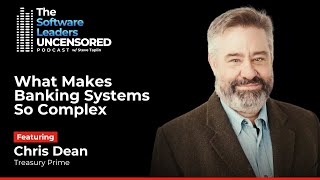
Chris Dean, Treasury Prime CEO on AI, Fintech Innovation & Building Banks That Talk to Startups

Treasury Prime CEO Chris Dean on Banking-as-a-service, embedded finance, and the evolution of Fi...