STOP Numbing The Pain (Do This Instead)
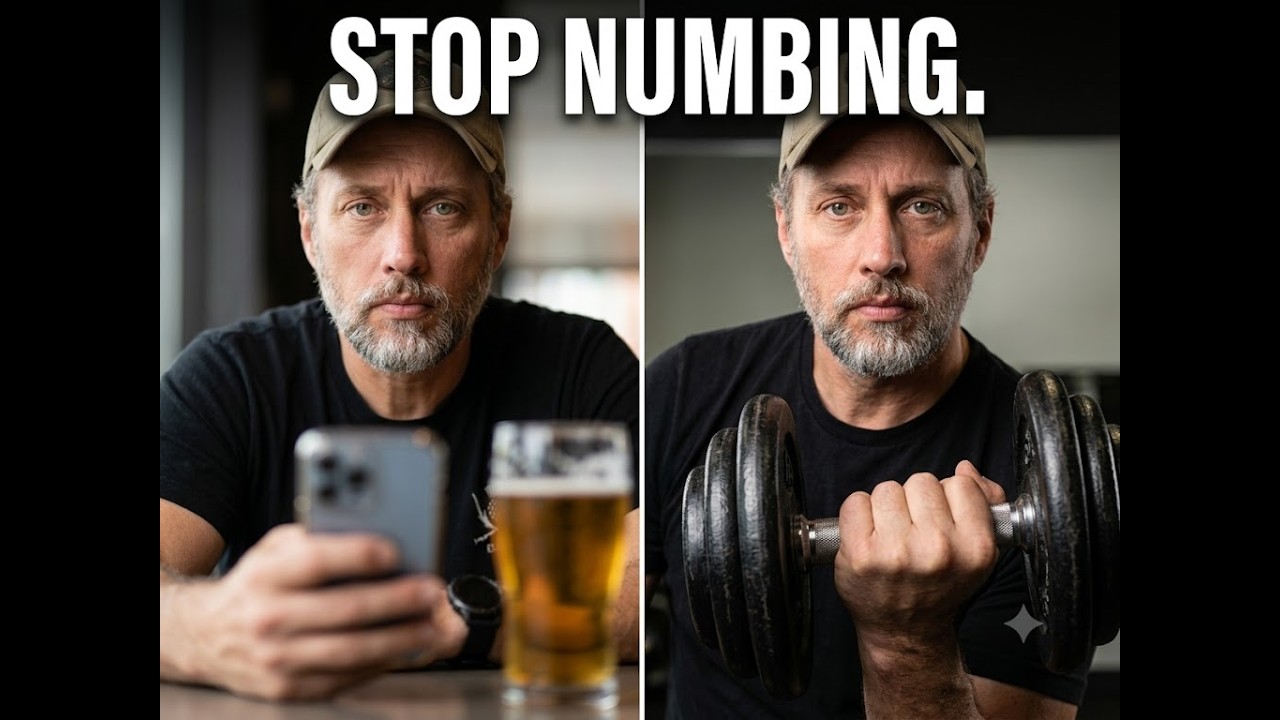
Dan Willis explains why men numb pain with alcohol, drugs, and social media instead of healing, then outlines better approaches: exercise, therapy, journaling, and meditation. He compares facing discomfort to building strength at the gym, stressing that results come gradually through sustained effort, not quick fixes.
Chapters
Stop numbing the pain. It's the thing that's gonna help you get to where you want to go. We're gonna really wrestle with that here over the next little bit. Welcome back, guys. We are going to break down today what it looks like for men going through a really hard time, whatever that may be— loss of job, loss of relationship, loss of identity, whatever it is that you're going through— and how we tend to numb that pain using a whole bunch of different things and what the results are. So For me, I'm going to share with you guys some of the things that I have done in the past that have been negative as far as numbing the pain and some of the results that you get from actually flipping that script and going the other way with it. So let's get down to it. I want to start off with first and foremost, guys, there's a lot of these things that we go to and in small quantities that can be good. And there's a lot of people that will defend them saying, well, you know, I can do this, I can do that. And it's okay because it's just a little bit. Granted, we're going to get that out of the way. That excuse is gone. If you are doing something within reason, that's a different thing entirely from numbing pain with it. Okay, if you're using it as a prescribed medication to yourself, it's a very different thing from once in a while. So what are some of the common things that we use to numb pain? Now, the big ones out there are going to be the common ones that have been around forever. So you're using booze, you're using drugs, you're using Maybe it's women or romantic relationships. Some of the newer ones are social media. So you love that dopamine hit, scroll, doom scrolling, binge watching Netflix. These are all things that we use to numb the pain. Whatever that is that's causing you that hardship, it doesn't make you feel good, right? It's— let's just be real about it. It sucks. It doesn't feel great. And that pain that you're feeling, it needs to be escaped. Your mind's saying, get away from it. Go away from it. Don't dwell in it. Find something that will remove you from it. And the reality is, when we use these things to numb our pain, when we use the alcohol, when you use drugs, any of those, whatever your thing is, you're not actually addressing the pain. And the problem is, yes, the thing you're using numbs it for a while. It'll help you to forget it or it'll help it to go away. But then once your numbing wears off, The pain is still there. Whatever caused it is still there, and that's still stopping you from doing the things that you want to do moving forward. And the reality is, when you're doing this, you're never going to actually tackle what's causing the pain in the first place. You're never going to grow from that, and as a result, you're never going to get the results. So for me, there there's been times in my life where work has been one of these things where I dive into work full tilt. I ignore my family. I ignore. you know, my community around me. And I just, I dial so deeply into work where I'm spending 80, 100 weeks at work and things that need to get done elsewhere aren't getting done. The home suffers, you know, the lawn's not mowed, laundry's not done, dishes aren't done, whatever it may be, right? I've done years of sobriety where I just want to come off of alcohol for a year. Right now I'm in a 6-month sobriety where, you know, no prescription meds despite being PTSD. And I'm not advocating that unless you go to your physician and work that out. But for me, I'm able to do that. So no prescription meds, no CBD to help me sleep, no booze right now. And I got to tell you, it is not a fun experience because all of the pain that you're dealing with is still there. It's still present, but you start to actually wrestle with it. You start to come to terms with, okay, why are these things hurting? What is that pain caused from? And how do I overcome it? Now, if you guys haven't done any of that kind of work with how to process that, there's lots of great resources online. I highly recommend. Rachel Sloan. So definitely check her out. Fantastic stuff. But there's lots of things that you can do that are positive and healthy that will help you with this. So I want to give you some of that, give you some best practices that you guys can use. And then afterwards, we'll take a look at what the results can be. Okay, so we've gone over kind of the vices, the things that we use to pull us away from it. So whether that's substances, whether that's experiences, whether that's relationships, those are things that we use to numb the pain. What can we use to stop numbing the pain? If you're looking to stop numbing the pain, there's a lot of really healthy things that you can do. Okay. One is just physical exercise. And I'm not talking to the extent where you're being overly extreme and using it as a distraction. Okay. There's a quote from a movie, Get Him to the Greek, where if you do, you can turn anything into heroin. If you do 1,000 hours of yoga a week, you've essentially created heroin, right? It's that same idea. Workout. Yes, that's great. That's healthy. Go for walks, go for runs, work out, get fit. That's good for you. That's a great way to go. But if you find yourself completely in the gym doing eight a days, you might have gone too far. You can have healthy relationships, friendships. You can have people that you just call on and talk to. Maybe you've got a counselor, a therapist. Those are great ways to go as well. The other thing is just some self-work. There's tons of resources online that you can go to, books that you can read, YouTube videos, of course, where you can take a look at yourself and really just do that self-meditative work of. Okay, who am I? What am I wrestling with? Why is this a problem? Why is this? The interesting thing with using physical exercise as an example is when we go to the gym, there's a large stigma around it of, I hate going to the gym. Those January 1st crew, you know, it's the first of the year, it's a new year, new you. You go to the gym and you're dreading it. Why are you dreading it? Because you know you haven't been there, you haven't been consistent. It's going to hurt. It's going to suck. Tomorrow is going to hurt. The next day is going to hurt. Those pains that are there are real. They're a very real thing. The thing hurts. But at the same time, if you keep going to the gym, you build strength, you build conditioning, you build the ability to process, you build the ability to acclimatize and become more used to that pain being there. And then after a while, oftentimes you'll hear people that become gym rats and they have a, they have a desire for this. When that when that momentary pain is removed, they feel a desire to go and seek that out because they know that it will strengthen them. In many ways, the pain that you're feeling wherever you are, whether it's that loss of a job or or relationship or whatever it is that you yourself are suffering with as a man right now, those things are painful. Yes, in the moment, but the more that you ignore them, the worse that that pain is going to get, and the more that you confront them and face them, it'll be like going to the gym. You're going to build strength. You're going to build conditioning. You're going to be able to recognize. It better. You're going to be able to understand how to better heal it, process it, and grow from it as a result of not running from it but instead confronting it. Okay, so those are some of the things that you can do in a really healthy way in order to be able to stop numbing the pain and confront it. Now, what are the results that you're going to see from this? And I want to be honest and upfront about this because a lot of the times when guys are going through these hard situations. What they're looking for is the quick fix, the Band-Aid fix. And I've been there. I've been like, give me the pill, give me the, give me the prescription that's going to fix this. Give me the, the one thing I've got to do that's going to make it all click. The honest answer is there's probably not one thing that's going to make this click for you. It's going to take a whole bunch of different things, and it's not going to be a fast fix. Maybe if it's a smaller problem, you're a younger guy, um, you know, this is your first real relationship, you've had a breakup. I'm not trying to demean whatever pain you're going through, but there are smaller pains and bigger pains. If you're going through a larger pain, expect it to take some time. Expect it to be something that maybe you haven't dealt with for a long time. Maybe it's trauma you're carrying from decades ago. That's okay. Be ready to give it that time. Okay. So if you're expecting results immediately, I would highly recommend that you abandon that expectation. But the results are this. If you start to get rid of those numbing factors and start doing some of those positive factors, Little by little, you're going to see progressive growth. And again, very similar to the gym, right? You start with light weights, start with low reps, and you build your way up. Same thing. The best thing that I can recommend you do in order to best grasp the results is commit to something maybe weekly. Maybe weekly is too often for you. Maybe it's monthly. But make that commitment to do something and track it. Have a spreadsheet, have a journal, have something where you are actively tracking. This is what I did. These were the results. This is what I did. These were results. And in a single day, you're not going to feel it. You're not going to see it. But as you progress over the weeks, the months, the years that come, what you're going to do is go back and look and say, holy cow, that's where I started. And look, by implementing these small changes and being consistent with those small changes over time, Massive results. Okay, you're gonna find that those pains are less. You're gonna find new things about yourself. You're gonna discover new strengths that you had, new abilities that you had that you otherwise were unaware of because that pain that you were carrying stopped you from discovering it. Okay, this is not easy to do. This is something that we're all always going to be in the process of as men. Even if you see guys that are at the very top of their game, take your pick. Everybody's got their names, but you've got guys like. Goggins, Jocko, you got guys like Robbins or Hormozi or Vaynerchuk. Take your pick as to who they are. Those guys still have their problems. They still have their pains. Those guys still have hurts, but they've learned over time how to build that strength to process those things and be able to confront them and get drained the results from to be able to get good from that pain. So there it is, guys. I really encourage you, stop numbing the pain. Find the things that you're using as vices, identify them, and do your best to get rid of them entirely. Scrap them, get rid of them. Now, if it's something like prescription medication, do that with a physician. Always go see your physician, always go see a healthcare provider if you're using one, okay? But that aside, if you are self-medicating with drugs, with relationships, with something else that's unhealthy, you have watched absolutely everything on Netflix and there's nothing left to watch, like whatever it is that you're doing, Remove that. Remove the environment of it. Remove the ideas for it. There's lots of resources that'll teach you how to remove those vices. Search them out. The positive things. Again, find resources online. I cannot recommend Rachel Sloan enough to you guys. Please take the time. If you haven't seen her and you are wrestling with something, go check her out. She's a phenomenal resource. But as well, take the time to really find those positive things. And it doesn't have to be massive things. It can be little things. Go for a walk if you're sedentary. Have a conversation with somebody. You haven't called up a friend in a while. You haven't called up a buddy in a while. Give them a call. Just have a conversation. Something that doesn't have to do with your pain. Just have a conversation about life and how's it going, right? Create new habits that are healthy for you. Maybe you eat better. Maybe you're more physically active. Maybe you're reading more. Whatever it is that you have, but set those goals and be realistic and start small and build from there. Don't do something massive. Don't go from, you know, I sit on the couch all day watching Netflix. I'm 300 pounds and say, okay, well, I'm going to hit the gym twice a day for the next 30 days. It's going to be too much. Start small, build incrementally, and grow. And really do the tracking. Take the time to do the tracking, guys. If it's a daily journal, if it's a spreadsheet, whatever it is, track it. Here's what I'm doing. Here's the result that I saw. Here's the— here's what I'm doing. Here's the result that I saw. And don't expect it to always be an immediate win. And sometimes the change that you make might not produce a result. And that's okay too. At least you now know that that change wasn't the thing that worked for you and you can try something else. But you won't know that unless you're tracking and journaling. Guys, let me know down below which of these things is going to help you the most. Are you guys in that stage where you're wrestling with the numbing itself? Are you guys wrestling with what can I do and introduce to help get rid of this, to help overcome this pain? And maybe you've done that and can offer some advice to the other men here. down below and let us know what worked for you. What are things that you guys have done that have helped you to get through your pain and to come out better on the other side? That's it for today, guys. If you haven't seen the other resources, I'm going to create a playlist of this. You'll be able to check it out. It's going to come with a whole bunch of other people that do great stuff on how to stop bad vices, how to improve yourself. So please check that out. Have an amazing day, and I'll catch you guys on the next video.
More from Dan

ready and prepared are not the same thing. #motivation #dothingsyoudontwanttodo #pushharder
Solitude is your mind gym. Never skip brain day!#fitness #motivation #fitnessmotivation




The Key to Lasting Change: Why Sustainable Growth Always Beats Monumental Leaps