Youtube Subscriber Count Doesn't Matter (and what does)
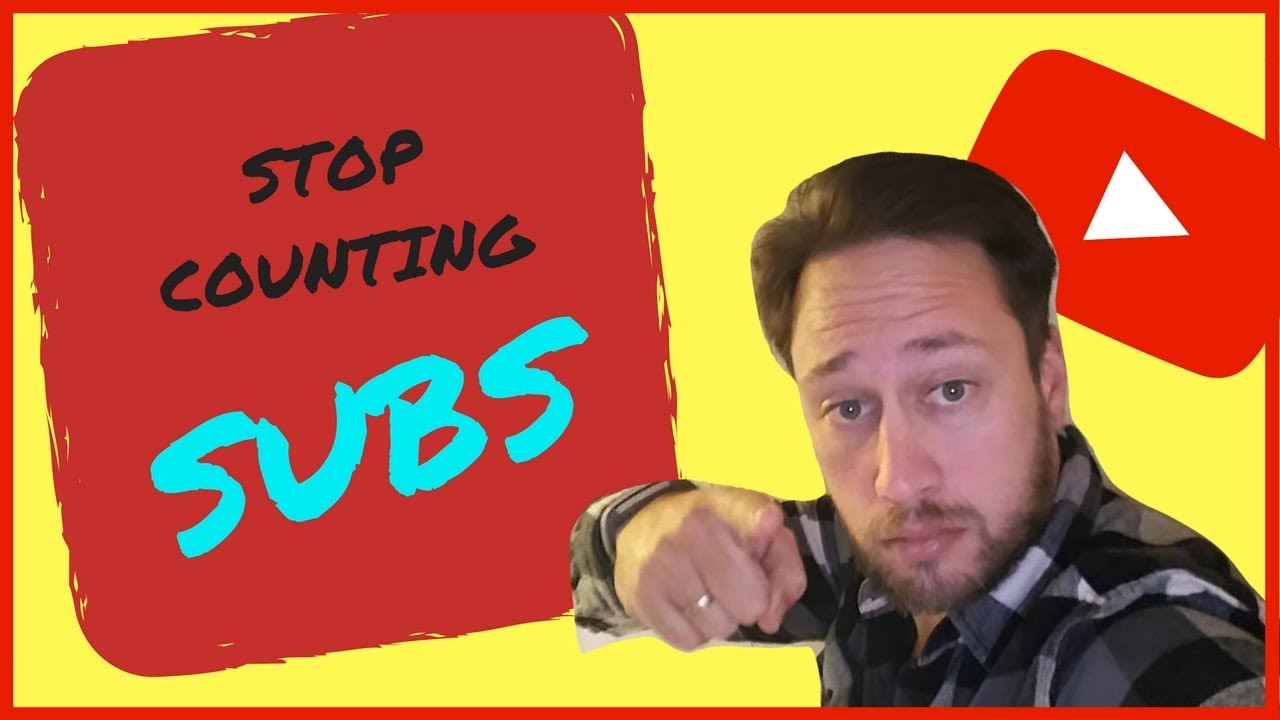
Dan argues subscriber count is a vanity metric that doesn't drive growth. Real success comes from three things: community engagement through comments, consistent high-quality content, and watch-time retention. He points to PewDiePie and Casey Neistat as examples of creators who built audiences through quality, not subscriber chasing.
Chapters
Your subscriber count doesn't matter at all. It doesn't matter. Stick around, I'm going to tell you why. Welcome back, guys. I am Dan from millennialmotivator.ca, helping you learn how to create, engage, and inspire. If you're new to the channel, click that subscribe button down there and the little bell. You'll get a notification when I go live next, but I put out videos Monday through Saturday on business, marketing, being an entrepreneur, helping you grow your YouTube channel, all kinds of great stuff about how you use the internet to do the things that you want to do, alright? So if that sounds like it's up your alley, give it a click. Today though, what we're looking at is your YouTube subscriber count does not matter and why, and what does matter. So if you're somebody who has a YouTube channel, you've been struggling to get it growing, you're worried about your subscriber count, we're going to take a look at what's actually important for you to focus on today and why this myth about subscriber count exists and how unimportant it is to you and your growth as a channel. So without further ado, let's go. Okay, so subscriber count, why is it such a big deal? Why does everybody make it into such a huge thing? Well, it's one of two things. It's authority and it's fame. Okay, most of the big YouTubers that we know, if you start throwing out names of popular YouTubers— Casey Neistat, Peter McKinnon, uh, guys like the Logans— I, I don't like mentioning them, but they're there. PewDiePie. These big subscribers, big subscriber counts on these channels makes it seem like they've achieved some level of fame. And to be honest, all those names, you know them they have achieved a certain level of fame because of their channels. Now, the issue that I have with this is it promotes this false concept that in some way their subscriber count drove their channel growth. And the reality is, if you look at most of those channels, you look at— let's just pick 3 off the top of our heads here. Peter McKinnon, you've got Casey Neistat, and you've got somebody like PewDiePie. Now, PewDiePie is somebody who's been around for a long time on YouTube. He started off as a gaming channel, now he's more of a alt comedy channel, news, and kind of whatever he wants to throw out there. But the reality is with his channel, he spent many years putting out great content, entertained people, and it grew regularly. So remember what I just said, okay? That's gonna be key as we move forward. He created great content regularly to a community, okay? That's how his channel grew. Now, does he have the most subscribers now? Is everybody familiar with him now? And does that help? Yes. But did his subscriber count help him when he first started? Maybe. If he started again today, would his subscriber count help him? Not really. He wouldn't need the subscriber count anymore because he could just start a brand new channel about something brand new. It could be probably just about anything with PewDiePie and he'd get there. Now, okay, PewDiePie, he's been around forever. He was one of the, you know, the forefathers of YouTube. So that's an exception, right? Well, I mean, Casey Neistat hasn't been on the platform for too long. But he showed up and went, okay, so what I'm gonna do is I'm gonna create this video cinematography style of daily posting to YouTube. Doesn't really exist yet. I'm gonna try it out and see how it does. So he created great content regularly for a community. Bam! Took off. Everybody knows Casey now. But Casey can do whatever he wants. He can. He shoots great quality footage. You go on his vlogs, it's anything from eating chicken wings to opening boxes to— Bromance with Peter McKinnon, right? Like, there's all kinds of things that he can do. So it's just mind-blowing to me that everybody goes, well, it's his subscriber count that got him there. No, it's not true. What got him there was consistent uploads, quality content, and community. So last, Peter McKinnon. This guy showed up out of nowhere, started a channel, went, I'm gonna do this. I love this stuff. I love what YouTube is about. I think it's a platform for me. I like cameras. I like video. I think I can make this happen. I think I can do it. And so he went out there and he did it. And again, he was consistent, he built a community, and in a year he picked up a million subscribers. But at no point was his focus on the subscribers. His focus remained on— say it with me— community, content, and consistency. So the lie about subscriber counts is huge, okay? I see a lot of people out there sub for sub. It's a terrible practice. It kills the channel. And It kills people's visions of how you can grow. Fake subs out there, that blows my mind. The reality is, guys, none of these things will help you to get where you want to go. If you want to be a YouTuber, if you want to do YouTube, the reality is you have to have a clear understanding of where you want to go with it, but also understand the metrics that matter. Forget your subscriber count. The best thing that you could do, guys, and I've, since almost day one on this channel, what I've told people is forget the subscriber count. Get it out of your mind. Just get rid of it. Forget the views, forget the subscriber count, get rid of those metrics. They're not gonna help you. But if you're not watching those metrics, what should you be looking for? What should you be watching? I'm gonna tell you right now. Stick around. Okay, so first up, guys, you've heard me say it a couple times here: community, consistency, quality content, right? Community, consistency, quality content. It's a huge thing. It seems like such a simple formula, but how do you measure that in your metrics? Well, community is really a huge part of this. If you go to most bigger channels, you'll find there's people that regularly show up, they're regularly contributing to the channel, and they're regularly sharing that content out. So what does that look like? Well, I know if I go back to my first video on this channel, there are people there that came in, found the video, dropped some comments, subscribed to the channel, and have been here ever since. Almost every video, like Clockwork, they're here. And a big shout out to all of you guys, you know who you are. Just a huge thank you to you guys. But that community, that engagement back and forth, is a core metric for me. I want to see how many comments I can get on a video. That's a, that's a measurement of success for me. How many people can I get talking and having a dialogue about this conversation that I put up? That is an essential success for me. If I can get a video and put it up there and it gets no subscribers for me and it gets 100 views and But out of those 100 views, I get 50 comments, that's a win for me. That's a win for me because I see a community that's engaging with that topic, having a conversation, and allows me the ability to have a conversation with them and grow in a relationship, right? Imagine having a relationship. For some of you guys out there that are married, maybe you've got kids, you have friends, imagine having a relationship with somebody and never speaking with them. You just, you go out on a first date with somebody and you sit there across at the table and you literally just stare at them. Eat your meal, watch the movie, whatever, go home, never say a word. How ridiculous would that be? Oh, well, I mean, they showed up and, you know, they said they liked it afterwards, so it was great. No. The reality is, guys, if you wanna build relationships and subsequently a community, so a bunch of relationships with a bunch of people, The metric you want to measure is how engaged are people with your content? Are they sharing it out? And are they talking? Okay? Now, I make this promise to everybody. If you comment down below something other than, hey, sub for sub to my channel, because that's— I just delete that. That's spam. But if you have something that you contribute into the comments down below, I make a point to reply to every single comment down there. And this is best practice that I highly recommend for anybody that is a small YouTuber, a large YouTuber. Make sure that you are replying to your comments. Now, I know for guys like PewDiePie that's probably seeming impossible, but the reality is if I was as big as PewDiePie, I would shoot my videos, pay my editor to put them out, and I would spend my days going through and engaging with the community as best as I could. And I think he still does that to some extent. Most of the big YouTubers, you still see them, 250,000 subs and up, still communicating, liking comments, replying back to them when it's possible. I, I think that's such a core metric. Check who's talking. What they're talking about and have a conversation. Okay guys, so that's the first metric that you must be watching. Next, what else do you have to watch? Okay, the next one guys is watch time. Why am I saying watch time? Because that seems like a more traditional analytic that you're watching in your Google Analytics. The reason why I'm saying watch time is this: watch time helps you to learn how to improve your content. Okay, if you see that people are showing up You know, your YouTube video starts. I guess we'll go from this side so you guys can see it better. But your YouTube video starts, and then all of a sudden, massive drop. That happens to most video, most videos out there, guys. You're gonna see everybody shows up for the first couple seconds, and if it's for them, they stick around. If not, they leave. So you get that drop, right? And then you see it level out a little bit. The next drop is what you're trying to gauge here. This is the metric that you want to watch. And the trick with this is you want to see that line go from its initial everybody comes in. And it drops. The next drop, you want that point to be so far out. You want it as far out as possible, okay? That's the metric that you're watching. That's what you're looking for. That's what you're hoping to achieve. Why is that second drop— why is the second drop so important? It's so important because it shows you when people start to lose interest in your videos. So you know that if you've got people's gripped attention to 2 minutes into a video, and then all of a sudden, boom, gone. They disappear from the channel. Something's happening at that point that they're no longer engaging. So figure out how to fix that. Ask questions newer in the video, make sure that you've got maybe a cut to something new, you segue into something, you've got a third screen pop up, something of that nature. Use the card feature and you have a card pop up. Use these tools that YouTube's providing you to extend that watch time and get people to watch the content longer. Now, the reason why I pair this with the other metric of community is the longer that you get people watching your video, the more there is to discuss. Now, one of my personal favorite channels to watch is Philip DeFranco. I love the guy. He goes from story to story to story, and you're, you're plugged in and you're watching and you're engaging, and he's constantly got you plugged into the next thing. You want to know what's coming down the pipeline. And then at the end of the video, he asks for your opinion On anything, and it creates a conversation in the chat. So vital, guys. But he knows he has to segue from one story to the next at about this point, or he's gonna lose people. They drop off. So check it out. Go check out Philip DeFranco's channel. Watch one video. You don't have to fall in love with the guy. You don't have to sub to him. Watch the process though. Watch what he's doing. It's so crucial to watch. He starts it off, gets people going, tells them what's in the show. tells them about one thing, it goes for a certain period of time, bam, cuts out, goes to another topic. It keeps people engaged and flowing. Once you're analyzing your watch time and you can see where that second drop comes in and you can work to improve on that, you're gonna see a lot more success on your videos because that second drop being improved is gonna get you a lot more comments, a lot more commentary on the videos, which in turn is gonna build a community, which in turn is naturally gonna build your views, shares and your subscriber count. Okay guys, that's it. Simple process, guys. Forget the subs, forget the likes, it doesn't matter. Forget it. And yes, are there benefits to subscribers and likes in search algorithm? Likes more so than subscribers. Your subscriber count isn't really going to matter. You can even hide your subscriber count, which I recommend if you are struggling with that number as a measure of success for yourself. Don't worry about the subscriber count, worry about your comment count, and worry about how long to that second drop, your retention. How are people watching your videos? But that's it for today, guys. Question of the day is, what metric do you think you should be measuring on YouTube? Do you think subscribers are important? Do you think likes are important? Or do you measure something else? Is there something else that's of value to you? Let me know in the comments down below. If you like this video and you think it's helpful, go ahead and share it out to a couple people. Again, guys, thank you so much for watching. Hit the subscribe button if you haven't already, and I will catch you tomorrow with another great video. Later!
More from Dan

ready and prepared are not the same thing. #motivation #dothingsyoudontwanttodo #pushharder
Solitude is your mind gym. Never skip brain day!#fitness #motivation #fitnessmotivation




The Key to Lasting Change: Why Sustainable Growth Always Beats Monumental Leaps