Expanding SOMATIC Capacity When DISAGREEMENTS Develop
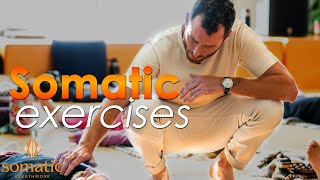
Daniel Borschel explains how nervous system resilience lets you disagree without getting triggered. He describes practices like breathwork, cold plunges, and movement that build capacity to hold multiple perspectives instead of reacting defensively.
Chapters
All I got some interesting topics to cover and we'll see if we have enough people on here. Maybe I'll guide you through some somatic exercises as well, if that's something you're interested in. Let me know in the comments. Let me know if you can hear me. Let me know where you're tuning in from. Love to see always the far reaches of our somatic family. And I'm also going live on YouTube as well. So what's up, YouTube? Excited to continue this with you all. What's up, Bonnie? Welcome, welcome, everyone. Let me know if you can hear me. Let me know where you're tuning in from. Today I'm going to be diving into one of the core issues that I. That I see in the world. And those concepts would be resilience capacity, nervous system regulation, all the things that I love talking about, but I think it's really relevant to the current sort of climate in the world. What's up from. We got Beverly Hills, we got Canada, we got Chicago, got Kirk on here, we got TK stretching. Tim and Kim, love you both so much. So let's, let's first dive into somatics a little bit. This understanding of how your body affects your mind, how your emotions affect your mind, how your stress levels, your defense systems affect the mind. And you can look at that on a personal level, your mind, or you could look at the collective mind. Because I'm going to be talking a little bit about the collective state right now. And so why I'm so fascinated with somatics, multitudes of reasons, but it really has provided a window, a doorway for me to understand what makes people do the things that they do, what makes people tick. I think from a young age that was such a driving force for me. Like, what's the why behind things? I remember. Have any of you ever experienced this? When your parents would say, they'd tell you to do something and then you would. They would just say, because I said so. Did any of you ever get the like, because I said so? Yeah, that always irked me so much when I was young. Because. Because I said so. I'm like, give me the reason, give me the why. I want to know why. What's the why behind it? And so somatics has provided this understanding of the why people do the things that they do, why people have this certain perception around things. And so this concept that I've been juggling with lately is what causes people to be in an argument? What causes the disconnect between our perceptions? What causes war what causes hate? Because at the end of the day, we're all humans and we're so much more similar than we are different. And there's. This is going to be a nuanced journey, so buckle up. If you're with me, Let me know if you're with me. One of the. One of the main things that I've really been juggling is what allows somebody to hold different perspectives and not get emotionally triggered. What allows me to actually see your side of things without becoming reactive, without becoming defensive, without feeling I need to, like, protect myself. And you see this in the world right now. My personal philosophy is that we have become very, very weak from a nervous system sovereignty and nervous system resilience perspective, and that we're not able to hold multiple perspectives at the same time without becoming dysregulated. Like, I can't. I have. A lot of us have a hard time connecting to another person when they have a different belief than we do without becoming emotionally dysregulated. And this has a lot to do with our nervous systems, our collective nervous system, the amount of dysregulation in our world, and our ability to connect with each other. So if you look at argument, where we're in an argument, perhaps argument does not mean separation. If we are in an argument, you could say if we're in disagreement, that does not mean that we are separated. That does not mean that we're not connected. And when we're in an argument and we create the separation, that's what causes a lot of issues. If we had the nervous system capacity to be able to hold our own perspectives, to hold our own state, and also have the capacity to hold whatever your perspective is in your point of view at the same time. And having enough nervous system capacity to be able to do that without having an involuntary discharge, meaning without becoming triggered. Right? Without feeling like I need to protect or defend myself. And what I. What I really feel with this is that we've become a. A culture of we've lost resiliency, we've lost capacity. Everyone's on their last nerve. Everyone's on the verge of having a nervous breakdown. I use those terms a lot. What does it mean to be on your last nerve? It means that you have no more capacity in your nervous system, you have no more capacity in your body, that if someone says something, you are going to get triggered. And so let's dive into triggers and like reactivity a little bit. Your, your body, your emotions, your mind, all of those things, you could say you're Living wholeness. And if we're throwing a somatic lens on it, we're, we're looking at how the body and your emotions actually affect your mindset. All of those things have a certain capacity. Your life. You only have a certain capacity with your life. You only have so much time. Your life is measured by breath. When you take your first breath in and eventually when you will take your last. But we only have so much capacity. I know for myself there are so many things that I want to do and I only have so much capacity to do it. So I have to choose. I really have to choose. And you can grow your capacity, right? You can grow your capacity. The same thing happens where especially if we have a nervous system that's not very resilient, doesn't have a lot of capacity, we're only going to be able to handle a few things at a time. We're going to get triggered very easily, we're going to become reactive very easily. And that breaks relation, that breaks connection. The number one thing that heals trauma is relation. Our ability to be in safe connection with each other, to co regulate co regulation actually heals trauma. We learn to co regulate with each other before we learn to self regulate. Let me know if you're following me here. I like, I'm a verbal processor and I like to process this with you guys. So definitely write your questions if they're coming in. I'm going to keep diving into this understanding of resiliency and building nervous system capacity so that we can actually hold multiple perspectives so we can actually be in this co creation together. So we actually don't become triggered and reactive when we are in disagreement. Birds in the background. Yeah, I got my windows open. It's so absolutely beautiful right now. As humans we're going to have differences, we are going to have differences, we are going to have disagreements. But if we all understood that just because we have a disagreement does not mean that we are disconnected, does not mean that we are separate, does not mean that my reality affects your reality and your reality affects my reality, we, we'd have a lot less, I would say war against each other, a lot less trauma, a lot less dysfunction. If we were able to actually have enough capacity to be able to hold opposing viewpoints, to be united in our opposing viewpoints. I think that's a, that's a massive thing for our world. We see that going on right now with all of the war and all of the collective arguments that are going on to be able to have enough nervous system capacity to Be able to hold multiple perspectives at the same time without getting triggered, without getting reactive, without getting. Without involuntarily expressing my emotions all over you. Right. And most of us think that that's a byproduct of our mind, but that's actually somatic capacity. Something that I've. I've realized through this journey of building a business and showing up for a collective of practitioners across the world and moving quickly from teaching small little classes and you know, working with clients to really operating a global, a global entity is. I've had to build my somatic capacity. I've had to build my nervous system resilience. And so through that, an aspect of that. And I'm going to take you through an exercise on building your resilience here soon. And obviously somatic breath work is a, is a modality on how to build, build your actual nervous system resilience, how to reset your nervous system, but to build your own resilience so that you have more capacity, more spaciousness in, in your, in yourself to be able to connect with other people. And this is a big thing for romantic relationships. But not just romantic relationships, but all relationships in your life. I want to read this real quick. Being so connected to your peace that you can have compassion for someone's dysregulation. Absolutely. And it's not just like being so connected to your peace, it's being so well regulated in yourself, so grounded in yourself that you can actually co regulate with this person without becoming dysregulated. I know, that's a lot of interesting terminology. Being so connected to yourself, being being able to regulate your system, being able to control and choose. That's really what this is. When we talk about a trigger, when we talk about becoming reactive, it means you have no choice. You've lost your free will. I'm fascinated by that understanding as well too, because, you know, you look at people that have kind of created their own fate for themselves. Fate is a byproduct of not having choice, meaning your life is laid out for you and you don't have choice. Fate is a byproduct of being triggered and reactive. Your life will be laid out for you. There's a lot of people that I talk to that are like, why does this keep happening in my life? Why do I keep doing this? You know, it's a lot of like victim mentality. Instead of taking responsibility for your life and becoming like the creator and realizing that you actually have free will and that lies within your choice. And choice is a byproduct of having nervous system resilience and nervous system capacity, being able to choose in the moment. You know, Carl Jung's quote, until you make the unconscious conscious, it will continue to control your life and you will call it fate. And then you get to the end of your life and you realize that all of these choices that I made were actually not from my soul level, but they were from my wounds. They were from my trauma, and not necessarily my trauma, but the trauma ancestrally that was passed down to me, and also the collective trauma as well. I talked about this last class, but your nervous system is the gift that's been given to you from your parents and from your ancestry. And they gave you all of the resilience and all of the patterns and all the positive things that have been cultivated for survival and thriving, but also all of the wounding as well. And so you got both sides of that. And so you might not have chose that, but it is your responsibility to work on it. And I want to circle back to the big sort of issue, and I'm curious to hear your thoughts around this. But having enough nervous system capacity, having enough capacity in yourself to hold multiple perspectives, multiple states of being at the same time without becoming triggered is how we have healthy disagreement, is how we have healthy debate. And I think that we need. We become quite homogenized in our culture where like, it is our differences, it is our disagreements that allow us to grow, it is our disagreements that create the beauty of this life. And so disagreement does not mean disconnection. We are all intrinsically connected. And that's a fundamental understanding of our world. That whatever I do is affecting everyone in the world. Whatever they're doing is affecting me. And there's a level of responsibility in that that is right. Responsibility is that you actually have choice and what you do and what you say matters versus I'm just not going to choose and I'm going to let fate play it out for me and I'm going to get to the end of my life and wondered why, why, why all this happened, right? So resiliency is a byproduct of both nature and nurture. So like I talked about, the gift that you've been given, your nervous system, your nature, your. Your default state of how you were born into this world, the patterns that were passed down from generations to you, both the trauma and also the, you know, the resilience and the positive patterns as well. So we're all dealing with that, but also our nurture, also all the experiences that we've gone through also all of the things that we've overcome, also all of the practices that we put in place to be able to develop more capacity. So we do have choice around that. We do have the ability to shift that. You know, I, I, I talked about last live that, you know, obviously your nervous system is a gift that's been given to you. And then you basically, what you're, what we hope that your parents are saying or we hope that's passed down generation to generation is like, here, take this gift, make it better, work with it, make it better, and then pass it down to the youth. Right? And so how do we make it better? How do we cultivate more capacity? How do we cultivate more space? How do, how do we have the ability to hold multiple perspectives? How do we have the ability to have healthy disagreements? I saw a stat from the Gottman Institute. It's the couples that are able to have healthy disagreements and healthy arguments are the ones that last the longest. It's not the couples that don't argue. It's the ones that have disagreements in a healthy way but can come to solutions. Right. And that's a byproduct of having capacity in your nervous system. Your ability to hold another person, that, that is feeling a bunch of emotions and not become triggered, to actually feel them, to be with them. Even though you might be holding a different perspective, even though you, your own agenda inside is like, you're wrong, whatever you're saying is wrong. Right. Maybe that, that, that part of you is still coming through. But can you actually hear them out? Can you hold their perspective? Can you see their side of the story? Can you walk a mile in their shoes? You think about what that means. Can you walk a mile in someone else's shoes? That's being able to hold their perception at the same time as yours. And what that requires is enough nervous system resilience to where you're not becoming triggered. Let me know if you are, if you're feeling, if you're feeling me. I miss you guys too. Yeah, this, this topic is, is just, it's been marinating in my brain. It's been marinating in my brain for the last couple days. And when you think and you look at something like cancel culture and when you look at life right now on a societal level, we're not able to have disagreements. We're not able to have healthy. Yeah. Healthy arguments, healthy debate. I can't. It's hard for us to tune into someone else's perspective and walk a mile in their shoes. And what that is. Is we become a society. That's. That's. I want to say weak, but I want to be careful around the. The words that I use. Another word that's being utilized right now is people that are overly sensitive, which. We've broken that down. If you've been following me, this is. This is actually my 30th live, so I'm. I'm starting to get in a flow with these, and I would love for you to give me topics to talk about. Right now I'm just kind of sharing with you the internal workings of my mind and what's currently alive for me. But I forgot where I was at, necessarily. Good vibes from Germany. How can these wounds be healed? Let's talk about that. I was talking about sensitivity. Sensitivity is not weakness. Sensitivity means that you are full of sensation, that you're full of sensory awareness, that you're able to feel inside of yourself and also feel another person. It's the precursor to attunement self awareness and awareness out of society. Talking about weak society and sensitivity, there's two aspects of that. You have to go to the point that Gabor Mate has been making around the myth of normal, which is that most of our issues are normal responses to an abnormal environment. We've set ourselves up into a world where our nervous systems are not designed to function optimally. We are not designed to be so isolated from each other. We're not designed to spend this much time on social media, on answering emails, on text messages. We're not designed to live inside of a box, eat from a box, sleep on a box, get put in a box by society. Maybe that's too far. Anyways, most of our issues, meaning our. Our weakness, can be a normal response to an abnormal environment. We put ourselves in an environment that our nervous systems are not designed for. Therefore, we're lacking resilience when we become weak. You know, we're. We're animals, and we forgot that, and we've weeded that out within our education system, within our birth process, within our dying process. You know, there's multiple parts in the cycle of our life that have been weeded out. Now. Okay, so you have this understanding of, okay, it's the environment as well. But it's also, you know, it's also you too, because you are the creator. You do have choice. The more they study epigenetics, they realize how much of an effect you have and also your environment has on your state and the expression of your genetics. And so we can actually change how resilient Our nervous system is, you know, all of Wim HOF studies on this understanding of God, I always forget the damn word. It is hormetic stress. Hormetic stress. Hormetic stress is one of the ways in which we start to develop resiliency. Hormetic stress basically means that we're putting ourselves under stress to actually grow from it. Breath work, specifically Wim Hof or a lot of the over breathing modalities such as somatic breath work in the first half is designed to mimic a stress response. It's designed to put yourself in a stressful state so that you start developing resilience. Cold plunging, what are you doing there? You're putting yourself in a stressful situation to see if you can actually regulate yourself within that. I talk a lot about dysregulation and you're never going to be in a regulated state all the time. How you know that you're growing is when you are dysregulated. When you know, you're like, holy shit, I'm dysregulated right now. How do I regulate myself in that? Because as you grow, you're going to become dysregulated. You're taking on more things, you're putting yourself in new environments, you're dealing with other stressors, you're growing, you're pushing your capacity and you're probably going to be like, how do I handle all of this? Well, it's how you find regulation in that new, that new capacity. I talked about your, your somatic capacity, right? Your ability to hold this, which has been a challenge for me. I've been dysregulated a lot lately. And so then I have to lean on my tools, which somatic breathwork is a powerful tool for that. Right? My somatic awareness exercises, for me it's like making sure I develop. I divide it into two categories. We live in a duality. And so you can utilize that framework for most things in your world. And somatic breath work is, it's based off of dualistic principles. Your nervous system has, you know, two major kind of responses. Your sympathetic state, which is your fight or flight go mode. Your parasympathetic state, which is your ability to relax and repair. Right. And so this idea of developing resiliency is how do I shift in between those consciously and so doing things to help get yourself into a parasympathetic state, also doing things to take yourself into a sympathetic state. Paul check. One of my mentors talks about this, this concept of working in and working out. If we had that perspective of how much time that I spend working out, I spent the same amount of time working in. Well, that would be a balance. That would be a balanced life. That would be a recipe for creating more resilience, more strength. That'd be a recipe for moving towards weakness, to sovereignty. If I'm spending a ton of time working out, well, then maybe I need to focus on my working in practices which. How do I cultivate? How do you cultivate energy for yourself? Like, let me ask you that and maybe type it in the chat, let me know. What practices do you do that cultivate that give you energy, that give you repair, that cultivate chi, life force energy within your system? A lot of these. Now, it's interesting if you look at martial arts specifically from an Eastern perspective, they had internal martial arts and they had like external martial arts. You know, you look at something like qigong, tai chi, those are internal martial arts of cultivating life force energy within yourself. Then you go to like kung fu, which is okay, now how do I. I've been doing my qigong, I've been doing my tai chi. Now how do I utilize that externally, right? Just to. Just to continue to play off this dualistic focus. Because your ability to expand and contract between those are what create resiliency and your ability to choose between that. So I see heavy bag exercise. Incredible. You know, that's a way of discharging, that's a way of working out, which is so important. So important. How do we move stress? How do we move things through. Through ourselves? And ideally you'd have on a physical, mental, emotional, sexual passion, right? All of those different levels of your being, right? What are expressions of those? And then you have the other side of the internal. How do you cultivate mental energy within yourself? Well, reading for me is big, a big one. Like being able to like have books or podcasts or inspiring material to take in that inspire me, right? Journaling is another one that has been really, really hard for me. I'm not a writer, but it is another tool to cultivate that energy within yourself. Meditation, breathwork, ice plunging. Another one for me is walking outside in nature, right? It's all of that. They're not new things. They're not new things, but it's making sure that you get all of those. But where it really comes out is in the relational dynamic. Where it really comes out is when you are with another person. Because we are relational beings. And that ties full circle to how do we build enough resiliency, enough capacity in our system to Be able to hold someone else and myself when they have an opposing belief against me without becoming triggered, without becoming defensive. And I think that's a question that. That is literally being asked to us right now. How do we see that we're so much more similar than we are different? How do we move from scarcity? I talked about this on a previous live. You know, Zach Bush, who's been an incredible mentor, he talks about a lot of our issues are around healing scarcity on a cellular level, meaning that there's a felt sensation inside of us that we're not enough. We don't have enough. There's not enough to go around. Music and dancing is a great one. At this point, I'm just, like, flowing and rambling. So let me know if you have questions, if there's certain topics you want me to dive into. Would love to. Would love to hear another thing that I've been playing with inside of my mind right now, and inside of my being is as I'm building out curriculum for the restructure of level one and level two. Okay, Adriana's got a topic for me. Creating space in your body and viewing your body as your home. Absolutely. How do we create space? Space allows digestion. Space create. Allows us to digest our experiences. If you. If your home is cluttered, if you have stuff everywhere, then you have less space. If your body is cluttered with undigested emotions, undigested physical pain, undigested mental information, then you have no space. You have no ability. You have. Space and capacity are the same thing. That's why. That's why, like, you know, I've been asked multiple times to share my perspective on what's going on in the Middle east and what's going on in wherever. Like, there's so many other things that are going on in the world right now that are not showcased on media. On media. Right. But what I'm focused on is helping people to heal themselves so that we realize that we're so much more similar than we are different. And to be able to actually hold multiple perspectives at the same time, to be in disagreement, but to realize that we're also. We're all together and we are connected. And like, disagreement does not mean that we're disconnected. It means that we have opposing viewpoints and we have the opportunity to see each other's sides. So I'll get back to how do you create space, you know, and viewing your body as your home. Well, your body is your temple. The temple is where you worship. Your body is where you've had every experience of joy, laughter, pain, bliss. Every spiritual experience that you've ever had has been through your body. And if I look at. I've been asked this multiple times, do I believe that there's, like, a spiritual war going on? I personally believe that there's war against your body. If you look at all the chemicals in our food system, if you look at all the predatory marketing that preys on both men and women on your body needing to look a certain way of you needing to wear certain clothes or get certain things done to your body, it's all against your body, because your body is where you have these experiences. Your body is where you spirit is known through your flesh, right? Your spirit is known through this body. Your body is the antenna that allows you to tune into multiple realms of being, right? Whether that's this physical realm or whether it's a spiritual realm. And now I'm getting into some deep metaphysics here, which I love to go down, but I try to keep things a little bit clinical. So to wrap up your question, Adriana, it's being able to have enough awareness of, are you a. Are you consuming a lot or are you in a digestion phase, or are you in a creation phase? And ideally, identifying where you're at right now? Are you in a consumption phase where you're taking in a lot of stuff, you're having experiences, you're maybe learning more things, and then it's important not to stay in that for the rest of your life, right? That. That consumption phase of experience and information, and maybe it's traveling all of those things. It's paired with the archetype of the seeker, like, if you consider yourself a seeker, while the seeker never finds because it just keeps seeking, right? So which is an important phase to be in. But at some point, you have to go into a digestion phase. At some point, you need to go through an organizational phase, processing phase, a phase of, like, digestion, meaning, like, okay, let's actually absorb, assimilate, and excrete and get rid of and release. Somatic breathwork is a digestion modality that helps you, like, figure out, okay, what are the stuff that I've gone through. Maybe I have. Maybe there's emotions I haven't let myself feel. Maybe there's a bunch of stuff going on in my head. Maybe there's a bunch of things that my body are trying to tell me that I haven't actually, like, digested and processed and absorbed what I needed to and excreted the rest of the right and then you get to the end, and then you get to the last part of that phase, which is at that point when you've digested something, you understand it. You've gotten rid of what you don't need. And then now it's like, okay, now I can create from that place, right? So it's identifying where you're at in that phase. Are you in a consumption phase? Have you been spending too much time in a consumption phase? Do you need more things to. Are you in a digestion phase or are you in like a creative phase? Right. Let me know if that landed for you. And obviously we need like a little bit of each of those on a daily level. But I find for myself that there are bigger cycles that I go through. If I'm in a consumption phase, well, then I'm. Maybe I'm. I'm in school, I'm doing courses, I'm traveling, right. I learned so much from travel. If I'm in a digestion phase, well, that usually for me, that's like a winter time where I'm going inside and I'm really just organizing all my thoughts and I'm spending time internally with how am I feeling then? If I'm in a creation phase, then it's like, okay, I'm figuring out how do I take what I just digested and share it with. Share with the world. It's the same thing as the hero's journey. It's the same thing as the seasons. We all follow this cyclical nature. It's the same thing as moving through the different states of your nervous system. It's all the same. It's a great question, though. Thank you for that. Let's see here. I think I've been in a consumption phase, but I've been ready to shift into an embodied and creation phase. I think that that digestion phase is the hardest part, right? It's. It's the break. It's the middle point in between your breath, right? You have an in breath, there's a point in between. And then you have an out breath, right? The consumption pause in between, and then the creation, right? But people forget. People forget about the in between point. Stillness. It is the same concept of, you know, when you look at polarity, well, there's the positive side of things, masculine energy. There is the. The negative side of things, which is the feminine side of things, the receptive. And then there's the neutral in between. And that digestive phase is the part where it's a part of connection. It's a part of connecting to yourself, connecting to something greater than yourself, digesting all of your experiences, absorbing, assimilating, excreting so that you can create from an intentional place. I see this in friends and I see this in other people. They're consuming stuff and then they create. They're consuming and they create. But there's never that pause in between to be like, is this actually like in alignment? Is this actually coming from an embodied place? And so that pause in between is so important. And I do feel like that's part of the reason why I created this modality and often or. And why I think that this is growing is because people are sick of being in that, like, let me just be in the creative mode of go, go, go do, do, do all the time. Or let me just be in this mode of like taking a bunch of stuff, stuff in. But there is no in between, right? Oh yes, the artist way does talk about this. Just arriving. This makes so much sense. I hope you post this. Would love to hear from the beginning. I've gone down multiple rabbit holes. The thing that I started with, which I'd be interested to see if anybody else is, has any thoughts on this. But you know, I look at, I look at a lot of the issues in the world from a somatic perspective, right? And one of those things I see is our capacity, our nervous system resilience, to be able to hold two perspectives, two opposing perspectives at the same time without getting emotionally triggered. And I will challenge you. I'm going to challenge myself as well because I become, I, I get defensive, I do, I watch my patterns, right? These things are so embedded within us. You could do all the work that like they're in there. And the more time you be, the more time you spend becoming aware of them, the less space it takes up in your life, the less fate happens where it controls your life and it controls the outcomes of your life. But if I'm in a disagreement with somebody, can you maintain relation? Can you maintain, do you have the capacity to be able to hold this other person even though they have an opposing viewpoint without getting triggered, without getting emotional? Because at that point then you're defensive, which sparks another person defensive, and then you have swords coming and then it just is. It's not going to do anything. But we think that that comes from a perceptive level. But a lot of time that comes from our ability and our spaciousness within our nervous system, our resilience, our ability to not be on our last nerve all of the time, to not be at the point of Having a nervous breakdown. And that's why you see so many of these modalities growing in our world. Yoga, meditation, breath work, journaling, processing, circling. All right, well, thank you so much for tuning in. I would love to take a couple more questions. How do you deal? How do you manage with information overload? You have to get it all. Like, there's a mold. There's, there's. There's multiple parts to that. So you have information overload, where all this information is coming at you. You're trying to take in a bunch of stuff, and then you have the information overload of, like, it's all inside of me, and what do I do with this? Right? And it depends on what that information is. Is it mental information of concepts and education or. Or political beliefs or perspectives? Is it. Is it emotional information because someone just breaks your heart or you just go through a traumatic breakup, or you're. You're seeing what's going on in the world right now? Like, that's an overload of emotional information. There's also physical overload of information as well. But how do I, like, when I. When I tune into your question, I think of mental information. For me, it's the distillation process, it's the digestion process, right? But what works for me is how do I simplify this information? What are the core pillars of it? Like, this is why. This is how I create curriculum for things. How do I distill it down to its purest essence? And that requires, like, defining different things. What are the actual meanings behind things? That requires building frameworks, like, what are the relation, the relations? For me, I work off frameworks and I work off diagrams. If you open up my journal, which you're never going to do that because I won't let you, there's a ton of different diagrams. I'm not good at writing for pages, pages, pages. I'm like, how do I simplify this into a visual representation of this information? And how do I get it from myself out into the world? Right? That's what helps me. Burnout feels different, like a different energy than nervous system freeze. How to address there. There are. There are different types of burnout. There are different types of burnout. One aspect of burnout can be that you're living a life that's not in alignment with your knowing and your. Your soul, which requires a tremendous amount of energy from your system to maintain. Like, for me, if I was working a job that I hated or that was just not in alignment with me, I will become burnt out Very fast. Right. Because it will take a tremendous amount of energy from your system to be able to hold that up. That's one type of burnout. You know, Jim. Jim Carrey talks about this. He calls. He calls it a depression, but it's a deep rest. Because most, most people that are depressed, you could say burnt out, meaning that I, like, I don't have any more energy, meaning that I'm depressed, which I need a deep rest from the character or the avatar that I'm holding up right now. And maybe there's. It's time to go inward. Like, burnout is a forced rest. Burnout is a forced rest, meaning that you need to take a time out and it's time to take inventory on yourself and the relationships around you versus nervous system freeze. That is, that's more of a defense system that, that can. That can be an adaptive way of how we deal with trauma or stressors. We can be stuck in a. In a freeze. In a. In a freeze state. Right. Freeze is basically numbness, which. Freeze can be the way in which we deal with burnout. Burnout means there's too much. I've been going too hard in the wrong direction. It's not in alignment. I've been pushing myself too much. I need a break. And the freeze can be kind of a pseudo way that we give ourselves a break, but we're actually not giving ourselves a break because we're actually numbing ourselves in that. The freeze. If you look at an animal, a freeze response is basically preparing an animal to be eaten alive. If I'm freezing, there's nothing I can do. Like an animal, when it's in a freeze response, it loses felt sensation. So it doesn't feel like. It doesn't feel being eaten alive. Which, you know, there's multiple ways to address, address that. And obviously nervous system being stuck in a nervous system freeze response. I would say, come try somatic breath work. Burnout. There's multiple things there. You know, there's. There's the aspect of really looking at the direction that you're going with your life and is it. Is it in alignment with you? And also looking at, from a nervous system perspective, looking at like just the balance. Have I been spending enough time relaxing and restoring myself? A lot of us feel guilty for taking a break and resting because I get burnt out sometimes with the amount of work that I'm doing. But it's in alignment with who I want to be in the world and what I'm doing. So I have to make sure I'm Maintaining, taking care of myself. That type of burnout. There's the deeper burnout of seeing if you're actually doing things and becoming in the right direction. Oh, what's up, Rebecca? Tuning in. Let's see. Let's see what else we got here? We got Scott. We got Nadeem. Okay, y' all are all now tuning in when I'm about to hop off. Give me some questions. I've been talking about a multitude of different things. You know, I started this off with developing nervous system capacity. And you're meaning that you have the ability to hold multiple perspectives at the same time without becoming triggered emotionally triggered. Right. What did Rebecca say? Does my explosive diarrhea mean I am burnt out? That means that you are in a digestion process, and your body really needs to excrete a lot of whatever information you've been taking in, AKA food, AKA whatever it is, it's not in alignment with your body, and therefore the digestion process is like, we need to excrete this fast. So, you know, it's. You got to look at the quality of information that you're taking in. Quality of food, quality of ideas. Right. You eat some terrible quality food. Well, your system is probably going to respond in that way, and it's going to say, get it out of here. Get out of here quick. Hopefully that answers your question, Rebecca. I get constipated from corporate America. Stress. Holding on to old shit is toxic, literally and figuratively. We look at corporate America, it's archaic. We're operating off of archaic systems. It's old. You know, you. You holding on to old literatively and figuratively is toxic for your system. And this is a product. This is a byproduct of not. Not having a solid digestion process. Right. Somatic breathwork, literally, is a modality that's created to help you process and digest your emotional experiences, your mental information, so that you can defrag and declutter all of the stuff that's going on in your head so you can become clear. Right. So you can release a lot of the emotional stuff that's been taking up your capacity and probably is leaking out on other people. So that you can move into the creator part of your life and do that with intention and show up in the world how you want to show up. Right. I love how this is all getting tied together. Y' all are amazing. Thank you. This is a great lunch break for me. Reminders of what I have learned. Thank you for your time. Thank you. Anything else, Rebecca? You got more questions? You're funny. Well, as always, it's. This one took. This one took some interesting turns. Thank you so much for tuning in to this live. I'm going to continue to do these every Wednesday, so please message me, message us at Somatic Breathwork. Let us know what topics you want to cover, what you would like me to cover that would support you. Because I'm doing this for, for you, truly. And also I'm a verbal processor and I love to just share what's on my mind at the time. So today was a digestion process for me and talk about some of the things that are on my mind. Foreign. I'll cover alignment next time. I like that. I've actually just been breaking it down. What does alignment actually mean? And there's multiple facets within alignment. There's congruence, there's boundary, and there's self regulation. So. And I'll. I'll leave you with this. So you want to tune in next time. Alignment is not a static position. You are when you look at posture, like, let's just take for example your physical alignment of your body. You are never going to be in one position ever. Because life is movement, alignment is dynamic. And alignment means like, okay, I have a base point of myself and as I move through the world, I'm going to be thrown in different directions and how do I find my way back to that base point? It's a dynamic state of being and there's multiple topics that we got to cover. Congruence, thoughts, words and actions, boundaries, self and other. And also self regulation within that. There's a couple more things, but I'll cover that next time. Thank you so much for tuning in. I love you all as always. Stay in touch. And I'm just so grateful, so grateful. I'm working on so many different things, but I'm trying to continue to show up for our incredible.










