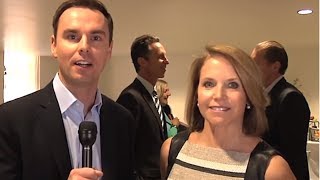
Katie Couric explains why she made the documentary Fed Up, which investigates how the food industry uses sugar and marketing to drive obesity. She was shocked to discover sugar hidden in low-fat foods and how the USDA has conflicts of interest. The film aims to change both personal habits and policy.
Questions this video answers
May 20, 2014; uploaded by Daniel Borschel.
600,000 food items; 80% claimed to have added sugar.
Over 95% of all Americans will be overweight or obese in two decades.
By 2050, one out of every three Americans will have diabetes.
4 grams of sugar equals 1 teaspoon; AHA recommendation of 6 to 9 teaspoons of sugar per day.
Chapters
The epidemic here is worse than previously estimated. Much worse.
The message has been pushed on us. It's your fault you're fat.
Shouldn't be so hard to get them to run around and play. Right?
They have voracious appetites and they don't exercise enough.
It's about how active our kids are.
Forget about it. There are 600,000 food items in America. 80% of them have added sugar. Your brain lights up with sugar just like it does with cocaine or heroin. You're going to become an addict. You end up with one. One of the great public health epidemics of our time. This is the first generation of American children expected to lead shorter lives than their parents. I am 12 years old, and my.
Doctors have said that I am a statistic.
We're blaming willpower, and it's a crime.
Over 95% of all Americans will be overweight or obese in two decades.
We're toast as a country. The sugar industry is extraordinarily powerful. They're in business to make money, not to keep America healthy.
What if our whole approach to this epidemic has been dead wrong?
The government is subsidizing the obesity epidemic. We've placed private profit ahead of public health. Systematic political failure.
By 2050, one out of every three Americans will have diabetes.
Those diseases are being driven by sugar. This is the fundamental problem nobody's talking about in society. We could cure 80% of of the problem where they prepared the food in the school.
Tomato paste is a vegetable.
Really, Junk food companies are acting very much like tobacco companies did 30 years ago. I would reject entirely any argument that they are in any way harmful. Lying through their teeth, kids are being told the biggest lie they will ever hear in their lives.
Ronald McDonald never sells to children. He informs and inspires through magic and fun.
If a foreign nation were doing that to our children, we would defend our families. Years from now, we're going to say, I can't believe we let them get away with that. You have to change the diet of America. It's all preventable.
Hey, everybody, it's Brendan Burchard. I'm here with Katie Couric, and we're so excited to talk about Fed up, the new movie. And we're just so curious. Why did you get so involved and so passionate about this project?
Well, it was actually my idea to take a comprehensive look at this obesity epidemic because I felt like people were hearing about it in bits and pieces in a very superficial way, and nobody was really digging deep to ascertain the root causes. So I approached Stephanie Sotek, the director of the film, director of A Fed up, but also she had done a movie about the bottled water industry called Tapped. And I said, would you consider working on something like this and really, you know, taking a good look at this in a way that hasn't been done before? And she said yes. So three years later, here we are and here we have this movie.
What was the most surprising thing for you? Obviously it was hard to shoot a documentary, but then secondarily you got some new surprises and some new data.
Yeah, I guess it's surprising that you could actually spend years researching and producing a great piece of journalism because that's pretty unheard of in the current climate. So that was exciting. But in terms of the content and the reasons, I think, you know, I've learned so much that this generation of children will lead shorter lifespans than their parents, that sugar has been pumped into so many low fat foods that the USDA has an inherent conflict of interest when it comes to promoting US agriculture and setting dietary guidelines. That Big Food doesn't want us to necessarily know what we're eating, that labels don't tell the whole story, that marketing to children is basically co opting their brains and wiring them at a very early age, and that we can actually do something about all of these things.
Because it's just missing. It's misinformation and lack of education around it, which I know you're both passionate about.
And yeah, I think a lot of people think want to do the right thing and they're trying to do the right thing and they think they're doing the right thing. That's because they haven't been equipped with the right information to make, make really educated choices about what they're consuming and what they're feeding their kids after someone.
Watches the movie where they go and do what do they feel like and motivated to go and change in their lives.
We hope they get mad. We hope they write to their I.
Saw the trailer, I told you in the elevator. Very upsetting. When you see the trailer, it excites you and you say this is not okay.
Well, we really hope that this will spur a conversation on a national, local, school and home level and that people will really start to evaluate what they're consuming and what they can do to make it better for all of us. So I think they can talk about it, they can tell their friends about it, they can have conversations and then they can say, you know, we'd like some things to change and everybody can have different ways they would like, to change the system.
They're going to look at their kitchen differently.
Yes, they're going to look at their kitchen. They're also going to look at the role government and the food industry and what role they played in all this. And so hopefully they're gonna really, you know, take a look from soup to nuts, if you will, about the issue macrocosmically, microcosmically, and then they'll be able to say, you know, we would. We want, we want change, but we're gonna start in our very own kitchens. Yeah.
What would you say after you went through this whole experience, you felt like changing in your own personal life? Has there been a big shift after you got all this data and this experience?
I mean, I look at labels in a much more educated way. I know that 4 grams of sugar equals 1 teaspoon. I know the American Heart association says we should all have six to nine teaspoons of sugar a day. And I was eating much more than that. I know eating whole food and non processed food is much healthier than eating things that come out of a bag or you stick in a microwave. I mean, I know that, you know all sorts of things.
It's easier to make a healthier decision when you know what you should be eating and what also can kill you.
Exactly. So I think that, you know, I know that drinking 12 ounces of orange juice is not a good thing. And then I look more carefully at my cereal and I don't necessarily grab everything because it's low fat. So it's changed my habits. And I think it's. Everyone who sees this film tells me it's changed the way they shop and it's changed the way they eat.
Incredible. Thank you for doing the movie. Such a huge honor to have you here. The new movie is fed up. Go watch it.