Get Out of Your Own Way with Dave Hollis
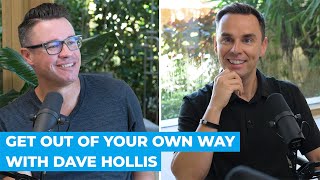
Dave Hollis talks about leaving Disney to build a business with his wife Rachel, and the lies people believe that keep them stuck. He went from skeptical of self-help to using morning routines and running to get sober, and learned that working with your spouse means defining roles clearly and being radically honest.
Questions this video answers
March 13, 2020
About 17 years
About seven years
About 900 miles since he stopped drinking (stated as "about a year ago").
Puerto Rico
Chapters
Hey, everybody, it's Brendon. Welcome to the brendon show. We have a super special edition right here because as you know, I barely ever do interviews with anybody unless, you know, the heavens open up and an incredible person emerges and comes into my orbit who I just feel like you have to know and who is doing something that I believe is just so purpose driven and on point with what we talk about in high performance, what we talk about in personal development. And when I see somebody who comes on the scene, who grows and who roll role models the way and does it with real integrity and heart and love, those are the people I'm like, I gotta bring them on the Brennan show. So in rare episode magic right now I've got my main man, Dave Hollis is in the house.
Brother, my man.
Man, I can't wait.
Thank you for having me here.
Thank you, man.
I appreciate you.
We are in the blessings of Puerto Rico right now.
Yes, we are.
We've been masterminding with some of our best friends and just learning about each other. And what I'm excited about right now is you've got this book.
I do have a book coming up.
And my audience knows. I love talking about writing, I love talking about the process. But most importantly, it's always personal development. You know, I just, part of my mission is how do I introduce more people to the concepts of personal development. And you got a hard crash course in that.
Yes, yes, I did.
Like you got whooped up by personal development hard in the last two years in such a way. I want to introduce you a little bit to the audience, brag up on you because you're a great friend but also just such a role model for I think my influencer industry right now where, you know, Dave and Rachel at the Hollis company have started something so huge like a massive, massive company in such a short period of time, at least from the public's perception, you know, and growing millions of followers and, you know, generating eight figures and doing events all around the country and now internationally, people have seen that. But just, you know, a couple years.
Ago you had a corporate job, very corporate job. Yeah, I, so I, I think I will tell the tale of my lives in of my life in two chapters. Right. I am starting the legacy of my life two years ago. Everything that happens after having left Disney is what I believe I will be remembered for. Yeah. But I would have never ever believed that to be the case three years ago, eight years ago, 12 years ago, when I'd spent 20 plus years inside of entertainment the last 17 of which I was working inside of the Walt Disney Company and left a job, honestly that many probably wouldn't. I was the head of sales at the movie studio for the last seven years. But I was in a situation where. And at the time, of course, I couldn't appreciate why. I was very unfulfilled. I had the title, I had the access, I had the mouse on the card, I had the salary. But I didn't have an opportunity to truly fail because of the unbelievable abundance that had come around me and the quality of my team, the strength of my leadership and these brands. When I first started in the job, Pixar had just been acquired. Marvel Studios came shortly thereafter. Lucasfilm just after that. And lose. Right. Selling Star wars and Avengers movies to movie theaters, it turns out, is a thing that almost anyone could do. Right. Like. And so I was. I was on a roll. I was on a roll. And I was also crossing this very interesting bridge between 30 and 40, where for the first time in my life, I was asking a set of existential why am I on this planet? Kind of questions against the backdrop of not feeling like I was fully utilizing the gifts that were afforded to me.
Yes.
And that felt empty.
That's the thing we. I teach about happiness in our New Year's broadcast, which was a huge part of your overall sense of happiness over the long term isn't like the achievements or the blips of I did this or that movie did good. It's, do I sense I'm actualizing my full potential?
Yeah.
And not meaning I'm in my full potential every day. It's like, but do I sense it? Am I touching it? Am I challenging? Am I pushing it? Am I in that flow consistently enough that I'm happy? And you had this crazy ability to have success, have this team around you, have this external perception of that. Decide to quit that to support and join your wife and her mission. And your book starts off with how that led to you grabbing up a bottle of vodka.
Yeah.
And knocking down a handle of vodka. And trying to cope with this transition. I think this is important because we're always talking about high performance, about transitions, because how you manage transitions is how you level up. And the worse you manage transitions, the longer it takes to level up or the more painful it is to level up. So what do you think? Is that, like, I'm this successful guy, things are going good, I start this new thing, and I can't handle it. I gotta turn to that because a lot of people struggle with addiction.
Absolutely. So what's interesting is I'd had a casual relationship with alcohol for my entire adult life. You know, drink here, drink there, have a glass of wine after a long day. And on the days where things got a little more hectic, you know, maybe it's two glasses or even three glasses to just knock the rough edges off of something that felt a little overwhelming. This transition, this identity challenge, the work of working together with your partner for the first time, writing a book, scaling a team, they were all happening at the same time in a way that was so disorienting that my casual relationship, quite honestly, just from a coping mechanism standpoint, turned into a not casual relationship. And what I realized is I left a thing I knew for a thing I needed. Right. I left this harbor of security for this opportunity to grow this job, this job.
Jumping into now entrepreneurship, starting your own business.
Yep. Leave corporate, corporate America for a startup skunk work, small team, let's scale it entrepreneur thing. And I did it because of this pursuit of wanting to chase growth. I wanted that tie that happens when you find fulfillment next to growth. I needed to find growth to be fulfilled. But I got into these choppy waters that were now a departure from the security and safety and certainty that I'd always been tethered to. And I was muting the waves. Right. I was over overwhelmed by or had fear from insecure about my ability to do well in this new environment. And so instead of, as you say, honoring the struggle, I was muting the waves to not have to deal with the struggle. And so in a crazy way, I made this huge life change, moved my family, like, left this job that nobody leaves, and then was dismissing the benefits of any of it by medicating, muting through drinking.
Did others know?
Did you. No.
Do you have a sense that your friends or family. Because we were friends at that time, and you had an open line to my phone and. And I didn't hear any. I'm really struggling. Do you want to talk? Because part of his new book, get out of youf Own Way, really does a great job of explaining the lies that men tell themselves. We have to handle it by ourselves. You know, we have to work ourselves to death. You have to, you know, manage our emotions in different ways. So if you're listening to this and you're struggling with emotions or you're struggling with transition, you have to get out of your own way, because ultimately you have to get out of your own way in which you ask for help.
Yeah. What's interesting is not only did People not know I was really, like, highest functioning. I don't want to say that I was alcoholic, but dang it, if there's a place that's really close to that, I was so close, and I was so good at managing the optics of it not being a problem and it didn't end up affecting a performance.
Was that like a Disney executive veneer you had developed?
Oh, absolutely.
Or do you feel like that was, like, something from earlier when you were a kid and you just learn, hey, don't, you know, don't be the kid who's out of control.
All of the above. It was like, I grew up in a world where managing expectations and curating the feed of your life was a part of how I was raised and then found myself in a job that took and really, you know, like, let those things that had been part of my upbringing now come to life as a part of my responsibility at work. I was the contact for the press spinning. The movies that did well didn't take as much spinning. But the movies that didn't do well, it was my job to convince the press that they did great. Thank you very much. And I took some of that professional competency and applied it to my personal experience and trying to convince people that everything was fine. Don't worry about it. Trust me. What's interesting about any negative coping mechanism, there is no local anesthetic. Right. If you decide to drink or take pills or binge eat or return to sex, whatever it might be, the way that you are coping may, in fact, mute some of the pain, but it will, in fact, also mute the joy. It will guarantee an inability for you to achieve the growth. And it took me some time to get to the point of appreciating that, because at the time, I was like, this is just what I need to do to get through this. Because, man, it feels overwhelming. This is what I need to get through this. Because I have doubt when I get. But I wasn't getting through it. I was staying stuck in that same station that I thought I'd left. And it wasn't until Rachel and I had some very hard and direct conversations about the trajectory of our life that I was able to think differently about introducing new, more positive coping mechanisms. I traded drinking for running. And I've run a lot. The triggers still exist. It's not like. Right. It's not like the triggers go away.
Yeah.
But I mean, I've run 900 miles since I stopped drinking about a year ago. I mean, like, it's.
It's a It's a theme also developed. I love to hear about that conversation. Like, we had this tough conversation. Was that sort of a conversation in. In the context of a vision, like, hey, babe, this is where, like, does she sit you down? Say, we're trying to go here? You know, we're trying to go here. Let's get our act together. Was it more of a disclosure on your part? And, like, I'm trying. Were you asking for help? Like, how did that manifest?
I had the gift of leverage, but negative leverage. Right. Some people can paint a beautiful picture of what's possible when they take control of their life, when they get out of their own way. Man, I really am motivated, fortunately or unfortunately, by what would happen if I were to maintain the status quo. What is the life I could have led? What is the regret that I might end up with at the end of my life? And so we sat down and had a conversation. Whereas she, at the time, was really reaching into personal development. She had struggled with some anxiety. She had her own negative coping mechanisms. She was on a mission to apply a salve to the things that were getting in her own way. And personal development were. That was providing the tool set that allowed her to continue to grow and evolve. And I, as a skeptic, my entire life of these tools being things that help hold people, I thought they were just for broken people. And I never wanted to confess any brokenness. I was resistant to the things that she was applying to her own life. And so she is growing. While I have convinced myself that I'm staying put, truly, I'm sinking. And this now divergent path of our trajectories is getting wider every single day. And so we have this very hard conversation where she says, look, growth is one of the, if not the most important commodity of my life. I am going to pursue better tomorrow for the rest of my life. And if you stay stuck or sink in three months, are we still going to go on date nights? Yeah, in, you know, a year, are we going to make out still in three years, are we going to still be married? And I knew the answer to all that. No. And in the recognition of our being on the beginnings of a path of irreconcilable differences, a term that truly I thrown away as, like, a lazy person's excuse for why they're not married anymore. No, no, no, no, no. It's real.
It's real. We're coming to a head.
It is real. And we were at the beginning of this divergent path where we just didn't Know each other anymore in the relationship, had nothing to connect to.
And now you're working together full time. Because I think that's so important for people to hear. It's like, these things don't just happen in a relationship because people get tired of each other. It's new stressors. Like, it was like a new. Like, now you're building this huge business together. You guys are on a hiring spree. You're a public figure now. You're on Instagram Live. Now you're managing a team that's related to your spouse. Like my audience, I shared this because they saw Denise and I go through transformation Week and what it was like to work together and what we felt about moving to Puerto Rico and all these things. It's super hard.
Oh, yeah.
And you have those stressors, and all of a sudden, oh, wow. We needed to grow in a different way. What most people think is we need to communicate in a different way. I'm like, oh, communicating a different way. That's like, that's. That's like below foundation.
Yeah.
No, you need to grow in a new way. And that's what I love about what you guys did is like, you grew in a new way. You challenged each other a new way. You, you, you, you, you. You were more vulnerable in a new way, but you kind of got some new habits, too. What you said, you mentioned running. What other new habits do you think helped you pull through?
Yeah, let's be clear. I mean, like, when we first. This is. Even before moving, before working together, I didn't have a morning routine. I mean, I can own the fact that she's reading high performance habits and talking about all this stuff that she's doing to, like, truly make her life better. Getting up at 5:00am, having a, like, all of the things that she was doing. I was rolling over, grunting, and, like, kind of begrudging her for getting up as early as she was. And I realized, like, oh, there is a tie between people who actually create the kind of routines in the morning to start their day in the way that they want and set themselves up for success.
Structured, excellent. Excellence helps live excellent.
Right?
But you know, why?
Like, but why like this? It's. I write the book through the lens of a skeptic. Someone who is more fixed, mindset oriented and has struggled with motivational challenge. My wife is the opposite on all three frames. Right? She is, right. She's been a believer from day one. She's been growth mindset since birth. And she is like, she's got an Internal motivation, combustion engine running inside of her at all times. Right. But my habits are a product of my wiring now, like, I know I need to engineer motivation. Well, how do I do that? Okay, I have to do engineer momentum. I have to do the same things every single day because I'm building on yesterday when I get up this morning to do the thing that I did yesterday. And so it's now I get up and I have a meditation, prayer moments. I have a gratitude practice, write a little bit inside of a journal, get out into the gym, move my body. But I am so regimented and routine. The running piece truly was. I need to substitute the bad coping mechanism when I am triggered. And so if I am committing to. I'm not going to drink. I still am going to have stress. I'm still going to have fear anxiety. There'll be days when I have imposter syndrome, days when. Okay, when those days show up, grab your shoes instead of the bottle. And so I started running. And it has been a cathartic, therapeutic kind of experience. And also, I've pushed myself to run way further than I ever, ever thought.
That I got a marathon.
I got a marathon in 10 days, right? But in having pushed myself further physically, it's also trained my mind, my brain. I am emotionally and mentally stronger for having pushed myself further physically because even.
Sometimes, literally putting the shoes on and hitting the first block is the hardest effort.
It's an act of mental.
It's an act of, no, we're gonna do this now. I think that's amazing.
What?
You know, one of my favorite parts of get out of your Own Way was just that chapter title of, you know, everyone's Thinking About Me and what I'm Doing. And for those who've not yet read it, make sure you get a copy of get out of youf Own Way by Dave Hollis. It's unbelievable, but this chapter got me thinking. It's like, wow, we all perceive and think that all these people are thinking about us, but of course, they're just going about their own daily lives. And yet now Dave Hollis is a public figure with one of the rising stars of the entire influencer industry. Someone very quickly becoming a leader in the space in so many ways. What's it like being the husband of Rachel Hollis?
It's amazing. I mean, first, it's amazing. I mean, like, the pride that I have for the work that my wife does is not even. I can't put it into words. So it's number one. It's amazing. It's also because we're doing this work together. Been the best two years of our marriage and absolutely 100% the hardest two years of our marriage. Doing this work, doing any. Anyone who is listening who works with their partner can appreciate that it is hard to do anything with your partner professionally.
I'm raising both hands if you can't see me on podcast.
It's real and the headline is right. Like, it's hard because of ego. Right. As individuals, we have them, and they get in the way sometimes of each other. We are both strong people. We're both achievers. We both want to have as much impact as possible. But I, in my wiring, in her wiring, we are wildly different. Now, the good news is we've found a way to pair the differences. I am the more practical, pragmatic operator to her visionary creator, creative. And, you know, in that we have something, I think that is part of what's propelling the company forward. But, like lane definition, role separation, that stuff that you think will come easier at the beginning, and it doesn't, you have to kind of stumble quite a bit. We had to really embrace in a way that a more codependent version of our younger selves would have bristled at, and did bristle at the beginning. The idea of radical candor of, like this. Kim Scott's got a book of the same title. But like, this idea that when things come up in our working relationship, the work that we're doing is too important. The responsibility we have to our team is too important. Our interest in coming back home and showing up well for our four kids, which is like a thousand kids, is important that we have to, in real time, confront each other with hard, difficult, truthful conversations, even though they make us uncomfortable, so that they don't fester and serve each other.
Because, like you said, it's like one of the challenges of working with somebody you love that I discovered was, you know, like you said, ego is involved, but also so much involved is love and caring. You're working together, and it's frustrating because you're like, oh, I want you to be happy. I care for you. I love for you. I want you to enjoy this process. I want this to be part of you. So it's part of, like, yes, what we want to individually accomplish, but also the trick there is you want the other person to individually be happy and accomplish and achieve and feel fulfilled. And sometimes we get in the way of that, for sure, and sometimes they're in the way of it, and we can see it, and we want to Coach them. And oh, my gosh, if you bring up that piece of feedback to the spouse or the partner, oh, be careful trying to coach the person you love. And those things come to play, by.
The way, like, the thing that has probably become a point of friction in our personal relationship more often than not, is the words that come out of her mouth. I have an idea. Right. So she's just started the sentence. Okay. And my practical mind starts instead of listening to the what, contemplating the how. Right.
And personally contemplating that. Like, how do I do that?
How do I do that? How do I operationalize the team to do that? Are. Is there risk in doing this? Are there room? What. What would it mean to you, Rachel, for how much energy you'd have to exp. Right. Instead of listening to the what, which is her. Her gift. I mean, man, she can have the greatest what idea? I, at the beginning of this partnership and plenty of times prior to us working together, would short the conversation by introducing the how questions before she'd even finished breathing out the what. And so I've really.
No husband has ever done this.
Well, trust me. The thing is, I know everyone, you know, likely does, but it's taken some time to appreciate that the benefit that this business, the personal pleasure that she gets in the creation, the creator part of her that my undermining, the ability for her to fully breathe these ideas out before. Before I start thinking about the practical implications of how to operationalize or implement them. Like, I just take a minute now. Yeah. And just.
You're aware, you're mindful. Yeah.
And that's a thing that didn't exist at the beginning. Right.
I taught people for a long time, High performance Academy. We do our whole relationship day on the last day. And, you know, we make the jokes of polarity and masculine versus feminine and that conversation. And part of it is when you're with a person who is a sharer, who. Who. Who. Their form of release or venting or just excitement is vision. Vision, vision, vision. I tell people, always wear a watch. And your first thing is when it starts coming, just look, give a quick glance. Don't let them see you glance there, but don't do anything for 20 minutes.
It's real.
Because you know what? Everyone runs if they're coming home and they had a bad day, that venting will be out in 20 minutes.
Yep.
Someone comes home with a big idea, let them share it. Let them. Just let them live it uninterrupted for 20 minutes. And I've saved marriage.
It's good advice.
It's unbelievable.
It's such easy advice.
I do it, but the only way.
I wear a watch.
That's it. I wear a watch for my wife, Denise, because I love her so much. I hate wearing a watch. But she starts going, oh, look, she'll never see me do it. But I just allow that space. And everyone runs out of gas after 20 minutes, and they feel so good. You heard, you listened, you were there. And then you can contemplate, you know, further discussion. I want to ask the question a little bit different way, because to me, that chapter is so critical. And again, his book is get out of your own way. And he talks about all these different lies that he believed that prevented him from success. And I think this is also a huge book for women to get their partner, their spouse, or to understand. Either get it as a gift or to understand how men think. And we get in our own way, in so many ways, hurt our relationships or our careers or our health. But that particular chapter of people are thinking about me or wondering about me, I asked that question a little bit about what's it like to be the spouse, because there's also this new fame element to your life, and you're walking into a brand where all of a sudden, now people are wondering about you because you're live on Instagram. You're part of this social media behemoth now. So how does that feel? Like you're an executive. And now because everyone says I want to be famous, what are some of the things that for you were, like, shocking or shut you down or frustrated you, of all sudden being in the public sphere?
Yeah. Well, what. So one dimension that I get into a bit in the book is not so much about the public private piece. I'll talk about that in two seconds. But the. I had been the primary breadwinner of our family. My identity, in some ways, was wrapped around being the primary breadwinner of our family for 15 years of our marriage. We've only been married for 15 years, 14 years of our marriage, okay? And so for me to have had that as a part of who I was for her, I'd assigned value to it. In some twisted ways, I'd made part of the reason why she loved me connected to the fact that I believe she needed me, which was never, ever actually the case. I can see that very, very clearly now. But when she had a year after I'd left the Walt Disney Company and she had a year where she sold about 3 million books, the way that she. And the value that she'd created was affording opportunity to our family and to the ability to scale our team. Just my previous contribution was dwarfed and it really messed with my. Who am I in this relationship now that I am not needed? Will she still want me? That was a very, very interesting thing to have to process and required a lot of conversation to even understand. Where does that weird insecurity even come from? Because there was nothing there. There was no there there. And yet it was still something that really messed me so.
Well, and because you're just at the public side of that, it's the two of you on camera. You're sitting behind her now. She's kind of like running the show. And it's like, what's Dave's role? Because I'm sure publicly you're like, well, you were thinking. And people were at like, what's his role in this?
Right. And the thing is, I didn't leave the Walt Disney Company earlier, before I really withdrew a bit more from my life, my wife, my kids, because of the worry of me leaving what I knew for what I needed, not making sense to them, them at the Walt Disney Company. And they weren't thinking about me. Like, the gift of this transition is the clarity of how wildly I overestimated how much people were paying attention to what I was doing with my life. And this is not in any way an indictment on anyone that I was in relationship with for the 17 years I worked there. They are like, I am like, you are human. And as humans, we are primarily interested in ourselves.
The number of people listening right now who left a job and discovered two weeks later that none of their co workers were asking about them.
Right.
Have felt that crushing reality of like, oh, that company's going on, everyone, no one's thinking about me, and I'm lonely out here now or left behind or not thought of. I've coached a lot of CEOs of Fortune 100 companies who've exited and found themselves with a huge golden parachute and, you know, are living in some, you know, amazing place. And they're calling me going, I. I cannot believe that no one cares.
Yeah, it's. It's bananas in a great way as much as man. It stung a little bit at first when I'd concocted a conspiracy theory that they were all given direction to not, you know, reach out.
Sure.
Which is. So we do.
We have to justify.
We have to justify what people care about me, my self worth, identity, everything else. Like, had to have there be a reason other than they just forgot they lost the number, but it was a gift because in the freedom of appreciating, nope, they're not thinking about you. You're freer to go and do almost anything. I will say when I was leaving the company because of my, like, the vanity of me leaving for something that made more sense to other people, this company that my wife had founded and for 15 years grew, I asked that she make me the CEO of. So it was important for me to have a title that made sense to people that were not actually paying attention. And in asking my wife, I asked her, hey, I know you've invested five fit, a decade and a half of sweat equity and hard work in building something that is at this tipping point that affords us now this chance to go do the work together. Can I be the CEO? And she said yes, because I think in part she knew it was something that I needed at the time. But I have subsequently taken the COO role, have her resume her role as CEO because of the benefit of what time has afforded me and how ridiculous, truly it was to have assigned value to that title as a thing that would affirm me in the eyes of people who are not even watching me.
But when people are in transition, one of the most expensive. We teach this in coaching. But one of the most obvious and first moves when people are in transition is they grasp at position.
Yeah.
Because position is identity. And so when I'm transitioning and anyone transitioning anything, if you're moving to a new place, you go start a new company, going to the first thing people grab, like, what's my position in this community? And we want a label for that. Because the label is the security.
Yeah.
And yet I always tell people in that transition, don't grab that label too quick because transition now is freedom. And so we have to reframe a little bit. Oh, oh, oh. I'm free to shape and craft. And so it's, I just want to let you know, it's completely obvious and expected and good that you would do that because that's just human identity trying to grasp onto something. But also I really respect the fact that you kind of step back and go, what? This is, this was here before me now. And maybe we play different roles than I thought.
Well, that's important too. We're, you know, work building something that right now certainly has, you know, more influence in a broader population of women. And so for them to see, and frankly for my three year old daughter to see, yeah, brother. A CEO who is also, by the way, and just a crazy great Business operator as the leader who is a woman is important today.
I love it.
So what.
What's one of the lies in the book that you feel like people just have to read for their own personal development? Because you have so many. And I love the book because you feel like you're growing along with Dave Hollis. He's on a journey, you're experiencing it. But I love personal development as my audience knows it in such a tactical way of like, oh, here's your list of five things you should know or do, and the list of lies you do a great job of, like, manifesting action points or something like that. What do you think someone's gonna. A lie that they need to know and an action that they could do to really start changing.
Yeah, well, I mean, I wrote it as much for men as for women. I wrote it as much for someone who stays at home and does the hardest thing in the world in raising kids, you know, as a stay at home mom, as I did for a CEO of a company. And I think in telling all of these stories that there, you know, is relatability, regardless of your, you know, kind of place in life. And so I think part of it is like, the first chapter starts with my skepticism of this book even existing. Right. The idea that self help is for broken people. And so if you're listening to Brendan's podcast Trust, you're probably already on the self help personal development train. But if there's someone in your life who's been skeptical of your journey, do I have a book for them? It's the first chapter that maybe can reframe how I came as a skeptic to appreciate the value and benefit of personal development. Right.
This means. This means five years ago, he would have really hated me.
The thing is, I was invited the first time to come and spend time with you. And I still. I mean, I think I sat the first night and represented the skepticism that I had maybe three months prior to being with you, that this was a place that I would actually thrive inside of, that you guys were doing work that was like. I just. I had some stigma around it that I don't have in any way. Now I actually feel sad for the version of myself that couldn't appreciate the benefits of what you. And frankly, every person who's here now does. But I grew up in something societal construct. My dad just some of the wiring that I had that said this isn't something that you go to. In a weird way, I grew up inside of a church community that taught me sometimes that if you weren't holding a Bible in your hand and teaching people something, then there was some sacrilegiousness to listening to a teacher and it just couldn't be further from the truth. But so anyway, long way of saying you asked a very specific question about what chapter? What, like, I think there's something in here for anyone, but a little bit of it is going to be where are you? And where do you need to be met? Because if it's that you're struggling through identity and having your title or your job as a limiting anchor to what you possibly could do to show up for impact in your life, great. There's a chapter on that. If you're struggling to connect with different people in their life experience, whether it be people of color, people who are differently abled, there's a chapter about that if you are struggling with the way that you're thinking that showing up consistently in a relationship is a thing that you're supposed to do constantly as a single singular thing. But truly, life changes, you go through life stages and changes. You're growing or your partner's growing and you don't know what to do. Great. There's a chapter about that. I mean, like I've tried to write it from the perspective of someone who has had a life just like the rest of you have had and made mistakes in believing a lie that kept me stuck. I've just done it through this lens again of skepticism, motivational challenge and mindset problems that now that I'm free from them, if you relate in any way, I'll help you get out of your own way.
You all will see on the book promotion site of get out of your own Way. I endorsed it.
Yes, you did.
Early version. I rarely endorse books. I hope you guys will get it. The book is get out of youf Own Way by Dave Hollis. Pick it up. I love this guy. I love his mission. I love his heart. Get out of your own way. Dave Hollis. Thanks for being on Brendan show.
Love you, brother.
Hey y'. All, I hope you enjoyed this episode. If you did, would you please smash that subscribe button and also post any questions you have down below? Because it's these questions that you're all asking that inspires these episodes. I'd love to hear what you think about it. Also, if you would love to join us on our next upcoming live training. We call it our high Performance experience coaching program. If you'd like some coaching and have some perspective and get some two hours of live with me every single month. Then click the link in the post down below so you can join us in HPX Coaching. I'd love to give you some more strategies, more insight, and more interaction to help you reach your next level of success. Until next time. Again, please subscribe. Share this video with anybody who could be inspired by it today. And thanks one more time for being part of my community.










