High Performance Habits Explained | with Brendon Burchard
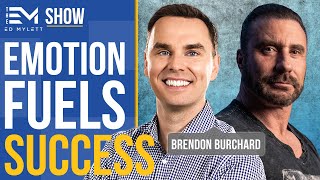
Brendon Burchard breaks down six research-backed habits for high performance: seek clarity, generate energy, raise necessity, increase productivity, develop influence, and demonstrate courage. He emphasizes taking breaks every 52 minutes, regular exercise and sleep, weekly self-review, and interviewing elders to capture their wisdom.
Chapters
If you ever come over to my house, Ed, which I hope you will sometime, come visit us down here. Everyone else says, brent, what should I bring when I show up? I go, bring the joy, baby.
Yeah, it's awesome.
Bring the joy. I think guilt can be utilized just like any other emotion. Emotions are signals, not realities. And guilt can be a signal to say, oh, let me pay attention here. Do a better job here. I only want to hire guilty people. High performers, the people who achieve the most, produce the most and feel the most fulfilled. They take breaks every 52 minutes. The high performance machine actually doesn't need the pit stop. It takes the pit stop so it can go faster, longer.
High performance people are extremely conscious of the energy they bring to an environment at any given time. And you can't be bringing that energy if you're not filling your cup. Okay, everybody, welcome back to the Max out program. I've got a dear friend here today who is a treasure chest of both inspiration and information. And most all of you have to know who he is, and if you don't, you're going to fall in love like I have after today. I think he's sort of the mentor of mentors in the personal development, self help, think better, peak performance space. He's a remarkable man. His accolades don't do him justice. Anything I tell you about him doesn't really explain to you the depth of the impact he's made in millions of people's lives. But he's a New York Times bestseller. He's written a ton of books, most of which I've been consuming most of my life. Even though he's a young man, he's really probably the world's leading high performance coach. His last book, his latest book, High Performance Habits, is unflipping, believable. Like you don't need a highlighter because in most books when you have a highlighter, you highlight the 10% of the book that's so good. The problem with this book is there'll be very few blank spaces. So you should actually highlight the things you don't want to go back and read. It's one of those books, in my opinion. 2 million some odd people he's coached and come through his programs. I first saw him many years ago on stage, and then I've watched him with Oprah Winfrey and Forbes magazine's giving him all these accolades. But the biggest accolade I can tell you is he's my good friend. Many of the people you've seen on my program go to him for advice and counsel. So I don't know if I could give a better introduction than that. So please welcome Brennan Bouchard. Brennan, thanks for being here, man.
Thanks so much, man. I love your show so much. We've been trying to do this for a while, so I'm pumped. We get to.
I wish you were in person as I told you off camera, but the timing couldn't be more perfect to share you. I told you off camera I had a go to list of two people I wanted to get on during this time. I wanted Gary V. I wanted his perspective and I wanted you on. They're different perspectives, but both have impacted millions of people's lives. So we're doing this, guys, if you hear this a year from now, we're recording this during kind of the COVID 19 dilemma, if you will. But I think the things we're going to talk about will find you at any time in your life. At any time in your life. There's stress, there's chaos, there's anxiety, there's dreams, there's obstacles. And Brennan's so good at the habits that are required. But if you could, to start out, brother, you talk a lot about during this time, striving to win, maybe not always thriving, what would be some of the things you'd share with someone at any point in their life, but especially now, going through uncertainty, so to speak.
Yeah. I think right now the ultimate question is, can you still strive in chaos and uncertainty? And what's showing up for people right now isn't chaos or uncertainty. What's showing up for them is the patterns that they developed in previous periods of difficulty in their lives. This is a very new thing, they say. But I say also uncertainty and fear, those aren't new things. Hardship, that's not new. And I call on people to call on their own strength and the resilience that they've developed previously before and put in great mindsets and great habits now going into this that will make them proud. You know, when this started for me, March 5, I sent a note out to my audience and I said, listen, we don't know what's going to happen with this. And a lot of the close down and shutdowns hadn't happened, certainly not in the US There were still like, what is happening here? And I said, listen, what leaders do is they set their intentions going into battle. They don't get halfway through and go, hey, what are we going to do here? Instead they determine what will their character be in that chaos? And so way early, I said, here's my three things to all my audience. Number one, adopt the role model mindset. When you adopt the role model mindset, that's the domino that knocks down every other strength you'll be required to call upon.
What's that? Mindset, bro. What does that mean?
Role model mindset means I realize that as I'm going to endure difficulty in life, the kids are watching my friends, my family. Others are observing and being influenced by me. There is a contagion out there, but there's also an emotional contagion out there. Let me be that role model in showing people how to deal with things with perspective, with being centered amid a the storm, with the strength of intention to say, you know what? I know this is going to be hard, so let me take care of myself and let me be kind to other people. When we determine ourselves to be a role model, we literally change our behavior. We say, you know what? Two things happen. One, I want to be a role model because three months from now, six months now, from a year, when we look back, I want to be proud of my character and my behavior during this time. Please let me be proud of how I endured difficulty in my life. Please let me be proud of how I endured difficulty in my life. That requires intention for how you want to endure difficulty. And second, remembering relational the reality that we're relational animals, that others are observing and seeing and experiencing what we are. And so let's do a good job for them. Let's show the kids how our values are demonstrated in times of uncertainty. Let's show our team how we deal with scary, fearful business environments. Let's show our friends how much we will be for them when the going gets tough. That's the role model mindset. It demands a lot of us, and it's easy to say, well, it's so much easier just to go along and see how it turns out and why don't we put our lives on pause? But if everybody did that, society wouldn't continue on.
When I have people on, it's interesting, brother. It's why I love the conversations we have privately, too. You have a way of. I kind of put things through my truth meter and my experience meter, if this makes any sense. I know you guys speak or tip and I don't articulate you. So that's exactly sort of what I've been thinking. My kids are watching me, my colleagues in the business world are watching me. People on social media are watching me. And I sort of consciously chosen to create an example that I'd be proud of. Even though maybe not in every single second I'm feeling that I find that as I begin to want to model that behavior, it transforms my state and I now feel it. There's almost a gift you give yourself by doing that. I interrupted you. You said there were a few things, but I wanted to make sure that everyone understood what you meant when you said that.
Yeah, but also you brought up something really important, Ed. You said that sometimes you feel it and you might not show that.
Right.
One part of the role model mindset in this difficulty too is showing the uncomfortable feelings to our kids to let them know or our team know. Yeah, I'm tired. Yeah, I'm overwhelmed too. Yeah, I'm stressed too. I mean, being vulnerable is not separate from the role model mindset. In fact, you know, real emotional strength comes down to two things. Emotional strength comes down from that part of us that's self reliant. I'm strong enough to bear difficulties in my life, but also psychologically. We talk about resourcefulness and that idea that resourcefulness is our relation to the world. It means our ability to ask for help and search things out when we ourselves don't have the capacity or the capability or the competency to do something. So part of the role model mindset is going, you know what, when I'm really going to struggle, I'm going to tell the truth and I'm going to tell people kind of struggling. But then what I'm going to do, instead of backing off, I'm going to enroll. I'm going to say, you know what, I'm struggling. I bet you are too. How are you doing? Oh, you're struggling too. How can we do this together better? It's not withdrawing or holding back or putting on, you know, a fake face just to placate or please people. Because I know a lot of parents have to do that sometimes to keep the kids sane. But you also have to say, hey, how can I, how can I find that balance between leading and being strong and making sure I don't discount the part of me that is insecure or vulnerable or unsure. Because in times of difficult, you want to demonstrate that you're willing to ask for help. Because then the kids learn to ask for help.
By the way, right before we did the call, I made a post saying, guys, one of those days, right? And I think also the impact you make if you're not vulnerable is minimized tremendously because somehow you have this armor or you're superhuman. And I have done. It's funny, interesting you say that Max is 18, Bella, 16. And I've always worked hard, but lately harder. And they know. And there's been a couple moments, like everyone here, if I'm being real, there's been some stressful moments in the house. I mean, we're all in the house. I'm working 18 hours a day.
Yeah.
Watching Netflix with Mom. Sometimes it's loud, you know, I'm like, hey, quiet down. I'm in here working. You know, Gosh, Dad's kind of wound up. And I did do what you just said. Everyone, just a lesson between the two of us. I said, hey, guys, this is a difficult time. Dad's got some concerns, you know? And I said, I want you to watch how I behave under this sort of, you know, stress. And one of the things I know how to do, I told my dad, I said, one of the things Daddy does is that when I have something, my anxiety goes up, my activity goes up. It's one of the ways I deal with it, is I just pour myself into work. It doesn't mean it's exclusive, but I want you to remember that a lot of people, when anxiety goes up, they freeze, Bella. And I don't want. When you're in a volleyball game and it's game point or you're down five points to freeze, I want you to say, this is when I rise up. This is who we are. And so I did. It's ironic, you say, I used my vulnerability as an opportunity to teach a lesson. Daddy's not superhuman. Daddy's not different than you. I'm making a choice, a conscious choice, which we're going to talk about later. I made a conscious choice during this time that I am a little scared. I do have anxiety. I am worried for other people in us, so I just want to second that big time.
I love that you went in intentionally with that, like communicating to your team or your family or people before you go into a situation to let them know, this might be awkward, this might be difficult. This might be intense. We don't know how it's going to go. But listen, we're in this together. Let's be patient with each other. Follow my lead. That's the job. That's the job. No matter what you lead, whether it's yourself, your family, or others, like casting out that intention in advance and having that explicit communication in advance, those are really hard for me. Listen, two words, intention and explicit communication, you get those, right? Going into chaos or as you're in it, people gel together and they feel stronger.
Together.
And if you don't do those things, things fall apart real fast.
It's so interesting, bro. I share with everyone. It's so interesting how we were on a similar consciousness right now. The call before this here was a business deal I'm trying to put together. And the person on the other end asked me, are you certain? Are you sure that this is right, that I should do this with you? And I leaned in kind of like this, same camera, same seat. I said, no, I'm not certain. I'm not completely certain. What I am certain of is my intentions. And I believe there's a power of intention. I'm certain of your intentions. I think our combined good intent, goodwill, us not wanting to do any harm, our intention to do something great together overrides any necessity for complete certainty right now. And that's a thing in life. Everybody that I want to. We're going to talk a little bit more about Brennan's other points, but if everything in your life is predicated on you being totally certain, you're going to do very little in life because there's very little complete certainty. But if you give yourself credit for intention, if you understand the power, Both you and I have been mentored by everybody. But you know, Wayne Dye, one of Wayne's great books, the Power of Intention. And my self confidence, oftentimes in good and bad times, does not come from my incredible ability, but in my belief in my good intent, my belief in my intentions. And so I want to quadruple agree with what you just said right there. Absolutely right. Was there anything else in that formula of thriving and striving during this time that you wanted to add?
Yeah. Number one was, first one is adopt the role model mindset because you want to be proud of how you dealt with this. Even if you struggled through, you want to know you did it intentionally and with tenderness and compassion and caring for the people around you. And you set an example. Number two is optimize your health and wellness. Because if we're all out there fighting, whether it's this particular pandemic or its future things, we all got to optimize our health and wellness, which I know you and I deeply, deeply, deeply care about with our people. Because there's no separation between physiology and performance. There's no separation between mind, body. It's all the health of the sante. And so if you want to have bonsante, which means positive spirit, it's going to come from health. And I think most people don't realize the major components of that all have to really activate together right now. You got to be on your A game in those things. When we did the study for high performance habits at the time, and still is to my knowledge, the world's largest academic study of high performers. So we evaluated people in 190 countries around the world and over 2 million data points. We had an excellent epic, epic, epic team from University of Pennsylvania's positive psychology department, UC Santa Barbara's positive psychology department. We had a lot of smart people on this thing. And one of those habits was the ability for high performers to generate energy. You have energy to generate energy. And it's a lot easier to generate energy when you've been building it up and storing it up. I always tell people, you, you know, the power plant doesn't have energy, it generates energy. A power plant takes energy from one source.
Wow.
Transforms it into another, stores and transmits it. And so right now we've all got to take energy from this low level, low grade source. Negativity, fear, upset, outrage, terror. We got to take that low grade energy and we've got to be able to, in our mind, to be able to transform that and transmit something different. Another level of energy. I've been blessed to work with Oprah and one of her big ahas in her life was to say this idea that you have to be responsible for the energy you bring into a space. And we got to be responsible for our energy, but also our health and wellness. We got to practice meditation, exercise, diet, sleep. We got to deepen our relationships. We got to take the supplements, we got to take to feel great. Whatever we have to do, we got to line it up. And the good news is, as we are recording this right now, Ed, people have either figured that out or not.
Yeah.
And my message to people listening right now is if you don't feel like you found your footing in this yet emotionally, take a little bit of a time gauge when you're listening to this. Because right now we're two plus months in and if you haven't found that yet, it's time to ask for help. Because maybe the tools you have or the knowledge that you have, or the will or the discipline or the training isn't there yet that would give you that solid energy to perform from. Because performing from fatigue and exhaustion, you're never going to get your best. You're going to be shorter with people. Your mind is going to bonk right when you needed to be kind of smart. And in our study we found high performers were, gosh, forgive me if I Don't get exactly right. High performers were something like 42% more likely to work out five times per week than underperformers.
Wow, wow, wow. That idea, bro, of, you know, you and I both are workout people. Obviously, you know, everyone, I think, knows they should, but sometimes. Why I've never heard it said that way. I know you're quoting Oprah, but that idea of bringing conscious of the, conscious of the energy bring to an environment like, that's a hundred. You and I were both right when we got you clicked into the zoom. What did I say? I just completely changed my state. I really said to him, you guys, my energy just changed. I literally said that. And I do believe that's true. High performance people are extremely conscious of the energy they bring to an environment at any given time. And you can't be bringing that energy if you're not filling your cup.
Yes.
You're not doing it yourself. So. Wow. Very good, bro. Very good. What's three? What's three?
Just on this energy part too, I want to clarify something real fast. On high performance and then on this energy piece. High performers, what is high performance? It actually academically means something. In our study, it means people who achieve long term success while also still maintaining well being, which is usually based on happiness and fulfillment and health and positive relationships. Because as a smith, I can't achieve high performance without burning myself out, without the grind, without wiping myself out 24 7, outworking everybody else and all these other things. And hey, for some people, that's true. However, high performance, it's based on long term success measures in any given field. And you can't have long term success if you wipe out your health or your positive relationships. And so on the health aspect of things, one thing that people do is they think, you know, we're saying just work out 24 7, do all these things. The world's largest study on productivity that's ever been done, one of my favorite studies that's ever been done, found that high performers, the people who achieve the most, produce the most, and feel the most fulfilled, they take breaks every 52 minutes.
Wow.
So every 52 minutes they break from whatever they're doing. So in my life, that kind of shows up and I like when my butt hits the chair. I literally set my iPhone for 50 minutes. 50 minutes starts. When it goes off, I stand up. If I'm sitting down, I might bounce in place and close my eyes because visual fatigue is very, very, very, very intense for people on screens. So bounce in place, close my eyes, take 10 deep breaths, get some water, might hit the ground and do a few push ups and vinyasa flows, come back up, set my intention and go. Because those pit stops throughout the day, Listen, y', all, pit stops throughout the day is how the race car wins the race. The high performance machine actually doesn't need the pit stop. It takes the pit stop so it can go faster, longer. The high performance machine doesn't need the pit stop. It actually takes the pit stop so it can go faster and longer. So you have to have brakes on the hour. So people always confuse. Well, Brendan must be saying, go, go, go, go, go. Actually, I'm saying, go, pit stop. Go, pit stop. Go, pit Stop. And that way when I hit, you know, six, seven, eight, nine o' clock at night, and people with me like, holy, how are you still going? I'm like, because I've been recharging every hour while you've been burning the candle every hour at both ends. It's that recharge that really helped performers go longer at what they do. So I really practice that.
Very good. Okay, do we finish that? Do we get to everything on that answer?
Yeah. Role model, mindset, health and wellness. And the last piece, which I think is so important. Skill up. Skill up. I said this, you know, my entire career to people. You got to skill up. You always have to see the vision of the future, and you have to keep vision of the future unconnected per se to your current circumstances or your past story, right? What is it you really desire and want and see that vision? It's almost like you wake up in the morning and you pick up a new sphere of purpose every day, and you get to cast that spear of purpose as far and wide as you can see that day, and march faithfully back that purpose. Pick it up and throw it again. Right? And in doing that, we have to realize a lot of times we don't know how to climb that mountain. We might have to throw that sphere of purpose up. And right now, people have to skill up more than ever. Like, Ed, this digital dividend just became.
Real for people big time.
You know, you. And I've been telling people, probably, you know, for me, it's been 15 years I've been helping people get online and earn or grow their business or amplify their sales, whatever it is, online. And I can tell you in that whole process, so many people, yeah, yeah, I'm going to do that right now. Yoga instructors who knew they needed to, like, do an online course or figure out a virtual way to earn Money. Guess what they're having to do. They're needing to do it. And that's a good thing. The third habit we found psychologically of high performers is they do something called raise performance necessity. Necessity means I make it necessary for me to figure out the things for me to be able to grow. I make it necessary for me to do work today. I make it necessary for me to show up well today, even if other people don't see that necessity, high performers make it necessary. In our mind. It's our hunger, it's our drive, it's our must. We have to. We feel that compelling thing. It's necessary. And right now, people are luckily being given that gift on a silver platter. It is necessary for you to get better right now?
Yes, big time. My main business. Well, one of my main business, my financial business, it's forced innovation now.
That's right.
And we're going to be so much better than we've ever been before because of this. And I think sometimes, in some cases, a Scotia success is sometimes a preventative measure from innovation. And so when you do hit stress like this, it sort of can be a catalyst for true greatness. So, guys, if you haven't figured it out yet, you need to get high performance habits. It's one of the books, I would say to you, everybody, that you're behind if you don't have, like, there's books that sort of repeat themselves on success. And this is different stuff. And so if you don't have these habits and you're not aware of them, you're behind the people that understand this information and you're going to get, you're getting flavors of it today. But chapter one, okay, I think is. It's amazing when you write something that's profound, it stands the test of time. But then when you write something that's I think, a bit revolutionary, its importance and value is magnified during times like these. I think your book and the things you and I do, even today's show, you said go seek help. I'm hoping that's what today's show is doing for so many people. But chapter one is all about clarity. And I think when it gets noisy and all these things are flashing at you, real or imagined, it becomes more incumbent upon us to get clear during that time when most people don't. So talk about that for a second. I think there's got to be a reason why it's number one in the book.
Yeah.
And I think during this time, I'd blow this interview if I Didn't ask you about that fact for everybody. So give them the gift of some of your wisdom about that.
Yeah, well, we conducted this study 190 countries, as I said. I mean, just true labor. It took three years and a million dollars to conduct this study. So this is not Brennan's opinion in high performance habits. It's like this is real, unbelievable data that we found conclusive stories of people and what made the difference. And we, what we found was high performers didn't have habits they weren't aware of. Their habits were very deliberate. We call them deliberate habits. Some people have unconscious habits that make them lucky. Other people have deliberate habits which forge real skill. And one of them was this concept that they seek clarity over and over. I did 300 plus interviews with these folks, not for a podcast or my YouTube show or even my own stuff. It was for the study. And they had this ability to seek clarity more often than other people. It could show up as simple as two people are going into a meeting. Ed. One person just kind of shows up at the meeting, like, I guess, what are we doing here today? And the other person sought clarity in advance. What's the purpose of this meeting? What do we want to achieve? Who's going to be there? What are their intents? What do we need to provide service to them? Again, going back to Oprah, if anyone ever has a blessing, a blessing to have meetings with her, and I've had the blessing of training her and her executive team on some of these concepts and high performance habits, she starts every meeting with, what is our intention? This meeting today, and she did that. I thought high performer, they don't begin without getting clarity. And so what's our intention? What are we doing here today? And high performer specifically, though we broke it down, it's a framework for this. They seek clarity in four general areas constantly. And it's not that they ever get perfect clarity, but they are constantly asking questions. High performers ask more questions than underperformers. Underperformers sit there and they don't engage. High performers constantly ask questions. And so here's what they ask. They seek clarity on four categories. Number one on self. That means who am I and how do I want to behave and be perceived in this situation? Imagine that asking that right now. A lot of people have to redefine themselves, recalibrate their behavior. Who am I without a job? Who am I without commuting? Who am I without a team around me? Who am I in isolation? The stuff of identity they are constantly checking in. High performers that's why they journal more than the average population. They're going inside, they're introspective about self. Second area they're constantly seeking clarity on is social interaction, which is, who is this person with me? What are their needs? What is it that they're trying to achieve or have or feel, and how do I want to treat them and be treated in this relationship? Why do high performers have more positive quality relationships than the average populace? Because they are constantly setting that boundary and expectation and conversation explicitly with others, just like you did with your kids. Hey, this is going to be hard. Dad's going to be a little, you know, dad's going to be a little anxious right here, but he's going to do this. And that conversation, that explicit conversation. You are setting sort of ground rules in relationship. High performers do that. They don't just bumble in and out of relationships. They set boundaries, set expectations.
Very good.
A third one is skills. Coming right back to skilling up. They're always intentional. Here's a great test for everybody listening. If I came, if I parachute in your life right now, and I opened up your calendar, this is what I do with my private client's ed. I'll parachute in, open up their calendar. They don't get to talk to me. They don't get to show me their house or their team. Talk about the purpose. No mission statements. Open up your calendar, and I'll sit in front of their calendar for an hour. Just going day by day over the past three months and going day by day in the front. And if I can't tell what skills they are working to develop in their lives, I know they're not.
Bam.
The other question in our interview series, listen to this one. You'll love this one. It took me about 150 interviews, and these are structured academic interviews, not entertainment interviews. For me to figure this one out. When I asked high performers and underperformers, because we were interviewing a lot of people, I said, tell me, what are the most important skills you're working on in your life right now? High performers could answer that. Listen to this one. Could answer that question on average 11 seconds faster than underperformers, meaning it was top of mind. And their list usually, on average was five. They could knock off five things I'm working on. And underperformers struggled to figure out one or two. Listen. That doesn't have to do with your background, doesn't have to do with your ethnicity, doesn't have to do with your income, doesn't have to do with, you know, your education level. In fact, high performance, we found, is not very strongly correlated with where you came from, how much you earn, you know, your education level, you know, all the demographic stuff we assume to be successful because we all know somebody who came from nothing and succeeded. And we all know lots of successful people who are tyrants and have no friends and crap health. So I thought that was fascinating that they. And the last piece which unites you and me in brotherhood is they were always seeking clarity on what their service should be. They were servant leaders. They were curious about whether you call it purpose or mission. Generically, in the study, we called it service. They wanted to know what is the service they needed to provide. They wanted to be excellent at that service and intentional about that service. And it was important for them to do a good job because that service meant for them, whether you call it pride or fulfillment or satisfaction, they just like jump into things. They want to know what's the value of what am I doing here and how can I do it well, and that was important, brother.
So this topic, everyone, man, that's so good. I don't write a lot during my interviews. I usually listen and go back. I'm writing as we're talking, you guys. This is the hardest thing to teach people. I think one of the hardest things is why I attacked it with the guys the best at teaching it on clarity. Because people who are unclear, I don't think, no, to the extent that they are, in other words, the high performers that you and I know, to the extent that they're specific, the specificity to their clarity is at such a different level that when you say it to somebody that's listening right now or watching this. No, I'm pretty clear I got some goals. You're like, I wish I could put you both together so you could see how unclear you are. The fact that you just have a few things written down does not make you have specific laser focused clarity. I open every meeting, everyone's ever been in one of me. What is your outcome for this meeting? What is our outcome for today? And to the specifics. So it leads to where I want to go. Because more than anybody that I know, you have a system and a process. You go through what I love what you call. It's like conscious design, right? Like you're the best at this. So just give them a little bit of a flavor of how you seek clarity and how you sort of design your life. And by the way, incredibly simple process. And I would say within a variation of 20% the same as mine. There's differences, but extremely simple, extremely similar, easy to duplicate if you chose to. So now that we've talked about clarity, how do you begin to seek accountability? Clarity, vision, structure, improvement. Watch this everybody. Here we go. Give them a little flavor of that. What you do to get it.
Yeah. Well, first understand it's a practice. It's not a one time acquisition. That's why we found it. I actually learned this. I didn't know. I used to always say you need to get clarity. And the reality is, no, they seek clarity. Get means you got and you're done. Seek means. This is an active practice. Like I'm still honing my craft just as you are on stage. How many stages you and I been on? I mean, the biggest arenas in the world. We've been there, right? We're still trying to get better as speakers. I remember our last conversation, we were just jamming about our love for public communication. It's like we don't, you know, you're not done.
So first speaking, he's being humble, just so you guys know. I was also telling him my admiration for his ability to do it because there's a very small group on one hand on planet Earth that I revere when I watch them communicate. And I just told them how much I want to see it in person more than I just keep watching on video. So I just wanted to say that now go, go ahead.
We'll get to do it again. I know it. I know it. You know, I think it's having that clarity in those areas first, like really sitting down and journaling about self. So who do you want to be? How do you want to be with other people? What are the skills you need to develop? And then what's the service you want to provide? And once you have that intention, now it's about going out and absorbing and asking questions. So things you teach, find a great mentor, read great books, take online training. But you know what the truth is about education? Tons of people consume. The difference between somebody who has clarity and people who just consumed comes down to concentration time, challenges and coaching. Okay, let's go through that concentration time. I mean, lots of people think about life. Other people think deeply about life. Lots of leaders do leadership and think about it once in a while. Great leaders really contemplate leadership. They deeply think about that interaction they just had with the team. They deeply think about that presentation. They just get their contemplation time. They're not smarter than other people. They're giving more contemplation time. There's an obsessiveness to that. They're really zeroing in and wanting to improve that thing. So whatever they do consume, like you said, they're taking notes, they're assessing themselves, they're journaling. So concentration time. Next challenge. You got to set challenges for yourself. You want to learn the skill of swimming, you don't just jump in the pool and start flapping around. Instead you go, okay, how do I learn to swim? Well, can. Can I get a coach or a mentor on it? And then you say, okay, swim down that lap. Come back. Clock, clock. Okay, that was good. Now do it faster without drowning. Go ahead. Clock, clock. Good job. Now do it again. This time, try this. Clock, clock. Then it's coaching, it's getting an expert, it's getting somebody who has that perspective to say, hey, kid, try this. Have you tried that? Have you slogged this? Just to give that outside perspective? And then you and I also, our entire lives, I believe, have grown at maxed out capacities because of when you acquire that, when you learn that. The way to develop mastery is then to teach and share what you have learned.
There you go. That's right. Yeah. Brendan, tell them really quick, because I just want to have the gift of this kind of your Sunday routine and sort of the area you measured, because I think it helps you seek clarity. I think it's a. It's a process that. I mean, you have to go through the entire thing, but give them a little flavor of that. Cause I think the practical application of the way you describe it is just. It was, it's, it's. It can be done by anybody, what you do. So tell me a little bit about that, if you don't mind.
Yeah, well, I have this. My thing. I don't know where it's around. I have my high performance planner, which now helps me do that. So I have a weekly review in here. And on that weekly review, it asks questions about your life, and it has questions from, you know, the basics of what did you learn last week? But things in there that most people don't think about, Ed. Like name two things you learned about the most important people you interacted with this last week. Because most people think about, how was my week last week? Yeah. What did you learn about other people last week? Because that's going to really develop mastery in life. Then I asked people to think about, well, what if you could think about the last week in terms of what emotions did you have? Were they emotions you wanted to have? How did you deal with Those emotions. How did you deal with your health last week? How were your relationships last week? How was your purpose and your progress last week? And just evaluating, like we need to evaluate categories of our lives. So I do that every Sunday. I just sit down and I have all these categories that I go through. Score myself on the high performance habits after that. And my high performance habits are, I'll go through briefly, you have personal habits, you have social habits that were academically found to correlate the strongest with long term success. And those were seek clarity, generate energy, raise necessity, increase productive quality output, develop influence, demonstrate courage. So I rate myself on those. And it's not like every week I'm like, da, ba, ba. I was so courageous last week. Holy no. It's like at least I'm keeping my mind on the radar of what's important. Everyone should have a written thing of what you are measuring yourself on in life and what you are trying to improve. And that should be something you look at every Sunday. And then I forecast, I sit there and I look at what's upcoming this next week. And a lot of it is pivoting, deleting, changing, shifting. Based on what happened in the last couple weeks, especially now at this time, it's like, you know what? That meeting's not as important anymore. We got to move that around. You know what? This crisis happened for my friend. I got to shift this thing over here. You know what? This challenge is going on over here. Let me make sure I give two hours to that. And I look at the blocks of time I'm scheduled for the week ahead and I just reorganize a little bit, recalibrate. And those simple things always help. And then of course for me, Sunday's family time. So it's a lot of calls and a lot of FaceTimes with my family, my four nephews who are like our lives, you know, just. Just touching base and having an emotional connection to people in our lives.
I think one of the differences, guys, that maybe you've not heard before is scoring yourself. So I think a lot of people kind of have some goals. Maybe they do. Review. How many years roughly have you been doing that On a Sunday?
24 years.
24 years, everybody. So it's a long term plan to become one of the most influential people on the planet in the career you've chosen. Okay. And. But what is different is that is not talked a lot about. So there's all these things you teach, bro, you're so used to them that some of the uniqueness and how special it is is even lost on you because you do them right. And one of them is ranking yourself, having an honest, not as you would have liked it to have been, but as it really was. And then project forward as to what you would like it to be. That ranking, scoring yourself, everybody having your.
Own scoreboard, every person listening should have a category of things that are important to them.
Yeah.
And they ought to score themselves on a score of 1 to 10 every week and just look at and be honest about it and not try to be perfect. Doesn't have to be tens across the board. It's just honest self evaluation. Right. Some people say, oh my gosh, self evaluation feels terrible, Brandon. I'm getting these bad scores in my high performance planner. I'm like, okay, listen, self evaluation is different than self judgment. You can score yourself in a way in which you observe it, you accept it, you take the lessons from it. You set intentions to do better without self hatred, without bemoaning yourself, without making yourself bad or the victim or the martyr. That's part of maturity, is being able to observe our own behavior, gauge it. And so there's not many things in my life that I don't have a scale of 1 to 10 on. When I go and stand in line anywhere, which I can't, you know, someday will happen again. When I go stand in line, I always sit there and I meditate to myself privately. And I just think, okay, on a scale of 1 to 10 right now, how present and joyful am I? And I'll just stand there in line. No one knows. I'm asking myself. I'm like, well, you know, I'm kind of. Kind of feeling like a six. And I'll go, okay, do you want to live a six, Brendan, or would you like to be an eight right now? I'd like to be an eight. Okay, well, what would it take to be an eight? Well, I'm going to stand up a little bit here. I'm going to take a few deep breaths. You know, I'm going to shake my leg on the ground a little bit. I'm going to talk to this person in front of me, make them laugh. Let's go. Life is on again. You know that requirement of when, you know you're at a lower level here? Everyone runs from guilt, Ed. I think guilt can be utilized just like any other emotion. Emotions are signals, not realities. And guilt can be a signal to say, oh, let me pay attention here. Do a better job here. I only want to hire guilty people. I want to Hire people. Go, you know what? I feel bad if I don't do a job of excellence in service. I feel bad if I don't feel kind to people.
Great.
I'm glad you feel bad about it. Now, don't let it stop or discourage or disparage you. Use it as a signal to get better.
So good. I. Bro, I got to just say something, everybody. So I get asked that question a lot. And there's a fine line between self assessment and self judgment, and you need to learn that line. And I drive my friends crazy, brother. It's so funny how we're so similar. And, guys, I'll let you all know something privately. I drive my family and friends crazy because I'm constantly ranking everything. How was today? 1 to 10? How was your day today, dad?
Good.
No, 1 to 10. How was it? How was that movie? 1 to 10, right. How was that bike ride? 1 to 10? How was that meal? 1 to 10? I rank everything 1 to 10. It drives people nuts. Like, can't you just have the meal? I'm like, yeah, I had the meal, but I want to know, 1 to 10, how was that spaghetti sauce? Like, everything in my life. You know why, though?
Because you have. Here's the fundamental, like, observation of that. Because you have been in charge of coaching people's human behavior before.
Yeah.
People who have never had to. Who's never been responsible for the development of other people's potential. That's such a foreign concept to them. They're like, oh, how could I ask them to rate themselves? How can I do that? But every great leader or manager listening right now, they're like, oh, yeah. No, that is necessary. Because if you don't calibrate people to something, if you don't anchor them to a number, a state, a value ethic, then what ends up happening is they're all over the place. But that. That number or that value or that standard or whatever it is that gives us a baseline to improve from.
Yes.
Coaches are always helping find that baseline to improve from. And numbers are the most simple and elegant way to do it. So even therapists do that work over and over of having people rate or score things. Because, you know, after, you know, a century of this industry, both, you know, both in psychological realm and more of our more popular realm, that we function as coaches, that's been proven effective 100%.
The other thing that he does on Sundays that I do, guys, I just want to just acknowledge really quick, is taking an inventory of the emotions you experienced in that week as well and what are the emotions you'd like to get the next week? That was a big breakthrough for me in my life. I'm an achiever. And it wasn't until maybe a decade ago that I started asking myself. I had an experience where we were building a house, and I walked in, I was pissed off about a bunch of stuff. And the guys working on my home that had immigrated to the country that were just working to send money back home to their family, they've got mariachi music on. They're partying and laughing and having a great time working in 120 degrees. I'm the builder of the house, and I walk in in this great stress, and I remember thinking 1 to 10, ranking this moment on bliss and happiness. Those guys are smoking me right now. And it wasn't. It wasn't a comparison thing. It was a reflection on myself. And if the game of life is happiness and bliss, I'm losing right now. And it wasn't one of these things where I judged myself like I'm a loser. It was more of a wake up call as a catalyst to change. So be asking yourself, ranking some of the emotions you want and don't want, how much are you getting of them? Two questions left for you, brother.
Let me jump in on that real fast.
No, do it.
I tell everybody. It's like I started earlier. Like, the power plant doesn't have energy. It generates energy. We. We also don't have happiness or joy. We generate those things. And when we realize that, that's one of my. We have shirts and hats that say bring the joy on it. Because if you ever come over to my house, Ed, which I hope you will sometime, come visit us down here. Everyone always says, brennan, what should I bring when I show up? I go, bring the joy, baby.
Yeah, it's awesome.
Bring the joy. That's all. I can just bring joy into other people's lives because you will feel so much better about that. And I'll also talk, as your audience is real fast, about one misidentification people often have who are high performers. When they evaluate their emotions for the past week, they often get upset with themselves that throughout the week they were too intense or too anxious. And what I tell performers all the time. Oh, no, no, no. For a lot of people, intensity is deep, caring intensity or what feels like anxiety to other people. That's their readiness state. That's like, you and I are intense dudes. You see us backstage, we're intense. You better watch out, because that intensity isn't against anybody. That's revving up the engines. And so don't misjudge the times that you were anxious or you had a lot of energy, because sometimes that what that appeared to be in reflection as a negative was something that was turning you on, getting you ready to go. You have to be careful about how it outlets. But an intense, forward, assertive energy, while that scares a lot of people and when they reflect on, oh, I was too intense. No, what you were doing was. You were. That's called performance edge. And performance edge is different than anxiousness over aggressiveness. It is something that high performers uniquely do, and it's an energy they all described like fighting and having difficulty explaining to people. So if those of you who are listening, you think, well, my emotions have been way too intense on people just gauge realize that might be your performance edge coming up. And now it's your job to take that edge that's coming up. And how can you translate that into a positive thing? Not something to fight, not something to push down, not something to explode on to people, but rather to go, oh, you know what? This is my readiness state. Oh, instead of having that feel like this, let me get those things in formation a little bit and let me turn that into joy so that you're bringing joy from that experience. And it's not freaking people out. It's the same energy, just they'll feel more positive and you will too.
That's a brilliant distinction. Brilliant distinction. I'm really. I'm glad you added that. Very good. Very good. Yeah. If you go watch a talk I had that had no anxiousness or intensity prior, you would watch a really bad talk of mine. So. All right, two things. And this is for me personally to ask you, but everyone gets to listen in on. As a guy who's trained millions of people on high performance habits, and I would just say, better living. Living better. What did you used to believe about winning in life? That you no longer believe. In other words, as a younger man, there was a belief you had that said, this is required or this is a must, or I have to sacrifice X or Y to get Z. What did you used to believe that you no longer believe with all the years of wisdom? I know it's a difficult question, but I give it a little reflection. What do you think a fundamental belief you had? And you go, you know, I just don't. That's not what I believe anymore. Is there something.
Yeah, I would. I don't know how to phrase it right, but it would probably be something towards comparison, you know, it would be to, you know, there's industry standards in every industry. And, you know, so if someone's doing something in this industry, I want to be able to do that or replicate that or model that. That must be the way. And so that. That, you know, just that comparison thing. Oh, people are doing videos like that. Okay. People doing courses on this, or they're framing these things that way. Or. Or I see them, you know, taking investors here or doing that. I guess that's the way. And not following. I would say my art.
Yeah.
As much as I would want to follow it.
Yes.
You know, I have six books out. I probably should have 10. But a lot of times I would compromise my time to, oh, I guess I need to go do this here, because that's what people are doing. And probably just not finding my own thing early enough.
Yeah, I agree. As I've gotten older, I've learned to, I guess, trust my own voice and intuition or the spirit than I did when I was younger. And I got anxiety if I wasn't keeping up or doing what other people were doing. And I think I would share that. That's a very. I have other ones, but that's a biggie for me. Then the last thing, brother.
Removal from comparison.
Yeah. I still have to fight it sometimes. Every once in a while, I still have to fight it.
Motivation manifesto. When you read the motivation manifesto, you're like, oh, this guy took his life back. And it's a book of, like, real intensity about reclaiming your personal life agenda from the doubt, distraction, comparison, fear. And it's a book about reclaiming personal power. That's the.
That's the motivational thing I admire about you, is that you do kind of do it on your terms. And it's okay with you if every day you don't get 64,000 comments on a post, it's okay with you. And then you'll turn around and pack out an arena that the guys with 64,000 posts can't fill. Right. It's just. It's just a different thing, but it's because you are true to your own thoughts and your own mission. The last thing is privately, everybody. I want to share something with you all, and I'd like Brendan to share it with you, and I'd like the lessons from it just for a few minutes. And I hope everyone stuck around to the end because this is going to be awesome. You know, I have a lot of private conversations with people I've known for 30 or 40 years, but I had one with you. And we've been in each other's life for a few years. That was one of the most impactful of my entire life. I think you know what it was going to be about. But my dad's been sick for a long time and your dad was. And you did something brilliant with your dad during that time. I'd like you to share with them what you shared with me about what you did with your dad and what those lessons were you learned that you carry with you to this day. And you don't have to give them all, but if you'd mind, since we talked about vulnerability earlier, I know it's a personal story, but if you'd share with them, this will be something. Anyone who listens to this or is watching it, I'll venture to say you will never forget the next couple minutes here. So please share that with them.
Yeah, like you, I had an amazing father and my dad was a big hero of mine and very simple guy, but had fought three tours in Vietnam, worked for the state of Montana for another 20 plus years after doing 20 plus years in the Marines, was an amazing dad, father, husband. And one day he woke up, it was Mother's Day, in fact, he woke up on a Mother's Day and walked down the hallway side, kind of hurt, felt funny. Mom said, what's wrong with you? They go to the hospital and the week before he'd been golfing and bowling and racquetballing and fine, good health, happy dude, just retired. And they do a couple of examinations at the hospital and they diagnose him with acute myeloid leukemia and they give him seven days to live. The leukemia had already just completely started taking his body out of nowhere. He had no idea. So they put him through chemo first round. And as he's going through chemo, his attitude's amazing. He's the guy who's joking with the doctors and the nurses and everybody's becoming friends. When he's going in for chemo, he's that guy and he's going to get through it because he's a Marine strong. And then goes through round one, doesn't work, round two starts not looking so good. I'm on the road at the time doing my seminars and I'm at one of my events. It's a four day event, people from all around the world and I get the call that chemo number two has not worked. And you know, of course me, I'm like, I'll cancel everything, I don't need to do this. I'll Be out there, dad. He said, no, no, I just, you know, we're gonna see if we're gonna do another one and just do your event. Don't cancel your event, Brandon. So I gotta go out on stage and you pull through motivating thousands of people for nine hours a day. And that night, I just. I felt, you know, upset about it. I was worried I wouldn't get to see him. And Ed. I grew up in a time we didn't have a lot of video cameras at my house. Like, that wasn't something that happened growing up in Montana. And I realized I didn't have much captured of a dad. And I also wanted to hear his thoughts about life and if he was going to pass. I wanted to capture his voice talking about his memories and what he thought of us kids and his life, his career, what he wanted us to know. Moving on. So I wrote down 30 questions about life and I called him, I said, hey, can I interview on these? I'm gonna send you. I'm gonna email them to you, and then tomorrow I'll call you. And I'd like to record it, you know, just in case I can't get out there, and I love you and everything. And it was difficult to ask for, but he was like, oh, yeah, sure, sure, son. And he was in the hospital at that point. And so I called him and I asked him 30 questions about his life, about how he grew up, what he learned in school, what he learned from his mom, what he learned from his dad, what he learned from his siblings, what he learned joining the military, what he learned in the Marines in Vietnam, how he met mom, how they fell in love, how they made decisions about kids and family and career, what he thought of each and every one of my family members and what he would want them to know if he was gone, what he wanted us collectively know as a family if he was gone, you know, what he wanted to say to me or to any other members of families. And it was just. It was a beautiful call. And I recorded it, and, you know, it was one of those things. I didn't know when it was going on, how soon he would really be gone. And. But in having that audio, it's been one of my most cherished assets of my life. I listen to it three times a year, usually on his birthday when he passed away, and usually on my birthday or another time of the year, like Christmas, because it's hard to listen to. I'm sure it's hard to listen to, but he says things that he taught Me throughout my whole life that I didn't realize he'd been doing intentionally. You know, he also basically said the same things. He said, be yourself. Be honest. Do your best. Take care of your family. Treat other people with respect. Be a good citizen. Follow your dreams. He didn't say it all in one list like that, but it was throughout the thing, and he was always saying that kind of stuff. Be yourself. Be honest. Do your best. And, you know, since that was in 2009, he passed away just a few. Short few weeks after that and got to be there with him. Mom, me, my siblings, holding his hand as he passed away after going through just, you know, anyone who's ever been with someone in hospice after chemo, it's really. It's really kind of a brutal and sad and difficult time. A lot of caregiving. But I have that audio, and I have that memory, and we. And I saw him deal with it with such grace, face death with so much. Just strength and courage and grace and good humor and a good attitude. It was really inspiring. And I tell everybody, if you're lucky to have a mother or father or caregiver, somebody who's important to you in your life still here, Interview them.
Yeah, interview them. I get emotional because, you know, my dad's in that situation. And usually you interview. You end interviews. Sorry. You end interviews on highs. But I thought. Prepping for the interview today, and I thought, I'm gonna interview Brennan today, but I'd like to interview his dad for five minutes, too. Sorry. Just like story. I know where I was sitting when he told me it, and it stuck with me for a long time. And those lessons, bro, are beautiful lessons. We've covered a lot of amazing things today, but those are more amazing. And a lot of you have. Sorry. A lot of you have people in your life that you love very much that have so much more wisdom to share with you than the two of us. Do you want to be asking them for counsel? Not should I do this business or not? But there may be someone in your life who you should be connecting with and reaching out to. And I think I'll let you finish on this, but I think what's the great blessing of this time that we're going through is that there's a recalibration, a reconsciousness happening of what really matters in life. Maybe the world had gotten a little out there on all the stuff and acquisitions, and maybe we've forgotten mom and dad. Maybe we've forgotten our sisters just a little. Just a little. You know, maybe we've forgotten our faith or what really matters to us. And I really love you for sharing that with me and the team, the family here. But it changed my life when you told me that, bro. It changed my life. And I know there's been magic moments on my show, but that's one of them for me. So I'll let you finish things. Anything you want to share with everybody, you know, as a final thought about this time or them chasing their dreams or anything like that.
Well, first I'll make sure I get over to you and you want to put in the show notes, the 30 questions. Or if you're listening, you can just Google Brendan Burchar life interview questions and it'll come up on my blog somewhere. Because we release those questions to people they could use in their own. And literally hundreds of thousands of people have interviewed their families with that guide. It's a really beautiful thing. I get videos all the time on it just ruins me.
It ruined me. Yeah.
Two things I didn't know. I do my career and I've taught 2.5 million people that meditate, do the release meditation technique. And hundreds of thousands of people interviewed their families with that interview guide. And it's downloaded. It's been downloaded like 3 million times or something. It's crazy. It just. I'll get that. But yeah, last thing I agree with what you're saying is people lost touch a little bit sometimes or some. Not everybody, but some people, you know, got distracted in the world of things and forgot that we're relational beings. And, you know, we all as humans only want four things. And I think only one is super important. We all have what I call our being goals. We want to be people that we are proud of. We want to have self respect and character. And we want to. Our being goals is I want to feel good and I want to respect myself. We have our social goals. I want to have deep, connected, caring, real relationships with other people. We have our creation goals. I want to create something, whether it's creativity or create a difference. Make my difference. I want to create something. We're from a creator in my belief. I believe in God. So we're from a creator and we want to create something. We want to create something significant, a contribution or giving. And we want to grow. We want to expand. We want to come into the fullness of who we truly are. And we want to experience the fullness of our real potential. And that is the area of growth. But what is the most important thing underlying all of that to Me, kid, I told you. I've been for 24 years. I've done my Sunday routines, and I do my evening routine every night. And one of the last questions I ask myself is, did I live? Did I love? Did I matter? Because 24 years ago, I was in a car accident and. And I almost lost my life. And that began my journey in personal development. But what I always tell people that gave me was that it gave me a second chance at life. It made me realize I wanted to live and I wanted love and I wanted to matter. Because prior to that, I was a sad kid. But the essential takeaway from all this understanding that I have is the most important thing we are being reminded of right now is you want to have a good life. You need to have reverence for this life. You want to have an extraordinary life. Have reverence for it. When you deeply have reverence and care and appreciation and gratitude for life, you're not bored. When you have deep appreciation for life, gratitude for life, it shows up in your calendar with what you're doing. Because you don't want to waste life. You want to give to life. You want to experience life. You want to, like, experience the richness and fullness of it. And right now, we're being reminded by being locked in our house. Wow, there's a big world out there. We've been taken for granted. Oh, wow, People are getting sick. There are people who are dying. Our health might be compromised. Let me appreciate life again. Thank God I'm still alive. You're listening to this. Thank God you still have this breath. You have this moment, you have this choice, you have this intention, and that is the ultimate thing, to keep that reverence for life so close, so inside. Like, every day is a second chance to be more of who you are. Every day is a second chance to be a better dad, a better mom, a better caregiver, a better contributor, a better leader. Every day, that second chance, if you can accept that gift, if you can accept that gift of a new day and have reverence for that, that will shift everything. You mentioned Wayne Dyer earlier. I had a blessing of touring with Wayne, and he woke up every morning, he'd tell his story, he'd wake up, put his two feet on the ground, he'd say, thank you, thank you, thank you. Because imagine beginning the day with deep reverence that you get another day. And I hope that this experience connects people to that reverence again. Because when reverence is there, when reverence is deep, when reverence is in your being, that appreciation and gratitude for life. You want to earn it. You know you want to earn it. That was the thing I learned in my car. I want to earn this life. Let me give back into this life. Let me enjoy this life. Let me really live this life. And I think this moment right now, ed is reminding us all of the blessing, the preciousness and the reverence of life.
So good. Brother man, I got to tell you, just so you know, you lived, you loved and you mattered for today. I can tell you that. And millions of people are grateful for you. Everybody. Thank you. By the way, Brennan, I love you and I'm so grateful for today. This was magic. Flat fire and magic. And I want everybody to get high performance habits. I want you to follow brendon and the other 10 millions of people that follow him on facebook and instagram. And in my case, if you're not following me, go follow me on instagram. Turn your notifications on. Because every single day I run the max out 2 minute drill. I post at 7:30 Pacific, 10:30 Eastern AM every day and when I post every single day within the first two minutes if you make a comment so you better turn your notifications on. We pick a winner and we pick winners three ways. If you make a comment in the first two minutes, if you reply to other people's comments and engage or if you miss the first two minutes, just make a comment on every post. Monday through Friday we pick winners. From there you can win a flight on my jet copy of my book come see me speak coaching call with me. My guests max out gear. So engage with me in the two minute drill, everybody. And brendan, I want to thank you for doing an unbelievable job today, brother. I love you and everybody. I want to challenge you to max out your life. God bless you. Hey guys, thanks for sticking around. If you'd like more, click the videos right here. They're exactly what you need to see next. And if you're new here, hit subscribe and become a part of the max out community and tell me what you think about the videos in the comments below. I read all of them every week and I select winners that get all kinds of prizes. Gear coaching calls with me. Make a comment.










