How to Stop Being So Hard on Yourself
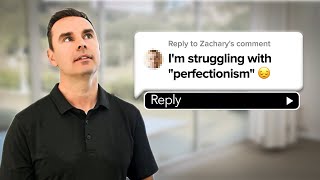
Transcript of a Brendon Burchard talk about overcoming perfectionism, self-criticism, catastrophic thinking, social compliance, competing interests, and rigidity; encourages a learning/growth mindset and practical prioritization. Near the end he introduces Growth Day features (growth streaks & rewards, an AI life coach trained on his material, and an all-access pass to courses).
Questions this video answers
Almost 20 million words.
Over 4,400 classes.
Over 40 deep dive courses.
Chapters
If you're a perfectionist, you tend to be overly self critical and you tend to get harsh on yourself. What if you didn't have to compare and meet everybody else's needs? If you can learn to say, I'll improve that. Now you're getting into self awareness and self development. If you say I suck, you're an unfair self criticism. I never said Brendon Burchard sucks. I just said I don't have the skill for that. I don't know how to do that. Once you let go of a lot of the sense of control, watch what happens. These things cause a lot of our problems. Number one, self criticism. You have unfair self criticism. You are being unfairly critical of yourself and notice of self, not the situation of self. Like, I screwed that up. I made a terrible mistake. I will never figure this out. Meaning you're using unfair, unfair criticism. You can say like, you know what, I didn't do my best there. I didn't do a good job. My behavior wasn't right. My behavior wasn't in line with my values. I made a mistake. Without harsh tones, self loathing, does that make sense? You can call a spade a spade without tearing up the entire deck. Right. You can be honest and be like, oh, I'm being real. I'm facing the thing. But not the criticism that degrades who you are or distorts the situation. Right, Distorts the situation. And I think I'm going to give you some keys to doing that in your self talk later. But self criticism, do not be too harsh on yourself. You need that reminder. If you're a perfectionist, you tend to be overly self critical and you tend to get harsh on yourself. And it's why sometimes perfectionism falls back into lower sense of self, self esteem. Why try? I'm no good. And so it's really important. Beware of self criticism. I want you to listen to it. If you can learn to say, I'll improve that. Now you're getting into self awareness and self development. If you say I suck, you're an unfair self criticism. Right? You can say I don't have the skills for that yet and not say I suck. Most of my life I've said, you know what, I don't have the skills for that yet. I never said Brendon Burchard sucks. I just said I don't have the skill for that. I don't know how to do that. I even make fun of myself. You guys hear me train all the time. I go like, oh, I'm A hot mess. Like, today, I'm a hot mess. In this moment, I'm a hot mess. But I don't think in my overall life, I'm lacking order or progress, right? It's not like my life is a hot mess. It's like, no, my studio is a hot mess today, right? I wasn't prepared today. My emotions were all over the place. In that moment, I was a mess. But it doesn't mean I don't feel like, oh, tomorrow I can find order and centeredness. So every time I make fun of myself, oh, what a hot mess this is. If I just stay there, I'm a hot mess. I suck. I'm no good. That's overly harsh criticism. In the moment, right? Really, in the moment, it's like, you know what? I didn't prepare as much so that I had this skill, and I didn't remind myself to stay centered. So the emotions took over. Next time, I'll prepare and get a little more organized, and I'll make sure that I'll stay centered. And if I don't do a good job, I won't berate myself. I'll just go, okay, next time, how could I demonstrate a little more skill or centeredness? Next time, how could I demonstrate a little more skill or centeredness? It's progressive thinking. It's thinking about, next time, I'll be more in the right direction. Next time, I'll improve. That's very different than hating myself and stopping. Does that make sense? Another cause of all of those things is catastrophe thinking. That's where you zoom in on what's wrong. You attach identity right. This thing is wrong. Oh, my God, it's gonna destroy my life. I'm awful. And then we punish ourselves with negative speaking or inaction. It's like, okay, well, because of that, I suck. I quit. I'm done. And we catastrophize, right? We globalize. We use dramatic language. And that's so important. Like, this is gonna ruin my life forever. No, it means you're going to have a really hard discussion Tuesday morning. This is going to ruin my life forever. No, you're going to have to apologize tomorrow morning. It's going to be uncomfortable. But see, that's behavioral driven progress. We need to tone down your language if you want to have a good life. And if you can make it behavioral progressive, then it gets a lot easier. It's like, oh, next time, I need to do this thing in this order, and I'd be better. I need to have more skill, a little more centeredness. A little more preparation. I need to book this call. I need to this like, it's like, I need to talk out this paragraph with five people versus I'm never going to write the book. They're never. I'm never going to get published. I'm never going to become a writer. It's like, bro, you need to talk out your paragraph with a couple people. That's right. Catastrophe thinking. So just think. It's like, I want you to think about this one really easy way to think about these elements that I go through. Well, I'll finish it down below. I'll get to it. Next up is social compliance. You feel like you have to meet the expectations of other people or you have to impose yours on other people. Compliance needs to happen. The compliance to their expectations or compliance to your expectations. One of the simple fixes there is like, stop. What if you didn't have to compare and meet everybody else's needs? And what if everybody didn't have to live your life and your preferences? What if you allowed actual freedom to other people to let them be who they are? Why do you think Mel Robbins book let them theory is so huge? Because a lot of people had the connection like, oh, I'm thinking they need to do it my way and it needs to go a certain way. Meaning compliance. Let them do their thing. Man, why do you have to control everything? Once you let go of a lot of that sense of control, watch what happens. Perfectionism, especially the negative kind, goes away. It's like, wow, it's a big shift. I don't have to control them and I don't have to control myself to meet all of their exact standards because that's their preferences. It might not be my preferences. The way I would do it would be this way. It's clarifying for you, your high standards, challenging yourself to meet them. And if you don't meet them, you don't speak ill of yourself or pretend the world is ending. You set a high standard that's striving for excellence. You move towards it. If you don't get there, you adjust your behavior and don't globalize. Catastrophe. And you don't think that, oh, I don't fit in or I didn't do it perfectly for other people. And that's compliance. Do we want to help other people? Sure. Do we want to serve other people? Sure. Do we want to meet the boss's expectations? Of course. Like, there's meeting standards, right? But compliance to an exact way in an exact process over time, that's Just going to create stress and anxiety. That's not what we're after. Most people aren't struggling with the personality problem. They're struggling with prioritization. There's a lot going on. Life is complex and life is difficult. And I don't know how to handle all these moving pieces. If we can get some tactical progress towards handling the moving pieces in life, if we can get someone clarity of what their prioritized daily actions should be, that goes so far in relieving the stress and the upsets. And too often people like, I'm going to be. I'm being a little facetious here, but I just want you here. I was with a group, maybe, I don't know, earlier this year. I'm trying not to reveal who this group was, but I'm not kidding you. A woman was sharing how she was struggling with her kids and she was struggling with this new project at work. And she's been pretty specific about where she was focusing. And immediately this group of people around her started talking about her childhood and her enneagram. I'm not kidding. I'm sitting there, I'm like, remember, if we're not specific, we can waste a lot of time. I saw this poor woman get grilled by the people around her about her childhood and this long conversation about her enneagram versus, like, literally talking through and helping her find a little bit of order in her chaos. Because, see, we want to believe there's some big specter of a cause out there. Oh, the cause was 10 years ago, when often people just don't know how to juggle what's actually here right now. And competing interest is undervalued as a conversation. In fact, some of the biggest challenges in our lives is when it's not the difference between right and wrong, it's right and right. Rushworth Kidder wrote a book called How Good People Make Tough Decisions. And he taught that it's a values difference. It's like, these are all right to do. Which one is actually a very, like, taxing mental struggle. It's not some cause from years ago or situations or astrology. It's actually just like, wow, could you help me figure out which one to do first? Like, how should I think about it? Because most people, they're not lacking, like, conviction or, you know, courage in their lives. We think they are, but they would have conviction and courage in their lives if they first had clarity. Does that make sense? Most people are lacking clarity. There's no some big scary cause acting upon them. What usually is they're, they're lacking clarity because there's so much going on. They're overwhelmed, There's a lot hitting them. They're stronger than people think. And I do that because I think that is not only a rationalistic way of looking at things, but I really believe that so many people overly globalize themselves into being stuck and they just need a little bit of help with prioritization. We have to remember, we don't teach people time management. We really don't. We don't teach people prioritization. We don't teach people how to deal with 10 right actions. And which action should I do? We're good at going positive, negative, of course, do the positive things. And you're like, I know, I know, do the positive things. But there's a lot going on. Which one? Which order? Just like I'm teaching marketing, right? If I'm trying to help you do a better marketing strategy, you already know all the things you can do, right? It's like, well, I could do a webinar. I could do a live broadcast. You know, I could do social media posts. I could do ads like you could. You are. There's a menu of things you can do. It's that you don't know how to choose from the menu, right? You ever go to dinner with a family or friend who you're all facing the same menu, but there's that one person at the dinner table who takes 15 minutes to order from the same menu that everybody else has. Why? Clarity's tough in their life. They don't know how to be decisive. In a world that has always allowed a lot of delay, indecision reigns. And so if indecision is the thing we've got to look at, well, what are we trying to decide upon? And we have to learn to talk with people with so much more respect. Part of what has made my career is I really believe in you. I actually know you're stronger than you think because I've seen transformations that would blow your mind. Like people who have made extraordinary progress, major changes in their lives. People are willing, people have extraordinary capabilities. People have unknown geniuses and competency, hopes, dreams that would shock people who just dismiss them. I'm not a person who dismisses people. I actually recognize that this is hard. Especially the higher performing you become, the more competing interests will derail your life. Why? Well, as you're higher performing, as you get more wealth, as example, when you get more wealth, you get what? More optionality. You don't know how to choose. You know the most miserable people I've met in my life tend to be like big name founders who sold their company and now they're like, I don't know what to do with my life. And everyone's like, but you have all the money in the world. And you're like, yeah, they have so much choice. It's like, you know, maybe you got the house, you got the car, you got the spouse, you got the kids, like, everything's good now. There's so much choice. You don't know what to do, so you feel miserable. When you don't know what to do, you feel miserable. Right? There's so many interests, so many opportunities, same thing. It's competing interests. Should I spend time with my family? Should we go on this vacation? Should I buckle down on this thing and get done? That's hard. That's the stuff of clarity. That's often the reason you need a coach. You need like a one on one coach to talk things through. Because that coach is going to do more of this work than they're going to do about astrology or disorders that affect a tiny percent of the public. They're not going to medicate you for it. They're going to go like, let's work through this. And I don't have a problem with any of those modalities. I'm just here to share. This is an underappreciated one. In our culture right now, people have real competing interests. Now if self criticism, catastrophic thinking, social compliance and competing interests are so much of the major causes of how we feel, well, but aren't these normal? Don't everybody do this? Yes. However, these are happening because of two things, especially in perfectionism. These are distorted levels of thinking, like I really distort, Like I'm like, everyone has self criticism, but yours is heightened and prolonged. And it's mean. It's like extreme, if you will. Lots of people worry and have fear, but there's catastrophic thinking. Lots of people worry about comparing or meeting or belonging, fitting in. But some people, it's like, I must comply or they will hate me. I will be rejected, I will be ruined. Right. Lots of people have competing interests, but other people, they distort it. If I don't make this decision right now, or this specific decision, it must be this one above everything else or the world ends. That's the distortion, right? It's also, please listen. This is the thing. This word is also not used very often outside of a lot of coaching or therapy. The word rigidity. So this is where a Lot of perfectionism. When it goes maladaptive, it's here. Rigidity means it has to go this way. It means you are inflexible. It means your belief is like unshakable. You won't learn, you won't adapt. You're just like, no, it has to be this way. It always goes this way. I am this way, that is this way. And there's a way. And it is. You are completely inflexible about it. You're not open to learning, you're not open to progress, you're not open to attempts. Because most of everything we've talked about can be overcome with learning mindset. Most people never had a learning mindset. They were taught things had to be a specific way. They believe that things have to be a specific way. They're not flexible in their approach. You've heard this globalized even in more popular psychology like Carol Dwecksworth. Carol Dweck's work about growth, mindset versus fixed mindset. Right? Fixed mindset means rigidity. It means I'm rigid. It has to go this way. Don't change it. It can't change. As an example, and so if we can stop you distorting your thinking, everything will ruin. If this doesn't happen this way. And we can be less rigid, we can say, maybe there's another approach, maybe there's another way. Maybe that's not true, maybe there's other truths. Maybe that's not the only value. If we can open up the rigidity, we can change everything. Hey my friends, it's Brendan Burchard and I'm excited to welcome you to the brand new Growth day. We are happy to roll out three brand new features that will help you on your personal development journey. First, our brand new growth streaks and rewards. Every day you come into Growth day and we will give you that daily inspirational life strategies so you can listen to an audio then create your journal, your checklist and your habit tracking to truly experience an extraordinary quality of life. We will also roll out to you the world's best AI life coach. This AI life coach has been trained on on almost 20 million words of my deep dive training in high performance, motivation and psychology. And third, all access pass to the world's greatest personal development teachers, coaches and trainers. These are the world's best highest paid keynote speakers, coaches and teachers who can really take your life to a deeper level. Because we have over 4, 400 classes, over 40 deep dive courses and those are available to you right now. All in Growth Day. Lasting change begins with a daily personal growth practice. And that is why you should be using Growth Day. I can't wait for you to use it and to level up your life and become more. Go get your growth streak and Growth Day right now.










