My Brain Started Failing… at the Peak of My Career
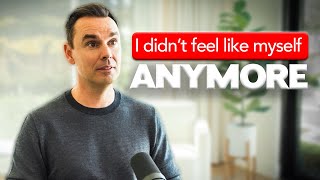
Brendon Burchard recounts a period at the peak of his career when, despite commercial success (Millionaire Messenger) and lucrative publisher interest, he lost energy, motivation, and coherent writing ability while drafting a neuroscience-themed book (The Charge). After discovering language errors and severe fatigue, he consulted Dr. Daniel Amen, who diagnosed post-concussive syndrome/traumatic brain injury—likely linked to prior physical trauma (ATV wreck). Burchard describes a difficult 2–2.5 year recovery, the strategies he used to rebuild cognitive function and presence, and urges listeners to choose work aligned with their passion and to adopt health and mental-conditioning habits.
Questions this video answers
The Charge (activating the 10 human drives that make you feel alive).
Millionaire Messenger (self-published; reached #1 New York Times).
Post-concussive syndrome / traumatic brain injury.
About two to two-and-a-half years.
Chapters
My dream was to make a living as a writer. These publishers wanted me to write a marketing book or a sales book, and they were offering millions of dollars to do it. I'm starting to feel swayed. I'm like, oh, maybe I'm making a wrong career choice here. I am set up to win. I have agents, editors, publishers. I've got a growing team. Why wasn't I fulfilled anymore? The several months I've been working on this book, I felt like I was losing. And I was in this house writing this book and not feeling it. Am I going crazy? I remember a series of months where I was, you know, speaking and keynoting major arenas. So I'd go speak to 10, 15, 20,000 people and I'd walk off that stage and I wouldn't feel energized by it. I'd feel depleted. I was tired and I was thinking about actually quitting. I had had so much success from the prior books and coaching that Denise and I were able to buy multiple dream homes like things are. It's like that roaring time in life. And I was at this home of ours in the woods writing my next book. And it was about neuroscience and how our brain makes us feel alive and what specific human drives activate us. I'm writing a book about how to feel fully alive and activated and I'm just not feeling it. I mean, how do you write a motivational book when you don't feel motivated? How do you write a book about dopamine when you feel like there's none? How do you talk about, you know, having made choices that make you feel alive? But sometimes things are burning out. One night I'm writing in some kind of like caffeine fueled energy. I'm writing this book called the charge, activating the 10 human drives that make you feel alive. And this book was a big swing, a big bet because what had happened, Millionaire messenger took off. But that was a book about the expert industry, the thought leader industry. That book took off. Self published hits number one New York Times. We go out on like a victory tour out to New York. We talk with 10 major publishers who want my next book, whatever it's going to be. And we go to publisher after publisher and they're telling me that the book I'm proposing to them called the Charge. They're saying, wrong book for you. You just had a number one New York Times on a marketing book. Your next book that we want to buy from you is marketing. I'm going, no. I only taught marketing because a lot of people were Asking me how to do it. I applied marketing to my career in personal development and performance psychology. What later we called high performance. I was like, no, I just, I'm a high performance writer, coach and trainer. I don't want to be a marketing guy. That book took off because I was trying to teach people how to do what I did. But they can go do that in, you know, tons of genres. But these publishers wanted me to write a marketing book or a sales book or even a leadership book. And they were offering millions of dollars to do it. And in meeting after meeting, I'm starting to feel swayed. I'm like, oh, maybe I'm making a wrong career choice here. You know, maybe if I go into writing marketing books that would be more lucrative or be better received, maybe I'm wrong. But my passion and my aliveness has always been around performance psychology, around how do we find that clarity and that personal power and that ability to be high agency people that we can perform. I'm the personal growth guy, not the marketing guy. I kept telling myself, I'm like, that's my passion. So we turned down a lot of publisher conversations and we don't progress towards deal stage with them. And I finally find a publisher who says, no, I believe you're right. I think people need to know how to come back alive. And they gave a huge contract for this book. So there I am sitting in the woods in this dream house by myself, writing this, exhausted and tired and feeling major stress because the deadline is now coming up. Because I'm behind, I'm not feeling good. I feel like I'm losing my energy or my edge. And now money is on the line, A deadline is on the line. But for me, my career is kind of on the line because if I don't make this book go well, of course the publishing industry go well. We were right. You really should just keep teaching marketing and business because you're good at that. I felt like I was losing. I don't feel like people understood how hard it was to do four and five day events on stage, you know, eight a year now. I made the choice. I was doing all the sales and marketing to do them. I don't think I knew how hard it was. And I was in this house writing this book and not feeling it. That can bring a lot of discouragement for those who know, you know, the Portland, Oregon area. And I mean it's, it's a magnificent view. I even had my mom's three legged little fold out table, the same table I wrote Life's golden ticket on I had kept that little fold out table I'm using as inspiration to write. I am set up to win, right at that point. I'm set to win. I have a good deal. I have agents, editors, publishers. I've got a growing team. I'm experiencing something that no one had really experienced before online, at least in my industry. As the industry was starting, something was off. Why wasn't I fulfilled anymore? That night I wrote and I thought I had a good night of writing. You know, I was making notes on my notepad, then I type it in. I felt pretty good. I went to bed way late in the morning because I'd had caffeine, didn't sleep particularly well. So I got up and I got in the shower to wake myself up. I had an idea about what to add in the book, went and sat back down my mom's little table, opened up the laptop, grabbed the notes where I was, went back to read where I was in the chapter and started reading a few pages before. And I was terrified because as I read those pages I saw sentence after sentence of incomplete sentences, weird paragraphs, incomplete thoughts. It was like, you know, a kid had just been typing on the keyboard or something. It was like, like jumbled mess. The several months I've been working on this book, it's really bad. It's not looking right. It's sounding weird. There's. I'm just skipping all over the place. I'm like, what the hell is going on? My dream was to make a living as a writer and now I'm looking at crap. It was terrifying. I kept looking at and I literally thought, am I going crazy? What is going on? And I'll tell you one thing that has saved me throughout my life is that I'm a reader. I read so much. Hey guys, it's Brandon. I'm jumping in here real quick. First, I want to make sure you've gone to progressmode.com to join the newsletter because I have a resource for you related to this episode and I have an upcoming meetup with my private group, Ultra. If you've ever liked to be in a private group with me where I help you get more progress towards your passion projects or to build your business or your brand in a bigger way, just go to progressmode.com, click on Private Group to apply to see you can get into Ultra and we can take it to the next level by getting in person and meeting up virtually once a month online as well. Just go to progressmode.com. because remember I told you the charge. The. This book was based on a lot of neuroscience. I was reading, and I remember reading this just obscure thing that happened to mention that a lot of people who have a brain injury. One of the tells of that is that language starts getting wrong. Like if you've ever. If you had a family member who had dementia or Alzheimer's as an example. One of the first tells of dementia and Alzheimer's happens to be language. The other thing I remember reading about was that people who have brain injuries, often their energy really gets low, and they just don't find satisfaction in anything anymore. Wait a minute. I'm having to have all this caffeine just to feel energized to write this thing. The language is bad. And I just thought, something's wrong with me. And at that time, because of Millionaire Messenger, I. I was doing all these events called Experts Academy, where I was teaching other authors and writers how to sell a ton of books without doing the traditional route and how to use online marketing and how to do courses. And at one of these events, I remember this guy came, and he was one of the VIP members, and he'd signed up, and his name was Dr. Daniel Amen. And he was really the most. The most public, foremost authority on brain health at the time. He knew what he was doing, and he had come to my events, and I just. His. His name, like, escaped me. But I called my team. I said, there was a guy. He was at this event. He was so nice, and he. He was like a. A brain guy. He did brain scans. What's his name? Oh, Dr. Daniel Amen. All right. So I message him, and I asked if I could give him a call. He said, yeah, give me a call. I said, hey, man, I have this weird thing happening with my writing, and I've not been feeling good. And he goes, oh, okay. And over the next 30 minutes or so, he just asked me dozens of questions, and he ended up ending the call. He says, well, where are you? I said, I'm up in the woods. He says, well, are you near an airport? I said, yeah. He says, I. I'd like you to fly down here. I want to scan your brain as soon as possible. Your brain might be swelling. You need to come down and see me. He said, have you been hurt recently? And I'm like, no. He says, you're in that house alone. Have you fallen down, hit your head? I said, not that I know. He says, have you ever had a brain injury? I'm like, nope. He's Ever hit your head? I'm like, yeah, when I had this car accident, but that was when I was 19. At this stage, I was, you know, mid-30s. So there had been no effect. I'm like, no. He's like, okay, nothing. No surgeries lately. I had wrist surgery a couple months back, but, you know, nothing really in my brain. He goes, well, what do you mean you had wrist surgery? I said, oh, well, I wrecked an atv. He goes, a four wheeler? I said, yeah. He says, you wrecked a four wheeler? I said, yeah. He said, what happened? I said, well, I snapped my wrist off, so they had to have surgery to put it back together and put this big steel thing in there. And I had, you know, thrown out my hip and broken some ribs and dislocated a shoulder and had a, you know, pretty. I was. I was hurt. And he says, okay, well, we're. You wearing a helmet? I go, oh, yeah. He goes, did any of the doctors ask you about your brain? I'm like, well, you know, they held up the pen and they run it back and forth in front of your eyes. He's like, did you get any. Did anyone. Did. Did, like, anyone in neurology look at you and talk with you? I'm like, I. I don't think so. I don't know. He goes, okay, yeah, come down. You might have, like, post concussive syndrome. You might have something else. I don't know, Let me san you. And I said, okay, well, you know, I've got this tour coming up. You know, I'm gonna go be on this major show. I've got this celebrity client. I've got, you know, I'm coaching a team that's gonna go to the Super Bowl. And he's like, yeah, no, you need to come down here. And, you know, within, I don't know, 48 hours, I was down there. He had me do a bunch of tests. More like psychiatry type tests. He sat me down, he opened up this big book. He says, do you see this book and this brain scan on this book? I said, yeah. He says, you see this one, this printout? This is your brain. Looks a lot like this brain, right? And I go, yeah. He flips the page, and on the other side of the book, there's a page, and it has all these symptoms. He goes, are any of these in your life right now? And I look down, and that was my. It was like a story of my last year of my life. He's like, it's going to take some time for you to heal. And he Was able to identify a pretty good through line of damage, if you will, from my cerebellum to my hippocampus to my prefrontal left cortex. I was hurt. I had post concussive syndrome. You know, I had a traumatic brain injury. And he's like, it's going to take some time for you to feel normal and come back. And of course, I'm like, no, no, no, no, I'm fine. You know, I got too many things to do. He's like, no, you're gonna have to adjust your patterns. You're gonna have to do some things to bring back your brain. You're gonna have to do some things to take care of your body more. You're gonna have to do some things to, you know, handle the emotions. You're gonna have to take some supplements and work out in new ways and try these new things and redevelop your brain. And I'm like, what are we talking about here? For the next two years, everything I did felt really hard. Really hard. Not just because physically I was in pain from all the injuries I told you about, but even as those went away, my brain didn't feel as sharp. I couldn't think as far out as I used to. I didn't feel the energy I used to. But I had to have faith in the forward position. I had to have faith that in the future I will be healed. And it took two, two, two and a half years for me to feel like back. Like Brendan back. Writing this book, the Charge was one of the hardest books I've ever written because I had to work every day to summon the charge. But you know what? What I just shared with you, that was the turning point for me. I had to learn. When you don't feel good, can you summon presence? Can you step into the power of now, as they say, right? Can you step into here, into this moment? Can you be so present here that you're absent of all that struggle, pain, difficulty over there, not avoiding it, but just being more vitally here. And most importantly, choosing an intention now, choosing aliveness now. Like making your brain turn on. Like, telling your brain, like, okay, like, let's. Let's, like, rev it up. Like taking control of your own biology in your own state and your own mood and. And doing everything you can to optimize that. But I want to share with you something about this. And that is part of getting the Charge back. If it's not physical for you, it's not a health thing. Though I do believe everyone can progress in their health, including myself. I want you to hear an earlier story I shared about making a decision in life. A lot of people wanted me to write a different kind of book, and I chose to write the kind of books that I've liked. I didn't write a marketing and sales book. I wrote a psychology book about the human drives that make us feel alive. And because I chose to write that, I uncovered some research that later on helped me diagnose the problem I was having changed my life. And so I'm still here with you guys today. So if you want to feel alive, make choices that are right for you. Stay consistent on the path that is uniquely yours. No matter what they tell you it's about, no, no, no. I'm going to keep progressing in the right direction for myself. You want to feel alive? Those are some of the core components. By fixing my brain, I was able to change a lot of people's lives. I'm happy. In that two and a half year period, I didn't stop. I didn't go into victim mode. I went into progress mode. I went into solution mode. I went into keep going mode. I want you to all hear this. If your sense of aliveness has been down, then please keep studying. Keep learning. But do the habits that really matter? Get the book. Learn the mental conditioning tricks. Learn how to take care of yourself. This is a time in your life. The progress mode really matters. You're entering a new era. You're entering the next stage. It really does matter.










