RIP Larry King: Unreleased Interview
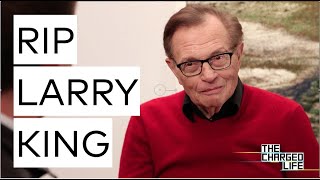
Brendan interviews Larry King shortly after his death, with King reflecting on his 60-year career, 50,000 interviews, and the poverty and trauma that shaped him. King's interviewing secret: curiosity and asking questions rather than talking about himself. His proposed tombstone reads "I'll be right back."
Questions this video answers
January 23, 2021.
January 24, 2021.
About 60 years in broadcasting and over 50,000 interviews.
Father died at 46; Larry King was nine and a half years old.
Larry King.
Chapters
Hi my friends, it's Brendan and I come to you with some sad news that Larry King, the famous interviewer, broadcaster, newsman, TV personality and a mentor to me, has passed away on January 23, 2021. And in this unreleased video, he and I discussed what he would want in his obituary on his tombstone at the end of his life. We talked about what he was proud of, we talked about his famous style of curiosity, we talked about what he thought of success and what made people successful. And it was just a wide ranging conversation that we've decided to post here. Thought with his passing this would be a time because he was very reflective about the end of his life. And I think it really speaks well to him and I hope that you will enjoy the video. My condolences go out to his family, his friends, to everybody in industry who've been impacted in such positive ways throughout his Life. You know, 60 years in broadcasting, over 50,000 interviews. To say he was a legend and an icon and a pioneer is an understatement. For me personally, when I was a 19 year old kid, I was in depression, I and one of the reasons was, is because I didn't know how to communicate, I didn't know how to share my emotions, I didn't know how to talk to people. I was awkward. And I picked up Larry King's book, How to Talk to Anyone, Anytime, anywhere. And it taught me about the power of asking questions and being present and holding space and just how to engage with people, which was important for a kid like me who was awkward and a poor communicator. So very early on he changed my life and definitely decades later, getting to work with him on interview series, we filmed a course with him, he interviewed me multiple times. I interviewed him multiple times, including in his home and in his awards room. I was so happy to have those experiences with my mentor. Life is short. Always find your mentors and say thank you in some way. Give back to them in some way. And I had the blessing to do that with Larry because his son in law, Danny Southwick introduced us and coordinated so many things. Shaun King was so supportive of getting us together and getting us on camera and creating a series together. And again we never released it. And this video is from that and I just thought you would enjoy it to hear him reflecting on the end of his life and his family supported and encouraged us to release the video for you. And I just want to share that. I think the secret to a great and long life Larry shares which is curiosity. Please enjoy the video.
Have you ever had a moment in your life that just changed everything, changed the course of your life? And what was it?
Well, I didn't know it at the time, but it was my father's death. I was nine and a half years old. He was 46. We were very close. Have a younger brother. He had lost a son who was six years old before I was born. So I had a brother I never met. And it was a very tragic day to me. He died of a heart attack suddenly. And I was a very studious student. I skipped third grade. I was a good kid. I was coming home Saturday morning from the library. I took out six books. I was an avarice reader. And there were cops coming down the stairs in our apartment building. He was a pretty popular guy, my father. Cops knew him. And this cop picked me up, books fell everywhere. And he took me in a squad car and he told me my father died. And he took me to a movie to get away from the day I went to see Back to Bataan.
Before you saw your mom, he took.
You to a movie with Robert Taylor? Well, he was their family there all day. And I took it very badly. And I got angry. I didn't understand Beth. I got angry at him for leaving me. I didn't go to the funeral. I took it very badly. There's a great play by James Agee called Dark at the Top of the Stairs. Another title of it is A Death in the Family in which a nine year old boy is faced with the death of his father. And the family telling him he is now. He's now the head of the house. And I couldn't handle that, you know, you're now the head of the house. So I became.
Did someone actually say that to you as well?
Oh, yeah. Now you're the man. And I was bar mitzvahed, but I wasn't a very good student the rest of the way. I fudged things a lot. I cut classes, I just did get out of high school, never went to college. So that left a lasting impression on me. But the one resolve I had was that I loved radio. And when I was a kid, I was five years old, I used to listen to the radio, listen to Dodger games and radio programs. I was fascinated with it. I used to imitate them. I'd hear programs and imitate the announcers. When I was 12, 13 years old, I'd go into the city. We lived in Brooklyn. We called Manhattan the city. And I'd go around to radio shows just to watch people perform on the Radio speaking. How old? 12, 14.
How'd you wander in there? Did they say HTML took a subway?
Oh, there you are. Yeah, I'd tell them, can I see? Some shows had studio audiences, quiz shows, and I was fascinated with it. I didn't know quite what to do, but I had a bunch of odd jobs. 19, 20, 21. My brother went to law school helping my mother. I worked, helped my mother. We were on relief for two years. New York City bought my first pair of eyeglasses, all of which I blamed on my father. Relief was a hard thing to take, you know, for two years, they told us what we could eat and paid our rent. It was New York City, a very generous city. That's why the older I got, the more liberal I got. I understood welfare and I understood relief and I understood poverty.
This is the city helping take care of your family after your dad passed.
Correct. That's what a city is, a big family. And that's what a family is supposed to do. But then I got a break and met a guy in the street, told me to try Miami, and I broke into radio. But the most revolutionary event, if I would look back, would be that death. I would go to ball games and come back and describe the whole game to my friends, tell them about movies. I like describing things.
You're a natural communicator already natural.
And I was also always curious. And that was the big. Anthony Quinn told me that. That you have the luxury of curiosity. And that has never left me.
Do you think that's your number one strength?
Absolutely. To this day, it lends to my sense of humor. It lends to things about me. I never have all the answers. I hate people who have all the answers. I don't hate them, but people who think they know, they see it. People who think they know everything don't. So I never had a guest where I thought I knew more about law than the lawyer, more about government than the governor, more about show business than the singing star. So therefore, I was curious. But I could remember. I swear to. I could remember being 9 years old, getting on a bus and asking the bus driver, why do you want to drive a bus? How do you get out of driving a bus? So I never lost that. And anybody who'd ever watch all my shows, to this day, you rarely have. Ever hear the word I. I don't use it. It's irrelevant. In an interview, what I think is.
This is hard for you. Right?
Then.
What I think is, no. Now I'm being asked. So I know what you Want, I'm responding to you. But if I were doing my own show, there's no reason to say the word I. What I think is irrelevant. What the guest thinks threw me to the. I'm a conduit to the audience. So I'm a storyteller. I love to talk, I do a comedy act, I love making people laugh. But when it comes to a guest, the guest counts. And I've just always been insanely curious. I'm the kind of person you really do not want to sit next to on an airplane. I was doing a radio show at Pumpernick's restaurant in Miami, Miami Beach. And before Bobby Darin came in one day, he was the first famous person I ever interviewed. I would interview salesmen, waitresses, you know, it was a coffee clot show. I'd do my own disc jockey show in the morning, then run up and do this hour interview show. And one day there was a plumber in the audience, a plumber. And I called him up and I did 35 minutes asking questions of a plumber. Now I was 22 years old, 22 and a half. I still remember things I learned at that interview. That plumber is just as happy at the end of a day when he fixes the faucet or stops the leak as I am when I interview someone and get something out of them. It's that same degree. I love what I do.
What do you feel like if someone writes in though? A fan writes in and says, well, Larry, sure, you, you can be on the fly, this is comfortable for you. But I have, you know, I have all this self doubt or I have this fear.
If you have the fear, go to the fear. In other words, you're nervous. You get up in front of an audience. I'm nervous, you know.
You mean say it, tell people.
Sure, I did it my first day on the air. This is a memory that lasts with me forever. All my life. I want to get in the radio. I go down to Miami, I knock on doors. A station says, hang around here. We get one opening, you're hired, they get an opening. I'm going to start Monday morning. Disc jockey. It's Friday night. I'm told I'm going to start Monday morning. I stay up all week. I do not sleep. I'm nervous. I'm practicing. Hello, Good morning, good morning, good morning. What am I going to say? I pick out my music. I got on the air at 9 o'. Clock. I get to the station at 5am I'm all prepared. I go in to Meet the general manager. It's a quarter nine. I go on at nine. He says, larry, good luck, start of your career. What name are you going to use? I said, what do you mean? He said, well, you can't use Zeiger. Larry Zeiger. Now you could use it. Don't matter now. He said, it's too ethnic and people don't know how to spell it. You need another name. What are we going to do? I'm going on the end. 15 minutes and he had the Miami Herald open. I would later write a column for the Miami Herald. Miami Herald opened and there was an ad for King's Wholesale Liquors on Washington Avenue. And he said, how about Larry King?
He chose it.
Yeah. I said, oh, it sounds okay. I later legally changed it. Oh, Now I sit down and go in here. I got my record. Cue Les Elgard swinging down the lane Da da da da da da da Start the music. Up goes the music. Now I got to fade the music and talk right? Da da da da da da da I fade the music. Nothing comes out. I bring the music back up.
Nerves, nerves stop.
I'm looking at the clock. It's now two minutes after nine. Or if you're listening at home, all you hear is music going down and up, down and up. And the general manager kicked open the door. Marshall Simmons, never forget him, kicked open the door of the studio and he said, this is a communications business, damn it, communicate. And he slammed the door. I turned on the mic, turned down the record and said, good morning, my name is Larry King. That's the first time I've ever said that because I've just been given that name because I'm starting my career in radio today and my name is too ethnic. So they gave me this name, Larry King. And you've been listening to record go up and down because I am so nervous. I tell you all my life I wanted to do this and this is my moment. My hands are shaking and I'm scared and I wonder if I can do this. So I'm going to do the best I can. I was never nervous again, any day of my life. Gave you confidence just by being honest? Yep.
As you get that successful worldwide known.
More stress, more opportunities.
Do you have any practices you do in your life to keep you stress free? Do you have any?
No, I don't. Stress, I think was a good thing to me. What way? Henry King, Stanford, the former president of the University of Miami, said that some people strive on stress. I liked stress if it was stressful. If I was put In a position of having to broadcast an event that I'd never broadcast before, which would be stressful. I liked that.
You thrived on the challenge. Is that what it was?
I liked it because I liked the fact that it's in my hands now. I had a scene once where when I was at cnn, a building in Manhattan blew up. It blew up. Someone had placed a bomb in the building. It was right around the corner from my hotel. So I ran down the street and I'm in the middle of the block and the firemen knew me and they let me through. So they got the hoses going and all the people are being kept on the corner. So I did what I had to do. I called CNN and I went on the air and they kept going back to me. And I'm describing this building burning. I've never. How to describe a building burning before, or firemen should. I never done that, but I never thought about it.
Right. And there's no camera with you.
It's just no camera taking my voice later. You could say that was stressful, if you ask me. Boy. Have you ever described a live building on fire by exploding? No, but did I think about it? No. Right.
You were just in the moment.
Trusted my instincts.
You must have dealt with a lot of entertainers or other people who. Who appeared on your show. They were terrified of their performance. They were worried. What do you say to them to calm them down and do it that way?
You try to do the best. I try to ease them. How do you do it? I do it a lot with eyes, voice, eye contact. I care about you. Some of the most difficult people I've had the best time. Sinatra was hard to get and he didn't like doing interviews. So I would ask him, why don't you like doing interviews and work with them on that? In other words, by feeling them out. Some of this is inborn, I'm sure, but some of it you can use in your daily life. Trust your instincts. Instincts are pretty good, you know. If you don't like someone, follow that, follow that. You may be wrong, but you're better off trusting the instinct than not. And I've always trusted my broadcast instincts. That's not the same as life instincts you can make. I made a lot more mistakes in life than I ever made on the air.
What was some of the big mistakes where you learned something?
I married wrong people. I made bad decisions. I didn't handle money well. A lot of that was a carryover from my childhood of being the poorest kid on the block, you know, all my friends had more money than.
And so how was it a carryover.
Into it like that?
I guess because I wanted more, so I had to drive a bigger car. So I bought a car I couldn't afford and I had to make payments.
What makes a successful person?
The source is, how do we define success? Success to him may be how much money he has. Success to him, how much fame he has. Success to him is how is his children doing. So there are degrees. We can define it differently.
Do you think most people feel like success in their life? You think most people.
I would say most people don't think they're successful. Most people think the grass is greener. The grass isn't greener. That's a good advice I give to you. The grass is not greener. Your own grass is better than the grass over there.
To appreciate what you have.
Appreciate what you have. And you used the word before a challenge. Jackie Gleason told me once he didn't like challenges. He liked doing what he liked to do. He didn't need to be challenged. I feel that success is overcoming adversity by always looking ahead. The sun will come up tomorrow. And the driving part of me is, it's not the driving for fun, finances or the driving for a claim. It's the driving to be there, to be in the hunt, to participate, to have value, to know that you matter. It can matter that the mattering is just that you feel you. If your children love and you respect you and you're a motorman on the subway, but when you come home at night, your children are. And when you go to open school week and the teachers say your kids are terrific, that's success.
So it starts with them defining success.
So you define your own.
What gets in their way the most often. What do you think gets in people's way?
Turbulence. Unexpected things. The traffic accident, the sudden death of a father, the sickness, life. John Kennedy said it best. Life isn't fair. Life's not fair. Not fair. Why did that child die and why did he live? Hitler lived at 67. Someone died at 12. It ain't fair. So turbulence hits you in life and you have to do the best to overcome them.
How have you done it?
I've met so many people in my life who talk about, I'm going to do this, but they don't do it. I'm gonna write. I'm gonna boy, I'm gonna put this deal together. I'm gonna be successful. Woody Allen said it best. Get off the porch, get in the game.
Do something.
It's so easy to sit on the porch and say, hey, boy, tomorrow I'm gonna get off the porch, get in the game. I always got off the porch. Nat King Cole said once, there are two kinds of people in the world. 98% watch the Fox hunt. They watch the people go chasing the fox. They sit on the porch, they applaud the winner, they boo the loser. 2% chase the fox. I always chase the fox.
Do you feel like you've changed in.
The last six years?
How so?
Well, hopefully I'll mature. There's still a little kid in me. And by the way, that's important. Don't let the kid in you. Leave. If I'd give advice to someone, don't give up that little childhood thing. Yogi Berra once said, I play a little boy's game, and that little boy is always in me. So it's okay.
Like the child mission. The wonderment and the joy and the innocence of.
Yeah, enjoy the, you know, whatever profession you have. Give to it. Try to be. I'm naturally competitive, I guess, but be the best at what you do. Just try to do the, you know. A rabbi told me when I asked a rabbi, rabbi, do you believe in heaven? He said, well, maybe there is, maybe there isn't. But I tell you what, lead a good life. Take a chance.
What's going to be part of your leading a good life? The next, this next chapter, this next years of your life? What do you really focus on?
I don't know what to think about at 81. Yeah, I think about health. I think about taking care of myself. I try to keep a better pace. I try not to think depressing thoughts. I think a lot about I shouldn't be doing this. A lot. I think a lot about dying, and I shouldn't do that. So if I'm giving.
What do you think about when you think about it?
Think about not being here. The thought of not existing for eternity. Right.
Is a heavy, heavy.
In other words, I think Mario Cuomo just passed away. A great friend of mine. I think about him every day. And Mario is not seeing what happened last week in isis, and he's not seeing the storm today in New York. And he's not seeing any of that. He's not existing. And when I'm not here, how will I be here? My children might think of me as something, but to not exist. For example, I'm not a fan of sleep. I know I have to sleep. I know I fall asleep. But if you could give Me a wish high up on the list would.
Be don't sleep a little bit more.
Each day to not have to sleep. Suppose you didn't have to sleep.
You'd be awfully tired.
No, but. No, no, that would probably. You don't get tired. You don't get tired and you don't need to lie down. That would be my wife's suicide not to get tired. But me if I didn't get tired. Life would be a joy because there's somewhere in the world people are up. So something's happening here. When in Europe something's happening.
Do you always feel like you're missing out on something?
You do.
Is that what keeps you up?
A lot of times I think about things. I think about worldly things. I think about other things. I. I don't know what that is.
It's the curiosity you were talking about.
I guess it's the curiosity. I panic when I get a little illness. This is not good advice for people.
But this is a good place for. You're talking about thinking about death and thinking about life. So if you have this moment where you get to think about your life and it stood for something. It stood for a message.
I think I. I think I entertained people. I think I helped educate people through gift of asking good questions. I hoped I made that my little small piece of this endless universe added something to the knowledge of people. It would be nice to be missed. You know, I don't want to be a. Whatever happened to. But it saddens me when I'll mention names like Arthur Godfrey and people don't know who I'm talking about. And this was a man who accounted for 38% of CBS's income radio and television every day legend. And no one knows him. People don't know him. And that. You want to be known.
Well, you're known.
I guess my tombstone. My tombstone would be I'll be right back.
What are you most proud of?
I'm proud of a lot of things. I'm proud of my family. I'm very proud of my family. Proud of my kids. All of them. Some are more successful than others, but all of them are good kids. That's it. Good kid. You want a good kid? I'm proud of my wife. I think you know, I criticize her some of my kiddo, but she's a hell of a lady.
She's incredible.
She is incredible. She's not the easiest person to live with. But why do you want someone easy to live with?
You know, if you're on your own.
I'm very proud of my accomplishments, too. I'm proud that in my industry, I'm in halls of fame. I got a lifetime achievement from the Emmys. You know, when your peers acknowledge you, that's a great, great thing. And I've had that great thing happen to me that the peers acknowledge me and that people still on the street recognize me or say, hello, Larry, or one of the biggest little compliments I got. I don't even know if I ever told my wife this. I flew to Tampa to interview John McCain when he was running for president at the University of Tampa. We flew down there. We're going to do an hour at the university. I flew in, he flew, and we both came in on private flight. Came in about the same time. We pull up at the university and we're walking through the student lounge to go to where we're interviewed, and all the kids are going, hey, Larry. Hey, Larry. Hey, Larry. How are you? How are you, Larry? And John McCain said to me, why didn't you run? That was a proud moment.
That's a proud moment. If you're on your last show, your last interview, what would your sign off be?
I'd like to say I'll be right back. Tell you what I'd like my obit to be. Oldest man who ever lived passed away today smiling in bed. Oldest man who ever lived.










