Somatic Practices | Meta Skills Vs Applied Skills
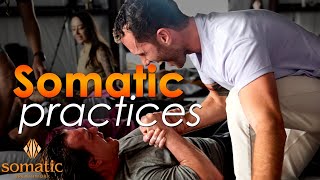
Daniel Borschel explains the difference between applied skills (technical abilities) and meta skills (ways of being that shape how you use them). He focuses on presence as integrated past, attunement through deep listening and 360-degree sensing, and how slowing down and softening expands your emotional range and connection.
Questions this video answers
Arizona State University
December 7–10 (year implied by video date)
Online training begins January 2 and runs 12 weeks
Chapters
This is my first time going live on YouTube as well. So excited to get in a regular rhythm and cadence with that. I'm going to give a couple moments for everyone to hop on. Let me know as always where you're tuning in from. Love to see how far and wide our somatic family extends and then we'll get into today's topics. What's up everyone? Let me know if you can hear me loud and clear as well. So good to see so many practitioners in the comments. I love you guys so much. Truly, what a journey this has been. Big announcement for us. We were just accredited by Arizona State University to offer continuing education credits to all health practitioners that want to come and learn somatic breath work. So it's really, really, really cool. I mean I thought that this was going to be a very long term goal, but apparently we have, we have someone on our side that's supporting us so huge. It's a huge step for the world I think as well. Licensed doctors, psychologists, therapists, nurse practitioners, even bodyworkers and yoga teachers can now get school level accreditation from our training. And we absolutely wouldn't have been able to do this without the incredible somatic team. So I just want to shout out everyone on the team, all of our over a thousand practitioners worldwide. Truly, each one of you are a pillar in your community for creating spaces where people are allowed to express for people that are allowed to release the stressors of life together. Yesterday in our online training, yes, definitely giving Morgan some love. She's been just absolutely showing up so well on these lives for you all and leading you guys through some powerful practices. So she'll be going live on Monday as well. And yeah, tune into her practices if you haven't already. But yeah, what I was going to say yesterday during our practitioner training, one of the topics, and I'll talk about this, then I'll get into the actual topics that I'm going to get into today, which is around meta skills versus applies applied skills, which is really important to wrap your head around even just even if you're not even a practitioner, but just if you are a human. Because the meta skills and practicing your meta skills will make all of the difference in the way that you show up in your life. But the thing that came up in our, in our practitioner training yesterday that I thought would be interesting to share with you, and this comes up often, is someone asked, when you hold these group sessions, does other people releasing take people out? Like if you're in the session and you're hearing somebody else Release emotions, whether that's bliss and laughter or whether that's sadness and anger, does that actually take you out? And the thing about doing group sessions, doing. And maybe you've received a group session or maybe you haven't and you're interested. But the thing about in person or online. But group sessions are truly. They are collective healing, and it's a metaphor for how life is. Because if you think about it, everyone's on their mat and they're all. Their eyes are closed, and they're on their own inward journey, and we're all on our own individual journey, but we're all in this journey together. And people are feeling things. You know, some people are going through anger, some people are going through sadness, some people are going through laughter, some people are going through bliss, Some people are going through questioning deep things about themselves. Some people are having powerful, profound insights. And everyone's going through their own individual experience, but we're all doing it together. And it's a beautiful thing when you start to see people's internal experience become externalized and know that, like, we're all human. You know, I have the question, like, why are people yelling and screaming all the time? And I'm like, well, it's better out here in the session than it is out on the world. You know, just because, you know, you go to the grocery store and everyone seems to have it all put together doesn't mean that there's not a lot going on inside of someone's inner world that's really, really taking a toll on them. And so where else in the world do we have an opportunity together to be in our own experience, to feel other people in their experience, but to have a place to release? And so it is a. It is a metaphor for our collective world. Let me know if you found that interesting or if you've had that experience in one of our breathwork sessions. Would love to. Would love to know. Get a little sip of water. And then we're going to be diving into meta skills. Meta skills are something that I'm very fascinated with and I've. It's something that I've always known about and have practiced, but I've never actually had a definition behind it. What's up? Hi. Good to see you. Morgan got Kirk tuning in, so let's drop in. Meta skills. Why are they important? Meta skills, we'll say we'll break it up into two groups. You have meta skills and you have applied skills. Applied skills are the things that you go to school for. You know, trades techniques, like as a practice practitioner, some of your applied skills would be okay. Hand, like the different hands on body techniques, like what to say and when to say it, and vocal projection and knowing how to command a space in your life. You know, applied skills would be like whatever you do for your job. Right? They're the, they're the more the mechanical ways and techniques and applications, the skills that you have to learn to do whatever you need to do. Now the meta skills are the things behind it that are driving it that you're not fully aware of, but make all of the difference. You know, there was a. I've talked about this before. Maybe you've tuned into this live, but how many of you have heard of the term good bedside manner when it comes to being a doctor or a nurse or any sort of practitioner? This term called good bedside manner, which is considered a soft skill or could be considered a meta skill, but they did some studies around it and I think like 70% of people that were in intensive care got better based on the level of the practitioner's bedside manner. Bedside manner meaning does this person actually. Is this person able to be an empathetic witness for you? Is this person able to showcase love? Is this person able to listen? Is this person able to attune to you? Is this person able to be present with you? Those are all meta skills. Those are all like what they call soft skills. But why is it that those have such an aspect, it's such a, such a big impulse or effect on whether or not people are getting better or not? Well, let's get into it. So meta skills are ways of being, ways of orienting yourself, and also ways of relating and connecting. Your life is measured by the connections that you are able to make. And those are not just outward connections, like the quality of your romantic relationship, the quality of your friendships, but also the quality of the connection inside of yourself. Your life is measured by connection. All of life is connected. At the end of your life, what's going to matter most is probably the quality of the connections and the people and, you know, maybe places and things that you've connected to and made a massive impact on. Those are the things that are probably gonna, gonna matter most at the end of your life. But how do you get better at that? How do you get better at connection? Well, let's go over a couple different basic meta skills and they're not so basic actually, but today I'll cover, I'll cover presence. What does it actually mean to be present? Because there's a formula to it and why become present in a world that's so distracted? The second one I'll go over is attunement. How do I attune to somebody? How do I connect? How do I feel? And read into the energetic connection between me and another person? And can I actually feel the quality of that energy? Am I aware of it? And then I'll also get into another meta skill. We'll see if we have time, but I'll get into range. Your range, your capacity. How much can you. How much range do you have in your life? The opposite of range is living in a very narrow window of existence. This kind of flatline experience where you are not really able to feel the highs, feel the lows. You're not able to be with other people while they're experiencing their highs or their lows. You don't have the capacity to actually hold it. You don't have the capacity to go inside and to, I would say host. Host that level of energy. So let's break down presence. What does presence actually mean? Let's let me know in the comments if you like. Let. Let me hear your definition. What does presence mean? To be present. What does it mean? Let me know in the comments why those are kind of rolling. We live in a world where we have a million things going on at one time. We're taking in more information than our grandparents took in in their whole life. Loving awareness. I love that we are more distracted than we've ever been. Every person that you're coming into contact with can like, notice if you're actually. If they have your full attention, save your full attention. And you can tell when someone's being actually present with you because it's a very rare thing nowadays. And it feels so good. Why do our. Why do innately, why do we crave presence with another person? Because we crave connection. Presence is the gateway to attunement. It's the gateway to these other meta skills and truly what presence is. And I get this from Thomas Hubl, one of my mentors. Presence is integrated past. Present is integrated past. Now, that one you could sit with for a while, but I'll explain it and I'll break it down. I can't be present with you if I'm still thinking about what went on this morning. I can't truly be present with you if I'm still stuck in the past. If I'm still thinking about what went on last year. If I got an argument with my significant other this morning, well, it's going to be really Hard for me to be fully here now with you if I'm still, if I haven't integrated the past. And so there's a lot of us with a lot of unintegrated past. And whether that's trauma or whether that's, you know, whether that's our power, integrated past is the gateway to presence. And so how do we integrate our past? Well, integrating our past. So we first have to define what past is. Past. The past is not what happened yesterday, what happened three years ago. The past is what stayed with, with you from what happened yesterday. The past is not last year, the year before yesterday, so on months ago. The past is what stayed with you in your mind and body into the present moment. That's what the past is. And every time you recall the past, every recall is a reframe. So based on the state that your body is in right now, when you recall the past, you will reframe it and you will put it it back into the Rolodex of your mind and body. And so let me know if you're following along. These are, these are complex topics, but I'm trying to break it down in a simple way. So we're talking about presence is integrated history or integrated past. And the past is not the thing that happened yesterday, but the past is what stayed with you into the present moment. And often if it's unintegrated, it starts to create your future. So meaning that if it stayed with you, can't be present into the future. Give me a thumbs up if you're with me here, let me know. These are, as you can tell, I like to really sit with and digest these concepts, these meta skills that are so important. So how do we integrate our past, the things that stayed with us from what happened yesterday? Well, part of that is a digestion process and what allows us to digest. How do we digest? Digestion is only done through space. Now what was the original way to cleanse your system was to fast, was to not put any thing inside of your body, was to. That's how you cleanse, that's how you actually activated your digestion system fully. Digestion actually takes a massive amount of energy. It's probably the most energy intensive physiological function of your body. And so it requires space, it requires not doing and not just digesting your food, but digesting all of the things, all of the experience, all of the emotions. And if you tuned in on Monday, I think it was Morgan led you through a somatic awareness practice or maybe even was a somatic breathwork. Practice. But what is that doing? That's actually creating a space for you to digest your experiences, for you to integrate your past so that you can become present so you can be here right now. There's a, there's a quote from Lao Tzu that, you know, if I'm, if I'm in the future, I'm gonna be, I'm gonna be feeling anxiety. If I'm in the past, well, I'm probably going to be depressed. Okay, we're going over the meta skill of presence. I'm going to recap all that. So presence is integrated past. I can't be present with you if I haven't integrated my past. And the past is not what happened yesterday. It's what stayed in my mind and body, because you cannot separate those. So it stayed in my mind and body from yesterday. And so the key to becoming present is to take space, to have different practices where you can digest your experiences. For me, I had to take two years after probably five or six years of school to actually, when you're in school, and maybe this is you, you like to read a lot of books, you like to listen to podcasts, you like to watch all of this content on Instagram. All of that stuff is. You're taking in information. Well, you only have so much capacity. You only have so much capacity, and you only have so much that you can actually apply information without application. Doesn't mean anything. And so when you're taking in a bunch of different information, you have to be able to absorb it, figure out what actually resonates with me, what actually is going to be applied in my life, and then from there excrete the rest. Right? Because that is what, that is what digestion is. There's a release of some stuff. Too many of you are holding on to way too much information and it's all stuck up here and it's taking up space in your life so you. That you're actually having a hard time being present. And presence actually is the gateway to connection, to creativity, to all, to, to, to being able to showcase your strengths in your life. You can't, you can't do it if you're distracted, if you're not present, right? If you're just tuning in. I'm definitely going on some rabbit holes right now, but we're discussing the topics of meta skills versus applied skills. When you go to school, you learn applied skills, how to do the thing, right, the mechanism of all these things. But the meta skills are the things that they don't teach, teach you like presence. Some of these comments are funny, bro. Spitting facts. Okay, so maybe this is a little bit too deep for you. You guys let me know. I'm fascinated by these topics. So we went through presence. If you want to learn more, you can, you can tap into, you can message me, you can come check out our practitioner trainings. We do have one coming up in Austin or actually in Phoenix in December. And it's going to be at a school that I used to teach at, Southwest Institute of Healing Arts, which will be a full circle moment for me. So I would love to see you guys in. In the desert. Let's move on to the next meta skill, and that would be attunement. Might have to, like, get rid of some of. Let's see. I see some good comments coming in. Save the comments for the end. I will do a Q A. I will do a little bit of a Q A for those that are actually engaged. For those of you that aren't, it's like, why are you even here? It's very interesting. Okay, let's go into the process of attunement. So I cannot attune if I'm not present. So obviously there's all of that. Somatic breath work is one modality that allows you to help integrate your past. Whether it's too much information in your head, whether it's emotions that you haven't let yourself feel, whether it's physical pain in your body that you. That you haven't yet integrated, that you haven't actually listened to what it's telling you. And so it allows you to digest that, integrate it to become more present in your life. That way you're not distracted. That way you're not making emotionally irrational decisions. That way you can actually be present with other people. So that's obviously the healing benefits of this practice. Now, when you want to take the journey to become a practitioner, a big thing that we study and go down is attunement. That's how well can I actually connect to another person? It's the study, it's the meta skill of connection, connecting to another person. So there's a couple different aspects of attunement. And let me know if you want to try to take a stab at the definition of attunement. I would love to hear it in the comments if you. If you can. This is the first time that I've ever had just like some random comments coming in through here. This is. This is interesting. It definitely distracts me. Okay, let's go into attunement. So the first step of attunement is being able to attune to yourself. The opposite of attunement. And you've probably experienced this maybe if you've been in a romantic relationship before, maybe if you have a partner. A lot of the times you become enmeshed, you start to forget what is self and what is other. So attunement is, can I be connected to myself? Can I also connect to another person? And can I be aware of the energetic flow between us and the quality of it? Like, what is the data stream of information between myself and another person? So there's an aspect of listening that comes in, but first of all, it's developing your awareness of self. What is self? You have to be. You have to have a deep connection to yourself. Now there is a big. There's a big movement around, like killing the ego and getting rid of the ego. And that's, that's all fine and great because the. When the ego is ran by your trauma and your unconscious patterns, then the ego, yes, we need to, we need to start to dissect the ego, right? But having a healthy ego, a healthy sense of self, a self, a healthy expression of yourself, that is spirit led, if you will. That is, that's what I would say. That's incredible. Incredibly important. All right, I gotta like, delete these people. What's going on here? It's so distracting. I'm trying to show up and teach for you guys. It's so interesting. People on the Internet, why, Like, who has time to do stuff like that? It's crazy. It's crazy. Obviously you don't have anything better to do with, with your time. So. Okay, I got them out of here. Hopefully we're gonna circle back. So we went over presence integrated, past digestion, all those things. Now we're getting into the meta skill of attunement. So attunement requires three things. It requires a connection to myself, a deep connection to myself, and that requires somatic awareness, which I'll get into in a moment. The second thing, it requires a deep sense of listening and sensing skills to be able. It's what I call is 360 degree listening. It's like, can you hear the language that's happening beyond someone's words? Can you hear what's really going on inside of them? Can you feel what they're feeling? Can you have awareness to minute details in energy fluctuations? That is speaking the language beyond words. And that is a massive skill that will get you very far in life. It will. If you can become very good at your sensing skills and listening. Your life will, will definitely be. Your quality of connections will be based on the level of listening. Communication is a two way street and if you're really, really listening, you'll know exactly what to say and when to say it. Especially if you're a practitioner and you're helping people. Communication is by far the number one modality. It's been measured by science that you can make someone's pain better or worse depending on the word selection that you're using when you speak to them. I'll say that again, you can make someone's pain better or worse depending on the word selection that you're using when you're speaking to them. Why aren't we all taught these communication skills in school, these meta skills? I don't know why it blows my mind, but here we are. And that's why I'm passionate about teaching this to you all. So awareness of self, awareness of other, this deep listening. Can I listen to the whole aura of what is being communicated from this person? And can I tune into what's the quality of energy that's happening between us? And, and is it, are we on the same page? Like, it blows my mind when some people are speaking to each other and they're completely unaware that they're not on the same page with another person. And there's a level of just social and communication acumen that goes on there, but it's a skill that can be taught. So first off, let's go into awareness of self. I've taught multiple times on these lives the somatic awareness practice, but it is objectively noticing what's going on in your body, in your mind and in your emotions. How about this? I'll lead you through it. I'll lead you through a quick one. And can you actually compartmentalize these. First off, notice your physical body. Can you listen to the language of your physical body? What is it telling you? And it's telling you through symptoms, through pain, through sensation. Like right now I'm feeling a little sweaty. I'm noticing tension in my back. I'm noticing a little bit of tension in my neck and shoulders as well. That first, can you just notice physical sensation? Can you move to emotions? What emotions are present with you? I'm feeling a little irritated by these comments here. I'm feeling a little bit, yeah, probably a little irritated, a little frustrated. So can you objectively notice what's going on inside? And then can you move up into your mind? What is the story that's playing in your head right now. And listen, guys, if you're not aware of these things, then they're going to run your life and you're going to call it fate. And then you're going to continue to be mad at yourself because you're going to continue to make the same decisions. And then you're probably going to be like, why is all of this happening in my life? When really it's actually your responsibility. And probably because you have no awareness or no connection to self and you're not taking responsibility for your life. For me, spirituality is responsibility. It's realizing that I'm the creator of my life and that I am. It's my responsibility. It is my responsibility. So yeah, that's why I'm teaching this sovereignty. So we can become sovereign beings. We can stop outsourcing our power to other people. Places, governments, doctors, pharmaceutical companies start to develop a rel. A relationship to yourself. And so these connection to ourselves. Now can you tune into another person? Can you notice? Can you feel what another person is feeling? Can you feel empathy? Can you feel what's going on on the other side of the world? Can you attune to it? It's difficult. We're taught to dissociate. We're taught to dissociate. But really what's going on inside of what's going on on the other side of the world is what's going on internally as well. And so can you listen, I'll give you a little thought experiment right now. Give me one second. I need some. This is a little somatic experiment right now as you're listening to me. I am happening inside of your nervous system right now as you listen to me. And maybe it's just my voice, but I am. I'm actually happening inside of your nervous system. There's a. Steven, that's happening inside of your nervous system. You are taking me in. Whether that's through your eyes, through your ears, and that's going straight to your brain stem. The same goes on the other side. If we were in a. In a conversation, in communication, you would be happening inside of my nervous system. And we don't really actually take into consideration that when we're in connection with another person. We've all heard this concept of wanting to be seen and heard. Why do we want to be seen and heard by each other? It's because we want to be felt. We want to know that we are connected, that we are attuned to each other. So that's all I'm going To say on attunement, I'll probably do another live just on attunement. But I felt like I'd give you a little bit on these meta skills because they've been very fascinating for me to kind of dive into as I'm creating more curriculum for Somatic and redoing some of the curriculum for. Like I said, we were just accredited by Arizona State University, which is massive. Which is an incredible, incredible sign that the world's changing, that the world is wanting this, that the world wants to feel. The world wants to reclaim connection to their self. The world wants to have a deeper connection to their own self. And for me, that is spiritual. And for me, spirit and biology are synonymous. You cannot separate the two. You cannot separate the two. Every experience that you've had has been through your biology. Every spiritual experience. If. If you have a spiritual orientation at all, it's been through your body, it's been through this vessel that you've been given this gift that you've been given. Your nervous system, you could say the electrical system of your body, your energy system of your body was the gift that you were given by your parents. And every time. I just did a post on this, but every time, you know, someone has a child, basically what's happening is I'm packaging up my DNA and I'm combining it with another person. And we are basically giving that gift to the next gener of life in hopes of asking them the question saying, here, take this, take this gift, make it better, refine it, do the best that you can, and pass it down to the next generation. So unfortunately, we live in a world with a lot of apathy right now. A lot of apathy. Apathy to me, is probably the. I would say the biggest issue in our world is that we're just. We don't feel. That's what this whole mission is about with Somatic is to restore aliveness. And what is aliveness but feeling? Can I feel myself? Can I feel you? Can I feel the highest of highs and can I feel the lowest of lows? That means I'm alive. That means I'm fully alive. There's a lot of people that feel like nothing matters. What I say doesn't matter. What I do doesn't matter. How I feel doesn't matter. So I might as well just continue doing whatever I'm doing. And that is a very unfortunate existence. And it is a tremendous. It causes a tremendous amount of pain. And it is the death with your eyes open disease. It is the living death that Peter Levine talks about you're alive, but you're not actually soaking up this gift that you've been given. You're alive, but you're actually not here. So we want you to be here. I want you to be here right now. We want to connect, we want to be present with each other. We want to attune to each other. And that's my mission in the world. So thank you all for tuning in. I know there were some crazy comments coming through. It's definitely an interesting time to be alive right now. It's an interesting time to be sharing your perspective on the Internet. But through those challenges, that's when it's needed the most. It's much easier to not put your perspective out there. It's much easier to stay quiet. It's much easier to not share your gifts and your expressions with the world, especially with the current climate right now. But I'll tell you that there's an obligation because the world needs your unique expression and you not sharing it is doing us all a disservice. I had a mentor tell me one time, how dare you, how dare you hold back your gifts from the world as how dare you hold back your gifts from the world. You're robbing everyone of it. So I want to say that to you. How dare you hold back your gifts from the world. We need it. We need it right now more than ever. And you're going to have haters, you know, you're going to have people that don't agree with you. Maybe family, friends, whatever it is, it's going to happen. It's going to happen. But it will test your resilience. It will absolutely tell. Test your resilience. So yeah, let me read through some, a couple of these comments. Maybe I'll answer a couple questions. These comments were like a war zone for a little bit. Thank you to thank you for the love. Any questions that you have, drop them in the comments right now. I'll go ahead and I'll probably stay on here for another five or so minutes and I'll definitely be posting this. This was our first live on YouTube. How long are the programs? Depends. We have an in person training coming up that will be in Phoenix, Arizona. That is December 7th through the 10th. And then we have an online training that begins. Let's see, the Online training begins January 2nd and that's 12 weeks long. Long. I'm still teaching all of those. We have an incredible team of mentors of we have doctors on our team, we have therapists, we have business Coaches, we have so many different, incredible, incredible people. Do you have any resources you recommend for strengthening one's attunement muscle? Absolutely. I would first keep practicing the somatic awareness technique. If you want to go deeper into that. I'm pretty sure I have a YouTube video that's a guided somatic awareness practice. From there, it's, it's, it's really work on your level of presence and integrating your past to become present. And then from there it is slowing down when you're in communication as well. There's two things. There's so this is an interesting thing that I learned from one of my mentors as well. There's two ways in which we stop ourselves from feeling. There's only two ways we stop ourselves from feeling. And whether that's feeling me or feeling another person, we become faster and we become harder. There's two ways. We either become faster, we become harder when life gets scary, when we get stressed. When we get stressed, we just like most of us were, well, let's just move faster. Let's just move faster. Because when I move faster, it stops me from feeling just like, you know, maybe this might trigger some people, but if you are in, if you are being romantic with somebody, you slow it down, you can feel it more. You know what I'm saying? Like, if you move faster, you lose felt sensation. Same thing happens in your life. So a lot of the times, the ways in which we stop ourselves from feeling is we move faster and we get harder. And so one is, is, yeah, like once when I have fear coursing through my body or when I'm feeling stressed, the, the desire is to move faster. This happens to me all the time when I get stressed. I feel like, okay, I'll just move faster and I'll try to get it all done. But then what happens is as soon as you start to slow down, you start to feel more and then the fear starts to bubble up again and so you're like, okay, I'll just move faster. And then it becomes a self defeating system. So that's one way we block ourselves from actually feeling, which blocks us from being able to attune and to be present with other people, which blocks us from building relationships and that blocking us. Like, relationships are everything, y'. All, Relationships are everything. The quality of your relationships in your life. You know, some of my business friends, like they say your network is your net worth. You know, I've, I've built most of what I've built because I have spent time building and really cherishing my relationships, truly. The other thing is we get harder when life gets. When things, when we start to feel fear, feel stress, we're like, okay, we'll just put up this defensive wall and, and then we'll move faster. And then as soon as we start to slow down and we become a little bit softer, we start to feel more. And then that becomes scary. And then we get harder and move faster, faster again. And so it's a process of titration, of allowing yourself to slow down and soften. Slow down, soften. Your nervous system's only designed to deal with this immediate, this immediate reality in front of you. Your nervous system is only designed to deal with what's going on in front of you. It's not designed to look at social media to think about what's going, going on on the other side of the world world. It's designed to be present and attuned to what is going on right in front of you and the people around you. And so although we don't live in that world anymore, we have to move forward. And we're obviously learning new patterns and building a healthy relationship and attunement with social media and technology and all these things which we are traversing new territory and no one can tell us the right way on how to do that right now, but we're learning. Part of that is slowing down when we get stressed, slowing down and softening. Okay, I went on another tangent. Let's see. Do you teach emotional intelligence and the emotional home in your somatic release course? We definitely teach emotional intelligence. I'm not, I'm unsure what you mean by emotional home. Maybe message me and we can chat about it. Would love to hear. I will be doing another live next week with one of my best friends and one of our somatic team members, Jeremy Beruman. He is absolutely incredible when it comes to all things conscious business and marketing, which is going to be an incredible live. So make sure you tune in. I'm pretty sure that'll be on Wednesday, but we'll make an announcement if you're tuning in on YouTube. Definitely comment. Let me know if you enjoyed this live. Sorry for a little bit of the confusion with. I'm dealing with Instagram and YouTube here, so there's some crazy comments coming in and I'll try to stay a little bit more focused next time. But anyways, I love you so much. Love you all. Even the people that were heckling me. I got love for you. I appreciate you. There's no such thing as a difficult client there's no such thing as a difficult human. The difficulty lies within you. And I'm human. Like, I was a little frustrated there, but that difficulty. There's no such thing as a difficult person or a difficult experience. The difficulty lies within you as an opportunity to build your resilience. So I love you guys. You guys are incredible. I am so thankful to have this just amazing, amazing, somatic family. Absolutely. Stephanie. There's no such thing as being too much, so we love you. And until next time, I'll see you so soon.










