The Secret To Living A Good Life - How To Heal Trauma, Overwhelm & Declutter Your Life | Fred Luskin
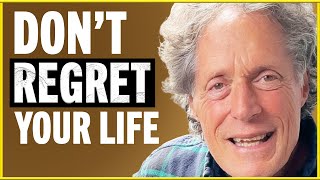
This is a recorded interview (YouTube) between Fred Luskin and a host, centering on forgiveness as a trainable skill that improves mental, relational, and physical health. The conversation defines forgiveness (including metaphors like "landing the planes" and "giving up all hope for a better past"), summarizes empirical findings (forgiveness reduces anger, blood pressure, pain, depression/anxiety and mediates cardiovascular risk), and presents a practical nine-step forgiveness process with examples (e.g., infidelity, Northern Ireland victims). The episode emphasizes calm practices (breath, gratitude), sincere apology components, self-forgiveness (remorse, apology, amends), and moving from a victim narrative to a coping/hero narrative.
Questions this video answers
May 1, 2024
Daniel Borschel
Chapters
I think, Fred, that the work you do covers one of the most important yet undervalued aspects of health. So right at the start of this conversation, why should people care about this idea of letting go, not holding on to the past? Why should they care about that in the present, especially when it comes to their physical health?
Well, I mean, when I look at you or I look at anyone, what I see or we all see is the result of habits, practices, preferences and experiences. So they're all embedded in your body. You want to have as many positive experiences and good habits as you can and release some of the negative experiences and bad habits as you can so that when you show up every day in your life, you're as good natured and healthy as you can be. When you hold on to negative experiences, it's stored, you know, it's like it creates a kind of brain groove. But the way you hold your life influences whether the shoulder raises or what your blood pressure is. And letting it go, not needing that wound relaxes stuff. And so you show up to me as a healthier, more present person.
A lot of religious practices, spiritual practices, for many years have spoken about the importance of forgiveness, the importance of letting go, the importance of not allowing the past to determine and dictate your present day. What I find fascinating about your work though, is that yes, you have the practical aspects of how you can do that, but you've also done research onto the power of letting go and forgiving others on our physical health, blood pressure, anxiety, depression, all kinds of things. So yes, letting go of past experiences helps us to feel better today, but it has implications for your physical health as well, doesn't it?
You know, letting go is, I'm going to say, a simplification of a somewhat complex process. It's re evaluating and re explaining it to yourself rather than letting go. So if I came in to talk to you about, let's say a bad marriage or a harsh parent, it's not like I let go that that never happened, or I just banish it to the past. What I do is I have an entirely different way of processing that experience so that who I am when I present it to you is different. So I could start with before letting go, so to speak. Boy, did I have the shittiest parents. And then forgiveness or whatever. And then you say, you know, these poor people, they had no idea how to parent and what a mess they made. And it took me years to get over it, but now I'm clean. That's what letting go is. It's processing it in a way where it's no longer a wound or an experience dragging you down now. So that transformation affects all of you. You know, not just your mental emotional status, but your physical status. So your muscles are less tight from guarding against stuff. Your blood pressure is more normalized, your nervous system is more stabilized because the very way you're processing the world has changed. Some of the research that we've done or some of the research that's been done has shown yes, it does reduce blood pressure in angry people. It seems to serve as a mediator between some heart disease and further heart disease. Those who forgive and don't forgive. It reduces the experience of pain that if you're unforgiving, you experience pain a little more. It has pretty significant influences on depression and anxiety. But its gift is in relationship. I mean, that's the gift because if I'm hurt, then I walk into an experience with you somewhat frightened. If I still identify myself as a wounded victim, then I'm less open, less trusting, less available to you. I have a mental way of holding it that says, hey Fred, be careful. Relationships are the most important thing we do for our health. You know, that's our juice, that's our. The research is what it's like 50% of your happiness. So when you look at the impact that has of impaired relationship and frightened relating, then you can see both individually and culturally the lack of forgiveness, the implications of it.
Yeah, we know that stress in some way or form is responsible for maybe up to 80 or 90% of what medical doctors see in any given day. And I think that relates to what you're talking about, relationships, it's relationship. Because relationships, when they are not going well can be a huge source of stress for us as individuals. At the same time, they can be a source of calm and comfort and safety. That's right, if they are going well. So I think when we look at it through that lens, we can understand how your ability to let go, move on and forgive will improve your relationships, which then will have a knock on effect into your stress levels and how you feel and your lifestyle choices, et cetera, et cetera. But I think it's also interesting what you said, that you've done research to show that in angry people learning to forgive helps your blood pressure go down.
It does.
That is news for so many people. When we're talking about health and blood pressure. Most people are talking about medication. I know if they are broadening their scope beyond medication, they're talking about lifestyle choices, you know, diet, movement, Sleep, all these things are great.
Losing weight.
Yeah. And all these things can help. But actually a lot of people, most people are not talking about forgiveness, letting go of anger and how that can have an impact on something like blood pressure as well. I've been thinking about this a lot. Forgiveness in many ways you can't measure it with a blood test. And therefore sometimes I think because you can't measure it with a simple blood test, maybe my profession doesn't take it seriously. Whereas you can measure your weight, your waist circumference. Do you see what I mean? I don't know. What's your take on that?
Well, missing in most of the discussions, like we have a kind of neutral space and then you have stress and anger or self pity or whatever, they create a negative space. But there's so much importance not placed on happiness and joy and exuberance and love and connection. Well, whatever small amount of research there is suggests that, that it has positive effects on our physiology in the same way that the negative emotions have negative effects on our physiology. So like when, when we teach resilience, like in, in my world, the, the easiest way to promote resilience is just to stop people for a moment and say, hey, you know, take a breath, relax and just remember a time that you were loved. Just stop for a minute, quiet down into yourself and just picture a time when you absolutely knew you were loved. Absolutely. You can feel it, you can see it. And besides the fact that your whole body calms down and everything slows down, if you can remember that or, or even remember the experience, the next time you feel stressed, you have a little more resilience because you're not as alone, you're not as scared. So when you forgive, when you overcome negativity, when you move past it, it's in there as a memory source. So when I haven't forgiven, like, and I meet you and maybe you remind me of somebody who hurt me, that memory triggers physiologic changes. Right now, you know, I have adrenaline or I have things, so I'm sitting down next to you, but because of my memory traces, I'm already aroused in a certain way. If I have forgiven somebody who looked like you or sounded like you, then I sit down with confidence because I've been able to handle myself. And so not only do I not have the negative memory, but I sit down with you with some degree of resilience of, oh, if this happens again, I've shown myself I can do this. So it's not just markers, it's an ongoing relationship to life that impacts the physical and the mental bodies.
Yeah.
Did that make sense?
Yeah. I really like that. I'm just thinking if you were to pick anyone off the street and ask them, would they like to be living in the present moment?
Yeah.
Would they like to not have their negative past experiences impact the way they interact? Let's take a relationship either with a loved one or a work colleague or whoever. So much of the time we sabotage the present because of what has happened in the past.
Exactly.
And so given that, we can say that, and if people think about it, if they step outside their life and reflect, I think most people would get that and go, yeah. Okay. The question then for me is, why do we hold onto grudges in the first place?
Well, immediately, I believe that we require time to adjust. So if you get a phone call that something happened to somebody in your family, I mean, you know, the amount of stress your body's going to be under, I mean, you're going to be flooded and let's say some driver was drunk and hurt somebody in your family. It takes a while for the nervous system, the mental apparatus, to adapt to the. Both the horror at first and then the changes. So that period of time, to me, the healthy part of it is called grief. Like, you need a period of time to adapt to life, to any wounding. You come home and your partner's in bed with somebody else, or, you know, you find out that somebody robbed your store, it doesn't matter. It's a massive adjustment. So we are appropriately destabilized and appropriately needing to work through this because the world we woke up to changed. And I believe that's grief like that. That's a healthy expression of human experience. And so you go through some anger and sadness and bargaining and all the stages of grief. The crucial question is, what happens after that? And how are you processing? Are you going through it? So resilient people, they go through all this upheaval, but they have some mental place that observes it and says, this will pass. You've helped dealt with things before, you'll just ride it out. Less resilient people or people who have deep grudges or all sorts of things, they feed the flame. Like, this hurts now, but remember when mom was this way? Well, you can't trust people or life sucks. So again, it's always in process. The key question is not like, it's gonna hurt, it's gonna disrupt, it's gonna be painful. That's part of our basic humanity. It's how do we Resolve these things.
It's a bit like stress, isn't it? A little bit of stress is good for us. It helps us be our best. Right. So that negative event, the fact that we feel bad, I like the way that you describe that as a form of grief.
Yeah, it is grief.
That's absolutely okay for a period of time.
That's the key thing. That's the key issue.
But if 10 years after that event, if you're still thinking about it, Even.
Not even 10 years after, there's some research that six months after a painful event, if anger is still your predominant emotion, that doesn't augur well, it's. It's the necessity to develop a kind of coping where we are capable of handling what life throws at us without excess bitterness that we bring from past inabilities to handle what life throws at us. That's the desperate need for forgiveness, both as an individual and as a culture.
Is some of this about control? And what I mean by that, Fred, is something bad happens, we feel bad for a period of time, of course, but by not letting go of it.
Yes.
Is it in some way our way of trying to control the future?
Yes.
We are holding on, we're controlling and I guess in many ways, and we are. We prefer the familiarity of the pain that we know rather than the feeling of freedom that we don't.
I think the essential challenge is how do we deal with our vulnerability? That's the essential challenge. So when you're hurt or when something happens that you didn't want, or when an uninvited suffering comes in, the hardest thing to recognize is as a human being, how vulnerable we are. Like we can't protect our families and we're gonna die and people are gonna mistreat us and people who love us today aren't guaranteed to love us tomorrow. So we exist in a. In a kind of liminal space of the good we have now may not last. And so one of the ways that we adapt to that is armoring, you know, like I'm not gonna so deep. But another way that we adapt to that is by getting furious when it's taken away or lost, which is part of what you're talking about. But for many of us, continuing that anger or that self pity, like I've had such a terrible life and nothing's gone well for me. That's exactly what you were saying. It's a form of control because we don't know what to do with the vulnerability. We have no idea what to do with the fact that as human Beings, we can't fully protect anything. So we develop these coping styles to stop us from seeing that every now and then. Sometimes we're naked in life, you know, we can't wear, we can't do it. And to be okay with that vulnerability, because when you can do that, you see other people's vulnerability and you're able to use that to be more forgiving. Okay, so that guy was a jerk. Well, of course he's a jerk. We're all scared, we're all confused. We're all this. But when we can't touch our own vulnerability, then we use these harsher copings and then we confuse them with reality. You know, it's like. And so it is easier for people to have the pseudo power of anger than it is to just sit for a while and say, man, I got slammed by that and I just don't know what to do. But if you sit with that, if you allow that weakness for the moment to come through, it passes. And then you prove to yourself, wow, I can handle it. I'm capable of being like, weak in this because this really hurt. I didn't stay there, and now I don't have to be as afraid. I don't have to arm her up quite as much. And I can be a better person in relationship.
Yeah. You say that forgiveness is a skill that anybody can learn.
Well, I had to learn it, and let me tell you, it did not come easy.
Yeah. So this is interesting, right? It's a skill that anybody can learn. There will be people right now who just heard me say, say that, who are pushing back, of course, who are thinking, hey, that may work for some people, but you don't know my life exactly. Right. So. So we'll get to that.
But can I interrupt you?
Please, Please.
No. The, the most humorous explanation of things that we have in our little world is we'll go in and give a. Talk to somebody, to a group, and people will come out and say almost that that's a great talk. However, you never met my ex husband or you never met my mother. That is the biggest pushback that we have gotten. That you just said, that's great, but you don't get my life.
So let's then talk about, you know, forgiveness. What exactly is it? Because I kind of feel. Well, first of all, I agree with you. I believe it is a skill that anybody can learn. But in order to learn that, you first have to understand, well, what exactly is forgiveness and what is it not exactly. So could you outline that for us? Sure.
I Mean, that's a very tough question at some level, because before you mention that, the world struggles with things it can't measure. It struggles to define things it can't measure. And so, like, how do you define love? Or how do you define beauty? Or how do you define forgiveness? It's not so easy, right? So I struggle, as everybody does, with defining these absolutely beautiful aspects of humanity. Right now, the best place that we've gotten to is two separate simple definitions. One is making peace with the word no. Like, no, life will not give you what you want. No, won't work out. No, you can't get this. And giving up all hope for a better past. Those are the two forgiveness things that are. That's as close as I can get. Some combination of both.
I like that. Giving up all hope for better past.
For better past. Simple. Lovely. Do you know where that came from? A woman in the Bay Area, in New York, not New York and California, her daughter was killed and she struggled for years and she came up with that definition of forgiveness. That helped her cope. And then she made bumper stickers around it. But that was her way of digging herself out of the pain, was forgiveness is giving up all hope for a better past. Very powerful statement.
Very powerful. Yeah. At the start of your book, which I couldn't believe, you said it was over 20 years ago when it came out.
Yeah, it's 20 years.
It still feels very, very relevant.
Thank you.
It's called Forgive for Good. And right at the start, I kind of love this list that you put there, you know, and I appreciate it was written over 20 years ago. So your, your views and thoughts may have evolved since then, but this is what you put back then. What is forgiveness? Forgiveness is the peace you learn to feel when you allow these circling planes to land.
Yeah.
What are those circling planes?
So we brought some people from Northern Ireland to Stanford a couple of times, each of whom had people killed in their violence. We brought Catholics and Protestants, and they had each either had children killed or other family members killed. And we tried to work with them to forgive. And we were tasked with coming up with some. A simple metaphor for that because many of these people were. They had 8th grade education, they hadn't been to college, and up until that point we were teaching at Stanford. So Everybody had a Ph.D. and, you know, it was like a very artificial world. So I tried to come up with a metaphor to explain what forgiveness was. And I thought of this, you know, like when you go to an airport and the air traffic system has planes floating overhead. And they land one by one. And if you have a grievance, and that was a pretty serious grievance, your plane doesn't land, you know, it still circles because you're not done. And forgiveness is letting go of the grievance so the plane can land the plane of this hurt me or this is terrible or what an awful thing. Yeah. The plane comes down, lets out its passengers, lets out its grievance and you're done.
So whilst the plane is up in the air, then can we extend that metaphor so that we think, okay, whilst that plane hasn't landed, it's going around my body, it's going around my mind, it's causing conflict, it's causing stress.
That's it.
Until you land the plane.
Until you land the plane. And when you don't land a plane on time, like anything else, when you don't grieve or wound and let it go, it disrupts everything. Like it gets in the way. It's like this plane should have landed two days ago and it's still up here. This problem with your brother in law or this problem with your neighbor should have been resolved.
And did that metaphor work?
It did.
They got that.
Yeah.
Okay, so we'll come back to that because the Northern Ireland situation of forgiveness is really, really fascinating. But in that list, as you say, you talked about landing the planes. You said that forgiveness is for you and not the offender.
Yes.
Forgiveness is taking back your power. It's taking responsibility for how you feel. It's about your healing and not about the people who hurt you, which I think is really important. You say it's a trainable skill, just like learning to throw a baseball. I think that's really empowering for people. It's not that you can either forgive or you can't. Maybe you haven't learned how to do it. We're definitely going to cover how you do that later on. It gives you control over your feelings, can improve your mental and physical health. Forgiveness is a choice. These things are really powerful. Do you still stand by all those things today?
Let me tell you, forgiveness is thousands of years old. It hasn't changed in 20 years.
Okay, so I really like that list. And then you say what forgiveness is not.
Let me give you the central piece to that though. Let's say you had an abusive parent and you said you're in your 40s and you realize it's time to heal. Right. The parent could be dead. So you can't, you can't wait for them to apologize, to grow, to change. So with that as such an obvious exemplar, the only place forgiveness can be is in us. That we can have been harmed by people who are dead, who have no interest in us. We can be harmed by people who don't even know they hurt us. So that essential separation of offender and offendee is one of the central tenets of this. That I control my experience to what they did and they may no longer even be available for me to have a talk or a conversation with. Since that's true, you can't have the forgiveness dependent on them.
That's a key point, isn't it?
Yes. It's so challenging for people to let go of a sense that this thing in the past caused me to be unhappy today. That link is called blame. Blame has a good degree of research on how debilitating he is for your physical well being. It's a position of helplessness. Helplessness is not good for your physical well being. But when I say, you know, let's say we went to high school together and you stole my girlfriend or something, if I'm, if I'm still 20 years later, like talking to you as if you're the person who stole my girlfriend, it's not your fault that I've wasted 20 years like that. That's me. That's the crucial thing that is very hard to get across to people.
Yeah. That's why I think people are so resistant to forgiveness a lot of the time. I was watching some talks of yours last night, Fred, and.
Thank you.
I think in one of them you were saying that forgiveness is the prescription that people often don't want to hear about.
Ain't that the truth?
To make sure you're taking action after watching this video, I have created a free breathing guide that's going to help you reduce stress, calm your mind, and boost your energy. In this guide, I share with you six really simple breathing practices that work immediately. Even just one minute a day will start to make a big difference. To receive your free guide, all you have to do is click on the link in the description box below. And I think it's because of a fundamental misunderstanding. Right. And I think your list of what forgiveness is not really speaks to that. Forgiveness is not condoning unkindness. It is not forgetting that something painful happened. It is not excusing poor behavior. I think people often think that if I forgive that person, my ex girlfriend, my ex husband, that I'm. I am excusing their behavior. And you know, throughout the book, you make it very, very clear that Is not the case. You also say forgiveness does not have to be an otherworldly or religious experience, which is a great thing to make it more accessible. It is not denying or minimizing your hurt. No. It does not even mean reconciling with the offender. And it does not mean you give up having feelings.
In fact, it's none of those things. One of the things that we recognized over the years, and it was somewhat humbling, is that a large part of what we do is exactly what you're saying. I started to realize after a while that the most important thing that we were doing was. Was explaining what forgiveness is and isn't and giving people permission to do it. That once you understand what it is and isn't, and somebody says to you, hey, buddy, this is good for you, that's a good deal of what we actually do. The techniques and the processes are less important than that. Positioning and permission.
Does that mean that the techniques are great? They can be useful. But are you saying that the key thing is to decide that you are a person who is capable of forgiving and deserving? And deserving of forgiving?
Yes. And I mean, so you're here and I'm here for a happiness conference. And one of the challenges of teaching people to be happier is a good number of them have not either made up their minds or had life experiences where they know they deserve to be happier, that they're capable of right now, right here, right at this moment, I'm worthy. And that is the switch. There's some challenging switch of how it is that people make the decision that they want to be a little happier with forgiveness. The difficult decision is do I want to free myself from suffering that started with an offense, but has been continued by how I am living my life. The challenge is one, to let go of that past, but two, to recognize that I'm the one who has been doing, like, thinking certain thoughts, telling myself certain stories, relating to the world in a certain way that contribute to my suffering. That I took an event, I incompletely grieved it. And then now I have been relating to that event in a way that causes me pain.
Ongoing pain.
Ongoing pain. And every now and then, like, I'll talk to somebody individually, like, more I more do group stuff every now. And like, just the other day, I was on a zoom with somebody, I think from Italy, and he. He was talking to me. And the reason he contacted me was, you know, Fred, I just. I got to a point where I got. I just got tired of my own mind, like I keep on playing this over and what we would tell people, or I still tell people, say you had literally the worst something. How is it their fault that you can't get them out of your head? How is that their fault? It's your head. And that stops that question. Cuts through a lot of the drama that people bring around their wounds. Around.
Yeah, it's that understanding, that deep understanding that the feelings I feel, the thoughts I have, are being generated inside of me now, right now.
And I'm practicing how I relate to my own life.
We've mentioned the word control a few times in this conversation and that sometimes holding onto a grudge is our way of trying to control the future, which of course is uncontrollable, and the present.
So that I don't have to feel vulnerable, scared, small, or lost in the present.
But I guess that word control, if we take it one step further, many of us know that we should try and control the controllables and not control the uncontrollables. Well, one of the ultimate uncontrollables is other people's actions, their words, their behaviors. We can't control that.
Not at all.
So if we say that we are going to be affected for the next 10 years. When someone does something I don't like, you're basically saying that I am gonna be a passive victim to life.
That's exactly it.
I say that with an open heart, but that's it. I'm not blaming anyone. I'm not calling them. Of course there are really nasty and horrible things that happen in the world.
That's an accurate reporting of reality.
Yeah. Once you get that, that actually your feelings are your responsibility, you change the trajectory of your life. You understand that the fire that's being lit lives inside of you. They may have done something one time.
Or 10 times even, it doesn't matter.
But how you're interpreting that is down to you, and it's in the present. So let's take an example. I mean, the book is full of, you know, wonderful examples, but in relationships and intimate relationships, someone cheating on the other person is pretty common. Right. And it's clearly very, very.
I think they suggest that between 25 and 40% of marriages will have an infidelity.
Wow.
Yeah.
So you must have come across this a lot. People don't want to forgive their partner, their husband, their wife, their ex partner for cheating on them. And of course, it's very, very hurtful. But I mean, how if someone came to you and said, listen, I get what you're saying. But my wife lied to me for 12 months. Yeah. And was having an affair. I have every right to feel upset, to be annoyed.
Exactly.
And I'm not going to forgive her.
Right.
What would you say to that person?
It depends when in the process they come to me. So if they come to me nine months after they discover the affair, I tell them that's not bad thinking. If they come to me 18 months after the affair, I start saying, well, you're creating habit patterns that are probably not going to be in your best interest. And that distinction is enormous.
Okay, hold on. This is really, really interesting. So you're saying that from the amount of people you've seen over time and for that kind of offense.
That's a huge offense.
That's a huge offence.
Huge offense.
You're saying nine months, it's still reasonable to be hurt and upset.
It's not just reasonable. It can be even healthy.
Okay, but at 18 months, not so. So is that because you have a ballpark in your head from your experience?
I do that. There's some research somewhere that I read that most people move through an affair with healthy grieving between six months and two years of when it happens that there's, you know, I do try to keep some research, like available. So that's the patterning of healthy adaption. So nine months is what I mean. I can bring my own experience. I had an awful relationship at one point in my life. And knowing enough about this stuff, I gave myself six months to complain as much as I wanted to anybody about how badly I was treated. And I was such a pain in the butt. And everybody who met me was high. Fred, I had a lousy. I'm Fred, I had a lousy experience. And I. I didn't put any limits or governors on my pain or my confusion or my hurt or even my blame. I did that for six months knowing what was going on. And then one inside of me, I started to recognize I don't need this anymore. I've complained, I've had pity parties, I've gotten angry. I've had that whole gamut in there. It's not really doing me much good anymore. If I'm not careful, this is going to just be a habit that was part of it was inside. The other part was in my head that said, fred, well, you know, enough. You, you've dealt with enough people. You got this out of your system now. Now you start talking about the coping narrative like you change the story. Nothing changed on the past, but you gave yourself a period of time to actively grieve, actively blame, and just be a mess like, that was fine, but don't make it your life story. So I shifted to, well, that was awful. Now what do I do about it? Or I better figure out what's next for me, or I have to learn how to let this go, or now I need to find out her good qualities, you know, whatever. But I deliberately shifted the focus of the narrative because I know that grieving has anger and despair, but it needs to find acceptance. And so I didn't do it before. Inside, I was ready. You know, you can feel I've bitched about this enough and now it's either a habit or I don't know what else to do. That's what hits people. I don't know what else to do with this. I only know how to complain or tell everybody how bad it is. I don't know how to shift to. I don't know how to land those planes. So that's what people need massive help with. How do you shift that narrative and how do you shift that focus from helplessness to coping? That's the intervention point.
It's hard, isn't it, for people because a, they may have been hurt before in similar ways. So this can reinforce existing patterns that we have. You mentioned the word habit, which is really interesting. It's this idea, isn't it, that we get good at what we practice.
Ain't that the truth?
So if you practice this kind of I'm a victim to the world narrative because of this incident that happened, and I get it, 9 months, 12 months, 15 months, however long it takes you to get over. Yes, sure. But if five years after you're still doing it, you have to understand.
Right.
That it's harming you.
Well. And it's also. You're doing it like.
Yeah, that could be. Let's say. Let's make it really specific. Let's say someone was in a relationship and their partner cheated on them once, let's say. Right. So it's one event that happens. And let's say they had 10 great years before that. For example. There's so many things in what you said that I think are the traps that people fall into. So the first trap I think people fall into is making someone either all good or all bad.
Yes.
Right.
Yes.
Yes. That was a bad and negative experience. That was something that you wish hadn't happened. But it doesn't necessarily mean they're a nasty person.
No. Nor does it mean the relationship is over.
Yeah, I'm really. What I'm trying to do is really get to these key points where people get stuck, right?
So if I meet somebody who's absolutely stuck like that. If you saw in the book there's a practice called pert.
Yeah. P E R T. So it would.
Be like, take a couple of slow, deep breaths into and out of your belly. Like, just quiet down. Take a, you know, inhale deeply. Exhale deeply. Inhale deeply. And bring your attention inward.
Can I just push back here? For the purpose of the conversation, not because I disagree. If someone's feeling that anger and rage towards an ex partner, right. And they're saying, or they're hearing you say, take some deep breaths, but it.
Ends where in the process. So if somebody's three months in, this is not what anybody. I would do. But again, if they're 18 months, okay. And I would do that. And then I'd say, remember somebody you love, not the person who hurts you. Feel it, touch it. And now you're a little quieter. Let me talk to that person. Let me talk to the part of you that's a little quieter. You both exist right here, both of you. I see the angry person, I see the bitter person, but I know there's also an entity in you, a certain vibration, way of looking at things that's already at peace. Let's bring that voice out to join the conversation. The game changes because the anger is simply a habit. And once that it's a habit, it's conditioned. It's a conditioned response. When you're a victim, you know, you have an adrenalized response and you. Your HP axis is all over the place. And so you, you. You develop a condition response in the stimulus of the bum that had the affair and your body's arousal. So you gotta cut that.
Got it. So the first thing is you calm everything down with some deep breaths.
Just a couple of deep breaths.
Okay.
And then bring an image of someone you love or a time when you felt safe or. And if you're in a horrible marriage, connect with the love you have for your dog. It doesn't matter. You're opening up to a part of you that's been hidden from you. And then quiet down for a minute and just. Let's tell a different story that doesn't make you upset again.
A story about the event that happened.
Yes. And that story can include the 10 years of marriage. The angry story ignores the 10 years of marriage. So when people come to me all unforgiving, and they will say, you know, the. The bum ruined our relationship. Because they had affair. And that's fine. If you say that story 100 times, you've said it enough. A better story is we were happily married for eight years. Things started to get vulnerable for some stupid reason. The guy had an affair. It almost destroyed us. But there's room in that story for growth, for change. But it includes more of the relationship. And the truth. Then this one thing is not the entire determinant, but you know enough about adrenaline, that adrenaline's purpose is to us, to focus a narrow band of attention on a problem. So when people are angry at a habit, they're simply giving us an adrenalized response that they have gotten to be hair triggered.
Yeah. And the really important thing for me there, Fred, is what I think a lot of people don't realize is that if you are holding on to a lot of resentment and anger and you can't let go, it changes who you are. It changes how you see the world. You are living in a stress state. And in a stress state, what does your body want? It wants narrow focus, deal with the threat at hand. What it doesn't want is peripheral vision.
Perspective.
Perspective does not want.
It doesn't even know what to do with perspective.
Yes, the lens through which you are seeing reality is completely different when you're in an angry stress state.
Exactly.
Compared to a calm, relaxed state. Which is why I feel your work, honestly, is so, so important. Because I think what you've done, Fred, is you've done a lot of research and science on forgiveness, on the benefits of forgiveness. So it's not just something that's going to make us feel better. Of course it will do that. But it's also going to help you interact with the world in a much more considerate, compassionate, loving way, which ultimately is the way we all want to be, whether we say we want to or not. We all want to be that calm, relaxed, forgiving person and also trusting.
You're married, you said. Yeah, I've been in relationship now for 10 years with somebody. I go back to them and I'm almost certain that they're loyal, that they, they certainly haven't cheated on me, that they're. They're going to say nice things about me. And so I walk into that house with a sense of trust. If they had done something which broke that trust, the forgiveness piece is in large part to get that trust back. But here's where people go off the rails. It's not just about trusting them. It's about trusting us to cope with our own life. Because Life involves hurt and disappointment and challenge. And if we get that and we can't cope and we blame it on them. Like the reason I can't trust you again is you did X, Y and Z three years ago. That's only half the story. The other half of the story is I never learned to make peace with a life that has difficulty in it. I never learned that. And I. And so I'm bringing my failure into the relationship moving forward and I'm blaming that on you. And so like realism is a very good patterning. So often before any big difficulties occur in a marriage, we're unrealistically positive. You know, like they're great, they're going to love us forever and we're going to live happily ever after. That's unrealistically positive. When you get hurt or disappointed, you become unrealistically negative. What you want to be is realistic with some bandwidth. You know that yes, they're almost always going to be good to me, but not always. And they make mistakes and they have their own issues and they're going to disappoint me. And so I need to develop a deeper love within me where I can handle them. Not just doing what I want all the time, but learning to love. When they don't do what I want, it deepens.
What's the relationship between being able to forgive ourselves and the ability to forgive others? A lot of us, maybe because of our childhoods and how we were brought up, we don't feel good enough.
True. Many, many, many people grow up very vulnerable to feeling not worthy enough to be loved. And so they, they have games in their head. We all do. I have to do X, Y and Z to be lovable. I have to, I have to become a physician. I have to get a PhD, have to win a gold medal. I have to, you know, make money. I have to do whatever in order to be loved. That, that's a game that almost everybody does to some degree. And it causes a lot, a lot of pain. Our lovability really has nothing to do. Not nothing. It has little to do with our achievements and little to do with our outward successes. There's a. We have a humanity or some. Something in us that's lovable and we connect to other people's lovability completely independent of their story of, of hi, I'm this. And I had this history and that, that's, that's not what we're loving. But we have such fear that if we don't do this, that thing, we do too much of that, that we're not going to be loved. And so we become very unforgiving towards our mistakes or our failures or our weaknesses. Whether that directly relates to forgiveness or others, I don't believe so. There are some people who are incredibly forgiving of other people and incredibly harsh to themselves. And there are other people who are very gentle towards themselves. They let themselves off the hook for everything and are harsh as heck to others. There was a therapeutic system 40 years ago called transactional analysis. And it was I'm okay and you're okay. But it was a basic decision. This comes, I think from Alfred Adler's work on we create through our early childhood one of four boxes. I'm okay, you're okay. Which is the healthiest? You know, I like me, I like you. I'm not okay. You're not okay, which is really unhealthy. And more people fall in the I'm okay, but you're not okay or I'm not okay and you're okay. I have found that in the forgiveness world a lot of people are very hard on themselves but really good hearted and kind to others. And the world is awash with too many people who so quickly forgive themselves don't even look at how they've harmed other people, don't have a lot of regret, don't say they're sorry easily.
Yeah, no, it's fascinating I guess. Then are the steps we need to take so that we can forgive others the same?
Yeah, that's it.
As the steps we need to take to forgive ourselves or are they different?
Very similar. And that is. Yeah, they're different tracks.
Yeah.
Can I add something to that, please? The key elements of self forgiveness for me have evolved over time and they're more now like remorse. Like that in order to forgive oneself well, you really need to feel bad for what you did. Like whether you harmed yourself or other people or you screwed up or you failed. It's really important for a while to tussle with one's own failure, but more just one's humanness. Besides remorse, we as a world need desperately to learn how to be better at apologizing. Like sincere, straightforward, caring apologies. Remorse and apology are central to self forgiveness because self forgiveness means we're letting ourselves off the hook. You have to earn it. You have to like do something. And the last piece, and these are from the 12 step programs, is make amends. Whatever you did or I did to hurt the world, make it right in whatever way you can. So if you did something that harms your marriage make it right. If you screwed up and hurt your kids, make it right. If you simply forgot something, make it right. Those three remorse, apology, and kind of amends, those are so crucial. And I don't see them culturally as promulgated enough.
Yeah, taking responsibility, I think is such an important concept.
No question.
We all make mistakes, right? We're all human.
Oh my God.
Therefore, we all make mistakes. Yeah, but you have to take responsibility. You have to first of all, take responsibility to yourself and go, yeah, you know what, that was me. I could have done that differently. You know, next time in that situation, I hope to behave or act differently. And then, you know, responsibles can also mean if you have hurt someone, whether you meant to or not, taking responsibility for that and saying that and expressing that.
I'm sorry.
Just taking a quick break to give a shout out to Vivobarefoot Shoes now. I've been a huge fan of vivobarefoot for over 10 years now, well before they started supporting my podcast. They are the only shoes that I wear then. They really have had a huge impact on my own life and the lives of many of my patients. You see, when people start wearing minimalist shoes like Vivos, you can see improvements in things like back pain, hip pain, knee pain, foot pain, even things like plantar fasciitis can often get better. And scientific research shows us that just wearing Vivos for about four months or so improves the strength in your feet by over 60%, which is absolutely incredible. One thing people don't realize about these shoes is just how flexible they are, which allows your feet to do what your feet naturally want to do, rather than the shoe dictating your foot's movement. Vivobarefoot are giving my audience a 15% off one time code. When you make your first order and they make it really easy for you to give them a try, they give a 100 day trial for new customers. So if you don't like them, you just send them back for a full refund. I'm a huge fan. I really hope you take advantage of this offer to get your 15% off codes. All you need to do is go to vevobarefoot.com livemore or click on the link in the description box below. Now, I've heard you say, Fred, that forgiveness is easier when you get an apology, but that most it's not just me.
That's the research.
Yeah, so this is an interesting point, isn't it? Because on one hand we're saying that we don't want to be dependent or overly Dependent on the actions of other people. Right. So someone did something. I perceive that as being hurtful. I don't want to be stuck in a place where I can only move on from that.
Exactly.
If that person, who I have no control over is going to apologize. However, I think what the research is saying, that if that person does give you a proper apology, and I know you have some thoughts on what actually a proper apology is, if they do, it makes my job of forgiveness easier.
Oh, so much easier.
Does that mean that we're dependent then on that person?
It's just a gift.
It's a gift.
It's a gift.
And what's a proper apology?
I mean, the gift. And I like the way you brought out the tension in that. Like you don't want to sit around, you know, like this, waiting for an apology before you move. And that's a really good reading of the data. But you also don't want to be close to an apology. Like, you can be hopeful that the person will recognize their error. You can desire it, you can ask them. It's not like being dependent on the means. You're not in relationship and can't put requests out there. What is debilitating is when you have an expectation that they will apologize. So if you. Let's say you're late. Well, I'll give you an example. Just the other day at Stanford, I do some trainings. I'm a meditation teacher for some of the athletic teams at Stanford. So I come in and I do mindfulness and I teach this stuff, positivity to athletic teams, the Division 1 teams. And one of the teams that I speak to, I came in and they weren't there. They had canceled practice at the last minute and didn't tell me. I was coming in from somewhere. And I show up and there's nobody there. And I'm thinking, hey. So I sent the coach a text like, where are you? And she sent back an absolutely sincere apology. You know, it's like, so sorry I wasted your time. I feel terrible. We made a last minute thing. I just forgot, you know, it's totally clean at that point. If I had sent her my text and she hadn't sent the apology, then I could have said, you know, she's a jerk or whatever. But I also could have said, you know, next time if you change it, please give me a call. I can put out what I want. Where I run into trouble or the human race runs into trouble is she has to apologize, she owes me an apology.
And I'm not gonna Move on until I get it. That's it.
That's it.
Yeah.
So then you put yourself into a very weak position.
Understandable position, but a weakness. But a weak position. Yeah.
And one which gives them control over your nervous system.
Just say that again. Because that, I think is a key point.
One that gives them control over your nervous system.
Yes. We're effectively a puppet. Yeah, right.
I would think so.
You know, the actions and words and non apologies of other people has the power to control me. And that is so, so profound, Fred. Because when you really get that, if you can get to the point where you understand that, I think you open yourself up to a new pathway in life.
That's it.
Because you realize. No, no, wait a minute. Yes. Bad things are going to happen, negative things are going to happen.
And forgiveness is that opening to a new pathway.
Yeah.
And a sincere apology says I'm sorry, but it also acknowledges the harm. So I'm sorry that I wasted your time. It's not just I'm sorry, but I'm sorry that I wasted your time. I'm sorry that I hurt you. It acknowledges. It sees the damage done and it makes a link between my action and your harm. Like a fake apology is I'm sorry you feel bad. That makes people crazy. And you get. That's a very common fake apology. I'm sorry you feel bad. Like, I'm sorry that you're out of control. But a real apology is I did X. It legitimately caused Y. I'm sorry. And can I make it right? Or can I tell you that I simply won't do that again? That's what a sincere apology is.
And if you receive one of those, although it's not necessary, it makes the job of forgiveness a lot easier.
So much easier.
Yeah.
Because repairs the relationship. What. What forgiveness does, it repairs us. But the apology helps repair the relationship.
Yeah. Well, let's talk about these nine steps to forgiveness that you've published. And I'm hoping that people who feel that there's something in their life that they can't let go of. I'm hoping that understanding these nine steps will give them something to work with. Okay, so step one, reflect on your experience. What does that mean?
I mean, you have to know what happened, know who hurt you. It can't just be vague like, I had a shitty dad. That's probably not good enough to really forgive it. Dad did X, Y and Z. It hurt me in this way. We tried. I mean, you don't have to have 400, you know, journals about it. But you have to have dug in a little bit to the experience and the pain, so you know what it is that you're letting go of. And it. It. It's also an awareness that it's still hurting me now.
Okay, and these nine steps before we go to step two, they don't have to be done in one go. Right. These are things that you work on over time. You go through the steps sequentially or do you circle back?
I mean, nothing works sequentially. You've probably read enough research. You go from one to two to six, back to four.
Yeah, but these are the nine steps to look at on your journey.
Yes.
Through and to forgiveness. Okay, so number one, reflecting your experience. Number two, make a commitment to yourself to work towards forgiveness and forgiveness, as.
They describe now the research, as two components. There's decisional and emotional.
What does that mean?
Decisional is. I'm deciding I need to let this go. Then emotional forgiveness is the inner experience of working on it. You need both.
Okay, but is that too, you know, make a commitment to yourself. Is that basically the decision?
It's a decision to be good to you.
Right.
It's a decision that I need to suffer less, I need to change. Something has to adapt in me because the world so far doesn't show it, that it's gonna change for me.
Yeah. So that's step two. Step three, Understand that forgiveness does not mean trying to make up with the person who harmed you or excusing their actions.
It's the difference between reconciliation and forgiveness. Forgiveness is an inner mind, body release, and healing. Reconciliation is restoring a relationship. You can forgive and not reconcile. So you can have a marriage with a horrible set of affairs and you can say, hey, you know, I forgive you. It's obvious that this isn't a good marriage. It's obvious that whatever reason, you and I can't make it work or you can't be here. So I open my heart, I'm clean, but we're done. Many marriages reconcile and don't forgive. So they keep on coming back to each other every night, but they stay angry. So there's a clear difference between reconciliation and forgiveness.
I think there was another key point there for me, Freds, which is letting go of that pain and that hurt, forgiving that other person because the emotional charge is lessened. You are better able to move on and make good, quality decisions.
Exactly.
When you're not.
But that's it.
When you're not coming from anger and.
Revenge, or not just anger or revenge, Self pity.
Self pity.
That's the other piece. To me, those are the poles of fight or flight. Anger is fight and self pity and kind of like poor me, those are the flight reactions.
Because self pity, it's just not gonna help you, is it?
Not long term, short term, it may be necessary.
Yeah, it's in the long term. Short term, stress helps us. Long term, chronic, unrelenting stress is what harms us. Yes. Short term grief, perfectly normal. Help go through it, talk to your friends, get it off your chest. But at some point. And that point is going to be different for everyone. At some point, exactly. You've got to change. You've got to change the lens. Okay, step four, Try to shift your perspective. I guess we've just covered that, haven't we?
Usually that's also from perspective, from past to present. So perspective means that I, you know, most of my energy was spent on what happened in the past, how bad it was. Shift your perspective means that you want to move to what am I doing now? What can I change now? And how can I be better in my life now? It's going from past to present.
Yeah. Can I share with you how I do forgiveness and how I would apply? Try to shift your perspective. A few years ago, I chose to take on the view. It was choice, it was a decision I made. That every single person in the world is doing the best that they can in that moment.
That's right.
Based upon who they are and based upon their life experiences. So in essence, if I was that person, if I had their childhood and their parents and their schooling and their friends and their bodies and their bodies, I would be behaving in exactly the same way as them. I am not even 1% exaggerating when I say that approach has completely transformed my life and happiness.
Of course.
Because you lead in life with compassion.
Of course.
And I believe that if you can take that approach, and it's like we said, you get good at what you practice. So if you practice that, you get damn good at taking that approach. If it starts to become automatic. At some points, yes. Intentionally. You're thinking about it, you're thinking about it, you're trying to practice.
Exactly.
Before you know it, you're doing it everywhere.
No question.
What I find so powerful about that in relation to forgiveness.
But that is forgiveness.
Yeah. And so this is interesting for me because I think if you take that approach of curiosity and compassion to that other person, forgiveness is a natural byproduct of that.
Exactly.
Because there's actually nothing to forgive.
Well, yeah, there is. Because you will Register offense. It's not like you become immune. You will register that that hurt or that was unskillful or that caused me harm. And the processing of that registering instead of being blame and attack, will be a true opening to your own experience, which is valuable. And, and it will involve an understanding that while flawed, they did who they were.
Yeah, I guess I feel that I want to. I know how many people push back against forgiveness and I really want to make sure that we've covered it from every possible angle.
There's one other piece that the, the sense of self, the ego, like the, the eye thrives on discord. Like that, that separate self, part of its job is to find ways that it's different than other people, that it's special, that it's unique, that it's better than other people. Exactly. And that also it's an identification point around suffering. Like I hurt, I was mistreated. The ego sense does not necessarily like letting it go because it loses its influence. Yeah. So that part of us that's attached to the ego, that part of us is what struggles with forgiveness because the ego is being abandoned. It's like, yeah, you were hurt, but so what? Everybody's hurt or you were hurt by an imperfect human being. Well, join the crowd.
Yeah. When you say it like that, it's like, of course it's going to happen.
Of course.
To make sure you're taking action after watching this video, I've created a free guide to help you build healthy habits. We can all make short term change, but can those changes become a fundamental part of our life? Often they don't. And that's why in this free guide, I share with you the six crucial steps you need to take. That really, really effective. If you want to get hold of that free guide right now, all you have to do is click the link in the description box below. There was this really nice case in your book, Forgive for Good, I think. I think it was a chap called Mark. Mark was in a marriage for 10 years and then his wife had an affair. Okay. So I'm saying what has changed things for me is, is by truly believing that if I was that person, I'd be doing exactly the same as them. Right. So it doesn't mean that Mark's ex wife did an amazing thing by having an affair. Right? To be clear.
Let's hope not.
Of course it's going to be hurtful for Mark and probably hurtful, I would imagine, for his ex wife.
Yes.
Right. But let's say I was Mark. We can apply that and go, okay, my ex wife, I understand. I can see why she had an affair. It was hurtful. I wish she hadn't, but it could be. For example, she had a really tough upbringing. She was always really insecure. I was busy at work for a few years.
Yes.
I get why on some level this happened. I'm not excusing it, I'm not saying it's right, but you just, it's like that, step four, shift your perspective. You're just opening the door a little.
Bit to go, and maybe I didn't nourish parts of her in the way that I thought I did.
Yeah. Now, Fred, I know some people are gonna push back here and they're gonna go, yeah, but that's still no excuse to have an affair because we've covered forgiveness on this show before. I spoke to a monk last year, Geelong Tubton, and he spoke from a Buddhist perspective about the importance of forgiveness. And you know, when we put out this one minute reel from the episode onto Instagram, it got a lot of interest. Some people loved it. Other people were pushing back and going, yeah, I had a tough upbringing. I didn't feel loved when I was growing up, but I still would never have an affair. Right. Which, which may well be true.
May well be true.
But what I hear in all of this stuff is some level of judgment, right? Judgment of other people. So, you know, you're one of the world's leading experts on forgiveness and research on forgiveness rights. Would you agree that if Mark looks at his ex wife and says, look, I, I don't like it, but I understand why it happened. It doesn't mean that they can stay together, but the forgiveness is, I guess it's a part of forgiveness, understanding why that person acted in the way that they did.
So the wife may have had a difficult childhood, but she also may be lazy, you know, and that she didn't put a lot of effort towards working things through with Mark? Maybe she had poor impulse control, you know, that, that the, the, the guy presented himself, maybe he didn't see himself clearly and was a worse partner than he thought it was. The, the, the, the definitions and the understandings are complex. What forgiveness does is it says that harsh, hostile judgment of the terribleness of them and the blamelessness of me, I'm moving past that. And so I'm willing now to release that judgment and that blamelessness so that I can be back in my present life without storing so much energy from what they did. Because it's completely complex and I'll never fully know why she did it, but I accept that. She and I were imperfect couple partners. She behaved badly. I didn't know how to cope with it. Well, it's a, it's a, it's a bigger thing than just one. You know, I look back and see this and that. It allows the complexity. And so I'm open to life's experience.
Yeah.
I'm not, I'm not such jugging, judging or protecting. I can have conversations around it.
Yeah.
It's a. You get what I'm driving. It's a presence centered freedom.
Yeah. No, I love the way you put that. I guess where I'm coming from is more that I just fundamentally believe that when we can approach people and the world with compassion and understanding, everything on the other end becomes easier because you relax. Yeah.
Your mind is clear, your heart stays open.
Exactly. And again, it doesn't. It's not condoning that behavior. It's just saying, okay, cool, look, that happens.
Shit happens.
I don't like it. Maybe we can't be together anymore.
Exactly.
But it still doesn't mean we didn't have a great 10 years.
No.
Or a great eight years until. Or whatever it might have been.
And you can even wish them well in their future.
Yeah. Let's get a step five. I think it speaks to what we've just been talking about. When you feel upset about a past harm, try calming exercises. That's the breath.
And I did that. Right. So with the people from Northern Ireland that we brought, the first day that they got there, the first thing that we did was we brought them to a fifth floor window on Stanford's campus. And you know, they had come from Belfast and we opened all the blinds and it was January, but It was still 65 degrees and the sun was shining. And what we asked them to do was just let the sun in, like open your arms, feel the warmth and go, you know, the world is beautiful too. To be open, to experience. Calm down right here and now. Right now, calm down. Yes. In the past somebody was murdered. But right now you can calm down. You can open to goodness and have a good moment.
Yeah. And that's a necessary step if you are going to move on. You have to be able to get out of the past.
You can't forgive like big life until you can have 30 seconds of peace.
Yeah. Step six, remember that some things, other people's actions and feelings are not in your control. I think we've covered that. Yes. Step seven, try not to dwell on the hurt you experienced.
Yes.
For someone who says, fred, listen, that, that sounds great, but I can't stop thinking about the hurt that I've experienced.
But you can. I mean, it's just that it's hard. And so one of the strategies is a cognitive strategy, which is to not say, I can't, but. And these are just normal cognitive strategies. Up until now, I haven't been able to, or it's hard for me, or I want to learn to. When you say can't, you make sure you can't.
Yeah. So that's hopeful and empowering for people.
It's more truthful.
And as you say, forgiveness is a skill that anyone can learn. And my hope with this conversation is that we're just opening the door for people to go, you know what?
It's all we can do.
You know what? Maybe it is something I can work on and get better practice.
And if somebody comes up with a schema like yours, that works, what a blessing.
Yeah. Step eight, the penultimate step. Look for the love, beauty and kindness around you. I guess that is. Come to the present moment, let me.
Explain how that is so related to forgiveness in a way that most people don't think about. So, you know, our negativity bias, the basic wiring. We're constantly looking out for things that go wrong, people that harm us, mistakes. Unfortunately, that bias makes us distort what we see. So what I understand is that when people are hurt, they become very vigilant to make sure they don't get hurt again. That's part of this negativity bias. But what is entirely missing from that is promoting more positivity bias. Such as, do you notice every time your wife is kind to you? Not every time. Do you notice when people are good hearted? And I brought up to you like an hour ago about vulnerability. If you acknowledge that you're vulnerable sometimes to be hurt in that space, you can recognize how vulnerable and open you can be to so much goodness. Like, if you're not fighting, you see how kind people are to you, you notice it. You allow your humanness to see, oh yeah, like, and I. An example came with the woman you met, my girlfriend. Like, we had a fight, I don't know, a week ago. And you know, it wasn't enough of a fight that it was something. But I noticed that she just stood there and didn't threaten me in any way. And a little bit later I came to her and said, wow, you know, that was just amazing. Like, you just, you're just there. Like you're not, you're not going Anywhere there's a commitment that you've made to this relationship. And like, I saw that, I could feel it. And. But that's what can happen when you're open, when you're vulnerable, when you're willing to not have to be in control.
Yeah.
You can see people's goodness. And you're not so obsessed with people's not goodness. They both exist.
You say that gratitude goes hand in hand with forgiveness.
That is one of the few besides an apology. And being older, that's about the only research proven thing that predisposes to forgiveness. The more grateful you are, it turns out, the more realistically you see things and the more likely you are to forgive.
And again, what you practice, you get good at. So if you practice gratitude every day, guess what? You start seeing good things everywhere.
Exactly.
You counteract our negativity bias, which has been there for many good reasons, but has been there for survival.
Exactly right.
Not happiness. That's step eight and step nine. The final step, remind yourself that you made a brave choice to forgive.
Yes. And that means change your story from what we cheesily call from victim to hero.
Yeah.
So stop telling a story about what a victim you are and start telling more of a story about how you have handled adversity. Well, yeah.
Northern Ireland, you mentioned that you worked with people who've been through some quite horrific experiences.
Pretty horrific stuff.
And all the, you know, the troubles there.
Yeah.
And the bombings.
Yes.
I think when we talk about forgiveness, a lot of people will say, well, some things in life, Fred, are unforgivable.
They do say that.
What would you say to them?
I mean, some things in life may be unforgivable to you, but that doesn't make them unforgivable. On the converse. The truth is there are human beings who have forgiven every conceivable thing that human beings can experience. So it's a point of view, it's not a truth.
So you've worked with people who have forgiven, you know, their parents being murdered.
Oh, my God. Yeah.
The point I'm trying to make, Fred, and you're sort of answering this. We think some things in life are unforgivable. You're saying it's not actually technically true because you have come across people who have forgiven some of the most horrendous things.
I've come across many people who haven't forgiven small things. So it's not only in the offense. I remember a woman who, at some experience that I had with her, refused to forgive her neighbor because he had built his fence, like, 2 inches onto their property. And she carried that grudge for a long time. And I know families who drift apart because they don't vote for the right candidate. So if you see that people don't forgive things that are not that important, you realize how much choice there is and how much personal processing there is. One, at the very beginning of my work, people used to always ask me, well, how do you forgive Hitler? And I had a number of answers, but I remember one of them was, so don't forgive Hitler, but forgive everybody else. I get that. Like the worst person I get. But don't use that as an excuse to not make peace with as much as you can in your life.
Yeah, that's really empowering. You know, when my view on forgiveness really opened up was a few years ago when I spoke to this lady called Edith Eager. Then, if you know her or not, she lives in California now. She was 93 when I spoke to her. Still to this date, one of the most life changing conversations I've ever had, because she. When she was 16 years old, she was taken to Auschwitz concentration camp.
Wow.
Both of her parents were murdered within two hours of getting there. And when I spoke to her at 93, I have rarely, Fred, spoke to someone who was full of compassion.
Isn't it amazing?
Forgiveness and an open heart. I know, genuinely. And I thought, okay, Rongan, here's the thing.
If Edith Egan pay attention to this woman totally.
And I did. I was literally moved so much by that conversation, and I use her as inspiration in my life. If there's something I struggle to forgive or to reframe, I don't make myself feel bad. I go, hey, Ronga, listen. You know, Edith could reframe events in Auschwitz. She can forgive. Right? Right. If she can forgive some of that, you can probably forgive some of this.
You probably can.
Do you know what I mean? So I take that. And again, I'm not saying that everyone should be forgiving some of the most traumatic events that have happened. Right. But I guess the point you're making is that some of these events that we consider unforgivable, some people actually do manage to move on and let go.
And if you can't forgive the worst things in your life, then it's even more imperative to open your heart back up to all the things you can so you don't walk around with a heavy heart.
Fred, you shared with me that in a few months, I think you're gonna turn 70 years old.
I am. In May.
You have been banging the forgiveness Drum for quite a long time now.
Almost 30 years.
Okay. I'm incredibly thankful that you have been doing so, that you've done all this research at Stanford. What's your hope now with this forgiveness letting go movement for the next few years, dare I say the next few decades?
Well, I mean, people have tried to get people to forgive throughout history. The basis of the Christian faith is Jesus's forgiveness on the cross. And I mean, you know, the Mahabharata talks about forgiveness. And it's, it's, it's one of the, the hidden human skills that when it's applied, is valuable in any way you look at it, but it's very hard for people to access it. And the only thing I would say that I have done is taken this idea, which has been around, I guess, as long as humans have been around, and find a way to translate it into secular, simple language so that people in 21st century America basically have a hook into it. Like, I, I don't make it spiritual or religious. I make it practical. When I started this whole thing, I was a pre doc and then a postdoc at Stanford University School of Medicine. I was a pre doctoral and then a postdoctoral fellow in preventive cardiology at the medical school. And all of this came from training in an orientation in behavioral medicine. So I took those ideas and turned it towards something ages old. That's, that's my contribution. It's. Forgiveness is way bigger than any of us.
And right at the end of our conversation, which I've thoroughly, thoroughly enjoyed. Fred's good.
Thank you. Me too.
For that person who stumbled across our conversation and has recognized that they've been holding on to pain.
Yeah.
They've been resenting others. Of course they're angry about things that have happened in the past. What are your final words to them?
Well, I mean, my final words to them, you know, it would probably be the same for everything. It's in whatever way you can remember that you're loved and connect with that. And when, if even for a moment, you remember that somewhere in you is love, you've been loved. When you connect with that, you will want to release some bitterness because love and bitterness are, they're the, they're the opposites.
Yeah.
And if you can't connect with love, then walk outside and appreciate the beauty of nature and notice a sunset or a sunrise and that will have the same thing. Because they can't exist together.
Yeah.
That would be my words to them.
Fred, I love that. For people who want to find out more about you, I'D highly recommend your book Forgive for Good A Proven Prescription for Health and Happiness. Where else would you direct people?
I have my website is fredluskin.com I'm just finishing a book on forgiveness for people in recovery from substance abuse. That book should come out in September. There's probably a hundred YouTube videos of me teaching.
So check you out wherever they like to consume that contest.
The more important thing is like practice forgiveness. You know, tell somebody you live with that you've held a grudge with. Tell them something nice that would be more important than finding me.
Fred, appreciate all your work. Thanks for coming on the show.
Thank you.
If you enjoyed that conversation, I think you are really going to enjoy this one about the simple things you can do for more meaning, purpose and happiness. Time is of the essence. You could die tomorrow so you have to be energized and motivated and excited to actually make the change.










