The Work: A Two Hour Intensive | Byron Katie | Wisdom 2.0
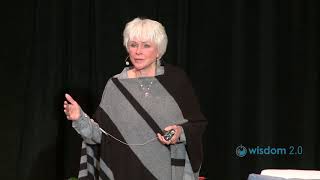
Byron Katie leads a two-hour session on The Work, her self-inquiry method for questioning stressful thoughts. Participants fill out a worksheet and ask four questions about their beliefs, then reverse them to see how their thoughts create suffering. The examples focus mostly on parent-child relationships.
Chapters
How many of you are new to the work today? Would you raise. Oh, my goodness. What are you doing here? You know, when I first started.
Bringing.
The work to people, I was used to hands like that. I used to say, how many of you are familiar with it? But what brought you here? Some of you that raised your hand. Why are you here? Yes, I came here by accident. You came here by accident. Now that makes sense.
My first night here, I met a couple in.
So the first night you were here, you met a couple, and the woman said, I have to be here. So you took that on? Yeah. Oh, that's. He saw me speak here three years ago at Wisdom and wanted to spend a little time here. So thank you for that. I want to clean up some messes inside. You want to clean up some messes inside, not just your sock drawer. Yeah, Yeah, I really hear that. Oh, my gosh, yes. Oh, you were invited, and I hope it was a good friend. Yeah. Okay. Family. You know, I was doing the work with some people, and it was in a place where there were very large boulders, huge boulders, and they wanted to do the work. And I said, well, let's do it up there. And they said, well, there's not enough room. And I asked him if it was true, and, you know, it wasn't. There's always room for one more. And then we have ways of.
Like.
Not enough seats in here to accommodate everyone that wants to be here. And so that is the way of it in the world. It's any kind of frustration is what the work is for. Any kind of disappointment, that's what the work is for. And the work, so many of you are new. The work is a way to identify the judgments and assumptions that are running through your head. You believe them, and the effect of that is suffering at whatever level, on a scale from 1 to 10, suffering is suffering. And when we're suffering, we don't make the best choices. So when we are suffering, when we're believing these judgments that we put on ourselves, people, the world, when we're believing those judgments, then there's no room for wisdom. Wisdom never moves. It's always available. It's a given. But what we're believing over that, it's not going to do war with it. That's why it's wisdom. It doesn't do war. But if we question the judgments that are like fog and smog and fake news, that's what they are. It's fake news. You know, Na na na na na na na na na. Poor me. He did that he hurt my feelings. So if we question those judgments, then wisdom is there. I mean, you're in touch with it. And again, it's always there, but you're more in touch with it. That will give you. That will give you a life that would serve not only you, but your world. And peace is the way. War. We have tried and tried and tried and tried, and the war with the self feels like fear. And that's fake news. Whatever you're believing is the cause of the fear. So some of you that aren't quite tracking what I'm saying just know it's not necessary. Everything in its time. So I invite you all to close your eyes and just relax, get still and think of a person that you have a lot of stress around, someone that frustrates you, or it doesn't have to be someone you live with or it can be someone in the news. It can be someone you do live with, someone you work for or someone that works for you. That person that causes you frustration or disappointment. Now, as you contemplate that person, look at the. At the argument that you A situation where you were arguing with that person or you were frustrated with that person. And if it was someone you saw on television, just anchor in that place. Maybe you were sitting in your chair or couch, just be there when you were witnessing that person on the screen. Get anchored in that moment in time in that argument or that situation where you are angry, frustrated, disappointment, disappointed. How many of you are in touch with that moment in time? How many of you are not quite in touch with that moment in time yet? Okay, I think three of you raised your hand and just contemplate the last argument you were in that you can recall and use that. Just anchor there. Now feel as closely as you can. Get in touch with and experience the emotions that were happening inside of you in that situation. And as you get in touch with those emotions, begin to get in touch with why you are so upset with that person in that situation, in that time and place. Identify why you're so, so upset with that person. And as you're witnessing that place and time just the way it was, and you're anchored there, name the emotion. Was it fear? Was it anger? Was it jealousy? Was it? Now I invite you to open your eyes and open your notebook, the brown folder, and find the judge, your neighbor worksheet. And you have everything you need to fill in. Statement number one, I am angry at. Blank because. And then why you're angry or whatever emotion you're working with it. Short, simple sentence I'm standing in the kitchen with Paul like 40 years ago. I can see it in my mind's eye. Can you see it in your mind's eye? Me standing in the kitchen with Paul? You've never met him, but here we are. I'm so frustrated. Why? Because he started smoking again. Okay, so I'm angry with Paul because he started smoking again. There's the emotion and there's the reason. Okay, so fill in your worksheet. And that is where I'm going to stay anchored. You stay anchored in yours. In that time and place, we're going to meditate on that moment in time. Now, here's why that's so valuable. What I was thinking and believing that then was the cause of my suffering then. So I want to identify what I was thinking and believing then and put it on paper. Just imagine what I was thinking and believing then. If I. If I didn't, if I had questioned all that, there'd be no way for me to be angry, no way to attack. No way to attack another human being. This was my husband at the time. So this is not a little thing that we're doing here. It's the cause of the suffering then. Not what he said or did, but what I was believing was the cause of my suffering. Any questions about that? Any questions before we continue? Yes. If you feel in the judge, in the worksheet, the way I'm directing you. Yes. Huh? Because the ego's too close. If you judge yourself, and you're just beginning, it's. The ego loves for you to judge itself. And it's just. It's like, oh, forget about it. I got this one. So, yeah, eventually, if the work becomes. You'll, you know, this my last book. The title of it is A Mind at Home With Itself. And what we're writing down now is the ego's work. And, and that ego, once it finds the way home, I mean, there's nothing that's not, let's say, use the word love. There's nothing that is not love. It's another way of saying understanding. But once the ego understands its true nature, you can do the work on yourself. And it's not going to argue. It wants to find a home in itself. Because until then, it's just like war. Okay, so we don't want to quiet the ego. Love is the power. And if I fill a worksheet in on myself, whose thoughts are those? Those are mine. So it is about myself. So to put someone in between, the ego does much better with it's not so threatened at first. Okay, so now I invite you to close your eyes again. We're meditating on that moment in time on your paper. Statement one. Just anchor there. Be there now. What do you want in that situation? Be there. And what did you want from that person? What did you want them to say or do? What did you want? And once you've identified that. And once you've identified that, fill in statement 2. Meditating on a moment in time. Identifying the thoughts that were the cause of our. Of our frustration, our emotions, our anger, our attack, our heart. Feelings it. So again, close your eyes. Be there now. Anchor there. Meditating on that moment in time to get what you want. Direct that person. Give them clear direction they should or they shouldn't. And when you are in touch with that direction, fill in statement three. And don't expect the ego mind to be rational or reasonable. Maybe it looks rational or reasonable, but when you fill in this worksheet, that's not always the case. The ego is not. The ego's a child. When we're frustrated, we're angry, we're frightened, we're. We're like a little child. I want. I need. It's not fair. You hurt me. So don't expect maturity on this. Even though the ego will think, ooh, that's mature, you write it down. But the whole point is we are identifying. We're becoming so still. We're identifying what we were thinking and believing in that situation because that's going to set us free today. That's where the traumas are. And no one can take care of those traumas for you but you and what you've written, some of you. It's not a great big trauma, but it's traumatic enough. You carry it for 40 years. So when you're seeing those images, does it bring peace or war? You know, Paul has died years ago, but that won't stop me from loving or hating him or loving or resenting him or feeling uncomfortable. No one dies. They live here. It's not done till it's done. We are identifying the cause of all suffering so that we can go on with our work, our work of making great change in this world of fake news. So close your eyes again. Be there now in that situation. I'm in the kitchen with Paul. We're standing there together. I'm facing him. He's facing me. I see that there's a vase of flowers on the. The. The bar area there. There's a window in the room. You know, I'm. I'm getting being there now. There's some situations you won't be able to see that clearly but you can see enough to anchor now begin to get in touch with. If you could go from that emotion, let's say it's anger. If you could go from anger all the way to happiness, whatever that is for you, what would it take? What could that person say or do or be? What do you need to be happy from that person in that situation? What was it? There was something there. You just knew if he would just. If she would just. So what do you need to be happy? And when you identify what you need from that person to be happy, just shift that emotion. Fill in statement 4. What were your thoughts about that person? And don't expect them to be kind or nice. How can they be you're angry, how can they be you're frustrated. I mean but so important that we identify them because we're believing the same thing today. We can go back then if we can wake up there. It affects now, it really affects now. It affects your life now and it's lasting. It's like I did the work on my mother. Well, nothing changed. But why does everyone else look so different? I continue to do the work and now my mother looks like they do now. Inquiry. So invite you to close your eyes and be there now, anchored in that situation, that time and place, what were your thoughts about that person? Paul is arrogant, he's hopeless. He doesn't care about me. He's a liar, he doesn't care about his welfare. And when you're in touch with what you were your thoughts about that person in that situation. Fill in statement five. I really like number five. It's a place where the ego can just fire like a shotgun. God, we're so good at that. And then we repeat it, we pass it on. We do it very sophisticatedly but we tell it. What is it about that person or that situation you never want to experience again? Get in touch with that and fill in statement 6. How many of you need more time? Now, just for fun, I invite you to think of someone maybe you live with and love and read what you've written as though you put their name on it and let's just see what arises, what comes up. Read the entire worksheet as though they are the one you wrote about. Just look at your worksheet, change the name and read it. Just see how familiar it is. More than familiar. So what you were believing as you were filling in your worksheet, what you were believing then those Are the things, thoughts that you're still dealing with now, those are the cause of separation, trauma. Your emotions and the way you treat others. I would never think that way about one of my children unless they didn't give me what I wanted or what I thought I needed. Unless they cross me in some way. And these thoughts you have written down, you know, are so powerful, they create your identity. I know who you are. Why? Because I believe it. Other than that, there's nothing wrong with you. I may want to look to myself. What I am thinking and believing is the cause of all war in my home, in my life. Boarding a flight to this city or that city, Walking across my living room floor. These thoughts on your paper, it's what you're traveling with. And they will attach to anyone. The ego. And again, I welcome the ego. I love the ego. It shows me what I need to wake up from. It shows me that I'm out of this world, out of my world, the world of my true nature. And I have just believed myself into a. A falseness that's frightening. That's separating. So as you look at your worksheets, what are you noticing? What are you becoming aware of? Anyone share it, raise your hand. Yes. It's the same story that shows up with a lot of people, even though it's about your mom. Yeah. Yeah. So what would happen if you didn't believe those thoughts onto your mom? You couldn't believe them onto other people. So what replaces this fake news? What replaces it is wisdom. I can tell you. As far as I know, I lead a fearless life. I've come to trust. You know, I can't even get into that. You know what would stop you other from doing the right thing, other than what you're thinking and believing? So you're not a coward or you're not this. You're a believer. You don't believe on purpose. It's a spell that you can break through inquiry. It's a false self that. In other words, against your nature creating that creates the false self. Will work more with that as we go. But anyone else? What did you notice? Yes. No. Just. Just notice how it carries over. Yeah. This. This. There's nothing exact here. It's just. I want you to notice that if you put it on one, you're likely to put it on another. Yeah. And read it again. Do put that on yourself. You're another. Okay. Anyone else? Yes. So here, sweetheart. Here. It was a good run. Nothing wasted. If I put it on, I wouldn't put it on myself. And I wouldn't put it on others. Excellent. Good. So it's just a special train of thought for one person. What's the first read? The first one. I was not treated with respect or patience in what I was saying. Okay, so you're judging yourself. So, you know, that's why you're not having the experience we're having here. And that's okay. So you mean I'm judging my. No, I'm judging the other person. Okay, I didn't hear that. What did you write for statement 2? I am angry with Wendy because I was not treated with respect or patience.
In what I was saying.
So what did you write for statement 2? Because I don't understand that one. In the situation, do you want them to change? I want Wendy to think before talking or making a dirty look or combative body language. You want Wendy to take a look at that? Yeah. Right. To think before speaking or. Well, let's keep it. It's so simple that even my mind can track it. So just that first part again. I want Wendy to think before talking. Okay. Wouldn't you want that for us? Of course. Okay. There it is. That's all we're saying.
Okay.
So I would think that for everybody in the room to think before speaking, it's just not foreign to you to put it on someone else or for someone else. Okay.
Yeah.
That's the point. Okay. Okay. Thank you.
Sure.
Okay, so who would volunteer to read the first thing they wrote on their sheet? Yes, the microphone here. Or you can start and I'll repeat until she gets the mic here.
Hi. Hi.
So read what you wrote.
Okay. I decided to work with my mom today. I am afraid slash angry slash heartbroken slash sad with my mom because she doesn't understand slash love me and wasn't there for me.
Okay. So would you like to do the work? Okay, so let's do the work. So the work is a way to question the thoughts I'm believing that caused my suffering. So, sweetheart, please join me. Thank you. So sit down. Thank you for your courage. Okay. And read it again.
I just want to say I've done the work a lot, and I wanted to work on this today because I don't want to work on it because I feel bad about judging my mom. Yeah.
Even though you do it a lot.
Mm.
Yeah.
And the same story in other people.
Yeah. I don't want to do the work because it's a good one.
Yeah, it's a good one.
Okay, sweetheart. So read stable one.
Okay. I am afraid, angry. So slash Sad and heartbroken with my mom because she doesn't understand, slash, love me and wasn't there for me.
So your mom doesn't understand you. Is it true? Now, the answer to the first two questions, there are only four. The work is this inquiry is four questions. They're introspective. They take you back to you and to that source of wisdom, to your nature. And if these first two questions, the answer is it's one syllable, it's either yes or no. It's not yes, but or no, because this takes stillness. How many of you have had someone in your life that you felt didn't love or understand you? Okay, so it is an epidemic. So what is the situation where you're believing this?
So it was a situation. Obviously, there's a lot of them. But I just.
The one that you were writing.
The one I was writing was. I'm sitting on the floor in a house my mom had moved into. She was cooking. And I tried to tell her about something. I don't remember, but that was really painful for me. And she didn't listen. She wasn't listening to me.
Okay. Okay. So in that situation, she didn't love or understand you. Is it true? So now we're just going to meditate on that. So do you all see her? She's cooking what? Cooking dinner. She's cooking dinner. You're sitting on the floor. We all see you. You're trying to tell her about something that's really important to you, that's painful. And she, you know, she doesn't understand or love you. Is it true? So be there now. Witness. Is she stirring soup? Is she adding flour to a pastry? I mean, the way it really was. Be there now and see you on the floor, how upset you are. Witness your mom. Witness you. And then answer the question out of what you're shown. And be open to what you're shown. Just let it guide you. She doesn't love or understand you in that situation. Is it true?
Yeah.
And notice how you react. The moment calls for celebration. Notice how you react the moment you believe the thought she doesn't understand or love you. Describe it. Start with your emotions.
It kind of feels like falling apart. So it's like total kind of. Yeah, like falling apart. Helplessness, Groundlessness, disintegration. I'm gonna die, you know, Heartbreak.
Yeah. Okay, so eyes closed again. Sitting on the floor, witnessing your mom, who would you be without the thought she doesn't understand or love you? Just witness her fixing dinner without the thought she doesn't love or understand me. Get in touch with that one. You know, when we see her and we start putting post its on that person, she doesn't love me, she doesn't understand me, she's ignoring me. She's, you know, all those post its onto that image, onto that body, that object we call mother. So that fourth question, drop the post its, take them off and witness what you witness from the floor, who would you be without the thought? She doesn't love or understand you.
So it's hard to do that.
Yes, because your entire identity is tied up in it. You know, this is, you know, inquiry. You lose identity and it leaves you clearer. The absence of confusion is the absence of suffering. How many of you had breakfast this morning? How many of you are planning, how many of you think you'll eat something after this event sooner or later? Okay, now, so those of you, how many of you had breakfast this morning? Okay, really, where's your proof? Where's your proof? Did you see you having breakfast this morning? You saw an image of you having breakfast this morning. Those of you that did not raise your hand saw you not having breakfast this morning. Okay, so you see that image now is that you. And those of you thinking that you're going to eat something following this event, is that you? That is false self. You see that image of you at breakfast or not at breakfast, the one eating something later? Yep, that's me. How do I know I can't touch it? It's not. What is that? Pure imagination. Isn't that pure imagination? Can you prove you had breakfast this morning? So ask the person that had breakfast with you and they'll say yes. Does that make it true? You believe this? You believe them. You believe, you believe, you believe. And the one that's going to have dinner, is that yourself? There's some denial going on here. So what is this? Is this myself? How many of you heard me say, is this myself? Really? Who am I? I'm who you believe me to be. And I can never be more or less than that. And I hope you love me. For your sake, you have a better life. And that me isn't personal. But if you don't, we have this amazing process of inquiry we can sit in that leaves us clearer to how to make change in this world. In other words, to have a good life. Not I. Not I. Not I. How do I know not I is gone? How many of you think you're following this? Okay, how many of you did raise your hands or did not raise your hands? Okay, so where's Your proof. It's the image in your mind that you did or didn't. You know I'm not messing around here, right? This is. I can say this is not a game, but it is the ego's game. And if I'm busy being disconnected from another human being like my mother, if I'm busy disconnecting and I'm suffering and I'm blaming her for it, that is hell. Who created it? I did. Where is it? On your worksheets? Who wrote it?
Me.
It's worth looking at. Yes, but then who did? I get what you're saying, but who's.
Sitting in that chair doing the work?
I leave that to you. She said, who is it sitting here doing the work with me? And I just leave that to you?
Like it's whatever I think it is. Whatever you think it is.
Whoever I believe her to be. And, and it's. What I can tell you is I'm connected. I'm connected. I'm listening. I'm not at war with what is. And that's where change takes place. It makes sense. So, I mean, I'm so busy with. My mother doesn't understand or love me. I'll put that on anyone. That's a pretty lonely world. So how do we, you know, how can I make the world love me? Well, you've tried that too. It's called a facade, false self. It's a lot of work. It's exhausting. So we'll just keep it really simple. Just, you know, if Inquiry brought me out of hell, it can bring anyone out of hell because. And no one can do that but you. So your mother doesn't love or understand you just witness that, take all the post its off. Who would you be? Who are you? Without that thought, in that situation on the floor.
I guess I just am.
Okay. And then later you don't have to guess, just, you know, just a little more sitting in it and. Yeah, just. I guess I just am a witness. So where did the heartache go? My mom doesn't understand or love me. Turn it around.
I don't understand or love me.
Now, isn't that as true in that situation?
I mean, I. I mean, I can see how. Yes.
Well, it's just a yes or no. Okay, but in, in that situation.
You.
Don'T love or understand you. Is that as true?
I don't know.
So try another turnaround. These turnarounds, you just try them on. It's like you bought a new pair of shoes or boots and you're just trying on. See if it fits, see what it means to you. They're not like positive affirmations. They're just try it on. In that situation, where is it that you weren't loving or understanding yourself? And so you're going to table that one for later.
Maybe I just figured that out. Yeah. Yeah, I think. I think I can see how, like, I wasn't being there for myself in that situation. And in this situation also is connected to many. So sometimes, like, I can go to it, but then like all the times this happened, it comes back.
So.
Yeah, but so I can. I can see how that's why it's.
So important to anchor.
Yeah.
And to, to respect the other situations where. But to anchor there.
So.
Yeah, so find another turnaround. Mom doesn't understand or love me.
I don't understand or love her.
So you're wanting her to give something. You're wanting her to give to you what you're not able to give in that situation. You would if you could. You're not able to. You're sleepwalking.
Yeah, but like, what comes up for me is like, I needed her then.
Well, she was busy cooking your dinner. So you needed her in that situation. Is it true? And you needed her. How do you react when you believe the thought you needed her?
I'm like disempowered. I can't help. I can't do anything because I need her and I can't control that. So I'm helpless.
So you need her. Who would you be? Witness yourself there. Without the thought I need her.
Yeah, I need me. So I would be without that thought. I'd be really free because I wouldn't need anything.
So you see how dependency is formed? It's not right or wrong. It's just good to be aware. So you need your mother in that situation. Turn it around.
I need me in that situation.
Well, you're, you're, you're looking at me like I'm supposed to have the answer. See, that's dependency. And you were really doing inquiry. But it's habitual with you. You're turning these around and ending in a question mark. Like I would have the answer. So that tendency. Yeah, yeah, it's. You don't trust your. Your beautiful mind. And so this is, this is, this is a good. This is a good thing. I love. You have the work. So my mom doesn't love her. Understand me. I don't love or understand my mom. So look at it now. Understand your mom. What is she doing? What do you see? We're not Making nice. In these images, we're looking at reality the way it was, the way we recall. Recall it to be, because that's where the pain was.
She was. I think she was cooking, but she was doing something else. She wasn't focused on me.
She had her life.
Yeah.
She was living her life, most likely.
Probably doing something for me.
Yeah. It's really good to begin to see when I'm believing. On to you. I can't see you. I see who I believe you to be. So through inquiry, we can see things like. Well, actually not probably doing something for me. She was, you know. And you can. You won't necessarily see that, but it's not surprising if you do so. But knowing your mother as you do, probably so. Okay, so your mother was not there for you. Is it true.
In this situation where.
You have just discovered she was probably doing something for you?
I'm trying to go really slowly to not just jump to the answer, because it's really easy to.
So we're really meditating on a moment in time. So go to the place where someone wasn't there for you or use her mother. From the position of the little girl on the floor. She wasn't there for you. She's doing something in the kitchen. Looks like dinner, maybe.
So what's coming up for me is she was physically there, but she wasn't there in the way I wanted her to be there.
Did you tell her how you wanted her to be there?
I think so.
You did? Did you say, turn around, face me. Listen to me. Stop what you're doing. I need you to focus here. No, so. So your mother is not psychic. You see where I am with this? It's like, if I am in enough pain, then she'll turn her focus on me. There are really other ways to get someone's focus. But when we're, you know, as dreamers. We're dreamers, meaning past, future. Those images, those. Not reality, not reality. Those images are. They distort our lives.
That really stood out to me, that you said, if I'm in enough pain. The microphone, that stood out to me a lot. Just to say it again, to hear it, but that if I'm in enough pain, then she'll pay attention and that there's better, probably easier ways to get someone's attention.
That's not a little thing to understand.
Yeah.
I think you may be growing up, and some of us don't do it until our 40s, our 50s, our 60s. But now is the time, so it's clearer direction. Your Pain we tire of. We want you to hear about our pain. For one thing. It's kind of a competitive thing. So mom wasn't there for me in that situation. Turn it around. I wasn't with the microphone here.
I wasn't there for me in that situation.
So witness that. You just weren't. You were just lost. Now, remember how Sharon and Roshi talked about compassion yesterday? Those of you that were privileged enough to see them, they talked about compassion. And when you witness that little girl on the floor there with your mother. I wasn't there for me. Just stay there. You know, this work is meditation. And get in touch with compassion. And you won't need us to eventually to supply what you haven't asked for. You can be there for you compassionately and deeply. You can literally put your. When you're like that, put your arms out yourself and rock and see what sounds come up. Be there for you. Whatever it takes to get in touch with yourself. Everything your mother didn't give you, you're the one. You're it. So mom wasn't there for me. Can you find another turnaround?
I wasn't there for her.
The microphone here.
I wasn't there for her. Yeah. I mean, I can imagine that she was going through a lot and especially, like, you know, getting mad at her or just on the basic, you know. Sure. She had a lot going on in her life, obviously, like taking care of kids and doing that. And then on top of that, especially when I'm focused on me and how much I need her. That's all about me and not about her.
And she's trying to do dinner. Keep it going. Yeah. And what I get from those is she really trusts you, that you'll find your way.
I'll think about that.
Well, she did not teach. Tend to you. She went on with what it takes for a mother to prepare dinner for her, take care of her family.
Yeah. Yeah. I think she does trust me.
So let's look at three.
Okay. Should I read it?
Yes.
Okay.
With the microphone here? Yeah. Okay.
Mom should come and sit with me. I chose this because I knew it would be hard.
Okay.
Mom should come and sit with me on the ground and give me a hug and tell me she understands and look me in the eye and be present.
She shouldn't be so busy.
Checked out, unattentive, not focused on me.
So slow it down and read that last part again.
She shouldn't be so busy. Checked out, unattentive, not focused on me. She shouldn't be so critical. Love other people.
More than me.
And spend time with other. All the other kids and friends.
Yeah. So your mother. Read. Read that line again. She should come sit with you.
Yeah, she should come sit with me on the ground and give me a hug.
Is that true? Now, to see that, get a clear image of your mother and, you know, her responsibilities that she takes on, you know, the other children. She should come sit with you on the ground. Is it true?
No. No.
So look at her.
M. I mean, I want her to do that, but she shouldn't. I mean, should she? I don't know.
And how do you react? What happens when you believe the thought you're on the ground and you really believe the thought? She should come sit with me on the ground and give me a hug. How do you react when she just keeps doing what she's doing? Doing?
I feel abandoned.
Now. Look at her without the thought. Witness her life without the thought that she should come sit with you on the ground and give you a hug. You want her to honor your life? Honor her life.
I. When I do that, I can do it for a second, and I just.
Like, tell us what you. What you did.
So I imagined, like, sitting on the ground and then, like, trying to really turn my attention to, like, what is she doing?
And, like, can you all hear her well enough?
To what? To, like, what is she doing? You know, kind of, like, going around and imagining, like, what must have, you know, what was going on in her life and what was, you know, she. Yeah, she was making dinner, which means there was probably a lot of other people in the house, not just me trying to do stuff.
Yeah. So you. You're honoring her life without putting requirements on it. You're getting a glimpse of your mother's life without your needs thrown in there. Okay.
I can just tell that it does, though, like, really take still, because I can do that. And then I can feel kind of, like the energy of my attention wanting to come back to me. But, like, what about me? And then I'll go there and be with her and I feel it.
Yeah. And just expect that, you know, but it's meditation. You're just coming back. You think, oh, but I wanted her to hug me. Okay. The question is, who would you be witnessing without the thought you want her to come sit with you on the ground and give you a hug? You get to see this woman, this mother's life, and you run into a teacher there. She's managing a lot, it sounds like. And when you sit in that, meditate in that, it could be that you're seeing her do things that you don't want to take time away from.
What do you mean?
It means, you know, I respect and admire what she's doing. I don't want her to stop to sit on the ground with me and give me a hug. You can get a glimpse into it. Maybe you won't trade it, but let's turn that around and see what is possible. She should come sit with me on the ground and give me a hug. So try this turnaround. I should get up off the ground, stand with her, and give her a hug.
Mm, yeah. More connection would probably be born from that.
Well, if I want to hug, you know what? I'd rather have a hug or suffer. I mean, this work will really mature you in a hurry. How many of you are meditators? Oh, you will love sitting in. Is it true? Eventually, everything you say will just end. And then a question mark when you take on this practice, it's a beautiful thing. It's like, he hurt my feelings. And when is it true? Just becomes alive in you, a part of your mind that comes with this practice. Just like, he hurt my feelings, it turns into he hurt my feelings. And your mind just is open like that. It's just. Just open to everything. It's that don't know mind that you may have heard some people speak to don't know, he's going to kill me. He's going to kill me. It's just like, wait and see, wait and see, wait and see. Otherwise, he's gonna kill me. How do I react when I believe the thought? What kind of life is that? Who would I be without the thought? Meeting that person with understanding. Like standing with the mother, giving the hug, giving the hug, and, you know, standing with the person who's gonna kill me. Say, you don't have the thought you're going to. You want to kill me. And let's discuss that. What is it about me? You know, is there something I can change? Is there something I can do? Because you're standing with an expert. Yes, honey.
Is it not on? Oh, no worries. And there are some times when a person is standing in front of me who is going to kill me. It's not just like the psychological, like, what am I responsible for? There is the concrete reality that someone.
Has hurt me.
Like, it's not conceptual. It's like, oh, they should have.
So I'm not.
How do you do the turn when that.
I just do my work and he pulls the trigger or not, Do I love him on my way out that's my job. Am I connected?
Okay, you have to unpack that.
And it's in one of my books. It's like someone really put a gun to me. And you know, it's another story. But this is experience talking. I know my job. You know your job. You know your job. It's not fear. It's fear until it isn't. But there's got to be another way. And there is. It's inside of us, you know, and the man that, that said he was going to. There was a cuss word in there and then kill me. It's that don't know mind. It's like, could be true. Don't know. I don't even know if he believes it. Looks like he does. But this is my life. This could be the last few moments of my life. Not going to miss the trip. So I was looking into his eyes and he was so. It appeared lost and fearful. And I fell in love. And as it happened, he didn't pull the trigger. And if he had pulled the trigger, am I going to go, ah. Or am I going to wait to see if it hurts first? For all I know, it doesn't. And is it possible to die? You know, I say this because we have so little time together today. You know, death is a belief. This work will take you prior to all pain and suffering. It's about getting still and just meditating on these questions just to see what's shown. And it works with any practice you've got. And the work doesn't say you have to answer these questions. They're just kind of hanging out. You use them or you don't. Yes. And it's tough work, you know, it's up against your identity.
So the story I've been telling and what my paper is about is the most same scenario I wrote that I'm angry and I'm sad that my mom provided the childhood from me that I felt broke me. And doing my paper, what I realized for me is that I say this often in my life. There are two possibilities of love and lessons. And those are the only two for me. So in the true spirit of what you said and where my life is about to flash before me, it's about the connection, right. And maintaining that. I realized that the thing that upsets me the most about my mom and our relationship now is, is that I don't know her pain. Is that I don't know her pain. I don't know the things that she was going through. And I miss ultimately that connection with her that I could have today. Having the question asking for the hug. Asking to share our stories together. Because through for me, sharing those stories is where you understand the other side.
Yeah.
You know, it's so. I think that's interesting insight from that piece of paper. I've focused and meditated on this for months coming. Because I feel like my family is falling apart at this moment. A lot of things that are happening. And if we all took the moment to understand that the pain I feel is also the pain someone else is feeling. So what I really look at that is what I'm sad about is that I don't have the connection. And I don't know why she's so angry.
Yeah.
Or what appears to be angry.
So you can see. Mom, do you ever get angry? And let's talk about that. I really. I'm so fascinated with your life. And if you get angry, why have you ever been, you know, discussion, conversation. And I don't want, you know, I. It is. It is such an amazing life that I have. My. This thing about me bores me to death. I am interested in you and you know, and when I'm saying you, it's like my mother. I want to know her. Don't you want to know what your children are really thinking and believing? And your parents and the people that you love in your life will. When they get angry, they tell you. So do you really want to know? Are you listening? So it's okay. Someone's angry at you. They're giving you their internal life. And there's an understanding there that if, like, if they get angry at you and you think it's all about you, then there's something off there. This is about them. You know, it's just.
Are.
Are we listening? Okay, sweetheart. So turn that whole thing around. Number three.
Okay.
Do I. To be happy. And then. Well, let's say I should. In that situation.
I should come and sit with me on the ground or stand up. Yeah.
Or you just go with your. I should come sit with me on the ground.
I should come and sit with me on the ground and give you a hug. And give me a hug.
Yes. Your mother's busy.
And tell me I understand.
Yes.
And look me in the eye.
Yes.
And be present with myself.
Yes.
And I shouldn't be so busy and checked out and unattentive to myself and not focused on me and what I'm feeling. And I shouldn't be so critical and love other people more than myself and spend time with other kids and other friends rather than Me?
Yeah. Okay, let's look at four.
It's really so boring, you know, all of. Okay.
Really, you eventually will bore yourself to death, you know, notice, you know, that's why I want you to read that paper with anyone else's name on it. You know, it's just like over and over and over, these thoughts, you know, and just all the emotions that go with them. The ego's trick, you know, you're identified and it's, it's. Well, I'm more interested here. Let's just keep going. Read four.
Okay. I need my mom to drop everything and be present with me. To hold me. I need her to see me, my pain and love me. I need her to take my hands and be present and look me in the eye. I need her to love me.
Okay, now you see you on the floor. Close your eyes. If she gave you all that, if it were possible, if she gave you all of that, in that condition, would it really make you happy?
I know the right answer, but I'm trying to come to it actually.
So hold on. Maybe you don't know the right answer. Maybe that's why, you know, sweetheart, to go really, to really sit in this practice. You have the belief, you know, I know the right answer. I would put that, Write that as a sidebar and question it later because you think you know where you're going. So you skip. You know, the ego will have you that way. So just honest inquiry.
I can't know that if she did all of that, if in the next moment I'd be happy, if I'd be okay.
You know, when in. In my work, when. When I was like that, doing. Doing the work you're doing on situations when I was like that and I was curled up in a ball and I wanted. I wanted someone to hug me and all of that. And I didn't ask and I did all the most ridiculous things so that they could see I needed a hug. And if they had hugged me, it would. It just would not fix me, you know, It's. It's. Well, I would have to give up my victimhood.
Well, and also it wouldn't fix me because I need me. I don't need her.
So let's turn it all around then.
Okay?
I should. I should.
Okay, I. I need. I think we're on need.
I need.
I need me to drop everything and be present with me, to hold me. I need me to see my pain and love me. I need me to take my hands, just ground and be present and look myself in the Eye sounds nice.
Well, it's practical too.
I can also make that happen.
Yeah, it's not a hopeless. It's no longer a hopeless situation. You know, why does it. If you want a hug, why does it have to be that person? If you just do it, you know, and if you don't, do you really want it? I know when I was doing this work I would. When I wanted a hug, I just lived it out. I would ask strangers on the street, would you hug me please? No one turned me down. Not one time ever. One woman dropped all of her bags and put her arm around me, started rocking me and sang me a lullaby. It's who and what we are. We put the post its on people and we frighten ourselves away. There's nothing you can't have. There's nothing we won't give you. And if someone says no, if you really want to hug, ask the next person. Or you don't want it, but we just fool ourselves. I really want a hug, but not from him. You want one or not? You know, my husband at the time, Paul, learned very quickly, quickly. He didn't like making like anything sign of affection, things like that in public. But he learned very quickly to hug me when I wanted one because he knew the stranger standing next to us would. This is an amazing world. It's an incredible world. And I love you. Don't miss it. That's why I'm here. I love you. Don't miss this beautiful world. To wake up to reality is to wake up to a world so beautiful and to make change that, you know, I keep moving that in into the equation. But just because you get free doesn't mean you get crazy. You know, it's. Who would you be without your story? Let's look at five.
Mom. Is disconnected. Not focused on me. Missing the point. Not seeing me. Too busy for me. Doesn't care about me, doesn't understand me. Doesn't love me. Can't make me happy. Abandoned me when I needed her over and over. Isn't safe or trustworthy. Is aloof, a bitch. Hurtful and too critical.
Familiar. Yeah. Yeah. So. But isn't that how we think sometimes? Okay, so this, this paper, it's yours. It's. It's personal. That is view with you and I hope it serves you well. And we're not taking like deep, deep time in is it true? And how we react when we believe the thought. But this work is always free on the work.com and how to do it and there are people there that will work on the helpline that will work with you free. If you just take your worksheets and call them, they'll work you through it one on one and hold you in it and support you. And. And in this little time we have, I love that you. That you. Someone's hand, it's up and that's where my focus.
Thank you.
I want to take up for you. You want to. For her. I want to take up for her in the red shirt. Oh, excellent. You're the surrogate mother she's always been looking for. Good. I'm very glad because I've written down here a couple of things. You know, for all I know, her mother really is. Is. For all I know, she's not a bitch. I mean, she is a bitch and she's really capable of being very selfish and mistreating you. And I think she is a selfish bitch. And I don't. I'm not going to rationalize that.
And.
Help try to help her out because she really may be bad. She may be. I don't know. So that I don't know is. It's a good place. Well, that's exactly right. You could be right. But you don't know either. That's true. And for one thing, I've had 25 years of dynamic psychotherapy, which once a month for 25, six years. And the whole point was to go and enable me with my sense of self worth. And I feel like what's happening here is you're getting the blame. So let's ask her. Do you feel like you're getting the blame?
No.
Okay, so two ways of seeing things. And that's why, you know, this diversity where all our opinions matter and. Thank you. You're welcome. Okay, sweetheart. So in that situation. Turn it around. I am disconnected.
I. I am disconnected.
Okay, now see, we're not. It's not just like in that situation, I'm disconnected. I'm not going to just move like that. If I'm at home doing this, I'm disconnected. I'm going to sit in that and test it. Okay. I'm disconnected. Okay. I'm disconnected with my mother. I wasn't aware of her life and what she was. Maybe I wasn't respecting that. I'm disconnected with myself. So you just muse on these turnarounds and the questions with everything written on your worksheet. So try this one on like that pair of shoes. In that situation, I am.
In that situation, I am disconnected. Should I just keep reading them and.
Take them in just to see what's true and what's not for you. And read them. Do it as you go. Just call it.
I am disconnected. Not focused on me. Mm. Missing the point. Do you mean to say my insights are just read them.
Yeah, just read them and experience them.
And missing the point. Not seeing myself. Too busy for me. I don't care about me, so I'm not that one. I'm not getting as much. But don't understand me.
For me, not caring about me would be. I'm not hugging myself. I'm not even asking my mother, would you hug me? I'm not moving toward her and say, I could really need a hug right now. I could really use a hug right now. You know, I'm so. That's where my mind would go with that. But it's not easy sitting on a stage here in front of this many people and being introspective when you're being recorded. So, yeah. So I always. I always am amazed at the people that have the courage to sit in this chair like this. It's just not that easy.
I don't understand me. I don't love me. Can't make myself happy or can't make her happy. Abandon myself when I need myself the most. I'm not safe or trustworthy. It's gonna get good now. I'm aloof, a bitch.
So to be happy, you need your mother to focus on you. Is it true.
Like you've learned? I know. I believe that. But no, it's not true.
You've experienced quite a bit sitting here. And with that in mind, you need your mother to focus on you.
No.
So you accumulate as you move through a worksheet. It opens the space so you can appreciate that other person, appreciate yourself. And so you need your mother. Your mother is not seeing you. Is that true? Can you absolutely know that it's true? She doesn't see you. You were pretty obvious. So she does see you.
Yeah.
And how do you react when you think the thought that she does not see you? She's not seeing you.
It's really painful.
Yeah. And notice. Do your moans get louder? Do your. You know, you're witnessing yourself, how you react. You believe the thought. All that pain you're showing. Do you double up? You know, what do you do to get her attention and become needy, if at all? Just notice how you react when you believe the thought.
I think for myself. I actually don't do that. And that's what's.
Wow.
That's what's painful that I like. Don't say that.
Yeah. Yeah.
Which is probably, like, why me would feel abandoned by me. Because I'm not asking for that.
So she does see you. You're this. This child on the floor that has no problem, that doesn't need care. And I don't know that I have that much to say that, but are you just sitting there, like, no problem whatsoever, or did I misunderstand you?
No, we'd had a conversation, but, I mean, I'm not, like, bleeding or, you know.
Okay, so. Okay, sweetheart. So your mother doesn't love you. Is it true?
No.
And on the floor, what happens when you believe the thought, she doesn't love you?
I fall apart.
And you see images of the past. You're falling apart. You see images of the past. What are those? When you have the thought, she doesn't love you?
I have, like, images of all the times I felt that or all the times I felt or, like, was abandoned by her or rejected by her.
So you're witnessing images of the past. Now you see images of the future when you're believing the thought, she doesn't love me. What are those images that that little girl was witnessing in her head?
That, like, I'll never be okay or be safe or be happy or be okay. Like, it'll go on forever in despair.
Yeah. So you're watching the you of the future going on in despair. You're seeing the you of the past when it was repetitive. Okay, so that you in the past, was that imagination or was it you.
From right now, wherever you are? Well, unless I was there, it's imagination. I mean, that's imagination.
And that you of the future and all that despair you're going to have in the future, you see that image of you, you. Is that you or is that imagination?
Well, is there even me right now?
Well, if you jump ahead, you know, so it's imagination. So when you're witnessing the past, you think the thought, she doesn't love me. You witness the past, where you have all the proof there. You witness the future where it really is. If you're bored in life, get a future. It will give you a lot of fear and terror. So you're on the floor, you think the thought, she doesn't love me. You see the past and future. Now tell me, is what your mother is doing or not doing the cause of your suffering or the mother of your past and future that you of your past and future when you watch these, that's the cause of suffering? This is the movie. You've heard the expression, life is dream? Okay, I Have the thought she doesn't love me. I see all that proof there. And I see it's not changing in the future, probably getting worse. It's forever. If my mother doesn't love me, then no one will. And it just, it's horrendous. It's a movie. And then we feel the emotion. So the question is, in that situation, is your mother causing your suffering or is it the dream? The dream meaning past, future, what is the cause of your suffering?
So in this situation, like what? So like I.
Let's keep it really simple, okay? You're on the floor and you're thinking.
Like I said something to her and she, she doesn't listen and she doesn't react to it. And it's a really big deal, something that I really need kind of like her help with or to be seen for her to understand how much pain I'm in, the whole story. And that doesn't happen.
So that's really good. So it's imagination all over the place.
You mean right now or then wherever you are. It's imagination that I need that.
Why are you asking me?
Okay.
Let'S say someone slaps me, okay? You know what I love about that? It's over. Life is good now if I, we call it remembering. If I see the story of the past, it's remembering. And I see him hit me, then I experience that again. It can be, let's call it trauma. Okay, so he hit me, it's over. I remember it and I put post its on that. In other words, I have the image of him hitting me and then I put my story on it. That was terrible. That was awful. It's not fair. People are not to be trusted. I put all of that on that. So that's the past. And then I see the future of it happening again. You know, I have to be, you know, people are like this, they will hit you. Okay, so, and I'm sitting here, what is the cause of my suffering? Past, future. If I drop those, where's the suffering? So this dream life is a dream. You know what I love? The end of the world. This is it. I have to imagine a world before there can be one. And if I don't love my world, this internal world, then that's what inquiry is for. I can identify it and question it. Any questions about that? You know, I really. Okay, someone stand. And that's the one.
There's a microphone. Thank you, Byron. I really want to hear you talk about this in the context of, of racism and sexual violence, okay?
So give me a scenario.
My scenario is about being catcalled on my bike when I ride shorts in the summertime.
Okay? So I'm on my bike and I experience the cat calling. Okay, and where's the problem? Until I believe onto that, is there a problem? How many of you can hear that? I mean, understand that. Okay, so they cat con. Ride in my bike. Someone cat calls. I think, oh my gosh, you know, what kind of neighborhood am I in? And are they going to chase my bicycle? And also when they do that, do they have guys up ahead that are. That's a signal that I'm coming. And then they're all gonna. I mean, it just. This is story of the future.
I want to take it one deeper.
Okay.
I experience sexual violence in my family as a young person. Yes, my body holds it.
Yes, it does.
My neurobiology holds it.
Yes, it does.
So I get that there's the beliefs, I get like transformative justice processes and all of this.
But the tissues, it's what you were thinking and believing, or here's what I suggest, what you were thinking and believing during that attack that you want to identify and put on a worksheet.
Okay, I'm following. I, I think, I'm thinking that we're talking largely about the mind and I'm really curious how that relates to the tissues.
When you question what you're believing. There it is, the other piece. Remember the physician yesterday that was talking about, you know, eat healthfully, work out, you know, walk or run, do yoga and there was a third one and meditation and, you know, those, those things. And in my experience, like I spoke yesterday with a woman that was raped when she was young, she has done the work on that and she can still see the images and everything, but what she was believing at the time, she questioned. So it can. That she tells me that trauma is completely gone. So I'll pass that on to you. And I happen to believe this woman, but only she, only she can say, yeah, wonderful.
Thank you for speaking to that.
Oh, you're so, so welcome. When I was, I was a three or four year old and a man took me into, into a house and into a bathroom and it was really dark and that was really traumatic. But what I was thinking and believing during that process with him, what I was, that was the trauma. And I can, you know, I could promise you, but what you're believing, what you're believing there, you know, is what you end up with. But I can promise you there's zero trauma that I am aware of in my life. But I know what suffering is, and I trust this way out. And because it's just me with me. And that's where it lands, where, you know, we're all left with our mind and how to deal with it with a lot of help from a lot of good people. Okay, who needs to. Who. Who needs to. To speak? Let's. Let's look at. Let's look at the last one before we take another question. And I've really cheated you on this, on our time together, big time. At no time did we really get still and without crosstalk, just really get still. You know, I could work on one concept. 30 minutes, 30 days. You know, I could. I could have. How do I react when I believe the thought that he doesn't care about me in that situation? You know, just that one question. How do I react when I believe the thought? And all the times maybe I put that on people. That work, always working in me, Always working in me. So that last one, just so people can get an experience in it for themselves.
I don't ever want to be hurt by her. Feel abandoned, feel unloved, feel unaccepted, feel rejected, feel alone.
Choose one of those. Which one is the most powerful for you.
Feel unaccepted and rejected or.
So I don't ever want to. I don't ever want to feel rejected by her again. Okay? I'm willing to.
I'm willing to feel rejected by her again. Again.
I look forward to.
I look forward to feeling rejected by her again.
Because if it still bothers you, your work's not done. So you take that to your next meditative session. And what I love about the work is, is I don't have to do any work other than identify what I was thinking and believing and to write it down in that situation. And then when I sit in the questions, I wait and I'm shown and it's given. Okay, questions. Who needs to do this? Just stand up, hear this gentleman here. Right there. Yep. Huh. So my question is for the counter questions. We pose them to see if they resonate. And if they do, then we can be with that. But if they. But I imagine there is a state where this. This not knowing state, where it's like, I don't know. I don't know if they are. I don't know if this is it. And then what I'm imagining is that helps me get present. Then I'm weaving all of these stories, and I don't need to. Is that kind of the intention of it? I don't have an end game. I just love an open mind that gives the world a fair shake. So my mother. My mother. My mother doesn't care about me, okay? So she's dying. She's giving all of the furniture, everything she owns to my brother and sister and nothing to me, okay? So my mother doesn't care about me. You see the questions on the folder? Yeah. Okay, ask me the questions. My mother doesn't care about me. How do I reach. Just ask me. Is it true? Oh, is it true? There are only four questions. Is it true? Okay, so I'm meditating on that moment in time. I see her. I'm telling you in what's going on inside of me, in this silence, what I'm witnessing. My mother doesn't care about me, okay? She's. She's saying, katie, just pick anything. Pick anything. Just choose anything. I want you to have something. So I notice there's a table there, and I say, okay, Mama, I'd love to have that. She said, oh, no, no, no. I gave that to your brother. And this goes on and on and on for several days. My mother doesn't care about me. Is it true? So you see what I was witnessing in my mind's eye? All the proof. She doesn't care about me. Okay? She doesn't care about me. Can I. So now the second question. Can you absolutely know that that's true? Okay? She's not that. Not that. You can't have that. I gave that. My mother doesn't care about me. Can I absolutely know that? I do. No. And I want you to know what I just saw, okay? I saw a woman that really wanted to give me something. Did you see? Was all given away, but I saw someone that. This went on for several days. She really wanted to give me something. So that's how I saw it wasn't absolutely true. And I still can't know if she wanted to give me something or not. But I saw clearly. I know my mother. I saw it. She doesn't do anything that many days in a row that she doesn't care about. I mean, I saw it, so when I saw it, I could answer it. And did I answer it? No. It was shown to me. There was no manipulation. I wasn't trying to figure anything out. I was in. Can I absolutely know that it's true? I witnessed the situation and I was shown. Okay, the third one. How do you react? What happens when you believe that thought? What am I doing? I'm witnessing. And I believe the thought, even though she's dying. I'm giving her the look. I'm impatient with her. I'm perceiving that I start picking objects I know she gave away. I lose patience with her. I feel that my mother doesn't care about me. When I believe the thought, that's how I react. Yeah. So the fourth question. Who would you be without that thought? Okay, so all of that witnessing without the thought. I've got a whole different palette. Without the thought. Who would I be without the thought? Here's what I see. Here's what I see in my mind's eye. A woman that would be so patient that she would walk me, think she wants to give me something of hers. And she tries and tries and tries. She's on heavy, heavy medication and may not even remembering until we get to an object. I see a woman that cares about her daughter and wants to give her something, really wants to give her something. And I see a woman that is giving her daughter something. How often when you're doing the work or you find that others do the work, do you find that that person who does the work identifies or empathizes with that person or just is left in a state of. I'm not really sure, like, I can let go of this story I learned this weekend about the three. Stephen, are you in the room? Honey? Is Stephen Mitchell in the room? No. There are three things in Buddhism and three noble truths. Does anyone know what they are?
The four noble Truths. Yeah. Suffering.
Okay. Suffering. So when I believe the thought suffering.
And suffering, the cause of suffering.
And we saw the cause of suffering. It's what you've written down on your. Your judgments. Your judgments that you're believing prior to investigation. So the cause of suffering, the cessation of suffering, has to be feelings, how we react. I was aggressive, I felt unloved. And. And when I'm doing my work, I sit and I want to know where the emotion starts. And I want to know how much emotion that is involved when I believe, like, the most trivial thought on my worksheet, how much. Maybe it starts, like here, and you think it consumes your whole body. Maybe it only consumes that much. Or you think that's all. It's just. And you notice when you sit and you get still with it, it does consume your body. But to make friends with emotions. And so we don't fear them so much, and we begin to recognize from those emotions the cause of suffering. One of the noble truths, the cause of suffering is what I'm thinking and believing. So you can see there's no goal here in inquiry. My mind is here, just open and I'm witnessing. And what's the other, the other two?
The last one is the end. The end of suffering. Freedom.
The end of suffering is to. As I question what I'm believing, I'm waking myself up to the dream. And you heard how I sit in inquiry with that. So the work starts with the first noble truth and, and it takes us to the end of suffering. And then the next time we suffer we identify what we're thinking and believing. That's the suffering, the cause of suffering and, and the, the path out of.
Suffering, the cessation of suffering and then.
The end of, and then the end of suffering. And that's that I'm willing that my mother doesn't care about me. I look forward forward to my mother doesn't care about me because if I ever have that experience again, that suffering will wake me up to my work's not done. So I'm back to suffering. I've learned a lot at Wisdom 2.0 and, and I love the experience of sitting with you today and thank you for your courage.
Thank you.
And thank you family. Thank you.
Thank you.










