This Dream Needed Patience
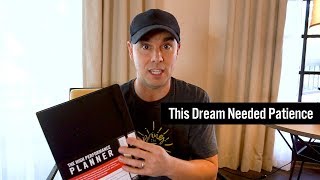
Brendan launches his High Performance Planner after three years of development. It hit Amazon's top-20 bestseller list. He shares three lessons: work on your dream daily (high performers spend 60% of their week on needle-moving work), use vivid visualization to stay motivated, and release imperfect work instead of waiting for it to be perfect.
Chapters
Hey all, it's Brendan. And right off the bat you can tell this is not the usual Brendon show. I happen to be filming this while I'm on the road with this tiny camera because I thought I'd share something that's really timely, really exciting, something I'm deeply passionate about and something I've been hugely challenged by over these last three years. And so I thought I'd do just a fun episode on the road. You all are asking me all the time anyway, like what's it like when you're not in your big fancy studio? And I'm like, it's kind of like this. A hat, a T shirt. On the road, hustling, working, doing my dream. You know, I'm here today, I actually start a 5 seminar tomorrow. It's called Certified High Performance Coaching. It's the hardest training program in the world to deliver. And that's not from my opinion. It's five days from 9am to 7pm and it's just me. So it's one of the longest single trainer LED programs in the world. It's brutal. That's coming off of six weeks where I've been on the road, where I did what, three other four day events. And in that time I also struggled because I had pneumonia. And I don't know if you ever had that, but it is the worst. I would take the flu for three months over two weeks of pneumonia. I mean, it was brutal. But I'm okay and I'm heading to this seminar feeling better, feeling stronger. In that same amount of time I was finally bringing a dream into fruition. And in this episode I want to talk to you about that, about the patience and the things that are necessary and required for you to actually bring a long term goal into fruition. Because I know how hard it is sometimes, you know, you might be up late at night at your kitchen table with like one light bulb on, working on your dream at night and you work all late in the night and then you got to get up and then you go do your regular day job or your regular efforts or you know, go back to that other thing. And you know that those hopes and those dreams you have at night while you're creating and working on something, you're hoping too that that sustains you throughout the weeks. But a lot of people quit on their dreams after a week of struggle or after two or three, four months, they start saying, ah, it's just a hobby, you know, no one really cares about this and they can't weather the storm of the difficult times they can't weather the storm, of the doubts that they have, of those days where they don't feel like creating or working on their goals or dreams. And eventually after a year or two, they give up. And even though they never even put the thing out there, they don't even know it works, they were working on it, but they just didn't believe in it enough within themselves and they quit. And I don't want that to be the case for you. So I'd like to share in this special episode what's happening in real time in my life right now. Many of you guys have been with us. If you've been watching me on social media, especially on Instagram, this last week, I launched something that was a huge dream of mine. And I want to share that about you and tell you maybe three things you could do to sustain the journey if you didn't see it right here. This is the big hot news for me right now. Now it's the High Performance Planner. I don't know if you guys can see that because I don't have a backlight here, but this is the High Performance Planner and I'm super pumped about this. I spent three years trying to build the world's best, sort of two in one day planner and productivity journal so that I could explain to people like how I do all this. You know, I had the benefit of conducting the world's largest study of high performers that's ever been done and I had all this insight about what they did with their morning routines and the questions they asked themselves in the morning and how they prioritize their day and how they reviewed the day and what scorecards they used to stay on track during the day, during the week, during the month, in the year. And I had all that information. It didn't land in my last book as much as I really wanted it to, but I also wanted to create a tool for people where you could do what I do. I mean, every morning I use the High Performance Planner and have for three years, by the way. So this is not like some big surprising pitch for anybody who've been following me. But this has been like my project at the kitchen table, literally working on this every night to perfect it. And what it has is it's got like these different sections, it's got like your morning mindset, it's got like your day agenda, it's got your evening review and then a habit scorecard that's been directly correlated with long term success. Meaning we know that if you'll measure yourself and improve in these six habits in this planner that you will improve your productivity and your long term success and high performance. We can measure it, but then I did things like in your weeks, right? Every single week I have you review your learnings, review your whole life. So we have this whole life assessment, the beginning that you start at the very beginning, you give yourself scores on that and then you score all of your habits. That happens every week. And then every month we have more assessments in here and it's just awesome. So if you haven't seen it, just go to highperformanceplanner.com or click the link in this post somewhere. Highperformanceplanner.com it's launching this week. That's why I'm doing this video on the road for you. Because it's literally this week and if you don't get it right now, I can't guarantee you'll get it by Christmas because it will sell out. We debuted it on Amazon on Thursday and it was an immediate, what, top 20 bestseller. As I'm filming this right today, it's number nine out of the all best selling books on Amazon. So we got it had a big four or five days. And that's why I haven't got to shoot this video for you, because I've just been on social media, it's been crazy. But I wanted to use it as a lesson point too because creating this thing was a three year effort. And how many people will work diligently on something for three years? Not many. And so that's why I want to share some insights that I learned along the way. The first lesson today about sort of having patience for your dream is you have to work on it every single day for at least 30 minutes or don't fool yourself that it's going to happen. You know, we all hope that one day we'll get a bunch of free weekends or a month off or three months off and that's when we'll finally start working towards our thing. You got to do it every day. What that means you research every day, you read every day, you study every day, you take a course every day or you actually create everything on that thing every day. You're just working at it. Book authors, they write every day. Not all of them, but a lot of the greats wrote every single day, right? And it's just forcing ourselves to, to really be in the game. Now. Not everybody writes every day. Not everyone needs to create every day. Some people could just have a marvelous 18 days and they've written the greatest book of all time. But that rarely happens. It rarely happens. And those folks tend to be like masters or savants or geniuses, regular folks, myself included. I got to work every day towards my dreams every day. I honed in something about this. And if you didn't know something about me, I do everything in this business. I'm shooting this video right now. But I mean, I picked the materials for this thing. I chose the fonts, I designed all the pages. I mean, I wrote the back cover, the front cover, the inside stuff. It's like I do the projects of my dreams and that's what keeps me creatively fired up and engaged, you know. And so it took every day almost for three years. I was either picking materials, changing the setup, testing it out, working on it, printing out the pages, doing the weekly, the monthly, the yearly, trying to figure out what assessments went in it, what trainings went in it. I decided ultimately to pull out all the fancy quotes, get rid of all the empty pages, and make this a workhorse of a planner. This is something that achievers will use. It's not like a gratitude journal where you're just like, oh, cute quote. I guess I'll write what was great today. And nothing wrong with that, guys, but I think you've had enough of those. And I wanted to create a strategic thinking person's planner, something that you could do every single day to be on your A game. Something you do every single day that would force you to approach the day more strategically, that would force you at the end of the day to really look back at the day and discover the gems, discover the things not just you appreciated, but things you learned about yourself, about other people, about your mission that force you to score yourself every day in the habits that we know scientifically lead to long term success. That was a ton of work to decide what goes in, what doesn't. And there were plenty of days I was like, ah, this doesn't work. Or ah, this day. I don't like this format, this design. But I just kept tweaking and tweaking and tweaking and tweaking. Then I'd learn more about the morning routines or the habits or the successful mindsets of people. And I made sure I was getting that in. Then what did I do? I gave the sheets, I printed out the sheets and sent them to my best clients and some major influencers and celebrities and huge entrepreneurs all around the world. I said, check. Would you fill that? Like, do this for a week or two? Tell me what you thought about the process. So I created beta groups and these people would fill it out, they'd do it for a couple weeks and they send it back. I'd make them take an assessment, like a professional academic validated assessment to see did their productivity actually improve. Thank God it did. And so that all led to this. It took three years. And it's not just because it took this many of you see, if you saw on social media, it's because we also launched this and this and a full year planner pack. So if you're like, Brendan, how could it take so long? It's like, well, there's like basically eight different SKUs here, right? We've got a full year pack because each of these planners is 60 days of sort of strategic thinking in your life. Day by day by day, every day. There's something in here, and I didn't want to get too thick, that didn't just slide into your laptop bag really comfortably. I also made it large enough that you could actually write about your life. I know there's little dime sized journals are really cute, but I wanted you to work for your life because I've working with high performers, I've noticed like the ones who really crush it, I mean they really think about life. It's hard. Like you're gonna fill out some of the questions in here and be like, brendan, those questions are hard. I don't know the answer right off the bat. I'm like, great. Because listen, if it doesn't challenge you, it doesn't change you. So I wanted to really go for it. So that's why there's so many different colors and stuff like that. It just took a long time, every single day. Here's what we learned about high performers in general. Those who achieve the longest term success in whatever their field is, they tend to spend about 60% of their week on what we call needle moving activities. These are activities that we could see or measure and that were the major activities that led to their wealth, their growth or their success. 60% of their week. Now the good news is that means they're not to spend every single, like hour of every single day. I mean, that other 40%, sometimes that's administration, sometimes that's, you know, email, text, you know, talking to people, management, delegation, like all the stuff of life. But 60% of the time their week, they were dialed in, in the major needle moving activity. So when I ask you for 30 minutes of your day, man, that's bare minimum. That's bare minimum. The highest Performing, meaning the most successful in any field in the world, spend 60% of the week on the needle moving activities that make them successful. Now, I know that might be different for you because maybe during the day you're working on, you know, needle moving projects at work and then at night you're working on the separate hobby, the separate dream. That's where your 30 minutes happens. Or maybe you get up an extra, you get up 30 minutes earlier and you work on that dream. But every day you need at least 30 minutes. And if you want long term success on whatever project or dream it is that you're after, you need about 60% of your week dedicated towards that. That's my first idea. Number two, the most important thing. I know this sounds so, so silly, but common sense is not always common practice. And that's why so many potentially great people fail to ever achieve their potential. And that's this. Listen, you have to get your visualization game down. Visualization, that means, listen, when I wake up, when I got a dream, I wake up in the morning before I get out of bed, I close my eyes and I just see it happening a little bit. And I'll lay in bed and let my mind and my body stir up a little bit of excitement or sometimes even anxiety about seeing the actual thing that I want happen. That was for me at one part of my life, seeing myself on stages, speaking and training to people. One part of my life. It was seeing my book come out and seeing it on the New York Times best seller list or seeing it on the Amazon best seller list. It was sometimes seeing myself coaching major celebrities or sitting side by side with an Oprah Winfrey or a Tony Robbins or a Larry King, all of which I've been able to do. It was because I visualized what I really wanted. But here's the thing. It's not just visualization that's like the first part. It's also affect. We talk about high performance and in psychology about this thing called affect, which is basically feelings and emotions. I want you to allow yourself to literally, not just kind of casually see it. Like put yourself there and feel it and sense it and see it and feel it and drink it in. Like, really take in the ambiance, the circumstance. Like really visualize and feel, feel what you are seeing. That's so key. I mean, as silly as this is, I literally would lay there and I'm like, okay, if I'm going to feel like, feel, like, fill out the ideal thing, what questions would I ask to really get it going I just start literally seeing myself at my desk in the morning, filling out the high performance planner, thinking about other people worldwide, filling out at the same time as me and knowing that I got this tribe of people on this path of trying to be their best with me and imagining people coming up and goes, oh, my gosh, Brendan, you completely changed my morning. You completely changed my weekly routine. You completely changed my life. Cause I'd never tracked my habits before. I'd never assessed my balance. Every single week. Between family, friends, work, finances, adventure, learning, et cetera, everything, every tool that we put in here, I could just imagine someone coming up saying, brendan, I really appreciate that part. And I literally just thought about it because I wanted it to feel like, you know, I was excited for the project. Otherwise, what? Look how easy it is to diminish anything in our lives. Well, it's just a book, it's just a planner, it's just a. Just a video, it's just a cosmetic line. It's just a beauty thing. It's just that, like, we all diminish our dreams. We make excuses and we make our dreams like, ah, we throw it away because we're scared to feel it, you know, I'm saying it's easier to throw it away. That's no big deal. Avoid it. Not no problem. And we mess up. I want you to feel it. Stop detaching from your dreams. Stop avoiding that anxious, scary feeling of thinking how hard it's going to be and thinking how great it's going to be. Because most people just, they don't want to even think about it because it's just, it causes too much nerves. I'm like, dance in those nerves a little bit. Let them come up for you. Because that's fuel, man. That's fuel. It's like Les Brown taught us. You got to be hungry. You'll never be hungry if you don't visualize it, see it, feel it, and want it. That's the big number two. I would say number three is realize whatever dream you're going to have, you have to perfect it in motion. You can't be a perfectionist. Like, I could have gone another two years working on this and validate it with, you know, 12 other academic teams. And I could have gone out and built, you know, four apps for it and, you know, online things. I could have kept this dream kind of in work in process forever. But listen, a real perfectionist realizes the real root definition of perfectionism is to perfect. And you cannot perfect something until you have released something. So sometimes you gotta set a deadline for your dream and you gotta go, why am I filming this? Why are you like, Brenda, I've never seen you in a hat before or a shirt. I'm like, well, watch my social media, please. On Instagram especially. But the reality is I don't have any choice. I set a deadline for this thing. We were going to go. So this last Thursday, when I announced it, we were not ready. My team wasn't ready. The world wasn't ready. I didn't have enough time because I'd had pneumonia and I was knocked down on my feet. I was just out of it. It didn't matter. We were launching. Here we go, let's rock. And it kicked my butt. But I'm glad I did it because as you release something, you start getting feedback. And I started to get a feedback. Like, let me give you an example. This one, I don't how the color in this room is terrible. So I apologize for that. This is the yellow high performance Planner. This is the one I thought would fly off the shelves. Talking with friends, had to give some. I thought it was gonna be the yellow one was gonna be bam, right? And if it wasn't that one, I thought, well, maybe it'd be like the cool orange. Let's see. I don't. You can see all these, like, there's a cool orange color in here. There's green, there's blue, there's yellow, there's red. This is the full Year Planner pack. So if you do look up on this on Amazon, by the way, you can type in full Year Planner pack and get this beast mailed to you and this will last you all of 2019. It's super awesome. Anyway, I learned, I learned like this. Not the most popular at all. Least popular. So why is that important? Sometimes putting things out there is the only way you actually get closer to perfecting your dreams. Right. I put it out there, I've launched it. It's available for pre order right now in the United States, Australia, Canada and the uk. Okay. So if you're in any of those countries, you need to order it now, especially if you want it by Christmas, because this thing is selling out like crazy. But also I learned that this one is going to be one of the big ones. It's basically these two. It's the black and the red. Okay. Notice when you take off the wrap, this is what it looks like because I want it to be understated. You know, I hate when you get those journals and they're super fancy and florally. And everything. I was like that. I was like, you know what? I'm an understated, simple guy. Strip it all down. What's magic is what's inside on the out. It feels beautiful. It feels like a moleskin journal. But I wanted it to be very simple so never's not like, hey, what's that thing? I just wanted you to kind of learn to play your A game and no one knows what your secret weapon is. Right? It'll turn out your greatest secret weapon and your productivity of all of your whole life will be this thing. I promise it. But I wanted to be understated. Well, I learned this one's the blockbuster. This one debuted in the top 20 on Amazon, and I have no idea where it is when you guys are watching this video, but for five days, it held that spot in the top 20. So I'm stoked about that. If it held it for one day, it's a planner. Like, I had no idea it would crush it like that. So thank you all for supporting me. But I hope you hear the message here. You have to work on your dreams every day. You have to visualize and see it and feel it, to work through all those times when you want to quit or when you don't think it's important enough. Because it would be easy for me with, you know, I have four multimillion dollar businesses. I have millions of fans that I've got to talk to. You know, our videos just on, you know, just on YouTube have been built like 70 million times. And it's just me teaching. I'm not even funny. Right? I'm not an entertaining person. So it's pretty amazing that my teaching and my training has gone that far. But I share all this with you on the road, kind of on the fly, because this has come out and it's been a labor of love, and I love that. And I want to see you have your labor of love come into fruition. I want to see you have your dreams come true. I want to see you create things, but release things and then perfect it. Like, I learned. Now it's like, oh, got it. Okay, this one's going to be the big one. Great. We'll do a redesign and a relaunch with different color schemes and everything else. And, oh, wait, this country orders this many and this country orders that many and these people from this state or. Oh, got it. This ad works. This one doesn't. Okay, great. This promotion, this email, Great. You're always going to be learning. Don't give up on Your dream just because the first time you launched it, it didn't go as big as you want. I've had books that came out that weren't New York Times bestsellers right off the bat. It came out, didn't do that well. I'm like, crap. So I had to learn and work and work and massage the marketing, do different videos and test it and shoot it in different ways, explain it in different ways. And then bam, it hits the New York Times. It doesn't have to be crush it. Sometimes you release a dream and you don't believe on in it because it does. It only gets 100 likes at first or a thousand. You know, people comment on it over a period of years and 100 of them were your mom, you know, and it's like, it can feel so disheartening. But I'm like, listen, if it's still in your dreams, if it's still in your heart, if you still lay in bed and you dream about and you think about it and you really genuinely feel it, then that dream was sown in your heart for a reason. That dream was given to you to protect. That dream was given to you to create. That dream was given to you to fulfill. So, my friends, believe in yourself. Believe in your dreams. Put your dreams out there, do the hard work. Because you deserve to see them out in the real world. But you won't if you don't start working at them every single day. Patience comes from. I know that this will happen. Patience comes from saying, okay, I'm going to work at it diligently every day. I'm going to allow myself to feel. I'm not going to those feelings, I'm going to let them come in. I'm going to work at this thing diligently. I will test it, I will put it out there, I will make it better. But I will not give up on my dream. Because that dream, I own that dream. It's your responsibility to make your dreams come true, my friends. I know you can do it. Remember, you're stronger than you think. And the future holds good things for you. Sam.










