What You REALLY Want. (The 4 Desires by Brendon Burchard)
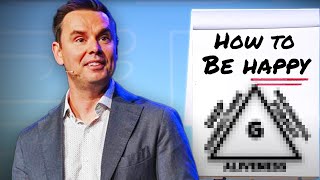
Brendon Burchard outlines four core desires beyond basic success: aliveness, connection, meaningful pursuits, and growth. He draws on his father's death and work with US Presidents and Olympians to argue that active pursuit, not just achievement, creates lasting meaning and well-being.
Questions this video answers
2009
Two US Presidents
Over a dozen Olympians
50 of the Fortune 500 senior executive teams
Eight personal development seminars a year
Chapters
When you were building it the first time and you were chasing it, you were building it, you were in pursuit, you were happy. Now, some people, they were in pursuit. They got the thing, but they're not chasing anymore. So they got the wealth, they got the house, they got the dream, they got the jet, they got the accolades, and they don't feel it. They're living a meaningful life and they struggle. What's happening with me? Is it my relationship with God? I'm like, oh, you're not hunting hard enough. The pursuit is not sufficient for the purpose. Can I give you guys a secret right off the bat? Of all the people I've worked with, two US Presidents, over a dozen Olympians at the top levels of the world, the best sports players today who are literally in the game right now, the opportunity to work with 50 of the Fortune 500 senior executive teams. I can tell you a super secret that most people don't know. Do you know what people want after they've already had safety, sustenance, and success? Do you know what they want after they've already had safety, sustenance, and success? I'm just curious. If you can just shout out a word, what do you think they want? Relevance. Purpose. Legacy. Significance. Habits. Feeling good. Contribution. Appreciation. Connection. Be happy. Okay, we're on the right track. Let me tell you. There's only four things they want, and I will show this one slide for my thing. Sorry, I said I want. Let me show one slide and then I want to get in the phases. I'll show you one slide. It's very simple. The first thing that everyone wants after they have everything. This is how I get. How do you get a billion dollar client? I'm gonna give you one word. You ready? You don't look like you're interested. I'm gonna give you one word to get a billion dollar client. I have seven of them. One word. No one cares. Okay, I guess we're gonna go to all the slides. I was gonna invent this for them. They're not interested. Who wants to know? One word, and I want you. Right, and test me on it. Test me. Don't take my word for anything. Test me. See if this word resonates with you. You already have everything. You do. You're in this room to afford to come here, to be in Ken's orbit. You got it. You've made it. You've got money. People watch you. You probably have an audience or a team. You probably have wealth. You probably have one of the nicer cars or houses in the Neighborhood, some of your kids even like you. Maybe. I don't know. I know what you want. I might know what you want more than you know what you want. But test me. Here's the word. What everybody wants. After safety, sustenance, and some success. What everybody wants. Aliveness. We want to feel more alive. These are what are related to our psychological being goals. It's. I want to feel. This is what they say. I want to feel the day again. I want to feel life. Oh, we haven't learned to be alive and aligned and in flow yet. Got it. Let's start there. The second thing everybody wants is connection. Connection is the quality of your relationships with yourself, your loved ones, family, friends, and maybe even for those who have faith, since we're in the house of the Lord God, a greater connection. And most people spend their entire life chasing more connections. I want more likes, more friends, a greater network. And they have no depth with the humans. They're actually with. Randy Garn, one of my closest friends in the world, as well as Ken's, was up last night. He's supposed to speak here today, but his dad, who's been in intensive care, has now gone home for hospice. He's got terminal cancer. It's not just in his brain now, it's in his whole body. So Randy, who's going to speak today, we all convinced him, go home. And he's such a man of service and of God. And he knew he was speaking in a church, and he loves Ken. He still flew down, and he was going to stay the night and then be here. And we all just said, brother, go back home. Go home. And we sometimes forget the connection, the depth we have with people until they're threatened or they're gone. I lost my dad in 2009 to leukemia. And. And I remember, you know, if you ever lose somebody, everyone tries to comfort you, you know, and they do very well meaning. And there's no right or way wrong to do it, because grief is different for everybody. But I was really struggling. Cause, you know, I'm the motivational guy at that point. I was doing eight personal development seminars a year in the U.S. this is 2008. And we did it, you know, 15 years unbroken until the pandemic. So eight events a year. I'm out. I'm the motivation guy, right? I wrote Motivation Manifesto that took off. Oprah used it. This lady named Meghan Markle said it's her favorite book. And everybody in the world all of a sudden knew what this motivation manifesto was. This is crazy weird. Blip. Moment of our life. So I'm the motivation guy, but I can't barely get out of bed after dad dies, and I'm struggling to deal with the grief, and. And I taught grief. And I'd been in hospices for several years after my car accident. I wanted to help people who had faced their end, and I still couldn't deal with it. And then a friend of mine called. I'll never forget it. He said, kid, let me tell you something. This is probably about three months after my dad died. Just a guy I knew in the industry. Kid, let me tell you something about your dad. You know he loved you, right? I said, yeah. You loved him, right? Yeah. Loved your family, right? Yeah. Let me tell you something. That hole in your heart, it sucks. It sucks that your dad died. It sucks that he's gone. And I want to let you know. My dad died 15 years ago. He tells me. Still sucks. It's always gonna suck that he's not here. I just wanted to tell you that it's always gonna suck. It sucks. It's okay that it sucks. It's okay that you don't feel well. It sucks. He says, the only blessing that I've learned since then is the hole in your heart. It never goes away. But the blessing is every time you feel the hole in your heart, it floods and fills in with memories. So the hole in your heart is what keeps your dad's spirit and memory alive. If you didn't feel the hole in the heart, it wouldn't fill in with the memories and call forth the memories. So the pain there is actually the thing keeping you a little bit connected and filling in the memories. It's okay that you feel like there's a hole in the heart. It's okay. It sucks. It's always going to suck. But at least the memories will keep coming and you always have that connection. Like, wow. Instantly felt better because I realized I was never gonna lose the connection with my dad. That's how bad we want connection. When connection isn't there, we don't get out of bed. For me, when I didn't have connection as a young man, I became suicidal as a young kid. I had my whole life in front of me. I became suicidal cause a relationship broke up. How does that happen? It's. Cause it's a human desire that's so deep. When it's not there, we are miserable. Why do I say this? If you don't feel happy and you have all the reasons, please go deeper in your relationships. Don't Distract from them, go deeper in them. What people do is they go, I'm unhappy in my marriage, I'm unhappy in life. And they know aliveness is there. So they go after aliveness and they chase the new thing, simultaneously ripping the connection over here. Realizing that sometimes aliveness is fun and flirty and something exciting. And yet the time it will take to create that connection is so much longer than the time it would be to recreate this one and get some depth there. Find some depth in your marriage again. Find some depth with your team again. Find some depth when with the immediate people. I brought Randy because yesterday he asked us all, and I think it was awesome. He asked us all to write down our top five people in our life. He had us all text our mom or dad if we still had the blessing of having them around. Then he challenged us at the end. He said, write down the top 25 people and keep them close. Basically. That's pretty cool. That's pretty cool. Big desire is your desire for connection. The other one you see up there, and I love this one. Meaningful pursuits. Meaningful pursuits. Notice it doesn't say meaning. Everyone I work with, they already have a meaningful life. Actually, by the time they get to work with me, they've already built something amazing. That's why they're in my seminar room, that's why they're in our conference, that's why they're in my mastermind. That's why they're in Ultra. That's why they're one on one client. They already did it by the time I get to work with them. So they have the reason for meaning. But you know how many people don't feel it. And you know what's so cool about the human psyche is even if you have the reason to feel meaning, sometimes you don't. Because when you write your notes down, just do me a favor, would you, on your notes, would you make sure you circle this word pursuit. Would you write that down? Cause when you were building it the first time and you were chasing it, you were building it, you were in pursuit, you were happy. Now, some people, they were in pursuit, they got the thing, but they're not chasing anymore. They're not hunting anymore. Hunters and gatherers. So they got the wealth, they got the house, they got the dream, they got the jet, they got the accolades, and they don't feel it. They're living a meaningful life. I've worked with pastors. They have all the reason in the world to feel meaningful. They're creating a connection with God. They're sharing the word, and they don't feel a sense of meaning, and they struggle. What's happening with me? Is it my relationship with God? I'm like, oh, you're not hunting hard enough. And all of a sudden, oh, the pursuit is not sufficient for. For the purpose. They're not in active motion, challenging themselves in the pursuit. So in the middle of that triangle, you saw the word growth. When I work with a client, it's maybe the fourth question I ask them. I go, tell me, how are you strategically growing right now? And if they can't describe that right away, I know their misery is more deep than most people. Tell me, how are you strategically growing right now? For some people, they think about their business. They think about what they're gonna grow or build. Some people, they might tell me some skills they're working on. Some people might tell me, you know, oh, I'm trying to do this with my family. That's cool. That's cool. But I just need you to know it. It's fine. I don't have to give you. You need to know it. And when I look at the calendar, it should be obvious in your calendar what you're trying to build. So there's blocks of time for the skill set you're trying to build. It should be obvious to an external human being what you are trying to grow into in your life. And some of you, that might be your spouse, she just knows what your goals are. Awesome. That's part of it. But your growth is what's really critical to everybody here, which is why I love Ken's teaching and where he goes with it, because it's that permission he's trying to give that I'm trying to give as well, which is like, you need to give yourself permission for a higher ambition. Do you know what died for a lot of people last three years? Ambition. We made ambition a bad word, and we're shocked that the culture is disengaged. What? No. Ambition, hunger, drive, stack. All of that is good as long as you don't wreck your health and your relationships, which is what we call high performance again. So, again, if you haven't read high performance habits, make sure you read that. That's the baseline study. If you're not doing the six habits of high performance, there is no hope for you to become a high performer or to sustain it. And that's not my opinion. It's the largest study ever done. It's just so obvious. And if we can do those things, we can start to grow.










