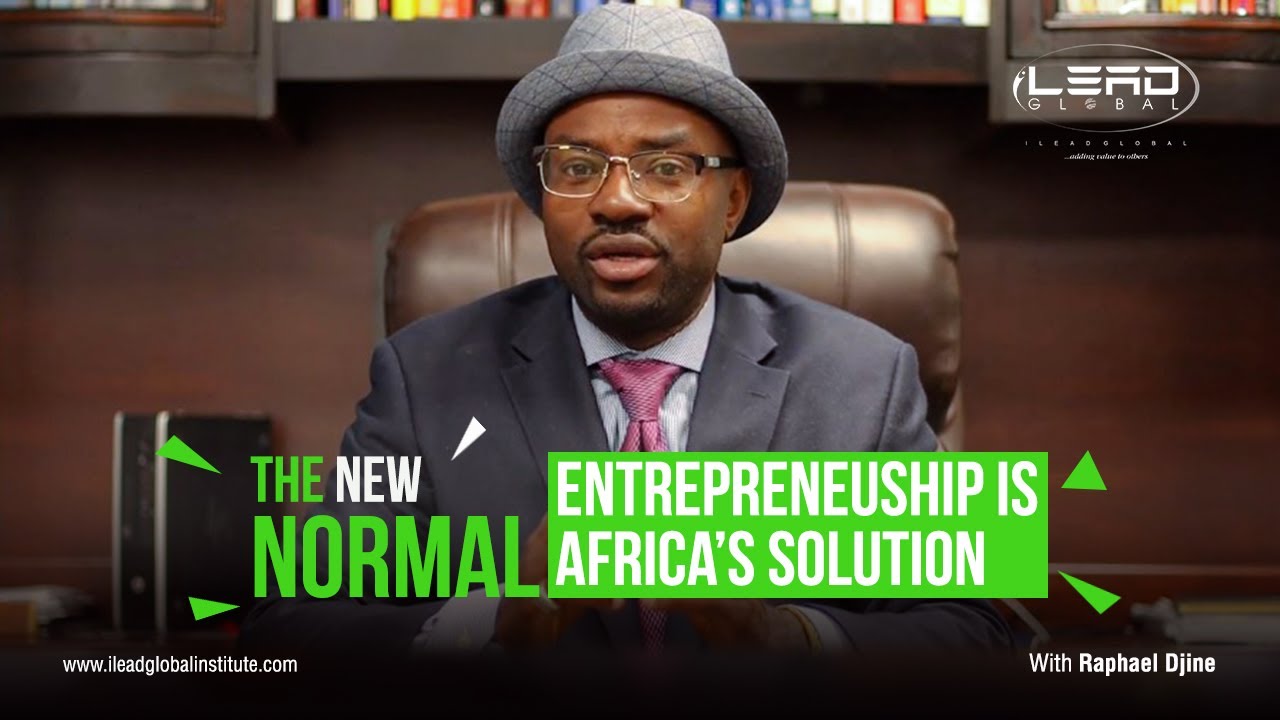
In this motivational talk, Coach Raphael Djine argues that Africa’s path to economic independence lies in fostering entrepreneurship rather than relying on colonial‑era education and wage‑labor jobs. He contrasts China’s grassroots problem‑solving approach with Africa’s historical dependence on foreign powers, noting that African curricula often teach irrelevant subjects (e.g., snow in a continent without snow). Djine highlights the continent’s abundant raw commodities—coffee, cocoa, bananas—and laments that these are exported for processing abroad, leaving Africans to buy back the finished products. He proposes building local value chains, creating micro‑ and small‑scale businesses that transform raw goods into locally‑branded products, thereby meeting domestic needs and generating wealth. The speaker calls for a cultural re‑programming toward entrepreneurial mindsets and announces a November event, “The New Norm,” where he will demonstrate step‑by‑step how to start and sustain a business, especially for those who have spent decades working for others.
Chapters
Hey, my friend. I know you are doing so well. I just want to talk about entrepreneurship as a solution to Africa today. I want to share a few things with you. Think about, think about China, for example. I love to use China because China was way less than any African nation. African nation used to help China. China didn't emerge because You know, they was trying to argue or find out who's going to be the leader, who is going to, you know, take the— be in the White House, or who's going to be a president and all that, or who was going to go to what school and have which degree. You know what? From the small village to the big town, Chinese, they start see problem and solve it. And today, If African, if Africa want to rise up and free themselves from slavery, because we were trained to become slave. That's why we, the colon, the people that give us, that claim that they found Africa years back and they give us independence at certain point. They teach us, they give us a language. They teach us how to count the way they count. They give us God. They give us, I mean, they give us everything. And they give us what we're supposed to study. Most people in Africa are actually studying the snow, and there's no snow in Africa, in most parts of Africa. So when you're done with the study, what do you do? You can't put food on the table. You can't take care of your mom. You can't take care of your kids. You can't take care of your wife. Why? Because you learned the wrong thing. You didn't learn how to solve your own problem. You didn't learn how to meet the need of other human beings around. Versus other emerging nations, they learn how to solve their own problem and they learn how to meet their own needs. Now they are meeting other people's needs. The solution for Africa, I believe, is just to raise entrepreneurs, is to raise people, is to reprogram people that can really, really target different areas to solve a local problem. There's no way we can be in Africa— Ivory Coast is one of the biggest nations that produce coffee. Or, but, or Africa is one of the big nations that produce cocoa and all that. But the chocolate is known as sweet as Switzerland. There's no farm in Swiss. Why we can't get people that even in a micro unit will be able to produce, to produce chocolate? And sell to the local market? Why those coffee we can't transform and start have different type of candies produced locally? Why we can't have— promote a local coffee? We drink coffee that is coming from Europe. So we actually produce coffee and send it to the Western And then they walk there and set and come turn around and resell it to us. African, we must start micro small business. We must start bring solution for our own problem. We must do that, and I believe that's going to be the way out from slavery. If it's not, we will continue to, you know, work so hard and die early because we have nothing to show for, or sit down, wait for somebody that is less talented than us, that is less smarter than us, come and take care of us while we are feeding them. Banana is leaving Cameroon and go to France, but they call that French banana, while they are produced in Cameroon. The old lady or the old man can work in that plant or that farm for 20, 25 years and die. But we have multi-billionaires in Europe that actually live off those things. We have to move from the job market and start small business. And start solving problems. Matter of fact, we are doing, but we are doing the wrong way. That's why in November you don't want to miss it. The new norm. I'll be talking about things like this. I'll be, I'll literally show you how to start your business. Most people have been working for their boss for 20 years. Matter of fact, they run the company. The boss is even gone. They just do everything and send the money to the boss. And I want to show you how to do that. So when you work, after you work for 30 years, you have something you can fall back on. So see you in November. Thank you.