How Content Can Change Your Entire Life And Business (1+ Million Views/Month!?)
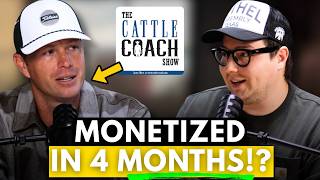
Cattle entrepreneur Colton Thigpen built multiple businesses to over 1 million monthly views using YouTube, podcasts, and short-form content. He treats his team like a sports franchise, focuses on watch time and sponsorships over vanity metrics, and credits partnership and faith as core to scaling without debt.
Chapters
And I'm thinking the camera is rolling, we're about to have the best set of content ever, and then I need to go get this guy some Charmin.
They were saying AI, we're going to AI this, and we're going to do AI with this, and I was like blown away. I was like, whoa, these guys are genius. Like, they are so far ahead. And then they just start sticking their hands up places that I was like, I have never seen in person.
One piece of advice I would give you is probably is going to fail if you're partnering on your baby. But if y'all partner on y'all's baby, that's when it'll be successful. As I watch other people, you can see their businesses tap out at the rate of their— Brand Builders Podcast.
Colton Thigpen, welcome to the Brand Builders Podcast today.
Thank you for having me.
So excited to have you on. Friend, a client. I feel like we have got to do some cool things together so far. Um, you've probably seen this guy if you're part of the cattle world on Facebook or YouTube, and it's been amazing to watch his stuff blow up from the ground up, really. And so I just wanted to bring you on, get your story, get your background, um, and bring some of your wisdom to the viewers who are also building brands. And so what have you all been involved in as far as businesses go?
Man, I'm, I'm a little bit ADD. Me and Naomi, we've talked about this. Um, and so my business journey has been a little ADD, kind of all over the place, but my, what I've always done and always been passionate about, like the main deal has been raising show steers. Specifically American cross show steers. And that's kind of been my lane forever. And through deepening my relationship with, with Jesus and, and a series of promptings that he pushed me towards, I ended up selling out my show cattle herd in 2021 that I'd worked my whole life to build. And ended up kind of taking a sabbatical from that. But other opportunities just like started coming in. And one of those was, uh, I partnered up with Jason Holder on Bull Nanza Stud Services. We're a bull collection facility. Shortly after that, we started Express Livestock Genomics, which is like basically a chemistry lab, which chemistry. I failed a couple times and needed some help in there. Um, but we test for genetic defects that cattle carry. And, um, what else? I feel like a Cattle Coach Academy, uh, which is the business that kind of led me to seek out you. And that's, I guess, all that I can think of. And Cattle Coach Academy is just an online Academy where I help coach and mentor people in the cattle business.
That's awesome. And we've got, we've got to see that grow. And part of our strategy with the content side of things, if you're listening to this, we use the podcast to basically sponsor all of these things. And so we'll throw ads inside of the podcast episodes for Cattle Coach Academy, which is the online course, and all three of his other businesses. Um, you mentioned your partner because I've been studying this, and this is kind of a selfish question, but how has having a partnership in business been? What has your experience been, and why did you decide to get a partner in the first place?
Yeah, um, all the advice I've ever gotten is don't have a partner, okay? Um, but whenever I started my show cattle deal, I started it with the partner as well. one of my best friends growing up, and we ended up being college roommates and his dad had land that needed to be fenced and he wanted a tax write-off and wanted cattle. And I want— I had cattle and wanted more cattle, needed more land. So we formed a partnership and that's how we started growing. Partnerships are healthy and beneficial if they're done correctly. And when that one ended, it ended on good terms. When this one began, it's been on good terms and it's been great. So I'm a big believer. And I think probably what's helped me in being able to maneuver through a partnership is I'm a big sports guy, was a big football guy. And so team was everything. And I don't believe that you can do anything great alone. And so having a team, having that partnership, I think it's a, a healthy way to grow if done properly. And, uh, it's kind of funny that the two partners that I've had, their personalities are very similar. Hmm. Um, they can be kind of short-tempered people, but they're assertive and they get the job done. I'm very non-confrontational. And so it's a good back and forth there.
I've heard that partnership is like a marriage. Yeah, it's just in the business aspect.
Yeah, absolutely.
And so that would make sense that your partner balances you out and is the opposite of what you do, because I've been, I've been thinking of partners and like different things that I could be doing, different people to partner with within my own stuff, because I don't have any partners right now and I've been going through a book called The World's— or The World's Richest Man, I believe. It's talking about King Solomon and the Proverbs. And one of the biggest things that it talks about and stresses is finding business partners, good business partners, not just anybody. And I think that's the key, but it's terrifying to me to relinquish some of that control.
Yeah.
And to trust somebody with something that I have been building for the last 4 or 5 years.
Absolutely.
And so that's what I've been personally trying to navigate. But there's multiple proverbs where it's basically saying like, seek counsel or else it's going to fail. Yeah. And that's not word for word, but I think it's important.
One piece of advice I would give you is it probably is going to fail if you're partnering on your baby. Right? But if y'all partner on y'all's baby and have something that y'all are forming together, and it may be just slightly different off what your true baby is, then that's when it'll be successful. Because if you already have your baby and you're just wanting someone to come alongside, it's never really going to be theirs, and you're never really going to give it to them. So you saying it has to be a new thing, or It doesn't have to be a new concept, but the structure of it has to be new. It can't be how you've done it, I don't think.
Yeah, yeah, it's an interesting thing to think about. And I think a lot of people, like, I— and when you initially start a business, like, your initial instinct is to be like, no, I'm gonna do it all, it's fine, I'll do it, everything. And that's not even just like with partners, that's like hiring out people. To help you and delegate things. And a lot of entrepreneurs end up in the freelance area, at least in my industry. And Robert Kiyosaki in the Cashflow Quadrant book, he talks about the 4 different quadrants. And one of those is like, it goes from employee to freelancer to— or employee to self-employed to Business owner to investor, and these are the 4 quadrants, and people get stuck in the self-employed section. And so did you ever find yourself stuck in that self-employed, or have you always kind of delegated some of your workload?
I'm a terrible delegator. Um, I love working with people that have a big-time initiative and, uh, like jump in there and go. And you can't train effort. And so I will delegate to someone who's like that, but even the people that are like that, that have worked with me, they're like, it takes a certain degree of telepathy to know what it is that you want, because I'm— and that's how my grandpa and my brother were entrepreneurs and I worked for them and it was like, we were about to go. On a 1,200-acre place that none of us had ever been on before. And I— for not saying none of us, they've been on it before. I haven't— work a set of 150 cows. I didn't know how many were out there and I didn't know where the pens were, but I was supposed to know, okay, we're going to ride out this way, gather them all up, make sure they're not in this ravine, put them together and send them to the pens. They never told me any of this. I was just supposed to watch and follow and figure it out, right? And so my delegation kind of stems off of that. Like I'm a poor communicator at what needs to get done. So I've really had to grow in that area. And because I'm like that a little bit, I've noticed that I want someone to do something the way that I would do it. Right. And if I work alongside them, I, I think that I'm gaining their respect by that, but actually. Not so much my words, because I'm not going to tell you, hey bro, you do it like this, but my face will. And so I've gotten caught like, hey guy, uh, this is what needs to be done today, um, let me know if you need anything and I'll go do something else. And if I delegate in that manner, they gain more respect because I gave them more responsibility and they get the job done. And it's super hard for me to trust that process And that's what is uncomfortable. But man, it has given so much fruit to our situation. Yeah.
So, so do you train these people or do you just kind of say like, this is what needs to be done, kind of do it? If you're a business owner and you know that you need to be putting out content and videos, but you don't have the time or the strategy to do it well, well, That's exactly what we help with here at Howdy Media. We offer content strategy, turnkey podcast production, monthly professional video and content services, and access to our state-of-the-art content studio right here in Abilene, Texas. More importantly, we help you create content that gets actual views, builds real trust, and turns attention into clients and customers. Because at the end of the day, That's why we make the content. So if you're ready to stop guessing and start using content to actually grow your business, go to www.howdy-media.com or send us a DM. Hope to talk to you soon.
With Instinct, it just kind of depends on what it is you're doing. A lot of the tasks are very simple, right? But if it, if it requires training, absolutely we'll train them. If they need to watch me do it. And then we have a certain standard that we work by, and then just a couple very simple rules. Like, a lot of what we do is with animals. Number one, don't get yourself hurt. Number two, don't hurt the animal, which almost happened to me.
Yes, we'll tell that story here in a second.
But if, if you're doing both of those things while getting something done, then you're probably doing it right. If you get hurt or you hurt an animal while you're doing, you didn't do it right.
Yeah, pretty simple.
Yep.
Yeah, so that story about me almost getting injured, I don't know, I don't know, it's either gonna be me or it was gonna be the cow.
The cow is never gonna get injured in this scenario.
Nope, it would have been me. It would have been my leg. From your point of view, tell that story real quickly.
Yeah. So Daron is out, um, kind of being a fly on the wall, videoing, uh, a workday. And this particular day we were flushing some donor cows and transferring the embryos. Well, Daron was assuming that all these cattle were very gentle, especially just coming out of the chute after getting poked with needles. And he positioned himself to get a great shot in the corner of this pen, right at the head of the chute gate. And they would exit and kind of go right by him. Well, I had this cow in the chute that I knew was going to come out pretty hot. And Daron—
but he knew, but he didn't tell me anything.
Daron was tucked away over here and I'm like, I don't know where, where to tell him to go. I don't really want to wait on him to get there. This could end up a funny situation, and he'll figure it out.
And so a lot of trust. There was a lot of Jordan 1s out there.
Yeah, yeah, he was dressed about like this, may not even have had a hardcore Carhartt shirt on. It was probably like a— what's that, uh, Taylor Swift sings about, a cardigan or something?
No, no, no, no, no, that's a little too far.
But the— let the cow out of the chute, and instead of rounding the corner and just looking at him, she like stays in the corner and gives him a—
and he starts like making these noises at me, bro.
And I'm thinking, the camera is rolling, we're about to have the best set of content ever. And then I need to go get this guy some Charmin.
It was good.
He— typical camera guy— it got out of focus, so I cut it off. That's what he says.
I wasn't thinking about the focus in that moment. I was thinking about my life and my injured body if, if I didn't.
And where he was, like, we couldn't really help him because we would have pushed the cow on top of him. So it was like, hang in there. And he did. He was a statue. I think he intimidated that cow to go away.
Yeah, not on purpose. No, that wasn't— yeah, anyways, so that was a funny story. Another funny story, so I'm a big AI guy. If you listen to this podcast, we talk about AI a lot, and there's a big difference between the AI in my world versus the AI in the whole—
I'm a big AI guy too.
And so one of the first days that I went out to shoot at his place we were talking about AI this and they were, they were saying, AI, we're going to AI this and we're going to do AI with this. And I was like blown away. I was like, whoa, these guys are genius. Like they are so far ahead of everybody else in the AI world. And then they just start sticking their hands up places that I was like, I have never seen in person. And different kind of AI, artificial insemination.
Yeah, so Bull Manza, we literally collect bulls, turn it into straws for the use of artificial insemination AI.
And so that term gets thrown around a lot, like it literally is our business, which it has been that way before artificial intelligence was a like actual thing, like, yeah. That's what it was. AI was artificial insemination. Yeah, until the last few years where ChatGPT came out and everybody started using it and freaking out over it. And I use it literally every day, so like in my mind I'm thinking, yeah, robots.
We had to, uh, baptize you in the cattle world of AI.
It's a, it's a crazy world out there. The things that happen on A ranch is amazing, and I get to capture a lot of it. That's one cool thing. So we've been, we've been able to help Colton build some of his YouTube channel and his podcast, and I wanted to kind of go over some just stats real quick and then just get your take on what your experience has been. Yeah, going all in on content and doing the whole YouTube thing. So In the last— we'll do the last 90 days. So the last 90 days on YouTube alone, we've had 44,000 views on his podcast, um, 1,000 hours of watch time. We're at— within how many months has it been? 6 months, 7 months, something like that. Um, we're up to 1,532 subscribers on YouTube. You're monetized, making money from the content, making money to market your own stuff. Stuff, which has never happened in the history of business before, which is amazing. And then Spotify stats— did you pull those up, Naomi? She'll be getting those Spotify stats, which are honestly probably the same or even higher. Um, but what has your experience been with content and doing the whole content thing? Has it been harder than you thought it was going to be? Has it been easier than you thought? Like, tell us about that.
Yeah. So I've just, with what I do, I've always had somewhat of a, a natural following or spotlight on social media. I was a quarterback in high school and college, and I played football for A&M and then raising show cattle and at that time, all my sales were through online stuff and online forums and social media. So like, I was using it to promote that stuff, and I just got lucky that people like cattle and that I had a decent following. And so it just helped the growth of it.
Yeah.
So whenever I came to you, it was something that I had been doing for a while, but not really on purpose or strategically. Um, and on social media I had decent numbers and I was like, I want to be intentional with this and there's another level that I need to go and I'm not smart enough to get there. I wanted to start a podcast. I wanted it to be video so I could have content. And then you were like, 'Well, YouTube's where it's at.' And I'm like, 'Dude, I'm not a YouTuber yet.' And he said, 'Well, that's why we're here, right?' And so one, relinquishing that control to you— I, I had tried, um, the podcasting stuff before on my own. I had, uh, the uploading, the editing and stuff like Computers hurt my brain, and sitting down and staying focused on a task hurts my brain. To me, if you're not sweating, it's not work. And so it's hard. I feel like I'm being lazy if I'm inside on a computer. So there's so much going on in my head that like kept me from being able to do this and doing it at a high level. So coming to you, I wanted to start a podcast. You wanted to put it on YouTube. And I wanted the podcast to basically promote the Cattle Coach Academy and not only promote it, but just to get people to that I didn't know to start trusting in me and my content and to get it out to people that I didn't know. You said you could do those things and that I could walk in, record, and that you'd handle everything else. And I'm like, man, that's awesome. Now I know that this comes with a price and there's good and bad with that on my end. The good is it holds me accountable. I have to keep coming back and keep doing it or else it's like lighting money on fire. And that accountability, I'm going to say you have to have, especially in the podcast game, in any content game, because you have to be consistent putting it out, and the repetition and algorithm, yada yada, you need to have it consistently in front of people. So I love the accountability of the price, but then you have this kind of crossroads of the price of, okay, can I justify how the price of y'all doing this for me, does that fit in my marketing budget? Am I going to say, okay, no matter what happens, the marketing itself is good enough that it's all gravy, right? And if it's not, then I have— I'm putting pressure on myself to, okay, I need to turn this into a business. How do I turn this into a business? I don't like doing things inefficiently, and you tell me, hey, you can monetize on Facebook and you can monetize on YouTube and you can monetize on Spotify. And so I'm like, okay, let's do that. Yeah. And so y'all created a plan to kind of concentrate on trying to achieve that, and just luckily we were able to do it. Now it doesn't cover the cost, at least not yet, of your deal. So still, if I'm trying to make this work and the money come in, it pay for itself, then I need to treat it as a business. And now with these analytics and stuff that you have, I have some data where I can go to someone, and now I'm also an advertising agency for somebody else, not only myself and building my own deal, but I can help you and your business through advertising on my platform. So it's the longer I stay in it, the more opportunity that there is. And that's the beautiful thing with just this day and age and this technology.
That's— I love that you touched on that because that is one thing that people don't realize is that you don't have to be paid even by the platforms to monetize your content. This meaning, like, it's great to get paid by YouTube, it's great to get paid from Facebook, but it's pennies on the dollar. If you have something to sell on the back end, if you have a business, we can shoot people towards your business constantly. And so eventually all this stuff, you, you counter in sponsorships for your show, like the advertising part, you, you factor in course sales, you factor in sales that we push towards, I mean, Bull Nanza and QB Cattle, all those, eventually this, I mean, this is your marketing and you're reaching people that you've never reached before on these platforms and you wouldn't have been able to reach. And so there's multiple different ways to monetize this stuff. And then the YouTube and Facebook payments are just like a cherry on top. You can make that a significant amount of income. It just takes a while, right? It takes longer than you would think. Um, because if somebody comes in starting to create content and their expectation is to just supplement their whole entire income with YouTube, you're gonna have to post a lot of content and be very entertaining. Um, as opposed to if you have a business and you can supplement that income that way, that's where you make—
I think people get a little bit confused on the way the monetization works of, man, I just need something to go viral, need something to go viral. Well, I've had stuff go viral and it paid me $2.50. It's the cumulative watch time hours or listen time hours. And so whenever you have a lot of hours of content out there being watched, that's how it stacks up. It's not just the one. And so that's why the consistency, and that's why pumping it out. And that's why, you know, uh, I've talked with Naomi about on our podcast, we strategically keep them around 20 to 25 minutes because that's kind of the magic number where people like have that amount of time to listen in their commute. But if we did hour-long ones instead of 20-minute long ones, we have more opportunity for watch time hours because there's more hours out there to be viewed and more ads that can be placed in the videos. Correct, correct. So we try to have a mix of both, uh, in our gameplay because there is a caveat when it comes to longer content.
The platforms, they look at what's called a retention rate, and it's basically how long is that viewer watching the whole video. If you put out a 10-minute video and somebody watches— if the average person watches to 8 minutes, that's an 80% retention rate. If you put out an hour-long show or YouTube video and they only watch 8 minutes, that's not nearly as— I'm not gonna do the math. I need AI, bro. But it's not gonna signal to the platform that it's as good of content. Therefore, it's not gonna send it out to as many people, right? So you have to find a balance. But the longer ones and the people who do stay and watch, the trust, the that is built between you and that person is tremendous. So it's like kind of, you gotta do different things for different reasons and different types of content. But beyond the monetizing, beyond the sales, beyond Facebook and YouTube paying you, has there been any other benefits to putting yourself out there as far as like awareness goes?
Yeah, it's kind of wild, the awareness factor Like literally just yesterday, um, a customer that I'd never worked with before that watches all the content bought a kef. This was last week that he bought, came and bought the kef. Okay. He sends his son's ag teacher and that guy's friend with a truck and trailer yesterday to pick up the kef. They get out. I'd never met either one of these guys. And the one was like, man, it's kind of crazy being here meeting you because I listen to the podcast and stuff. And I'm like, that's wild. And he goes, man, that one had you fired up. I'm like, which one?
There's a lot of podcasts.
And we were able to talk about that. And like, he listened and he had his opinions and stuff. And it's like, I'd never met this guy. Ever. And the only reason I am meeting this guy is because his friend is an ag teacher of a kid whose dad watches podcast. Don't know any of these people, right? And then, um, one of the coolest stories was we had maybe released 2 episodes, 3 possibly, and I went to California to judge a show. First time in California, knew none of the people that were like hosting me while I was there. We— they take me out to eat one night. A random group of people from Iowa that they know come in, and one keeps looking at me funny.
They're like, you're the podcast doing this thing from afar?
Yeah, yeah. And I'm like, they're not even cattle people, they were sheep and goat people, but just love show industry stuff. They're from Iowa. I'm in California, a place I've never been, and it's like, this is wild, the reach and the scope. And it kind of— one, it's humbling. Two, it's like reassuring because, you know, it's effective. But three, it's like makes you very aware of like the content that you're putting out there and the influence that it has on people. So you have to just double down on, okay, do I believe what I'm saying and is it true and is it good to put out there because there is people believing it and they believe me and I've never met them.
So like, it's a little, a little scary sometimes because if you say something, like if I say something wrong and somebody goes and applies that thing and it doesn't work, yeah, or it, it leads them to a bad spot, and then it's like, it's kind of a burden a little bit. But at the same time, like, I feel like the positive way outweighs the negative.
Oh, definitely.
That's cool to hear those, those stories. And you forget, like, this is a good analogy that I like to bring up to even small creators. So like in your case, say somebody sees your video 100,000 times, 100,000 people is a ton of people. And the more you see these numbers, the more numb you get to it. Yeah. You don't really realize how many people— that's almost more than the city that I live in.
Yeah.
And even if you go down to small creators, if you get 500 views on a video, imagine a room of 500 people. Yeah, like, that's a lot of people. Uh, most people, their number one fear is getting up in front of stages and talking in front of crowds of people. Imagine 500 of them listening to what you're having to say. And so, and then you can pull up— I pulled up the Dallas Cowboys stadium. It holds however many thousands of people, like 80-something. Yeah, and it's like, bro, that's a lot of people watching your stuff. And so, I mean, some similar things have happened to me, and I don't have near of a reach as you do, um, but I'll be walking around Abilene and people are like, hey, you're the, you're the podcast guy, or you're the— I've been doing cash hunts— you're the cash hunt guy. And, uh, it is cool to know that they are actually seeing it. Yeah, um, I think Naomi sent me those stats. I wanted to read the Spotify stats.
And while you look that up, like, the— one of my most recent clips or reels that I put on social media, it's at like 50,000 views, like, which is crazy. But if you look at the comments, at least 5 of the people that commented are from Australia, and it's like people from Australia who I don't know, have not met, but are cattlemen, are following and watching the stuff. And that just like, in what other way could I ever reach somebody in Australia?
And think of the opportunities that like, you don't know what that could lead to, right? You don't know who's watching your stuff. You could have the CEO of some massive company be watching your stuff and be like 'Whoa, I want, I want you to come work for me,' or something crazy. You're like, 'I want to sponsor the show. I have this much money. Like, I want to be a part of it.' You never know. Like, the partnerships, all kinds of stuff. Spotify, the last 90 days we've had 16,278 plays. So add that to the 44,000 from YouTube, and that's just long form. That's not counting your Facebook, which was probably in the millions every month. Yeah, it stays around 1.2, 1.3 million just on Facebook, which I think we need to— I think we need to try TikTok eventually too, man.
Yeah, I know, I know. I did a little on TikTok and then I just get tired of it.
I hate TikTok. I'm not going to lie to you. I hate TikTok. But I feel like there is potential that even I'm missing without posting on TikTok, right? It is kind of on the little downhill because YouTube Shorts, I think, has outgrown TikTok recently. Really? YouTube Shorts is massive. And that's— we literally in the last couple of weeks have been talking about posting more YouTube Shorts. But yeah, that, that's awesome.
So the first YouTube Short we did was like a day and a half ago and has 1,100 views or something.
1,100 views. And the good thing about those is like there's a button you can link your video, your full video. And then it just funnels people to the full episode constantly. Win, win, win, win, win everywhere. That's why I love content. I'm a big fan of it.
All I do is win, win, win, no matter what.
Um, okay, so as far as— I like to touch on vision because you're leading a company, you're leading a business, you're leading thousands of people online now.
Yeah.
So as far as the vision goes of what you're doing with your, your businesses and your content, where do you see it going in the next 3 to 5 years? Do you have any big plans?
I don't, and that's— it's scary to some, especially like whenever they're looking at you to be the leader, but I have never found my vision to come to fruition the way that I've visioned it. And so, one, I, I find success in that because of my ability to pivot. And two, the only reason why I have success is because of my faith. And faith is walking what you do not see. And so if I'm relying on my faith, I'm not dumb to the fact that you need a vision and a goal and things to work towards. But at the same time, I can set— I never— Bull Nance is a multi-million dollar business, Express is a multi-million dollar business, and I never planned and saw it after getting into those businesses one day in my life. Yet all my life was a preparation to be able to successfully run those businesses. It was nothing I did. It was God guiding and directing my steps and me having the faith and the courage to follow through with it. And so I operate every day to a certain standard, and I operate every day. So if I'm not lazy, if I work hard, and if I work hard with a standard of excellence, we're going good places. Um, now there's certain things and opportunities that I see, like, hey, if we chase this, it could take us here. But like, as of right now, there's not like a certain set direction that I have for each and every business. They're just like an idea that I want to run with. And we have this— we know our standard and we know the work that it's going to take to start accomplishing it.
That's good. So do you do, do you do a ton of goal, like, goal setting or anything? And what are those goals if you do?
Yes, I do. Um, I definitely do goals more than like an end result. Um, and my goal, like, for Bull Nanza is not necessarily to start this, this, it's, I want Bullenanza to be debt-free and be able to take care of its employees at a high level. And if we're debt-free and taking care of our employees at a high level, then that means, uh, there's no, no, not as much stress on the owners. The employees can create a workplace environment that they want to do good at what they do. And so then we're going to have a good product, and then we're going to have happy customers, and it's going to create a full circle. Um, while you have debt, there's always going to be stress and tension. And so that's my main goal for Bullenanza, because just getting rid of that one thing is going to positively affect so many other areas. Um, with Express, we just like literally yesterday, um, paid off the building that we are in, which was the last piece of debt.
That feels good.
Yeah. So in that particular business, we can start— it can be, you know, lead us into, you know, what we can see in other areas and just keep that hunger going. Um, but I don't know, our— and I don't like having the monetary goals. Like, I've never been money-focused or money-driven, but whenever you don't have a monetary burden, you can do your work better. And so I don't know that if that answers your question, but yeah, no, that's good.
That just— I mean, that just shows like some people's goals are like, oh, we— I want to make $2 million this year.
Yeah, I do believe in the 10x factor, and there's books about that. And, um, kind of Elon Musk in his companies kind of does a 50x factor, like, okay if we want to get debt-free, if we just follow our debt schedule, you know, that may be in 10 years or 15 years, whatever your mortgage on your land is, whatever. If you set it to— let's 10x that. So let's be debt-free in 1 year. Hmm. And what that does is the things that you say yes and no to throughout your day-to-day If you're doing it in 10 years, you can be more lackadaisical. If you're doing it in 1 year, it makes you say, okay, we can't stay this path and achieve this goal. So what is it that we have to do? We have to work 10 times harder. We have to bring in this supplementary income. We have to cut this expense. We have to 10x our deal. And we say, and, and in life, I love that concept because like If I want to be married to one woman for my entire life, then I have to do certain things, right? I have to cultivate that relationship, but if I'm focused on that, then naturally I have to say no to this, this, and this. I'm probably not going to be an alcoholic. I'm probably going to have a stable job. I'm probably going to say no to these events, these friends, and these other women. And if I have all these things I'm saying no to, then that makes me tunnel visioned into where I can say yes. And I, I liken it to the deal of like a bowling alley, right? I can go and I can bowl and I can throw them in the gutter and miss the pins completely, right? And that's my 10-year getting out of debt plan. But if I 10 exit and say, okay, the gutters are not an option. And I put the blocks in there. I'm going to hit the pins whenever I let the ball go. Right. Yeah. And so saying, knowing what to say no to kind of makes that tunnel vision to what, okay, I'm saying yes here. So I have to say no here, here, here, here, here.
Every yes is a no to something else. Yeah, um, that's awesome. So how— I want to pivot to your relationship and your real marriage. Yeah, how important is it to have a spouse that supports you in a way that Sarah does?
Yeah, well, I mean, it's, it's everything. And the more— the older I get and just see my peers, and, uh, I pay attention to businesses. And it's just like, like, I like people watching at Walmart, right? And I like whenever I'm at a restaurant, I like to see how the wait staff operates. I like to try to find the owner. It's just like the way my brain works. And so I say— repeat the question again.
Basically, how important is it to have a spouse that supports you and alongside your journey as a business owner.
Yeah, so I say that to say, like, as I watch other people, you can see their businesses tap out at the rate of their marriage or the rate of the support of their spouse, right? So there's some people that are very successful in the cattle business that are on their third and fourth wives. And they are on their third and fourth wives because they have an extreme work ethic and they are chasing after this goal. And literally every extra dollar and every extra amount of time they spend investing that time and that money into that ranch. That's awesome. That's a great way to be successful. Put everything you have into it. But if one of your goals is to have a good marriage, then you better probably find a different way to go about doing it, right? And if the spouse is on board, she's probably going to jump in there with you, or she's probably going to take care of her, uh, of the home, right? And y'all are going to have a good working relationship. But not all spouses are wired that way, and so For me, I got very lucky in a couple things. One, I met Sarah when I was young. I was a junior in high school, she was a freshman. So we've— we have a long relationship. We know each other extremely well. Two, she never wants to stifle my passions. But three, she's gonna let me know when, one, she needs something before I get so tied up in what I'm doing that I, I'm neglecting it and she just starts resenting me. She doesn't let it get to that point for her. She voices it to me and then it's on me to make that pivot, right? Um, some women, and they don't want to upset their spouse, or they'll try to be tough and hold it in and never voice that. And so I'm very fortunate that mine is, uh very willing to be outspoken.
Yeah, um, I think that's important. Like, you see all the time, not in just entrepreneurs and business owners, but like pastors— pastors who get caught up in trying to grow the numbers of their church or congregation and they neglect their family, and they end up losing their family at the cost of having a church that has a lot of people.
And here's— I'm glad that you brought that up because I learned a lot about this whenever I sold out my cattle in 2021. Before I did it, I sat down and wrote pros and cons. Like, I felt this prompting on my heart to do it, and I was like, well, I'm going to write the pros and the cons. And the cons of selling my cattle, that list is going to be pretty extensive, and the pros is going to be short, but maybe it'll be powerful enough to offset it. Yeah. When I got to writing I was dumbfounded in the fact that the pros on selling them, that list filled up a page and I could easily have kept going. The cons, literally there was 3 things and they all revolved around me and my pride. Hmm. So the only person I was going to hurt by selling them was Mr. Pride. And whenever I looked at that, I was like, how selfish of me to hang on to this thing. And then once I sold it, made a decision, and I got to learn and grow from that, I got more time with my wife. I had more money to spend with my wife. And it was like, what if I would have held on and not done this thing? Like, where I was so blinded and tunnel visioned in what I was doing. What if I would have never seen that, never opened my eyes to it? And I'm sure God would have gotten my attention in another way, but like, I'm so grateful in the way that he did get my attention. And there was somewhere else I wanted to go with that.
Uh, I was just talking about the, the pastors and business owners.
And yeah, and during that time Whenever I sold out, a lot of people thought or assumed that, oh man, he's like going in full-time ministry. He's, you know, sold everything and he's going to be a preacher. And like, that thought did cross my mind. I wanted to be absolutely open and willing to move wherever God wanted me to move. But the one of the main things I learned was if I would have attacked ministry the way I was attacking the cattle business, probably that I would have had a successful ministry, but that's God's ministry and that's God's work and there's no I in it. I also assumed that if I attacked it that way, that Sarah would be okay with my time being devoted to this because a noble act, and it's not the cattle world. And that I assumed that, you know, when someone needed counseling and I had to go at all hours of the night, or I needed help, that it was so noble. And if I had to fly across the country for a mission trip, that it was so noble that she would be okay with it. And that's not the case either. And that does not make her wrong. There's got to be a balance, and, and Jesus has to be the forefront, and that's back to the my vision and the faith journey. And when a marriage is holy and sanctified and the two literally become one, there is something so special and godly and important there in that marriage that it's like, if she's tugging me, we need to find that cohesion because we are one and God is ordaining that, not me and my vision. That's good.
Just shows, I mean, how important the family is. How— I mean, it's biblical.
Yeah.
And so I think having that perspective, so many people in this hustle culture in America have— their goal is to make as much money as possible and they're going to neglect every single other thing in their life that's important in order to get there.
And then they probably will, and they probably will get there.
Say they make a million bucks in a year and that was their goal, but everything else— their health, their relationships, their family, their, their marriages— are completely destroyed because that's what they sacrificed. And then they get all this money, and success to them in their eyes is is riches, and they get there and they're broken, and they have nobody there with them to enjoy the fruits of their labor.
And so, but there's also beautiful ways to get there, and 100%, and ways that you can attain those riches, uh, a heart posture towards attaining those riches, methods towards attaining those riches that are very healthy. And very helpful. A lot of— if you talk to people that are very wealthy, they'll tell you that money is not evil, but money is the ultimate, uh, exposer. Like, all it's going to do is enhance who you are. Like, if I'm a Negative Nancy, I'm going to be a rich Negative Nancy that everyone's gonna know. Yeah, a 10x Negative Nancy. If I'm a very grateful, giving person, and I have a lot of money, then I'm going to be very grateful and very giving in some big ways, very impactful ways. And so it's all about the heart posture towards it, and that money magnifies who you are. So work on you so when the money comes— money's not the root of all evil, it's the love of money that's the root of evil.
That's good. I was listening to a podcast, um, the other day and they were talking about this topic and it basically was saying like, how do you know if money is the love that you're idolizing, or the love of money is your idol? If you're afraid of losing it, if you're afraid of making more because you're afraid of losing it, um, that's— I feel like a good indication of like, if I lost all my money today, would you be completely wrecked or would you have enough of a foundation and other things in your life that would not cause you to freak out and go into depression. And, and that's hard too as like a, a business owner, because like if you have a bad month, say you lose a lot of money, like how are you going to react to it? Is it going to destroy your life? And like, I mean, I've even struggled with that where like we have a bad month or something and I'm like in the dumps for like 2 days. I'm like And then my wife— thankfully I have a God-fearing wife— and she's like, hey, like, chill out. Your identity is not in that. Like, look towards the Lord, it's gonna be fine. She literally— she has to remind me that all the time, and I'm like, okay, you're right. The Lord knew I needed you. Um, thanks for coming on the podcast today. I feel like there's so much wisdom and knowledge that that people can soak in, that even I soaked in from this conversation. Um, where can people connect with you on social media?
Uh, on social, it's just my name, Colton with the K, uh, Thigpen. And then I have the Cattle Coach Academy, uh, cattlecoachacademy.com, uh, expresslivestockgenomics.com, bullnanza.com. Um, I'm also on Instagram. I don't check that one much. I I don't even know if it's my name or QB Cattle or what, uh, and then YouTube at, uh, Cattle Coach.
Cattle Coach, go check him out. Make sure to check out some of the other episodes if you haven't already, and we'll see you guys in the next one.
Peace.
More from Daron




Entitled Woman Tries Suing Man For LEAVING Her Mid Date, Instantly Regrets It


This Is Why More People REGRET Buying Their Electric Vehicle Than Ever Before


