Up Close And Personal With A Tornado... | Life Of A Texas Storm Chaser
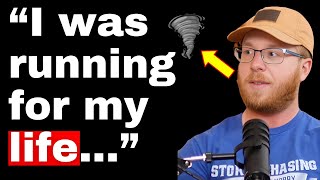
Ben Zilberfudin, an Abilene resident, chases tornadoes across Texas while running an irrigation business and working full-time at Warren Cat. He uses drones and anemometers to document storms, reports to the National Weather Service, and sells footage on social media. He also shares how water scarcity shapes his irrigation work and his plans to expand his livestream setup.
Chapters
He got us really close to a tornado, and I was actually uncomfortably close. And what happened was this storm was just going nuts. I mean, I've never seen so much lightning along with a tornado.
Is that— is that what you say, like the biggest tornado you've ever seen? All right, I think we're rolling already.
Sweet.
Welcome Ben Zilberfuden to the Howdy Podcast.
Thank you.
How's it going, sir?
Good. It's going good today.
Glad to have you on. I wanted to bring you on and kind of discover what it is you do. I know you're big into weather. I know you're big into irrigation. So for those of our listeners who don't know who you are, let's get a background.
Okay.
Where, where were you before you were chasing tornadoes before you were getting pictures and what, which we'll show you some pictures here in a minute of some of the storms he's chased. But yeah, tell us how you got to where you are.
Yeah. Um, I was born and raised here in Abilene. Um, I went to school here, homeschooled a little bit, uh, went through high school, always just had a passion for weather. And we'll talk about that here in a minute. But, um, uh, just, uh, I don't know. I've always been an Abilenean, you know. Never wanted to move necessarily. I always liked Abilene, and, uh, it's just— it's home to me.
So you've never lived anywhere else?
Nope, never.
Dang. Yeah, that's nice. I wanted to get away from my hometown.
Yeah.
So it's good to say that you can stay in your hometown for a long time.
Yeah.
So, okay, tell us kind of what you do now, like whether— like, or what, what do you primarily do? Do you do more of irrigation work? Do you do more weather and storm chasing?
So actually my main job is at Warren Cat in Abilene. And then outside of that, I operate an irrigation business. Okay. And so when I'm not at Warren Cat, I'm working my irrigation business. When I'm not doing those things, I like to fish, I like to hunt, I like to go kayaking. Storm chasing is obviously at the top of that list of just things I like to do. It's, it's always been a passion of mine. And so It's whenever there's weather going on, I'm on top of it.
So would you say, I guess, it's like more of a hobby?
Yeah, I would call it a hobby for sure.
Really strong hobby.
I eventually want to turn it into a business. Yeah, I want to monetize.
So how would that work? I have no idea about like the weather world and the storm chasing. Like, how do you monetize off of that?
There's a few ways you could go on to social media and go YouTube. You can do live streams and get money that way. Sponsors, donations, donations. Yeah, through Facebook Live videos, or you can get sponsors on YouTube. You could also sell your footage. A lot of people will do that. Let's see.
So we have— we do a lot of drone work.
Yeah.
Is that a thing out in the field? Like, whenever there are tornadoes up, do people send up drones? Hey, I wanted to hop on here really quick and remind you guys about our 24-hour podcast setup services. So if you have a space in your office, in your church, at your house that you want to transform into something similar like this, we've perfected the technique. We've got the whole list of everything you need. We'll personally look at your space, we'll do some interior design work, set up all the cables, make a trip out to your location and set it all up for you and train you how to use it. So if you're interested, I'm leaving a link in the description for you to check out. Hope to work with you guys soon.
Oh yeah, I, I actually have recently experienced that, like the last year or two, uh, more than ever. I've seen several people with drones, uh, there's people from out of state, out of other countries chasing. Um, I've met, um, school teachers that, um, you know, from all around here. I mean, I've all— I met all kinds of people.
Heck yeah.
It's just crazy who you'll meet and run into out there.
So that's, that's awesome.
It's interesting.
Mike, really quick, could you turn off that vinyl record player? We've been jamming to some vinyl records and I forgot to turn it off. No, that's awesome. So have any of the drones like fallen out of the sky or got sucked up in the tornado?
Not yet. I haven't seen that. I actually got to look at through this guy's drone. He had a headset on and he was watching it. And so this year we were able to watch the storm and everything through his headset, and that was pretty neat. But so far, most of the guys use these racing drones, and so they're, they're pretty agile. And yeah, they can go through 30-mile-an-hour winds or so and do just fine.
Yeah, that— so one of my buddies has— he built an FPV racing drone. Yeah. And it'll be hovering there. And as soon as he hits that stick up, it goes 400 feet, like in half a second.
Wow. Yeah.
So I guess you have to have some really high-powered stuff if you're going through a tornado. Oh, yeah. Oh, yeah.
Oh, sure.
Yeah. So along the lines of like drones and technology, what other kind of technology do you use?
I keep it pretty basic. There's a lot going on when you're storm chasing. So for me, it's mostly just a phone, an iPad. I actually have this little device here. So this is what's called an anemometer.
A what?
An anemometer.
Anemometer.
It's a fancy way of saying it measures the wind speeds.
Okay.
So this is how I get my miles per hour readouts whenever I'm around storms. When I'm storm chasing, I'm also actually storm spotting too. So I call my reports into the National Weather Service and our local office, and they'll issue like a tornado warning or a severe thunderstorm warning or a flash flood warning based on what I'm seeing out there.
And so this is a good way to tell them there's a tornado and then that's when we get alerts.
Yes. Yes. So we rely heavily on storm spotters.
Okay.
Yes.
Okay. Yeah, that's awesome. Okay, continue. Sorry. So do you just plug that into your phone or—
No, it has a digital readout. I didn't actually— didn't bring it today, but it's okay.
We don't have any wind.
It's pretty accurate. And so that's kind of— I want to be accurate. They tell people to be, you know, watching your surroundings. If there's trees around, then just kind of use that as an estimate. But I like to use this. Um, it's only like $130 on Amazon, so it's, it's a good, accurate little device to use.
Sweet.
But actually, this is my second one. Um, I, uh, one of the little cups, uh, broke off when I was chasing one of these.
That strong wind?
Well, I had it on the highway, so were you holding it outside of the window while you were driving? No, it has magnets, so it attaches to my truck.
Have you ever done that, though? Just like—
No, they have handheld versions of that. So I've thought about getting some of those, but—
Okay, sweet. So there was a lot of tornado action going on this year.
Yep.
Is that the most you've ever seen?
I would say it probably. Yes, I'd say it's probably the most I've ever seen. Yeah.
So kind of explain what the heck happened because there's a lot of Abilene people in the big country area who were affected by these tornadoes, who are curious to know more. And like, why did it happen in like mainly one day? Yeah, like maybe there's a couple of other days, but one day there was how many tornadoes confirmed?
I want to say is about, about 5.
5 confirmed tornadoes in one night.
Yeah. Most of them, the majority of them from one storm.
So why did that happen?
So what kind of happened that day was we, we had a boundary that set up. It was, I think, like an outflow boundary of some kind.
Okay. So in layman's terms, what does that mean?
So when storms form, they get winds that rush into them. That feeds the updraft. That's the food for the storm. So that keeps the storm growing and keeps it healthy. Well, part of a storm to properly work, it has to have a downdraft. So part of that downdraft is where you see your rain, your hail. And what recently we had was a microburst. That was an extreme downdraft out of a storm. But that downdraft causes a, a boundary to form sometimes on the leading edge of these storms. And off that boundary, sometimes you can get new storms. Or in this case, other storms can hover over that boundary and latch onto it and begin to rotate even more. It can be a way to tighten up the rotation in a storm.
Okay, cool. So I guess continue on, I guess, why there are so many, right?
So what happened was everything pretty much lined up just perfect for that storm that formed just northwest of Anson. To latch onto that boundary and it began to move in a southerly direction while most of the storms were moving more in like a southeasterly direction.
Okay.
So as it was doing that, it was getting the winds that were coming in from the south directly pulling those into that storm, and that caused it to rotate even more other than that, just that boundary it was latching onto. And so really on a day that we weren't expecting a lot of tornadoes or even really a strong tornado, which this was a strong tornado. It was actually just 1 mile per hour away from being an EF4. Okay. And there was also—
what's the highest tornado?
The highest ranking? It's an EF5.
Oh, wow.
Yeah.
So it was an EF3. Is that right?
It was a high-end EF3. There's a chance it was an EF4 and there's always the possibility they may upgrade later on. That happens sometimes. The National Weather Service will go out and do their surveys, which they did, and Every now and again you'll get an upgrade or downgrade depending on—
So does that mean they like change it after? Mm-hmm.
If they come across some new photos or new evidence that shows even stronger winds, they'll upgrade or downgrade. Just depends on—
Was that the— did you see that one? The big one?
Yes, I did actually have a picture of it.
Let's see it.
So there was a lot of lightning that day.
And yeah, and you can just show either this camera or that middle camera.
And what happened was this storm was just going nuts. I mean, I've never seen so much lightning along with a tornado.
Yeah.
Going on. And this is pretty—
So you got lightning and the tornado?
Yeah, I got several pictures of lightning and tornadoes in that day.
Wow.
It was pretty amazing.
Is that, is that would you say, like the biggest tornado you've ever seen?
I would say it's the strongest tornado I've ever seen. I've seen larger tornadoes, but this was definitely the largest.
Where have you seen the strongest?
So I want to say it was April of 2021. I was in Crowley, Texas area, or Crowley. Some people call it Crowley up there, just about 2 hours north of here. And I was chasing and I came across actually a similar situation. This was so similar in the fact that almost the number of tornadoes and the way they— the storm latched onto a boundary. I mean, it was almost identical to what happened back in Anson, Texas. And I saw about 5 tornadoes that day.
Sheesh. So there was one storm and there's one bigger.
Yes. Yes.
But not faster.
The wind speeds were not faster. The movement of it actually, I would say, was faster.
So how do you get the wind speed of the tornado?
The wind speeds? It's— it just—
is there like an equation? Like you stand like half a mile out and then it's like the tornado probably spinning?
No, actually, they, they use the EF scale. So it's the Enhanced Fujita scale. So what they do is they look at damage and they kind of have these calculations when they use that damage and photos of damage and they go back and calculate, well, how, you know, many miles per hour would it take to flip a truck or to flip a railroad car or to throw a 2x4 through a house?
If there's a semi that flew 20 feet, they would use that as data to figure out how big the tornado was.
Yep.
Huh.
There's actually a program at Texas Tech, and that's what they do is they they use everyday common things, blades of grass, you know, they throw 2x4s at, you know, pre-made little houses and sheds and things like that. And they figure out, you know, well, how much, you know, miles per hour were the winds to achieve something like that.
Interesting.
And how can contractors and builders make homes more safe?
Okay.
And cheaper, you know, because you can get a home that's you know, almost tornado-proof for the most part, you know, it'll withstand a fairly strong tornado, but those homes are more expensive to build.
So what kind of homes is that? Is that like brick homes or like barnaminiums?
It definitely would be homes that are 2x4s with— some people reinforce the 2x4s with like, even like studs, you know, at the bottom, and they just reinforce the frame more than anything.
Yeah.
Um, and, uh, the roof too. They'll reinforce the roof even more than a normal home. Uh, it could be even concrete they could be pouring, you know, inside the walls or anything like that, uh, to reinforce that, you know, structure. The main thing is your, your roof. Once your roof is gone, you know, everything's pretty much gone. Gone. Yeah, you start getting walls knocked down and everything.
Yeah, there was a house, and she's actually going to be on one of, uh, our clients' podcasts next week, who— the house was completely gone basically after the tornado, um, and it was a family who was found. I'm sure you heard about that story. Um, so what would you say, like, for somebody building a house? I guess just to focus more on the frame, right? So like, that house, I don't know what it was made out of, but like, what Was it just like a weak building structure? Like, is that because it was gone? Like, only slab.
Yeah.
So I don't know. What do you think about that?
I would say for the most part, yes, it probably wasn't reinforced like some homes are. But I mean, we're talking we were dealing with almost an EF4 tornado. I think they said the wind speeds were 165 miles an hour.
And so, so it just caught the worst part, probably.
Yeah, I mean, I would, I would say most people are better off getting a tornado shelter, a storm shelter, or you can either dig them out or have one installed in your home. And you can have above-ground ones. And that's just the best way because even if you do build a really expensive home that's more tornado-proof than the average home, you're still going to get some damage if you're going to get like an EF 3 to an EF5.
Yeah, interesting. Okay, so that's kind of the weather side of things. Does that encompass majority of everything you do with the weather side? Um, like, what else do you do whenever you storm chase, whenever you're researching these storms? Like, is there websites you go to? Like, how do you prepare for this stuff? So quick message from Howdy Media: we've actually started a Howdy Media Insiders group on Facebook where you can join completely free. In this group, you'll have exclusive access to the Howdy Media team, education resources, behind-the-scenes footage, and conversations with people who are like-minded. And a bunch of them are small business owners and creatives just like you. Hit the link in the description to join the group.
So I like to do a seasonal forecast and I don't base everything off that, but that's just something I do for fun.
So what does that mean?
So I'll look a season ahead, sometimes multiple seasons, ahead and just kind of get an idea of what we're going to see, you know, for that particular year. I was expecting this year to have more tornadoes. There were signs that were showing up that I could tell about 6 to 8 months in advance that was like, okay, this year is definitely gonna have more tornadoes than last year. It's definitely going to be a year we'll probably remember. And so I was seeing that several months in advance. You can look at ocean temperatures in the Eastern Pacific. And I'm sure you've heard El Niño or La Niña. That's a huge part of it. As we go into spring, you want to look at those ocean temperatures to see, are they cooler? Are they warmer? Are they just about average? And you also want to look further north in the northern part of the Pacific towards the Gulf of Alaska, because there's everything that we get weather-wise comes downstream from the West Coast. So it comes across the West Coast from west to east. And that's typically how we get our storm systems that produce these, uh, from type of severe weather.
Pacific Ocean causes everything.
Yes. Uh, well, there's kind of a, a, it's a symbiotic relationship, I would say, uh, because you got the ocean and then you got the atmosphere and they're constantly affecting, you know, one another.
So have you ever experienced a hurricane? Have you been?
I have not yet, but that is actually on my list of things to do. Yes. So I actually have a coworker of mine. He's real influential in kind of my love for weather, and he and I will actually go chasing. We went this year. He got us really close to a tornado, and I was actually uncomfortably close.
So how close was that?
I would say about 50 yards.
50 yards?
Yeah. It wasn't on purpose. It just formed right out of the blue on the leading edge of a storm.
How big was that one?
It was actually almost like a dust devil, I would say, but it was a real tornado.
Okay. Okay. That's still scary. You don't know how big it's going to get.
Yeah. I mean, we were trying to just run for our lives because the storms kind of— they trapped us down there towards San Angelo. We're around San Angelo to— oh, I can't remember. Just east of there about, I don't know, 20, 30 miles.
So what did y'all do? You just straight up ran?
Yeah, we outran the storm. I was going about 90, 95 miles an hour on the highway. Just trying to—
You weren't— you were driving? No, I was thinking—
No, we weren't running.
Running?
No.
Okay.
No, we were trying to drive away because it trapped us between really large hail and more large hail. And we didn't want to get my truck beat up. We didn't want hail going sideways through the truck.
And so would that be your advice to somebody who's like, like right under a tornado, like about to get hit, or it's coming their way and they like need to— do they need to just like get in the car and go the opposite direction?
Or like, it's—
what do they do?
Are you saying that like if they're at the house?
If you get stuck, yeah, if you're at your house, if you get stuck and there's like a tornado like coming right at you and it's close, because like usually you don't have that much time to like react. So what would you say is the best move? Would you say to hunker down, find a closet, or would you say to run?
Definitely hunker down. It just depends on how far the tornado is. In this situation, what we had with the Anson, Texas situation, I would have actually recommended all those people leave their homes. And because it was so big, it was moving slow enough where you had plenty of time to leave. In a really large metropolitan area, you don't want to do that because you're going to get stuck in traffic and it's just going to be a big road hazard. And so when these storms come to larger areas like, you know, Oklahoma City, Dallas, Fort Worth, San Antonio, you want to hunker down. You don't want to be on the highway while that thing's moving.
Yeah. So while we're talking about this, make sure to follow Ben on social media. Where can they find you for all the weather updates?
It's Ben_ZyLB.
Zylb.
Yep.
Not, not Zilberfudin.
Not Zilberfudin. No, that's my full last name. It's a mouthful.
I was saying before this podcast, I was like, I feel like I should say Ben Zilberfudin every single time I say your name. It's so legendary.
Yeah.
Okay, so cool. That's the weather side. So let's kind of get into the business side of things and what you're doing in the business world. That's kind of what we talk about a lot on this podcast is content creation, social media, business, like running a business, leadership. Explain what you do in that area. I know it's kind of like a side hustle right now, um, but kind of talk us through your plans with that. Is it— do you want it to not be a side hustle? Do you want to keep doing it as a side hustle? Uh, have you had success in that area? Like, kind of just talk us through that. And what is— what is it that you exactly do whenever you say irrigation?
Okay, yeah, um, so what my business is, is, uh, I am licensed to install irrigation systems. So sprinklers, you know, at your home, sprinkler systems at like a place of business anywhere in the state of Texas. I'm licensed for that. I took a test, I took a course and passed all that and got my license a few years ago back in 2021. And what I do right now primarily is irrigation repairs and diagnostics. So broken pipes, broken heads, fittings, nozzles. All that, I repair it, replace it. I've redone irrigation systems partially. I've done like replacing all the heads on a whole irrigation system that needed all the heads replaced. Sometimes what's called the stem that rises up out of the, uh, the sprinkler, uh, it'll get stuck over time, and there's like a little rubber gasket in there. So sometimes, uh, people, you know, the, the pipe's good, but the heads will need to be replaced because those go bad before the PVC will. So I'll go in, install all new heads and get it all adjusted and everything. Especially with this drought, you want to make sure everything's adjusted and efficient as possible because you're going to have a high water bill if you're not, you know, and if there's leaks and stuff everywhere.
Yeah, you're going to be paying a lot of water bills, guys. Oh, so who would you say your target audience is? Is it mainly residential or is it commercial? Like, what are you really trying to push into and break through?
I think it's definitely residential. I just love meeting people. I like to talk.
Is it more consistent, I guess, than commercial?
Um, it can be. Yeah, it just depends. You know, the homeowners right now, the water is getting more and more expensive. Our water bills just keep on going up. And so fewer and fewer people are able to afford to water their lawns and especially now we're having water restrictions since we're in a little bit of a drought again. So unfortunately, it's just getting to be more of a luxury than anything.
Classic West Texas.
Yeah, water restrictions.
So we have lakes.
Yep, we have lakes. We have a growing population. And so what the state of Texas is unfortunately behind in right now is just figuring out how to adjust for that population increase. So we have a lot of people coming in, using more water, and we need to adjust our, I would say, our lake systems, adjust how we use water, when we use water. And with the sprinkler side of it, there are certain nozzles you can get that are more water efficient. They're called MP Rotators. I try to push that to people and they're, they're a lot less I would say it takes more time to use them, but there's more of a steadier stream of water, less spray, less chance of it evaporating and just going up back into the atmosphere. So yeah.
Okay. So is it— do you have a name for your business?
Silver Valley Irrigation.
Silver Valley. Do you have any social media stuff that they could follow?
Not yet. I'm working on that.
But then come on, you got to get on that social media grind.
Yep. I have plans for that. I'm taking pictures of different jobs and getting ready to post all that.
And so you need to be taking like behind the scenes stuff.
Yes.
Like whenever you're on a job, this is friend to friend advice, pull out your phone, video whatever you're doing, talk about it for a few seconds, post it.
Yeah.
And start pumping that stuff out because if everybody knows you're the irrigation guy Like, if you're the expert in the area, you, you will never run out of business, especially in this area, because like, oh yeah, I don't— I'm not into that field. I'm not into that niche, irrigation. I have no idea who I would call other than you now. Yeah, I have no idea who I would call for like if my sprinkler stuff goes out. I'd probably just have to Google it and the first one on the Google list I'd probably call and hope was good.
Yeah.
So like, there's a massive, like, market opportunity for you to—
There definitely is. And I try not to take on a ton at a time because I don't want to tell my customers I'm, you know, 2 weeks out or something when they got a lawn that's dying or a tree that needs water that, you know, we live in West Texas. We got, you know, times we don't go more than, you know, we go like a couple of months without rain. And so if a sprinkler system is not working, you got a break in your line or whatever, and you're not getting water to a tree or or a plant and, you know, you need something done in a timely manner. And so I try not to go more than a week out when I tell people, you know.
So how do you— what is your main, like, strategy as far as, like, getting business? Because there's a lot of businesses that are similar. It's like a service, like, for example, window cleaning. Uh, my buddy Jesse is coming on the podcast, I think, next week, and he's started a window cleaning business. So it's like a similar type of thing where they call you, you provide a service, and that's it. Yeah, like a trade. So what has worked for you and what have you been doing to get these clients? Is it just word of mouth? Like, are you calling people? What is working for you?
Uh, so originally I used, uh, Angie's List, or in my case, my site was called Angie Leads. I'd get these leads and I'd contact these customers. And, uh, is that—
it worked pretty good. Craigslist?
Not kind of, but not exactly.
I haven't— dude, I'm not gonna lie, I haven't heard Angie's List, and I haven't heard those words in a long time. Okay, so you're getting business from there?
I have. Uh, I haven't used them in a while. Um, the main reason is I had to call the customer back immediately, and it was during my normal work hours at work, and so I couldn't always do that. And so it was kind of cutting into that. So each lead I would get, I would lose money, you know, whether or not, you know, if I got that client. And so I was losing a lot more money. And, uh, I, I just tried to do it at first to really get a clientele, and then after that I didn't really need it anymore.
Okay, so then did it start like traveling word of mouth type thing?
From there it traveled word of mouth. I got more, you know, neighbors or, or family from those clients. And so, um, also work, church. Yeah, I got clients from both those.
So let's talk about the church too. So me and Ben go to church together. We go to Bethel Assembly in Anson, Texas. And it is not— let me just say it is not about getting business, but being part of communities, I think, is important for all aspects of life. You can't do anything on your own, including running a business.
Right.
And so has being a part of these communities like a church, your friend groups, your families, has that benefited you in your business?
Oh, 100%. It just, it helps me also just realize, you know, what the goal is, why I'm doing what I'm doing. You know, it's always an opportunity for me to talk with my customers and everything and just get to know them personally, you know, on a personal level sometimes. And every now and again you'll get that customer that just doesn't mind talking for 30 minutes or an hour. That's okay. You know, I enjoy that.
So, so this is a great question because I've been struggling with this lately as a business owner. Do you do much follow-up? Like, do you follow up with them through like mailouts? Do you follow up with emails? Do you follow up with calls? Like, do you do much of that?
I haven't. Normally they'll call me whenever they need something. There are certain people that I will do follow-ups with that I just know on a more of a personal level. Um, and, uh, sometimes I'll check on, like, I got a neighbor that is one of my customers, and so I'll check on his lawn, see how it's going. I just recently did some adjustments on his lawn, and so it's looking better.
Thank you.
So it all works.
Yeah, because I, that's one thing I'm trying to work on these next couple months is getting an email list set up. Well, I have a bunch of contacts, but getting that set up, start sending out emails, like cold emails, warm emails, trying to just touch base with people, connect. Yeah, I think that would be really beneficial for you too, because, um, for your type of job, it's like they might call an irrigation company once in a while. Like, I don't know, how often do you think sprinkler systems go out of date or like out of service? Do they break pretty often, or—
they do, uh, you'll get quite a few, especially around curbs and in areas where you've vehicles running over them and stuff like that. Or if it just depends on, you know, who installed it, who worked on it last, you know, I'll go behind other guys that did all kinds of messed up work that I'll have to fix and correct.
That weren't licensed, probably.
Probably not. Is that illegal? It is illegal. Yeah, it is illegal.
So yeah, get licensed if you want to do— not in Abilene though, because Ben's already got this territory.
Yeah. Dang. Okay, so actually it's— most of them are pretty friendly. I have other irrigators I know that actually run into on a regular basis, so they'll, you know, say, okay, hey, I got too much work, I got, you know, you take, you know, some of my jobs or whatever.
And those are good relationships too.
Oh yeah, for sure.
Overflow, because obviously one person can't handle all of Adeline, right? And it's the same way with like our real estate photography, um, and even social media services, like We can't do everybody's stuff. So it's like we kind of have to be selective and have to, in our case, see if they're a good fit.
Yeah.
So yeah, definitely good connections. We have connections with other photographers and videographers within Aveline, and it comes in clutch. And I send them work, they'll send me work. Everybody wins. Yeah, everybody eats. So let's see. What are, what are your plans, I guess, moving forward, um, just overall? Because we do talk about social media a lot on this podcast, and, um, for people out there wanting to kind of get into starting a business, wanting to, or getting into weather storm chasing— is that what your title would be, storm chaser?
Oh yeah.
Or what would your title be?
I, I would, I would say that's Obviously my number one, you know.
What is your shirt? Storm chasing. It's not my hobby. It's my call. Yeah, dude, that would be awesome. And go live. Go live on YouTube every time you do it.
That is the goal. I got to get more technology. That's just part of it. More, you know, more ways to just adapt and share on social media. There's a lot going on when you are storm chasing that a lot of people don't realize. And a lot of times I will go by myself because you know, it just— the scheduling doesn't work out for somebody. They can't just take off, you know, on a whim and go watch a tornado. Yeah. So a lot of times I'm doing about 10 things at once, you know, and it's— that makes it kind of dangerous too. So you want to make sure that you have different ways to, you know, route yourself and everything. And that my phone right now is my main way I route and take pictures. But I'm working on hopefully getting a professional camera.
Yeah.
And that'll take care of one of those things. And then whatever technology I need to do livestreams. I'd love to eventually do livestreams.
I got you on the camera, bro. Yeah, just let me know your budget. I'll give you— I'll give you the best dang camera.
Sweet.
So somebody wanted to get into storm chasing like they've never done it before. What would you say the best thing to do would be?
Definitely go on YouTube. Tornado Titans is one of them. Texas Storm Chasers is another. There's— there's different people you can watch. One of the main things I would recommend is go with somebody that's experienced. You know, do that for the first year or two.
When you say go with, like physically go with them?
Yes.
Like reach out to channels and just go with them.
Find somebody. You know, a lot of people know people that are interested in this. You really got to want it. I think a lot of people are interested and just kind of— they think it's cool, but you really got to really want it. You got to kind of be a little bit obsessed like me. You know, you got to have that drive.
Like to live on the edge a little bit.
Yeah. You got to want to learn it. You got it because it really is your life you're dealing with and the lives of other people when you're out there. You got to watch, you know, what you're doing when you're driving. You got to watch out for people. It's a, it's a circus. I'm not going to lie. It is crazy when you get out there and you get a storm going.
Adrenaline.
Oh yeah.
I bet.
I've been out there in the middle of nowhere and there's hundreds of vehicles just for a storm, you know, and you're running into chaser traffic and other people just running all over the road. I mean, it's mass chaos going on.
And I think it's cool too, because there are also people who save lives.
Yeah.
Like we saw that whenever we had those storms.
Yes. And so that's a goal of mine. That's another reason why I'm out there. So I'm out there to report it. I'm out there to capture it too. But my main mission is to also just be out there just in case something does happen. I know CPR, I know certain things, you know, first aid. I keep a first aid kit on me at all times in my truck. So I'm always just kind of ready in case, unfortunately, you know, in case I come across something that I don't want to see.
But you never know.
I got to be the first responder on.
So, yeah. Sweet, man. So kind of give us what we need to be looking out for for the fall coming up. Fall and winter.
Yeah.
Have you mapped it out? Do you kind of have an idea of what's going to go on?
Yeah, I've looked at it. So we're in the transitional period right now. We're in neutral conditions, but we're fixing to transition to a La Niña. And so what that's going to cause that to go on is we got ocean temperatures around the Pacific that are cooling quite rapidly. And so I would say probably within the next month we'll be in a full-blown La Niña. And so a lot of times it's a step-down process in weather. It's always a step-down process. So it takes time for things to, to fully transition. So I would say it takes about, I don't know, 6 weeks or so for things to start finally looking like La Niña is here. And so for us, West Texas—
oh, sorry, continue.
I was going to say, here in West Texas, what that'll look like is a little bit drier conditions, not necessarily just full-on drought throughout the whole fall and winter, but we'll definitely be a little bit drier on average and we'll be a little bit warmer on average too. But that's on average. With La Niña, a lot of times we'll get those crazy one, you know, once in a lifetime snowstorms or severe weather events. La Niña tends to be quality over quantity.
So whenever the snow vid happened, or was that what it was called? Yeah, the snowstorm that we had here. Was that a La Niña year?
Yep, that was a La Niña.
Oh, shoot.
Yeah. Two major snowstorms.
Same thing that's coming.
Yep. It's not a guarantee, but it's something I'm looking at right now. I'm thinking somewhere around second half of January, somewhere in February, we're going to probably have a fairly decent shot of cold air. Normally what causes that is what's called a polar vortex. It will have a sudden stratospheric warming event. And in this case, it displaces all that cold air locked up north of here and it just shoves it down in the United States. And if you get a system that's coming through at just the right time, you can tap into that cold air. And if you got a warm Gulf of Mexico, which we do right now, we have a record-breaking sea surface temperatures in the Gulf of Mexico.
Great.
It just pulls that moisture into that storm and that cold air. And it, you know, gives you lots of snow, lots of ice. It just depends on the setup of the system as it's coming through with whether you can get snow, whether you get ice, whether you get a little bit of both.
So you're saying it could get wild?
It could. I, if I had to put a percentage on it, I'd say we probably got a 35% chance of seeing something pretty significant this winter for as far as a snowstorm. And I'd say it'd probably be just one snowstorm that's more memorable. I don't think we're going to have a lot of snow, like, you know, multiple chances of it. I would say it's gonna be one good storm, maybe a less memorable early-on storm. I'd say as we go through fall, we're gonna go into severe weather season again for the fall. I'm expecting it to be a little more active. So once we get past, I'd say, November, we're going to transition to a really cold period, I think somewhere I don't know, early to mid-November. I don't know. It's hard to tell.
So I want, I want you to estimate live on the podcast today. Will there be snow on Christmas?
I'm gonna say no.
Dang it, Ben.
Unfortunately, I— with La Niña, it's typically in the second half of the winter.
Okay.
I hate to Hate to break it to you on that one.
If it snows, I'm FaceTiming you.
Okay. Deal.
And you all got to DM him and say La Niña was wrong.
Yeah.
No, that's—
it's hard to predict really, you know, fine-tuned details.
I'm just joking.
But no, I know.
Far out.
Yeah. Oh, it is. It's crazy. But what I normally do is I look at previous years that were similar to this one. And I compare and contrast and I look at that and I just kind of average everything out. And that's kind of how I forecast and do a seasonal forecast because, you know, you can't predict specifics. You can if you want to and just be wrong. You know, you're either going to be right, you're going to be wrong, you know?
Yeah, that's awesome, man. Well, thanks for coming on the show. Like you said earlier, what is it? Ben_Zilb?
Yeah, Z-Y-L-B.
And is that on Instagram too?
That's on Instagram. On Facebook, it's Ben Zilberfudin.
Ben Zuberfield. And it's fun to say if you say it 3 times.
It's a tongue twister. Say it 10 times.
Yeah, yeah. Go give him a follow. Make sure to give him a follow because he could give you some news that there's a storm coming and he could save some money, save some lives. Don't get stuck in a tornado. Don't get stuck in a snowstorm. Just follow this guy. Ben was the first guy I always text if there's a storm coming. And I'm like, kind of concerned. I'm like, this is kind of weird. It's eerie. It's dark outside. I'm like, hey, is this something I need to worry about and like get in the closet? He's like, nah, you're good. So give him a follow. He posts updates there. If you need sprinklers, if you need anything with your irrigation stuff, whether it's residential, commercial, any repairs— do you put in new systems?
Uh, working on that. Uh, I gotta— I've done it, uh, just kind of more in the course when I took it, but I haven't done it actually in real life. You know, I've designed systems. Yeah. So, but I need to do it, get a little more— getting there. Yeah. I'd say within the next year or so, I'll probably be ready to do new installs. Sweet.
Sweet. So you heard it here first. He's working on getting that figured out. But if you got any repairs in the meantime, this is your guy. Thanks again, Ben, for coming on the show.
Thank you, Darren.
Appreciate it. And we'll see you in the next one.
Sounds good.
More from Daron




Entitled Woman Tries Suing Man For LEAVING Her Mid Date, Instantly Regrets It


This Is Why More People REGRET Buying Their Electric Vehicle Than Ever Before


