Why He Quit His Six Figure Oilfield Job… ($10k In 1st Month?)
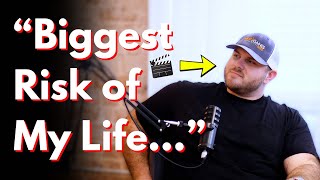
Kyle left a 13-year six-figure oilfield job to become a freelance videographer and made $10,000 in his first month landing clients like car dealerships and oilfield companies. He shares how he productized video services through retainers and revenue-share models, and his pitch tactics for selling to oilfield firms.
Chapters
Like, that was like, oh, I'm a young buck, I can do this. Dog, 2 weeks after I quit, I landed my first client. That's the only way you're going to actually provide value for anybody you serve is if you can find a way to make them money.
And that's one thing that I try to focus on a lot is if you can't lead yourself, then you can't lead others.
I mean, I spent 3 days on this video. Everything that I gave it my all, dude. I was shitting bricks when I finally sent it. I was so proud of it. We go in, we go in, we go in, we go in.
Kyle, how's it going? How's it going, man?
Good, man, good.
Glad you can make the trip from Lubbock, right?
Yeah, I saw your, uh, your little post and I was like, dude, it's 11 hours ago, I'm in a great mood, why not? Let's reach out and see what happens.
Just a short drive over I-20, man.
Yeah, ain't too bad. Actually, it really wasn't that bad at all.
Heck yeah. So, videographer?
Yeah. Okay, long story. Kind of a short story right now. So yeah, For the videographer side of it, how do I go about intro tech? Okay, so before that, I've been in the oil field for the past— let's go all the way back.
Okay.
Just to kind of give you some context. Where would I start? Okay, now we'll start with just this year and then we'll go back. Okay. Okay, this year, or this past year, 2024, um, I, I was turning 30 on May of '24. I turned 30, and up until that point, I had always just put my head down and busted my ass because I figured eventually, you know, I'll come out on top. And that's exactly what happened. I mean, I, I ended up moving from swinging hammers or painting equipment at 18 years old in the oil field at some shop and South Texas to becoming the operations manager of one of the biggest oil field companies in the world. Okay, let alone, uh, Midland, Texas. Um, anyways, turned 30 and I just had this crazy, crazy emotional— just, I don't even know how to explain it, but it was essentially a shutdown. And the best way I can explain it is if God was like, dude, you've had your time, it's time to make a move. And I've had, I guess, experiences like this in my life where, you know, I could feel the presence of the Holy Ghost being like, dude, it is time, you know what you need to do, make the jump. And obviously pushing it off, pushing off, but it got to the point where I was sick to my stomach, dude. Hated being there, hated giving my life away. The money wasn't what it— it just wasn't what it was supposed to be. And, um, yeah, so I started really like just listening to myself. Well, in, in the position I had, I had a lot of drives— 2, 3, 4-hour drives to locations, from the back, you know, check on the guys and stuff. And during those times, I would, uh, just put on a YouTube video because, you know, that's what we do. And I came across this dude named Cam Mignet. Okay, Cam Mignet on YouTube. He's a videographer.
Yeah, I've been— I, I watched him. I found, I found him like recently.
Yeah, really? Okay, so if you know about his Zero to $10K, uh, documentary he did on YouTube. Yeah, I jumped in, I watched it, and I got so addicted to the idea that this dude just flew into a random city, started knocking on doors, was charismatic, had a good mood, just good energy. The people around him loved it, and he was able to do it. He pulled $10K in a brand new city in less than 28 days. That for right— that right there for me was just like, if a 21-year-old kid can do this, there's no reason why I can't. So I contemplated, contemplated, contemplated. Same thing, good day one, uh, good mood one day, video, bit the bullet, found out how to talk to them, got linked up, etc. Calls me, he's like, yo, what's up dude? And I'm like, hey man, holy crap, that was fast. I literally just put it in. He's like, yeah dude, we operate pretty swiftly around here. So tell me about your story. And I was like, well, told him the same thing. I'm like, dude, I'm 30. It's time for me to do something. I don't know what it is, but that kid got a camera and he's making 10 G's a month. I want to know what's going on. Yeah. He's like, okay, well, let's find out if you're the right fit and this and that. And I'm like, okay, cool. So we ended up talking and we set a date. And, um, I got a call from another guy named Joe later that day. So hop on the call with Joe, me and Joe are friends now, but at the time I didn't know who this kid was. And when I say kid, I mean, with the most respect, kids, these dudes are no older than 22, 23 years old.
I mean, that's where I'm at.
It just blows my mind. Right. Cause it was funny because at that age, I remember having that exact same fire, that same thought that like, dude, why are we working for a job?
Yeah.
Let's go do something with our lives. But I was in the oil field and it was really hard to give up $150 grand a year. That is— yeah, yeah. So I just pushed and pushed and pushed, and then, you know, 13 years go later and here I am back in the same spot. So I'm talking to Joe, and Joe's like, okay bro, you know, I think you're a great fit. I love your energy. You seem like you've already made your decision. You're like, are you sure that, you know, this is going to be something you want to do? Like, this is what it's going to cost, this is what it entails. And I'm like, listen Joe, it's a lot of money, and I necessarily don't have to throw away, but at the same time, I know myself well enough to know if I don't put myself against the wall, I'm not going to move. That's just who I am. And, uh, let's do it. Tell me where to sign. Sweet. So paid up, joined, uh, joined the, the program, and we started doing coaching calls every single day. You join the program, it is absolutely phenomenal. Uh, phenomenal. 2 weeks after I signed up with these guys and was talking to them every day and like really starting to get into it, I didn't know a thing about cameras, dude. I never owned a camera. Like, my ex—
so you decided to do this before you knew how to operate a camera?
100%. Sweet. Yeah, welcome to Kyle, dude.
Yeah, I mean, that's the best way to do it and get into it, honestly. That's how— that's what I did. I ordered that black Sony A7III one day, never used the camera before, and I started selling real estate media, dude. And I was like, I was telling them I wasn't available, but really I was waiting on my first camera to come in.
That's that, dude. Okay. So same thing, right?
Yep, same thing.
Two weeks in, I'm bugging these dudes. I'm like, okay, what kind of camera do I need to get? Because there's, there's guys in this program with iPhones that are making 10, 15 grand a month.
Yeah.
And I'm like, no, no, no, I'm a professional. I mean, I don't even know what the word aperture means, but I'm a professional. So I went and bought an a6700. Perfect, perfect, right? Yeah. I'm so glad I made that choice. I just bought the body. I spent some extra money, I bought some good lenses. I got a Tamron 70-270, and then I got a Sony, I think, 70-300, and then a Sigma 10-15 or 10-18. So the perfect setup for everything I needed to do. Um, I didn't know anything about being my own boss. I just was so excited to not have somebody on my throat. Yeah, dude, I can't even describe you how amazing it felt. Terrifying but amazing. And I just started hitting the hitting, dude. Like, I was still working on my job at this point as an ops manager. So I had a pretty good schedule. I could pretty much do what I wanted, but I was so burnt out at that point that I really wasn't doing much of what I wanted. And I felt like I was just— I felt like, excuse my language, but I felt like I was just being a piece of shit. Because I was working there, but I wasn't being productive, as productive as I know I could be, because now my mind's on starting my own business. So I struggled with it for about a couple of weeks, and then eventually just got to the point, same thing, the gut feeling like, you need to quit, you need to quit, you need to quit. And I prayed and prayed and prayed and prayed, and I talked to everybody I loved and like cared about their opinions, and they're like, listen dude, it's your life, do what you want, you know. I was like, but I got responsibility. I was like, nah, whatever. Do it. Walked up and, uh, told them, I'm like, yo, I appreciate it, but I'm out. That didn't go over very well. They were not—
never does.
And they were like, why? And I'm like, I was at a point where I literally just let it go. I was calm, cool, collected. But I'm like, dude, you have been lying and manipulating everybody here. You made me promises to all the guys I hired. Now that they're hired, you're going back on the promise and making me look like a— like, it was just extremely toxic.
Yeah.
And me just dumping that all out there, it was a good 45 minutes of me just telling them what the problem was because they asked. After that, they didn't say anything. They wished me the best, and then I rode my—
so when was that?
That was September of this past year.
Recent.
Very recently. Yeah, this is 2 weeks after I joined the program, so I've got all this like hype put my 2 weeks in at my career that I spent 13 years building, making 6 figures for all this time, and I'm just gonna pursue chasing money with a camera and just living my life. Like, that was like, wow, I'm a young buck, do this, dog. 2 weeks after I quit, I landed my first client.
Nice.
A dealership, um, in, in Lubbock. Uh, it was $100 a car. I would film and I would do pictures for them. First week I did $2,700. We did the entire lot. Let's go. Yeah, it was insane. Me not knowing anything about what I'm doing, I was able to get some really good footage. The editing, I still didn't know what I was doing. I was using CapCut because it was free. Yeah. So I get in the group and I'm like, guys, I told these guys I would have these videos done and edited in their Dropbox in 2 days. There's 27 videos. I literally just downloaded CapCut.
Yeah.
And I don't even know how to change, recurve time or anything. I need help. So one of the kids in the group, he lives in San Antonio, uh, Amon, great, great guy, man. He's phenomenal when it comes to car edits.
Yeah.
And he was like, okay bro, let's go. So we locked in here. I called him, I was like, how much would it cost? He's like, you know, can you do $300, $400? I'm like, absolutely dude, I'll give you a grand right now if I can afford it. Like, just help me. So we stayed up for 2 days solid just blowing through these edits, and he showed me a bunch of stuff And you know what, on what software? We moved to Premiere Pro. Okay. He was like, I'm not running on— I was like, I don't blame you. Like, let's go to Premiere Pro. I'll do it and I'll just figure it out. And I did. Um, I got pretty good at within those 2 days, just back against the wall.
27 videos.
Yeah. You know how to edit videos now, or at least those ones. I was on top of the world, dude. I'm like, perfect, dude.
What?
That's insane money. Like, let's go do this 10 more times.
Yep.
The next week, not so good. Week after that, not so good. The week after that, I go to the dealership to go shoot a video. Come to find out, they hire somebody because $2,700 a week is whatever— $2,700 a week is way more expensive than just hiring somebody in-house. So when I figured that one out, I was like, damn, now what? Back to square one, right? Um, I just kept going. Outreach, outreach, outreach, outreach. And while I'm doing all this, I'm also like learning as much as I possibly can about everything around me. I am incorporating myself in the community. Like every single day I'm in every single phone call. I'm texting the guys outside of the community. I'm meeting with the coaches, like just giving it absolutely everything, man. And, uh, I got to a point where I was like, I don't know if it's me or if it's the Lubbock like market or what, but it just seems like everybody with a camera is doing what I'm doing. It was so hard to go to— it still is like, I really don't have many clients right now. Because everybody I've reached out to has already got somebody doing it for them. Being a college town, I'm assuming that everybody else has seen those videos, you know what I mean? So there's quite a few people out there doing the short form, the social media, trying to sell businesses, packages, retainer deals, right? So I, I was struggling with that. Um, I was like, you know what, I'm gonna go to real estate. And I've got met with so many realtors, but nobody's like jumped on me.
Hey, this is Darren, really quick, and then we'll get back to the podcast. I wanted to remind you If you're watching this, you're more than likely a business owner or a content creator. And that's what we do here at Howdy Media is we help people just like you who are like, I have no idea what to do in order to grow online. Well, today's your lucky day. In the description of this video, there's going to be a link where you can book a free call directly with me and we can go over a game plan and see how we can help you guys out. Hope you guys are enjoying the episode so far. Let's get back to the video.
Realtors are— dude, me and a buddy of mine were just talking about this before we pulled in.
They're mixed emotions.
Yes, that's a roller coaster, dude.
If you can find like ones that are willing to invest money, it's good. 95, 98% of them not interested around here at least.
Yeah.
Um, Lubbock I feel is probably a similar situation.
Very much so. The thing that I found out about— sorry to interrupt. No, you're good. Thing that I found out about the real estate market for our kind of niche is that if the house isn't over $750,000, they're not going to pay for a video. Yeah, because 5% on top of whatever they close plus all the costs, I mean, they're only leaving with a couple hundred bucks. And the kind of video that you would need to sell that house, it's not a couple hundred dollar video.
Yeah.
So that's, that's the real estate market right now from where I'm at.
It's It's interesting. We— so that's what we started with was real estate media. That's how we got into this whole thing. And I had that A7III and a drone that I found on Facebook for like $400. Um, anyways, that lasted me a good year until I wrecked the drone. I was trying to land it on my car and just like fell off.
No way.
But it was, it was user error. It wasn't DJI's fault. It still sucks. Anyways, I was like, ah, business expense, I'll just get a Mini 3 Pro. And so it's been great. But yeah, that's where we started and we did that for a solid year and a half. And then it started getting to a point where I could only shoot so many houses. Realtors won't pay any more than this price. And I was very limited as far as what I could do. Yeah, because there's a lot of cheap realtors out there who don't.
Yeah.
Anyways, it's consistent. It's just not the thing that's going to make you the most money. The margins or you can't scale it.
Yeah, exactly.
And so we still do some of that stuff.
Stuff.
But we have moved and shifted from just real estate media to like, hey, we're a video production company.
Yeah.
Um, you throw that in there, you can add higher price tickets, price tags. And then not only do we do the videos, but we can also consult you and coach you on how to use the videos.
Yeah.
And so now if you're a videographer, and I'm sure those guys talk about it— oh, all the time.
You have no idea. Videography is like maybe 5% of the conversation.
Yeah, the camera side. Like, you used to be able to sell like, hey, we have professional cameras, but that's not the case anymore because guess what? Everybody has an iPhone.
Everybody's an iPhone.
And so, um, filming movies on iPhone, if you can sell something beyond the camera, that's where you're gonna really—
that's where the money's at. Yeah, sell the service. So the whole point of what we do is we're not selling cool videos. That, that's all said and done. The whole point of videography in the business market now is more to target leads, qualified leads, and find a way to convert them. That's, that's the only way you're going to actually provide value for anybody you serve, is if you can find a way to make them money. And the cool thing about this industry is that it's not hard and it is very possible. So a big thing the guys preach right now in the Leverage Creator community is retainers, but based on, uh, profits earned. So essentially $2,000 a month for 20 videos, but I get 20% of all the revenue that I bring in. And, uh, the way that they're doing this is we're learning how to build CRMs, and CRMs are being tied directly to all the analytics of any channel that you put your, your videos on. And then from there, you can tighten in on who you're, you're actually going to lead and who you're going to be able to pull. And then of course, your database, your financing— it completely changes how you draw customers to your business and the type of customers that you're actually We fit the service. Yeah, it's, it's phenomenal, but it's a lot of work and you've got to know what you're doing. So that's where that's—
yeah, I've implemented that a couple times, um, the percentage thing.
What do you think about it?
I haven't got to— I didn't have a ton of success around here. Yeah, this specific area.
Yeah.
Um, first of all, this type of service in this area, very foreign right now.
Very.
And so that's why I wanted to bring it here in the first place, is because like, hey, Abilene's like 10 years behind right Lubbock's probably a little bit further than Abilene, but I'm— we're trying to like take it to the next level and catch them up a little bit.
Yeah.
And so since we started this, there's been a couple other podcast studios open up and people are doing more with content and seeing the value that it brings.
There's a—
there's so much value because like that's how I started my business. I didn't know there was another way to start a business whenever I was 21 years old. Uh, well, I was really Yeah, I guess 21, mid-20 or 21. I was like, okay, I have a camera. How do I get customers? Yeah, start posting on social media. Did that for the whole first year for just real estate stuff. I would DM realtors, talk to them. That was it. And then I was able— I put up one Facebook post in February of 23. And ended up signing a $2,000 a month client the same day.
No way.
And I looked at my wife, I was like, okay, I think I'm on to something here. And it was for social media management. Never done it before, right? Get them to send me a $2,000 check right off the bat. And anyways, that lasts about 6 months. There were some other things going on with that company and they went out of business.
They just— boy.
Anyways, so by that time we had a couple more clients, had another big one come on that fizzled out within 6 months just because the types of people weren't necessarily making the best decisions within the business itself. Because like, social media is great, but like, there's a lot of other aspects that you have to be good at in order to make a good business. Yeah, social media, they were depending 100% on us to drive their business. No.
And I'm like, Now, yeah, when it comes to social media and building or bringing a business to the web, if they're not set up, if they're not ready to actually process those leads and convert them to sales, then you're just wasting your time and they're wasting money.
Yeah, and that was— those were all like learning experiences for us too, because I'm like, okay, what didn't work? What worked? Here's how we can change it for next time.
Yeah.
And so then we were going in and managing and doing the whole thing from start to finish. Like, we'd create the ideas, film the content, edit it, and schedule it for them, which I, in theory, I still think is a good idea, but I haven't been able to figure out a way to make it like a well-oiled machine yet. We've experimented with a couple different things. What I ran into is, again, companies around here aren't used to that. They're like, why would I pay you $3,000 a month to post on social media?
That's cheap.
Yeah. And so whenever they're— you're capped, and people even struggle. Like, I have to turn people all the time down now because they're like, yeah, we will only spend $400 a month or something for all of this work.
Yeah.
And I'm like, okay, sorry, move on to the next one. But at the time I was like starving. I was like, I'll take anything. I know how that feels because I had to.
Exactly. Yeah.
Which is fine, and you have to do what you got to do.
Exactly.
And all those experiences will be learning opportunities.
Oh yeah, as long as the vision is still what the vision is.
Yeah. So we've shifted now we, we focus on the video production. We offer this as a service.
Yeah.
So we have clients and members who come in and they get to utilize this. If they're a partner, partner of ours, like a video partner or a consultant client, then they'll get like— this is like a cherry on top, like, hey, we'll give you access to the studio. Um, and so that's helped a lot. But we try to sell mainly long-term partnerships, like where we teach them. We, we tell them to find at least one person at company and like we're going to teach them everything we know and teach them how to convert and do content and we'll help film it if we need to. But we're not going to be the day-to-day person to be there doing the thing. And so that's been way more efficient. I've had some coaching clients that like other videographers from Abilene, they'll kind of— well, I'll help them out with their systems and stuff and pricing structure. And how do you charge? You charge like value-based or you charge hourly based?
Uh, value-based.
Okay, good.
100%.
Have you ever charged hourly?
Uh, no.
Okay.
No, no, no. When I came into this, I understood that that's what made this industry unique.
Lucrative.
Was that you are able to charge for the value you bring, and a value is determined by the size of the problem you're solving.
Yeah.
Which turns back into what I started doing instead of local stuff around Lubbock. Is I started reaching out to all the oil field companies that I had built connections with over the past 13 years and started, uh, like doing some creating solutions for problems through video. For instance, there's one company, um, we used to use some of their equipment and their equipment kept breaking down a location. So that location run, now you're shutting down the job. That's on average between $50,000 and $100,000 an hour of non-productive time that company is being charged. On top of that, you have a tech who is generally 2 to 3 hours away from location on average, who's just worked 13 to 14 hours. He's gotta go wake up now, get dressed, grab all his stuff, get the truck ready, load up an extra pump just in case this one's broken, for instance, or it could be, you know, whatever other piece of equipment, drive all the way out to location, swap it if he can't fix it. But 99, 99% of the time, it's literally like a 3-second job. It's just resetting something, plugging this back in, or just— it's lack of experience or knowledge, right? So I came up with the idea. I'm like, okay, as an operations manager dealing with this, field supervisors dealing with the operators, dealing with everybody on location, that was a problem that I really got sick and tired of waking up in the middle of the night to deal with. So I came up with an idea where I would record a series of videos that would solve these problems in short form, like 30-second YouTube, uh, Reel clips. And then I would link all those to a QR code labeled specifically for that piece of equipment on that piece of equipment. So the idea was all their equipment would have a QR code labeled onto it that would bring them to a, um, private library of all the videos of everything that could go wrong with it that they could fix, in turn saving everybody on location money, saving the reputation and providing a service that nobody else in the industry is doing because they all make money off of their equipment going down. Yeah. So I pitched it. I was like, what, what if you guys are the only ones in the industry that have a solution for a problem that everybody else is profiting on? Granted, yeah, you probably lose a little bit of profit, but at the same time, you're also saving all your guys' drives. You know, you're saving extra equipment. You're, you're building a value-based offer compared to everybody else. I mean, there's just— it's so many wins. So I presented it to them, they loved the idea, we started shooting, and now we're just waiting for the owner to sign the contract.
Nice, dude.
Yeah, and that was the first oil field company. The second oil field company, it's, uh, the owner and I have known each other for a while, but we didn't really, you know, we obviously different places. So once he heard that I had left my position through a buddy, he reached out and he was like, dude, I'm super interested. I want to do long form, short form. I want all of it and I want it as, you know, years. But we've been working on this now. I had to— I brought somebody else in to help me with this because he's looking for like high production level.
Yeah.
And we're talking $20,000 to $50,000 contract if everything goes according to plan.
Yeah.
So I don't know. We'll see what happens with that. But he actually— I just got off the phone with him before I got here, the owner. He was calling, he was like, hey man, would you be interested in a sales position? Like part-time, you know, kind of, you know, the industry and then you also get to get the footage. I'm like, I'll stop by the ranch on the way home. Yeah, I'm kind of curious as to what this is going to be.
So that's something you can leverage hard.
Is that what I'm thinking? I'm like, because all I need is to like either one of these guys just— I don't care, jump, let me film, let me build what I know I need to build for you guys so I can market it. I just need one customer and you got to document Everything. Yeah, everything. Like, I, I want— because I mean, the way I looked at it, I'm like, okay, a 30-year-old man who's been in the oil field for 13 years now picks up a camera and is gonna go back to the oil field to show the rest of the world what it's about. I'm like, even if this doesn't work, it's a great story to follow on YouTube. Yeah, if it does work there's nobody else in this industry that is crazy enough to try to pull this off. Yeah, that I know of. And if you are, give me a call, dude. I'd love to work with you. But that's where we're at, man, and it's, it's working out very well.
I mean, and so, so with that, um, oil field contract, does that include like X amount of videos or what is that?
Yeah, so that's going to be for— so for the bigger one, there was going to be a pretty big, like, brand video. Like, this is who we are, this is what we're about. Kind of like introducing themselves to LinkedIn, to the market, online brand story. Yeah, we sell those. It's going to be gorgeous. And then the second one we're looking at is more of like a, what is the culture video? So he wants two separate campaigns, one to more kind of build out the guy guys, the company. Like, he wants people, company men, other oil companies like, yo, these guys know what they're doing, I want them. The other campaign is for everybody else in the industry like myself, him. We have a very specific mindset. We've been in the game— like, the oil field has changed so much, it's very hard to find people that got in it that long ago and have actually learned, understand, and built. There's like very few people with that kind of understanding of the game. And, um, with of course, you know, morals, godly, gonna do the right thing. Yeah, you know, not covered head to toe in tattoos that say stupid. It's oil field, right? So he's trying to really find the cream of the crop in the industry, and instead of just putting out, you know, hire me on LinkedIn or whatever, he wants it to be legit. Yeah, so I'm excited for it. We'll see what happens, but I'm really excited to see what he's building as well.
Heck yeah. Are they gonna do any podcasts?
I don't know. I just told him, he's like, what are you doing right now? You sound busy. I'm like, dude, I'm sweating like a pig. I'm in Abilene and I'm about to jump on a podcast. He's like, what on earth? I'm like, I don't know, man. Just, I'll call you when I get done. So I don't know. We'll see what happens.
You might pitch a podcast studio to him too.
Dude, I might.
So that's one thing we've been selling and including in our packages too. It's like, we'll come and custom build a custom tailor studio for you and an extra office.
That's awesome.
And we're— that is a lot of profit margin, really. Yeah, I mean, we're— our target is $45,000 to $75,000 per studio. We're not going to get any in Abilene. The highest one in Abilene is like maybe half that that I've gotten.
But what about that, uh, that new podcast that all of oil and gas podcast. They just opened up in Midland. Did you hear about that? Okay, this past summer, I don't know why nobody had done it yet, but somebody started a podcast just for the executives of oil and gas in Midland, and it has just absolutely exploded. Like, they've got CFOs, COOs of like Chevron and Mobil, and like, it's huge.
Just talking about—
just talking about the industry, man, because nobody Nobody's ever really explored the industry like, like how everything else is being explored. It's the only thing that isn't modernized. For instance, the equipment for, you know, completion side of it, it's the same hammers and pieces of iron and stuff that were running in the '50s and '60s. Yeah, so like a lot of people, including this, this Chris guy that he runs his company, man, he is so excited about bringing everything— AI, just virtual reality, all of it— into an industry with the money is unfathomable. Yeah, so we'll see what happens, man.
Whoever gets ahead of that curve is going to be— I mean, if you're, you're in the oil field, you're probably doing well anyways, but like, you're gonna be like generational.
Yeah, like generational, man. The thing about the oil field is there's a lot of money in it, but the problem is is the people that get in the oil field for that money were never taught how to keep it.
Yeah, so I grew up in Denver City, Texas, and so like there, after high school, you either went to the oil field or you went to college.
Yeah.
And if you stayed in Denver City, you're either in the school system working as a teacher or you're in the oil field.
Exactly.
And so I didn't really want to go to the oil field because I don't blame you, dude, it sucked. I have family members who work in the oil field and they're like, it's good money. But it's like I would never recommend it to anybody.
I'm telling you, after 13 years, it sucked. I learned a lot about who I am and what I can take as a person. But dude, yeah, there's a lot of easier ways to make money. So promise.
So I decided to come here and I went to Hardin-Simmons and got a finance degree, decided I didn't want to work at a bank. I've always had this like entrepreneur mindset. And so anyways, started this while I was in college because I was like, I need some extra money, dude. This is a massive gap in the market because I'm a real estate agent too. So I got that before I even got a camera or anything. And I had a listing and I needed pictures of it. And this is what kind of gave me the lightbulb moment. And there was only one guy to call in Abilene for photos. And I was like, And he was booked like 2 weeks out.
Yeah. Yeah.
I was like, it can't be that hard to take nice pictures.
Famous last words of a rabbit hole.
$50,000 later, 3 years later, I'm here in the studio. And anyways, that's— that was my lightbulb moment. But I just saw a gap in the market.
It's awesome.
And, and then what was even better was I just I found out that I really enjoyed it.
Yeah.
And so I have a very creative part of my brain and also like a very business part of my brain and like, that's it. And so I get to express creativity through this. I get to do business stuff through this. And so like, it's all meshed together.
Perfect.
I've grown a lot through like my leadership stuff, through church, through the school. I lead a lot of worship. 2 at our church. And so what church do you go to? We go to Bethel Assembly of Anson. It's in Anson. Nice. Um, but all these things, like, the Lord just completely— somehow I was like, how can I use all these talents in one, all these skills into one thing?
That's crazy.
He's like, okay, here, go start a podcast studio, dude. And so this isn't even our main thing. Like, we offer podcasts I think we have like 4, about to have 5 members here. And so it's like a monthly retainer. They come here once a month, once a week, whatever. We film it, we'll edit it for them, which is super easy. We have AI tools. AI tools. Have you heard of Autopod?
No, I've heard of it, but I haven't actually looked into it.
Yeah, it's a plugin for Adobe Premiere Pro. And you just basically tell it like, hey, this is speaker 1, this is speaker 2. Here's the audio for it, go. And it just— in about 30 seconds, you throw an intro, throw an outro, move on. Yeah, it's, it's incredible. But finding out things like that have helped. And so I don't really know, we haven't really hit our cap of members yet. I'm thinking it's gonna be around 7 or 8 before we have to start bringing more people in to help. Yeah, as of right now It's just me, Mike, which he's not here right now. He's probably gonna get here in a little bit. He's about to graduate from Martin Simmons. So he does a lot of the editing. Naomi helps some in other areas of the business, not necessarily editing. She's going to though. You're going to.
You're gonna love it.
Yeah. Oh, but I mean, I enjoy editing. Do you like editing?
I love the, um, I love the challenge. If there's like a cool video, for instance, the speed ramping and, uh, tracking that has been going all over Instagram with— I went and bought an Apple Mini Mac just to have the 16 gigs to be able to do that because my Mac Air just kept crashing. And I'm like, see, I'll enjoy that. It's an investment. And I literally put together a video of my truck yesterday just speed rails. Like, that was so much fun to me. But if it's— if it— I said, okay, I should probably preference this entire thing with, I am severely ADHD. Severely, right? I didn't realize or even know what that was until about a year and a half, 2 years ago. I went to the doctor and I was like, hey man, somebody gave me an Adderall and it made me feel really good. Um, can I have some? And they're like, well, are you ADHD? I'm like, I don't know. They're like, take this test. Test. So I was like, okay, I'm gonna cheat this test, I'm gonna win, and I'm gonna get Adderall. 5 minutes into the test, I completely forgot I was taking a test because it was like a bubble popping game. It's like an attention thing, right? So 30 minutes in, I'm having the time of my life, dude, just— yeah, on this iPad. Finish it up, and like, he walks in and he's like, oh, walks out. I'm like, damn it, I forgot. Yeah, oh well, you know, it is what it He comes back in, he's like, dude, did you answer all this stuff, you know, truthfully? I'm like, mm-hmm. I didn't want to, but yeah. He's like, all this stuff? I was like, yeah. He's like, dude, we're not even gonna put you on Adderall, we're gonna put you on Vyvanse, 50 milligrams. Yo ass is hella ADHD.
Yeah.
And I was like, what does that even mean? He's like, go home, do some research, take this pill once in the morning. Do not not take this pill. I was like, okay, thanks, Doc. Went home, did a lot of research, found out so many things about who I am and all the dumb stuff I've done in my life and why my brain doesn't work when it wants to. Anyways, greatest opening of my life. I'm like, wow, I'm autistic and retarded, but I'm like normal.
This is great.
So I just was able to explain myself to myself for the first time, and, uh, ever since It's just been great. But anyways, I completely forgot what we were talking about.
Video editing.
Video editing. Yeah, ties right back into it somehow. I don't like doing things if I'm not interested.
Yeah.
And if I'm interested, I love doing it.
Yeah. Yeah, that's how I am. Yeah, I'll get obsessed. Yeah, like the first video I ever made, it was like a highlight video for a company. It's like a trailer company.
Okay.
And first time I got to really use the drone. First time I got to really use Premiere Pro. All they wanted was like a 45 to 60 second video and it took me 8 hours, 9 hours because every single thing in Premiere Pro I had to YouTube.
YouTube.
I was like, how do you, how do you use Warp Stabilizer? How do you stabilize footage?
Warp Stabilizer.
It's like, how do you stabilize footage? Because I don't know how to use my gimbal. It was like freaking out the whole time, dude. And it was, it was gnarly. And, and I shot in log on accident, and so then I had to recover. I didn't expose right. I didn't know what exposure was.
Oh my God.
And it ended up looking pretty, pretty gnarly. But if you don't do that stuff, and if you don't do it, I felt bad too because I did charge for that. So I did a lot of projects for free, but I charged for that. I don't think it was the worst video in the world.
But looking back, you could have done better.
But looking now, I'm like, yeah, I had this sort of the same experience.
Like, I got the camera, right? It arrived. I'm still working. Saturday comes up, I'm like, open houses, realtors, they're just gonna beg me to take all their pictures and videos. I hit like 6 open houses, every single one of them like, dude, just get out of here. Finally, I hit an older guy. Nobody was at this house, and I was like, hey man, Um, can I please shoot a free video for you? Like, I would really just love to shoot a free video. He's like, you know what, dude, do whatever. I'm closing out anyways. I'll be back in 30 to lock up. Sweet, I got a client.
Nice.
So I went around 17 to 70 trying to film interiors of a home. Never touched a camera before.
And you're filming with the 6700?
Yeah.
So crop sensor, bro.
You— I'll show you the video. All you see is like literally like 1,300 crop in. I mean, I spent 3 days on this video. Everything that I gave it my all, dude. I was shitting bricks when I finally sent it. I was so proud of it. I put it in the group chat. Everybody was like, you did this? And I'm like, I know. Sent it over to him, dude, like sweating bullets, freaking out, proud, nervous, scared, the whole nine. Nothing. A day goes by, nothing. 2 days go by, nothing. I call him, I'm like, hey dude. He's like, hey, what's up dude? So I've been so busy. I'm like, you're good, you're good. What'd you think of the video? He was like, Kyle, I'm gonna be completely honest with you, man. I never looked at the video. I was like, what? He's like, I sell 70 homes a year, dude. I don't need pictures or videos. I was like, well then what? It's been, huh? He's like, you're a great guy. If anything happens, I'll give you a call, but have a great day. And I just hung up the phone and I was like, just started laughing hysterically. I was like I'm taking myself too seriously. Like, this is what— this is the best lesson I've ever learned.
Yeah, because to them it's just a video.
They don't care.
It's just a vision. Like, they just see videos all day, every day on their phone. They just don't know what goes into it.
Exactly.
And so that's funny. 17— I have a 17-70 that I use for events, but not real estate.
Yeah, I didn't know any better.
No, I used a 24mm lens, which is probably pretty close to what you were shooting. But mine was full frame, so it was 24. Yeah, but I've tried and it doesn't— one does not work. Uh, I have that 10-18 Sigma now that I use.
Oh, you have that one too? Yeah, I love that.
It's incredible.
Um, I don't like the fact it doesn't have any stabilization. Yeah, I figured that one out.
Um, does the 6700 not have like a stabilizer? It has IBIS, like the active stabilization and stuff.
Okay. Yeah, it's got— it's the 6700. It's amazing.
I want to get that one. I've been thinking about selling the A7III and getting that one.
Really, dude? I've been looking for an A7III because the, the FX30s are APS-C, and so all my lenses are APS-C, and just the cost of moving into something full-size, it doesn't make sense to me right now. No, no, especially with the dual native, uh, ISOs. Yeah, you can't beat it.
And the FX— well, I guess the FX3 is full frame, but yeah, it's incredible. I use this thing, these things for everything, and people always ask us like, how do you— those little cameras, like, how does it look so good?
Yeah, dude.
And so that sensor is just incredible because we have the same sensor.
Yep, 6700.
I just can't take pictures very well.
I actually, I enjoy taking pictures. I've actually done a lot of photos. I forgot to tell you, I got, uh, signed up with, uh, my kids' tournament director. Okay, I've got all the basketball games for this year, all the sports photography, baseball.
Yeah, photography or video? Both.
Well, she just wanted photography, but she set me up as a vendor, so I have to get a booth, printer, packages, the whole nine. And while I'm there, I'm gonna try upsell video. Yeah, but pictures I think would be just so easy.
Yeah, they're quick.
It's so easy.
Have you shot sports before?
Yeah, I started when I got the camera. I just started shooting his games. For fun, just to learn. My first game, I shot 7,000 pictures, just, just blasting. Yeah, didn't know anything about culling, didn't know anything, nothing. Got back to the house and I was like, I've already told all these parents I'm gonna give them all these photos. Yeah, I've got 7,000 photos to go through and figure out. It took days. Luckily, my fiancée was like helpful so much.
Yeah.
Yeah, but after that I was like, okay. Yeah, that's how—
so my wife, she, she works at a school right now, but she helps like in the summers and with bigger events. She'll come in and help. She does photos and she is trigger-happy. And whenever we do a wedding, I— because she goes back to do her full-time job. Yeah, this is my full-time job. So I have to go through and edit all her pictures that she takes. She'll be second shooter. I'll be first shooter. She's just like the whole time. I'm like, I'll end up on a whole wedding day. Whenever we were doing weddings, I could probably get away with 800 or 900 pictures because I'm very selective. Skilled, very selective. And I'm pretty good with shutter speed recognition, like knowing when to use what. But, and then her SD card will have 5,000, 6,000. Yeah, I'm like That's—
dude, I have a wedding I got asked to do, begged to do, um, coming up next month. He's a really good buddy of mine and he heard that I got out and did this and he was like, dude, I want you to shoot my wedding. I'm like, I'm in your wedding. He goes, yeah, I know, but it's not that big of a deal. I'm like, yeah, that's the whole— like, that's the one thing you can't do. He's like, dude, just tell me a price. And come shoot the wedding. We'll figure it out. I was like, oh my God. So I told the price that I thought would be reasonable. I think it was like $2,500, um, for the whole thing, and that was going to be bachelor party and all that. Um, he's like, dude, I can't afford that.
I'm like, you told me to tell you—
you're trying to help me out, but you want me in the wedding, and you also want me to take pictures of the wedding, but you're not going to pay for it. So what, what are you willing to give me to make you show up to your wedding? And he's like, Can you do $1,200? I'm like, dude, yes, I can do $1,200. But here's what I need you to understand. I just started this 6 months ago. I was out there with you. You know that. He's like, I know, but I trust you. I've seen some of your work. It looks good. I'm like, okay. So we got a wedding to do. And I told Sarah, my fiancée, I'm like, you know how to use a camera? She's like, no. I'm like, perfect. There's this little green A.
You just gonna put the green A on intelligent auto.
Just gonna take the— don't Worry about it. Just do that. I'll figure out the rest in RAW. Yeah, right.
Not JPEG. We've accidentally shot weddings in JPEG. Really? I brought in a photographer and I had to rent a camera because I didn't have two cameras. I only had the A7 III. And so I forgot that whenever you rent a camera from a company, it comes reset, start like basic settings.
I didn't know that.
And so I didn't go in there and change— it was compressed JPEG files. So like you're supposed to change it to uncompressed and uncompressed raw, extra fine, whatever. Anyways, I had to— I learned a lot because I was doing the video and he was doing the photos. And so, yeah, but the clients paid for it. I'm not telling them. They don't know who they are. And so, and they love the pictures. I mean, it was fun.
It's perfect.
And so even though I look at them sometimes, I'm like, that's a lot of noise reduction. Yeah, I even like purchased some like third-party softwares to clean them up. Yeah, because some of them, I mean, we're in the dark and like you can't recover JPEG photos.
Yeah.
Um, so shoot in RAW. That's my advice.
I shoot JPEG.
Okay, that's good.
It does that. That camera does both.
So do that. Um, yeah, I'm trying to think. The 6700, frame rates-wise, what does it shoot? Uh, you know, 4K 60 or—
oh yeah, 4K 60, and it can go 4K 120. But it's, um, it's— so the 4K 60, I believe, is upscaled or downscaled from 6K, and then the 120—
okay, like these.
Yeah, exactly. And then the 120 is S&Q. Okay, I understand.
Sweet. Yeah, I haven't used 120 ever for—
me neither. I'm sick.
You have to buy an express card and those are like $600.
Yeah, no, I just got the V60s. I'm like, if it requires a V90, then yeah, you're gonna have to pay for that, dog.
Yeah, if, if I ever need 120 FPS, then it'll be in HD or they're gonna pay for it.
A lot of the guys now are recording and doing everything in 1080p HD. Yeah, they could just— so a bunch of the guys who are very, you know, they know what they're doing in the community, they're like, do not record 4K unless it's specifically required.
Really?
It's just, it doesn't make sense. Every platform apart from YouTube is capped at 1080. You can't do anything with it. File sizes are ridiculous, huge from what they are saying.
So that's what I had. So starting here Originally, I was gonna be like, we're gonna shoot every podcast in 4K. I filmed one podcast at 4K, 3 SD cards. Yeah, and each SD card was like 50 or 60 gigs, and like, what kind of videos? And so I was like, okay, well, I don't have enough slots on my computer to first of all plug them all in at the same time. So I was like, okay, I gotta get SSD and clear the SD card every time I use it. And so anyways, we have this switcher now, and it only does 1080p unless you're using Blackmagic cameras.
Really?
So it's great. Nobody ever complains about the quality.
No, that's the thing, 1080p, I mean, it's phenomenal.
What I do everything in, unless it's like, unless it's something social media, like quick stuff. I'll film in 4K if it's for a not long-form project, and then I'll just export it in 1080p.
Yeah, that's what I've been doing.
It's the cleanest that you can get.
I love the— I love that in my journey right now, where I'm at specifically, is that the 4K has so much room for error. Like if I need to crop in and fix some stuff, I can do that with 4K.
You can't zoom in very far with HD.
1080, yeah. You're screwed. So I really like that, but I would love to get better and actually more deliberate, deliberate about what I'm actually filming.
Yeah. So in the next year, what are your goals with your video business?
So I'm in a very unique situation. Um, the next year for me honestly would just be to get to a point where I have enough clients and customers to pay my bills and pay for whatever equipment I need. So I mean, a good goal honestly would be $5K a month is real small, but I feel like that's a healthy spot to be. And then from there, $10K, and then whatever goes from there.
Um, because really, I mean, all it takes is one client and it'll— it could double what you're bringing in.
Exactly. Yeah, that's all it is. Like, that's the crazy thing about it. It's like, you know, you have days, especially being entrepreneur, and give— you know, it's just like, man, what Dude, why am I doing this? It's not going anywhere. And then, you know, you could get a text message, be like, hey dude, sorry I didn't get back to you. Yeah, when are you down? Sunday? Let's have a talk. It was like that one little text could change your entire day, one, but it has the potential to change your entire life. Yep. For instance, Chris, this guy that I'm, you know, I have this project out for the Wolf Field Company, he called me today and he was like, hey, you know, um, I've just spent a couple of weeks going through these sales executives that I wanted to hire, and I really haven't found anybody I like. He's like, so I got talking to Ocean, and he was like, hey dude, you know, Kyle mentioned that he really liked working with you. And he was like, would you consider, you know, coming on part-time for sales just to help out with the company? And it's just like, dude, the ability— the fact that, you know, I, I have an option to make really good money part-time for this guy in a position that I never would have gotten. Like, most people would have to put in so many applications and know so many people to get an offer, let alone the opportunity to go for a position like this. And yet here I am being given it, and I kind of don't want to take it because I have a business to run. And he made it very clear that he understands that my business needs to thrive, and he wants it to thrive. Yeah, so it's like those opportunities don't come around ever, dude. Never.
And those are gonna— those are gonna come up a lot because I'm like, what if somebody texts me tomorrow and it's like, hey, I'll give you $50K a month, but you got to work for me for 20 years or whatever?
That's where your goals come in. Yeah.
And so I'm like, is the amount of money worth losing the freedom that I have to do what I do with this type of business?
Yeah. And that literally— that all comes down to your goals, your company, and what you choose. Me specifically, freedom is by far the most important thing. The way my brain works, my temperament, who I am, the how I feel about myself— if I don't have the ability to control my life, then I'm not happy. And if you tell me that you're going to give me X amount of money, but if you say jump, I gotta say how high, then sorry, I Not happening. Never doing that.
Yep. That's why I didn't want to be an accountant.
Yeah, never.
Plus it's very boring and you sit behind a desk. No offense if you're an accountant, but no, I mean, some—
that's every— we have to have drugs for different folks, man. At the end of the day, the way I look at it is we've got a very short amount of time on this planet, and every single— I, I kind of look at life in 5 to 10 year blocks. Every decade for me specifically, I've got to do something needle moving. That's just my DNA. Like, whether I want to or not, like the 30-year-old thing, like I just get this— yeah, I have to. So the way I look at it is like, okay, my first, you know, 10 years in this world, I was in a completely different country, moved over here. The second 10 decade of this world, I was figuring out like myself and the country I'm in. I mean, it's 14 different schools before I graduated high school. My second or third, uh, what was it, 10 to 20? Yeah, from 20 to 30, it was— I mean, 17 to 30, honestly, it was just pure grind. Yeah, it was like, you— your 20s are for work, work, work. I promise you, I, I probably had less than a year and a half altogether of free time in my entire 20s. It was just solid solid work. That's all I cared about. That's all I wanted to do because that's all I was told. It was like, the harder you work, the higher you climb. And I did. Just be very careful where you're climbing because one day you're going to get there and you're going to realize, like, I didn't want this. Yeah, I never wanted this.
It's too much.
It's, it's, it's not who I am.
Yeah, that's, that's literally the fire that burns into me every single day because I don't want to go work at a bank. I don't want to do anything like that. And so we've had good months, we've had bad months. Like, it happens.
But do you look at you, you're smiling. I know that right there is worth more than anybody will ever be able to pay you. We—
I have the freedom to go visit family when I want. I can— if I, if I need to be gone for a week, I just won't schedule anything that week.
Phenomenal. And so crap, you don't want to work? I'm sick.
Yeah. And it's sometimes the revenue reflects that.
Absolutely.
But that does— that's okay.
That's the best part. Your revenue, your lifestyle, everything that you want can be directly attributed to the amount of work or thought or energy or creativity that you put in, not anybody else's.
Yep.
Nobody else. You are in charge. That's, that's it. Yep.
That's why, that's why I started this thing. And so up to this point, it's been a very crazy journey. It's been more good than bad.
Oh yeah. Um, clearly, dude.
And so I don't know, I've just been The Lord put this in my heart and gave me this passion for some reason, and I think it's for that. Yeah, and so yeah, it's been cool.
You can't be— a big thing that I, I really like my dad has always told me is like, in order to take care of other people, you have to take care of yourself first. And if you think for a second that by sacrificing your happiness, yourself, your life, your goals, your ambitions in order to keep somebody else's alive, then you— there was no point of you being put on this planet to begin with. It's a disgrace to God. Yeah, he's made you able, he's made you intelligent, he's made you charismatic, he's made you all these things. Why would you not just take them and go live your own life?
Yeah, and the same thing goes with like leadership. And that's one thing that I try to focus on a lot is if you can't lead yourself in whatever area, like you, you don't pursue knowledge, if you don't want to keep learning, if you don't want to go to the gym or whatever it is, like, then you can't lead others, you can't lead your family, you can't lead your clients.
Exactly.
And so yeah, it's important. That's why I love reading this book. I'm probably going to read this. Brought this book, dude. What is this?
The Psychology of Money. It just, it kind of goes around the, the mindset mindset of money. What people— from my understanding, okay, so like money, if you were never taught about money, then you would just work for it. You would trade time for money and then trade the money for things that you want, right? But the psychology of money is a lot more than that. Money is a tool, and you also need to understand where it is, how it came about, why it matters, and what what your mindset can do with it. If you have us— okay, there's a famous quote, I think it says, it says, if you take $100 million from the richest people and you give it all to the poor people, within 5 years that man will have all that money back because it has nothing to do with the money. It's all about the mindset.
Yep, that is true.
And that's what book is gonna like help you.
That's why everybody who wins the lottery is broke. They go broke within a year.
70% of them broke within and are worse off 5 years than they were before they came up with the money. It's not about the money, it's what you do with it. Yeah, that's—
I'm pumped to read it.
Yeah, I think you'll like it, man.
Well, sweet. Well, I guess we'll go ahead and wrap it up. I mean, cool. We're gonna get some food if you— if you're down. I'm starving.
What time is it?
Do you gotta head back?
It's 12. I'll grab some food with you. Okay, absolutely, man.
All right, thanks for coming on the podcast, man. Where can people find you?
Um, so Kingdom Capture underscore is my Instagram. You can find me on there, it has my website linked to it. Um, but yeah, other than that, reach out to Darren. I'm sure you'll put me in touch.
Lubbock area?
I live in Lubbock currently, but you know, I'll go wherever. Yeah, I'm an explorer.
Sweet, man. All right, appreciate it.
More from Daron




Entitled Woman Tries Suing Man For LEAVING Her Mid Date, Instantly Regrets It


This Is Why More People REGRET Buying Their Electric Vehicle Than Ever Before


