Beating Racism: Here’s How I Convinced 200 KKK Members To Quit! Daryl Davis
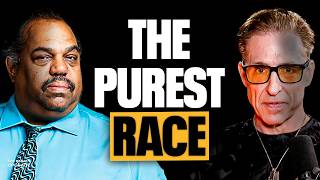
In this extended interview on the Human Upgrade podcast, host Dave Asprey talks with Daryl Davis, a Black jazz musician who has persuaded over 200 members of the Ku Klux Klan and other white supremacist groups to leave the movement. Davis recounts his early experiences with racism—from being the only Black Cub Scout in a 1968 parade to confronting an American Nazi Party speaker in high school—explaining how those events sparked a lifelong quest to understand why people hate. He describes his peripatetic childhood as a diplomat’s child, which gave him a global perspective and a belief that travel reduces prejudice. Davis outlines his strategy for changing extremist minds: avoid direct logical attacks, instead offer alternative perceptions that can reshape a person’s reality. He shares a vivid 1982 encounter with former Nazi leader Matt Cole in Lafayette Park, where he challenged the speaker’s racial purity rhetoric and learned about white supremacists’ fear of the projected 2042 demographic shift toward a 50/50 Black‑non‑White population. Throughout, Davis emphasizes five universal human values—love, respect, being heard, fairness, and family well‑being—as the foundation for bridging divides. The interview also touches on his music career, the role of protest, and the importance of protecting free speech while rejecting hate.
Chapters
I'm the only black participant in this parade. And people are waving and cheering and smiling until we got to a certain point along this parade, rough. When suddenly I'm getting hit. I still didn't realize I was the target. It wasn't until my den mother, my Cubmaster, my troop leader huddled over me and quickly escorted me out of the danger. He held my hand in his hand, shaking it. He says, Mr. Davis, it is in the interest of the black people to be a strong race, and you cannot be a strong race unless you are a pure race. He says, you know, black people are born with a gene that makes them violent. And I said, we all know that all white people have a gene within them that makes them a serial killer.
The first time you walked in and sat down with someone from the kkk.
What did it feel like?
You're listening to the Human Upgrade with Dave Asprey. Our guest today repeats some of the things the KKK said to him. And frankly, they are not very nice. If this is going to be a problem for you or anyone listening with you, be warned. Sitting here in a studio in Washington, D.C. with Daryl Davis, Daryl is one of the most unusual human beings I've come across. A jazz musician, a black man, who just so happened to convert 200 Ku Klux Klan members to no longer be in the Klan. He's been a guest a couple times on the Joe Rogan show, and I've been on there three times, so we have that in common. And he's lived a life that is astounding. And I want to share with you how he thinks and just to hear some stories of how he's achieved something that sounds impossible. One of the things I've learned over the years is that if you want to change someone's mind, going in logically doesn't really work because our operating systems are designed for us to not want to change our reality. So these logical arguments end up basically with low carb guys throwing, thumping their chests, or vegans yelling at each other, or keto people saying, I'm more keto than you. And we get stuck in these cognitive areas. For me to start the biohacking movement, I had to break my paradigm of food, of hunger, of how much control I had over my brain, over my body, over my nervous system. And it was a lot of change. And I found that I couldn't tell people what to eat, but I could show them, and that most of the way we influence other people comes from the unconscious or from the things that are not the words we say, and if you'd like to learn more about that, the episode with Robert Cialdini, who wrote the famous book Influence, is a way to just understand how much is going on that you don't see. So we're going to learn from Darrel how he did this, and you are going to be blown away. Daryl Davis, it's a great honor to.
Be sitting here with you today. It's my pleasure and honor. Thank you, Dave, for having me.
How was that intro? Are you a jazz musician first? Are you the guy who changes people's minds? How do you like?
Well, when you say that, I was one of the most unusual people. I thought you said, oh, he has six arms and three eyes and all that kind of stuff. No, you know, yes, I am a musician first, but ultimately I'm a human being, and I've learned to recognize everyone as human beings. Perhaps I have had some experiences that many people have not had, but still, we all have certain things in common that we all can relate to, believe it or not.
What made you reach out to the kkk?
Okay, well, in order to get there, you have to understand my background. I'm age 66, and I was the child of parents in the US Foreign Service. I began traveling around the world at the age of three, in 1961. I was born in 58, and my first exposure to school was overseas. So as an American Embassy kid, you know, you get assigned to a country for two years, and at the end of the assignment, you return back home here to the States. You're here for maybe a year, and then you get reassigned abroad again for two years. So back and forth, back and forth. My first introduction to school was kindergarten, which was overseas. I did kindergarten, first grade, third grade, fifth grade, seventh grade, all in different schools in different countries. Now, the schools over there, my classmates were from all over the world because anybody who had an embassy where we were stationed with our American Embassy, all of their kids went to the same school. So this little girl here might be from Nigeria, this person here from Japan, that boy there from Czechoslovakia or Italy, Russia, you name it. All those embassy kids were all in my school. That being my first introduction to school became what my baseline for school was supposed to be. And the term multicultural did not even exist back then. You know, to me, it was just the norm, you know, that's all it was. A bunch of us kids, we played together, we worked together. We didn't look alike, maybe we didn't have the same languages. We didn't worship, you know, the same way, perhaps, but we all played, worked, and had slumber parties together. Right at the end of the two years, I would come back home here, and I would either be in all black schools or black and white schools, meaning the still segregated or the newly integrated. And just because desegregation was passed by the Supreme Court in 1954, four years before I was born, schools did not integrate overnight. It took years. And even right now, in 2024, we're still battling integration in some parts of this country. So one time I came back, 1968, and I was going to one of these newly integrated schools. Two black kids in the whole school, myself in fourth grade at the age of 10, and a little black girl in second grade. So consequently, you know, all of my friends were fourth and fifth graders, and they all were white. Several of my male friends were members of the Cub Scouts, and they invited me to join. So I joined the Cub Scouts, you know, did a lot of fun things. And we had a parade in which other organizations were participating. Girl Scouts, Brownies, Boy Scouts, 4H Club, and different organizations. And the streets were blocked off. Sidewalks were lined with nothing but white people. This is 1968, and here I am with my Cub Scout troupe. I'm the only black participant in this parade. And people are waving and cheering and smiling until we got to a certain point along this parade route, when suddenly I'm getting hit with bottles and soda pop cans and small debris from the street by just a small group of spectators, maybe four or five, mixing with a larger crowd off to my right on the sidewalk. I turned to see what was hitting me. I see these people, you know, throwing things and yelling. I couldn't hear what they were saying because there was, like, a marching band and all kinds of noise going on, but they were throwing things. And I still didn't realize I was the target. Oh, wow. You know, because I never had any precedent for this. I'm just assuming, oh, you know, these people over here, you know, they don't like the Scouts, you know, you were 10, I was 10. And I'm trying to figure out, why don't they like the Scouts? You know, maybe their kid didn't make the cut or something. You know, I had every excuse for the right excuse. And I'm thinking, they're targeting the Cub Scouts. It wasn't until my den mother, my Cub master, my troop leader, all came running back. These are white people. And huddled over me and quickly escorted me out of the danger. And I kept saying, what did I do? I didn't do anything to them. Why are they doing this? And all they would do is kind of shush me and rush me along, tell me to keep moving, keep moving, everything would be okay. You know, I kept moving. And fortunately, you know, they didn't follow us. So, yeah, the danger had passed. And by the end of the parade, I still didn't have an answer. And so I went home and my mom and dad, who were not at the parade, were putting red sticky stuff, used to call it Mercurochrome and band aids on me and asking me, how did you, you know, trip and fall down and get all scraped up? I told them I didn't trip and fall down. Told them what happened. And for the first time in my life, my mom and dad sat me down and explained to me what racism was. Now, you see, I'm an only child. You know, I didn't have, you know, older brothers and sisters, you know, to learn from their experiences. My mom and dad were, you know, were my source of information and they never lied to me. But on this day in 1968, when they told me why I was being hit with these projectiles, I did not believe them. For the first time in my life, it made no sense. My 10 year old brain could not process the idea that someone who had never seen me, never spoken to me, knew nothing about me, would want to inflict pain upon me for no other reason than this, the color of my skin. And to further prove that they were wrong and I was right, was the fact that the people over here on the sidewalk doing this did not look any different than my fellow scouts or my schoolmates or for that matter, my friends overseas, whether they were my friends from the American Embassy or my little French or Danish or Swedish or Australian friends, for that matter. Some color had nothing to do with it. My parents kept assuring me, you know, Again, this is 1968. And sure enough, I learned very quickly that was a very turbulent year. On April 4th of that year, Martin Luther King was assassinated. And every major city in this country, including where we were living at the time, burned to the ground with violence and racial animosity and all this kind of stuff. So I learned that my parents, you know, had told me the truth. And I accepted the fact that this thing I never heard of called racism because it wasn't in my sphere, existed. But what I didn't understand was why. And at the age of 10, I formed a question in my mind which was, how can you hate me when you don't even know me? And for the next 55 years. Because I was 10 then. I'm 66 now. Or 56 years, I should say. I have been looking for the answer to that question. That fall, we moved back overseas, you know, and I was back to normalcy. But every time I'd come home, there'd be some incident that would happen to me, either directly or vicariously, you know, related to the color of someone's skin, or my skin, for that matter.
Were you mad at your parents for not telling you about racism?
Initially, yes. Initially, yes, I was upset, all right? But in retrospect, I believe, you know, my parents are gone now, but I believe they did the right thing, and I'll tell you why. Supposing they had told me, darrell, you know, things are not as. You know, your. Your friends may be fine at school. You know, you play with them, they come over to your house, you go to their homes and you have fun. And these are good kids and good parents. But not everybody is like that. There'll be some white people who won't like you because of the color of your skin. They may try to hurt you or call you names. Suppose they told me that in advance.
You'D have been suspicious all the time.
Then I would been, you know, is this a good white person? Is this a bad. How do I tell the difference? Maybe just stay away from them altogether. Right? So they did not pre poison me or prejudice me. You know, unfortunately, I found out the hard way. I mean, literally bad, you know, but, I mean, not funny, but, you know.
Yeah, it's got to be astounding. A lot of kids will feel betrayed when they find out their parents aren't infallible or that your parents were not telling you the truth. But parents are doing it for your own good. In your case, as you grew up, you recognize that that was a gift. Do you think you gained a superpower for connecting with people because you moved around so much as a kid? You go to a new school, have to make friends, go to new school, have to make friends. Did that help you later in life?
You know, let me tell you something. That is all I knew. And a lot of the kids, not necessarily the natives, the native kids to whatever country we were in, we lived in Africa, we lived in Europe. You know, they're. They're there and they do whatever they do. But all the embassy kids, they had that pretty much that same experience. So, you know, as a kid, you think that every kid does what you do because that's all you know. So I didn't know anything any Different. The kids that I was friends with, if they were already in the country when we got there, chances are they only had a year left. And they were leaving because we're there for two years and then when we have a year left, new kids are coming in, you know, so it's always in flux. All right? And that was my life. Now, I'll tell you this. It wasn't hard, but I noticed something that when I would be home, you know, we traveled a lot and my dad and mom always made sure I saw everything. I went inside the pyramids in Cairo, inside the Sphinx. I touched the Berlin Wall. I've been up in the Eiffel Tower. I stood five feet from the Mona Lisa in the Louvre Museum. Yes, okay. And you know, when I would come back home and be in whatever grade and studying, you know, our textbook, world history, whatever, you see all these items, I've been there, I've touched those things. I realized that most of the kids sitting around me here in our own country, the closest they would ever come to those things were the pictures in those textbooks. You know, they weren't going to Berlin, seeing the Berlin Wall or the Eiffel Tower or, you know, King Tut in Cairo or whatever I did. And sometimes those things in the history books were wrong. I was there, I saw what it was, and the history book was wrong. All right? So I really appreciated my parents even more for exposing me to these things because According to our U.S. census Bureau, less than 50% of Americans even own a passport. Europeans, they travel all the time. They're always going somewhere. They don't call it vacation, they call it, I'm going on holiday.
Right?
And you know, when we say vacation, we mean, you know, we might be gone for a week, no more than two weeks, because that's what our company pays us for. Two week vacation. Right. These people, when they go on holiday, they may be gone for a month, two months, whatever, you know, and so they, they are a lot more worldly than we are. I've been. When you combine my childhood travels with my adulthood travels now as a musician, touring or lecturer or what have you, combine those two sets. I've been to 63 countries on, you know, on six continents. Wow. Now I'm actually behind, though, because Currently there are 195 countries in the world. And a couple years ago, I met two guys totally unrelated to one another, about three weeks apart. One was an American, surprisingly, from California. He'd been to 125 countries and the other guy was from Estonia. He'd been to 161. Now, that was a couple years ago.
You're in estonia. You walk 20ft in any direction.
Yeah, yeah.
To another country.
Yeah. Yes, exactly.
I've been out there too.
Yeah. But one of my favorite quotes of all time is by Samuel Clemens, otherwise known as Mark Twain. It's called the travel quote. And Mark Twain said, travel is fatal to prejudice, bigotry and narrow mindedness. And many of our people need it sorely. On these accounts. Broad, wholesome, charitable views of men and things cannot be acquired by vegetating in one little corner of the earth all one's lifetime. And that is so true. So true. Now I'll say this. All that travel does not make me a better human being than someone with less travel experience. What it does is it gives me a better and broader perspective on humanity than most people who've not been exposed to somebody outside of their immediate environment or circle. And I can tell you this. No matter how far I've traveled from our. From our own country, the United States, or whether it's right next door to Canada or right next door to Mexico or to the other side of the globe, no matter who I meet, you know, they may not look like me or speak my language or worship as I do. Maybe they don't even worship at all. I always conclude that everybody I've encountered is a human being. And I've noticed that every human being wants these five core values in their lives. Everyone wants to be loved. Everyone wants to be respected. We all want to be heard. We want to be treated fairly and truthfully. And we all want the same things for our family as anybody else would want for their family. And if we can learn to apply those five core values or any of those five values when we find ourselves in an adversarial situation or in a culture or society in which we're unfamiliar or uncomfortable, I'll guarantee your navigation of that situation, that culture, that society, or would be much more positive, much more smooth, and much more productive.
Hearing your experience growing up is so interesting. I grew up in New Mexico, and at the time there were essentially no black people there. I had literally never met someone black before. I went off to college, which sounds crazy, but that's how it was. There was lots of the local Native American population and lots of Mexicans. Other than that, it was. That was all I'd ever seen. I went to college and ended up sharing a one bedroom apartment with a black guy for three years. And he told me stories. I'm like, wow, this Stuff really happens because it was completely outside my world. Plus I had Asperger's syndrome. So being a little bit autistic doesn't always help you be aware of the world. But I was kind of thrown for a loop going, wow. I guess that stuff is real because it's something that I would have never seen. And hearing that, it still just kind of doesn't match my worldview. And I believe everything you're saying and it always kind of stuns me. And a lot of people saying, well, this is a problem, but there's not much we can do about it.
Sure there is.
And, well, there certainly is. And it looks like curiosity was the primary thing that got you going. But I got to know the first time you walked in and sat down with someone from the kkk, what did it feel like?
Let me back up a little bit after that experience as a 10 year old. One time, you know, we went back overseas, I was back in normalcy. I'd come back, stuff would happen, I'd go back overseas, come back. So Now I'm in 10th grade and we had a class here, back in this, in this country called the POTC, which stood for Problems of the 20th Century. We had a great teacher and it was a senior class, I'm taking it as a 10th grader, sophomore. And he would bring in controversial speakers, talk on different topics, abortion, this, that and the other. And the 12th graders or whoever was in the class would get to question them. And so I was taken in as a 10th grader. And on this one day in 1974, he brought in the head of the American Nazi Party. Now, the American Nazi Party was founded about 15 minutes from where we're sitting right now, right across the Potomac river in Arlington, Virginia, by a fellow named George Lincoln Rockwell. And George Lincoln Rockwell was a big proponent of the ideology of Adolf Hitler.
Isn't that where the CIA is from there too?
Right. About 15 minutes up the road in Langley. Okay, so. So yeah. So anyway, George Lincoln Rockwell will always take his storm troopers and, and, and go to crash Martin Luther King's marches and rallies and, and you know, confront him and all that kind of thing. Well, anyway, Lincoln Rockwell had a right hand guy named Martin. I'm sorry, Matt Cole, K O E H L and Lincoln Rockwell. George Lincoln Rockwell was murdered by one of his own Nazis. He got into an argument with this guy named John Palter and Palter killed him right on Wilson Boulevard over there in Arlington. And so Matt Cole, his right hand guy, took over and Martin Kerr became Matt Cole's right hand guy. So on this day, our teacher had invited Matt Cole to our school, to our class, and he came along with Martin Kerr. Now, there were more blacks in the school, but only two in this particular class. And I'm in there, and another black guy and Matt Cole was standing at the front of our class. I'm 15 years old, espousing all of these views of white supremacy. And he pointed at me and pointed at the other black guy and said, we're going to ship you back to Africa. And then he went like this, and all you Jews out there, you're going back to Israel. Now. I just sat there looking at the guy. I'm a kid.
Did you not know Israel was recently created? You can't send them back to a country that didn't exist until you're dealing.
With Nazi mentality, the master race. They don't care where you go as long as you're out of here. So I'm, you know, I didn't say anything to. I'm looking at like, what on earth is this man talking about? Right? And one of my classmates piped up, says, well, they live here. You know, what if they don't want to go? And he says, oh, they have no choice. If they do not leave voluntarily, they will be exterminated in the upcoming race war. That was the first time I ever heard the term race war.
And what year was this?
1974. Wow. Okay. And make a long story short, I confronted Matt Cole eight years later when I graduated college. Music became my profession, but studying race relations became my obsession.
And in music, you were not a small name. You're still not. You're playing with the greatest names in jazz, right?
Well, you know, I majored in jazz, but, you know, I played jazz, I play rock and roll, I played blues, I played country, R and B. I mean, if. If they're paying, I'm playing. All right, so, you know, I worked for 32 years with Chuck Barry, the man who invented rock and roll. Yeah, yeah. And not every gig, but. But many gigs. And he was my mentor, my friend, my boss, my fellow musician. You know, I learned a whole lot about, you know, from that guy. Not just about playing, but about, you know, business as well.
So you made a name for yourself in music as you were following this curiosity about racism?
Yeah, yeah.
And when you say you confronted this guy, how did you confront him?
Okay, well, right here in D.C. there's a park across the street from the White House, right across the street. It's called Lafayette Park. And 24, seven even right now, as we're sitting here, there's somebody or multiple people in that park who are protesting something. They are there 365 days a year. Some of them pitch a tent and just stay there. Okay? Whether it's nuclear weapons, abortion, the war, wherever it is, whether it's Vietnam, whether it's Iraq, whether it's Afghanistan, you name it, somebody's protesting something. So that's where you go. You fit. You stand in the park and face the White House. So you're hoping that whoever's in the Oval Office will look out the window and read your billboard and solve your problem.
You think protesting works?
It used to work. It has gotten watered down because so many of them now, people just ignore them. Right. All they. All they do these days is block traffic or something. So. But yeah, back in the day, yes, they were a lot more powerful. Now, unfortunately, people take other. Other extremes as a. As a means of protest, even taking people out and things like that. Okay. So anyway, I had found out about an unpublicized demonstration that was going to take place in front of the White House of the American Nazi Party. Wow. And no, you know, unpublicized means nobody knows about it. They don't tell anybody, not even the police. Because if people know about it, all kinds of protesters come and they come to do violence to these people. Now, while I don't support anything of white supremacy or Nazism or KKK stuff, I do support everybody's right to freedom of assembly and freedom of speech.
Thank you. You're allowed to say stuff I vehemently disagree with, and that's okay, even if I really don't agree.
Right? We have the right to hate. We don't have the right to hurt.
There you go.
Okay. So anyway, I found out about this thing and so I got down there early. Now, see, back then, this is 1982, back then, you could drive up and down the 1600 block of Pennsylvania Avenue, which is where the White House is located today. You can't do that because over those years, people have tried to ram the gates of the White House with their vehicles. So they put up concrete barriers that lift up out of the street so only law enforcement can drive there. You can walk up and down there all you want, but no, no commercial vehicles or private vehicles. Just, you know, law enforcement. So anyway, that thing you could. I parked my car, Caddy cornered to the White House on the other side of the park. I wait, here comes this van. And about 13 or 15 of these Nazis get out. There's nothing that tells you they're Nazis. No Gestapo uniforms, no SS insignias or swastikas, just dark black suits. There's Matt Cole and Martin Kerr. Same guys who came to my high school eight years prior, right? I'm two years now out of college, and I'm watching Matt Cole. He's getting his people all lined up, you know, facing the White House. It's lunchtime, and D.C. is crowded, you know, Anyway, lunchtime, everybody's out of their office, walking up and down, right? And they're walking by, not paying any attention, not even knowing who the. Who they are, because, you know, they don't. You know, there's nothing advertising you know who they are. So they're walking past these Nazis not knowing I knew who they were. And I said, you know what? I'm going to confront Matt Cole because I did not confront him when I was 15 years old, so I need to confront him. So once he got all his folks lined up, I walked right over to him and I said, matt Cole, he, like, jumped in the light. Who's this black person knows my name, right? He goes, do I know you? And I said, well, you spoke at my high school. And he said, what high school would that be? I told him. He goes, looked at me, yes, yes, yes, I remember you. That was a long time ago. What can I do for you? I said, yes, it was eight years ago. Do you remember what you told me? Yes, yes, how can I help you? I said, well, I'm still here. And he says, I can see that. What can I do for you? I said, well, you can tell me. Who the hell gives you the authority to make permanent travel arrangements for me? He says, what's your name? I said, daryl Davis. He put his hand out. He shook my hand, and then he did something that I've used before, a tech. A technique that I've used before on clan people, right? He held my hand in his hand, shaking it. He took his finger on his other hand and shook it in my face like this. He says, Mr. Davis, you have to understand one thing. It is in the interest of your people, the black people, to be a strong race. And you cannot be a strong race unless you are a pure race. You cannot be a pure race if you are miscegenating with other races and on and on. And then he goes, it is in the interest of my race, the Aryan race, to also be a strong race. We are becoming a mongrel race by. By miscegenating with mud races such as Yours. So anybody who is non Aryan or non white is a mud race because you have color in the, in the skin. And so he's concerned about that. He says the races cannot coexist until you learn you must be separate. Right. To keep the races pure. And so, you know, he went on and on and then he told me, he told me a lot of lies, but he told me one thing that is true. And the media has been avoiding talking about this. It'll come out every now and then, but they don't double down on it. And this is true. I've been following it since 1982. He told me that back then, 1982, that they're very concerned about the year 2042. And I was asking him why, and he was telling me about the demographic shift that was slowly happening. And it's getting faster and faster. By the year 2042, this country will be 50, 50, 50% white, 50% non white. And between 2045 and 2050, it's going to shift and whites will become the minority. All right, so, you know, when you have sat on the throne of power for 400 years, that's all you know, you don't want to get off. You look at the last president, the one before Biden, he was only on the throne, so to speak, for four years and thought he was still there. He still thinks he's still there. So, you know, you get that power, you don't want to give it up. And so they're seeing this shift coming, you know, and our census is taken every decade, every 10 years. When I was a kid, when you were a kid, the black population in this country was 12% Native Americans, 1% Latino, Hispanic Americans, 2% Asian Pacific Americans, 3%. Whites were like 86, 87% today. The last census was 2020. All right, blacks, they say 12.9 or they say 13, so it's 12.9. We really haven't grown. Native Americans remain at 1%. Asian Pacific Americans have almost doubled to 6% Latino. Hispanic Americans have more than quadrupled to 17 point something percent. So if you take just 12% black, 17% Hispanic, Latino, let alone anybody else, just, just those 2, 17 and 12, that makes 29% non white. That's almost a third of the country. This is happening and it's going faster and faster. Right? So they're trying to stop that because they're afraid of losing their majority status. And in their minds, you know, you mentioned reality, you know, people's reality. It's real to them, to them they. They think we discovered this country, we built this country, and we wrote the Constitution for this country. And people who don't look like us are coming to this country and taking our country away. We're going to take America back. We're going to make it great again. So that's the mentality. That's their patriotic reality.
One of the most powerful classes I ever took was called Religion and Violence. And we studied all the religious movements that have turned violent. Genders?
Sure. The Mormons, the Christian Crusades, everything.
The Crusades, all of them. And it was taught by a rabbinical scholar. And he said, what do they all have in common? I said, they're all irrational because they believe in all this weird crap. And he laughed and he said, no, these are the most rational people you'll ever meet. If you believe what they believe, their actions are rational. And so you realize it's questioning your fundamental beliefs. And if those are wrong, what you're doing is wrong. But if your fundamental beliefs are actually real, and it seems like what you're doing is you're getting in at some level, and you're convincing a group of people who are hard to convince, any group that. That believe something very strongly is hard to convince, and somehow you're getting in and you're changing something that they believe in reality that then changes or collapses the behaviors that are based on that. So then they change.
Well, actually, yes and no. What you're saying is absolutely 100% correct, but I would not say that I changed them or that I converted them. When you see my name in the media, it'll say, black musician converts to 200 Klansmen or white supremacists, whatever. No, I didn't even convert one. In my eyes, I. I have been the impetus and continue to be the impetus for over 200 to convert themselves. Yeah, okay, that's less.
That's much less egotistical and more accurate. It's totally true.
Yeah, but. But because what. What I know, you know, what you said earlier about reality is real to these people. You cannot change somebody's reality if it's real to them. And if you try to change it, you're going to get pushback. Yeah. Because they know it's real in their mind.
And that pushback can have bullets in it.
Oh, yes. I mean, the more you push, the more it's going to escalate until the point of the break point where it explodes and becomes violent towards you. Right. So let me give you an example. Let's say if you want somebody's reality to change. Don't attack it. Don't tell them they're wrong. Don't try to attack it. You know, even though you know that you're right, you've seen that, you've, you know, you're older, whatever reason you, you have the facts, they don't have the facts, all right? And you know they're wrong. Don't attack it. Don't try to prove, prove it. All right? What you do is this. You offer them a better perception or better perceptions, plural. And if they resonate with one of your perceptions, they will change their own reality because one's perception becomes one's reality. So hypothetically, let's say you have a seven or eight year old brother and he runs off to a magic show with his little buddies and he comes home and tells you, dave, you're not gonna believe this. This magician on stage, he asked for, for a lady volunteer and 50 women raised their hand. He picked one out of the audience, brought up on stage and asked her, you know, what's your name? Where you from? And then he had her climb into this long box and he had her put her feet out the hole at that end and her head out the hole at this end. Then he closed the box, took a chainsaw and went right down the middle of the box. It came out the bottom. He cut her in half and they told her to wiggle her feet and she wiggled her feet. And you said, listen, it didn't happen like that. Yes, it did. I was there. You weren't there. I saw it with my own eyes. You weren't there. He's 100% right. You were not there. He saw it. You couldn't see it. You were home, right? So how are you going to tell him that he did not see what he saw and you weren't there? You know he's going to attack you, right? And so he's pushing, he's pushing back and, and then to prove to you that he's right, he tells you, after the man cut the box in half and she wiggled her feet, he moved this half of the box with the feet over here to stage right and the half with the head over here to stage left. And then he walked over there and he spoke to the woman's head and she talked back to him. And then he brought the two halves back together, he did some abracadabra incantation and opened the lid and she climbed out full form. He cut her in half, put her back together and there's no blood. And you say Listen, it's an illusion. No, it's not. I'm telling you now, it's escalating. Because after he's gone through all this trouble telling you what this man did and how he put it back together, you're still calling him a liar in his mind, right? So he's going to explode. Rather than attack his reality. What you do is you offer him a better perception. Because one's perception is one's reality. So you say to him, listen, I hear you. I understand what you're saying. But let me ask you a question. Do you think that maybe, just perhaps, it's possible that the woman that he picked out of the audience, maybe she works for him, Maybe she knows the trick, she travels all around the country with him and always sits in that same theater seat wherever they go. That way he looks all around the different women and always zeroes in on her. He brings her up on stage, and when she climbs into the box, there's already a pair of mannequin dummy legs laying on the floor of the box that are wearing the same stockings and same high heels that she has on. She grabs them by the poles about the end of them and shoves them out the hole. She brings her own knees up under her chest. So now her whole body is on this half of the box, right? And he cuts the box.










