Biohacking for Women: How to Capture Your ‘Spark Factor’ | Molly Maloof, MD | 1016 | Dave Asprey
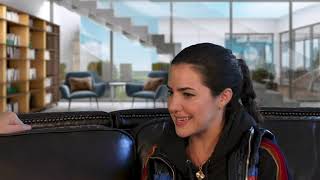
Dr. Molly Maloof talks with Dave Asprey about biohacking for women, focusing on hormonal cycles, mitochondrial health, and stress. They discuss how to combine lifestyle changes with pharmaceuticals for better health and why medical education needs to catch up to emerging technologies.
Chapters
You're listening to the Human Upgrade with Dave Asprey. Formerly Bulletproof Radio.
A state of High performance.
You're listening to the Human Upgrade with Dave Asprey. Today's episode is live in person. My very favorite kind, at my studios in Austin, where I just moved. And it turns out there's all kinds of cool people in Austin. Funny, that's one of the reasons I moved here. And one of the many cool friends here in town is Dr. Molly Malouf. If you're a longtime listener, at least since episode 706, you already know who Molly is. She's well known for her work in mitochondria and women's biohacking, which is what we're going to talk about today, specifically biohacking for women. She's also pretty well known for psychedelic work as well. And we've sat down several times at my conferences, by the way, guys, biohacking conferences. You go there in June in Orlando. Molly, you're going to be there.
Oh, of course. Hopefully, I'm going to be speaking.
Well, you spoke last year, and you have to really step it up. Oh, you mean biohacking for women. Maybe we could do that.
Yeah.
So why did you write a book on biohacking for women?
I just feel like I figured out so much in this one life. Like, when I was a kid, I remember hitting puberty, and I distinctly remember being like, someday I'm gonna understand my body. I'm gonna understand what's going on right now. I'm gonna understand how this thing works, because I'm so confused, and I think a lot fly blind through life, just wondering what is going on inside my body, what is happening to me? And we go through so much change. We go through puberty, we go through our fertility years, we go through perimenopause, we go through menopause, we go through post menopause, and our lives are constantly changing. And then throughout the month, we're going through our menstrual cycle. And a lot of women are so confused about that. And I just kind of wanted to take all the learnings that I've made in my practice and in my own life and in my own health and put it into a book. And someone recently said, molly, you've written the biohacking Bible, which is really cool.
Yeah, it's so true that there are foundational things like mitochondria are important for men and women. And you talk about mitochondria in here. I've said since the beginning of biohacking and by the way you guys wouldn't know this, but about 55% of biohackers are women. And it's been that way since I started. People go, it's such a male thing. I'm like, I don't know if you guys look at the numbers, but no. Biohacking has always been for men and women. But women are much better biohackers on average than men, because men are like, yeah, we went through puberty, and then we went through some kind of andropause thing that we don't really notice because it takes 10 years, and we just get, like, fat and hunched and cranky, but it was so slow, we didn't notice. And then that's that. So we don't have to deal with the change that you'll see on a monthly basis. Like, your performance was massively different on this day for sure. And you weren't hungover. So, guys, we just don't have to train for that. But women usually do. And I think it makes you more perceptive of where your body is.
Well, it wasn't until I think, the last maybe three or four years that even I really started truly tracking my period consistently and doing it in a way that was like, how do I build a lifestyle around my menstrual cycle? Like, I didn't really fully accept that. Like, I was not a man, like, five years ago. Like, I was like, I can do. I literally dated a guy. I dated a guy that was like. He's like, you can do anything that I can do. And I was like, dude, I'm fasting just as much as you are. And I'm getting. You know, I'm starting to really notice that this is not working for me the way it was before. And it was working for a few months, and then I was doing it every other. I was doing it every other day fast.
It happens every time. Like, women over fast. They over keto.
Yep.
Guys do, too. It just takes us twice as long as you to hit the wall.
Right, Exactly. Yeah. I mean, I've met bodybuilders that are men that have definitely messed up their hormones by doing too much cutting. And obviously, it can happen to guys. But I think women's bodies, because of our biological imperatives, are a little bit different. Like, we are. I mean, women are oxytocin dominant. We're designed to help create life and to nurture life. Men are really vasopressin dominant, designed to protect life and to protect against aggressors, to actually defend the tribe, you know?
Yeah. There is such a thing as masculine, such a thing as feminine. The energies are different. And yes, women can exhibit masculine. Like you just talked about. A lot of women entrepreneurs are exhausted from putting out too much masculine energy.
Yeah. And.
And especially if you watch any modern movie, it's like the way women display power is by martial arts. That's not feminine power. The way I know. Feminine power. And guys, same thing. We can express femininity as well. And so there's a whole conversation there that may go down to mitochondria. But before that.
Sure.
Your book is called the Spark Factor, and I was really honored that you asked me to write the foreword for it. So thank you.
Thank you so much.
You're welcome. First Guide for Biohacking for Women. And I declined your invitation to read the intro because I couldn't do it in the time.
It was a really busy time in the year. Like, the end of the year was crazy for me. I mean, it's funny. Cause this is one of those years that I finally reached. Like, I think I realized I finally hit the wall of performance and stress where I was like, okay, I finally hit the amount of stress that I can handle before my performance really declines. And the great thing about this book is even just rereading it myself, I realized I'm gonna even be returning to this book regularly because our bodies are constantly changing, our demands are constantly changing, and our stress levels are constantly changing. And last year was a really stressful year for a lot of people. It was a year of tremendous change. And what I really wanna teach people is that biohacking is about consistently checking in, getting your measurements taken, actually taking a scientific approach to your body. Not just flying blind and just doing things and taking supplements because you think that they're good for you, but because you have data to drive those decisions. It's funny. I'm gonna be on Jillian Michaels podcast soon, and I'm a little nervous because she's very much about calories in, calories out.
Why are you nervous? You have science.
What do I say? I mean, I've always been like, calories in, calories out. Actually, the rules don't apply to. We're not a closed system. You know, it doesn't work that way. I think people need new options for health because things that aren't working just aren't. And you know Christopher Palmer, this new doctor just from Harvard, he's just started putting up social media. He just published a book called Brain Energy. And I'm like.
I just interviewed him a couple weeks ago. Introduced him to Dr. Amen.
He's great. The reason why I love his stuff is because I think we're starting to realize there's a common theory of health, and it's all about metabolism. So, like, if your energy flow, if your body is not functioning normally, your brain isn't going to function normally. Because your brain is very energy. It demands a lot of energy, and so does your heart. And this is why I wrote about COVID in the book. And Covid's a very controversial topic to write about.
So how much of the spark factor is about, like, Covid?
It's really a small portion, but what it's really about is like trying to teach people that if you understand mitochondrial health, you'll understand a lot of different conditions, you'll understand mental illness, you'll understand all the major chronic diseases, heart disease, cancer, diabetes, and dementia. Like, these are what kills us, Right? And you'll actually understand immune system dysregulation, immune system dysfunction, which sets you up for infection. So it's like I wanted to create a book that was like a common theory of health. Like, what is this sort of common thread? Because I feel like the medical system has created this ontology of disease that is based on pathophysiology, right? We're taught about all these different ways that people get sick. But I was in the hospital watching over and over and over again that all these people that I was treating had the same risk factors, right? They weren't eating properly, they weren't exercising properly. They were stressed out beyond comprehension. They had a lot of trauma, and they lived in environments that were poisoning them. And it's like, why? Like, why do those things lead to all these different manifestations of disease? And it's through the mitochondrial dysfunction, Right? And this is what the book tries to teach people is like, okay, if you want to biohack your body, you gotta understand how the body works. And it's not simple, but it's certainly not nearly as complicated as what I was taught in medical school.
You know, I love getting to just sit down and chat with you, whether we're on camera or not, because you get it. And there are some doctors who really see this. But most of the time in medicine, you fall into this. You know, if I have a hammer, everything's a nail. And so someone is okay. It's all about even. It's all about mold. Well, no, mold's a common trigger of the actual problem, but it's not the only one.
Yeah.
And so the person who thinks it's all about mold. Didn't see ebv.
You know, obesity is a great example. One of my friends was saying yesterday, she's like, well, didn't you say that obesity is a disease? And I was like, a disease is literally a term for a condition that we have now labeled as something we can treat medically. Right.
Semaglutide, anyone?
Exactly right. Which, by the way, is a really cool drug. And I'm pretty sure that Elon and the Kardashians have all gotten super lean on it, which is pretty interesting. And then I just found out yesterday, I was reading on Instagram that Khloe Kardashian is like, I have not lost weight on Ozempic. And it's like, lady, you're tiny. Like, clearly you're doing something, and it's not just lifting weights. Okay.
And also, it probably wasn't Ozempic. It was probably the new one or whatever.
I'm grateful that we have these tools. And how does this thing work? This thing improves insulin sensitivity and glucagon.
Balance, makes mitochondria work better. You mean maybe it's anti aging? Oh, it is.
I mean, this is the cool thing. Peptides, like, the cool thing that I'm seeing in the world is that peptides are becoming medicine. This is a big deal.
That's terrible.
Peptides were.
They're just gonna get 10 times more expensive and be illegal in the US we have to go to Thailand to.
Well, so, like, here's an interesting peptide. Bromelatide. I can't pronounce it. PT141.
Yeah, I love that stuff. I inject it a lot.
If you get this from a doctor, that's a prescription version. It's like, you know, thousands of dollars. And it's an injection, but you can get it from a compounding pharmacy for like, a fraction of the cost. 200 bucks, 150 bucks. Ideally, we want to get medicines that are properly dosed, properly produced, properly regulated in a way that we know are safe. Like, what a lot of people don't realize is that most doctors that are working within the insurance system are basically given a formulary. And that formulary says what they can and cannot prescribe. And that is actually designed by the insurance company. So doctors are subcontractors of insurance companies now. And I get messages from doctors all over the country regularly who say, molly, like, things are falling apart. Like, things are. And I hate their life. It's not just that, like, the actual system is breaking down. And I knew this was going to happen when I was in medical school because I was lobbying for health care reform. And I was like, uh, oh, this whole Medicare reimbursement rate situation is not changing any year. I come back every year and they're not doing anything about this situation. And then I was like, well, we're gonna just end up seeing a dual system emerge. We're gonna have a public option. It's gonna look like Medicare and the va, and then we're gonna have a private option. And that's essentially what's emerged. But what I didn't anticipate happening was the digital option. Right. Like, I. About 10 years ago, when I started working in tech, I. And we were both in the Bay Area, I was starting to work with startups, and I worked with over 50 companies in 10 years. And that's part of the reason why I kind of got a reputation as an innovator. But I did it because I needed to fund building a practice from scratch, and I didn't know how. So I was like, maybe I'll go talk to startups and teach them about how the healthcare system works. Because I've been working in health care since I was in ninth grade. And so I started working with all these companies and I was like, oh, my God, there's going to be a tsunami of innovation happening from technology companies that's going to just engulf medicine. And it's basically. We're seeing all these companies basically go to direct to consumer. They're building these physician networks, they're doing all these online prescription products and experiences. It's not always good. I mean, obviously, like, that one company that did Adderall prescriptions is kind of in trouble with the government. Who knew that selling. I actually talked to one of these investors who is investing in the company. I'm like, you do realize that this is just like a drug deal, right?
You know, you could just invest in a pirate's den anyway.
Yeah. I mean, but it's funny because I think we're entering a phase of really, people are looking for truth, and the truth is coming out. I mean, the Twitter files, I mean, all of this stuff is coming out.
Can I say something really bad?
Sure.
Adderall actually works.
It's amphetamine.
It's a horrible drug, but it works.
It totally works. Increased stress hormones.
If you're gonna crash the helicopter you're flying, you should take some Adderall, because then you'll stay awake and no one will die. Except you'll want to kill people more. So you might shoot them, which is why they switched to Modafinil for the government, which works better than Adderall. And I took it every day for eight years.
Wow.
I'm on it today, right now.
Interesting.
So, like, it's okay to use pharmaceutical enhancement as long as the benefit's greater than the cost.
Totally. And you really were one of the first people to start talking about nootropics openly. Like, you were the first. Like, everybody was like, what is.
I took a lot of hits for that. Like, that's unethical. I'm like, yeah. What do they call the guy at the bottom of the class at Wharton who gets his mba? I don't know. Mba? I use smart drugs to get to the bottom of my class. I win.
Yeah. Well, it's funny. When I was in medical school, I was like, getting. I was basically somewhere in the middle of my class, and I was really bad. I had really bad test anxiety. And I went to a psychologist and I was like, all right, I'm miserable. I don't know if I can do this. And he's like, look, you're not depressed, you're not anxious. You don't have any diseases. You're just a stressed out medical student who's not taking care of herself. So I was like, oh, wait, so this is my responsibility? And he gave me the biggest favor he could have ever given me. Instead of giving me antidepressants, he was like, hey, you need to take care of your body. And I wasn't.
Wow.
I wasn't doing that. I mean, this was medical school, right?
Like 10 years ago or something.
This was probably like, I don't know. I graduated in 2011, I think.
Okay, so, yeah, 10, 12 years ago. That's really progressive. That's so impressive.
But what I did from there was I said, okay, I'm a scientist. I'm going to go into the science. What do I need to do to change my health? So I started doing yoga. I stopped drinking. I was coming drinking mugs of espresso. It was not normal.
Yeah, you're supposed to do a bunch of espresso.
Maybe just like a little espresso. It wasn't like a mug. And I was doing all nighters. I wasn't exercising. I was super sedentary. I was super isolated. I was doing everything wrong with my health because I was trying to study and get the grade, and I was not performing. I was not performing at my best. So I changed my lifestyle. I started doing yoga. I stopped doing all nighters. I stopped drinking so much coffee. I Stopped eating Raisin Bran for meals, which is, you know, I started eating real food. I started spending more time with my family, my friends, and my grades started to go up. My performance started to improve, my mood started to improve. I had more capacity, I had better performance, I had more productivity. And all my. And I went from an average on my first board exam to 99th percentile on my second. And nobody does that in medical school. And all my peers were like, did you cheat? And I was like, no, I didn't cheat. I just changed my lifestyle.
That's cheating.
And they were like, well, what did you do? And I was like, look, I'm not just going to tell you what I did. I'm going to teach you. And so I recruited like 10 doctors. And I was like, hey, will you help me teach health health to my peers? Because this is not part of the curriculum. And in medical school, I was at the largest medical school in the country, and there was not wellness in the curriculum. They weren't teaching sleep, they weren't teaching fitness, they weren't teaching nutrition, they weren't teaching integrative medicine, they weren't teaching mind body health, they weren't teaching relationships. And all this stuff was fundamental to health. And I was like, I'm just gonna create a course. And so I got it added to the curriculum and I ended up winning a bunch of awards for this.
That's so cool.
It was like this. I was like, how is this not part of our education? You know, like, a medical student shouldn't be the one bringing this to the curriculum. You know, this should be baked in. But our curriculums are largely designed by pharmaceutical incentives. So almost everything we are taught is how to diagnose disease, how to. And what to treat it with. And what do you treat it with? You treat it with drugs and surgery. And don't get me wrong, I've had surgery and I've taken drugs, and they've certainly helped in certain cases.
They're awesome.
I take a little bit of thyroid medicine, a very small amount, and it's great.
I take a relatively large amount, it's even better.
It's awesome.
But it's like, there's nothing wrong with using medical technology for biohacking. And I'm so glad you said that.
Yeah.
Because a lot of people, and I feel like more women than men, they're purists. Like, I would never use a drug. Like, that's ridiculous. You should use a drug.
Some of these drugs are life changing, but we shouldn't depend on them completely. And we shouldn't be.










