Body Out of Balance? Bring it Back to Harmony with Chinese Herbal Medicine – Chloe Weber – #737
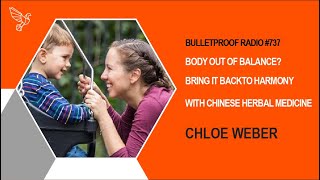
This is a YouTube video titled "Body Out of Balance? Bring it Back to Harmony with Chinese Herbal Medicine – Chloe Weber – #737" published on September 10, 2020. It features a detailed interview between Dave Asprey, host of Bulletproof Radio, and Chloe Weber, an expert in Chinese herbal medicine and biohacking. They discuss the principles of traditional Chinese medicine, the use of Chinese herbs, their formulation, and modern adaptations for health and performance enhancement. The conversation also touches on personal health stories, herbal extraction methods, and practical applications of Chinese herbs in daily life.
Chapters
Bulletproof Radio.
A state of high performance.
You're listening to Bulletproof Radio with Dave Asprey. Today's show is about something that is a really confusing topic, and I think I've found someone for you who can simplify a little bit. And I'm talking about Chinese herbs. I know a lot about formulating, and I've put together so many of the bulletproof supplement stacks and products and collagen bars and all that kind of stuff, but when it comes to Chinese herbs, there's a whole broad stack of stuff to know. For instance, what are they in English and what are they in Chinese? I don't know all that stuff, and there are so many combinations, and there's a whole different way of thinking about it. So I have always consulted experts in Chinese herbology when I needed to use anything more than single things. But frankly, I don't get it well enough to teach you guys, so. So I found someone who could, and her name is Chloe Weber, and she's with Radical Roots Herbs, and they're sponsoring today's show. But she's a real expert who is a biohacker and lived the life and has put together some cool stuff that I've started using. Chloe, welcome to the show.
Thank you so much for having me.
All right, now I'm just going to have to call out the elephant in the room. You don't really look or sound like you grew up studying Chinese herbs.
I'm most definitely not.
You're not from China?
Although my family has always had an odd affinity for Chinese culture. My parents lived in Chinatown. When I was born, I think it sort of permeated into me somehow.
Okay. It was osmosis. So you've had an interest in. Do you speak Chinese?
I don't. I need to hack myself in order to do that because my ears definitely do not understand the tones. But.
But you at least know what all the names of the herbs are in Chinese so you can formulate. I'm guessing.
I do know all of the herbs in Chinese.
How did you pick up that knowledge? How long do you have to study to be a real expert in Chinese herbs?
So for to become a practitioner of Chinese medicine, you typically do a master's program that's essentially about three years. But in that three years, it's the course equivalent of four and a half master's degrees. So we're doing eight classes a semester. Three semesters a year for three years straight. So it's a pretty rigorous schooling process. And now I'm actually in the process of getting my doctorate in Chinese medicine as well.
Now, you also did study, though, in China as well, right?
Yes, I studied at the Heilongjiang University in Harbin.
Okay, got it. So you put some real time into knowing this, which is really important. But your story is a little bit deeper than that in that you've had your own series of health challenges and family things like that. Can you talk about how your child has affected your openness to biohacking and use of Chinese herbs? Just kind of walk listeners through your story, because I think it's fascinating.
So let's see. So my interest in Chinese herbs and Chinese medicine actually started from my health challenges. When I was in high school, I actually contracted cutaneous leishmaniasis while I was on an Outward Bound trip in Costa Rica. So that sort of led me down the road to study ecology and evolutionary biology in college. And then ultimately I wanted to get into medicine and look into public health. And what I was seeing in the Western side of medicine really just wasn't addressing public health. It was just putting a band aid on a lot of symptoms. So that's how I got into Chinese medicine. But then my son Remy was born. He's six now, and he was diagnosed at two and a half with a one in 20 million genetic disorder called STXBP1, which, side note, you definitely know you're in a shit show if Your child has 1 in 20 million genetic disorder named after the gene that's mutated. So with Remy, we've had to go really outside of the box when it comes to treating him. Western medicine only really provides seizure medications or dealing with the symptoms. So in terms of herbal medicine, I wanted to be able to create a formula specifically for him that I knew was with herbs that were really clean, manufactured, and processed in the best way possible. But then also, we have really dived into biohacking. So we've been doing a lot of bioenergetic medicine. We go to a clinic in Guayaquil, Ecuador, where he does oxygen therapy and ozone and alpha brainwave stimulation, all sorts of really cool stuff. And so that's led me to the path that is hanging out with bulletproof and nerding out on all of the goods that you guys have.
Very cool. That's how we got connected. And I want to go into just teaching people listening about the basics of Chinese herbs. Talk to me about what they are, what are the big categories and what's different from, you know, oh, I take American ginseng, I use herbs, I take oregano, kind of what's different.
So in Chinese medicine, instead of looking at a symptom, instead of having like a one to one correlation between a symptom and a cure, we're looking at the dynamic interplay of the body. So we sort of look at the body as a microcosm of the macrocosm. So everything that we see in nature we use to sort of describe the actions and what's going on in the body. So the same is with herbs. We're really looking at the whole plant and how it's interplaying with the body. And then instead of just doing one herb, we're using different herbs together to create a formula so that we can not only address the branch which are the symptoms, but we can address the root so we can really get to the underlying health issues, while we're also addressing the symptoms that are causing you pain or insomnia or whatever that is.
If I was to summarize that, I would say kind of systems biology, the body's a dynamic system. And I look at tcm, the traditional Chinese medicine and Ayurveda as well as some of the weird Russian stuff that we don't know so much about, but the very ancient lineage shamanic root out of Mongolia and Siberia kind of things as some of the original biohacking that's out there because they were looking at the system of the body and how do we influence it. So whether you're talking about things like different sounds of bells in each ear, you'll see that in China. You'll see that actually in many different cultures that's setting up a standing wave between the ears, like, oh, they were hacking the brain to put you in a state. And then, oh, let's take these performance enhancing herbs that's happened in every society that's ever lived, whether it's coffee, tobacco or many, many other compounds, Adaptogens were invented, as far as we can tell, and China for military use. And so you go back like, okay, this is in us and the cultures that have been studying these for the longest seem like they all go back to systems biology. But for you and me as Westerners, at least, when you put on your Western hat, because you can go both ways with your brain if you can think the way you can about Chinese herbs. We're going to look at the system of the body in a different hierarchy. Like we might look at it from a medical, oh, there's organ systems and, and things like that. But then as soon as you put on your meditation thing, oh, actually it's all about your chakras, and then you do your qigong. Like Montauk Chia when he was on, he's like, well, you have to put a breath in this order between your liver and your colon and your stomach and your lungs and your heart. And if you don't do it in that order, then the qi won't flow. I think he's probably right because he's 80 something and has been doing this for a long time and has amazing magic powers. But man, those systems don't seem like if I put them on top of each other, I'm not sure that there's a hundred percent correlation there. How do you deal with that disparate view where they don't always match?
Well, I think that they don't have to match. I mean, they're separate systems and separate ways of looking at the body. Like Chinese medicine, it's the only lineage that we can actually look back at classical texts from 2,500 years ago, read them and understand what they were going through and how they were treating pathogenic factors of that time. But Ayurveda has a different way of describing things, and I think that they all sort of interplay similarly and they're all working on the same systems. They're all honoring the fact that we have an energetic body, that we have a spirit, that we have a soul, that that actually affects how our body's functioning physiologically as well and how we're engaging with the world and our food and our diet, I mean, all of it. So I feel like they're all very complementary, but they're just separate ways of getting to the same end. So it's sort of the many roads to the top of the mountain phenomenon.
There's definitely more than one path. And I remember being a little bit skeptical when I first really tried Chinese herbs. Not buying well formulated ones in capsules. I said, I'm going to go all in on acupuncture. And I had. This is probably 15 years ago. I had some kind of weird thing going on that I couldn't explain. And so I said, all right. I went to this guy and I looked him up and he had good Yelp reviews and he was 90 years old and had trained in China and had written a book on this stuff and completely knocked me out with needles. And afterwards he said, oh, I'm writing up this prescription for you. And I went into the little town, it turns out the new bulletproof cafe in Chinatown in Victoria that I'm opening up in my offices. And I'm 40 years in, it's actually like two doors down from this place. But this guy out of a movie, and he's got one eye pointing in one direction, one in another one, doesn't speak very much English, reads this list of prescriptions and starts opening bottles and drawers and putting these ugly, gross seed pods and these big balls of paper and telling me you have to boil them. And it made the most foul tasting tea I've ever had. And you have to air out the house after you boiled it. And you'd hold your nose and drink it. And it got better. But that was, let's just say, suspending disbelief, because how is it that there's actually infrastructure set up for people to have stores like that? And enough people do it because it's so inconvenient, it must work because it's so gross. So I had results from that. But even for all the weird biohacking stuff I do, it was pretty far different. And I couldn't see how this guy would know what all I needed. But based on your pulse tests and all, can you tell me how you. Let's say you're looking at me, and if you were to examine me and say, ah, Dave, you need these herbs, how would you know? Like, what would you do to know?
So typically, we'll take your pulse, we'll feel your pulse, we look at your tongue, we talk to you about your past medical history, what's going on. And with Chinese medicine, we're really looking for underlying patterns of disharmony. We're not looking for a disease state. We're really focused on trying to prevent disease from forming. So we're looking at where is your system weak? So we might talk to you, and from your pulse or from your tongue or from something you say, we might realize that like, oh, Dave has a past medical history of mold exposure and has weak digestion. So then from there we look and create a formula that's going to support the digestive functions and that's also going to support cognitive function. If you have mold exposure, that's something that you want to do. Maybe also look into ways to help detoxify. So it's really sort of finding where the body is out of balance and then working to bring it back into harmony and into homeostasis.
And the definition of balance is when you feel the pulse, it's even. Or. I've been mystified with this. So let me just go into that a little bit. I was CTO of one of the wristband companies intel bought us for $100 million called basis. And we were the first get heart rate from the wrist the way your Apple watch does now. But for some reason, what we could do then and even what the Apple watch does now isn't enough to replicate what a Chinese medicine practitioner does. When they put a finger on your wrist, what are you doing that's so different there? I mean, I've read a few things about this, but seriously, it all looks the same to me. Like, enlighten me.
So we're feeling for the quality of the pulse. So we have three different places where we feel the pulse when you're on your wrist, and then from there we see, like, sometimes the pulse feels wiry or choppy or floaty. So that sort of gives us an indication of what the internal organs are doing. It's sort of like the tongue is, you know, also showcases sort of what's going on in the inside of the body. It's a way to look at what's going on actually on the outside. So, like, if you have a tongue that's really red and inflamed, lots of inflammation, lots of heat. So that's how we look at it. Some of the pulse masters are just absolutely insane. Literally, they can take your pulse, they'll sit there for 20 minutes and then they'll be like, you had gluten last Tuesday. And you're like, how in the world would you possibly come up with that? So I'm definitely, by no means anywhere close to that, but I can definitely tell which organs are sort of out of function.
What I believe is happening there, and I want you to tell me if you think I might be right or if you just think I'm completely wrong, is that when we look at double blind placebo controlled trials, we have this idea that, oh, we're going to take a group of people and we're going to test an intervention or a diagnostic method and we're going to isolate everything else. The problem is that there's always a healer, a patient and a diagnostic or treatment modality. And if you try to isolate the healer from the system, the people that I've worked with who are the most knowledgeable and intuitive like that, yes, they're checking your pulse and yes, they're getting data from that, but they know because they know. And the mechanism of knowing is very hard to say. Whether it's because they've looked at 10,000 patients over their life, it's the same. You go into an ER, a doc has been an ER doctor for 15, 20 years. They'll touch your artery to measure your pulse. And they know in about two seconds what your pulse is. And they're always right because they felt so many pulses. They just know how many beats per minute that is because. Because it's in them. And someone who's worked with drug and alcohol addiction, someone walks in, they're like, oh, yeah, that guy's an alcoholic, but he hasn't drunk for three days because he smells like that. But what. All that stuff is real. It's like Neo in the Matrix. So sometimes I think it's more than just the pulse. Or am I just giving people more credit than they deserve?
I think it's both. I mean, I think I certainly. You see patterns happen over and over again. You know, like, you see how people come in. You see. I mean, even from somebody's demeanor, you can sort of start to know what's going on in their body. We can really look a lot at the face, the ear, all of these different things, and get an idea of somebody's overall health. But I've definitely had teachers who have been like. Who have called out people's, like, trauma and like, sexual abuse from their childhood. That's. There's just no way that they could possibly know that. And that's a rare practitioner. But I think that what they sort of do is channel. You know, they go into that sort of qigong energy space and energetically somehow tap into a different level that I've yet to learn.
You know, and it's also possible that maybe for some of us, that's just not what we're going to learn.
Yeah, and I'm okay with that. Like Chinese. I'm okay if I don't learn Chinese, I'd love to, but.
Yeah, and there's definitely people whose life purpose is to be a healer, and other people, it isn't. The important thing, I think, for listeners is there are people with those skills. And when you can find one of those in your local community and have them in your camp, they will be able to help you in a way that a normal medical professional can't. And a normal medical professional can do things probably that they can't do and that it's okay that both exist. And if you have someone who has skills with Chinese herbs or acupuncture, I certainly have people like that in my camp. It helps that on staff. Dr. Du here is a guy I can call, and he's one of the people I talked to years ago when we opened the bulletproof coffee shop in Santa Monica. I said, I Want to be able to put herbs in coffee, because I know that the mcts that we use are good carriers of herbs. So we actually had four different offerings that I don't believe we do anymore. Mostly because they just taste terrible in coffee. No one wants to put them in. But we had one for burning fat. We had one for increasing cognitive function and things like that, but we just moved away from it because mushrooms and coffee taste like crap. They always have. Sorry. You can try and say that it doesn't or it's pretty good. There's no need to ruin your coffee with that because you can take them in capsules or in a tincture and you'll probably be much happier. And then you can enjoy the taste of your coffee. But I hear you put Chinese herbs in coffee.
I do put Chinese herbs in coffee.
And why would you do that to your perfectly good coffee? Chloe, you're making me sad.
So good. Well, do you want to hear what herbs are in the coffee?
Okay, maybe it matters which herbs. Garlic is not amongst them.
Garlic is not amongst them? No, it's cinnamon, reishi, astragalus, licorice, and poria. See, those were not in Chinese.
What is poria?
It's also a mushroom, but it's a very mild one. So it really tastes just like cinnamon and like a little bit earthy. It actually tastes delicious.
Okay, that's right. I actually like the.
Oh, and he shou shou wu. So it's got the foti in there also.
You like he shou wu in your coffee?
Yeah, I mean, just a little bit, but it's so good.
That's another one of the Chinese herbs that I wrote about in Superhuman. Because there's a lot of TCM is around immortality. They really. Apparently people don't like to die. It's this weird thing. And so they've been studying this for a while. And that's one of the things you can use for hair that's turning gray. It's a general anti aging tonic. And there's good evidence behind it, but there's also evidence it slows down your liver. And I was putting that to the point I had enough Chinese herbs that as I was doing all the research for Superhuman every morning I would put like 10 different things, some Chinese, some not. And I would make like half my bulletproof coffee to enjoy, and I'd make half to like, oh, my God, I'm going to drink this. And I'd put all this crap in there, some from Japan, from China, and I'd drink it And I'm like, shudder and then drink the good stuff afterwards. But the stuff that tasted good that I found was not he showu but the lion's mane extract from life cycle. Because it's an alcohol tincture, it just adds a little bit of sweetness kind of. That didn't seem to bother me. But generally speaking, man, mushrooms and coffee, it's like that kind of dirty taste. And you want your coffee to not have that in it.
Well, that's the thing about Chinese herbal formulas is that by adding other herbs to it, you're able to mitigate a the taste and change the taste a little bit, but also some of the toxic effects. So that's. It's like with life cycle. I always found it interesting when you would talk about how that was the only formulation of mushrooms that you found to be really effective for sleep. Yeah, yeah. And you felt that the dates were really what was making a difference.
Or the plums. I thought maybe it was the plums. I don't know. Because Chinese use plums, different plums for different things all over the place. Tell me about that. I don't know much. A couple of people mentioned it. Are you an expert in plum pathology?
No, not at all. But I do know that in Chinese medicine we call it, we have dazao. So honey fried licorice, which is zhirgan sao or dat sao, which is a little, you know, Chinese date situation, are often added in small quantities to our formulas in order to mitigate any toxic effect, in order to sort of like help stimulate the digestion so that they're processed better also. So I always thought that that was probably why the life cycle. I thought you were right on, on that in Chinese medical formulations.
You know who told me that? I remember it's coming to me. It was Dr. Barry Morgolon, who's been on the show a couple times. In fact, he was the most popular guest of 2018. And this is like the real life Dr. Strange where they interviewed him for the movie. And you know the surgeon who studied in monasteries in China and he said, dave, I bet it's the plums. Oh, that's cool. I never thought of plums having magic powers, but apparently there's something special there. Okay, so plums may have a special detoxing effect, but you do some other interesting stuff with the radical roots herbs that you put together that we're going to get into. That is probably the smartest way to mitigate plant toxins. So if we know individual plants can do good things for us, we Also know they can do bad things for us. And in the Bulletproof Diet, which I guess I published the book in 2014, but started writing about it in 2010, I'm like, look, lectins are an issue. Oxalates are an issue. And for certain other people, nightshades, which are like the more aggressive types of lectins, are pretty meaningful. Is this something that we knew in China 2500 years ago, or was that out? They might not have called them those things, but they tell you, like, eating raw spinach is not a good thing unless you have kidney qi or something.
No, no, no, no. So Chinese medicine definitely frowns upon cold food. We look at the stomach as a cauldron, so we want to keep the digestive fire going. So it's incredibly rare to see people eating raw food in China. That being said, we're always looking for a balance both in flavors as well as temperatures. One thing that's interesting is that and that I love about Chinese medicine because as a clinician and as a human, I've seen a lot that this gut is really the foundation of health. And so one of our main texts is this text, Piwei Lun by Liquid Lee Dong won from, like, 1200. And he. His. His text is on the spleen and the stomach. So it's the school of thought that basically says that digestion is the root of all illness and the root of all health and vitality. So that's one of the main tenets of Chinese medicine. And it's really cool because it really, you know, shows what's going on today. And so many people's poor, poor health, poor cognitive abilities. I mean, the formula that we have, middle management, is based off of one of his formulas, bujang ichitong. And so that formula has been used for hundreds and hundreds of years to strengthen the spleen, support digestive function. And then what I always find really cool is that they also talk about that digestive function having the ability to raise clear yang. So in Chinese medicine, clear yang rising is sort of allowing cognitive function. So they already knew about the gut brain axis in such a visceral way. Yeah.
By the way, the name middle management is hilarious for something that's for digestion, like, oh, let's spare tire. But I was pretty impressed. I read the list of ingredients, which is really long, and I know about two thirds of the stuff on there, but some of these, I'm like, you know what? In English or Chinese, I have not even heard of that. I think, what do you have, like, 15 ingredients in this, I'd guess.
Yeah, probably about 15.
So how did you know which ones to put in there?
So that's one of my favorite formulas. So it's based off of that classical formula. Because why would I mess with something that's so perfect? But I added in some herbs that I felt like could address some of the issues that we're seeing more today. So Huoxong, which is patchouli, actually, there's clinical research showing that it can help kill, like, break down biofilm and break down candida. It's a broad spectrum antibiotic. So, yeah, you can probably smell the patchouli. It's really sweet.
Yeah. I was thinking that's why it smells like incense. I couldn't place what I was smelling.
You're like, there's a hippie and a hairspray.
Yeah, there's like a hippie popsicle in there. All right.
But then I also added Lian Chao, which is. In Chinese medicine, we look at that as, like clearing heat and toxins. So that's sort of clearing out any intestinal stagnation. It also has some very strong antiviral properties. So I wanted to make sure that a lot of times when I see patients who have gut issues, there's also some sort of pathogenic factors in the gut, whether it's dysbiosis or candida. So I wanted to bump up the formula a little bit because that's just so very common these days.
So you took what we know works from thousands of years of practice and said, well, gee, the modern world is a little bit different than the way people lived when they made the formula. So let's tweak it for the conditions that you see in people today.
Exactly.
So I've definitely been enjoying middle management and a flow state. And your other one, the immortal All Stars, I actually don't take that one because I already have low blood pressure. And it's got one herb that I know lowers my blood pressure too much, but it's an herb that's really good for anti aging. In fact, it's an herb that I want to take because it's got multiple pathways via W and T signaling. So I haven't really played around with that one, but I've really been enjoying the flow state. You can feel the difference from that stuff. In the middle of management, my digestion is already really good, but I take it because I like my digestion to stay good. So I'd love to say it changed my life, except, well, I like my digestion. I've been Working on it for 20 years. But I do think it has, it has good stuff based on our conversation here and just based on my own diligence. So I've added it to my stack. And I appreciate the addition of the herbs, but also the way they're processed. I've always been suspicious of plants. I know because of the algorithms of life and this is Dave Asprey 101 kind of content for long term listeners. But that algorithm of life around kill anything that might be scary is the top priority of all life forms and then eat everything is the second priority and have sex with everything else is the third priority. That's just how you keep a species alive, whether you're a plant, an herb or whatever. And the difficulty that I have there with plants has kind of an echo throughout my work. I found out my favorite foods are making me sick. I grew up in New Mexico with green chili. It's a nightshade. I am of the genetic type where nightshades give me arthritis. I had arthritis since I was 14 and I don't anymore because I don't eat those things. So plants want to kill you, yet some of them are yummy and delicious and some of them are medically very important. You do something different with the extractions. Can you talk about how you process your herbs? That's different than just typically throwing powdered herbs in there.
So we use an alchemical spagyric extraction technique. So it's also a 4,000 year old extraction technique that basically what we do is we tincture the herbs in organic grape alcohol and then we take the herbs out of the alcohol and we burn them for eight hours. And then from the ashes they use water to reconstitute all the minerals and salts. So basically when they're doing that, they're looking at it as the tincture, which is an alcohol, as the spirit, and then the ashes as the body. So then they bring those back together. So it's this crazy spiritual alchemical chemical reaction that happens. So you can look at it. And this is what I love about Chinese herbs in general is that you can look at it both from the left and right side of your brain. We can look at it from the woo woo aspect of it, but we can also look up all the pharmacological actions of each of these herbs. But so when they combine the minerals and the salts back in with the tincture, you can see this incredible chemical reaction that's created herbal products that I've never. That are of the quality and the efficacy that I'VE never seen before. So it's been really fun.
I used to be really suspicious of that method. I'm like, how could burning something and then eating its ashes do anything? And this is going back to kind of the beginning of my journey when I weighed 300 pounds and someone said, you should try these formulas. A lot of German techniques use that as well, or German formulations do. But I've come to understand that that spagyric extraction, there are things in plants that come out with alcohol and there are things that come out with, say, hot water. And that's why the dual extract, like the lion's mane stuff, I think works for life cycle in a way that just taking lion's mane powder has always disappointed me forever because I can't feel anything from it, no matter how much I take. And it doesn't change my sleep. So it's because my body doesn't have alcohol production on board. Thank goodness. That would be bad. Auto intoxication is a real thing if you have Candida. So how would I get that stuff out biologically? Well, you would get the spirit of it out. And you could say it's woo, but it's also, look, some things are soluble, some aren't. But then there's a bunch of crap in the plant that's there to keep you from eating it. So like, aha, I have a solution. Let's burn it. Okay. Now you've gotten rid of all the things that would have irritated your gut or things that were there to protect the plant. As long as they weren't alcohol soluble. They just got incinerated. But did you want the other components that supported the plant? Basically, like I said, the salts, the minerals, you probably did because the other things were paired with them. So you put it back in there. At worst, all you did was you got a mineral supplement. And at best, there's an alchemical energetic reaction and you've added fire and there's earth and wood. And the five elements are all in there and you can dance in a circle and maybe all that helps. In fact, sometimes it seems to. But it's okay to have that suspension of belief there. But as a science thinker, look, we burned off a bunch of crap you didn't need. We got the good stuff out, and in case there was something left, we put it back in. It makes sense on its face. So it isn't as crazy as you might think. And people have been doing it for a long time. Generally, stuff that doesn't work evolves its way out of our Behavior, except for politics.
Very true. And also, there's tons of research showing that whole plant medicine, as much of the plant as you can get into an extraction, the more effective it is. I mean, artemisin is a drug that we've created for malaria, and that's based off of a Chinese herb called Qinghao. And so there's been research studies that show that clinically, qinghao, the herb, as a whole plant decocted traditionally, has been shown to be more effective than the chemical derivative that they make the drug from. And that happens a lot. That happens with hemp, with seizure disorders. There's a lot of different examples of that. So the more of the plant that we can get, the better. And also, I mean, mineral deficiency is an issue that we face as a society right now, also.
It's a real thing, of course. All right, I have to give you props. I'm pretty good at product naming. J. Abraham says I'm, like, really good at it. I don't know. I just name stuff like bulletproof and whatever. But I have to tell you, the names of some of the formulas you put together. Made me laugh. Middle management is brilliant for something that fixes your gut. And then you have windshield, which I'm assuming that's for flatulent people.
Yeah.
What is the concept of wind, and why would you want to shield from it?
So in Chinese medicine, we normally consider any sort of viruses or, like, if you have, like, a cold or a flu. That's often correlated to wind in Chinese medicine. So we're trying to keep the wind from getting in.
Oh, so you just wear a mask so it can't get in?
Is that how you can just wear a mask and never leave your house ever again? So that formula is actually also based on a classical formula called Yuping Feng Song. And what I did was take that formula. That formula was being used in one of the hospitals in Hubei, and they were giving it to all of the doctors there. So some of the research that came out of there said that it was 90% effective in keeping the doctors safe during the pandemic. Whether that research is accurate, I'm not going to. I have no idea of that. But I do know that this formulation has been used to boost the immune system. And what we look at in Chinese medicine is boost Wei Qi, which is sort of our protective defensive qi for quite a long time.
I haven't had. I haven't had any trips in the last four months in order to try it out. But I'm interested if I'm ever In a place with lots of wind. It is well known anyone in functional medicine, whether they know Chinese or not, knows that there are some herbs that really do reduce, in multiple studies, the odds of getting a cold or the duration of a cold. Things like Andrographis are very well studied. I've talked about that on other shows and not for any particular virus, because everyone knows for certain viruses, if you say anything works for it, they delete your show. So I would never say anything works for a certain virus, because that's bad. Only things that are approved by the government can work for that. But for all other viruses that we know about, the studies are pretty good for endographis. Is Andrographis in there via another name or. Actually, I don't have that bottle next to me.
I don't know what Andrographis is in Chinese.
Got it. It's one of those things. It may not be in there, but there's actually, at least for controlling IL6. I listed something like 40 of them in a special podcast. You don't want a cytokine storm. Gee, here's 40 things that are documented in studies, and several of them were Chinese herbs. So you can do that, and it's manageable. So you're saying, look, here's what the doctors use in China so that they can have higher immune function when they're in the emergency room, regardless of what year it is, and that they get sick less. And that would be what travelers want and probably what everyone wants. Is that meant for constant, constant use, or do you just take it when you're exposed? Or what do you do?
For me, I just take it when I'm traveling. But. So in Chinese medicine, we're really, you know, as I said, we're trying to work with the body's underlying systems to make sure that your body is sort of in harmony and functioning as optimally as possible. I mean, that's all. That's exactly what biohacking is about. So as long as you're doing that regularly, then you already have this, a robust immune system. But this just adds an extra layer. So if I'm flying, I'll use it. Or I offered my son's teachers. I was like, if you guys just want boxes of this, I will drop it off at your school. Depending on your fear levels, you can take it. I formulated it so that it was safe. So if you were taking one or two a day for a couple weeks at a time, that's fine. But for me, I mainly just use it when I'm in sort of higher risk or around somebody who's sick.
Yeah, okay, that makes a lot of sense. Let's have to use that one. And then with flow state, I know that a lot of the compounds in there increase bdnf, and that's why lion's mane came to my attention and is something I pay a lot of attention to. In fact, anytime I can raise bdnf, it improves my REM sleep. And BDNF is correlated with higher hippocampal volume. My hippocampus is in the 87th percentile of hippocampal size for my age. In other words, my hippocampus isn't shrinking like yours is. Ha, ha. Or maybe yours isn't, if you're taking care of yourself. But the idea is that it doesn't have to shrink with age. It shrinks with age because you're doing something wrong or maybe you're not doing something right. And those are different things. Now, given that your flow state stuff does have stuff that raises bdnf, can I take it before bed or is it gonna keep me awake?
No, it's not gonna keep you awake. I've never had it keep me awake. So that one is based off of a formula called Xiaoyaosan, which is also called Free and Easy Wander. So how it works is really focusing on the liver in Chinese medicine. So in our system, the liver is sort of in charge of the free flow of blood and qi throughout the body. So if you get stressed, your liver sort of stagnates. So I sort of look at it as, like car wheels running but not actually going anywhere. So the liver sort of clenches up. So what this formula does is it helps the free flow of the liver, so it helps alleviate stress. There's research showing that it has neuroprotectant and anxiolytic properties. So that's always really great. And then the bdnf, you know, those herbs, the thing with Chinese medicine is the herbs are put together in such a function that, like, it might not, while one herb might have this action. So even like you were saying before about Danshen, Danshen can drop your blood pressure, but you might want to try the formula anyway to see if, in the conjunction with the other herbs, if that's not a symptom that you're going to have as a result of that. So it's really about how they're working together. So I've taken it before bed just to play around with it and see what it does on my Oura ring and see if it affects my sleep or my deep sleep or my rem.
No effect or was it deep?
I haven't seen much of an effect on it. My deep sleep is Super High. My REM's been pretty good, but it definitely doesn't drop it. I would say if anything, it bumped up my REM a little bit.
That's what BDNF normally does. Okay, I'll try before bed and see what happens. If I don't sleep at all, I'm gonna call you in the morning and say that it's annoying. Now I totally shat all over putting herbs in coffee because most of the time they don't taste good. You didn't send me your golden ticket, which is the stuff that's what you put in your bulletproof coffee, the stuff that you described earlier. So I can't say whether it tastes good or not, but you do something that's really interesting. I have experimented years ago. I have all these, as you'd imagine, every kind of coffee brewing technology you could think of. Behind me. There's an espresso machine that's pretty nice. But there's also the, the stuff that the cup of excellence uses to perfectly brew a cup of coffee, where every variable, including percolation and temperature and pressure and even how much you stir the water with little bubbles is controlled by a computer. So I have thrown herbs in with my coffee before, but usually it's like, oh, I'll throw in some green tea or a little cardamom and see what happens. Even grapeseed extract in order to get a little bit more tannins in. And you can play with coffee taste that way. But what I've always done is I've taken my Chinese herbs and I put them in when I'm blending with the coffee and the oil. But what you talk about doing is steeping the herbs with your coffee. So if you're doing like a French press or a mocha pot, you put your golden ticket herbs in with the ground coffee, you steep it and then you just toss them with the coffee. Which is better? Putting all of the herbs in the already ground coffee or exposing herbs to hotter water when you're steeping them?
I think it sort of depends on your preference. I've been blending them up more recently, but I started when I started making it, I started making it for myself like years ago just because I was a run down mama and trying to figure out how I could hack myself a little bit more. And it was just an easy tasty way because they are tasty. You're gonna like them.
I could never make them taste good at the bulletproof coffee shop, which is why we don't really do a lot of Chinese herbs and coffee anymore. And I sort of think mushroom coffee is just not a good taste. But if you put a little bit maybe of one mushroom or something, I'm going to try the golden ticket stuff. But you didn't send it to me. So that's stuff that I know you make, But I'm color me skeptical on that one. But I'm probably wrong because if you tuned it for flavor and you know, your Chinese herbs, I am very aware that the Chinese perspective, the flavor of the herb is part of how it works. So you have to taste bitter, you have to taste sweet, you have to taste sources. And the other. What are the other flavors that I missed? Sweet, sour, Umami's, Japanese, whatever. There's another one I missed in there. Anyway, if you don't have each of those flavors in a meal, it's not fully balanced. And I'm junior enough read into that stuff to know it matters. But that means you can tune, just like we do when we're putting together the new collagen bars, which we just launched, that are chocolate dipped, but our chocolate's sweetened with a prebiotic instead of with sugar. To tune the flavor of those, it's a whole science and an art, and it takes a lot of knowledge. So if you're doing that same kind of thing with herbs to put them in coffee, I'm excited to give it a try, to be honest, but I haven't done that one. But I am taking the middle management and the flow state and all. So that's cool. And if you convince me that they taste amazing blended up and taste better than my normal bulletproof, I'll be surprised. But I'll say it if I do. So you have to send us.
I will. All right, I will. Fair deal.
Let's talk a little bit about what it's like to biohack your kids. You okay to go there?
Oh, yeah. I love talking about my son.
All right. I know that you started getting into ozone and so you mentioned your son has a very rare genetic condition where there's not enough people with that condition that they're ever really going to get a lot of attention for from the medical community. People with rare conditions kind of have to team up with other people have it, otherwise no one's going to pay attention to you because there isn't a billion dollar market For a pharmaceutical company to do that because the market's, you know, 100 people at any one time. What have you. What have you done? Like, what are the most effective biohacks that have improved your son's condition?
Let's see. We do so many. I mean, diet is key. Digestion is key. 100% the most important aspect of his health. So, Remy, I always find it really interesting. So he will have seizures with the full moon, but only with the full moon. So I've always suggested and believed that he had parasites. But we did a couple of stool analysis, and they never came up. But then I would do a parasite cleanse on him and it would go away. And finally we got a stool analysis that did show that he had pathogenic bacteria.
Which one?
He had the bacillus pneumoniae.
Oh, lovely. Okay.
Yeah, Pretty high. And then he has pinworms. I suspect he has other parasites also. But so we're working on clearing that. So that'll be interesting, because I truly believe that if I'm able to clear out his gut, his seizures will go away, because there's never a time that he has seizures that he doesn't have a GI issue, which is fascinating and horrible to watch.
I've actually spoken at the Autism One conference, and I oftentimes say, guys, I really did have Asperger's. It runs in my family. And when you fix your gut, you fix your mitochondria, you fix your metabolism. When things are running well, your brain can do things. It still has to be retrained after you get rid of the pathogens, but it's possible. And so when you talk about the parasite thing, some people who don't, who aren't into that, huge numbers of people have parasites. It's a very normal thing in humans, and we just don't like to think about it. So the fact that they control so much of human behavior, it's really scary. And it's so scary, most people will turn away from it. They won't even hear. These words will get erased by the end of the show from their memories because it's too traumatic to think that those pinworms are actually changing who you date. But they are. They're mean, and they will take over control of you if they can. And they do it for almost all higher life forms. And there's whole books written about this. So kudos to you for saying, all right, let's figure out if there's parasites in there. And that's a very common thing in the autism community, because the Parents are like, all right, we're desperate. We're going to look. And when they look, they're getting lab results. They're seeing things under microscopes. They're not just making it up. And, I mean, there's a parasite. I don't know if that was a cat. I just walked across your lap. Oh, yeah. I was like, there. You've got a big one. But that was just a cat's tail.
Giant parasite. He kind of is. I mean, they all are. If you have pets and kids, they're all just essentially parasites of varying forms.
Exactly. Some of them more wallet parasites than others. Now, okay, so you've looked at those things. I mean, do you use, like, neurofeedback? Do you use electrical stimulation? Obviously. I'm assuming you use Chinese herbs, But where do you draw the line?
Well, so I feel very fortunate because I'm trained in all of this, and I also know my son really well, so I can sort of push the boundaries in ways that I feel like other parents may be too scared to do. But definitely the gut is the foundation. In Ecuador, as I said, we do hyperbaric oxygen, ozone, alpha brainwave stimulation, which he.
That's with the electricity. Just. You're running a current over the brain?
No, he. I always think it's his most brilliant device. It's like a. It's almost like an old phone booth, which some of your listeners probably don't even know what a phone booth is at this point. But so it's a little seating area, and me and Remy sit underneath it, and then there's some sort of diodes, like, over our heads. But I feel like the doctor set that up so that the parents wouldn't go crazy while we're all down there doing therapies with our kids so we can get some alpha brain.
So it's like blinky lights sort of.
Things, or it doesn't even blink, but it's just some sort of bioenergetic alpha stimulator EMF thing. Yeah. They also do what I believe is a pulse electromagnetic field over his frontal cortex.
Okay. We definitely do some of that stuff at 40 years of Zen. The pulsed EMF on the head to induce specific brain states. So they're doing something specifically for the front of his brain. Okay, cool. And it works just fine on kids.
Yeah, yeah. No, I mean, he's never had an adverse reaction whatsoever. One thing that I think is super interesting is so Remy's disorder causes not only for him not to make enough of this one protein, but the protein, then misfolds and then aggregates in the brain. So there are two things that I'm personally interested in is one is, you know, I have a nanov, but I've been bad about. I haven't been using it as much as I'd like on him, but for protein folding. But then also there's some research that's been coming out on using gamma brain frequencies in order to break up amyloid plaques and Alzheimer's. So I'm curious. So children with Remy's disorder, a lot of them do end up ultimately regressing in some form or another. And there's sort of a debate as to whether that's because of the epilepsy or whether that's from this protein aggregation in the brain. I personally believe that it's probably both, obviously, but also that the protein aggregation is causing some of the regressions.
Is there a beta amyloid in the brain or something else?
It's the. No, it's the syntax and binding protein that misfolds and then aggregates. So it's this rare, obscure protein. But I'm curious if it would still.
Help if you know where it sticks. I mean, there's things you can do to wash the brain out, so to speak, or even subcellular organelles. Some of the other tech we have at upgrade labs like the atmospheric cell trainer technology that we use, when air pressure changes rapidly, basically the cells get bigger and smaller. It'll reverse the pump inside a cell and then you want to increase cerebral spinal fluid moving in and out of the brain, which washes the brain amazingly. Whole body vibration can do magic things for increasing circulation there. And even those old fashioned things that come right out of China, the Qi swing, you lay there on your back with your feet in a little thing and it kind of moves your whole body like a mermaid. You know exactly what I'm talking about. Literally, they're called the Qi swing. All of those are the sort of old fashioned things. The vibration stuff comes out of the Russian space program. The Qi swing comes out of, well, qigong and exercises like that. But you look at that and you're saying, okay, you're dealing with these things. Let's go down to what's the body designed to do and how do we just help it get rid of some extra proteins in the brain? Well, it gets washed out by csf. And so you're probably already doing all those things and more. But for people listening, you think about it from that system's perspective saying, how do we help the body do what it wants to do if you wanted to increase exclusion zone water in your son, one way is tiny amounts of butter blended in whatever he's drinking. The other way is the nanov and the Ying three people have been on the show as well, and we use that at upgrade labs. And that is breathing exclusions on water which goes into the lungs and the body's like, hallelujah, I don't have to convert the water to fold the protein. And I'm saying this, you probably already know all this, but for people listening, that's how you think about it. If you know it's a protein folding thing, how do you make it easier to fold proteins and then you see if it works right? And it's possible, maybe it'll make it easier to fold the proteins. Wrong. And you actually want to inhibit easy water? Trust me, you don't, because that's how you make ATP as well. But those kinds of interventions, is it likely to be harmful to do that? The odds of it causing harm compared to french fries are about zero. So that's how I think about it. And that's how you think about helping people. Have you noticed a difference from using the Nano V?
Oh, absolutely. I mean, and his mitochondrial function's so much better, his tone's better. I mean, he's six and he's just starting to walk independently. So it's, you know, he's still non verbal and we still have a, a long way to go, whatever that looks like. I really have no, you know, I have no end goal in sight for Remy. I just want to support him as best as I possibly can and, you know, support his biology and his neurology and see how far he gets. Because I just, you know, there are so many ways to support neurological conditions in particular that, you know, Western medicine just sort of ignores. I mean, again, for him, they would just dull his cognition with more seizure meds. Many kids with his disorder are on three or four seizure meds with still very poor seizure control. Or a lot of the kids will seem to be anxious, I don't know, because they're non verbal, so it's got to be fairly frustrating. So then they'll just give them sedative drugs and it's like, no, my child. His body is brilliant, just like all of ours. And there are ways that we can support it to function more optimally. But mitochondrial health, digestive health, I mean, it's all very much in alignment with what you're doing. I actually tell a lot of my patients who are getting pregnant, I often recommend you and Dr. Lana's book.
Oh, the Better baby book. Thank you.
Yeah. Well, we really do have an epidemic on our hands of neurodevelopmental disorders. I think one out of five children have ADHD. One out of ten ADHD. I think last in the States, it's like one out of 52 boys with autism. I mean, it's just really overwhelming. So the more that we can optimize our health before we have a baby, and then the more we can teach parents about optimizing their health, but also optimizing their children's health and neurology, then we can really help a lot of people.
I love the. You mentioned your practice and I didn't really introduce that you were actually practicing. You're practicing in Denver now, so people can actually get appointments to see you for herbs. And what's the scope of your practice?
Herbs, acupuncture. We do, you know, a little bit of tween ah, which is Chinese medicinal massage or cupping. One thing that I don't know how much you know about, which is a fun Chinese medicine goodie, is do you ever use Moxibustion or have you studied that at all?
I've done Moxibustion. I mean, anyone who's watched the Matrix has to know about it. That scene where Neo finally comes out of the battery system and he's laying there with just crazy needles and they're all on fire with little smoky things. There's Moxibustin, but once you see that, you have to do it.
Oh my God. It's one of my favorite things. And it's actually really immunostimulant stimulant. So one of my friends, Merlin Young, is actually doing a research study in Africa using Moxibustion to treat drug resistant tuberculosis. It's super badass. So it's something that's been along forever and it's really safe and effective and incredibly affordable, which tuberculosis. I mean, if you want to talk about viruses, which we want, but like one out of four people in the world has tuberculosis. So that's.
That's not a virus though. That's not a bacteria.
Well, it is a bacteria. That's true.
We'll talk about microbial diseases.
Yeah, there we go.
Well, Chloe, I appreciate the diligence that you put into Radical Roots into the formulas you make. I'm definitely feeling a difference from especially the flow state, but I've taken it before bed and I like the middle management as well. And I am going to try to see whether you've perfected the flavor profile of putting useful herbs in coffee or whether I should just take the pills afterwards. So I definitely know that the licorice and other things, those are useful herbs. I'm just looking for the best way to get it into my body. So I'm going to try your golden ticket. And I'm pretty sure a lot of people listening will, because you are offering actually a really good discount to everyone who listens. And if you're a longtime listener, usually when someone comes on the show, they're happy to talk about their life's work, and then they give you a discount on it, which is not a bad deal. So you can save 20%. Go to Radical Roots Herbs. That's Roots Herbs, not just root. So radicalrootsherbs.com and use code Dave20. They'll give you 20% off. Try flow State. Try Middle Management. Try Immortal All Stars. And try the golden ticket stuff in your coffee. But you may have to put it in your smoothie. If you don't like it in your coffee, that's okay.
I even put it in Remy's keto pancakes in the morning.
Okay.
Genuinely, it's pretty good.
It's pretty good. Okay. As long as you got the flavor thing down. I just want to bring good coffee.
No, no. I love my. I'm from. I'm from New York. I love my coffee. Whenever my patients are like, I quit drinking coffee. I'm like, why would you do that to yourself? So I'm all for it. Don't worry.
All right. I love it. Chloe Weber from Radical Roots Herbs. Thank you. Website radicalrootsherbs.com affiliate code dave20 to save you some money. Have a beautiful day.
Thank you. You too.










