Breast Cancer Resilience: Shame, Love & Holistic Healing - Dr. Toni Galardi | 1095 | Dave Asprey
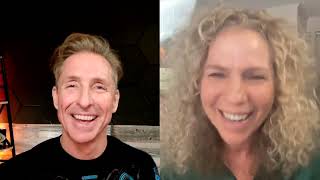
This is a YouTube video titled "Breast Cancer Resilience: Shame, Love & Holistic Healing - Dr. Toni Galardi | 1095 | Dave Asprey" featuring an in-depth interview conducted by Dave Asprey with Dr. Toni Galardi, a holistic psychotherapist and breast cancer survivor. Recorded in October 2023, the discussion covers topics such as the psychological and somatic aspects of breast cancer, mind-body connections, dietary influences, emotional healing practices, and alternative approaches to cancer treatment and prevention. The content is a single-speaker interview format focusing on health, wellness, and holistic healing strategies related to breast cancer.
Chapters
You're listening to the Human Upgrade with Dave Asprey, formerly. You're listening to the Human Upgrade with Dave Asprey. Today you're going to hear a really cool interview with Dr. Toni Gaillardi. She's a holistic psychotherapist who cured herself of breast cancer. She's written three books. She's been in the media lots of times, PhD in psychology, and she's worked with a lot of really cutting edge issues that I think are going to be really valuable for you. And her new book is called Breast 10 Steps to Awakening from Breast Cancer to this is a long title to radiant health, surgery, radiation, or chemotherapy. And a whole paragraph. I struggle with the second part of my titles, too. But the idea here is breast cancer affects a lot of people, including even men. And you can't blame psychology for cancer. But if you take psychology out of a cancer conversation, you're ignoring the mind body connection, the fact that the body has its own intelligence, that the mitochondria are a distributed consciousness. And in fact, I've covered this before with Mike Koenigs, who wrote a book called cancerpreneur, who's a dear friend who almost died of cancer and wrote about how it changed his life. And it was a very powerful interview. So I think this will be fascinating. So even if you don't have breasts or you're not worried about breast cancer, this is a psychology conversation about health and wellness. So, Tony, welcome to the show.
So great to be here. I've been very excited about doing this interview today.
Me, too. It's one of those things where there's all these different health topics, and I'm about longevity and about improving human performance. But if you're not happy and you don't address psychology, the biggest curse of all would be to live as long as methuselah, you know, 969 years, and just to be miserable the whole time. And there are people on that path. So that's why I've done so much neuroscience on, on myself and brain training and all the lifestyle parts that are hard to put words to. And I thought you captured that pretty well in the book, so I'm looking forward to this. All right, let's get into your book. You asked a hundred different women in a poll about what was their relationship with their breasts, which is a poll I've never heard of or even conceived of. What led you to have this?
It was after I was diagnosed with breast cancer. And the turning point was being in the breast cancer surgeon's office and I had put off the biopsy. We, I found the lump, and we did the mammogram and we did the ultrasound. And the radiologist told me she thought it was stage two. And I decided I was going to wait to see the breast cancer surgeon and do things that I wanted to do some research and do things that were evidence based and see what happens. And so when I saw the breast cancer surgeon after the biopsy, it had already. It had reduced in size by half, by 50%. So when we looked at the scan, the biopsy, she said, and I saw her face drop. And I'm thinking, oh, God, is she seeing something? And she said, your tumor is in the shape of a heart. And one of my girlfriends was, was with me. You know, she's got a sense of humor. She said, yeah, a cracked heart, because there was a line down the middle of the heart.
Wow.
The tumor. And in her clinical way, the surgeon said, well, that's because two tumors had merged into one. And in that moment, I thought, because I was still on the fence as to what I was going to do, and I thought, this is emotional. There were so many losses in my life in the previous five years that I just had this very strong sense. And so I decided I was going to go and do research because that's what I love to do. And I've walked the path of the wounded healer since I was 30, which means I've gotten things that doctors couldn't cure. I've had three near death experiences. And so my style is to find those answers. And so I thought I would start with interviewing women about their breasts, because when I started looking at celebrities who had gotten breast cancer, and I was looking for ones who had done alternative treatment, because I thought, I'll just follow what they've done. Well, none of them. I looked at every 30 some odd celebrities, four of which were men, which we can get into at some point. The increase of breast cancer in men. And so there were four celebrity men who had gotten breast cancer. And so I looked at each one, what each one had done, and was lumpectomy, mastectomy, over and over and over again. And I just thought, wow, this is amazing. And so I started looking deeper into what stage the actual cancer was. And Rita Wilson had stage zero, which is not even breast cancer, technically, it's dysplasia. Wanda Sykes, stage zero. And they both had bilateral mastectomies. And I thought, if you just detox your liver and you detox your colon, you can clear that that's non invasive. Why Would a woman so quickly give up her breasts? So I thought it'd be interesting to do interviews with women on their views about their breasts. What did you feel about them when you were a teenager? What did your mother feel? How did she feel about her breasts? You know, what messages did you get from that? What messages have you gotten from the media about breasts and your own breasts? And it was fascinating. The data that I collected was fascinating in that women who'd had large breasts and women who'd had small breasts, both had shame as teenagers about their breasts.
That's sort of never good enough, no matter what.
Yeah. Because, you know, when, when boys are looking at you at your, while they're talking to you at your chest, you know, you, you, you develop some self consciousness when you're walking down the street and, and the, you know, the guys working on buildings and stuff like that are, you know, whistling and whatever. And that was me as a teenager as well. You know, I had large breasts as a teenager and guys were hanging out of cars following me and everything. It was, it was very scary. It's very scary. So we don't develop, other than breastfeeding, a real respect for our own breasts. So when a doctor says, and they use the word, the C word, when they say cancer, most women are just going to go, just tell me what to do, doc, just tell me what to do and I'll do whatever you say. So the way they get women at stage zero is by saying, you don't have to have radiation if you do this. If we take the breasts off completely, then we don't have to radiate. So I started to really look at this, like, what are the messages we're getting from our mothers about our breasts? What are we getting the messages? And now with social media, what messages do young women get about their breasts? And so I wanted to look at that data. And by the way, gay women had the best relationships with their breasts.
Not really.
Many of them were athletes. And so to them having small breasts was cool. It was great. Didn't get in the way, you know, so, and, and they're, they're not identified in that culture, you know, in their, you know, gender specific culture. And their world isn't predicated on having large breasts like it is in the heterosexual world, you know, so men like that, you know, so there was just a lot of data. So I started to look at, okay, while I was looking for what were the evidence based things that I could do, you know, because that was important to me. I saw myself as A guinea pig. You know, I was willing to take this on as a guinea pig, but it was important that it be evidence based, you know. And so that began my journey. It was really quite interesting in the data.
It sound like just from reading through your book. Some, some women had no emotional connection with their breasts. Some of them felt obligated when they were with a partner and postmenopausal women who breastfed without complications like their breasts the most. And you think that's probably oxytocin and that younger, childless heterosexual women had probably the most problems of the view of the breasts. But why does it matter?
Why does it matter? It matters because I believe that heart. You know, my work is very somatic in, you know, I was trained shamanically. I went through a shamanic initiation between age 30 and 33 that was pretty intense. I work with body blockages in the body and women develop body shame at a young age. And I think there's a connection in some ways to the rise of breast cancer because only 5 to 8% of breast cancer has the BRCA gene. Okay.
It's even then the evidence that that's causing it is, is becoming thinner and thinner.
Right, right. Because we know from Bruce Lipton's work with epigenetics that it. You're. It's not a given if you take care of your health.
You know, I love it that you brought up Bruce Lipton. He inspired me greatly when I was writing actually my first two books. And even the definition of biohacking has Bruce Lipton's epigenetic work in it. And he will be speaking at my next biohacking conference in Dallas. That's@Biohackingconference.com Guys, if you're interested. And Bruce, he's a. Become a friend. And so, yeah, you're saying your thoughts and your environment influence your biology.
Right.
In my own journeys on esoteric shamanic and similar kind of stuff, I've become really aware each cell in your body has its own consciousness. But certainly each joint, each muscle, each organ has its own. They're not very smart, but they have their own consciousness. And if you hate your knees, you'll have bad knees. And the weirdest thing, and I would have completely denied any of this when I was, you know, a computer science oriented, only logical thing. But it turns out this is logical. But we make the unproven assumption that there's not consciousness in the body. But you go back, even Candace Pert was a devout atheist. She discovered the opiate receptor. And in the second half of her career, she's like, oh, my God. Like, there's a consciousness here that we're working with. So the idea that if you're having issues with the part of your body, you might just be pissed off at it or ashamed of it or something like that. And when you do forgiveness work and healing work and you change the way you look at it, you can cure ed. You can have a part of you that won't heal right, that suddenly heals right. And it feels like shamans have known this and TCM and somatic practitioners, but this is just about invisible to most of the world. What do you say when you're working as a psychologist and someone comes in and do you just say, like, hey, you probably don't like your breasts? Like, how does that conversation go?
Well, first of all, not all women who don't like their breasts get breast cancer in know it is more a disease of over giving. Okay. Women who we. When we look at personality types, and I do have a chapter in the book about that, like, what's the personality of breast cancer? Because, like, Michael Murray in his early books as a naturopathic doctor talked about the cancer personality as somebody who holds all their emotions in. Okay, I'm not that person, and I got breast cancer, you know, and you.
Can'T blame someone's emotions for their breast cancer either. There's environmental factors that are clearly a problem.
Of course, of course. However, trapped emotion, you know, if you don't process. In my case, because I'd lost both my parents within six months of each other, moved across country, broke up, broke off an engagement before I left Marin County. It was lost after loss. My brother and had brain cancer and ended up with brain damage during surgery. It was boom ba boom. And I was starting over here, you know, know, as an entrepreneur. I knew no one. I. I went on guidance because I'm a Jungian. So I was given dreams to leave California, but there was a bug coming. Okay, so.
Not a. Not a bad dream in terms of accuracy.
Yeah. So. And they said it was a stealth bug.
So was there a guy, like, with. With like horns who look like Fauci in the dream? I'm just wondering.
No, it's actually a bug climbing Air Force One at the time. Yeah. And this was a year before COVID You know, I asked in lucid dreaming, what is this? And they said, this is a stealth bug and it's going to. It's going to be dropped in California and you need to get out. So my father had just passed. I know this is going to get a little esoteric, but I work with the other side, you know, and beings and people come to me from the other side. So my father came to me and said, I will help you make this move. Because I was terrified about making the move to Asheville, but that's where I was being guided to go.
So, yeah, I want to pause for a second there. If you're listening to this and saying, Dave, I thought you're about longevity and biohacking. There are enormous numbers of people who do what Tony does. I've had many of them on the show. This is something that most humans are capable of with the right brain trained, right meditation practice. There's books going back to the 13th century talking about how to do this and how to turn that on. So if your belief is that that didn't happen because it can't happen, there's plenty of evidence that it can happen. It just doesn't happen to everyone. And oh my gosh, maybe different people have different abilities. Who would have thought, right? So I would ask you to suspend your disbelief if that makes you think. This is incredible. In my mind, if you throw out data that you're subconscious or maybe aliens, I don't know, but that, that's coming into you and you say, well, that can't be useful data. Therefore it's not. I did the same thing. Everything below my neck when I was young, I'm like, oh, it's like, it's all this, what emotional garbage. It's just not logical. I wish I could turn it off. That's probably not very good for your health. So learning to sort out the signal from the noise. And yes, there are dreams that just are noise for sure. There are ways to do that. So I just, I find that to be awesome and cool, cool that you paid attention, but I don't find it repellent. And if, if you're listening and saying that's repellent, well, just suspend your disbelief and see if there's something good here, because I think there is.
Well, Carl Jung was a neurologist originally the psychologist who basically created, you know, the understanding of dream interpretation, understood that we are a part of a collective unconscious. You know, quantum physics is showing us this now is that Candace Pert and all of these people, you know, that have come along, Bruce, and there were so many people for Fritzof Capra before him, you know, who were quantum physicists, that we're seeing the molecule of God. Okay, so we're now seeing that, yes, we are connected. We are One consciousness. So when we go to sleep, we are more capable of connecting, you know, because there's no such thing as past, present and future. We're not in linear time. That's an illusion. Right. We know that. That's been proven that, you know, there is no such thing as. As this linear kind of thing. So you're jumping timelines when you're sleeping. You can go to the future, what we call the future, when you're freed from the ego, the consciousness of the limited mind.
I believe all that to be true, and I just don't have issues with it. But I certainly did before I really started being curious and started paying attention and started being trained by people who are, you know, living masters of these things, going, oh, my gosh. So, yeah, there's something to it.
Dream recall is literally a muscle. You know, when I teach my clients, when I'm working with them to keep a dream journal, everybody, almost everybody, when they first start, don't remember their dreams. When they start keeping a journal and they know they've got a session with me, there's the dream recall starts happening. So it is a muscle that you develop, and you can ask before you go to sleep at night for guidance on whatever it is that's, you know, perplexing you during the day. So enough about that.
Yeah, it's. It's a thing. I'm. I'm thinking of the episode I did with Joy, Martina out of Amsterdam, when we filmed this anyway, where she was talking about training intuition as a muscle. And it's. It's absolutely doable.
So.
And certainly with neurofeedback, I've had some very big shifts in my awareness of things, and I still have some blind spots, and I don't know if I'll ever fully fill them in, but I have friends who don't have those blind spots. And that's why you sort of have a team of super friends to get stuff done, and that's okay, too. Now, have you come across women who, you know, loved their breasts into cancer remission?
I feel like I'm one of them. One of them. Know, one of the things I started doing because I realized how much judgment I'd had for years, you know, and so I bought this. I looked online. It was called Breast Love. It was a oil, you know, based in MCT and had rose, you know, essence in it. And I used it as a practice every night, you know, rubbing this on my breasts and telling them how much I love them, you know, and thank you for your rate for Coming into radiant health, you know, because I believe in declaring that, you know, that my. My breasts are getting healthier and healthier. So that was.
Did you ever try that just with bulletproof coffee?
I have not.
I'm just kidding. Although it turns out if you Google coffee and cancer, I don't think it would work topically, though. So there are also studies that show that even just five minutes of breast massage, whether you do it yourself or a partner, does it for you really meaningfully raise oxytocin levels.
That's right.
And there's probably studies. I haven't read them, but I'll bet you money that if you raise oxytocin, especially if it's low, that it would reduce your overall cancer risk. I don't know about if there's a study for. For breasts specifically, but also getting the lymphatic fluid in breasts moving that way is a really good idea.
Yeah. There's a technique in my book for breast. Like what is called breast flapping that, you know, you first put the oil on, and there's a technique for lymphatic drainage.
So.
Yeah.
Does it work for men, too?
Well, here's the thing. Breast cancer is going up in men.
It is.
And so touching the pecs, you know, why not? Why not?
You know, I'll get a little personal here. Most of my life, I had man boobs, and they tend to run in my family. I think all of us turn our estrogen or our testosterone into estrogen. So I used to actually be ashamed of it. You have, like, kind of perky nipples for a guy. And as someone who weighed 300 pounds, let's just say it wasn't the look I was going for, and I don't have that anymore. And I haven't had the surgery. And I've talked to some very big celebrities, male celebrities, who've had surgery just because they had to look a certain way off camera. I learned how to do it with nutrition and with just having the right hormones and the right herbs and things like that. But there is a sense of shame that comes with that. And if a person's harboring shame in any part of their body, that part of their body will be less strong than if you just sit there. And this sounds weird, and it actually sounds kind of dumb, but you send loving thoughts to whatever that part of the body is, and weird stuff happens when you do that. So I have never tried loving my nipples the way they are now, but I like them a lot more this way than I used to. So I'M hoping my cancer risk is low because I have lower heavy metals, because I don't rub cash register receipts all over my body. And I avoid plastics and BPA whenever I can. And I also detox a lot of that stuff.
Very key.
So let's talk a little bit about food because that was part of what I did to have less perky nipples. And I want to know, what did you find about breasts and breast cancer in food?
So creating an alkaline environment in the body is the key. You know, cancer lives in an acidic environment. It thrives in an acidic environment. So that means what I did was I. Because I was eating protein three times a day, I was eating more of a paleo diet. And so I had protein for breakfast, lunch and animal protein for breakfast, lunch and dinner. So I changed that and I went to 80, probably 80 to 85% plant based. Started growing sprouts, you know, broccoli sprouts in my kitchen. Because what we know about broccoli sprouts, powerhouse, much more than a bushel of broccoli has something in it, you know, indole, three carbinol, that actually cleans the xenoestrogens out of the body. And one of the things I'm passionate about is helping women to understand that it is the estrogen we get from the environment. It is not our estradiol that causes breast cancer.
Now, I've seen a lot of problems with inflammation throughout the body from plant based diets because of oxalic acid and phytic acid and lectins and omega 6 fats. And when you say an alkaline body, it takes me back to when I was a vegan and then a raw vegan. And I of course had my alkaline water that gives you diarrhea all the time. And someone sat down with me, a biochemist friend, and said, dave, if alkaline water was such a big thing, you could just have a little bit of baking soda and it's 10 times more alkaline than alkaline water. And it turns out in my longevity book I talk about the studies showing that having a teaspoon of baking soda every day increases lifespan by about 15% of memory serves, maybe 10%. So is that what we're talking about with.
You have to remember this is talking about somebody who's got cancer, which is different than your everyday. I could not. So.
So if you have cancer limiting protein and any kind of carbs, anything that'll raise mtor you would want to do that until the cancer is gone for sure, right, because. So you did that just during cancer or did you keep doing that after the cancer?
So I still do, I have cut my animal. I still once a week because I'm a, O blood type. So once a week I do have an organic grass fed burger. My body loves that. But I have fish every night, you know, for dinner and I do a lot of metal chelating. I, you know, I take chlorella, I take modified citrus pectin. So I do things that chelate mercury, you know, from the body as well.
That's the only way if you're going to be a pescatarian, which some listeners certainly do, that. Getting enough protein from fish is hard because it's not that high in protein. It's higher in water on a similar size piece of fish versus piece of cow. And then you have the microplastics and you have all the, the pollution that's in the ocean now. So I've, I've limit my fish to once a week. Kind of the inverse of what you're doing. But when it comes to acidity in the tissues, most people don't understand acid alkaline balance at all. And, and they kind of think even the baking soda thing would work, but it doesn't actually work that way. You can take citric acid, potassium citrate or sodium citrate and those will change the alkalinity of your body much more so than, you know, a plant based diet will, which is, which is really interesting. So I do monitor that and every night I have some citrate and that has other benefits as well. But with that you can kind of eat whatever you want and make sure that your body doesn't get too acidic for cancer. And if I had cancer, would I be doing that and limiting protein and limiting basically starch or sugar? I would.
So I was, you know, still eating protein. I was eating it, but I was eating it more in, you know, lentils, avocado, seeds, things of that nature.
And it's a very limited protein though, because there's not much protein in there and it's not that available again when.
You'Re starving cancer, that's all.
It's the right approach. I, I have no issues with, with doing that as long as it's working. And I've even had people on her doing green juice water fasts for, you know, 40 days or three months for cancer. So once you do that, you kind of pick a path. But I think there's validity to that and it makes a lot of sense. What did you find about dairy and breast cancer though.
Oh, big. Well, the reason we give babies milk is to grow. You know, it's growth factor is in milk. So, um, if you have breast cancer, you know, it's not a great idea. It's one of the things you want to eliminate is dairy from your diet, you know, while you're eliminating, clearing that out of your system. I now occasionally have goat cheese, you know, but again, it's about, I believe in helping women find what's going to work for them. I remember listening in on cancer summits where they were saying, and these are famous MDs were saying you have to do live food for a year. And something in me said, I don't think so, I don't think so. To clear cancer, I don't think you have to. Now maybe if you have metastatic, you need to do something really radical. And what this book is geared toward is the 88% of breast cancer, which by the way is stage 0 and 1. So most women don't know that when they hear the word cancer when they get that diagnosis. And unless they are at stage three or stage four, it's easier. And the other thing that they talk about sugar is the bad thing is sugar. I didn't give up, I gave up refined sugar. I actually wasn't eating refined sugar anyway. But I continue to have my, I do raw cacao chocolate with coconut sugar in it. I love my chocolate. And my feeling is if you're going to deprive someone of too much, they're not going to stay with it. They're going to go give me the traditional, you know, just lop my breasts off. You know, this is too hard, you know, so, and, but I don't think you have to go radical with early stage breast cancer. So if you have, if you need to have meat once in a while, eat the meat, you know, that's my feeling.
The conversation around dairy is so nuanced and the outcomes are so different with raw grass fed A two dairy. And a lot of the milk that the studies are based on is skim milk powder, which is probably the, a very big cancer fuel for everyone. And it's usually made from cows treated with bovine growth hormone, which causes massive increases in the size of the udders and in milk production. And who would imagine that that might be in the milk, just like all hormones moms take is in their milk too. And whether that might have an effect on, on women. In fact, there are studies showing that it can have an effect, especially on younger girls. They're Drinking a lot or eating a lot of skim milk or drinking a lot of industrial milk, that they're increasing their breast size at a younger age than ever before. It also could have something to do with plastics. So you can't only blame milk, but I, I do find that for many people, if they're not allergic and they're doing the grass fed and raw thing, or even maybe not raw, but at least grass fed a two that it, it seems like the benefits are worth it. But if you have cancer, probably not. What about soy? Do you do soy?
No, not at all. You know, I go according to what my body can do. And every time I'd eat a soy protein, protein bar, soy based protein bar, I would get gas. So I knew my body was not digesting it well, you know, and I think there is food sensitivity tests to that you can do that can determine what does your body respond to, you know, so it is nuanced.
Biome definitely does, does one of those. And even if you can digest soy, that might be worse than not digesting it though, because of all the phytoestrogens that are also not very good for us. So I'm not. And also there's the glyphosate that's so common in soy and soybean oil.
There are phytoestrogens that are actually good. It's because there's estrogen, a the alpha line and the beta line to the breast. Flaxseed, for example, feeds the beta line, which is the good estrogen that you want in your breasts. You know, so not all estrogen is the same, you know, so yeah, soy feeds the alpha line. And I would recommend not doing soy if you have breast cancer.
I would just shorten the sentence soy is not good human food. Better than Starbucks.
I agree.
All right. You have another chapter in your book that's. I think you might have given it an inflammatory name for a reason. But the cancer personality no one talks about. So tell me about the cancer personality. What is that?
So it has to do with codependency, basically. And in our culture, women are reinforced. We're given a lot of goodies for taking care of other people first before ourselves. And in medical astrology, I'm a medical astrologer as well. In medical astrology, the astrological sign of cancer rules the breast. I'm a triple cancer. So I knew that my breast would be an area that could, could be where I would have a weak link and I would have to work on that. And that's astrological. Sign, by the way, I saw show up in all four of the men who are celebrities who have breast cancer.
Interesting.
Yeah. Peter Chris, who was the lead guitarist for Kiss Moon, is in cancer. And so the point is that cancer personality, that gets one in trouble is that out of balance, giving and taking care of others and putting yourself last. And we see that often in women who have children. But we see it at work too, the demands that women have now in the corporate workplace, because I work with executive women, you know, women who are on sets as actresses, because I work with people in the industry as well. And you just do what your boss tells you you have to do. I have a whole chapter in my book devoted to occupational hazards data. The data shows what careers put you at risk to breast cancer. So being in a position of authority where you're giving all day long can put you at risk. Yeah.
So there's kind of two aspects of that. One is codependence. And for listeners who've heard the term but probably haven't had it properly defined, it's when you feel responsible for someone else's emotions and then you do whatever's necessary to make them feel good, even if it's significant against your own interest. And I learned a lot about that because I used to be codependent as well. And I, I did that work in my early 30s on just releasing that pattern from, from my behavior. And it does drive you to exhaustion. And you're right, because even now, women who are in the workforce, if they have kids, they still have an enormous job when, when they get home. And some of that job men really can't do even if they want to, like, you know, you really can't nurse. And if you're going to say, but Dave, you could give a guy hormones until he grows breasts and then could nurse. That milk has never been tested for human safety and you shouldn't drink it or feed it to a baby. Let me just put it that way.
Okay. Uhhuh.
What do you think about that? You know, men. Men taking hormones, prolactin, and whatever else in order to start lactating. Good or bad for children?
Yeah. Unless that's been clinically tested, I don't think it has. I would think that's not a good thing. No.
Yeah. So it's possible. Just because you can do it doesn't mean you should do it. We'll just put it that way.
Yeah.
You also talk in the book about the impact of negative life events like stress from the job or divorce or death in the Family and there are studies that show a substantial increase in breast cancer after that happens. Tell me about those studies.
So cancer, breast cancer takes, you know, most of them. There's a very small percentage that's called inflammatory breast cancer that is aggressive and can move fast. But most breast cancer diagnosis are pretty slow growing. And so it typically takes five to seven years for breast cancer to form it into like a tumor where it actually shows up on a mammogram, you know. And so in when we go back in time, I will ask women, or if it were a man, to look back and see what traumatic events took place in your life during this period of time and how much of it did you process? Actually do some deep work with a therapist to clear, to create forgiveness and clearing. When I say clearing, what I mean by that is, you know, doing breath work so that you're going, you're meeting those emotions, bringing back the memory of whatever happened, finding it in your body and directing the breath. And because I believe in accessing the universal intelligence and universal light consciousness, bringing that in, that's like, you know, super duper energizing the healing of transmutation when you do that, those kinds of things. I didn't have time. I was, you know, I started. So much was happening in my life over a five year period. And here is the peddler, what did they call it? The shoe guy that has no shoes. The shoemaker has no. Whose children have no shoes. So here I am, a therapist and I wasn't doing the work, the processing of my own emotions.
Physician, heal thyself, as has been said before.
Right, exactly.
Why do you think it's so hard for people in healing professions to just turn it around on themselves? I mean, it's a constant thing, right.
Because you're doing that work all day, you know. But I've changed that at the end of every day. And I mentioned that in the book. I have a whole exercise I give people for how to do energetic, you know, cleansing hygiene. We don't think about energetic hygiene. We think about our teeth hygiene, we think about our hair hygiene, our body hygiene, but we don't think about energetic. That there's an etheric body, several etheric bodies around our physical body that, you know, collects energy from other people. People vomit on us all day long. And if you're a therapist, you get that. So I cleanse, you know, I clear my energy field after each client.
Can you teach people listening how to clear their energy fields? Maybe a lightweight cleansing?
Yeah. So like a simple technique is to Just, you know, and this actually comes from the Middle Ages in the Wicca community, the women who were healers and curanderas and the Spanish culture or whatever, which is to simply say that which is not me in my etheric body, that which is not me, go back to whence you came. You know, or you can say, go back to wherever you came if you want to do that. And then I do add this other piece. Anything or anyone that is not me that is attached to my physical body, go back to whence you came. It has to leave, you know, and I, because I'm energetically sensitive, actually can feel it leave. And I can feel the energy leave. I've had to do that in the middle of the night. I've been awakened in the middle of the night because the collective unconscious right now is amped up just a little. Yeah. So if you don't actually seal your own energy field off before you go to sleep at night, and I don't always remember to do that, you can be at the. At the mercy of the collective energy while you're sleeping.
There's probably a whole series of 25 podcasts I could do on. On how to do that sort of work and.
Oh, my gosh. Yeah.
Very different approaches.
I give a bunch of them in my books.
Yeah. And I don't. I don't know that all of them work for everyone either. Right. And sometimes you have to practice for a while before you can turn it on. But there's a reason I've been to Nepal and Tibet and, you know, remote parts of the world to. To learn some of these esoteric practices because seem like they were useful. But I would say for me, the jury is not out. But for someone who's like, that's such a waste of time. Well, okay, then, you know, measure your results and your happiness. And maybe I'm deceiving myself entirely, but it makes me happier in higher performance so I can practice placebo self deception with the best of them. And that's okay.
It's what you believe. If you believe that something's going to work, it's 50% of the game.
Well, going back to breast cancer, what about diagnostic tests to see if you are at risk of breast cancer? What do you like?
So if you can get your doctor to do an ultrasound instead of a mammogram, if you have dense breasts, and a lot of women, especially women under 50, have typically have dense breasts. And when you have dense breasts, mammograms often miss what are called calcifications. Which are precancerous kinds of formations in the breasts. So if you can get your gynecologist to order a breast ultrasound, if you have dense breasts, I would recommend that over a mammogram.
Do you know what kind of calcium forms those calcifications?
I do. You would know that. You'll probably figure that out.
It's calcium oxalate. Hello, kale. Hello, spinach. Hello, almonds. Hello, raspberries. Hello. Some of these paleo superfoods. And when you have razor sharp calcium oxalate crystals in your breast, it creates inflammatory inflammation, creates an opportunity for things to go wrong. So I think that we're, we're dealing with a lot of, of well intended nutritional practices that might not be serving people. So if you have the inflammation without calcification, it's a different thing. But if it's calcified, well, same thing in your arteries, it's calcium oxalate. Kidney stones, 70% calcium oxalate. So I think our, our diets are a little bit high on certain plants, maybe higher than they should be. And nuts and seeds are, are definitely a part of that, but not all of them and not all plants either. So it's one of those things where, huh, we talked about this, you know, 100 years ago a lot because people would eat all sorts of plants when they were hungry and then they would die. But even things like, was it pseudo, pseudodendron, some of the house plants, like, warning, don't touch it. You know, don't let your dogs eat it. They'll die. They'll die because of oxalic acid, just higher levels. So I think, in fact I've seen connections with, with breast cancer and oxalate. And it seems like it's one of those many different things that can increase inflammation throughout the body.
But there are things you can do such as castor oil packs, you know, if you have a tendency towards dense breasts and you love almonds. Okay. And you're not going to give up almonds. Because when I'm working with someone, I have, you have to be real with what someone's going to do and what they're not going to do, you know. And so then I say, okay, so here are the things you can add. And one of the things you can add is a castor oil pack. And castor oil packs.
Breasts are on the liver.
Breasts, both. The liver is, you know, it's obviously creating, cleansing, it's stimulating glutathione in the liver. All of that's really good. But also on the breast so alternating nights, you know, you can do this while you're sitting watching tv. I put in the book, Queen of Thrones is a company that, where you can do the, the kits you can get the kids.
I'm friends with the woman who runs it. She's.
Oh, really?
Queen of Thrones. And her logo is like, hot girl sitting on a toilet. Like, okay, you just go for it. And, yeah, casserole packs. I've, I've done those in my healing journey, and I found them to be relatively effective, but incredibly messy. I mean, imagine, you know, duct taping a saturated cloth covered in oil to your abdomen and then going to bed and ruining your sheets. So I, I found it overall was a pain in the ass.
But they have, you know, they have these kits where they wrap and they have these strings that wrap it around, around, and then you just wear an old T shirt over that. Clearly, you know, if you've got, you want, you know, to prevent breast cancer or there's, you know, you already have breast cancer, you're more motivated to do that kind of thing, you know.
So are there any studies that show that if you're using that Queen of Thrones thing during Game of Thrones, you get extra effects.
Maybe? That would be an interesting study.
That one was from Deborah in the Upgrade Collective, our live studio.
I love it. Oh, that's great.
She said that. I was like, I have to, I have to share that. So thanks, Deborah. Your snarky comments are always welcome.
That's hilarious.
Now, what about thermography? Is that, is that useful? Are you a fan? Are you not a fan?
I am a fan, especially for younger women. You know, it's great, I think, because it shows earlier on if there's inflammation in the breast. So doing thermography, again, if you have any kind of calcifications, I would recommend an ultrasound as well. You know, so you want to do both. So if you're showing, if there's any hot spots, red hotspots with thermography, I'd recommend, you know, but I am not a physician. My thing is really more about, you know, one of my passions with this work is about helping people find their purpose. Because one of the things that happens with breast cancer is often I've seen with a lot of crises, you know, when somebody hits the wall is that they're out of alignment with their real soul's purpose. And so that's my passion, is helping someone. Because when you're, when you're really passionate about what you do for in life, let me Tell you the healing quality of that is huge. Huge. I don't think it can be quantified, actually.
Yeah, if, if you have a reason for being and, and that also goes back to hormones. And if you're low thyroid and low testosterone, you'll be low dopamine and you won't have a passion for life. And you address those and you get your passion back and you find your purpose. And you know, I'm working with entrepreneurs now in a, in a private mastermind around that purpose and mission thing. It's one of those things that's hard to quantify, it's even hard to, to talk about, but it's something that you can work on. So I, I love it that you're bringing that in. You also talk about another friend's work, Lynn McTaggart. She wrote a book called the Field and Bend the Power of Eight. I'm in a group with her. It's Jack Canfield's group for Transformational leadership. And she's just a lovely human being. Tell me about the Power of eight and how that affected you and your understanding of psychology and breasts.
So because I was, to use your term, wanting to biohack the treatment of breast cancer, when I was doing the research about alternative treatment, it was like I couldn't believe what it costs to go to an alternative cancer clinic. The clinics in Mexico are 30,000amonth. So I was looking for cost effective things that I could do and then other women, women who can't afford. Because one of the things we know about. I just want to do this aside before I get to Lynn's work. A study came out from jama, the journal of the American Medical association, that they are concerned. Here is the ama, they're concerned about the fact that women are paying more out of pocket costs for breast cancer treatment than lung, colorectal or prostate cancer all combined. This is concerning them that we can pay out of pocket up to like 100 grand when all is said and done. So I was looking at in the alternative world the same thing. Like I don't, you know, I want women to be able to have processes and protocols that would be inexpensive. Well, the Power of eight costs you nothing.
Hold on a second. I'm still stuck on the JAMA study. So the American Medical association was concerned that people weren't spending more on the other kinds of cancer. When they proved that women could spend that much on breast cancer, they were.
Concerned about the, of what it was costing breast cancer.
That was a dark comment about the American Medical association and Their ineffectiveness on fighting cancer. So it doesn't make any sense. But I'm surprised because they don't seem to care about the cost of treatment except to make it higher so that.
We can take another 20%. Wow. The AMA is saying this because there's a double whammy. The breast cancer surgeon gets two different surgeries. You have to remember that, okay, they get to take the breasts off, and then they get to do the breast augmentation. Okay. So if you tell women, you know, with stage zero breast cancer, you won't have to do radiation. All we have to do is take the breasts and then we'll do another surgery. All of that, you know, there's out of pocket costs. I have a friend who's in the health insurance business, and he said some people's just. Their deductible is 13 grand. Okay. I was looking for what are tools that have evidence based. And Lynn McTaggart's work, I would recommend anyone to read Power of Eight.
Very evident.
I was impressed by the research because she started with having people hold consciousness over seeds. You know, there was a control group, you know, which they just watered the seeds like you normally would. And there were people who were watering the seeds and who were what some people call praying over them, you know, directing healing energy, you know, seeing the seeds in their perfect form. Okay. Then as. As they. She saw more efficacy, she graduated to human beings. And this was before we had something called Zoom. I was lucky to have this come into my life. When zoom, we had the zoom technology or, you know, in place. So in the. In her studies, people all around the world who participated, who were the transmitters would focus on somebody who had a particular health condition, and they would just focus on them being in radiant health, just sending love, whatever it is that, you know, seeing them in their perfect state, you know, and the, you know, the data was pretty impressive. So I thought, okay, you know, but what I had to do as a healer, you have no idea how long it took me to. Because a friend of mine said, I'll send the list out, you know, to your friends. So. And I had moved to Asheville, so it was mostly people from California. It took me two weeks to finally give her the list. I remember going. Taking my computer and going to the floor, like in fetal position, sobbing, like, how was I going to ask people. How was I going to ask people to do this for me? And the first two sessions, I sobbed. I mean, sobbed during while people were radiating light toward my chest. And then it moved to ecstasy and Then it was like every single time after that. Because it's a 16 week protocol that you do for 10 minutes. All it, all it requires is 10 minutes of people's time.
You know, and if this sounds a little bit out there for you, I've done work with Dr. Joe Dispenza and he's got great data and he puts amazingly eight people around someone who's sick. And I've participated in this and it's, it's really powerful when you have that number of people just all focusing. And Lynn, I think made the scientific observations about you need eight people, doesn't work with seven. There's something about having eight or more. And Dr. Dispenza is doing so much work on like really hardcore validation, measuring heart variables, measuring brain waves and measuring healing outcomes. And he's kicking the pharmaceutical industry's ass. Right. Worth at least knowing about. And you read the book. Okay, I really love it that you're, you're talking about this because it's relatively esoteric, but there is definitely meaning to this.
Well, in my book Breath Quake, I'm. I'm talking about also my journey, you know, both my psychological and spiritual journey of having to learn how to receive, having, being identified as being the person who helps and facilitates and supports others. Healing and having to really have that ego purification. It was definitely an initiation of another kind. So. Yeah, yeah.
How about toxic relationships? You mentioned a whole chapter on those.
So there was a study done. Again, getting studies funded is not easy. So there was a study done in China on women who got breast cancer in their 40s. And that's more of a. It's only 25 now it's jumped. Was only 12%. Do you know in the last two years it's doubled in terms of women under 50 getting breast cancer? So they were studying women in their 40s who had gotten breast cancer. And in terms of what was the thing they all had in common and was not socioeconomic class, it wasn't what they ate. The only thing that they could find that was constant that they saw show up over and over again was a woman being in a toxic marriage. So I really take on not just, you know, significant other like a partnership marriage or someone you're committed to, but all your relationships. You're really taking a look at this, you know, do or do you surround yourself with people who champion you?
The other thing is if, if you look around and you have a toxic relationship at home and a toxic relationship at work and toxic friends, the common element is you. And if Only one of them is toxic. It might be the other person, but it's more likely your interaction with the other person. And it's always hard to see that. And, you know, it's. We're actually designed to not be able to see that in ourselves.
I, you know, there's a whole chapter in my book on childhood trauma. So if you were traumatized, if there was abuse, there's a. Another. A lot of data on higher incidence of breast cancer in women who were either sexually or physically abused as children.
Probably men, too, but I doubt that they do the correlation there.
Yeah. Prostate cancer. Yes.
You know, now you also say that trolls on social media can contribute to breast cancer. Is that true? I said that you warn about the presence of haters and trolls who can create stress and negativity and therefore.
Well, you know, I think that, you know, it's funny, Brene Brown talked about this in her. Her talk A Call to Courage on Netflix, about how her husband had warned her not to read the comments, you know, because these trolls would say they said vicious things. Here was this woman who's so brilliant, and they said vicious things about how she looked and, you know, you name it. And so where I think where that applies is doing everything you can to, you know, select what you do with social media. I like watching dog videos, you know, babies. So I try to fill my consciousness with things that, you know, actually stimulate oxytocin.
You know, it's. It's funny. I. I still read my social media comments, not all of them, all the time. And I went through a time where when I started the biohacking movement, like, tens of thousands of comments like, this has changed my life. I've lost all this weight. I'm healthier, and it feels good. And then Joe Rogan had a financial reason to come after me after I've been on his show, and even helped him a lot. So overnight, he sick like, 10,000 trolls on my social media. Overnight it went to, like, you know, you're a bad person, and, you know, liar, cheater, like, every bad thing you could think of. And it was really ungrounding to just go from like, oh, I'm being of service to these things. And I did some, like, deep work involving EMDR and neurofeedback and forgiveness. And the reality was every time Joe would say, Dave Asprey, I would sell more coffee, right? And that was the reality, but it felt really bad. And I'm sure that the things you're writing about here about trolls and what they do for your Stress and inflammation. Absolutely true. And it was a really cool lesson though, because now when I see a hater like that, there's kind of two things you can do and the easiest one is you just click delete and then you ban them and they never get to benefit from your work again. It took you half a second and it took them a lot more hateful energy to make it. As long as you have the hard skills to not let it land on you and just feel a little bit of compassion for the person. And the other thing you can do is you can play with them. Right. And engaging in a humorous non triggered way. With trolls, I find it to be an art form. I don't mind it. And sometimes people come to my social media just to see what I do with trolls because it's just funny. I'm like, their opinion of me is not relevant and it doesn't stick. But it took me a long time to get there.
You know, you're a pioneer, right? And pioneers are always at risk because, you know, love brings up everything unlike itself. So for whatever you're doing in service, the dark is going to come forward, you know, and it's about staying in that light that, you know, if that's humor, if that's just not giving them power, you know, that's the key.
Yeah, it takes work. So if you're listening to the show and someone says something mean on your social media, they're probably triggering an unhealed thing that's most likely from a bully or maybe a teacher or a parent. And when you go back and heal that, you just realize the trolls are also people who were bullied. They're just adults acting that stuff out. So you can just feel a little bit of kind of compassion for them. And then if you feel so called, you can make fun of their moms online because, hey, we're going to do seventh grade bullying. Let's go all in.
Oh, God. Oh, God.
I did that the other day and like, that wasn't a very mature response. I'm like, nope, it wasn't. But neither was the comment. So like, let's, let's have fun. And I don't know, I, it's, it's never personal for that stuff. Now. I, I've really enjoyed our conversation. Tony at Unibook is called Breast Quake. And if you are concerned about breast cancer, if you just know you have a toxic relationship with your breasts or you know someone who is. This is a. It's partially an esoteric book, but it talks about the psychology that's completely ignored in the world of chemical and radiation and lasers and surgery kind of pharmaceutical approaches. I'm not opposed to those when they're called for, but so often we go there first without addressing the nutritional, the lifestyle, and the emotional factors. So this is a unique book because it walks you through that side of it, and I think it's worth your attention if this is a topic that you care about. So I appreciate that you were willing to write the book and just go out there and talk about stuff that some people don't believe and just to call it like you see it, which is also what pioneers do. So thank you, Tony.
Thank you, Dave. You know, I am passionate about helping women prevent breast cancer, and that's really what this book was meant to do. So that you gave me an opportunity to be able to serve your viewers and listeners, you know, is a gift to me. So thank you.
You are so very welcome. Guys, if you like the show, check out Breastquake. Or if you wanted to do something really interesting, you could Google coffee and breast cancer. And if you did it on Google, you won't find anything because Google is now a censorship house. But if you went to any other search engine and you googled coffee and breast cancer, or coffee and any kind of cancer, and you looked at all of the medical studies in big journals that talk about whether coffee is good or bad for you, you might be surprised at what you find. And then you might understand why I'm such a fan of coffee in all of its forms, including a newest coffee company called Danger Coffee. You're listening to the Human Upgrade with Dave Asprey.










