Conscious Bacteria? The Secret New Science of Cellular Intelligence | Zach Bush
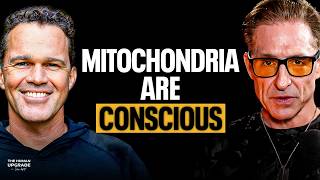
Dave Asprey talks with Dr. Zach Bush about whether bacteria can be conscious and how cells communicate. Bush argues that cellular intelligence runs on energy and information exchange, challenging the idea that consciousness is unique to brains.
Chapters
If DNA is the memory of biology, I think the energetic world or these past life experiences are the database of felt realities. Dr. Zack Bush. Dr. Zach Bush. Dr. Zach Bush. The entire world is actually inside of the human DNA. Every single gene that's ever been expressed by any organism on the planet is probably stored in the human genome.
I've come to believe that mitochondria are the foundation of consciousness. And that may be a bit humanist. It may just be bacteria are the foundation of consciousness and mitochondria are one of the many bacteria.
Nature has no purpose. Nature has an existence. But this human condition identifies that nature intended us into our existence and into our resilience and into our full potential. And it's in this last hundred years where we've accelerated this march away from that nature. Human cells don't have their own communication network. And so it should really be the question is humans even a species?
You're listening to the Human Upgrade with Dave Asprey. Zach, Wired magazine once wrote an article that said we are surrounded by a cloud of fart and poop bacteria that identify who you are. True or false?
True.
Ew.
Yeah.
How far does this cloud extend?
It's a big fart. It's a big one. It turns out that it is a soup. It's the stew of life that sits within kind of an 8, 8ft of the surface of the planet. In some ways is this, this thin little horizon of life that is colliding between Earth and heaven here. And it's a miracle. It's an absolute miracle that it all has evolved to the connective intelligence and beauty that it's decided to express. And we're very fortunate to be part of that.
That was so much gratitude. Now I'm sitting within eight feet of you. Are you upgrading my microbiome? But your mere presence?
Yeah, I think as soon as. That's why I made you pick me up in the Jeep by getting my Uber to deliver me to the wrong place. So we could microbiome swap early, you know, get the full intercourse going here.
Seriously though, does being around other people just change your microbiome?
Oh, it goes beyond that, yeah. I mean we're swapping information at such extreme levels. So my second subs especially was in endocrinology and metabolism. And so the first half of that specialty is looking at the way in which organ systems communicate through hormones. The second half of that is looking at the mitochondria, which are small bacteria that live inside our cells, communicate and prod life giving force and communication networks. Throughout the system. And so as I got deeper and deeper in that, I was doing cancer research and realized that the concept of nutrition was being seen backwards. I had been told that it was carbohydrates and proteins and macronutrients, micronutrients. But really the difference between that nutrition and nourishment is when the community starts to fellowship around those nutrients. And so when nutrients are coming to the body, they're tossed around in this soup of life. Bacteria, fungi, fungi, protozoa, parasites. And that system, that complex, intelligent system, then takes nutrients and turns them into nourishment. And the difference there is almost vibrational. Instead of just being a carbon connected to a hydrogen or an oxygen, you really get these situations where there's a life force within the system. And when we start to kill the microbiome, we can eat the same things. And this is the challenge of the supplement industry, is the reason we're supplementing ourselves is because our food system died someday decades ago. We never needed nutritional supplements. The whole concept's a bit of a red flag of, like, we might have a problem. But the fact that we're spending $250 billion on supplements is pointing to this fact that it's getting really hard to get nutrients out of food into a body. And unfortunately, we're finding more and more is that putting the supplement into your gut is not actually going to make the difference. It's actually getting the life force between the nutrient and the body. It's creating the nourishment of community and that ecosystem that actually makes the body thrive. And that's not something we can get in a bot. And so that's something we've got to discover in our reconnection to complex ecosystems out, out and around us.
If that's not something you can get in a bottle, why do you make a supplement in a bottle that I like?
Yeah, so that's. That's actually what we've captured. So instead of a macronutrient or micronutrient, that bottle is a soil system that's suspended in water. And so we've been learning from nature over the last 15 years that nature and it's reflected in every indigenous culture. Actually, if you go to the bush, Australia, or down into the Brazilian rainforest, every meal is understood to be the dance of four elements. In some tradition, it's five elements that are seen as they add the ether. But at very least, you're sitting there with fire, water, air and soil and earth in that kind of system. Of the four elements within a nourishment system. And so that was understood historically. And as we've killed the microbiome of our soils through chemical farming, our team has been looking further and further back in time as what went missing in the system. And what we found and what ended up in that bottle of ion, is that missing piece between the history of community and soil and the monoculture of today's soil systems. And so when you lose community, you inherently lose communication. And when you lose communication, you lose the inherent ability for cell repair, regeneration, all that. And so that's why so many people are reaching for stem cells or peptides. And all this is because there's a failure of communication at cellular level. So we've taken simply a different approach to health and nutrition in the sense that instead of trying to micromanage nutrients, what happens if we put the nourishment back into the system? And so ion's been this really fascinating journey into realizing that the system is so complex that it would be nearly impossible to even start to understand what question to ask, let alone come up with a reductionist answer as to how we're going to create connected ecosystems again.
Well, if glyphosate has this power to destroy the community, why wouldn't a compound or a set of compounds have the ability to restore it?
It's actually the community that goes and restores it. And so in 2012, we were able to show that the family of molecules made by a diverse ecosystem within soil systems is actually the antidote to Roundup. And so it wasn't until we started creating these perfect storms of chemicals in the 1970s. So the green revolution, which was basically chemical agriculture at scale, started in the 1960s, really got its. Its foothold in the 1970s. And by that time, we were using things like Agent Orange, which is 2, 4D, and we were using atrazine. And then glyphosate came along in 1976 to be kind of the new kid on the block, and it became the. The granddaddy of them all almost instantly. It was so effective at killing microorganisms. And our lab for the last 15 years been really working on what's actually happening to a human cell when glyphosate touches it, because it's been touted as a very safe compound to farmers and consumers and regulators and governments. And so nobody had really done the correlative studies down to structure function. And so we're very fortunate that Stephanie sneff out of MIT, starting in late 1990s, did the correlations of here's the amount of roundups sprayed in a region, here's the amount of chronic disease that comes into that population within five to 10 years. So she gave us a really Beautiful and continues 25 years later to give us the definitive science on the correlation between herbicide use and, and chronic disease paradigms. Our lab came along recognizing that nobody was changing their paradigm because all of the industry was still able to say, well, it's just a correlation, it's not causation. And so we've been working on the exact mechanisms. And this year our definitive paper will come up. It's 10 years in the making, but we've published some other papers along the way showing that glyphosate is the foundation of gluten sensitivity and all of these things. And so what we've accepted as a normal state of disease didn't exist when I started my medical training in the early 1990s. And so 1992, we didn't have gluten sensitivity, we didn't have celiac diseases and epidemic, we didn't have Lyme disease and epidemic, we didn't have chronic fatigue syndromes, we didn't have fibromyalgia, we didn't have chronic regional pain syndromes. And so we've had to create a whole new diagnostic book on what humans are now presenting with over the years. So the exact mechanisms are actually pretty profound in that they give us a sense of how are we going to find our way out of this crisis we've created. Because the first thing that happens when you put the communication network back between the cells. And again, just to put an emphasis, human cells don't have their own communication network. And so it should really beg the question, is humans even a species?
What do you mean they don't have a communication network? I know like five signaling mechanisms.
Those signaling mechanisms are being made by the ecosystem around and within the cell.
Oh, you're saying the mitochondria are not a part of the cell because they talk to each other with biophotons. Right.
They live inside your cells, but they're certainly non human. They have their own genome, their DNA is, you know, they've got their own frequency. And we now know that they store a lot of their reproductive DNA inside the human nucleus within our. And so the microbiome is a description of life itself. Biosis is probably the unifying definition here. Biosis refers to the complex interconnected relationships that make life possible. And so when you look at a species that's now multicellular, and not just an earthworm, multicellular but a human multicellular, where you're dealing with extreme amounts of information that's coursing through this body and creates such a complex symphony of you've got to have an entire, not just community, you've got to have a civilization moving into human. And its numbers are grand. We've only got 70 trillion human cells, which is a large number. It's about the size of US national debt. And so you had 70 trillion cells that are powered by 1.4 quadrillion bacteria, somewhere around 10 times that much in fungi, protozoa, the rest. And then you've got 14, quadrillion, mitochondria living inside the human cells to create that organic garden system of communication, networking inside the cells, cells. And my area of expertise in the cancer world was mitochondrial metabolism in cancer cells. And what you find out is long before a cancer cell can become cancer, that human cell is having a degeneration of the soil system inside of it and outside of it. And so it's this loss of gut microbiome which is tied to skin microbiome, respiratory microbiome. So the whole body, we used to really think, well, the colon we can accept, there's bacteria there, but the rest of the body must be sterile. No, it's not actually. The brain has its own microbiome. The prostate has its own microbiome. Organ in the body is teeming with organisms outside the cells. And inside the cells are unique subsets of the mitochondria, which are very diverse in their genome. Expression speciation is very difficult in mitochondria. And really, as we've kind of thrown up our hands saying we can't because they change so fast, a mitochondria will change its genomic expression a few times a day. And so that speed of morphology that the mitochondria are doing is giving humans our adaptation factor. The reason I can jump from, you know, my day yesterday where it's, you know, 13 degrees somewhere up north, and then suddenly I'm in 80 degree weather down here. My mitochondria adapt immediately. My thermal regulation in my core adapts instantaneously. I turn on microorganisms that weren't working yesterday. And so it's that plasticity relies on the biodiversity inside my cells and outside my cells. And as soon as you start to lose that macro micro ecosystem, the communication networks are gone. And so the ion is what we're using as a bridge. We would like to put ion out of business completely in the next 20 years. So all of our money has been going into Non profits and other companies that are trying to solve for these root cause breakdowns in food systems and macro desertification cycles, plants and everything else. Because it's illogical that we should need fossil soil to make available the nourishment of today's nutrients. We've got to learn from that and reprogram our modern soil such that our grandchildren would never need a bottle of anything to be nourished by the mother of the earth here. And so we've got to reconnect these systems if we're going to survive. And we're right at that really interesting point of an extinction of a human species, which is to say the death of ecosystems that express themselves through human species.
I've come to believe that mitochondria are the foundation of consciousness. And that may be a bit humanist, it may just be bacteria are the foundation of consciousness and mitochondria are one of the many bacteria. And I also think they're the basis of chi, or life force energy as people call it. Do you agree or disagree?
Well, let's go back to a definitive life. And then consciousness is basically the life experiencing the cosmos. And so life experiencing the cosmos, or you, requires a perspective. And to get a perspective on nature, you've got to have a whole lot of energy to separate your, your perception. Right, right. And so much of nature is so integrated into nature that it, it doesn't know the difference between itself and the sunset, the sunrise. And so the birds in the air, the elephant in the bush, they don't seem to notice the spectacular thing that's happening off to the horizon there. And all the humans stop and stare at that sun and just, just sit and on we meditate for three hours while that sun's dropping down over the horizon of Africa. We're the only species that does that. And it gets me very curious about this issue around what is causing that much perception to happen to allow us to stop and wonder at the beauty of nature. And in the end, it has to do with light concentration. And so light in physics world is manifest as stars, suns. And so these suns are nuclear fission infusion events. That's the price physics can do. But no matter how much sun that light is pumping out of that orb, there's no life around it. It's vacuum space forever. It's not until that light energy is captured by a carbon molecule that we start to have the possibility of life. There's a lot of focus on water is necessary for life and all this. And that's, there's no question for our version of biology that we have on this planet, water is necessary. But it would never happen on an aqueous planet if there was not carbon, because carbon is the methodology by which we can concentrate sunlight. And it takes about a thousand fold concentration of light energy before you can manifest light in enough concentration to get life. And so that's where the mitochondria come in, is it's the mitochondria, they're breaking apart the double and single carbon bonds to release sunlight back into the system. With enough light, then you can have the experience of what we might call consciousness. With enough light, you can coordinate enough particle states in enough diversity to start to be able to create intelligence, stacking geometries in a lot of ways. And so physics is stacking itself in more and more complex geometries that then focus or consolidate energy, sunlight, if you will. And with the concentrate of that, then you get these vibrational information streams going that then allow for something to appear that we would call intelligence. And we've shown in science now, around the microbiome, a single course of antibiotics wipes out that gut flora, and your creativity goes down, your rate of depression goes up, your rate of anxiety disorders, sleep disorders, everything goes off the charts because you just lost the workforce, because you lost all those stacking geometries of thousands of species that were contributing to different versions of concentrated light energy. The bacteria are good at it. They'll concentrate about a thousand fold light energy. But mitochondria are the masters. So they came along about 2 billion years ago as two bacteria combined forces. It's an archaea, which is one of the more ancient versions of bacteria. They can survive in acid pools and all kinds noxious environments. And archaea came along and seemed to have swallowed a methane producing mycobacterium. And the two of those happened to have a collaborative membrane relationship that allowed a 10x improvement in energy production. And so suddenly we went from fermentation of single cells to the opportunity for a multicellular creature, because inside of that double bacteria was so much energy production that it led for an immediate upgrade in biology. And so again, we get to see biology is going to follow suit as to how much light is concentrated per cubic centimeter on the planet. And so in that way, mitochondria are right at the root of the force of life, as you said. And in that, with enough of it, with enough collaboration, we can get something that appears to be consciousness.
We know that our gut bacteria and our mitochondria actually manufacture light, small amounts of it, right? So there's like bioluminescence in the gut. And it looks like light isn't just energy there, it's also a communications mechanism for that network.
That's exactly right.
What can we do to enhance that communications network so that light works better either externally or internally?
Yeah. So there's a couple mechanisms that the body uses. The first is fiber optic cables. And so the fiber optic cables between human cells, known as gap junctions, are complex systems. Gap junction sits between two human cells, every single human cell. And necessarily being connected by multiple gap junctions to the adjacent ones, you might have 3, 5, 10 gap junctions. And under an electron microscope, you can see that that gap junction as a whole cable System measures about 10 times smaller than a human hair in its circumference. Then you zoom in on that again and you find out there's a thousand cables inside that. And on the end of every one of those thousand cables is a perfect three dimensional aperture, just as you'd seen a camera lens. And that aperture opens and closes, tightens to let light through or close it down. And so you're literally doing fiber optic communication down at the cellular level as one cell pulses in. And I think science has gotten away with suggesting there's not much energy in human cells again and again. And so they say, well, there's not that much light energy. A tiny bit of light energy, well, that's light emitting from the cell. They haven't calculated the amount of electromagnetic field being pulsed out in electricity from the cell. They haven't pulsed and measure the amount of. Or somebody will go measure that and say, wow, there's very little electricity. But then you think about, well, how much energy does it take to make a material particle? Because we know all that electricity has to go into a particle to rebirth your cells every millionth of a second, because you're actually not solid. You're rebirthing all the time from vacuum space. And so we just keep brushing aside relativity and quantum physics all the time when it comes to human biology. And we're like, well, we're made of cells. No, you're not. You're made of, of atomic structure, which means you're mostly vacuum space. And to remanifest enough particle, you've got to generate so much energy all the time. And so it's, that's, I think, where our calculations start to get into these accurate numbers. Like, whoa, this is way more than physics has to offer. Life is so much more light filled, so much more energetic, because all that light is becoming particle, it's becoming electricity. It's becoming magnetic fields, becoming emitted light, it's becoming thermal heat. So we're using all that energy from that stored sunlight, from carbon in a million ways to manifest what we would call life.
It's such an elegant and beautiful explanation. And there's one thing that's coming to mind that maybe pokes a hole in it. Germ free mice, they don't have a community of bacteria. They live in cages. Granted they're sealed cages where no bacteria get in there, but they really don't get sick. They actually are ripped almost no matter what they eat, as long as you don't give them a microbiome. And as soon as they get regular mouse poop, then they get all the normal diseases. Why would life without a microbiome thrive?
Because they're not without microbiome. Because 10 times that of the bacteria that they're saying they're stripped of is the mitochondria inside their cells. And so they're just small bacteria that they're not measuring.
So they still have mitochondria, they have life, but they thrive. They can do things that you can't do if you have other bacteria in your gut. So maybe all the bacteria in our gut really aren't our friends.
Well, I would say there's two ways to do that. And so there's adaptation. So as soon as the microbiome we could call the macrobiome that's out there in the gut and all that versus the micro system of the mitochondria inside of yourself, the rate of adaptation again is extremely fast. And I have this eerie feeling that we're about to find out in our DNA science that, that the entire world is actually inside of the human DNA? Every single gene that's ever been expressed by any organism on the planet is probably stored in the human genome. And the reason that's so sneaking on me these days is like when I keep looking at the science coming out around how much of our DNA is not making human proteins. And then to find out that the mitochondria are actually storing a bunch of their genome inside of the human DNA, they outsource and they can go and access that at any time they Taiwan. That starts to get weird. It's like, wait, why now have we been able to relegate in the scientific brain that it's only mitochondria that are storing all their genes inside of our DNA? Isn't it just as likely that my entire gut microbiome at some point has stored its DNA inside my human nucleotides? And you're like, well, that's a lot of genes, Zach. That's a lot of genetic information. But then you start to look at how much genetic information is in a human body. Each cell in my body that I would call human contains about a meter of DNA. And so if we took your body apart and we strung all of your DNA end to end, you would wrap around the circumference of the earth. Take a guess. How many times would one human wrap around the earth?
Probably a few dozen.
Yeah, exactly. 25,000 miles of DNA in meters is actually 2 million.
2 million times.
You would wrap around the Earth 2 million times.
Wow.
And so you start to think of these tiny, tiny microscopic nucleotide sequences holding information, and then think of how many much information is around entire circumstances and now multiplied to 2 million other DNA just repeated. That's the dogma is that, well, one human cell has the same DNA. That's something. But we now know that's absolutely not true because the microbiome in one cell is radically different than the other. And so the genes that are being stored inside of one set of cell from their microbiome could easily be holding genetic information not reflected next door.
Are you talking about the microbiome, them included, not just mitochondrial and nuclear DNA?
Exactly. So that's quite possible. Now it's possible that we've got a whole lot of life being stored in the memory of human DNA and it's being fractured up in microrna and micro DNA strands, nucleotide sequences. So it's not obvious to us right now, because our current tools are so fascinated and so refined to this protein synthesis issue. If it doesn't make a protein, it's not a gene. And we've held that for a long time in our definition of DNA. Well, if only one and a half percent of the human genome is coding for a protein, what's that other 98.5% of the genome doing? And I think that's the part that's most plastic. And so you're probably passing on that one and a half percent with quite a bit of predictability. But I am curious to know how much we might find out is being stored elsewhere. And so when you say these are German sperm free mice living in a cage, how much of that information is actually available to the mouse already in its own DNA? And is the mouse able to, in light of a missing neural pathway or a detox pathway, because the bacteria aren't there doing it, what's likely they might be able to access that enzyme in a collaboration with the mitochondria inside of themselves to repeat that journey. And so the body's in constant adaptation. And the thing about the germ free mice is they had to develop those, those slowly. It took generations of training those things how to stay alive before they were able to do what they do. So it's not like you just give an antibiotic to a mouse and they do better. Now you kill mouse immediately if you give them enough antibiotics to make them sterile. And so they had to be bred, you know, generation after generation to reach this, this lifespan that was reasonable of a few months, you know, in this germ free environment.
One of the things that, that I collect is we'll say corner cases or things that aren't supposed to happen but do happen. And the typical human being will say, that can't happen, therefore it didn't, therefore whoever's reporting it is a bad man. It's a very childish view of the world, but it's just something that our brains do to save energy, I think. And there was a study a while ago where they took bacteria that couldn't digest lactate, they didn't have the ability to do that, and they put them in a solution that only had lactase, a fuel source, nothing else. And you expect them to starve to death. But they didn't. They changed their genetics to be able to survive in that environment. And it completely pokes Darwin in, in the eye, right? And people say, oh, that was just one. It doesn't matter if it was just one. Like that's the definition of science. So now we have a story that's useful about reality, but it's not, not accurate, it's just useful. And so that's a very small bacteria level case of what you just described, right?
Where life adapts, life adapts. And you know, the most obvious place that we're completely wrong about everything is viruses. You know, okay, we keep thinking that viruses cause something, you know, and so we attribute a syndrome of an illness to a virus. Viruses are a, a rebranding of something that's known as an exosome. And so exosomes are the process in which any species exudes its genome outside of its body, but it doesn't exude the genome that is currently being expressed in the body. It exudes a new possibility for its own body or for nature to express. And so the virome as a definition of all of the viruses on the planet that have been exuded by all of them, micro ecosystems, macroeconoms of the planet. That database of information is the imagination of nature's future that hasn't occurred occurred yet. And we've chosen to demonize that thing, saying, well, if there's any problems with our current biology, it must be that thing over there, because it must be against us. And so we got this story that got baked into our mindset somewhere between germ theory, which was mostly talking about bacteria, and this kind of new viromic theories that were coming through after Watson and Crick came along and said, oh, my gosh, there's DNA and there's genes everywhere and you might be getting infected by somebody else's genesis and all this. And so we developed this new version of gene of germ theory, which is a little bit interesting because they aren't actually living. And this is often overlooked. It's very common. You read a definition of microbiome, they'll throw the viruses in there. The viruses are not the microbiome. The word biome means living organisms and their relationships. There is no life inside of a virus. There's no energy production, there's no energy storage. There's just a strand of DNA with a few proteins that can help translate that evidence ends up needing being needed by biology. And so what's happening is we are creating a, in some ways, a memory of all the possibilities that we could have been before we became human when we create our exosome base. And so in my breath right now, I'm exerting on this room a lot of imagination in my urine and my feces and all of the excrement of my body, all of the system is carrying these little exosomes. And this is the human that hasn't lived yet. This is the human that will come after us in the sense that this will be the intelligence of biology once our extinction is complete. And so I love that about nature. When you show her stress, and especially if you show her a lot of stress, she immediately is imagining the next version of what's going to come. And it's always going to be more diverse, more beautiful, and more intelligent than it was with her previous iteration. And so viruses in this intelligence is not able to take over a human cell as we're told. You breathe it in, it takes over your cells, and it remanufactures itself. And then those go. And like, if that was really the case, you'd be dead by every virus. What's stopping it from doing that? And why did you decide to make it in the first place? Is my curiosity of, like, actually for all this Fear around gain of function laboratories. That's what biology is. It's one giant gain of function biological laboratory. And so life is constantly scanning for its next opportunity. And so in my bloodstream right now I've got about 10 billion viruses, I've got 10 to the ninth viruses that are coursing through my bloodstream. Not the same one, it's not repeating, it's different. So I've got 10 billion new genetic sequences that are pulsing through my bloodstream right now. And every one of my 70 trillion cells will be exposed to that over the next 15 minutes. Every cell will scan all 10 billion of those. And so as my bloodstream courses through my body, every cell is scanning, scanning, scanning. And if there's a gain of function opportunity, it says, ah, I think I could use that one. And it takes that up inside. And then a huge roundtable has to be assembled to decide if this is going to be what we do. So nobody can decide a new protein, it's too important. You can kill the species if you make the wrong protein. And so the most regulated step in biology is the decision to make a protein from a gene. It takes 200 CO factors, CO repressors, co activators to get into concert around the enzyme that will translate that RNA strand or DNA strand from the virus into a protein or into a retrovirus and then code back into your DNA. Those steps are highly, highly regulated. It is impossible that a gene comes in to take over your body. It doesn't have any of the apparatus to do anything to your body. And so it's really has the apparatus is a collaboration that's beyond complexity. And so what's happening is our bodies are constantly updating, constantly updating, and then we get sick. And the moment you get sick means that there was one of those gain of functions that got proved out at the cellular level that was critical for your survival. And so now you got to go pass that thing around. So most of the uptake, I think, goes unseen. I'm probably updating a gene. I don't know, it could be every millionth of a second. I'm taking up one of those 10 billion new options and updating my body with it. But when we get sick, that's a moment where your body's like, okay, I'm going to use this all over the place, this needs to go everywhere. And so I'm going to put this person in bed, I'm going to shut down their, their energy system, I'm going to put all that energy into protein synthesis and we're going to go about restructuring the whole body. It's very much like rebooting your computer. And so you got to shut the damn thing down and upload the new operating system and go. So when you see the fever and all this, this is your body decision to do a major upgrade. And then you might say, well, people die from that stuff. Like people do die.
Like smallpox or herpes or something. These are viruses. It seems like what's going on with those?
Yeah, so you could pick any of them. Flu is the most common one to kill people. Right. And so you got flu and you got, but you get to point to something. I thought flu had been rebranded to get rebranded. It was a good PR campaign. But that flu is, is that flu virus is there to again do this gain of function update in ways that we don't even, we're not smart enough to know yet as scientists what's happening there. Why is that one being picked? Why is that being disseminated through the whole body? So what happens when you, you end up dying from something is not because the virus came in as a takeover, it's because your body tried to do a critical update and you didn't have the energy to implement it.
So it's always down to mitochondrial energy.
It's how many mitochondria are burning inside yourself cells, period.
And we're kind of aligned. I, I describe myself as a mitochondrial fetishist. Just, you know, I, I realized I had chronic fatigue and this is back in the late 90s. And like, I know my energy is broken, so I'm going to go after the energy production system because I'm a computer hacker and you realize it's a complex network, a distributed intelligence, and that it's listening to the environment. Like these are what made the biohacking thing happen. And that viewpoint works for almost every disease I've ever come across. So you have migraines, let's fix your mitochondria. Like let's fix the fuel source for them. You know, you have insert name of whatever it is, including things that can't be cured. You find the thing that makes the mitochondrial network stronger or makes them make more energy and more light. To your point, magically things get better. And what I don't understand yet is, you know, what is the set of most important variables in the environment. I know that there's light and there's temperature and there's timing and there's vibration and there's chemicals. Even things like essential oils are chemicals. And then there's the bacterial environment.
Right.
And there's magnetic stuff that's happening and there's subatomic particles that are actually involved in that. How do you order that list of all these environmental things that are important signals for you so that you can make some semblance of it?
If we were bodies that had souls, then we'd go after the body. But I think we're souls that have body. Agreed. And so we are these magnificent energy centers with complex geometries that have been here since the origin of time is a reasonable model.
We kind of created time reality.
And so, well, time exists. Time is something that we like to perceive.
Well, we perceive it, doesn't mean it's real.
Well, I would argue that there is a fourth dimension. And that fourth dimension measures the distance between two events or two masses as they move through space time. And so it's, it's a measurement of one of the dimensions of reality is time. When we start to try to make some conclusions about, you know, time as a fixed construct, that's where that starts to break down. And so because it's a multi dimensional phenomenon, it's only relevant in its relationship or context of the other dimensional inputs. Time gets pretty warpy. Like it's a bendable thing, just as mitochondria are.
It feels like time and love, they both exist, but they're not that easy to pin down because they're things we perceive, they change.
Right. Well, I think you just answered your own question with that one, actually. So how do you make sense of all this stuff? And for me, the answer for me and used to be patients, and now they become my collaborators. And I've shut my clinic down realizing that anytime I put somebody in a patient provider relationship, it breaks down the empowerment of an individual and they can't reach their healing. And unless I get out of the equation. And so we created the journey of intrinsic health as a methodology for allowing eight people to come into a constellation to witness each other's intrinsic health. And what that has been helping us show is that the real matrix we're living in is the masculine and the feminine qualities of a plant. Not just a planet, but actually nature itself and the cosmos. The masculine is simply that which will witness the flow of energy, which we would call the feminine. And so when you have a witness and you have a flow, then coherence occurs. And so really what we were being called to is letting go of all of our reductionist beliefs about nutrition and supplements and all the things, and start to ask that question, how do we Create complex systems in which we can all hold still enough to witness another. And then say, say our response to that which is going to be a frequency in which when we see beauty, we induce this waveform that we call unconditional love. And when we experience that back, we get gratitude. And so we get this nice interchange of unconditional love and gratitude, which are two frequencies that are basically connecting your eternal state. It might be a soul to your biology. And if you're lacking those connections, the body dies quite quickly in a state of isolation, disease, inflammation, everything else, because you've lost the original math. And so the translator between the infinite and the finite are these frequencies that are generated, created by a body when it experiences itself, when it experiences the beauty of nature in itself, around itself. And so for me, I've started to realize that anytime I put some tool or some solution into a patient's field, my, my most likely outcome is to decrease their capacity for, for real healing.
Are mitochondria masculine or feminine?
It depends on which phase you're in, I think. Every, everything's got masculine, feminine, single. Bacteria has to have both, a single atom has to have both, or else it doesn't stay stable. And so the masculine is basically the fabric of the cosmos that is structurally still. It's basically you got this web of energy that stays in a relationship to one another where there's vector equilibrium, meaning there's stillness. What flows through that, then we would call the feminine. And so this is the life force, if you will, will. And so you've got something that's stationary, and then you've got life force in the universe. And as soon as something that's still witnesses the motion and the beauty that that would create, then it can create a particle out of that light. But if unwitnessed, it just stays as the potential for something solid. And this is the observer effect in physics. So that two slit experiment, if there's no sensor around, no humans and no electrical sensor, nothing, that X ray behind that steel plate is covered with this rainbow of possibilities. And the light just goes simply everywhere. And it's like, wait, how? There's only two slits. You're shining a light through these two slits, you can clearly see it. As soon as you go into the room, you say, yeah, there's only two little slits of light that are allowed through that steel plate. How is the entire X ray film seeing all those potential? It's because nobody has witnessed the light. And so it remains in its infinite possibilities. You put a sensor in there, you put A human in there or just a little electrical sensor. And suddenly there's two perfect slits expressed on the. The X ray film. The observation of the phenomenon is what's creating everything in its solid form. So the steel plate doesn't even exist if there's not even a sensor to differentiate the world in which we see the static and the motion. But you put an observer in this thing, then everything is in this particle state. And so whether it's a mitochondria, single atom, you've got to have this marriage of the masculine and feminine, which is.
An observer effect in Taoism or Tantra or even Sheila Kelly at the last biohacking conference talks about, you know, the masculine energy form is, you know, qigong. It's like standing still, like holding space. And then the feminine expression is, you know, dance and movement. And there's several different types of, like shamanic or in that realm of healing ceremonies where the man's job and that is just be present and grounded and still, which allows a massive transformation for feminine energy. And it creates a loop and, you know, the old principle from alchemy and as above, so below and all that, which is an expression of, well, the universe is probably holographic, which supports your idea that inside of you is all life inside your DNA. Because it seems like that's a principle of reality. It's just one that a lot of modern scientists absolutely reject. Why do they reject it?
I think we're after specialness. Ultimately. We're really afraid that we got kicked out of nature. We have this uniform abandonment disorder that's got us running around trying to engineer ourselves back into nature. And so we're doing all kinds of technologies and everything else. When you go through a, you know, a biohacking event, I was just one in London, 1200 booths. And at the end of the day, you realize what you heard over and over again is people telling you that this technology replaces this part of nature future. This, this part's going to do this thing. Then, you know, and the answer in the end is like, wow, shoot this weekend, next weekend, instead of the bio cameras, we should all just go to the beach together and we'll get all of that beauty in there. And so our technologies right now are a bridge back to nature or our avenue to death and extinction. And so we. It's not the technology that's wrong, it's the application of it. And so if our technologies are taking us further away from nature, we are. We are doomed if our technologies sit there and stare us in the face. Until we realize that nature had all of our solutions. When we were, you know, self organized in our mother's womb, then we were in a different pattern of life expression. So not the technology. Good, bad. But the question is, how are we applying that technology? What are the lessons we're learning from it?
Maybe nature once had all of the answers, but our soil has been massively destroyed. There are species that don't exist anymore that ought to be in our microbiome. And I kind of think it's helpful to use some red light therapy. Right, which is directly communicating with mitochondria and actually increasing that light in the body. Yes. Sun is good for you. You can only lay in the sun, at least if you're as pale as I am, for so long before you start getting sunburn. Right?
So, well, you only take, you only need that few minutes, a few minutes in sunshine with a full band with then all your mitochondria getting all, all that stimulation. Five minutes is plenty. Takes very little time for light energy penetrates the human body at an extreme rate. The radiation from the sun overall, whether it be light, electromagnetic, gamma ray, whatever it is, that stuff is through the entire system in a matter of milliseconds. And so you spend five minutes times milliseconds, suddenly you're in quadrillions of updates across the system. And so five minutes of sunshine. I'll put that against any technology we've come up so far, but the reality is we're living in environments where people are not getting the sun. And so again, the technology, I'm not saying the technology doesn't work. I'm just saying technology needs to point us back to a reintegration with nature, because in the end, we don't have enough technologies to create biosis. Nobody has actually created life ever.
That is a very important point. And it's funny. I created the biohacking movement and I also created a regenerative farm to live on and raise my kids on because I recognized the benefits of the soil. But I don't mind adding energy. And you know, Brandon Crawford was just on the show and he's using very specific wavelengths of light to communicate with mitochondria. And he's taking people with als or children with brain injuries, and he's regrowing their brains in a way that sunlight doesn't. So it feels like there's times when we can use tech to help a mother Nature.
That's right. And, and I don't know if we're helping her as much as revealing her. And so we're revealing what the nature intended when we were living in TUG because the ALS and Ms. Didn't exist a few decades ago. It's like we've created these syndromes, and then we run around finding the technology, thinking that the technology needs to heal the disease, when in fact the technology reveals what did we eliminate in our relationship to nature first? And so we need to be hesitant when we say we found something that cures a disease, because it's probably just revealing why we got the disease. And so that's where the technology can be so helpful, is like, oh, oh, well, now we got to go find that specific frequency in nature and ask, what were we doing in 1800 that kept ALS out of the system? Because it's too expensive to let somebody develop a neurodegenerative disorder and then give them treatment. And the fact is, we never get them back to baseline with technology. We might improve them, but we've never created a fetus inside of a uterus like that. That level of intelligence, that level of nature, I marvel at it because. Because it's, you know, you look at just the headlines that glimpsed through as I walked through a hotel lobby this morning. I don't know why we're talking about Elon Musk so much at all, but we talk about that guy all the time. And we're so enamored with the fact that he and his engineers have filled steel tubes with liquid rocket fuel and lit them on fire and they shoot up in the air and then they fall back to Earth and that thing is going over and over, and everybody's like, oh, my gosh. Meanwhile, there are tens of thousands of women that this morning gave birth to a baby that self organized in her womb. Womb. And there's no headlines. The disease of humans is we cannot see the miracle of life.
It's. It's so profound. And I've often said, and people say, what's the, the biggest thing you can do for longevity? Have a healthy mom, right? How many generations back does that affect happening?
I mean, it's been pretty easy in mice to map back 40 generations, but to. To go back 40 generations and find out that that 40th generation was back is still contributing to your epigenetic genetic patterns suggests that it never stops. Right? And so the genetic memory is, is long lived. And this is why we have to. We have to change our relationship to our concept of life right now. Because if we keep trying to, you know, hack our way out of 40 generations or 4,000 generations of trauma, that was begging into this belief that we're separate from nature. And all the scarcity and the fear and the guilt, the shame and all the patterns of war battles come out of that. We're hopeless. We've got 68% infertility rates in a number of different places. We've got sperm counts of pulmonary by 60% are still going down. The US population, our birth rate as three weeks ago published was 1.61. Anything under 2.1 is extinction. Every tenth below is another generation shorter. And so we are a couple generations from extinction in our own country. And Japan's already going extinct. We've got 30 million empty residences in Tokyo in the next five or 10 years because they're just aging out because there were no children. That's what extinction looks like. And the human brain, because we haven't gotten to the point where we're seeing fundamental collapse of city systems yet because everybody's driven 20 years, right? @ the most, yeah. At the most, yeah, yeah. No, I think the US is already shrinking at 1.61. If, if it wasn't for immigration right now, we would have, you know, totally empty cities.
Why aren't you going around like Elon and just having babies all left and right?
There's part of me that thinks that I'm getting ready for that. There's part of me that thinks that I'm. I'm approaching a moment where I'm going to become an energetic memory of the possibilities of who I could have been. But if any other point before this, I would have just passed on the genetics of all the trauma, the 40 generations before me.
So you were doing the personal development work before you go out and have a bunch of babies.
That's right.
So more than one mother. What's the deal here?
I don't know what it's going to look like in a few years. Like, we're gonna have such a fundamental collapse of biology that I think that, you know, we can't imagine the process that's going to restore this, this species. It's going to have to be a very intense, you know, collaboration because there's going to be such a fine little eye of the needle that we got to shoot through now. If we're going to make this gap so that we can stay in play, it's going to have to be a collaboration that's not going to be like relationships and marriages and open relationships. It's going to be how high of a frequency of authenticity can a human create to remember the original design, the original birthright of humans. And that takes an enormous amount of ritual and ceremony around a human to remember what it is. Because it has to be in an environment where it breaks the story. You've got to lose the story of humans being separate from anything. And to do that, you've got to get into these very high frequency states. And that's what we call shamanic states. It's what we call things. And so when you go and sit with African shamans in the bush, you don't sit for long because they're going to activate you so intensely that you're going to reach these frequencies where the only options are really to dance, scream, movement, move, chant, have sex. The intensity of these rituals have been long known, and they've been used to save us many, many times. And so we remember even how to do this, which is we need to stop being genetic expressions of one ancestor to another. Because when we just communicate genetically through the ancestry, we're doomed because we're passing on all the collective trauma. With each generation, it gets worse. Three generations without healing. An epigenetic wound, it becomes a germline mutation. So now it's not an epigenetic modification, It's a new gene modification. And so now that's gonna be every single generation to come. We've had that for generations and generations. Generations. And my sperm and the DNA in it are the memory of the human trauma as a collective. And so as I started to experience all of this, I'm like, I don't think that I want to be part of that. And so how do I become something new? How would I pass on new information instead of the old information? I would have to come into a moment of frequency where all of the genetic trauma is somehow erased. And the only way that you can do that is actually send your protons back in time. And this happens. And if it had never happened, and if I. Then I wouldn't put this out there, But I have seen it happen hundreds of times in my own patients.
Yeah.
And it's called spontaneous remission in the medical charts, right? And so when spontaneous remission occurs, I mean, the most classic ones are like four and fourth stage cancer tumors in the brain. And then suddenly the person's talking again, and now they're walking again, they're eating. And then finally the doc is like, we should scan that person. Right? And you scan them, and there's no evidence the tumor was ever there. In a healing process, you end up with scar tissue. You have things and, you know, all of the cell signaling pathways. It's very complicated process to heal and it leaves behind this matrix. So when we say here's a technology that grows brain cells and people with als, what's happening is there's fibrous tissue and there's scar tissue, and so you're crawling back to some sort of function, but you are healing. You're not spontaneously remitting, and so you're healing something. And you will end up slightly better than you were before in a good scenario, maybe a lot better than you were before, but not where you were originally intended to be. To do the original intention, you have to do a spontaneous remission. The only way to do that is happens, has to happen instantaneously across the whole system, which means it to needs needs basically an operating system update to the original design. And so that operating system update is what we're trying to do. And so Journey of Intrinsic Health. And our immersive experience that we're doing is seven days of intensely putting people in these spaces of high vibrational experience where they can suddenly access that original information. And if they can see the original program for just a millionth of a second, all of the protons will revert to their original design. And so the proton will forget that there was 40 generations of trauma between the insult and this cancer. And the tissue simply goes back to express what it intended, which was human, which is to say an ecosystem expressing itself in beauty.
It's got a lot of relationship to what we do. At 40 years of Zen and in fact heavily meditated my new book, I talk about these altered states, including the shamanic states and Tantra and a lot of the things that we just covered. And people go through their own life and they'll use something called the reset process to completely remove the, the echoes of trauma from this life. And when they're done with that, they kind of split into two groups, actually three groups. One of them is they'll go into their experience in the womb and then they undo the trauma they experienced in utero. And from there, some of them are just called like, I feel like I'm going to heal generational trauma. And you're saying, what do you mean, heal generational trauma? There are techniques and you know them because, you know, shamanic stuff. And so they do that and like, oh my gosh, like I did that. And then my mother, I haven't talked to in a long time just called me this evening and I don't know why. And you've seen this all the time with your patients as well, right?
It's Beautiful. It's beautiful.
They're healing. So we can do that. I know we can do it. You can measure it. And for the westerners who just don't believe, you just go experience it. Well, I don't believe my experience. Well then let's freaking measure it and prove it. And then some other people, they're saying, I don't know why, but I feel like I had a past life then, I didn't believe in those, but I had all these visions. So I'm going to go let go of that trauma. What's up with past lives and trauma? What's your take on that?
When you start to kind of comprehend the DNA strand as a memory of everything that's ever been there in the biology, this concept that we have around ancestors, ghosts, you know, spirits, all of these things. I think you can kind of imagine that as the, the energetic version of the DNA database. Right. And so if, if DNA is the memory of biology, I think the, the energetic world or these past life experiences are the database of felt realities. We don't think very well, we're not a highly intelligent species, but we feel really, really well. And I think that's why we've been left to survive here. And I think that's why we have so many advocates in this energetic space. These multidimensional spaces worked with a lot of people around the world now that are communicating on a daily basis with non human life forms. And they have lots of different names for them. And we create human stories around those which immediately kind of depolarizes it or polarizes it, disempowers it and polarizes people to like think conspiracy theory or whatever it is. But the fact is this is how indigenous wisdom came be was not in human isolation, it was actually in human connection where suddenly in a cave somebody had this moment of singularity and then they were surrounded by so much information. If anybody's ever done a dark retreat, it's the opposite of darkness. There's just so much light around us that's not being perceived by the eye until you take away the light spectrum that the eye was sensing. And then suddenly you realize I am a sensory machine that is sensing the entire cosmos generations forwards, backwards, upside down. I can, I can actually sense multi dimensional realities where just outside of our current experience thing, there's teeming life, other entities in these other vibrational forms that then can come and communicate across that dimensional reality. Because you've reached the state of super sense. And that super sense is really where the shamanic energies are Trained. The Kogi are the famous ones for raising their kids from age three onwards, you know, sometimes years, sometimes decade. But those kids that are destined to be their lead shamans would be put in the dark.
Yes.
And be trained into whole site. And so they can see what's happening all over the world. They can see the future, they can see all these things. So they become very prophetic in a sense, by just being able to use the body for what it was designed for. So the human body does not think well, but it feels wonderfully. And if we start teaching our children how to feel more fully and then encourage them not to, they don't need any encouragement. They simply don't need to be programmed with emotions. And so emotions are the conflagration of feelings. I think of emotions now a lot. The same as high fructose corn syrup. Fructose in an apple. Is that drinking fantastic things like love.
As well as hate?
Oh, yeah, yeah. These are, all of these are reduced frequencies that then are perturbation of the original nature of it. So feeling is a complex waveform that'll go through the entire thing. And if you allow yourself to feel, you realize it's not static, it's constantly in motion and it has completely different, you know, valleys and peaks in it. And so if you really go into unconditional love, for example, example, you're going to find a lot of grief because the reality is when you're in that state of witnessing beauty. And I experienced this with a rose the other day. Somebody hand me a rose like, this is the best smelling rose. Smell this, Smell it. My whole brain goes in existing holy smokes. And your first instinct, at least mine, is I want to smell that again. And you go to try to smell it again, you can't, because your olfactory bulb doesn't allow you to smell the same thing twice. And so the next time it's like, oh, maybe a faint version. And then you kind of give it a second, you try it a third time, and there's nothing. It's like, how could I only smell that rose once? And the answer is somewhere around this ethereal state of the feeling of the rose is still traveling through. That initial essence of the rose that hit my nose was only the beginning of the real feeling of rose. And if I would stop attributing it all to the scent of it and I would let it travel through my body, I would find that the rose itself can detox trauma, can remove that ancestral trauma in my lungs, because it's now being allowed to be witnessed to me. And I'm witnessing the rose in me and now I'm feeling it in my bloodstream. And so the whole feeling of rose is so far beyond the little scent that's given it or the color that it, it hits my eye with. And of course, when I look at a rose and say that rose is red, it's actually every other color except red. The only thing it's not is red. And it reflects that off its surface because it's not red, red. And then our eye picks it up like that's red. And the rest is like, screw you, I'm everything but red. And so our perceptions, whether it be our scent or our eyes, are giving us such a reduced version of reality. They're all lies, they're all perturbations and maybe full out lies. Color is a full outline. I think scent is actually, well, don't have to take it from me, but the Kabbalah, the oldest science on earth says scent is the only human sense that is correct.
More so than touch even, because I would have thought vibration and scent are the two.
Yeah. It's interesting because I don't know the entire reason for this, but I think it is interesting. Scent is the only thing that doesn't come through a neuron and that was.
A very primordial bacterial membrane way of sensing. Even before touch.
The olfactory bulb is the original way to feel. And it doesn't, it, the olfactory bulb doesn't make sense as a thing. Like we don't know how it works. It's a black box of miracles.
So we should all just have more glade air freshened.
That's right. For sure.
I, I think wearing chemical fragrances is one of the rudest things you can ever do. It's like walking around punching other people in the olfactory bowl.
It's true, it's true. I think that's true. But then if you take the, the emotion version of that, you realize we're programming our children to go seek love, to not fear each other, don't have any guilt, don't shame each other, don't get angry. You know, a kid doesn't understand what that is. When you yell at a three year old, like, stop being angry. Like they're like, like what are you talking about? They have to be steadily trained. Like you're feeling this, and this is what we're going to call it. You're expressing this and therefore we're going to call it this. So pretty soon that kid's gone from the experience of so much pleasure in something to then the loss of that thing the next moment, which then will take them into this anger or this grief process with the five love, five emotions of anger. And then the parents yelling at them, don't be angry now. Stop throwing the fear fit. Instead of realizing that's the long waveform of that kid having just experienced unconditional love for the first time. And in that process, they had to lose it because everything, the scent of the rose or the face of a friend is going to disappear. I remember holding onto the leg of a table, my mother trying to drag me out from under the table because I didn't want to leave my best friend's house screaming. You know, she thought I was throwing a fit. I was experiencing unconditional love.
Love.
I wanted to continue to feel what it felt like to be seen and heard and played by my friend. And that is what we are missing when we start to boil things down to an emotional framework. We're telling each other that you shouldn't be this or you should be this. And it's aborting the reality that everything in life is there for a sensory experience of itself. And everything is experiencing so much feeling. And if we then go empower our kids to continue to feel and stop trying to boil it down to an emotional matrix for them to mentalize. Emotions are the mental abstraction of feelings. Ultimately, yes. And just like fructose, we see the same result. Fructose in an apple is one of the most important ayurvedic tools out there. I've seen apples cure all kinds of things. Apple day, keep the doctor away all the things. But if you stew an apple in the morning with cloves and cinnamon, as the ayurvedic and nutritionist would show you, the amount of inflammation that will reduce is insane. And the amount of coherence that you can get in cell, cell signaling and all that from the combination of that fiber and the pectin and the. And the fructose is magic. And then you add those herbs in there and spices and all the alkaloids. It's. It's just too beautiful to even think about. But that fructose is so life giving. And then you find a bunch of fructose and corn. Then you chemically flip the molecule by a chemical reaction. Now it's the mirror image. Same molecules, same atoms, same things, but just in the mirror image. Now you have high fructose corn syrup, which doesn't occur in nature, so you can patent it. Well, super. We can take corn which is a dollar a bushel. And then we can patent and take this thing, we can sell it for more. That works out well. And so high fructose corn syrup, same molecule as fructose, is not recognized as a sugar in the body. And so when you eat, it's a different isomer. It's. It's just the racemic, and so it's the mirror image. And so it's the racemic of fructose. Fructose. And when the liver sees that. So if you drink a Coke, your blood sugar doesn't go up.
Yeah, because fructose doesn't raise blood sugar.
High fructose corn syrup doesn't get metabolized to the liver as a sugar at all. It gets turned into a triglyceride. Yeah. So you have triglycerides shoot up. And so we're eating all this high fruit is corn syrup. And they say that it's a calorie, but it's not. It's actually being stored as this kind of inflammatory driver of the triglyceride there. And so I'm very sure that emotions are the same way, because I've seen it in all of my patients now. And so it turns out in my clinic, we had this camera from Russia that was an induced energy field. So it's a big voltage across the fingertips kind of thing. Yeah. Instead of Krollian, which is a glow, and you're inducing a plasma discharge from the surface of the finger. And then you can take a video of that explosion, and it'll show you the pattern of entropy or stress or syntropy or kind of organization in the different organ systems based on the reflexology map. So we got this very incredible map, and we imaged tens of thousands of patients over time. And what we ended up proving was nothing more than the fact that 9,000 years of Chinese medicine was right. So all the technology we needed to just trust the human iterations of science and observing healing works. And what the Chinese had done over those thousands of years was to be able to pinpoint where emotions are stored in the body to cause disease.
Disease.
And it's very specific, unconditional. I'm sorry, Unresolved grief for a loved one's death will store a very specific section of the lung. And that's where they end up getting their emphysema or their lung cancer or whatever it is years later. And so we ended up being able to image that over and over again with our patients. And we were using emotion code therapy with a series of magnets you identify which dominant emotion. Then you bring that emotion to the surface and. And you run magnets over the brain. And it just resets the programming. It's just like wiping a magnet across a disk. You erase it.
Wow.
And so you erase the memory bank of that emotion. And then the body goes back to its original unperturbed state. So we would image people, show them their emotional patterning as disease in the body, because you can see where all the entropy is. Put them through emotion code therapy and then reimage them and show them that they just rebooted and then have coherence where there was incoherence before. And so it was very amazing to realize that just like high fructose corn syrup, unable to process as a carbohydrate an emotion. Now abstraction of a complex feeling can't be moved through the body. So it has to store and create an inflammatory natus. And so emotions are the high fritious corn syrup of the feeling state of a human being. And because we do all of our stories around emotion telling, we are programming each other with trauma every time we tell a story. And we have to, I think, learn how to sing rather than tell stories.
Didn't you just tell me a story?
I did. And I programmed you intensely with it. And so that's why we got to stop using words and sing intensely. Because now you've got to go back and reorganize everything. Now the danger is you're going to believe everything I'm saying. It's unlikely, and you're good at avoiding danger. But when we believe each other's stories, we lead ourselves away from from the divine. We lead ourselves out of our own truth. When we believe our own stories, that's when we are the greatest danger to ourselves. And so our own stories become the most entrenched and therefore egos thing. It can be ego, it can be shame, it can be any version of it. But the stories we tell ourselves are the most deflating to our own full potential.
Where do those stories come from?
Our abandonment disorder?
I believe those stories come from mitochondrial network attempts to survive life. That was scary. I'm individually a dumb little bacteria. As a network of bacteria, I'm very fast, but don't understand time or context. So there was a threat to the system. I stored the threat. I recognized another similar situation in the world. So I don't emotion to make the dumb person sitting in the brain that keeps getting in the way of life to do what I want. That they're manipulating us. Shoot holes in my theory I would.
Just say the mitochondria are, are not. If, if mitochondria were an end and themselves, they wouldn't have bothered their living other cells. The moment we distill something down to, it's just this thing. And that's the thing that's doing the thing. It's the biosis that's doing the thing. It's the complex Internet of relationships of life that allow life to occur.
You can argue that you can't separate the mitochondria from the world around them.
You can't. The mitochondria die as soon as you take the gut microbiome away. So it's all interconnected.
It, it is all interconnected. Earlier you said something interesting. You said that when you're doing the healing work you're doing now, that you bring eight people in, when 40 years of Zen has a full complement, it's eight people. Joe Dispenza, who's speaking at the biohacking conference this year, by the way, I'd love to have you speak at the conference again. He does healing work and I've done it with him. Really profound work in groups of eight. Lyn McTaggart, who's been on the show.
Has a book called the Power of Eight.
What is with the number eight?
It's the most stable geometry in the universe. And so more than three, I thought triangles were. No, triangle actually doesn't even exist. It has to have a fourth point. So tetrahedrons exist, which is a three dimensional triangle and that's the most stable geometry. But its stability increases then when you put two of them together. And so eight points, double tetrahedron, that's the, that's actually the, the geometry of a black hole. And so when eight points come together, they are now working in sacred geometry constellation to absorb information and light energy and then generate life. And so you become a generative engine for life. And when you put those eight together there, that's at least part of the geometry below the surface there.
All of the shapes we just described. And this goes back to sacred geometry, ancient Greek stuff. Like even saying the word tetrahedron was like a capital offense at the very creation of three dimensional geometry stuff way back in ancient Greece. So if you look at eight cells and where zygote just right after fertilization, the first steps of cell division, all of the Platonic forms can be drawn within those eight, that little cluster of cells between where the membranes hit. And so is that multicellular life, the very basis of all of this?
Well, yeah, I mean again, we're not bodies with souls, we're souls with bodies. And so the, the formation of those cellular relationships that would be in a zygote and those early divisions are inherently going to follow sacred geometry of, of the soul. And so I believe that each soul does have variation. That's what gives us unique identity. And so my soul quantum entangled with the egg of my mother the moment I was conceived. And at that point forward, every single cell division after there would know exactly its, its core identity. I can take the cells from one identical twin and put it in another one and it'll destroy it immediately as foreign material. And so it's, it, it's not the cellular material, it's not the DNA, it's not the genes, it's not all of the things that we keep thinking we're bodies with souls or whatever. It's not. The identity is not in this, in the cell. It's in the physics that designed the cell. And so the fact that we have identities that are outside of the genetics and energetics of a cell is very important, I think, to our life journey. It will make us stop fearing death. It's permanent. This is a permanent state of you. And that I am is not going to disappear. That I am, will always be. I am. That, I think, is where things begin, where my zing happened. That got me distracted. The bigger question was when. When you described the eight, at the beginning, you said the eight cells in that zygote. And actually even when it's 256 at each of those initial cell divisions, all the cells are identical. And then suddenly this ball, it's basically a tumor. Each cell is dividing exactly like the previous. Suddenly there's, it goes from looking like a, a soccer ball to like a fist, suddenly punches the side of it and turns into a lima bean. Like it develops asymmetry, always at the exact same cell division, which is so mysterious to me. And again, it's all echoed through all the shamanic stuff and the number of beads on a prayer mandala, the things like, like we've been screaming, our psychic psyches have been screaming with all this information for the beginning of time. And our modern, you know, hyper divorced science that we practice as medical world today is just beginning to glance back at the realities that all of our indigenous sciences have been preaching since the beginning of thought. It's all sacred geometry all the way through. And asymmetry is a very important process of, of life. Without asymmetry, you can't actually propagate life. And this is actually really poignant to the moment that we're in right now. And so I don't want to go deep into. Into the whole conversation because it's too long. But just as a nutshell in human biology that relies on energy, concentration of light energy to produce enough information to promulgate one of the very first things that's required is differentiation of the sex. You and I are living out two different hypothesis for life. And I love our friendship for that is like we actually are doing the exact opposite thing with very similar beginning premise. And so we're doing the opposite things really.
What do you think about that? Like, I've done the shamanic training.
I've. No, no. I mean our life experiences are pointing us in the same direction. And so we're going to begin and we're. And end at the same place.
Gotcha.
But what's happened between those two points? Every human is going to begin and end in the same place. We're all going to have some version of our shamanic reawakening and we're going to find ourselves at the last breath that we're going to take. We came in alone, we're going to leave alone. But the way in which we've done those bookends just happens to be much different. And we keep coming to the same conclusions. Yep. And I love that about it. It says like, you've got a path that you're going down, I've got a path. And we keep looking back at each other, like, are you seeing that?
That?
Yeah, I'm seeing that. All right, let's keep going. You know, and without the triangulation, I would start to doubt. Doubt what I'm seeing. And so I need the other perspective. And.










